Gluten Culture

“I’m allergic to gluten-free.”

That’s my son’s line when people ask.

In part, it’s true; he’s allergic to buckwheat, which is often used in gluten-free products. But what he’s really saying is that gluten-containing foods are a staple at our house. Our diet and our family culture would break down without gluten.

It’s been a while since I blogged about a bread day, but they still happen. Every two or three weeks my husband fires up the bread oven and bakes two dozen loaves of bread. I follow with a couple of cakes, cookies, or whatever sweets I feel like baking. On the tail-end heat, my husband might throw in some bac-un or seitan—gluten-based meat substitutes.

Between the bi-weekly gluten fests, we make pastries, muffins, scones, crackers, and all manner of other gluten-containing food.

If we took gluten out of our diet, we’d lose a protein source and a suite of family activities.

And, yes, you can bake gluten-free bread, cakes and cookies.

But they’re not the same.

There is something fundamental, something visceral about the feel of gluten—under your hands as you knead bread, in your mouth as you chew it—something that is integral to my family’s enjoyment of food.

Yes, I think we’re all allergic to gluten-free.

Mystery Burgers

Not the mystery burgers…

On Sunday, we were all busy with various projects in the yard and shop. At some point I glanced at the clock and realised no one had thought about dinner, and it was getting late.

In the fridge was a small quantity of baked pumpkin—not enough to pair with the pie crust in the fridge for a galette, which would have been easy and quick.

Then I noticed a package of tofu in the back of the fridge.

And a wedge of blue cheese.

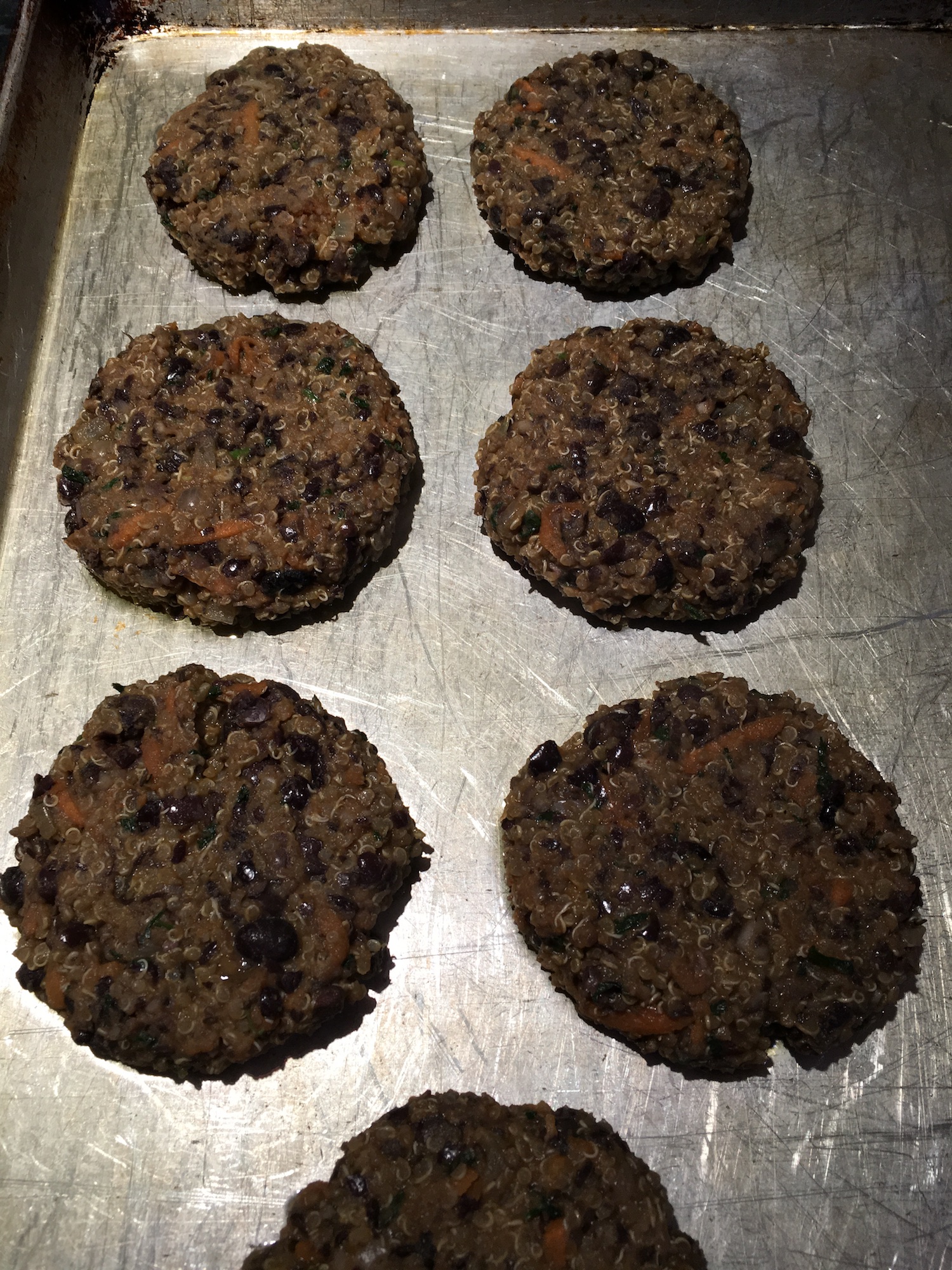
Before long, I had concocted pumpkin tofu burgers with blue cheese melted on top. Oh my! They were delicious!

Tragically, I have no idea what I put in them. I didn’t measure, didn’t write anything down.

Aside from the pumpkin and tofu, I remember a shallot, parsley, sage, rosemary, thyme, ground coriander, paprika, salt, soy sauce, black pepper, cumin, bread crumbs, egg…but how much of each?

Nope. I couldn’t recreate these things. I might have been more careful had I known they would turn out so well. But I was rushing, using whatever I could find in the fridge and cupboard, going by the seat of my pants.

I didn’t even take a photo of them.

I suppose I’ll just have to make them again, more carefully. Mmm! I like that idea.

Cranberry Orange Scones

I wanted lemon scones for breakfast this morning, but had no lemons. I made these instead, based loosely on my lemon scone recipe. I can’t think why I ever wanted lemon…

1 1/2 cups all-purpose flour
2 cups barley flour
1/2 cup brown sugar
1 tsp baking soda
1 tsp baking powder
1/4 tsp salt
125 g (1/2 cup) butter
1 egg
2/4 cup unsweetened yogurt
1/4 cup orange juice
grated rind of 1 orange
3/4 cup dried cranberries

Combine the flours, baking soda, baking powder and salt in a large bowl. Cut in the butter with a pastry knife until the mixture resembles coarse crumbs. Whisk together the egg, yogurt, juice and orange rind in another bowl. Toss the cranberries with the flour mixture, then mix in the wet ingredients. Once all the flour is incorporated, gently knead the dough in the bowl (just 2 or 3 turns). Divide the dough in half. On a floured board, pat each half into a round about 2 cm (3/4 inch) thick. Cut each round into 8 wedges, and arrange the wedges on an ungreased baking sheet.

Bake at 190ºC (375ºF) for 15 to 20 minutes, until nicely browned.

Eat them quickly, before someone else gets to them!

Summer Soup 2018

I feel like a broken record sometimes (those of you under the age of 45, ask your parents what I mean by that). The garden season repeats itself each year in a pretty predictable fashion, and I find myself blogging about the same events every year.

Saturday was Summer Soup day, which I’ve blogged about more than once before (in 2015 and again in 2016). This year’s production was 25 quarts of soup and 6 quarts of vegetable stock, bottled and ready for quick meals throughout the year. Production time, just over 14 hours.

It always feels good to fill every pot in the kitchen with delicious vegetable soup…at least for the first hour or so. But by the end of the day, I’m sick of being in the kitchen and ready to collapse. I need to remember the feeling later in the year when I’m feeling guilty about just pulling a jar of soup out of the cupboard for dinner. I’ve put in the time. We all have, because even the kids help pick and chop vegetables for summer soup. We’ve earned every ‘free’ meal we get from it.

50 Ways to Eat Zucchini

I’ve been humming the Paul Simon tune, Fifty Ways to Leave Your Lover, but changing the words a little…

There must be fifty ways to eat zucchini.

Just fry it in ghee, Lee, make a stir fry, Guy
Don’t need to be fancy, Nancy, just listen to me
Pop it in lasagne, Yolanda, don’t need to be fond of it
Just put it in tea, Lee, and eat your zucchini.

Wondering how many ways we do eat zucchini, I started a list.

I got to 42 before I had to think too hard. So here we go…

  1. Raw sticks dipped in skordalia or your favourite veggie dip.
  2. As crostini: thinly sliced and topped with cheese, tapanade or olivade.
  3. With peas, carrots and pesto over pasta.
  4. In burgers.
  5. In enchiladas.
  6. Grated in a tomatoey spaghetti sauce (adds wonderful texture).
  7. Grated, raw, in burritos.
  8. In vegetable pakoras.
  9. In calzones.
  10. In cheese pasties.
  11. On pizza.
  12. Herb and parmesan-crusted.
  13. Zucchini bread.
  14. Zucchini cake.
  15. Chocolate zucchini cake.
  16. Zucchini sorbet (trust me, this is amazing!).
  17. Frittata.
  18. In stir-fry.
  19. In fried rice.
  20. In Not Yo Mama’s Mac and Cheese.
  21. Stuffed with mushrooms and cheese.
  22. In vegetable soup.
  23. Zucchini and tomato tart.
  24. In quiche.
  25. Zucchini and cheese madeleines.
  26. Zucchini and cheese muffins.
  27. In roast vegetables.
  28. Grilled.
  29. Zucchini souffle (not the best souffle–zucchini releases too much water).
  30. Coleslaw with zucchini.
  31. Kebabs.
  32. Oven-baked Zucchini tomato risotto.
  33. Ratatouille.
  34. Sauteed with garlic and herbs.
  35. In summer vegetable stew.
  36. Panir Louki Tarkari–Paneer, zucchini and red bell peppers.
  37. Zucchini pickles (meh. I wouldn’t do these again).
  38. Mixed vegetable curry.
  39. Braised.
  40. Zucchini fritters.
  41. Zucchini cheese tart.
  42. In Uplifted Polenta Lasagne.

There are our 42 ways. There must be (at least) 50 ways to eat zucchini.

Double Cherry Pie

I picked eight cups of cherries from our tiny sour cherry tree the other day. I was thrilled I’d gotten enough for two pies from a tree not much taller than me! I decided to make them all up into pie filling—I’d make one pie right away, and freeze half for later.

But when it came to filling the pie dough, I poured all eight cups in! Yikes! There was no way to take it back out, and I knew it was going to boil over and be a disaster in the oven.

I shrugged—nothing to do but see what happened—and slipped the pie into the oven (with a tray beneath it to catch drips.

An hour later, I pulled the most glorious pie out of the oven…

It had dripped a little, but no more than every other cherry pie I’d ever made.

And it looked plump and delicious. Each slice was thick and wonderfully overloaded with fruit. Truely decadent!

I’m not sure I’d recommend making a pie with eight cups of cherries—it really could end up a disaster in the oven—but it certainly was a delicious mistake.

Orange Cranberry Scones

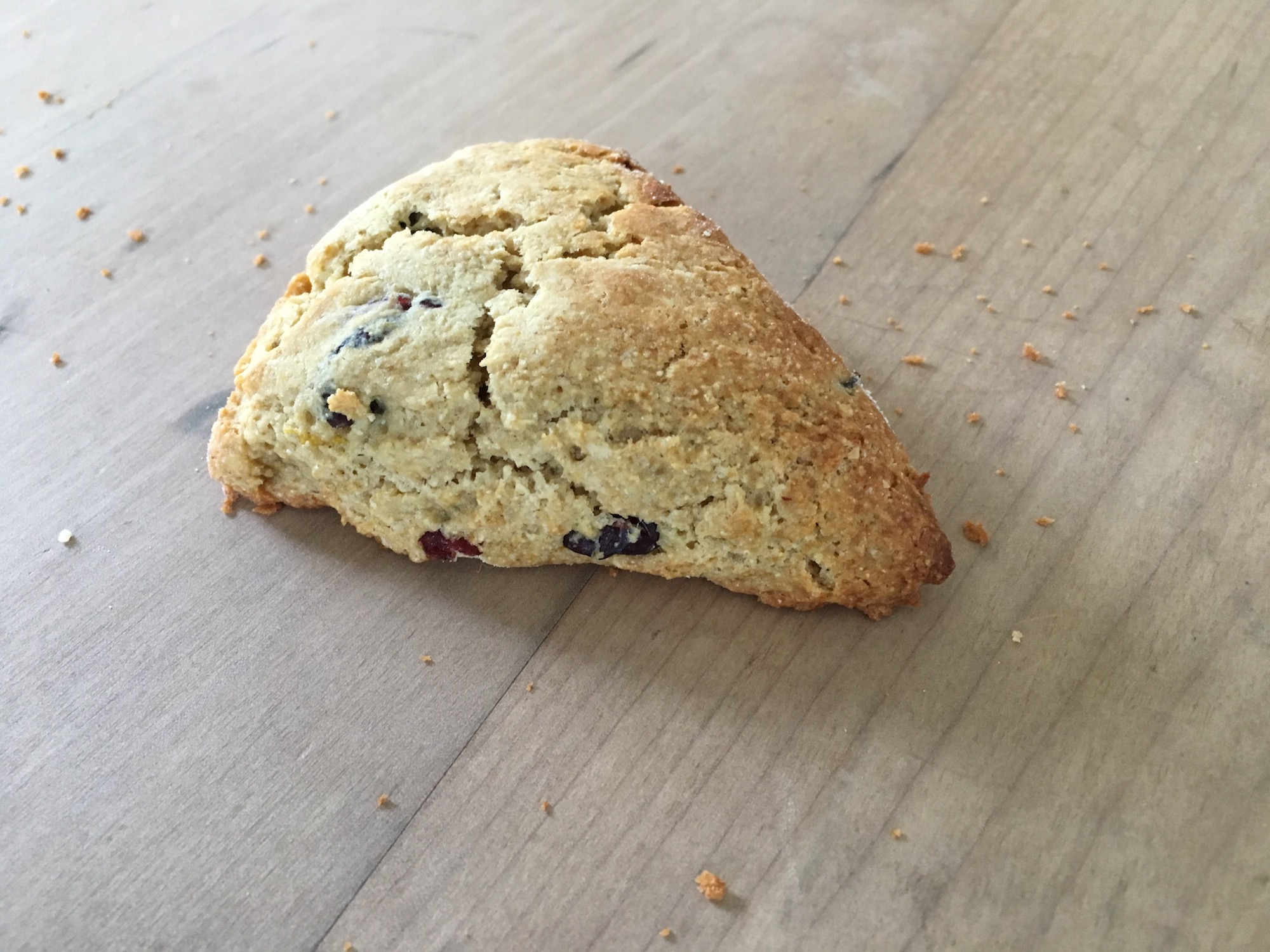
In a nod to Thanksgiving, I made orange cranberry scones for Sunday breakfast. Another wonderful use of barley flour. I’ve grown quite fond of barley flour in cakes and pastries–it lends a softness to the texture that is delightful. It also seems to delay baked goods going stale. The remaining scone, pictured here, was just as tender and moist on Monday morning as it had been fresh out of the oven on Sunday.

2 cups barley flour
1 1/4 cup all-purpose flour
1/2 cup lightly packed brown sugar
1 tsp baking soda
1 tsp baking powder
1/4 tsp salt
125 g (1/2 cup) cold butter
1 egg
1/2 cup buttermilk
1/2 cup orange juice
grated rind of 1 orange

Combine the flours sugar, baking soda, baking powder and salt in a large bowl. Cut the butter into the flour mixture until it resembles coarse crumbs.

Whisk together the egg, buttermilk, orange juice and orange rind in a separate bowl. Add to the flour mixture, stirring until evenly moistened.

Turn the dough onto a floured surface and knead two or three times. Divide dough in half. Pat each half into a circle about 2 cm (3/4-inch) thick, and cut each circle into eight wedges.

Place on an ungreased baking sheet and bake at 190°C (375°F) for 20-25 minutes.

Orange Cake

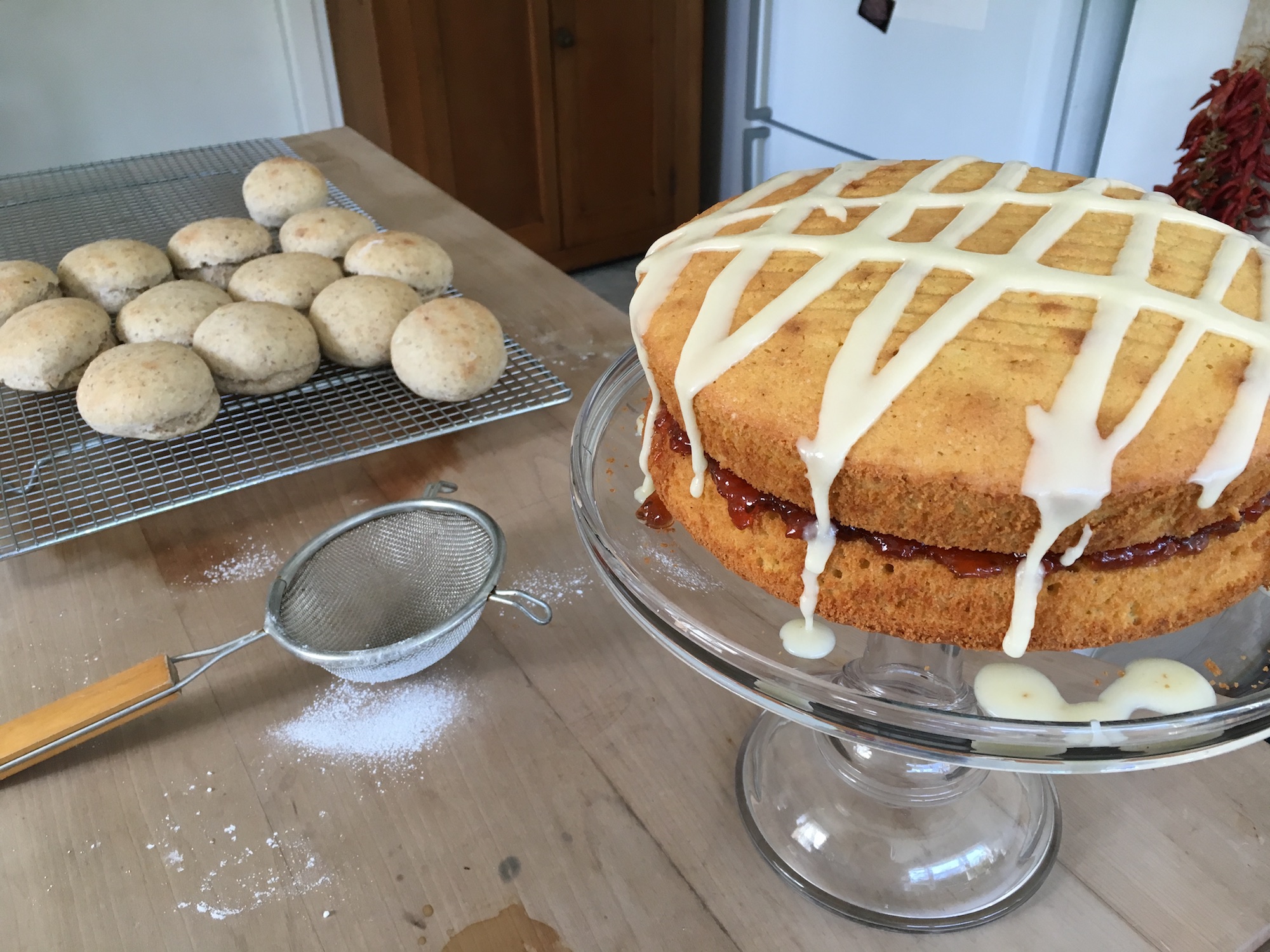
Having friends over is such a good excuse to bake. I normally wouldn’t experiment for guests, but I was pretty sure of the orange cake I tried out on Saturday, because I based it on my lemon cake recipe.

It’s a close race, but I think I may like the orange version even better than the lemon. I filled the cake with gooseberry jam and drizzled it with a simple orange icing, both of which nicely set off the cake itself.

Here’s the recipe. I suggest trying the lemon version also, to see which you prefer. You might need to make them both several times to decide.

1 cup butter, softened
1 3/4 cups sugar
4 eggs, separated
grated rind of 1 orange
2 1/4 cups all-purpose flour
1 cup barley flour
1/2 tsp salt
2 1/2 tsp baking powder
1/2 cup orange juice
1/2 cup water
3/4 cup threaded coconut

In a medium bowl, mix flours, salt, and baking powder. In a large bowl, cream butter. Add sugar gradually and beat until fluffy. Add egg yolks and orange rind and continue to beat. Add dry ingredients alternately with orange juice and water. Beat thoroughly after each addition. Fold in stiffly beaten egg whites and coconut. Pour into greased pans. Bake at 180ºC (350ºF) for 30 minutes.

Orange frosting: Sift 1 cup confectioners sugar into a small bowl. Stir in orange juice by the teaspoon until the icing reaches a thick, just pourable consistency (I used about 2 Tbsp total).

An Abundance of Artichokes

It’s a terrible thing, having excess gourmet vegetables. We are in our usual springtime artichoke excess. It’s not unusual for us to eat eight or nine artichokes five days out of seven.

A quick online search shows artichokes currently selling for anywhere from US$3 to 10 per pound (that’s NZ$9-31/kg). Given we easily eat a kilo per meal…Well, you get the idea. If we had to pay for them, we couldn’t afford them.

Of course, the problem remains–what do you do with that many artichokes? We preserve quite a few for use at other times of the year, but that still leaves plenty to enjoy during the season.

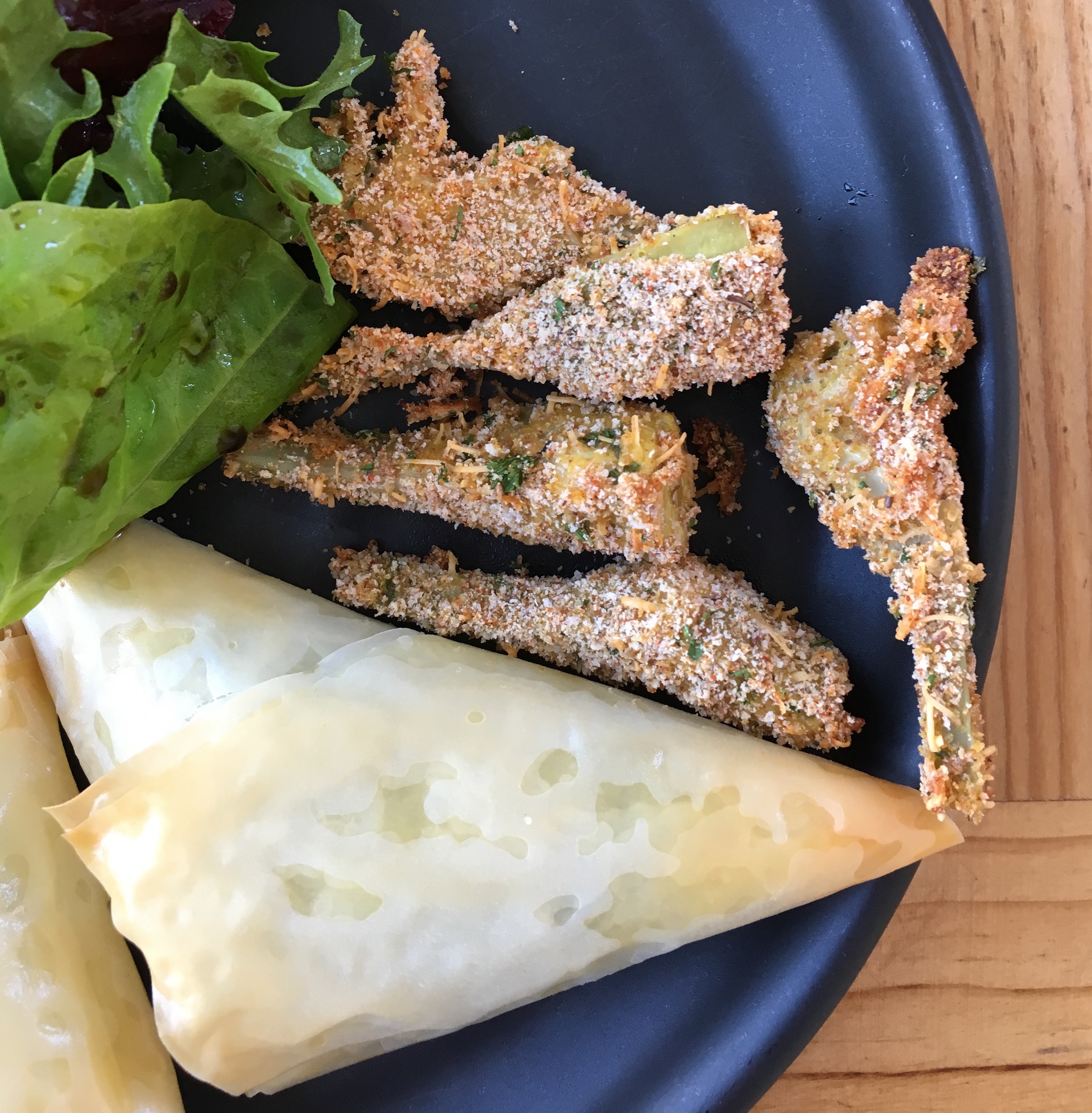
We eat a lot of artichokes in risotto, pasta, pizza, and gratins. The other day, I tried a new way of preparing them–crusted with parmesan and baked.

It’s simple, if a bit time-consuming (it would be trivial if you simply bought canned or frozen artichokes).

First, prepare the artichokes: snap off the outer leaves, peel the base and stem, trim off the top 1/3 of the leaves, remove the choke and any spines on the inner leaves, and cut the remaining heart into wedges. Drop wedges into a bowl of lemon juice and water as you go to avoid browning. Drain and steam for 3-5 minutes, until just tender, but not falling apart.

Then prepare the breading: mix in a medium bowl 1 cup bread crumbs, 1 cup grated parmesan cheese, 1/4 cup finely chopped parsley, 1 tsp salt, 1 tsp paprika, 1/8 tsp cayenne, and black pepper to taste.

In another bowl, beat two eggs.

Dredge the artichoke wedges first in the egg, then in the breading to coat thoroughly. Arrange in one layer on an oiled baking sheet. Bake for about 20 minutes at 190°C (375°F) until brown.

I served them plain, but they would be lovely with a dipping sauce like aioli or skordalia. They made a delicious accompaniment to the tiropitas (spinach and feta triangles) and salad that rounded out the meal.

Restaurant Review: Crazy Corner Cuisine

“I e-mailed you a picture. I want a blog.”

I find it difficult to blog about a meal I haven’t cooked myself. I can’t give you a recipe or even a detailed ingredient list.

So I’ll have to blog as though I went to a restaurant for a fine meal…

I walked into Sedgemere’s finest vegetarian restaurant, Crazy Corner Cuisine, early–my reservation wasn’t until six–but I was ushered into the lounge and encouraged to relax with a book while I waited. As I reclined in a delightful window seat overlooking the restaurant’s herb gardens, the wonderful aroma of my meal wafted through the restaurant.

Crazy Corner isn’t your usual restaurant, where the meal is prepared behind closed doors. At Crazy Corner, the chef consults with the patrons, tweaking the meal to suit their tastes. In fact, on this visit to Crazy Corner, I was given a colander and allowed to enter the restaurant’s garden to pick my own salad.

Crazy Corner Cuisine grows nearly all the vegetables used in the restaurant, so you can be sure that whatever you eat, only the freshest ingredients are used.

On this visit, dinner included a beautiful polenta ‘lasagna’–layers of herb-filled polenta and thick lentil stew rich in mushrooms and spinach generously topped with cheese and baked to perfection. The portions were generous, and the side salad was the perfect foil to the hearty lasagna. The meal was accompanied by an excellent New Zealand Merlot.

I have to put in a good word for the kitchen staff, too. Though quite young, they cleared the table efficiently and I heard them industriously washing dishes as I left.

The whole experience was delightful and relaxing. I highly recommend a visit to Crazy Corner Cuisine the next time you’re in Sedgemere.