Salt-preserved Green Beans

I always struggle with what to do with too many green beans. I can (bottle) some, but none of us really like the taste of canned beans, and their mushy texture leaves a lot to be desired. I don’t freeze any, because freezer space is at a premium, and I prefer to fill it with sweet corn and peas instead.

So this past summer, I preserved some green beans in salt. The recipe I used claimed that the flavour and texture of salt-preserved beans is far superior to canned or frozen.

I pulled out the crock of salted beans the other day to test them out.

At first glance, they didn’t win any beauty contests, especially the yellow wax beans, which came out of the salt a sort of dead-flesh colour.

I rinsed them and soaked them for two hours, as directed, and then tossed them into a green bean and potato charcharis.

Cooked into a flavourful Indian dish, the beans most definitely had better flavour and texture than canned beans. Almost as good as fresh, even.

Unfortunately, they were so excessively salty, they made the dish almost inedible. Even my salty-olive-loving family couldn’t choke them down. Most of the dish ended up on the compost pile, and I expect an epidemic of high blood pressure in the local sparrow and mouse population who dine at chez-compost.

There are still some beans left. I’ll try using them again—small quantities in otherwise unsalted stews or soups might work well (sort of like a salty ham hock in bean soup). Maybe.

But I’m thinking I’ll just give away the extra green beans next year.

In Praise of Parsnip

The rangy rosette of a parsnip plant.

A bit like carrots, but sweeter and starchier, parsnips are wonderful winter vegetables.

I’m not certain when I first ate parsnip, but I know I’ve eaten a lot of it. When I was breastfeeding my son, nearly everything I ate gave him colic (It took eight weeks of 24-hour-a-day screaming for me to work this out … longest eight weeks of my life). Parsnips were one of the few safe vegetables, so I ate parsnips. Lots and lots of parsnips. But I never got sick of them. Their comforting, earthy flavour only grew on me the more I ate.

I try to grow parsnips every year, but I’m not always successful. Parsnip seed has a short shelf-life, and germination can be poor, even with seed that isn’t officially past it’s ‘plant by’ date. I buy a new packet of seed every year, whether I’ve used all of the old seeds or not. Even so, I don’t always have luck germinating it, because parsnip doesn’t like to be transplanted, and needs to be seeded directly into the garden beds. In my garden, that means the seeds tend to dry out, in spite of my best efforts. It also leaves tender seedlings at the mercy of birds and slugs, which seem to enjoy parsnip as much as I do.

But this past summer the parsnips did well, like many other crops that appreciated the unusually warm, wet weather. The parsnip I picked for dinner yesterday was 15 cm in diameter at the crown, but still tender and delicious. And there are plenty more out there to harvest.

Parsnips are sweeter after the first frost, so they’re a great autumn and winter food. They store well in the ground, so there’s no need to fill your fridge with them at harvest time. When we lived in Minnesota, I used to use a pickaxe to chip them out of the frozen ground through the winter.

Parsnips make wonderful additions to stews and casseroles. Their flavours meld well with potato, carrot, and celeriac. They compliment beans and pulses. They’re great vehicles for butter and cheese. Back when I was subsisting on little beyond parsnips, we used to mash them (like mashed potatoes), braise them, and roast them, in addition to using them in stew and soup.

It’s no wonder these versatile vegetables have been cultivated since long before Roman times. They’re a great winter staple—a vegetable you can eat again and again and still enjoy.

Gluten Culture

“I’m allergic to gluten-free.”

That’s my son’s line when people ask.

In part, it’s true; he’s allergic to buckwheat, which is often used in gluten-free products. But what he’s really saying is that gluten-containing foods are a staple at our house. Our diet and our family culture would break down without gluten.

It’s been a while since I blogged about a bread day, but they still happen. Every two or three weeks my husband fires up the bread oven and bakes two dozen loaves of bread. I follow with a couple of cakes, cookies, or whatever sweets I feel like baking. On the tail-end heat, my husband might throw in some bac-un or seitan—gluten-based meat substitutes.

Between the bi-weekly gluten fests, we make pastries, muffins, scones, crackers, and all manner of other gluten-containing food.

If we took gluten out of our diet, we’d lose a protein source and a suite of family activities.

And, yes, you can bake gluten-free bread, cakes and cookies.

But they’re not the same.

There is something fundamental, something visceral about the feel of gluten—under your hands as you knead bread, in your mouth as you chew it—something that is integral to my family’s enjoyment of food.

Yes, I think we’re all allergic to gluten-free.

Mystery Burgers

Not the mystery burgers…

On Sunday, we were all busy with various projects in the yard and shop. At some point I glanced at the clock and realised no one had thought about dinner, and it was getting late.

In the fridge was a small quantity of baked pumpkin—not enough to pair with the pie crust in the fridge for a galette, which would have been easy and quick.

Then I noticed a package of tofu in the back of the fridge.

And a wedge of blue cheese.

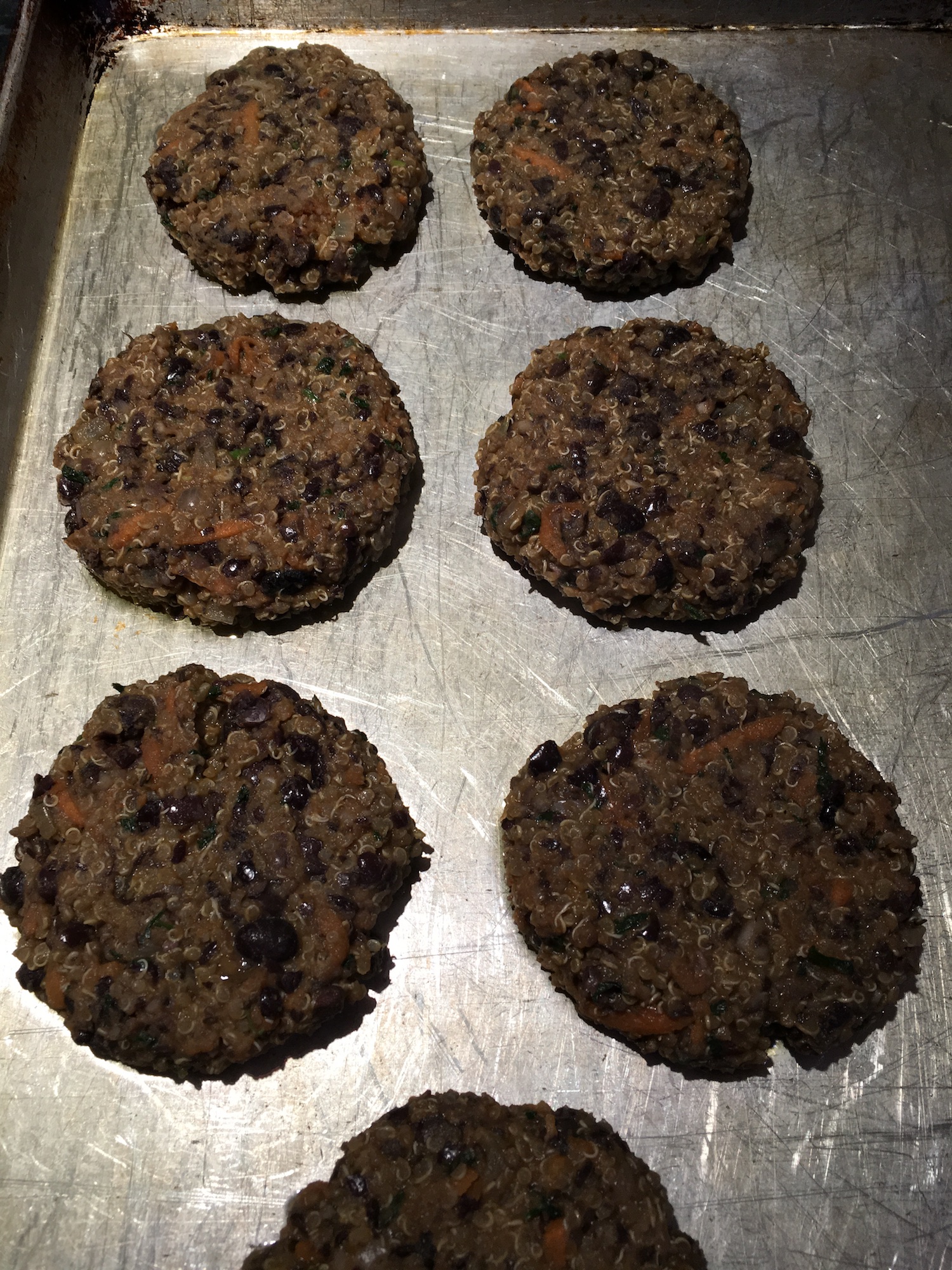
Before long, I had concocted pumpkin tofu burgers with blue cheese melted on top. Oh my! They were delicious!

Tragically, I have no idea what I put in them. I didn’t measure, didn’t write anything down.

Aside from the pumpkin and tofu, I remember a shallot, parsley, sage, rosemary, thyme, ground coriander, paprika, salt, soy sauce, black pepper, cumin, bread crumbs, egg…but how much of each?

Nope. I couldn’t recreate these things. I might have been more careful had I known they would turn out so well. But I was rushing, using whatever I could find in the fridge and cupboard, going by the seat of my pants.

I didn’t even take a photo of them.

I suppose I’ll just have to make them again, more carefully. Mmm! I like that idea.

Recipe Rescue

As you all probably know by now, my husband and I develop a lot of our own recipes. We also have recipes collected from friends and family members, magazines, and library books.

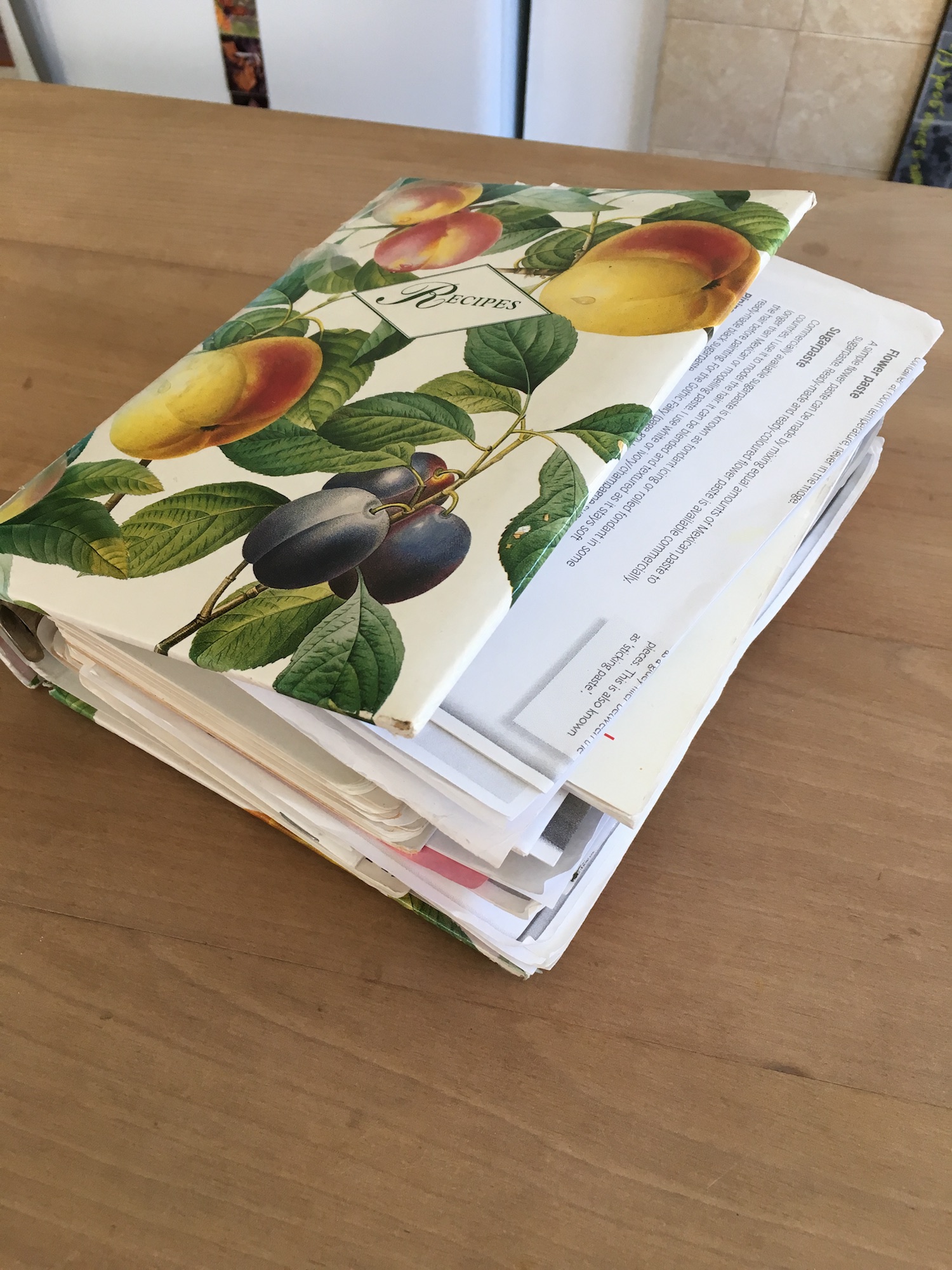
For over twenty-five years, we collected all these recipes in a notebook that was never designed to manage so much paper. I looked for a replacement for a long time and found nothing suitable.

Nothing marketed as a recipe notebook, that is. When I got creative (read desperate) I found the perfect solution.

  • One D-ring binder, A5 size
  • A pack of 100 A5 sheet protectors
  • One A5 size lined notebook

I added some homemade card stock tabs to help me organise, and voila—a perfect recipe notebook, with plenty of space for all our recipes.

I can slip photocopied recipes into the sleeves where they’re visible, not wadded together in the back of the notebook like they used to be, and I didn’t even have to copy the handwritten recipes—I just slipped the pages from the old notebook into the sleeves of the new. And the bonus is that recipes are now protected from the inevitable spills.

Can’t Stand the Heat?

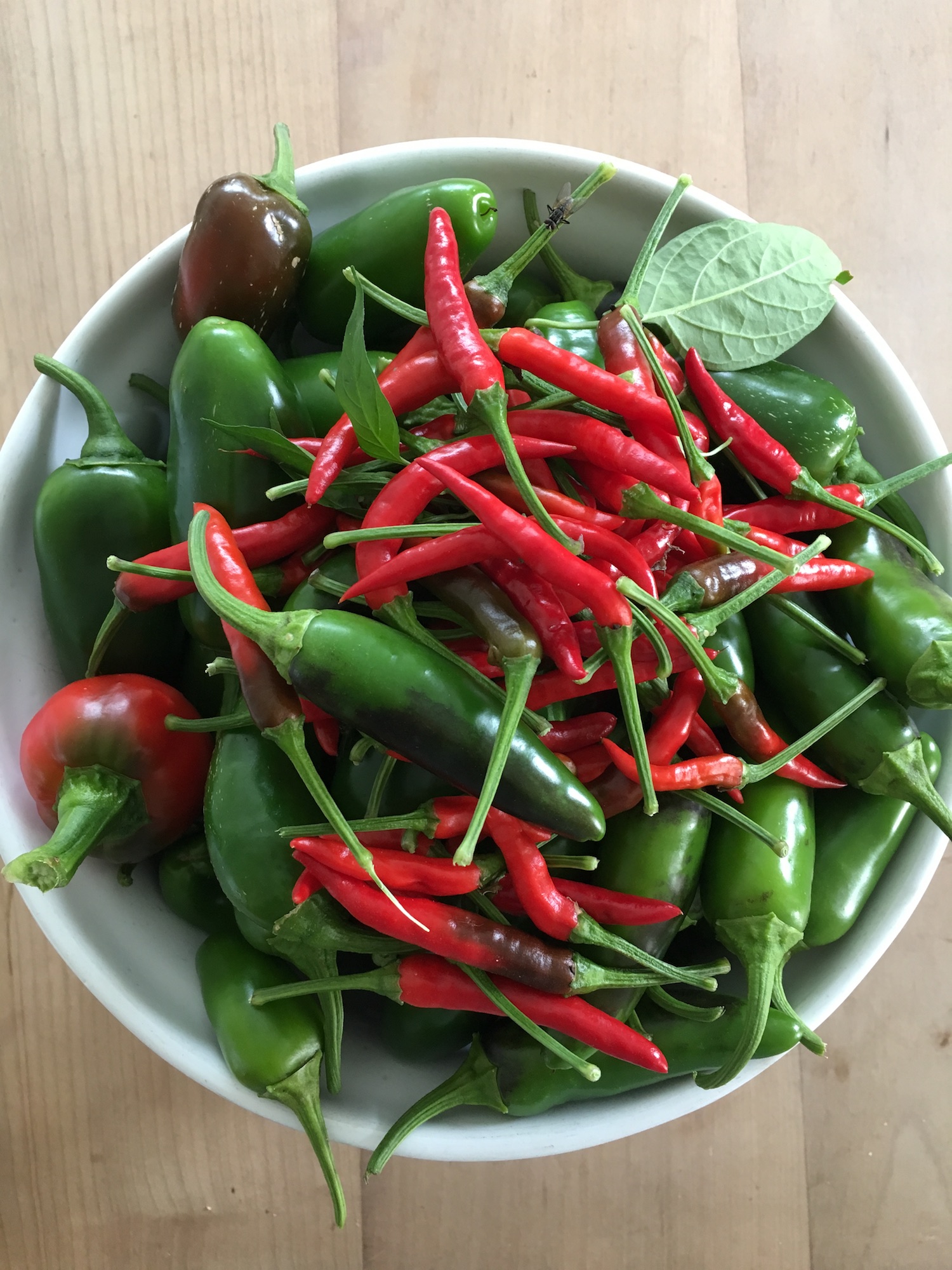
Chilli peppers are one of the prettiest plants in the garden. It’s no wonder there are so many varieties grown largely for their ornamental value.

But I appreciate my chillies for their kick as well as their glossy leaves and cheerful fruit. Unfortunately, chillies are tropical plants, and many varieties need a longer, hotter growing season than I can provide here, even under cover.

Two varieties, however, regularly produce well.

Jalapeño Early—I can’t grow normal Jalapeños, but this variety is a week or two quicker to produce, and that’s enough. One of my favourite chillies because its low heat level (2,500-8,000 Scoville Heat Units) means you can load a dish with them and enjoy the other flavours they impart along with the heat.

Thai Super Chilli—At 40,000 to 50,000 Scoville Units, these peppers are significantly hotter than Jalapeños. Just one of these little gems gives a nice kick to a dish. I particularly like these chillies because they dry well in beautiful strings hanging in the kitchen. They’re easy to grow and preserve, and they lend beauty to the garden and the kitchen all year.

A couple plants of each of these peppers is plenty to grow a year’s supply of spicy goodness, but you know I can’t stop there. I usually plant at least one other mildly spicy pepper. this year, it was Cherry Large Hot. Similar to Jalapeños for heat, these chillies really serve no purpose for me except as a beautiful red contrast to the green Jalapeños in salsas and pickled peppers. Good enough reason for me to plant them!

50 Ways to Eat Zucchini

I’ve been humming the Paul Simon tune, Fifty Ways to Leave Your Lover, but changing the words a little…

There must be fifty ways to eat zucchini.

Just fry it in ghee, Lee, make a stir fry, Guy
Don’t need to be fancy, Nancy, just listen to me
Pop it in lasagne, Yolanda, don’t need to be fond of it
Just put it in tea, Lee, and eat your zucchini.

Wondering how many ways we do eat zucchini, I started a list.

I got to 42 before I had to think too hard. So here we go…

  1. Raw sticks dipped in skordalia or your favourite veggie dip.
  2. As crostini: thinly sliced and topped with cheese, tapanade or olivade.
  3. With peas, carrots and pesto over pasta.
  4. In burgers.
  5. In enchiladas.
  6. Grated in a tomatoey spaghetti sauce (adds wonderful texture).
  7. Grated, raw, in burritos.
  8. In vegetable pakoras.
  9. In calzones.
  10. In cheese pasties.
  11. On pizza.
  12. Herb and parmesan-crusted.
  13. Zucchini bread.
  14. Zucchini cake.
  15. Chocolate zucchini cake.
  16. Zucchini sorbet (trust me, this is amazing!).
  17. Frittata.
  18. In stir-fry.
  19. In fried rice.
  20. In Not Yo Mama’s Mac and Cheese.
  21. Stuffed with mushrooms and cheese.
  22. In vegetable soup.
  23. Zucchini and tomato tart.
  24. In quiche.
  25. Zucchini and cheese madeleines.
  26. Zucchini and cheese muffins.
  27. In roast vegetables.
  28. Grilled.
  29. Zucchini souffle (not the best souffle–zucchini releases too much water).
  30. Coleslaw with zucchini.
  31. Kebabs.
  32. Oven-baked Zucchini tomato risotto.
  33. Ratatouille.
  34. Sauteed with garlic and herbs.
  35. In summer vegetable stew.
  36. Panir Louki Tarkari–Paneer, zucchini and red bell peppers.
  37. Zucchini pickles (meh. I wouldn’t do these again).
  38. Mixed vegetable curry.
  39. Braised.
  40. Zucchini fritters.
  41. Zucchini cheese tart.
  42. In Uplifted Polenta Lasagne.

There are our 42 ways. There must be (at least) 50 ways to eat zucchini.

Master Chef Sedgemere

An every-day artful display of dinner ingredients.

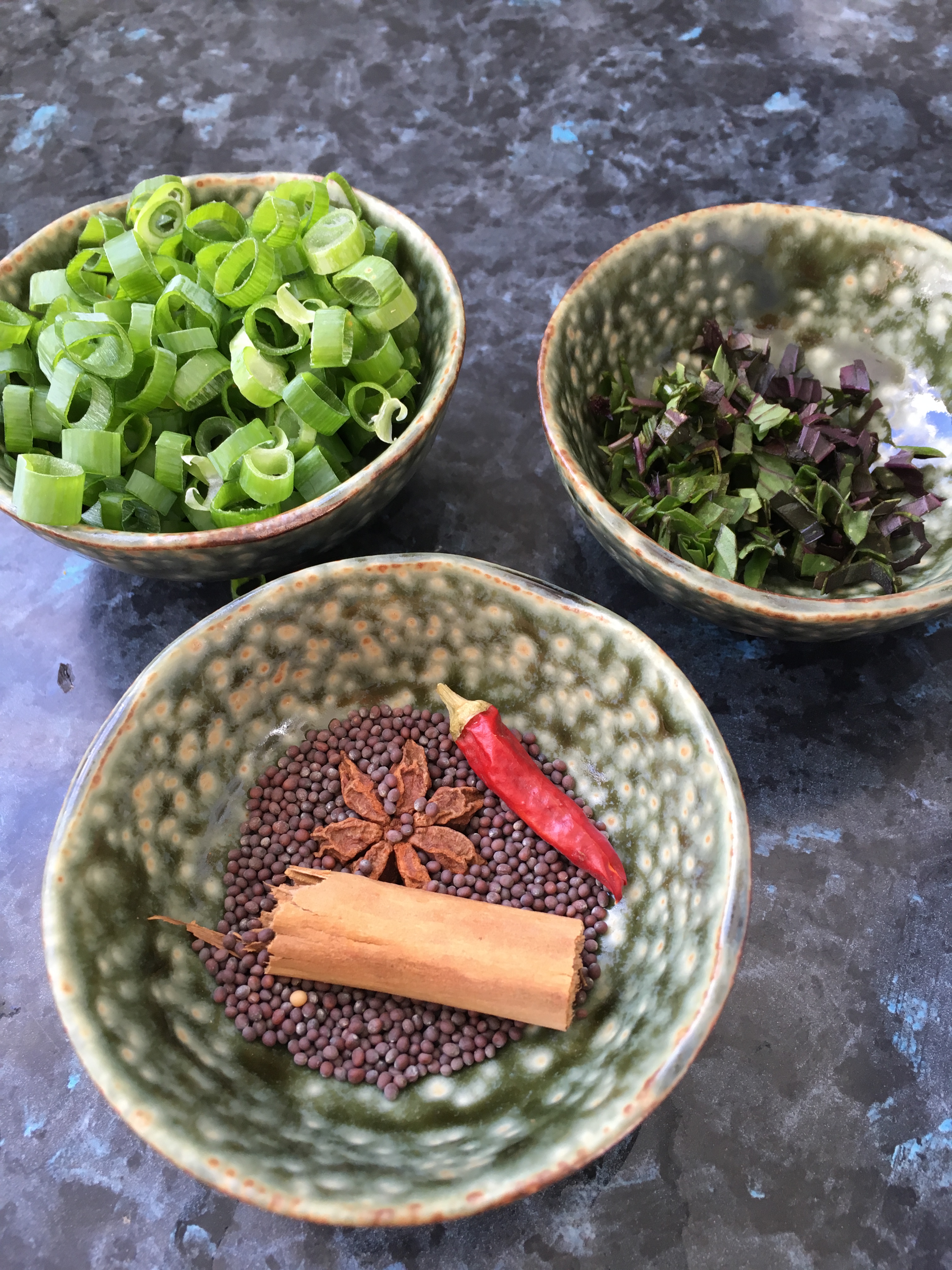
My husband had just finished making pesto for our dinner pasta. He turned and surveyed the vegetables I’d chopped: yellow and green zucchini, three colours of green beans, baby carrots, fresh peas…

He laughed. “We live in a cooking show sometimes.”

“Yeah, like, every day around five o-clock,” I answered.

I exaggerated, of course, but only slightly. With a garden that produces beautiful vegetables year-round, how can we not end up with beautiful spreads of food in the kitchen every day?

So, hurray for the garden! All we need now is the camera crew…

Kitchen Fumble

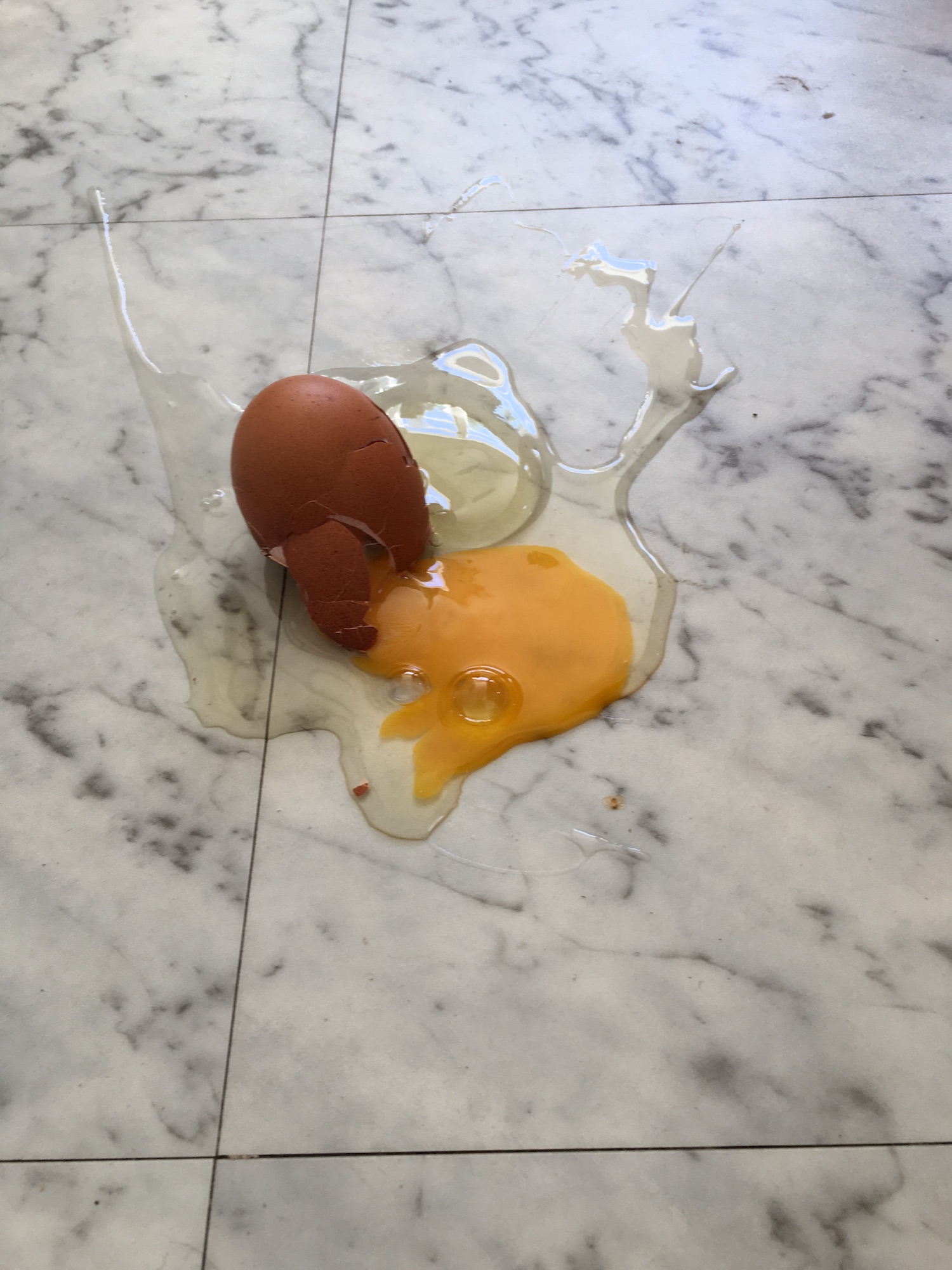
I had collected the day’s eggs and was putting them away when one leapt from my hand in a doomed bid for freedom.

My daughter watched it happen. We looked at one another and giggled.

We’re accustomed to kitchen disasters at our house. We spend so much time cooking, preserving, and processing vegetables, we’re bound to make messes.

There have been truely memorable ones…

There was the day I baked a quiche for dinner. When it was done, I pulled out the oven rack the quiche was on, and the quiche slid off the rack and flew out of the oven and onto the floor, pie and broken glass everywhere, and dinner ruined.

There was the time a bag full of several kilos of popcorn tipped over, sending thousands of little corn kernels bouncing and rolling across the kitchen floor.

Probably the most spectacular was a brewing mishap. My husband started a batch of beer, tucked the brewing bucket into a corner of the dining room and, and then went away for a week to a conference.

Two days later, I noticed the lid of the bucket was bulging. I knew it shouldn’t be doing that. I stepped over to the bucket and leaned down to see what was wrong.

With a boom, the bucket exploded into my face. Pressurised beer sprayed across the entire room, the ceiling, and me.

I stood gaping and dripping for a moment before bursting out laughing. What else could I do? It took ages to clean up the mess. By the end, I was grumbling more than laughing. Turns out the airlock had gotten clogged. I rigged up a makeshift airlock that could handle the very active fermentation. My husband came home eventually. The beer was none the worse for the excitement.

So the egg taking a dive onto the floor was nothing, really. It could have been a whole lot worse.

A Cook’s Evolution

It’s a piece of cake…

I made quiche for dinner tonight. Not unusual on a Wednesday.

Not these days, anyway.

There was a time when quiche was a weekend meal. I made the crust, and my husband made the filling. It was a big deal. It certainly wasn’t a task for one person after a full day at work.

There are a lot of meals like that. Meals that used to be daunting, but now are regulars at any time of week.

Part of that is due to my 5-second commute. If I quit work at 5:00, I’m home at 5:00 (provided I’m not distracted by the weeds between my office and the house). I have more time to cook than when I had an hour-long drive to work.

But most of it is the evolution of my cooking skills. Things like pie crusts, homemade noodles and homemade tortillas used to be difficult and apt to cause me frustration by being too wet or too dry. I’ve made them so many times now, I don’t even pull out a recipe anymore. And I’ve refined the recipes so that they’re always the right consistency.

I have an intuitive feel for what needs to be done to cook a meal, so that I work efficiently, taking the opportunity of a minute here or there while something cooks to prepare another dish.

I know when to think ahead, too—putting beans on to soak at breakfast time so making refried beans at dinner is quick and easy, making a pie crust the evening before so that a quiche is as simple as cooking vegetables and tossing them in the pie, making a double batch of labour-intensive dishes so that there are leftovers for the freezer for instant gourmet meals, preserving garden produce in exactly the right quantities and forms so it’s easy and quick to use in our favourite dishes.

The evolution has been slow, and it’s only now and again that I notice it. When I do, I’m always surprised. “When did this become so easy?” By the time I notice, I’ve almost forgotten how difficult it used to be. There are a lot of past hours of stress and frustration behind every beautiful quiche, or stack of tortillas, or homemade ravioli that I casually whip up today.

It’s a good reminder, for those times I see someone else effortlessly doing something I find difficult or impossible. It may be effortless today, but you can bet a whole lot of effort and evolution has gone into making it that way.