Use it and Lose it

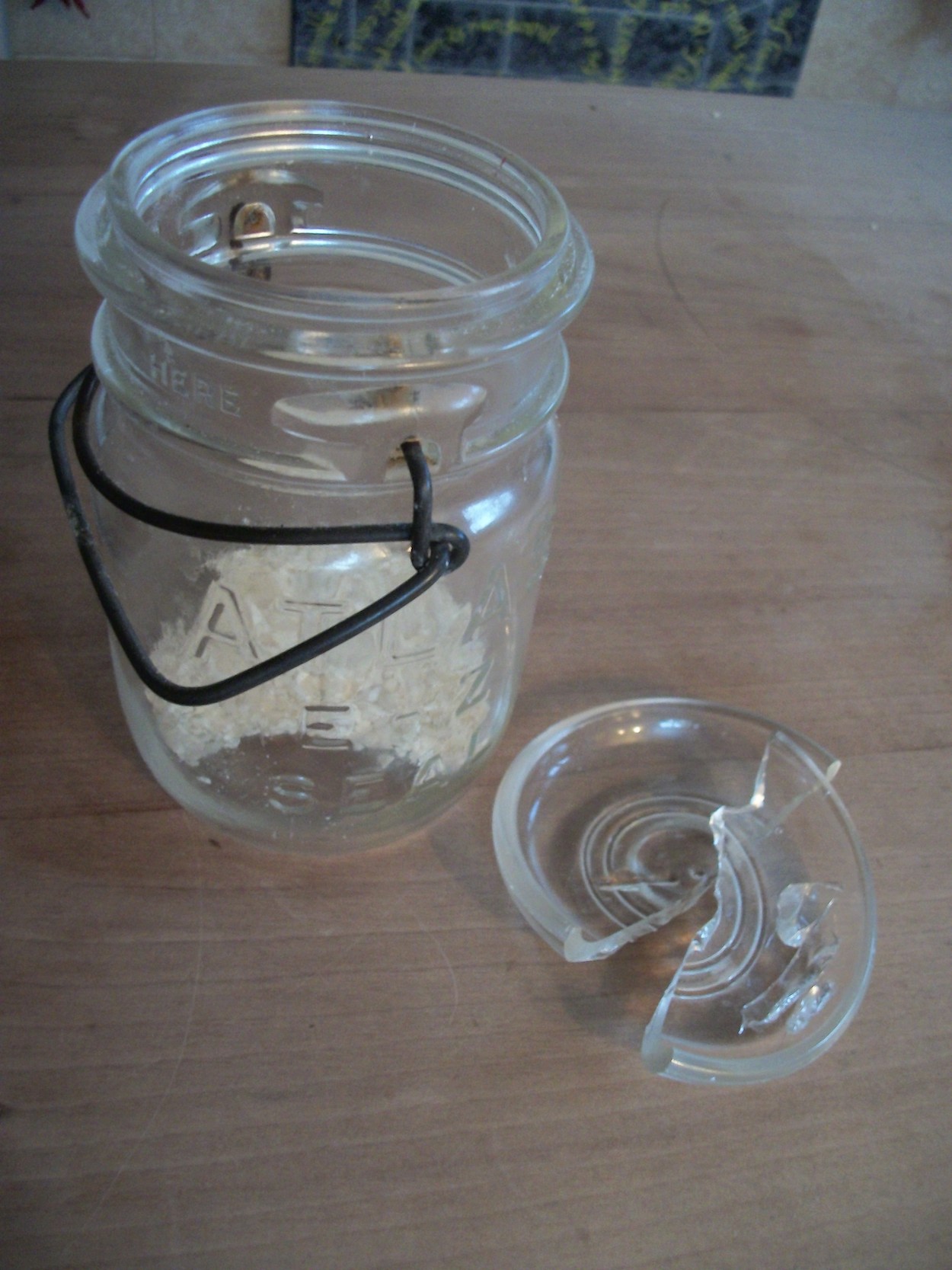
100_3629 smI opened the jar of sesame seeds this evening, and the glass lid slipped from my hand, fell to the floor, and broke. I closed my eyes and took a deep breath. Another one of my favourite antique jars was gone. There is only one left now.

I don’t know how old these lovely Atlas jars are, but they are certainly older than me, possibly much older. I should probably not be using them at all. But they are beautiful and useful—it would be a shame to pack them carefully away to preserve them. Better to let them live out their lives as useful kitchenware, as they were meant to.

I believe in using the things that I enjoy. So I use those antique jars, the 150 year old steamer trunk, the antique chairs, the collection of early 20th century teacups.

The quilt that I spent seven years embroidering goes on the bed every summer, and the newest quilt (over a year in the making) serves us all winter.

The result is, of course, that things break, fade, and wear out. Slowly these little treasures disappear, no matter how much care we take with them.

But I like to think of these objects as having a life, a presence that is tied intimately to their utility. If they are not used, they cease to exist as they were meant to. By using them, and ultimately breaking them, I keep them alive. And when I wrap the broken shards in newspaper and inter them in the rubbish bin, I know that they have lived and died well.

I hope I can say the same of myself when I reach the same point in my life.

Greek Salad

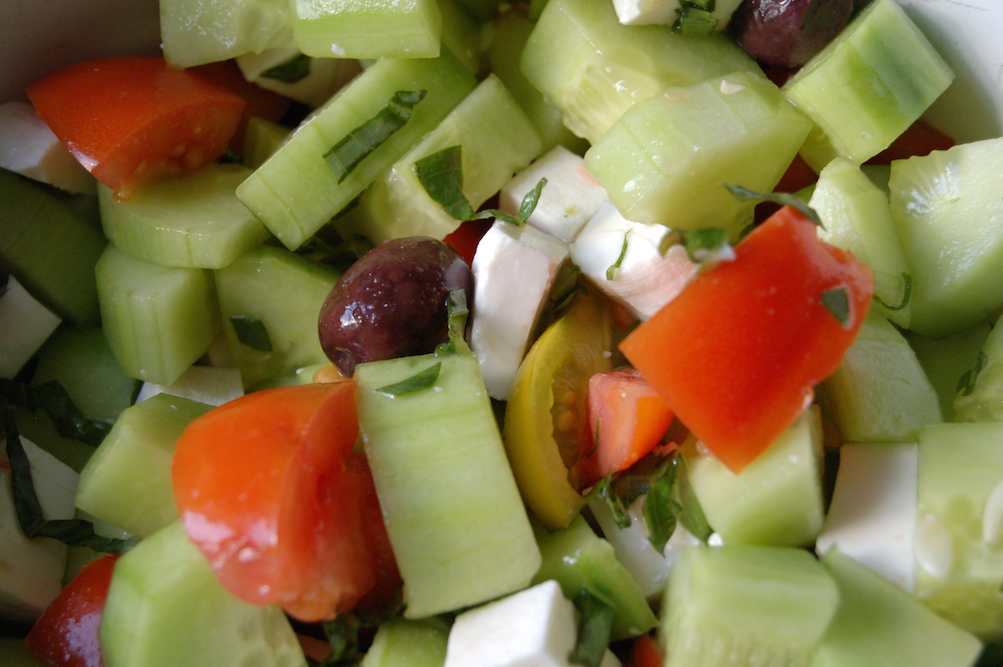
Greek salad3 smIt was a raw, overcast day today, and I spent most of it outdoors. So I thought I’d do a little summer dreaming for today’s blog to warm me up.

Dreaming about Greek salad—the essence of summer.

Fresh tomato (preferably Brandywine),

Fresh cucumber,

Homemade feta (from our own goat milk),

Big, fat black Kalamata olives,

Fresh basil,

Balsamic vinegar,

South Lea olive oil, made just down the road.

Serve it with some crusty homemade bread and a glass of wine.

Nothing could be better!

Mushroom Leek Tart

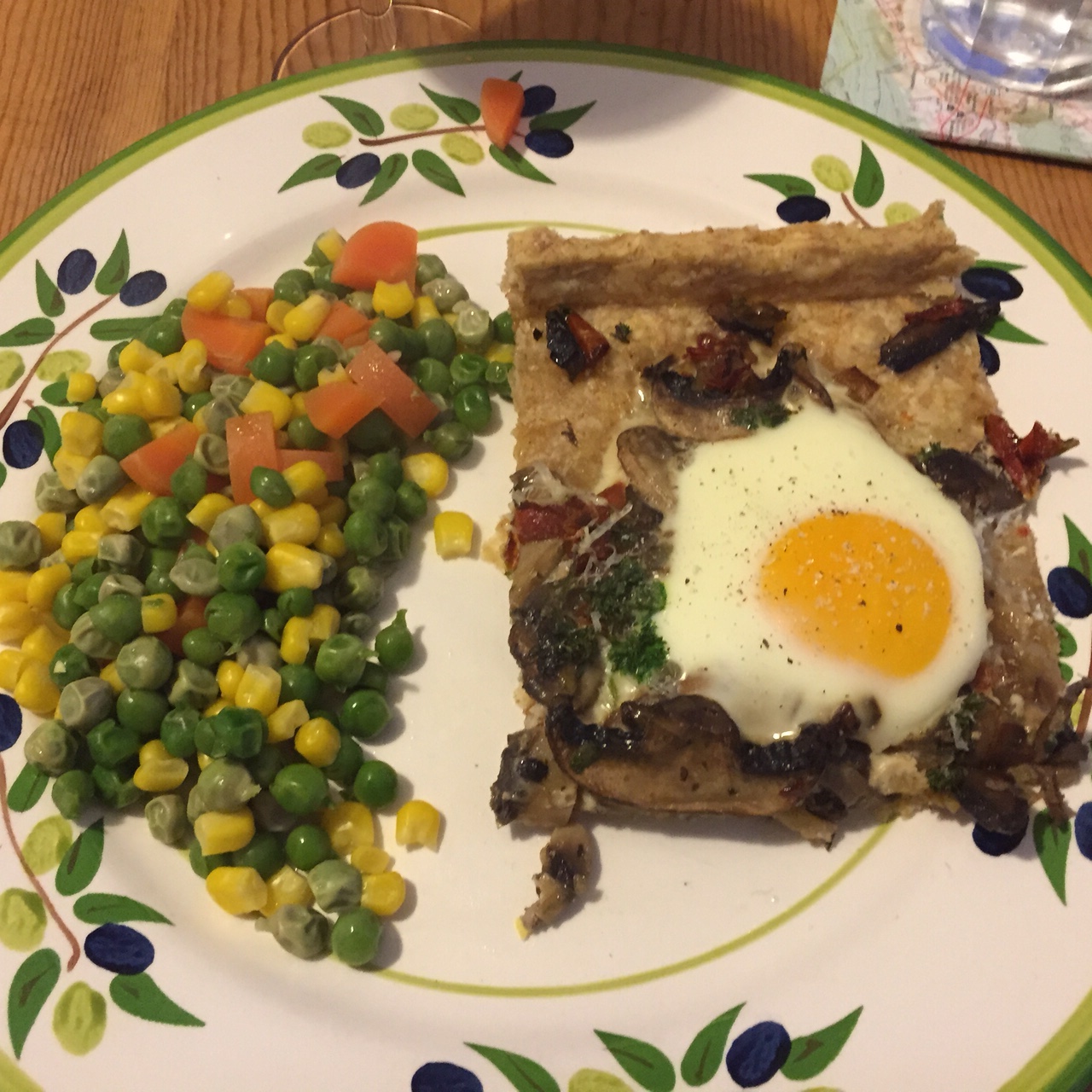
IMG_3455Driving home today with a kilo of mushrooms in the car, I devised the following mushroom and egg tart for dinner.

It was delicious!

Approx. 1 kg fresh mushrooms, sliced (I used buttons and portabellas)

10-15 g dried porcini, soaked 30 min in hot water

4 small leeks, sliced

small handful dried tomato, chopped roughly

Fresh thyme, rosemary, and parsley to taste

½ c. grated parmesan cheese

8 med eggs

salt and pepper to taste

Sauté leeks, mushrooms, tomatoes, rosemary and thyme over medium heat until well-cooked, and the mushroom liquid has evaporated. Add salt and pepper to taste.

Make pastry for a double crust pie. Roll it out in one large sheet and line a jelly roll pan with it.

Sprinkle half the cheese over the crust. Then spread the mushroom mixture evenly over the cheese. Top with the remaining cheese.

Crack the eggs onto the tart, one at a time, arranging them neatly across the tart.*

Bake 20 minutes at 190°C (375°F). Allow to cool for 5-10 minutes before serving.

*If I made this again, I’d bake the tart for 10 minutes, then add the eggs—20 minutes is a bit too long for the eggs.

Garden Update–24 August

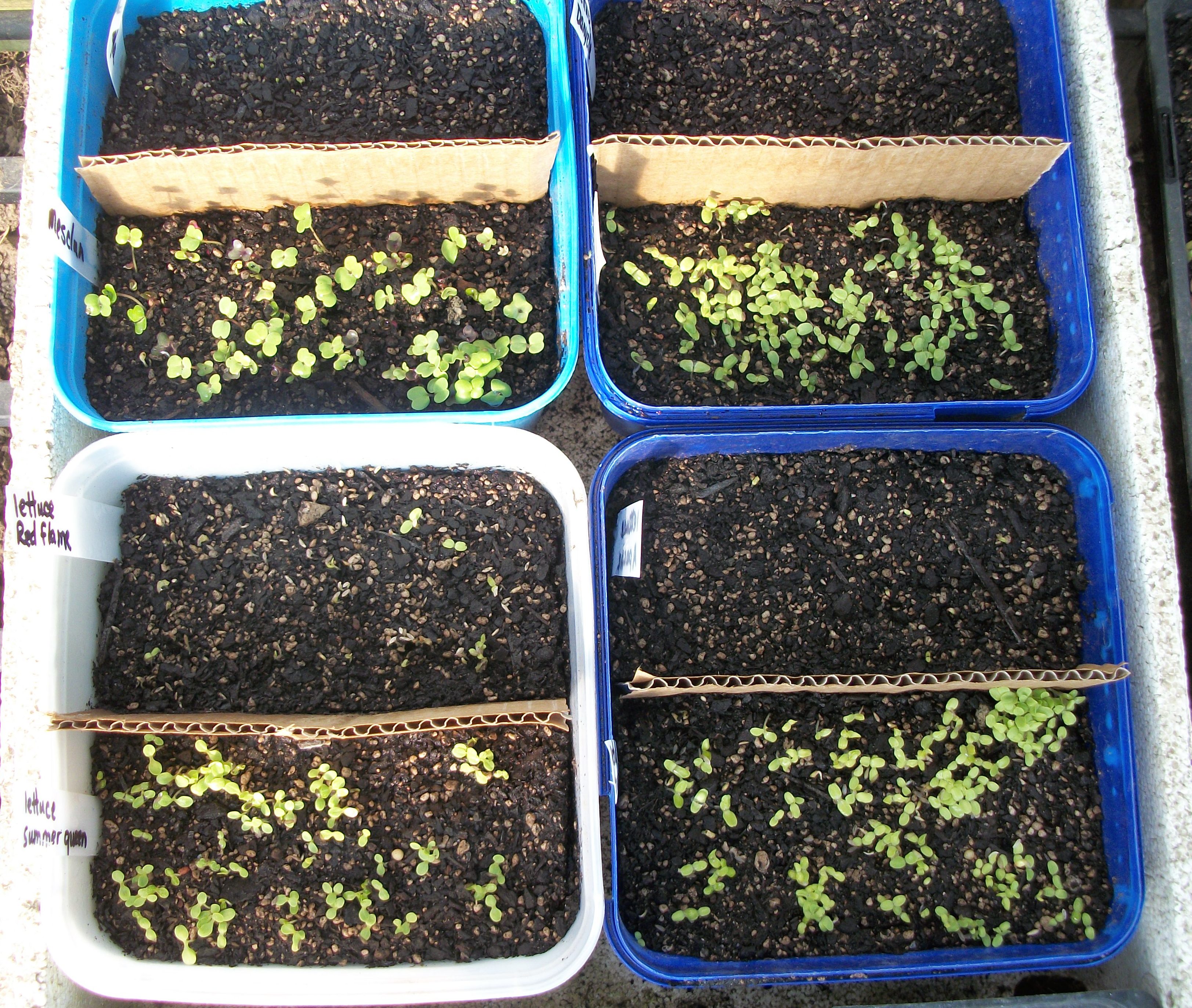
100_3612The greenhouse and the first of the garden beds have been cleared of weeds and prepared to receive plants!

The first plants to go into the greenhouse won’t stay there long. They are the early crops that need just a little extra warmth now, but will be planted out into the garden in just a few weeks. These plants have spent the past week in my office, with a little overnight heat to help the seeds germinate. Now they’ve moved to the greenhouse, making way for the late season crops in the office.

I start the vast majority of my vegetables indoors, because I get much better and more even germination there, and it protects the seeds and very young seedlings from the voracious birds and slugs that prowl the garden.

Over the past two weekends, I’ve planted the following in seed trays:


Broccoli (de Cicco)

Cabbage (Puma)

Pak Choi (Joi Choi)

Broccoli Raab (Spring rapini)

Cauliflower (Snowball)

Pepper (Jalapeño Early)

Pepper (Marconi Red)

Pepper (Thai Super Chilli)

Pepper (Mini-Stuffer)

Pepper (Muscato)

Pepper (Cabernet)

Eggplant (Tsatsoniki)

Eggplant (Tokyo Black)

Eggplant (Eclipse)

Snow Pea (Goliath)

Sugar snap pea tall

Blue Shelling Pea

Lettuce (Danyelle)

Lettuce (Merveille de quatre saisons)

Lettuce (mesclun mix)

Lettuce (Red Flame)

Lettuce (Summer Queen)

Lettuce (Drunken Woman Fringed Head)

Lettuce (Apache)

Arugula

Spinach (Santana)

Spinach (Bloomsdale)

Spinach (Red Stem)

Onion (Stuttgart Long Keeper)

Onion (Red Amposta)

Spring onion (Ishikura)

Shallot

Cilantro (slow bolt)

Celeriac

Gogi berry

Dill (bouquet)

Cape gooseberry

Fennel (Florence)

Fennel (Sweet Leaf)

Celery (Elne)

Celery for cutting

Parsley (Gigante Italiano)

Parsley (Green Pearl)

Tomato (Amish Paste)

Tomato (Indigo Rose)

Tomato (Window box red)

Tomato (Bloody Butcher)

Tomato (Beefsteak)

Tomato (Brandywine pink)

Tomato (Russian Red)

Tomato (Pear Blend)

Tomato (Delicious)

Beet (Detroit Dark Red)

Turnip

Chard (Cardinal)

Basil (Amethyst)

Basil (Sweet Genovese)

Basil (Thai Siam Queen)

Tomatillo

And a bunch of flowers I won’t list…

For a total of about 1300 plants.

Many more to come…

Pastry for Science

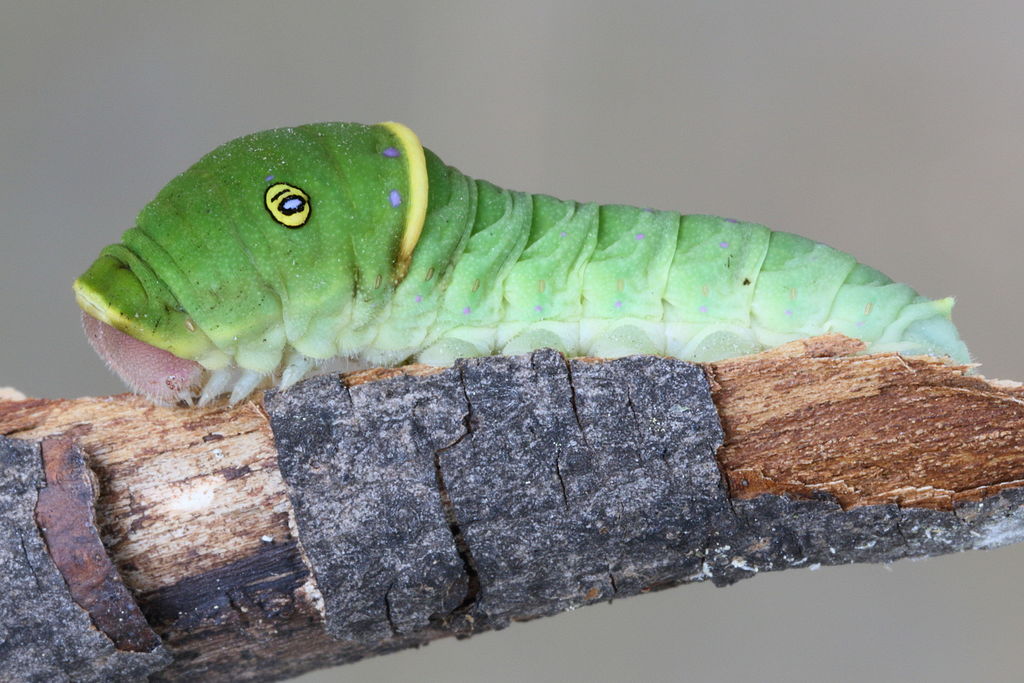
Photo: Simon Pierre Barrette

Photo: Simon Pierre Barrette

Yes! The next time anyone questions my predilection for pastry, all I have to do is say I’m making it for science!

Researchers at Carleton University in Ontario made fake caterpillars from pastry in order to test the importance of the visual components of the tiger swallowtail caterpillar’s defence strategy (which is to look like a snake). The pastries were popular with birds, until they painted snake eyes on them. But young birds could learn that pastry with snake eyes was tasty, too, and then would only avoid pastry with eyes and the shape of a snake.

The researchers conclude that the combination of features the swallowtail caterpillar uses is a result of the selective pressure of smart birds, who aren’t fooled by imperfect disguises.

I might conclude that birds like pastry just as much as I do!

Upside Down Cake

100_3609 smI don’t make it often, but I love upside down cake. Nectarines are possibly my favourite fruit in the topping, though pears and peaches are excellent, too. Really, how can you go wrong with butter and sugar-drenched fruit on top of cake?

At this time of year, the best I could do was a jar of black boy peaches that I put up over the summer, and that was just fine!

And with a bit of whipped cream left over from pumpkin pie the other night…hard to beat!

Where the sidewalk ends

100_2204 cropFriday afternoons, my daughter and I have two hours to kill in the city between band practices. We usually pass the time by going for a walk. But neither of us likes walking on busy city streets, so we usually drive somewhere close enough that we can walk out of town.

There is a wealth of these magical spots, particularly around the hills, where the city is patchy and interspersed with steep valleys.

Today, we walked from a tidy little neighbourhood of small houses built sometime in the 1960s on the broad flat at the mouth of a valley. We climbed out of the neighbourhood toward the head of the valley, passing houses of decreasing age and increasing size, until we were walking past brand new houses of immense proportions, with wide expanses of plate glass overlooking the valley. Then a few skeletal houses, surrounded by scaffolding, and then no more.

At some point along the way, the road narrowed and the sidewalk petered out. Paddocks full of beef cattle spread out below us, and bush-covered slopes rose above. Bellbirds sang in the afternoon light.

The road narrowed to one lane, and a sign warned motorists that there were no further turning spots and no exit. We walked on until we reached the farm at the end of the road, a vineyard spread out below on the valley floor.

The sound of traffic was just a distant hiss, and I contemplated what it must be like to be the last farmer in this valley, holding out at the end of this long road, with no way in or out, save through the city.

It must be terribly isolating—as much as being on a remote station. None of this farmer’s neighbours share his or her interests, concerns, or outlook on life—they are all townies on their lock-it-and-leave-it properties. They know nothing of calving, fencing, or weed control. They don’t notice when there has been too much or too little rain. Their only concern with a late frost is whether it means the ski fields will be able to stay open another week.

It can’t be easy to stay in that sort of situation, and I admire the farmer that can hold on in the face of the encroaching city. Too soon, I fear they will be gone.

PV=nRT

100_3593 smAnything can become an occasion for a science lesson in our house (much to our children’s dismay, I’m sure). Today it was pumpkin pie.

The pumpkin pie recipe I use has stiffly beaten egg whites in it. So, of course, it puffs up dramatically in the oven, coming out looking like a great big orange pillow. As it cools, it falls.

It’s the perfect physics lesson to explain the Ideal Gas Law! And my daughter fell right into it when she asked, “Why does it puff like that?”

If you’re not familiar with the Ideal Gas Law, here it is:

PV=nRT

Where P=pressure, V=volume, n=amount, R=ideal gas constant, and T=temperature of the gas.

From this equation, we can clearly see that, as the air in the bubbles of egg white heats up, the volume of the air will increase (assuming, of course that the bubbles themselves can expand and maintain a relatively constant pressure, which egg white does beautifully), causing the pie to puff. As it cools, the air decreases in volume, and the pie falls.

Proving that understanding thermodynamics is easy as pie!

Weeds, weeds, weeds!

DSC_0001 smI was surveying the vegetable garden the other day, contemplating the winter’s crop of weeds. It’s not a pastime calculated to bring out good thoughts.

I have identified 57 weed species in the garden. Most of the weeds are not a big problem. Nettles, while irritating, are easily removed (and they’re food plants for two lovely native butterflies, so that’s okay). Clover, difficult to remove from around vegetables, is easily hoed out of a bare garden. Dock and mallow, even with their long taproots, come up without difficulty in the soft wet soil of spring. California thistles…well, I can at least pretend, at this time of year, that I’m getting them out deep enough that they won’t just resprout.

Then there’s twitch (couch grass). Twitch is the bane of my existence, and gains ground all winter. It creeps in from the edges of the garden and seeds itself into the middle. It is impossible to remove from the packed earth of the paths, and even the smallest piece of a runner left in the ground (or even on the surface) will resprout.

And twitch isn’t something you can just ignore, like shepherd’s purse or henbit. If it goes unchecked, it can wreak havoc in the garden. It sucks moisture, and can sprout thick as the hair on a dog’s back overnight, smothering even good-sized vegetables.

One year, I ignored twitch in the potato bed, thinking that the potatoes would shade it out. I only realised my error when I harvested the potatoes. They were shot through with twitch roots!

My annual struggle with twitch will start soon—probably this coming weekend. I will be sharpening my tools in preparation for the battle.

Strawberry Banana Smoothies

100_3588 smI found another excellent way to use my frozen strawberries today—smoothies!

I make a lot of strawberry smoothies during strawberry season—they are the after-school snack of choice at that time of year—but have never used frozen berries before. After trying it today, I’ll have to make sure I freeze more berries this year!

I had a couple of overripe bananas today, so I figured I’d throw them into the mix, too. The result was delicious! Here’s my recipe. The amounts are approximations—I never actually measure anything for smoothies.


For 4 servings (or 3 very generous ones), place in a blender:

3-4 cups strawberries (mostly thawed if frozen)

2 bananas (broken into pieces)

2 Tbsp honey

¼ tsp vanilla

Pour in milk until it covers about three-quarters of the fruit.

Blend until smooth and frothy.

Enjoy!