Phalanx of Gulls

2016-04-18 14.50.46 cropThey normally announce their presence with raucous calls, but these were silent but for the faint hiss of feather on feather as they beat their wings. It was the hiss that made me look up, and I was surprised to see so many gulls being so quiet. Several hundred flew low overhead.

On their way from one freshly ploughed field to another, I suppose there was no need for conversation.

One lone gull cawed once. And the rustling wings moved on.

Jack-o-lanterns

2016-04-17 11.17.03 smWhile you folks in the Northern Hemisphere are cleaning out your pools, dusting off the barbecues and planting seeds, we in the South are enjoying all that autumn has to offer.

And something we always look forward to is carving pumpkins. Growing up in the US, it was one of my favourite Halloween activities. Here pumpkin season falls inappropriately near Easter.

That doesn’t stop us from celebrating the season with jack-o-lanterns.

All my pumpkins are grown for food, but the edible part of the Austrian oilseed pumpkin is its seeds—the flesh is only suitable for goat food (and even the goats aren’t excited by it). So once I scoop out the delicious seeds, I have no problem using the shells for artistic purposes.

A nice crop of Austrian oilseeds this year means there is plenty of raw material for our artwork.

Naked Ladies

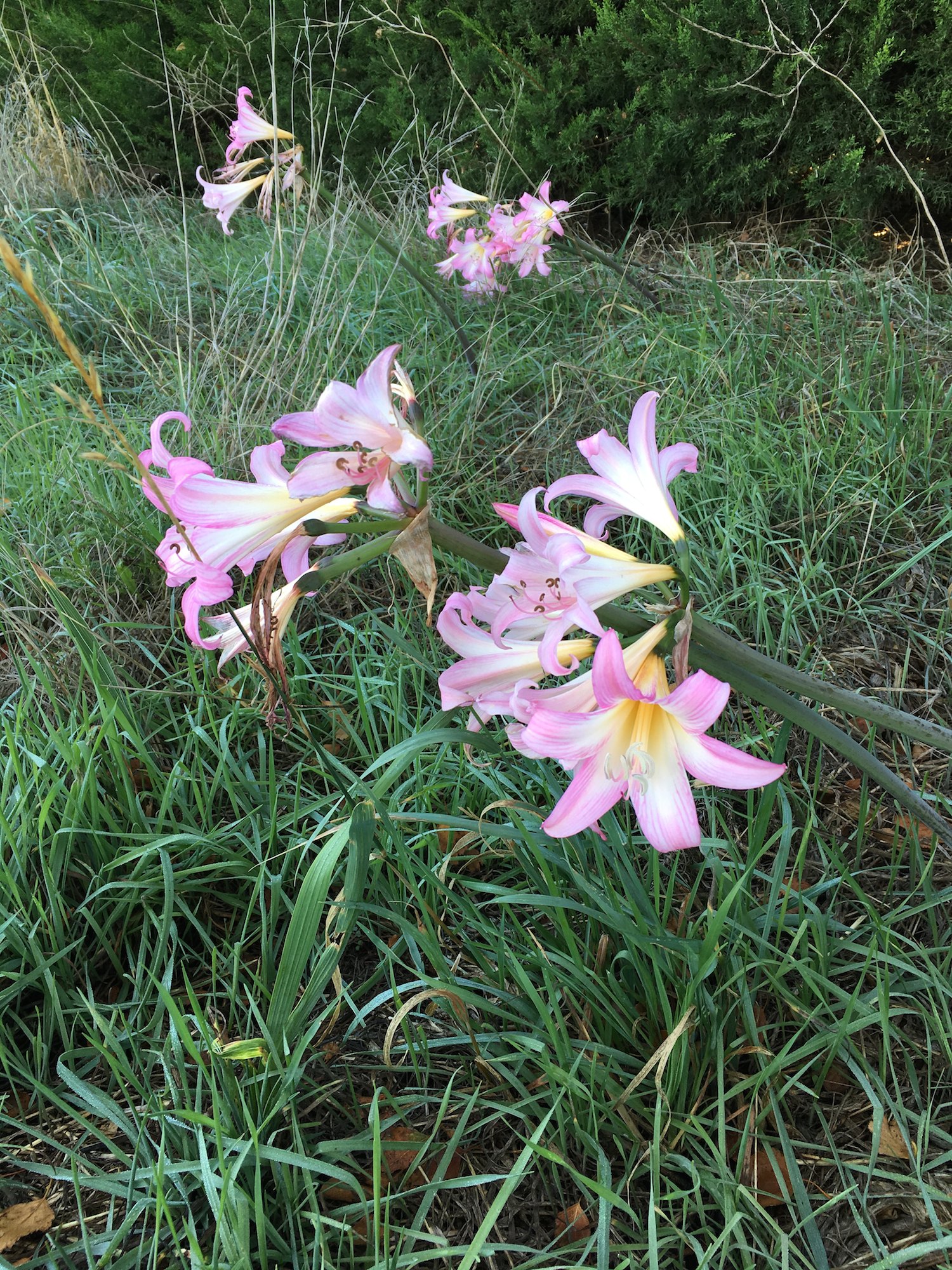
2016-04-14 08.43.56 smDo I need to say more?

These are some of the most delightful flowers in our yard. When we first moved in, there was a row of non-descript green plants in front of our hedge. They were uninspiring. I planned on removing them.

The plants died back over summer. We mowed the remains down.

Then one day I looked out to see a row of gorgeous pink blooms! What a lovely surprise! When I described them to my mother, she immediately said, “Oh! Naked ladies!” My response was, of course, to giggle. But the name is apt, as these lovely ‘girls’ bloom long after the leaves have died back.

We did end up removing the naked ladies…in order to put them in a better spot, as the hedge was smothering them. Every year, I forget they are there, and every year I have the joy of heading outdoors one day and finding them in bloom.

They make me smile. What more can you ask from a flower?

Touched by Frost

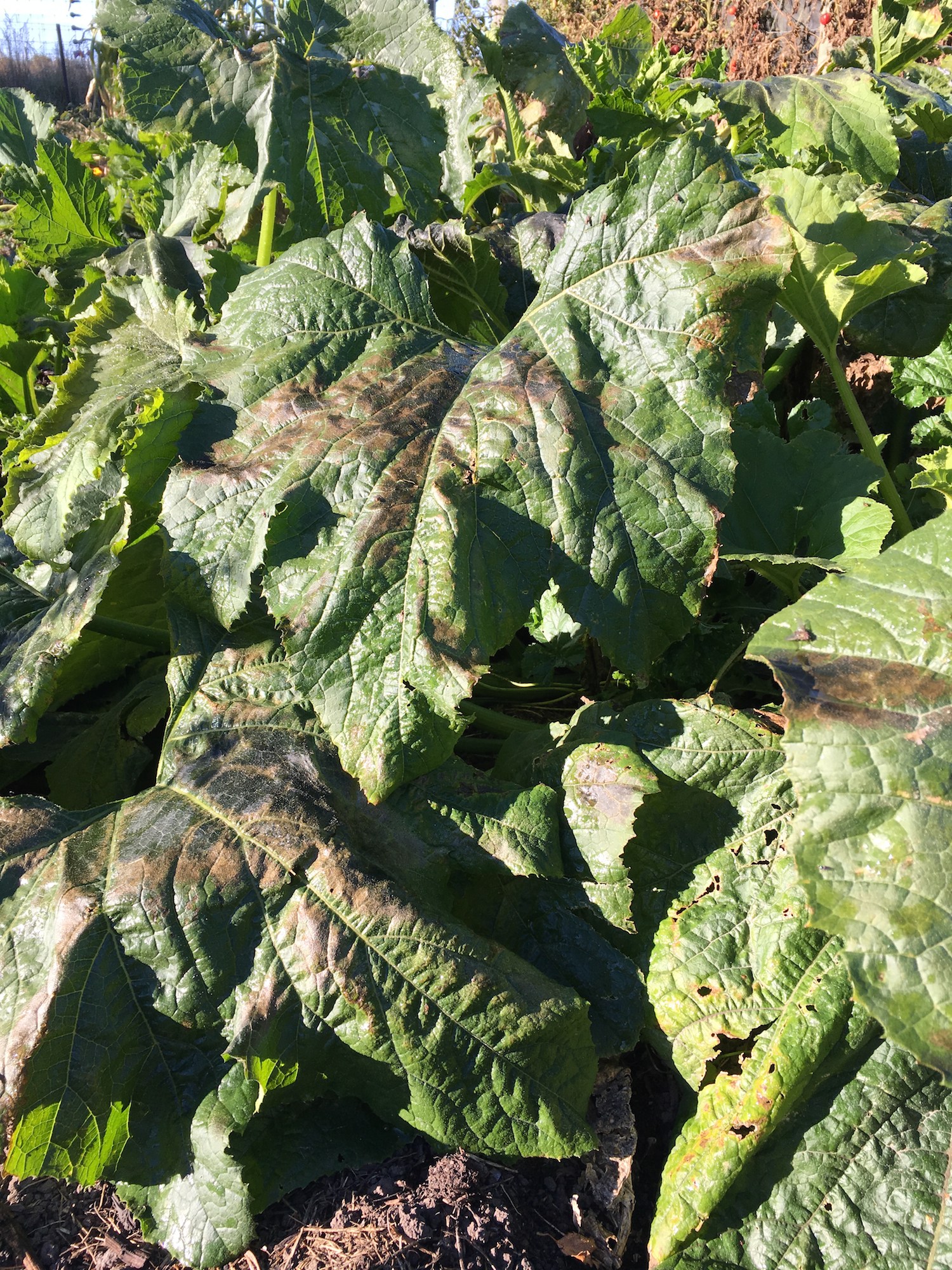
2016-04-14 08.42.53 smIt happened. The first frost hit the vegetable garden. Not hard, but enough to show. Most of the tender and unprotected plants were already done for the year, anyway—the tomatoes had largely succumbed to drought, the cucumbers had given up, the melons were done, the pumpkins were already harvested, and the basil had gone to seed. The summer squashes were only lightly touched—a few of the leaves browned, but most of the growing tips in good shape.

Of course, at this time of year, any day could be the last.

So we savour each day—enjoying the tastes of summer while they last.

Daylight Savings Cat

None the worse for wear.

None the worse for wear.

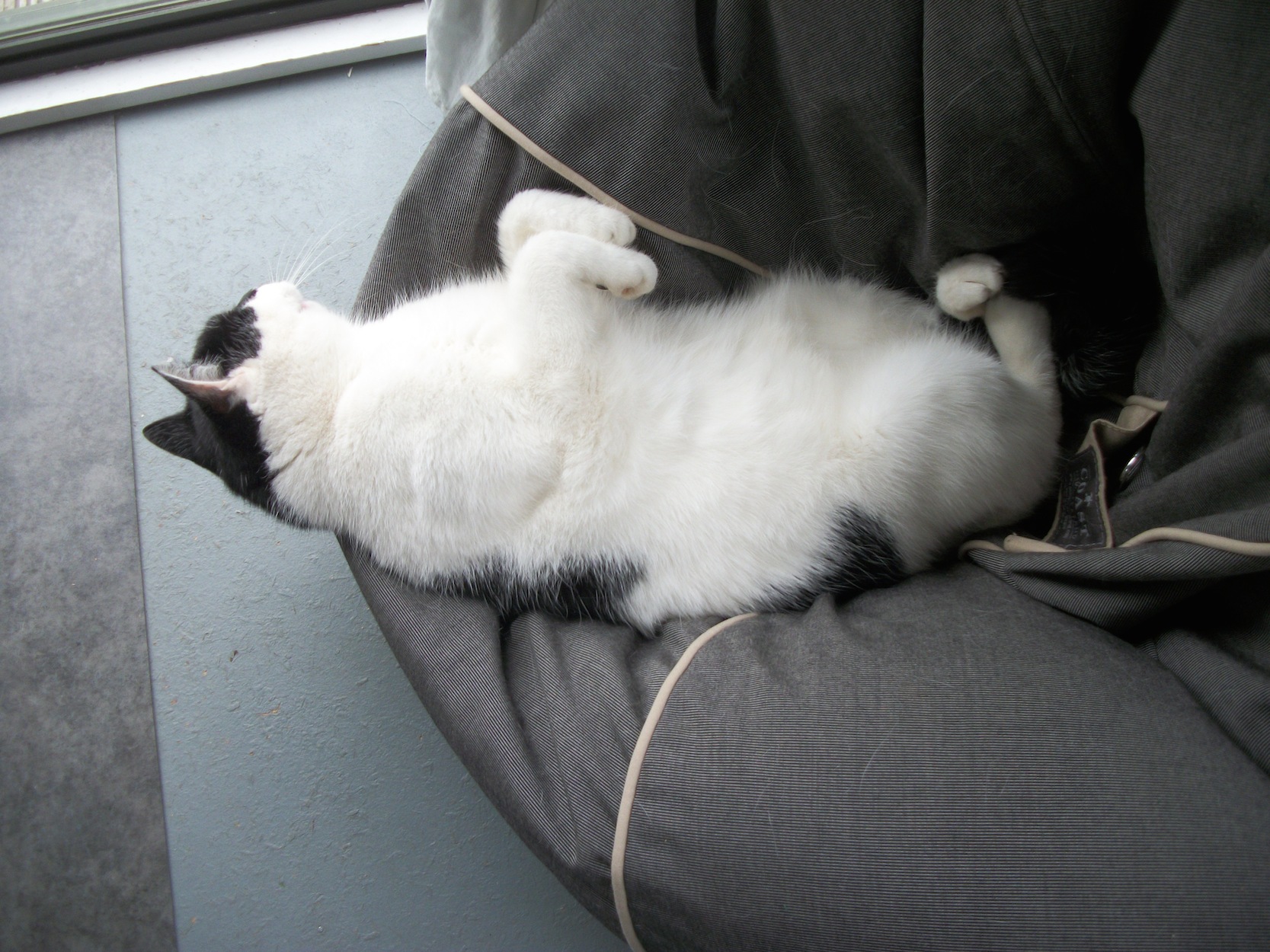
The cat has been particularly annoying lately. Usually he meows at my bedroom window around five am to be let in.

But when we came off daylight savings time last week, he refused to change his schedule. And out of spite, he even started meowing earlier, which means he’s been waking me up before four am for a week.

Ignoring him only makes it worse. If I don’t get up and start my day when the cat calls, he hurls himself at the front door until I do.

I can ignore a meowing cat, and even fall back asleep if I try. I can’t ignore seven kilos of fury rattling the front door for an hour.

So this morning when my eyes opened at 4.30 am I was surprised it was so late. All was quiet, and for ten minutes I lay blissfully thinking the cat had finally gotten the message about daylight savings time. I was just drifting back to sleep when I remembered…

About 4.30 pm yesterday, I was balanced on the top of a ladder, hanging a sack of pumpkins on a rafter in the shed. The cat was slinking around in the shed, and the wind blew the door shut. I remember seeing his tail slip in, just before the bang.

I never let him out.

Darn cat. Even locked in a shed forty metres from the house, he was able to get me out of bed early.

Because, once you realise your daughter’s cat has been locked in a shed for twelve hours, you can’t lounge around in bed enjoying the quiet.

Stormy Weather

Somewhere out there...

Somewhere out there…

Don’t know why
There’s no internet or wi-fi
Stormy weather…

Rural life is great, but these days, when so much of our lives revolve around connecting with others via the internet, rural living can be a lesson in frustration.

Not only does our normal “broadband” speed make us wax lyrical about dial-up, but on rainy days, we’re lucky to connect at all.

Our internet comes to us via a transmitter on the Port Hills, about 50 km away. The receiving dish on the roof must have line-of-sight access to that transmitter in order to receive a signal. Installing it required cutting down two trees that were in the way, and involves regular trimming of a bush that threatens to grow too tall.

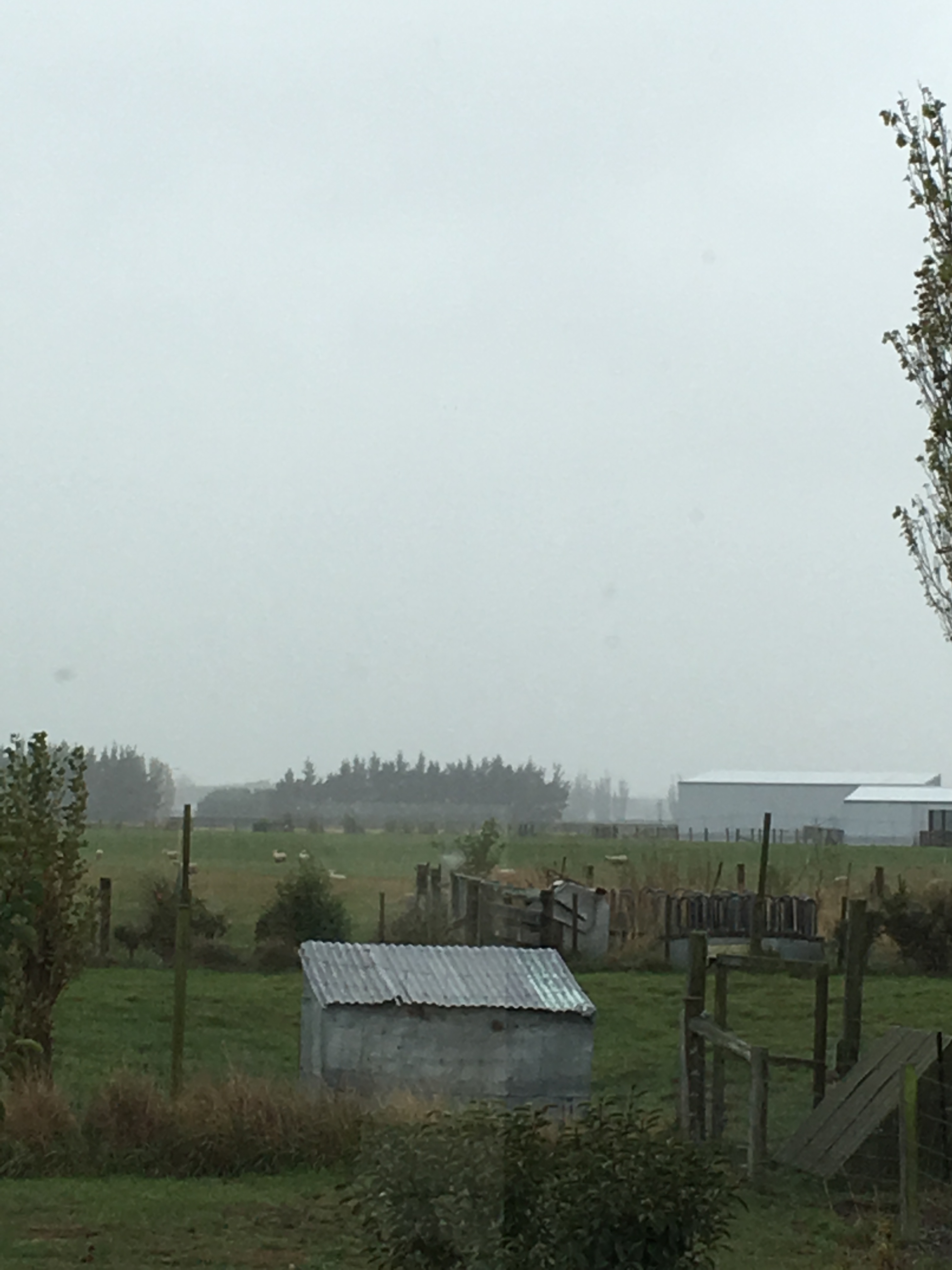
It also means that when there’s a lot of rain between us and the transmitter—particularly if it’s a fine, misty rain—we get no internet signal. Compound that with the fact that our phone line now goes through the internet, and rainy days cut us off from the world.

Enter today’s weather—exactly the sort of fine, misty rain that isolates us. Want to do some research? You’re stuck with whatever books you’ve got in the house. Want to ring the vet? Not today. Post your blog? Not likely. Check your e-mail? Forget it.

Makes it a good day for writing, I suppose.

And if I’m lucky, the rain will clear briefly so I can post this blog…

Corn

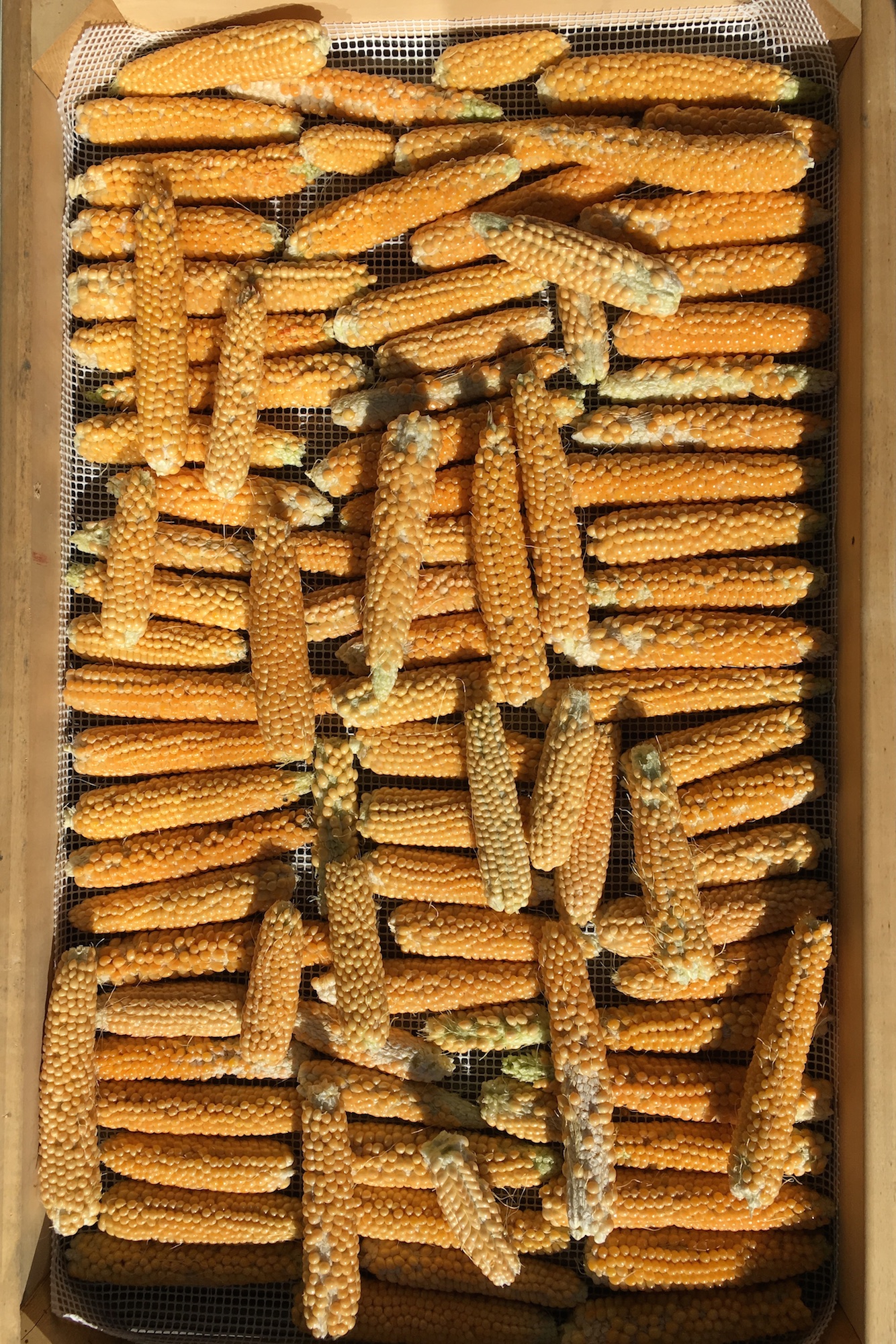
This year's popcorn harvest.

This year’s popcorn harvest.

What would life be without it?

Even ignoring the highly processed corn oil and corn sugars found in so many products, what would a movie be without a big bowl of butter-laden popcorn?

What would chilli be without a slab of corn bread to go with it?

What would summer be without corn on the cob?

And how dull life would be without polenta, corn dodgers, corn chowder, corn and pea succotash, roast corn, caramel corn, tacos and tortillas, nachos…

And then, there’s chicha fuerte…

Um…well…we can just forget chicha fuerte. It’s a corn alcohol brewed in Panama. Tastes a bit like vomit, and even a sip leaves you with a hangover the next day.

But hurrah for all the other forms of corn!

Many thanks to the people in what is now Mexico who bred corn from its ancestor, teosinte, about 9000 years ago! I doubt they had any idea how ubiquitous corn would become, but they hit on a winner.

Pumpkins

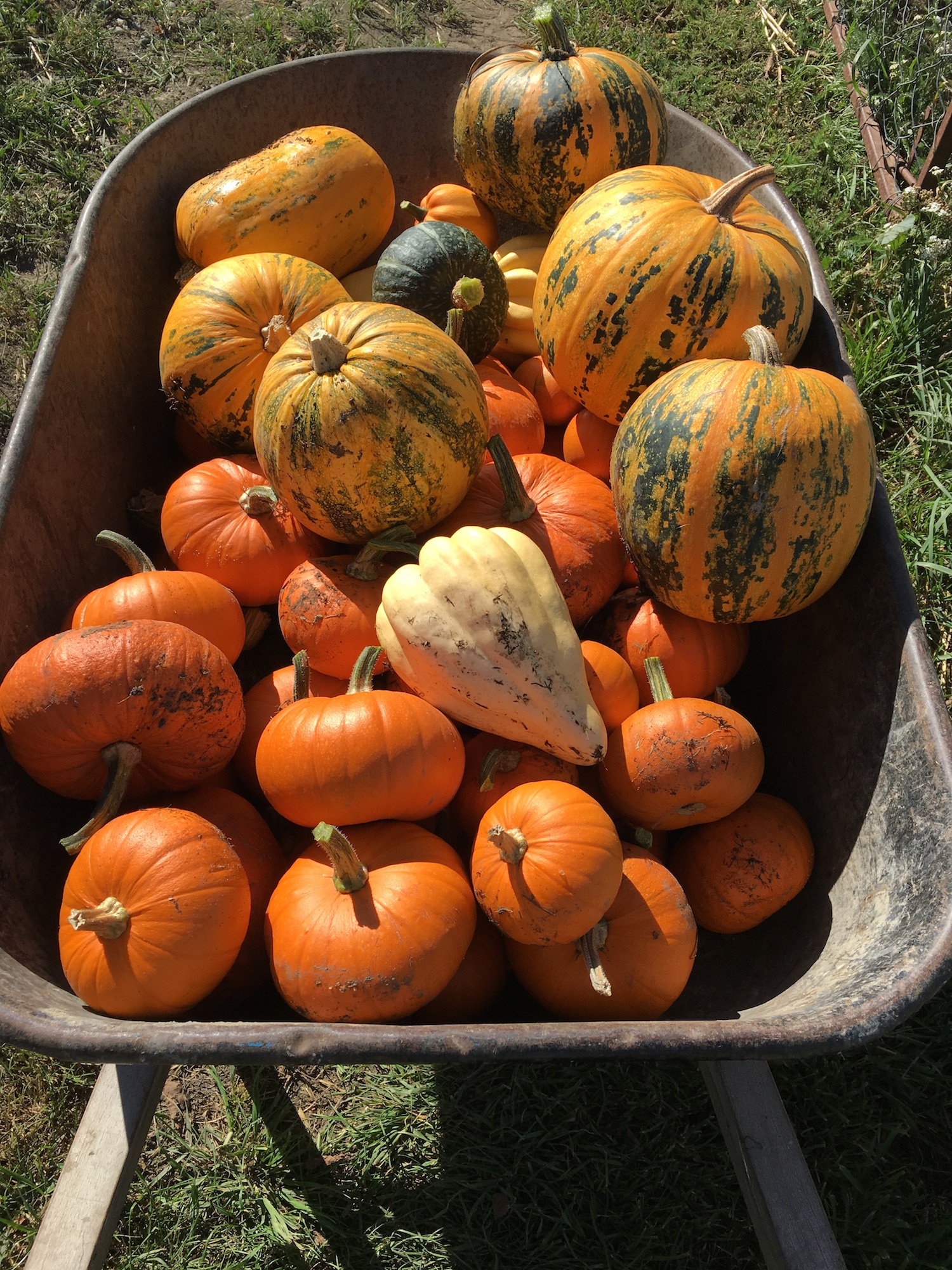
About a third of the harvest.

About a third of the harvest.

Autumn wouldn’t be complete without the requisite wheelbarrow loads of pumpkins and other winter squash. In spite of some late-frost drama this spring, the harvest wasn’t bad.

My kids ask every year, “Which are the pumpkins and which are the squash? What makes a pumpkin a pumpkin?”

The short answer is that a pumpkin is a squash that we call a pumpkin. There are four species and countless varieties that variously get called pumpkin and squash. Some fruits are known as pumpkins in one place, and squash in another.

I don’t bother with the distinction. The important distinctions are between varieties. Some are best made into soup, others make splendid pies. Some have robust, dry flesh that holds up well in savoury galettes. Some are just the right size for baking whole. Some keep well, and others need to be eaten quickly after harvest. Some have flesh only useful as goat food, but have naked seeds that are wonderful toasted with salt and spices.

Which is, of course, how I justify planting so many pumpkins of so many varieties. I need them all!

The Aphipocalypse

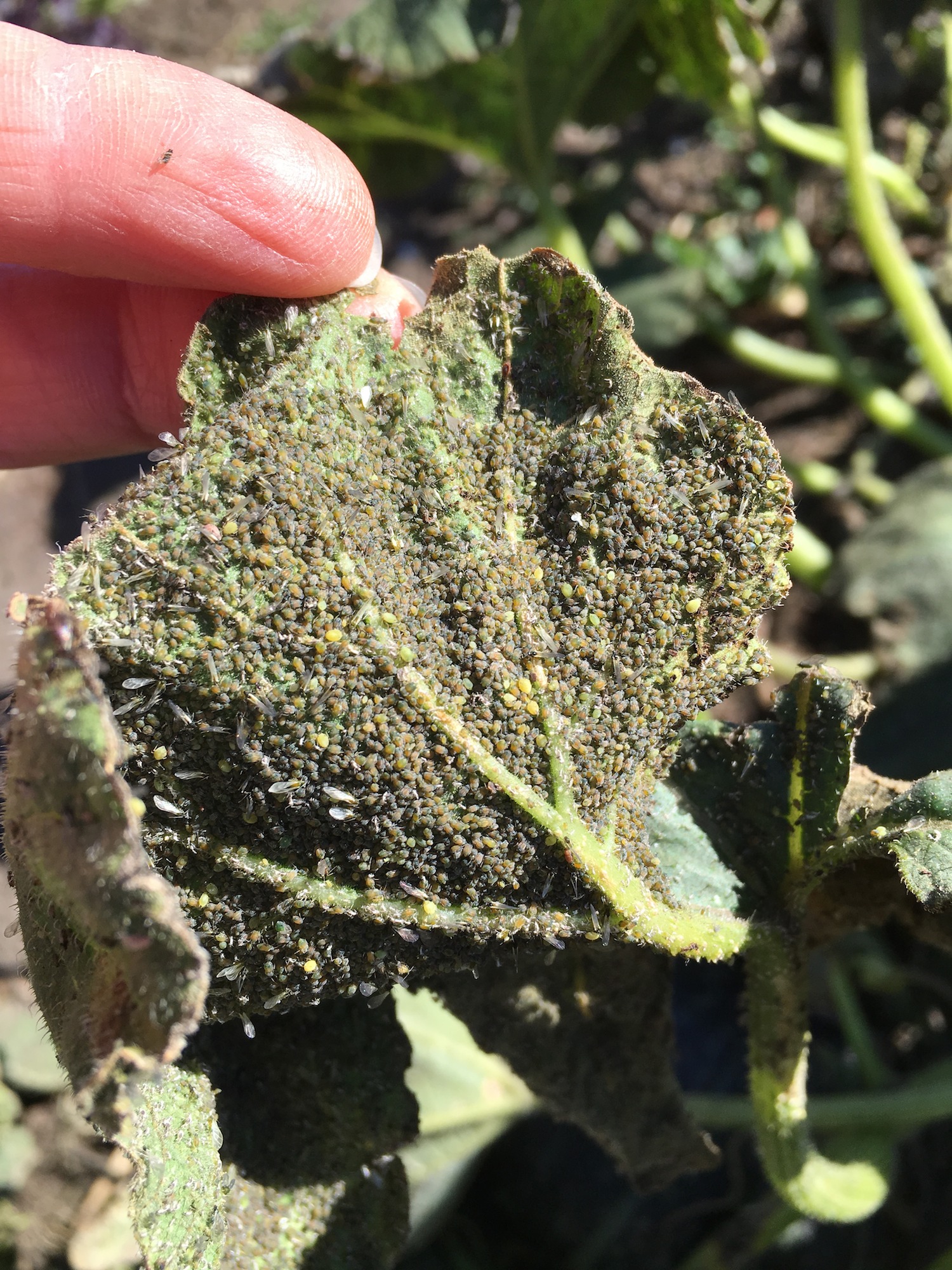
2016-04-09 11.19.43 smIt has been years since I’ve seen an aphid infestation quite this bad, and rarely at this time of year.

As I’ve mentioned before on this blog, I usually have aphids in early spring, and then the predators and parasitoids knock them back to almost nothing through the summer.

But somehow, the predators and I all missed the aphids on the pumpkins. I expect the warm dry summer was perfect for their growth. I rarely take note of the pumpkins from December to April—they need little weeding, and are generally pest free.

So when I went to harvest, it was a bit of a surprise to find millions of aphids on the underside of nearly every leaf in a back corner of the pumpkin patch.

All summer, the aphids have been cloning themselves, producing dozens of replicas every week—an army of little green girls. Only girls. It wouldn’t have taken them long to build up the population level out there right now. Some of the generations of aphids had wings (you can see some on the left side of the leaf in the photo), and dispersed to other plants, but most stayed put, slowly spreading across one leaf after another.

But, as big as the population is today, they will all die over winter. About this time of year, the females will start producing a few males—also genetically identical to themselves, with the exception of a missing sex chromosome. Only in the fall will females mate and produce eggs. The eggs will overwinter, hatching out in spring (all female) to start the cycle over again.

I think I won’t wait for these girls to lay eggs. I’m afraid that, now that the pumpkins are gone, the infested vines will be dunked in a bucket of soapy water and buried deep in the compost pile. No sense in letting them get a head start on next spring!


Unicycle

2016-04-08 15.50.22 smThe girl was saving up her money.

I should have known she was aiming for something like this. Metre-and-a-half high stilts weren’t enough, nor juggling balls, nor devil’s stick, nor diabolo, nor feats of strength and flexibility.

It arrived in the mail today, and in spite of a looming piano recital, she assembled it after school and spent her potential practice time repeatedly throwing herself off the seat and onto her backside, laughing the whole time.

She’s clearly preparing for the day she’ll run away to the circus.

If she keeps it up, she’ll be able to start her own one-person circus.