Greek Salad

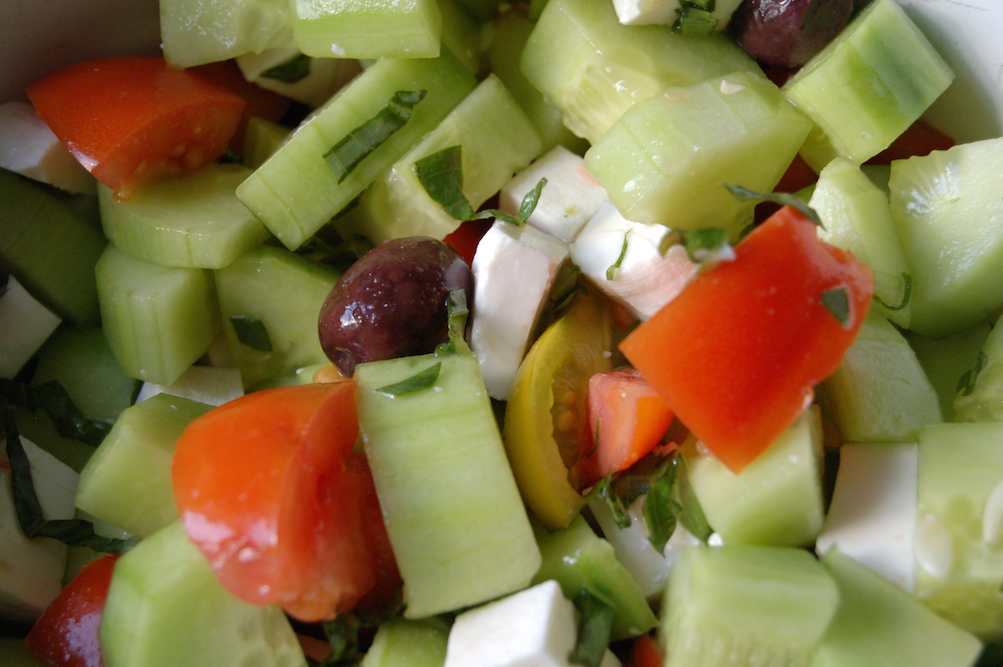
Greek salad3 smIt was a raw, overcast day today, and I spent most of it outdoors. So I thought I’d do a little summer dreaming for today’s blog to warm me up.

Dreaming about Greek salad—the essence of summer.

Fresh tomato (preferably Brandywine),

Fresh cucumber,

Homemade feta (from our own goat milk),

Big, fat black Kalamata olives,

Fresh basil,

Balsamic vinegar,

South Lea olive oil, made just down the road.

Serve it with some crusty homemade bread and a glass of wine.

Nothing could be better!

Mushroom Leek Tart

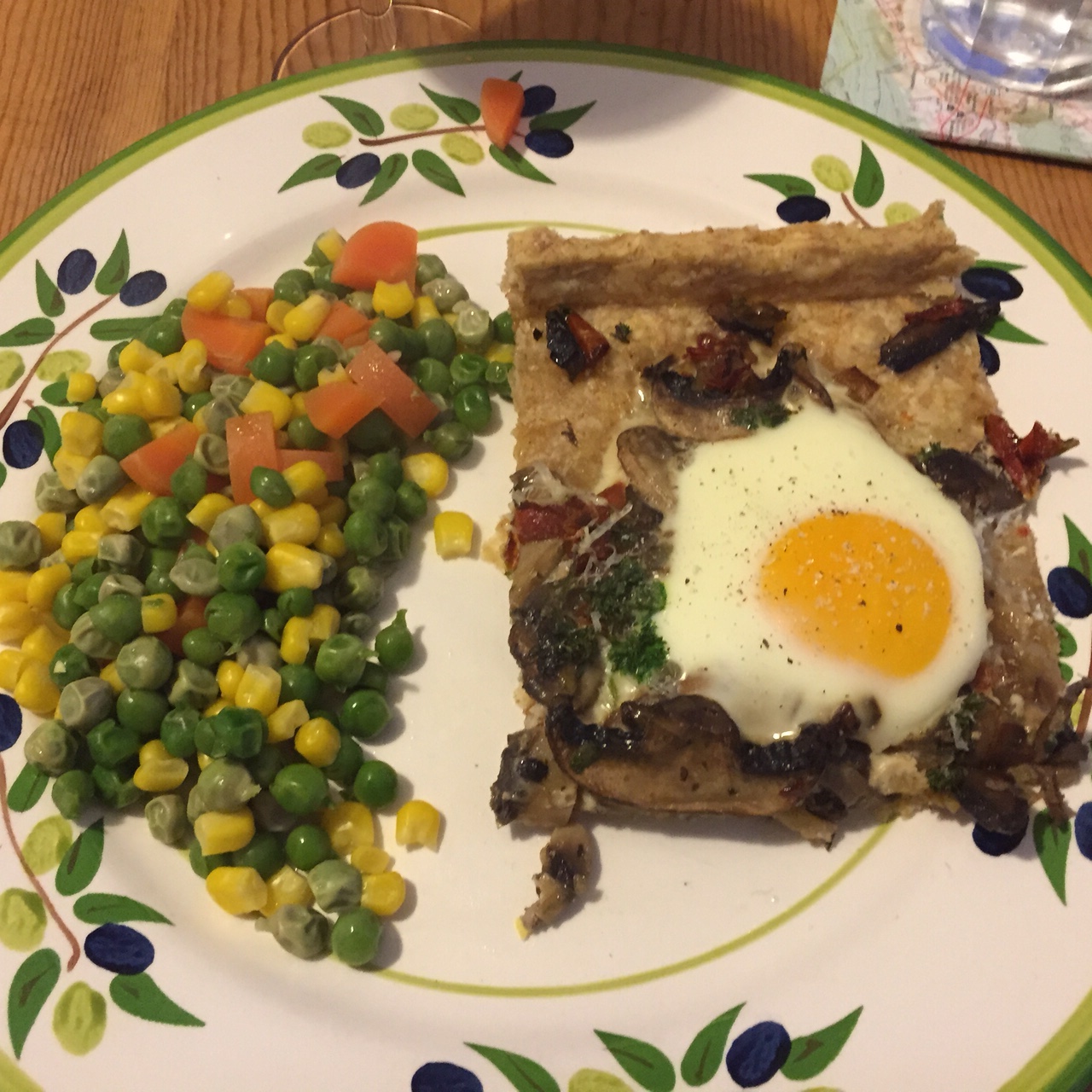
IMG_3455Driving home today with a kilo of mushrooms in the car, I devised the following mushroom and egg tart for dinner.

It was delicious!

Approx. 1 kg fresh mushrooms, sliced (I used buttons and portabellas)

10-15 g dried porcini, soaked 30 min in hot water

4 small leeks, sliced

small handful dried tomato, chopped roughly

Fresh thyme, rosemary, and parsley to taste

½ c. grated parmesan cheese

8 med eggs

salt and pepper to taste

Sauté leeks, mushrooms, tomatoes, rosemary and thyme over medium heat until well-cooked, and the mushroom liquid has evaporated. Add salt and pepper to taste.

Make pastry for a double crust pie. Roll it out in one large sheet and line a jelly roll pan with it.

Sprinkle half the cheese over the crust. Then spread the mushroom mixture evenly over the cheese. Top with the remaining cheese.

Crack the eggs onto the tart, one at a time, arranging them neatly across the tart.*

Bake 20 minutes at 190°C (375°F). Allow to cool for 5-10 minutes before serving.

*If I made this again, I’d bake the tart for 10 minutes, then add the eggs—20 minutes is a bit too long for the eggs.

Garden Update–24 August

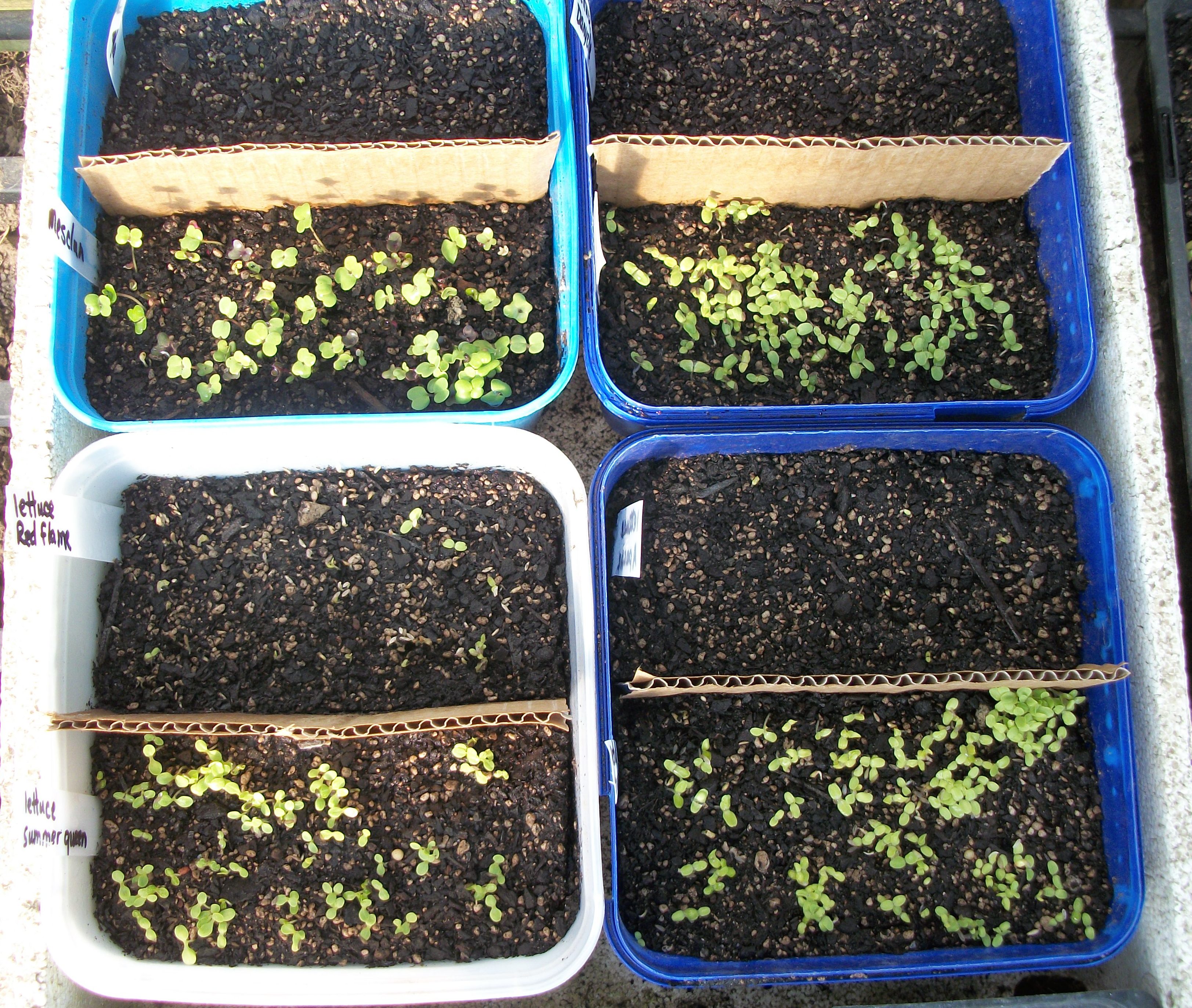
100_3612The greenhouse and the first of the garden beds have been cleared of weeds and prepared to receive plants!

The first plants to go into the greenhouse won’t stay there long. They are the early crops that need just a little extra warmth now, but will be planted out into the garden in just a few weeks. These plants have spent the past week in my office, with a little overnight heat to help the seeds germinate. Now they’ve moved to the greenhouse, making way for the late season crops in the office.

I start the vast majority of my vegetables indoors, because I get much better and more even germination there, and it protects the seeds and very young seedlings from the voracious birds and slugs that prowl the garden.

Over the past two weekends, I’ve planted the following in seed trays:


Broccoli (de Cicco)

Cabbage (Puma)

Pak Choi (Joi Choi)

Broccoli Raab (Spring rapini)

Cauliflower (Snowball)

Pepper (Jalapeño Early)

Pepper (Marconi Red)

Pepper (Thai Super Chilli)

Pepper (Mini-Stuffer)

Pepper (Muscato)

Pepper (Cabernet)

Eggplant (Tsatsoniki)

Eggplant (Tokyo Black)

Eggplant (Eclipse)

Snow Pea (Goliath)

Sugar snap pea tall

Blue Shelling Pea

Lettuce (Danyelle)

Lettuce (Merveille de quatre saisons)

Lettuce (mesclun mix)

Lettuce (Red Flame)

Lettuce (Summer Queen)

Lettuce (Drunken Woman Fringed Head)

Lettuce (Apache)

Arugula

Spinach (Santana)

Spinach (Bloomsdale)

Spinach (Red Stem)

Onion (Stuttgart Long Keeper)

Onion (Red Amposta)

Spring onion (Ishikura)

Shallot

Cilantro (slow bolt)

Celeriac

Gogi berry

Dill (bouquet)

Cape gooseberry

Fennel (Florence)

Fennel (Sweet Leaf)

Celery (Elne)

Celery for cutting

Parsley (Gigante Italiano)

Parsley (Green Pearl)

Tomato (Amish Paste)

Tomato (Indigo Rose)

Tomato (Window box red)

Tomato (Bloody Butcher)

Tomato (Beefsteak)

Tomato (Brandywine pink)

Tomato (Russian Red)

Tomato (Pear Blend)

Tomato (Delicious)

Beet (Detroit Dark Red)

Turnip

Chard (Cardinal)

Basil (Amethyst)

Basil (Sweet Genovese)

Basil (Thai Siam Queen)

Tomatillo

And a bunch of flowers I won’t list…

For a total of about 1300 plants.

Many more to come…

Pastry for Science

Photo: Simon Pierre Barrette

Photo: Simon Pierre Barrette

Yes! The next time anyone questions my predilection for pastry, all I have to do is say I’m making it for science!

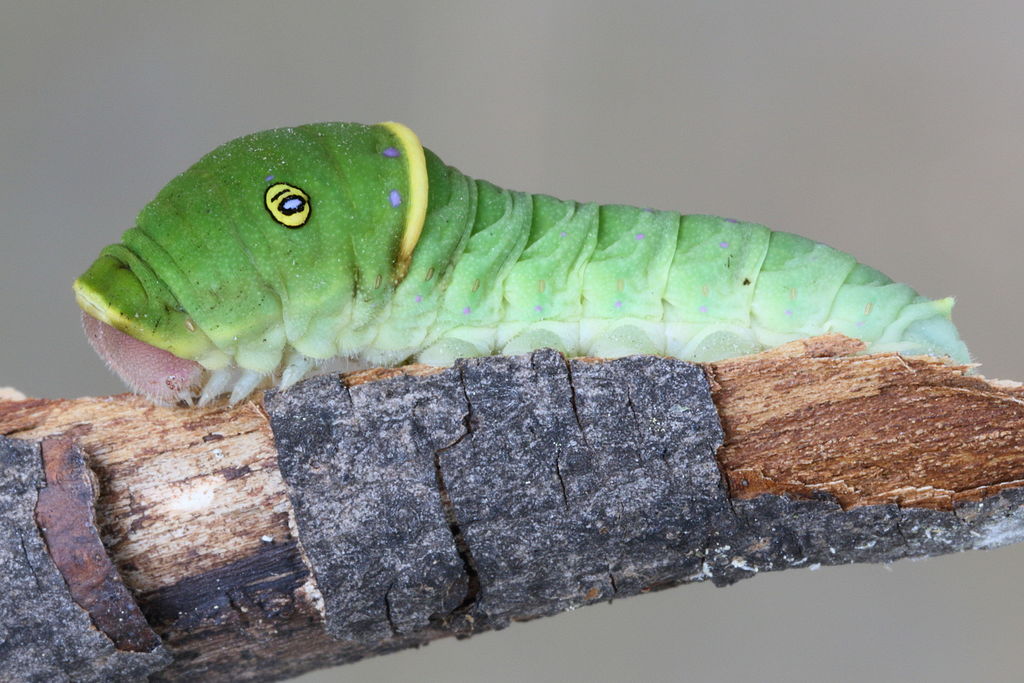
Researchers at Carleton University in Ontario made fake caterpillars from pastry in order to test the importance of the visual components of the tiger swallowtail caterpillar’s defence strategy (which is to look like a snake). The pastries were popular with birds, until they painted snake eyes on them. But young birds could learn that pastry with snake eyes was tasty, too, and then would only avoid pastry with eyes and the shape of a snake.

The researchers conclude that the combination of features the swallowtail caterpillar uses is a result of the selective pressure of smart birds, who aren’t fooled by imperfect disguises.

I might conclude that birds like pastry just as much as I do!

Upside Down Cake

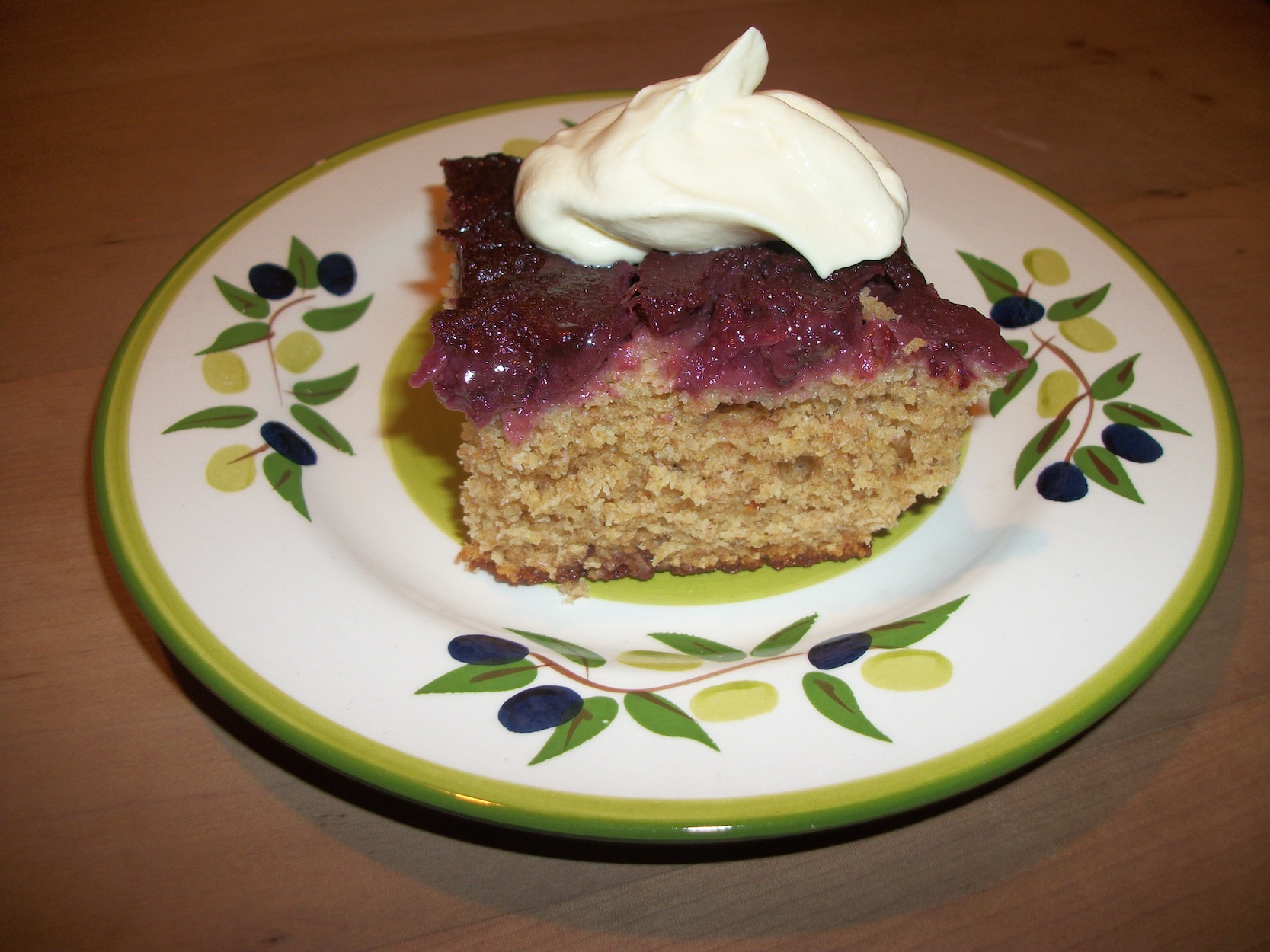
100_3609 smI don’t make it often, but I love upside down cake. Nectarines are possibly my favourite fruit in the topping, though pears and peaches are excellent, too. Really, how can you go wrong with butter and sugar-drenched fruit on top of cake?

At this time of year, the best I could do was a jar of black boy peaches that I put up over the summer, and that was just fine!

And with a bit of whipped cream left over from pumpkin pie the other night…hard to beat!

Where the sidewalk ends

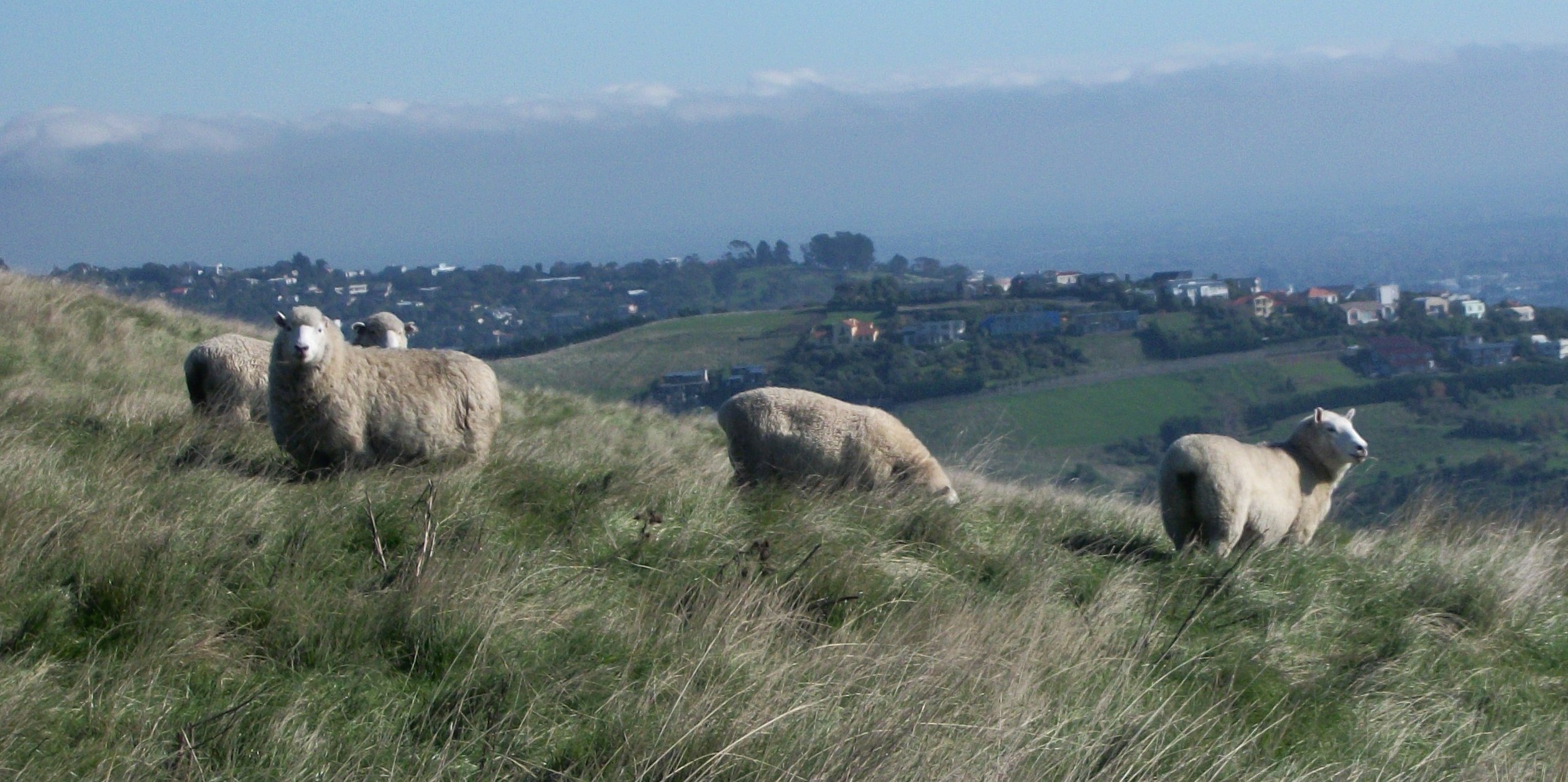
100_2204 cropFriday afternoons, my daughter and I have two hours to kill in the city between band practices. We usually pass the time by going for a walk. But neither of us likes walking on busy city streets, so we usually drive somewhere close enough that we can walk out of town.

There is a wealth of these magical spots, particularly around the hills, where the city is patchy and interspersed with steep valleys.

Today, we walked from a tidy little neighbourhood of small houses built sometime in the 1960s on the broad flat at the mouth of a valley. We climbed out of the neighbourhood toward the head of the valley, passing houses of decreasing age and increasing size, until we were walking past brand new houses of immense proportions, with wide expanses of plate glass overlooking the valley. Then a few skeletal houses, surrounded by scaffolding, and then no more.

At some point along the way, the road narrowed and the sidewalk petered out. Paddocks full of beef cattle spread out below us, and bush-covered slopes rose above. Bellbirds sang in the afternoon light.

The road narrowed to one lane, and a sign warned motorists that there were no further turning spots and no exit. We walked on until we reached the farm at the end of the road, a vineyard spread out below on the valley floor.

The sound of traffic was just a distant hiss, and I contemplated what it must be like to be the last farmer in this valley, holding out at the end of this long road, with no way in or out, save through the city.

It must be terribly isolating—as much as being on a remote station. None of this farmer’s neighbours share his or her interests, concerns, or outlook on life—they are all townies on their lock-it-and-leave-it properties. They know nothing of calving, fencing, or weed control. They don’t notice when there has been too much or too little rain. Their only concern with a late frost is whether it means the ski fields will be able to stay open another week.

It can’t be easy to stay in that sort of situation, and I admire the farmer that can hold on in the face of the encroaching city. Too soon, I fear they will be gone.

PV=nRT

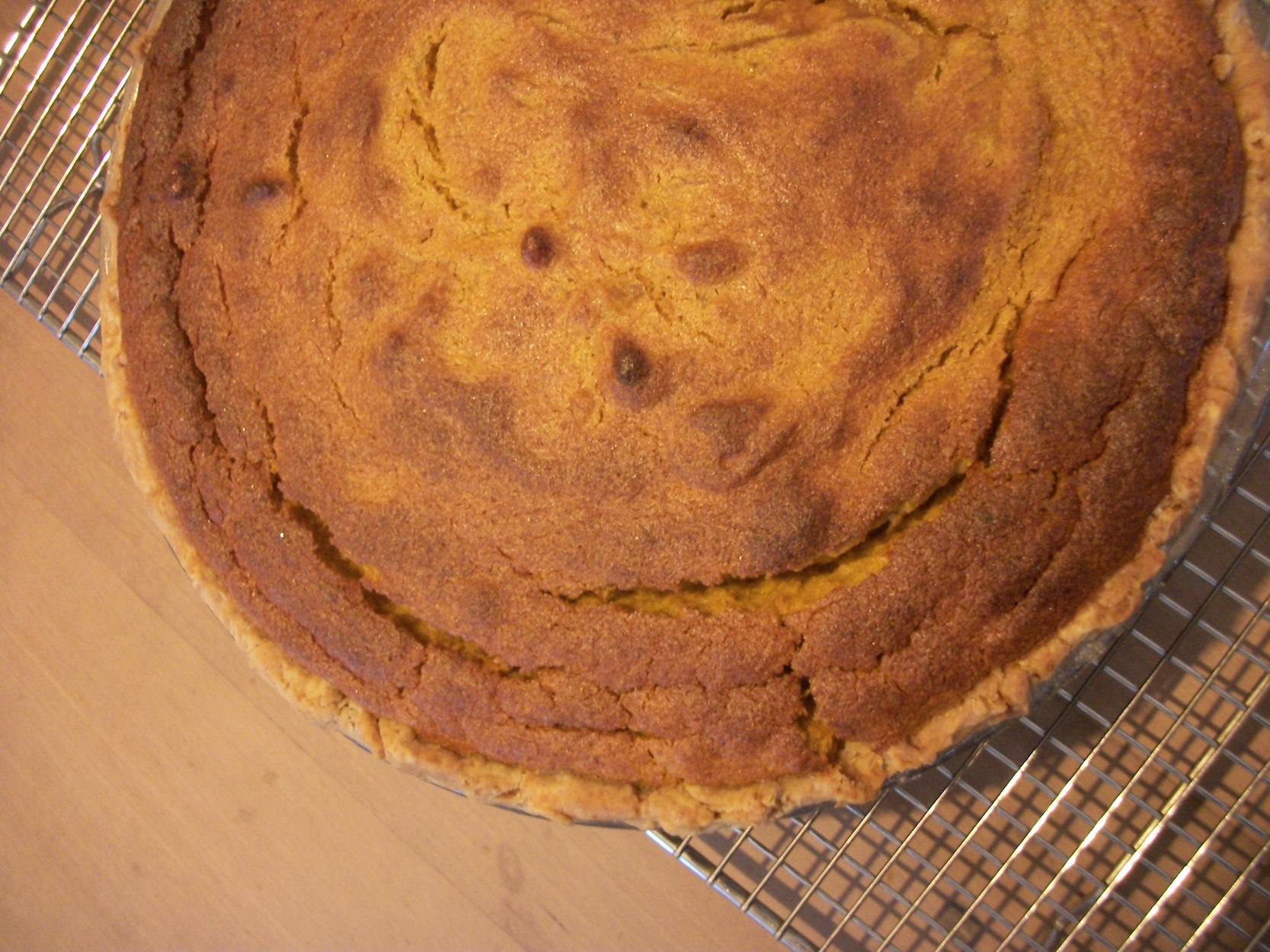
100_3593 smAnything can become an occasion for a science lesson in our house (much to our children’s dismay, I’m sure). Today it was pumpkin pie.

The pumpkin pie recipe I use has stiffly beaten egg whites in it. So, of course, it puffs up dramatically in the oven, coming out looking like a great big orange pillow. As it cools, it falls.

It’s the perfect physics lesson to explain the Ideal Gas Law! And my daughter fell right into it when she asked, “Why does it puff like that?”

If you’re not familiar with the Ideal Gas Law, here it is:

PV=nRT

Where P=pressure, V=volume, n=amount, R=ideal gas constant, and T=temperature of the gas.

From this equation, we can clearly see that, as the air in the bubbles of egg white heats up, the volume of the air will increase (assuming, of course that the bubbles themselves can expand and maintain a relatively constant pressure, which egg white does beautifully), causing the pie to puff. As it cools, the air decreases in volume, and the pie falls.

Proving that understanding thermodynamics is easy as pie!

Strawberry Banana Smoothies

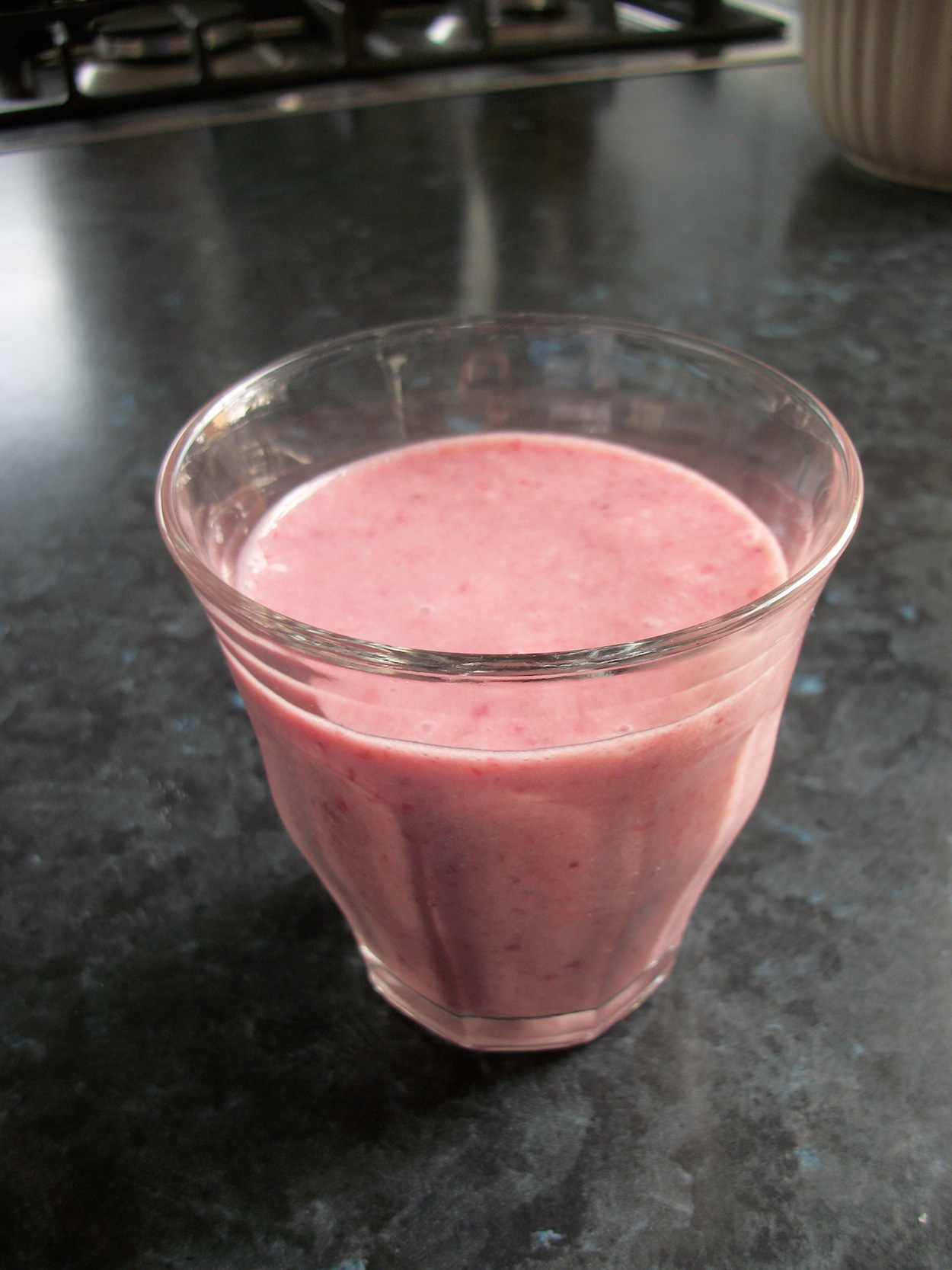
100_3588 smI found another excellent way to use my frozen strawberries today—smoothies!

I make a lot of strawberry smoothies during strawberry season—they are the after-school snack of choice at that time of year—but have never used frozen berries before. After trying it today, I’ll have to make sure I freeze more berries this year!

I had a couple of overripe bananas today, so I figured I’d throw them into the mix, too. The result was delicious! Here’s my recipe. The amounts are approximations—I never actually measure anything for smoothies.


For 4 servings (or 3 very generous ones), place in a blender:

3-4 cups strawberries (mostly thawed if frozen)

2 bananas (broken into pieces)

2 Tbsp honey

¼ tsp vanilla

Pour in milk until it covers about three-quarters of the fruit.

Blend until smooth and frothy.

Enjoy!


Garden Planning

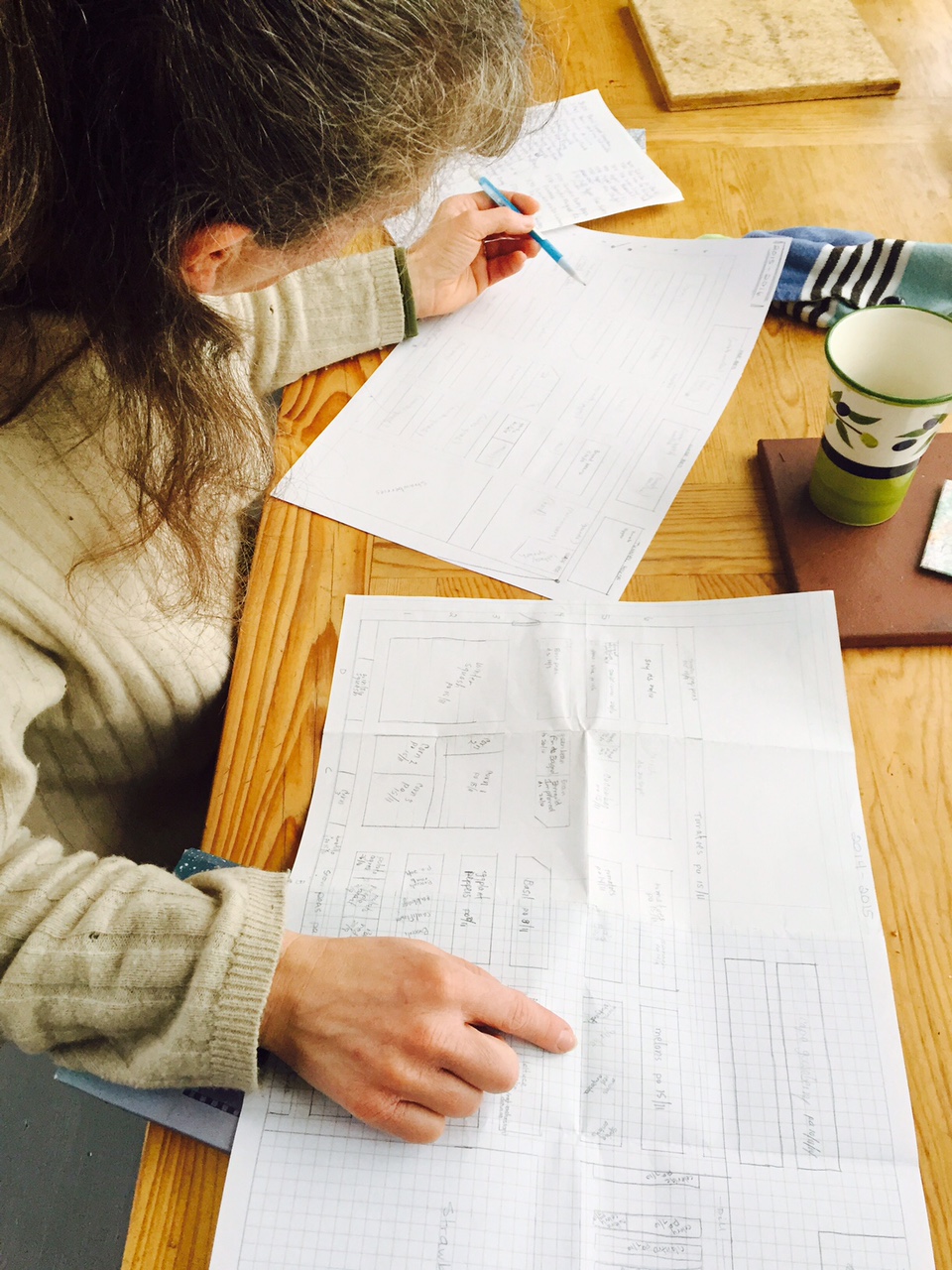
gardenplanning1Part of my late-winter garden work is planning the coming summer’s vegetable garden. It’s a job I take seriously, because it affects my work for the entire year.

The vegetable garden (minus the greenhouse) covers about 410 square metres (4400 sq ft). It is divided into 28 beds, separated by narrow paths, with a broad path running up the middle between the gates on either end.

During the winter, the chickens run in about two thirds of the garden, controlling weeds and pests, and the remaining third is devoted to winter crops.

In planning the new crops, I need to take into account when the winter crops will be over, when I’ll have to remove the chickens from the garden for the year, and what was in each bed the year before.

I also need to take into account wind, irrigation patterns, available support structures, and growth patterns. For example, corn always goes near the edges, because the irrigator can’t throw water over the mature stalks—anything on the other side of the corn dries up. Corn is also a great wind block, and I can use it to protect more delicate plants from the vicious nor’west winds. Peas and tomatoes usually go on the edges of the garden, which are bounded by deer fencing they can be tied to for support. Melons like tall plants on their south side to block any cool southerly winds.

My goal is to have every inch of the garden covered with food plants for the entirety of the growing season. For example, the early spinach will be bolting by the time the tomatoes are ready to plant out, so they will share a bed. Chopped spinach stalks will form the mulch for the newly planted tomatoes. The garlic will be harvested before the pumpkins get large, so they can be planted in adjacent beds, and the pumpkins trained into the garlic bed once it is empty. Plants with a single harvest date, like dry beans, are planted in adjacent beds, and packed in so that the plants can spill into the paths, because I won’t need to walk down them frequently for picking.

It takes several hours (and usually a cup of coffee, and a scone if I can get it) to plan the garden to my satisfaction. There are often small changes as I go, but once the plan is in place, it guides my entire spring.

I can’t prepare 410 square metres of garden all at once, but with the plan in hand, I can prepare the beds in the right order so that each one is ready when the crop is ready to go in it. The plan allows me to ignore waist-high weeds in one bed while I focus on another, knowing that all the beds will eventually be prepared and planted. It makes my springtime as stress free as possible, and gives me time to stress about the weather instead!
Cinnamon-filled Scones

Lucky I managed a photo before they were all eaten!

Lucky I managed a photo before they were all eaten!

These are arguably the family’s favourite breakfast scone. They take longer to make and to bake than my usual scones, so I make them up the night before and put them in the fridge. In the morning, all I have to do is toss them in the oven. Though I haven’t tried it, the oat/whole wheat dough would go great with a jam filling, too!

Filling:

1/3 cup brown sugar

1 ½ tsp cinnamon

1 Tbsp all-purpose flour

3 Tbsp (40 g) very soft butter (almost, but not quite melted)

Stir together the above ingredients until they form a spreadable paste. Set aside.

Dough:

1 cup oat flour *

1 cup whole wheat flour

1 cup all-purpose flour

¼ cup brown sugar

1 Tbsp baking powder

½ tsp salt

1 ½ tsp cinnamon

½ cup (125 g) cold butter

1 egg

1 cup milk **

1 tsp vanilla

Mix the flours, sugar, baking powder, salt and cinnamon in a large bowl. Cut in the butter with a pastry knife until it resembles coarse crumbs.

Whisk together the egg, milk, and vanilla. Add this mixture to the dry ingredients, and mix just until the dough comes together.

Divide the dough in half. Knead each half gently, then pat each into a 9-inch round. Place one round into a lightly greased 9-inch round baking pan. Spread the filling on top. Place the second round of dough on top of the filling and press gently to remove air pockets.

Cut the scones into 12 wedges, and bake at 375°F (190°C) for 40 minutes, until brown and firm in the centre. Allow to cool 5-10 minutes before removing from the pan.

Eat immediately…or someone else will beat you to them!

* You can make your own oat flour by grinding rolled oats in a food processor for about 30 seconds.

** For Cinnamon/Pumpkin scones, use ¾ cup of cooked, mashed pumpkin and ¼ cup milk. If the pumpkin is dry, you may need to add a little more milk.