Spring Cuteness

‘Tis the season for growth and new life.

Unfortunately, that means lots and lots of weeds, birds nesting in the shed (and pooing on the car), and slugs multiplying like mad (and decimating the newly-planted lettuces).

But it also means the occasional cuteness overload, like this guy.

This newly-fledged magpie has been hanging out in various locations around the yard as he learns how to get around and hunt for himself. He’s quite tame at the moment, and you can even give him a little scratch without him fluttering away. I’m sure it won’t be long before he’s dive-bombing the cat with his cohort of teenage magpie thugs, but at least for now, he’s terribly cute.

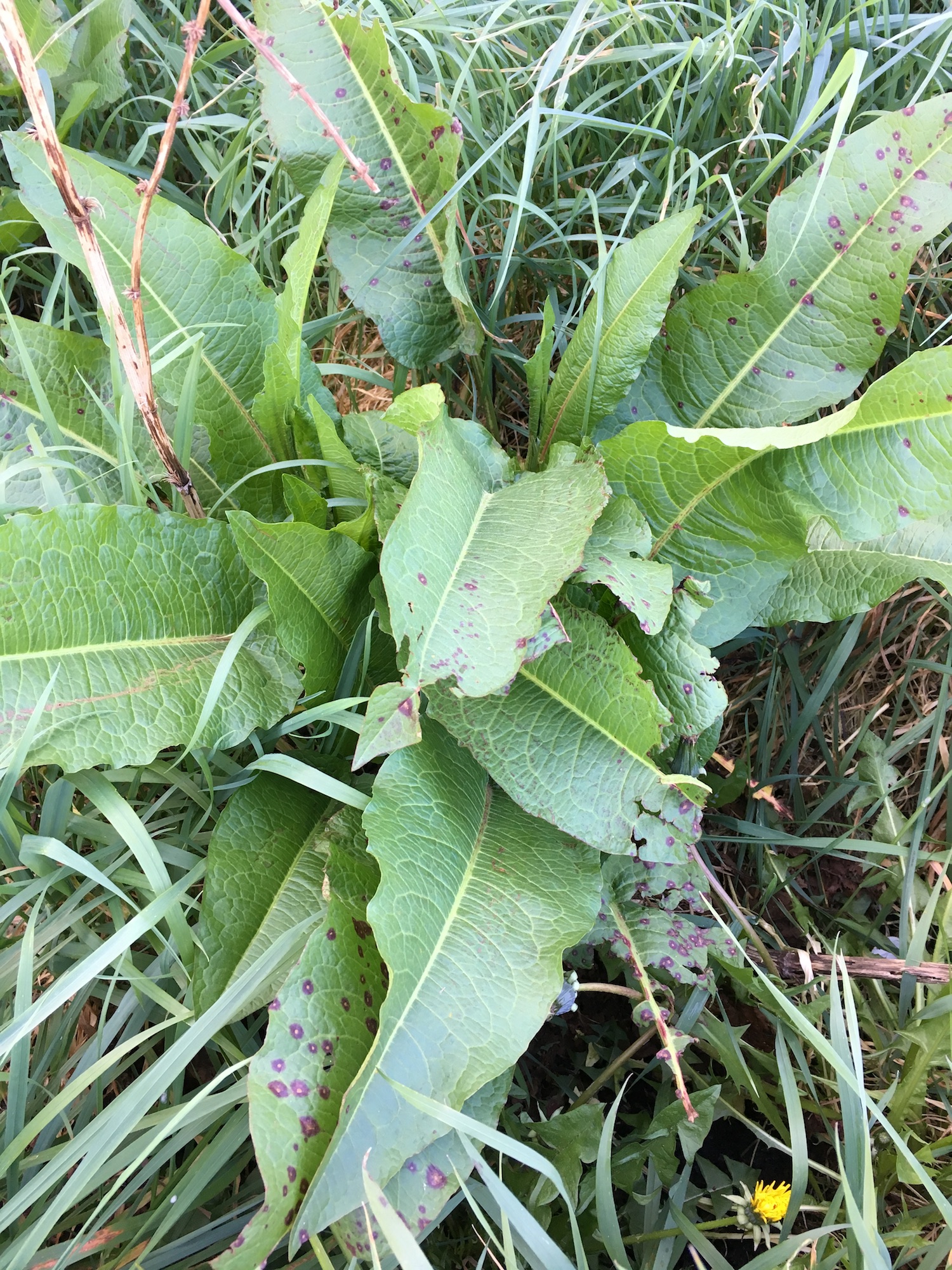
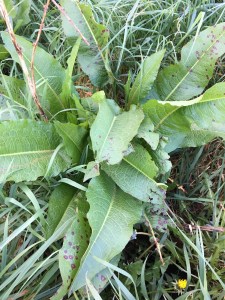
Spring Weeds–Dock

Springtime is weed season, and there are plenty in my garden–57 species at last count.

I grumble about weeds, but I also find them fascinating. Weeds are the opportunists, the survivors, the tough and persistent plants of the world. Some have been spread accidentally, through virtue of their mobile, sticky, or tough seeds, but many more have been introduced on purpose. They are plants we once considered useful, and it is our changing values that make them weeds today.

So I’ll be introducing some of my weeds over the next few weeks as they sprout and flower and generally annoy me. We’ll start today with a weed I love to hate–broad-leaved dock (Rumex obtusifolius).

Dock isn’t my worst weed. Not by a long shot. But it is persistent. Deep, branching taproots make it a struggle to pull out, and with each plant able to produce up to 60,000 seeds a year which can remain viable in the soil for up to 50 years, there is an unending supply of new plants. Still, dock struggles to compete with established plants, so it’s mostly a weed of disturbed soil.

The goats absolutely love it, so I can’t complain there. Dock is high in magnesium, phosphate, and potassium, and the tannins in the leaves can help prevent bloat in ruminants. Any dock I pull out of the garden goes directly to the goats.

It is likely dock was brought to New Zealand (from its native Europe) on purpose in the mid-1800s. Though the leaves are high in oxalates, which can irritate the stomach and bind to calcium, potentially leading to calcium deficiency, the plant was regularly eaten like spinach. It was also used to treat a variety of ailments, from coughs to cancer.

Dock often grows side by side with stinging nettle and, like many nettle associates, it can supposedly cure nettle stings. I’ve used dock for this purpose, and can attest that it seems to help, but then so does just about any fresh leaf rubbed on nettle stings.

I wouldn’t want to fight dock on a large scale–it scoffs at most herbicides, easily survives mowing, and can resprout from pieces of root left in the soil after ploughing–but for me, it’s a manageable weed that even has some utility.


Chasing Chickens

Foiled again! A chicken eyes the zip ties on top of the gate.

Two weeks ago I moved the chickens out of the vegetable garden and into their summer paddock. The summer paddock is smaller than the garden, and not quite as rich in insects and diverse weeds. The chickens are always a bit put out at their restricted terrain, and they express their dissatisfaction for the first few weeks by escaping.

When they get out, they immediately rake all the mulch from under the artichokes onto the paths. Then they attack the compost pile, spreading twitch roots, mouldy bread and last night’s leftovers around the yard.

It’s a test of ingenuity between me and the chickens. At first, they might fly over the fence–I clip their wings. Then they might scramble to the top of the gate along the fence’s diagonal bracing–I use zip ties to create a jagged edge on the gate so they can’t perch there. Then they might use the nesting boxes as a perch, jumping from the ground to the nesting boxes, and then over the fence–I add zip ties to the top of the nesting boxes. In time, they might dig underneath the fence and slip underneath–I fill their holes with rocks.

Eventually, they’ll grow tired of trying to escape. Or maybe they forget that they used to have more space–they have pretty small brains, after all. Either way, I will eventually win.

Until then, I’ll spend every afternoon rounding up the chickens who’ve escaped and returning them to their paddock, and then raking mulch off the paths, wondering why I don’t simply increase the height of their fence. Perhaps it’s me with the small brain…

Don’t bite the hand

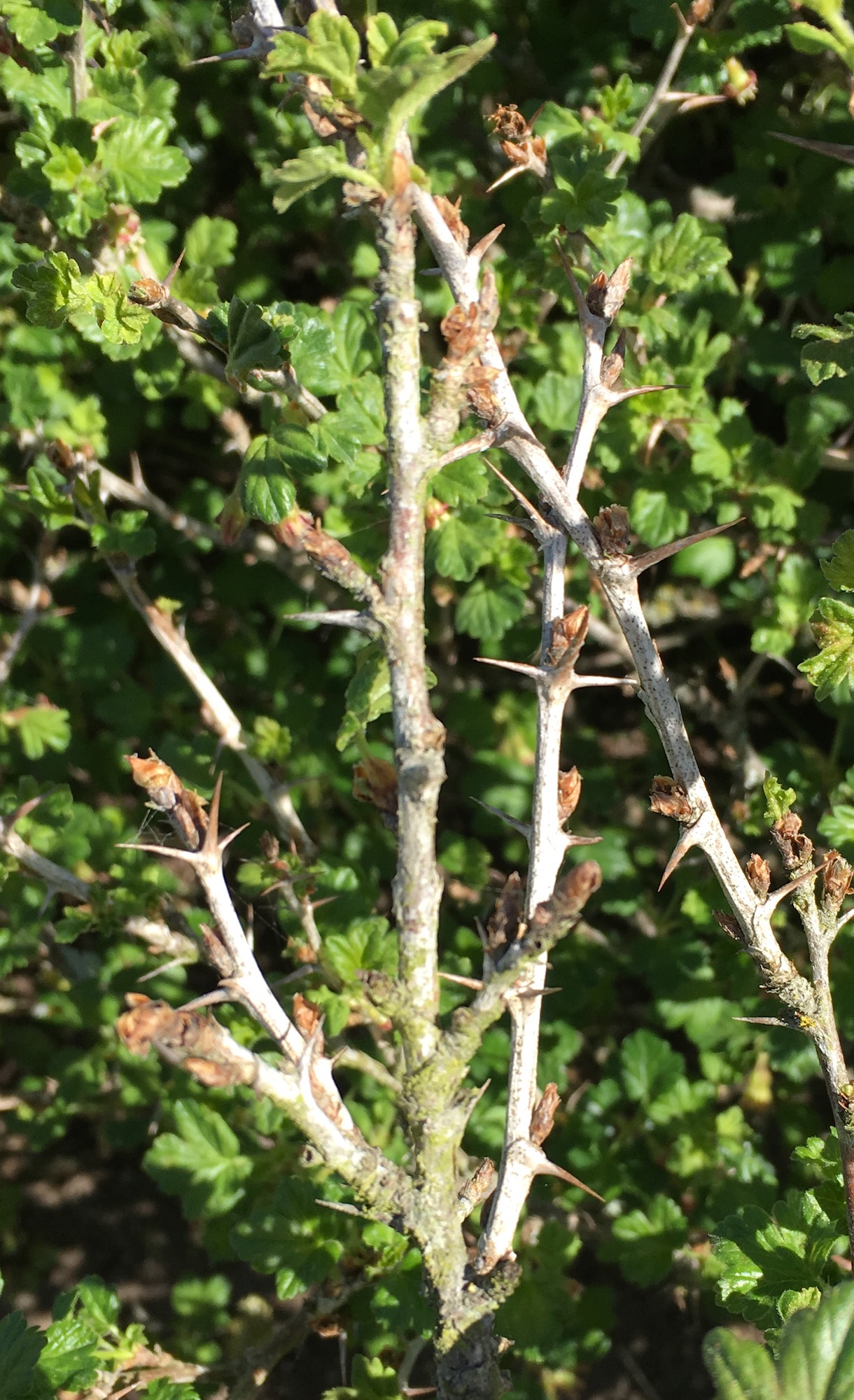
I was working on the bi-annual weeding of the gooseberries today. It’s not that the gooseberries wouldn’t benefit from weeding more than once every six months, but there’s simply a limit to my tolerance.

It’s bad enough that nettles zing me and thistle spines lodge in my gloves as I pull them out. I don’t begrudge them their attempts to stay rooted in the ground and avoid the compost pile.

But the gooseberries have no excuse for aggression. I’m weeding around them, freeing them from competition, making sure they have plenty of space, light and air.

And what do I get for my efforts?

Stab wounds, scratches, spines broken off in my hands…ungrateful plants. Haven’t they heard the saying, Don’t bite the hand that weeds you?

Springtime Sensory Overload

We often think of springtime as an explosion of colour–white, yellow, purple, and pink flowers blooming, green grass growing. But spring is more than eye candy. Springtime is a sensory feast.

Springtime is the smell of lanolin and freshly turned earth. It is the cloying scents of blooming broad beans and daffodils. It is the smell of line-dried clothes. It is cut-grass and petrol mowers.

Springtime is the sound of lambs calling to their mothers, and the mothers’ deep, chuckling replies. It is the warbling of magpies before dawn, and the harsh call of spur-winged plovers at night. It is the throbbing rumble of tractors and the barking of sheep dogs.

Springtime is the feel of thick grass between the toes, the sting of nettles on bare legs. It is gritty dirt under fingernails, and sweaty hat brims. It is the buffeting of winds and the snarl of tangled hair afterwards. It is warm sun and cool shade.

Springtime is the bitter cucumber flavour of salad burnet. It is the rich umami of artichokes. It is the earthy taste of asparagus.

And springtime doesn’t end at our physical senses. Spring is the sense of well-being, the sense that all is not yet lost. That magic still lingers, in the rhythm of the honey bee’s wingbeats and the rustle of flight feathers, in the rain of apple blossoms and the quiet feeding of a caterpillar.

Gate Sales

I picked up a kilo of honey and a lovely variegated sage plant while I waited for my son at piano lessons today. And I didn’t step into a grocery store or a nursery.

One of my favourite aspects of New Zealand life is the practice of ‘gate sales’–selling your produce at the farm gate. Gate sale setups can be elaborate, like the beautiful flower cart one of the local daffodil farms uses, or they can be simply a table or box by the side of the road. They operate on an honour system–there’s no one there to make sure you pay–you simply drop your money into a box. Theft does happen–I know from my own experience–but most people are honest.

I’ve seen all sorts of things for sale on the roadside–all manner of vegetables, eggs, walnuts, plants, honey, in-season fruits, flowers–whatever the grower has in abundance. And it’s not just commercial growers–did your lemon tree produce a spectacular crop? Sell the excess at the gate. Zucchinis out of control? Sell the them at the gate. I used to pay my entire year’s garden expenses from gate sales of whatever was extra. I’ve gotten better at planning in recent years and have two teenagers in the house now, so I don’t have the same problem with excess produce anymore.

While I don’t sell much anymore, I take full advantage of those who do. I’ll even go out of my way to buy something (like honey) directly from the farm, rather than picking it up at the grocery store. Other times, the farm is much closer than the store. If we’ve run out of potatoes or eggs, all I have to do is walk to the neighbour’s place to get more. I like the idea that my money is going to the producer, and not to all the middlemen. I like fact that whatever I’ve bought has been locally produced. I like the feel of the trust inherent in the transaction. It feels good, neighbourly, and personal.

As we move into spring and summer, gate sales will be increasing. I’ll be ready, with my ’emergency’ stash of loose change in the car so I can stop and pick up whatever is fresh and at the gate today.

Equinox Excitement

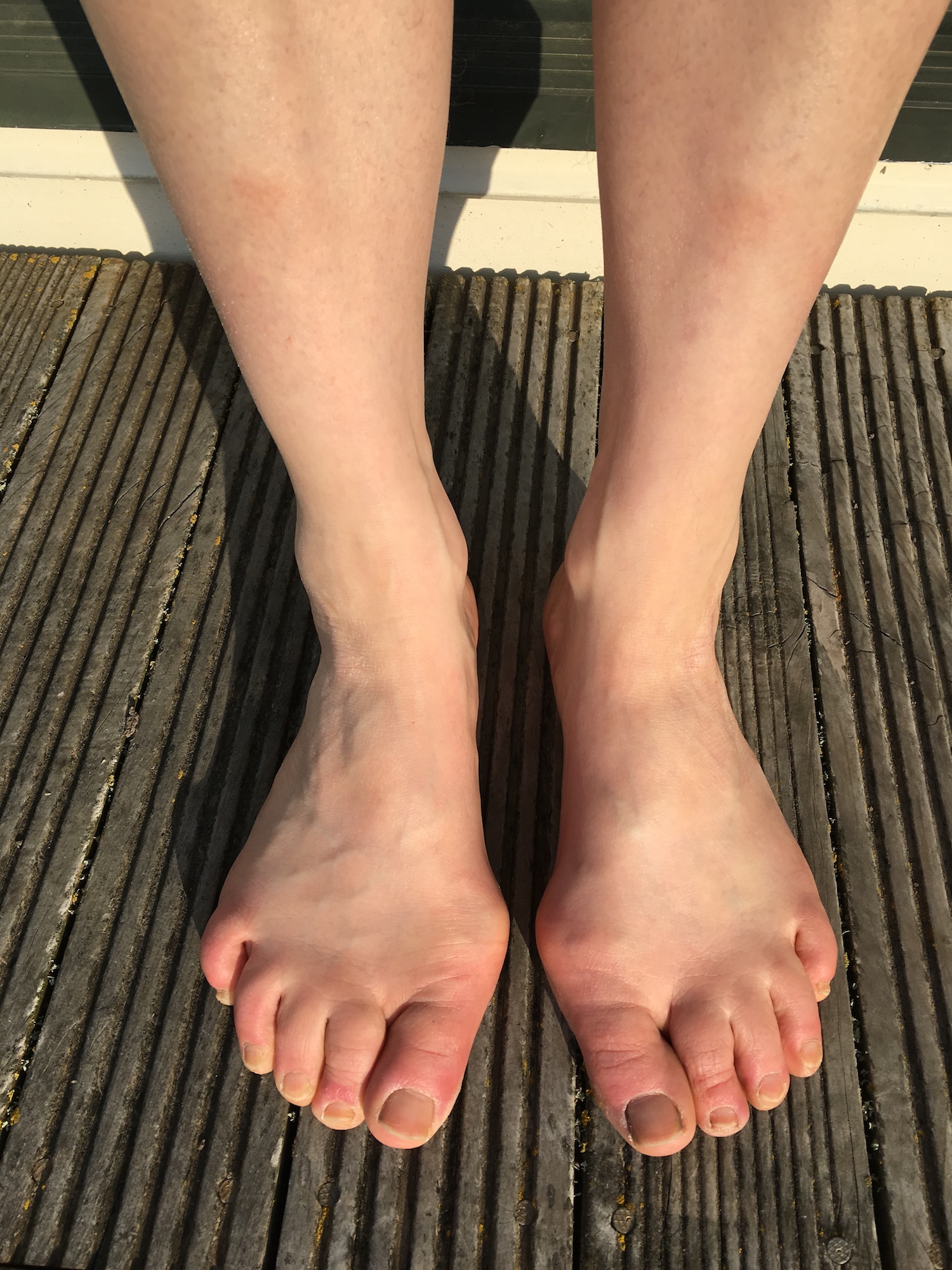
Time to liberate the feet! The temperature hit 28ºC today. Hard to believe it’s that warm just two days past the equinox. I can’t complain, though—it was lovely in the garden this weekend. The only problem was that I’m still clearing the winter nettles away, so it was gumboots and jeans out there. Long about three this afternoon I called it quits and shed the protective gear for shorts bare feet—pure bliss!

I’m sure there will still be cold and wet days, there will be frost, but there’s something exciting about the changing weather at this time of year.

So a happy equinox to you all. We’ve enjoyed a taste of what’s to come here this weekend. Perhaps you’ve had summer’s last hurrah, or the first bite of autumn. Wherever you are, and whatever your weather, I hope you got out to enjoy the changes around you.

Beech Forest Hiking

I’m particularly fond of hiking in early spring. It’s not for the spring weather, which is often raw and windy, or for spring flowers, which aren’t particularly abundant in the bush. No, it’s for the lack of German wasps.

Much of the forest we hike through is dominated by beech (not the northern beech, but several species of Nothofagus). Beech is host to a fascinating ecosystem which has been invaded by non-native wasps.

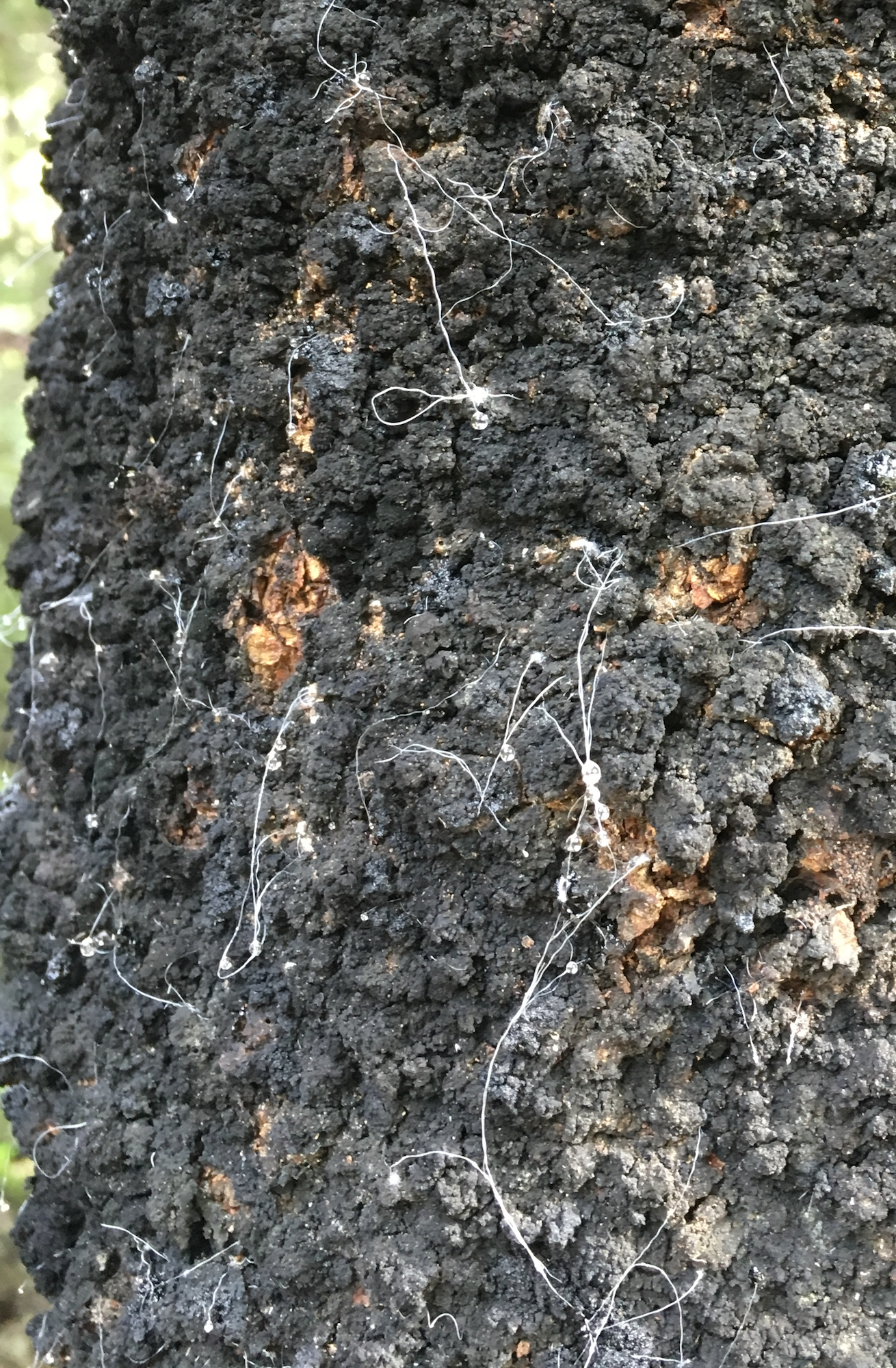
Throughout much of its range, beech is infested by scale insects. The scales live in the bark of the trees, feeding on sap. Because sap is low in nutrients and high in sugar, the insects need to excrete the extra sugar. Each insect has a long anal tube through which it ‘pees’ concentrated sugar water called honeydew.

Drops of honeydew form on the tips of the anal tubes and fall to the ground, tree, trunk, and branches around the insects. The entire area ends up coated in sticky sugar.

Sooty mould grows on the sugar coated surfaces, turning trees and forest floor black, and giving the beech forest a distinctive smell. The sooty mould is eaten by a variety of insects, including moths and beetles.

But not all of the honeydew simply drops to the ground. Native birds and insects (and hikers) drink the drops of water on the tips of the scales’ anal tubes. For wildlife, honeydew is an important winter food, when flower nectar is scarce.

German wasps enjoy honeydew, too, but only in the summer.

By mid-summer, the beech forest hums with the sound of millions of wasps collecting honeydew. For me—allergic to wasp stings—it means a hike requires constant vigilance lest I grab a tree trunk for balance and end up in anaphylactic shock. But in springtime, the wasps aren’t yet out and about, and I can enjoy the sticky smell of the beech ecosystem without worry.

Stay Sharp

It’s the time of year when I have too much to do in the garden. It’s a race to get the garden beds prepared before the vegetables are ready to go out into them. It’s a race to keep ahead of the weeds in the perennial beds. It’s a race to get the finished compost out of the bin before I need the space for fresh material.

I hate to waste my garden time. I hate to take breaks, because every minute I’m not out there is a minute for the weeds to get ahead of me.

But I’ve learned that some breaks are not a waste of time. Sharpening the hoe is one of those breaks that pays for itself. When I’m using the hoe a lot, I stop every couple of hours to sharpen it. It takes just a few minutes, and it makes the job much easier and faster.

A nicely sharpened and well-maintained tool can make all the difference between back-breaking drudgery and a job efficiently completed.

It pays to stay sharp.

Nettle Season

It’s stinging nettle season and, as I’ve mentioned before, my garden is host to an irritating quantity of nettle—quite literally.

But though it is a stinging weed, I’ll admit to a certain fascination with nettle. Look at the stinging hairs (trichomes) under the microscope, and you’ll find beautifully wicked structures like fine hypodermic needles. Those syringes are full of an irritating mix of acetylcholine, histamine, serotonin, moroidin, leukotrienes, and formic acid to irritate your skin.

But the triggering mechanism for the trichomes depends upon turgor (water pressure), so once a nettle wilts, it can’t sting.

And once it wilts, nettle is an incredibly useful plant. It is edible and quite nutritious for both humans and livestock. The cooked greens are used in traditional dishes throughout the Northern Hemisphere where it is native.

It can be used to make a vegetarian rennet for cheesemaking, and is used to flavour and decorate some cheeses. I’ve made nettle rennet myself as a substitute for commercial rennet when I’ve run out.

Nettles can be used to make tea, cordial and beer.

The fibrous stems can be used to make linen-like textiles. The roots can be used to make a yellow dye.

Fed to chickens, nettle is an effective egg colourant, which may explain the deep orange colour of my chickens’ egg yolks at this time of year.

All in all, stinging nettles don’t deserve their bad reputation. Like many of our weeds, they’re useful plants that we’ve forgotten how to use.