Zombie Cat

A hapless zombie cat victim.

At this time of year, birds and small mammals are distracted. They’re busy fighting over territories, building nests, and mating. There are young, naive animals fluttering, scurrying and hopping about.

So it’s no surprise the cat catches more prey in spring. English sparrows, mice, rats, rabbits–he brings almost all the major vertebrate pests home and leaves them on the porch for us.

I don’t mind, really. It doesn’t bother me to have to dispose of his kills–I’m not squeamish about it, and I’m happy he’s dealing with at least some of the animals that destroy my garden and wreak havoc in the sheds.

But there’s something that worries me.

I’m afraid the cat is a zombie.

Rodents, birds, rabbits…they all show up headless. The cat doesn’t seem interested in eating anything except the head. Even on a succulent rabbit, he ignores the meaty legs and flank, and goes straight for the head.

Maybe it’s just the crunch he likes, but I think it’s more sinister than that.

Now every time he gives me his wild-eyed look, I can almost hear him say, “Braaaaaaaaaaaains.”

Spur-winged Plovers

Almost every year, a pair of spur-winged plovers (Vanellus miles, known as the masked lapwing in Australia) establishes a territory in the goat paddock. A few days ago, I was taking food to the goats, and noted where the plovers were making a ruckus at the other end of the paddock.

This afternoon, I took a walk out there. The plovers were nowhere to be seen, and I was worried–they’re not always successful nesters here. There are simply too many predators around our property.

I nearly turned around, but I decided to take a look anyway.

I was rewarded with the perfect plover nest. Two eggs, a little dried grass, and some rocks.

The spur-winged plover self-introduced from Australia in 1932. Since then, its population has grown dramatically. No surprise when you consider it likes open habitat, and is quite happy to set up house in paddocks, parks, and road verges (we once had a pair nesting in the middle of an intersection nearby).

It has done so well since it arrived in New Zealand that its protections as a native bird were removed in 2010 due largely to the problems it was causing for aircraft (airports are lovely habitat for it). It is one of only two native birds to not be protected under the Wildlife Act (the other is the black backed gull).

I enjoy the plovers. I love their harsh night-time cry, and their indignant posturing while defending territory and nest. I love the fact they cheekily nest wherever they want and expect everyone else to stay out of their way.

I’ll be watching these eggs closely. Fluffy plover chicks are even more fun to see than plover eggs.

Happy Spring

It’s the first day of spring!

Naturally, it’s cold, windy and rainy–day to be curled by the fire with a cup of tea, not a day to be out in the garden enjoying the flowers.

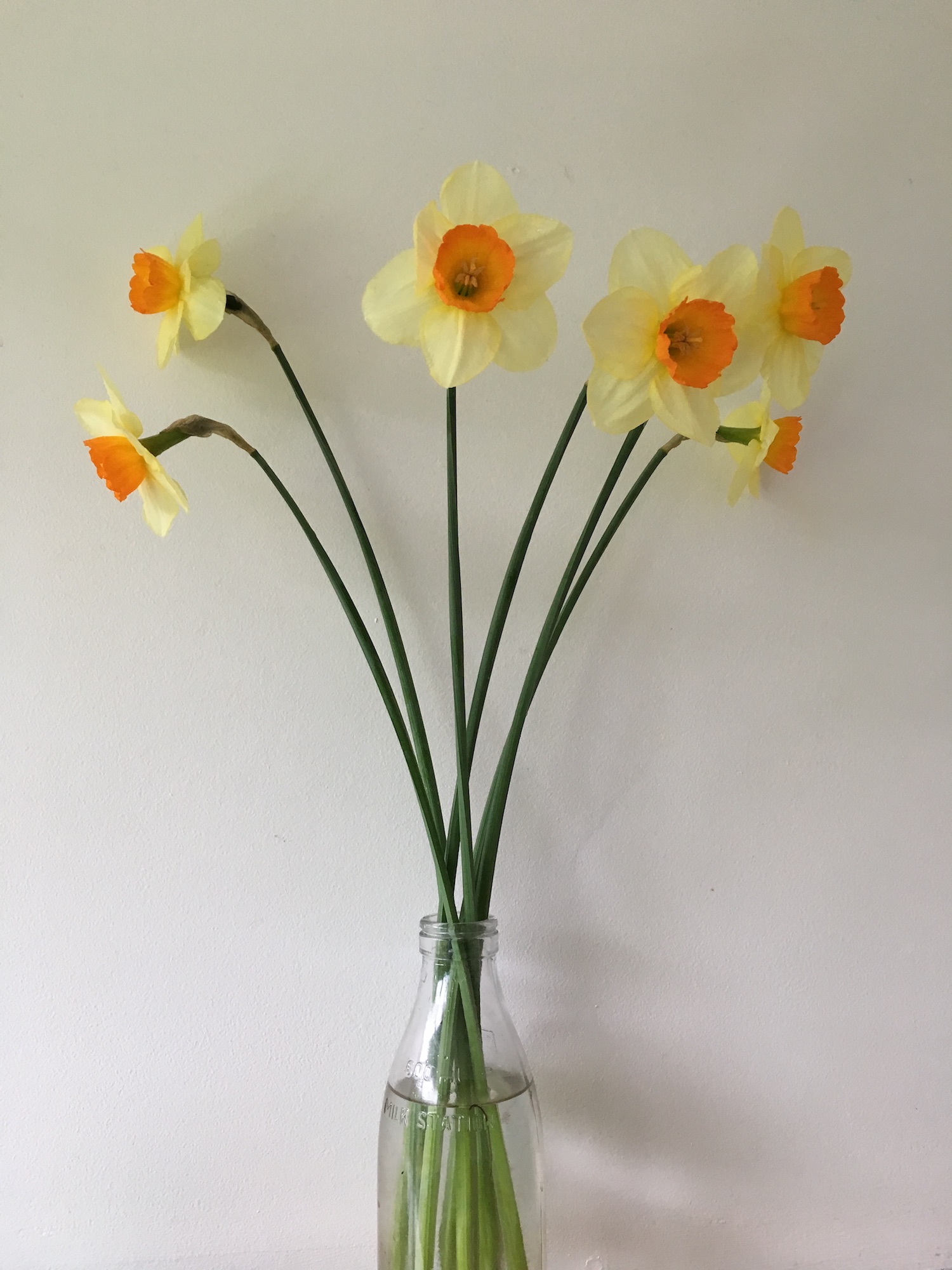
So I braved the rain to pick flowers and bring them inside.

Forget the weather. It’s spring indoors.

A Look at Larvae

They’re just midges. If anyone pays attention to them at all, it’s to note how irritating they are when they swarm by the millions, here near Te Waihora/Lake Ellesmere. They are annoying at times, swarms so thick you can’t breathe without sucking in a few.

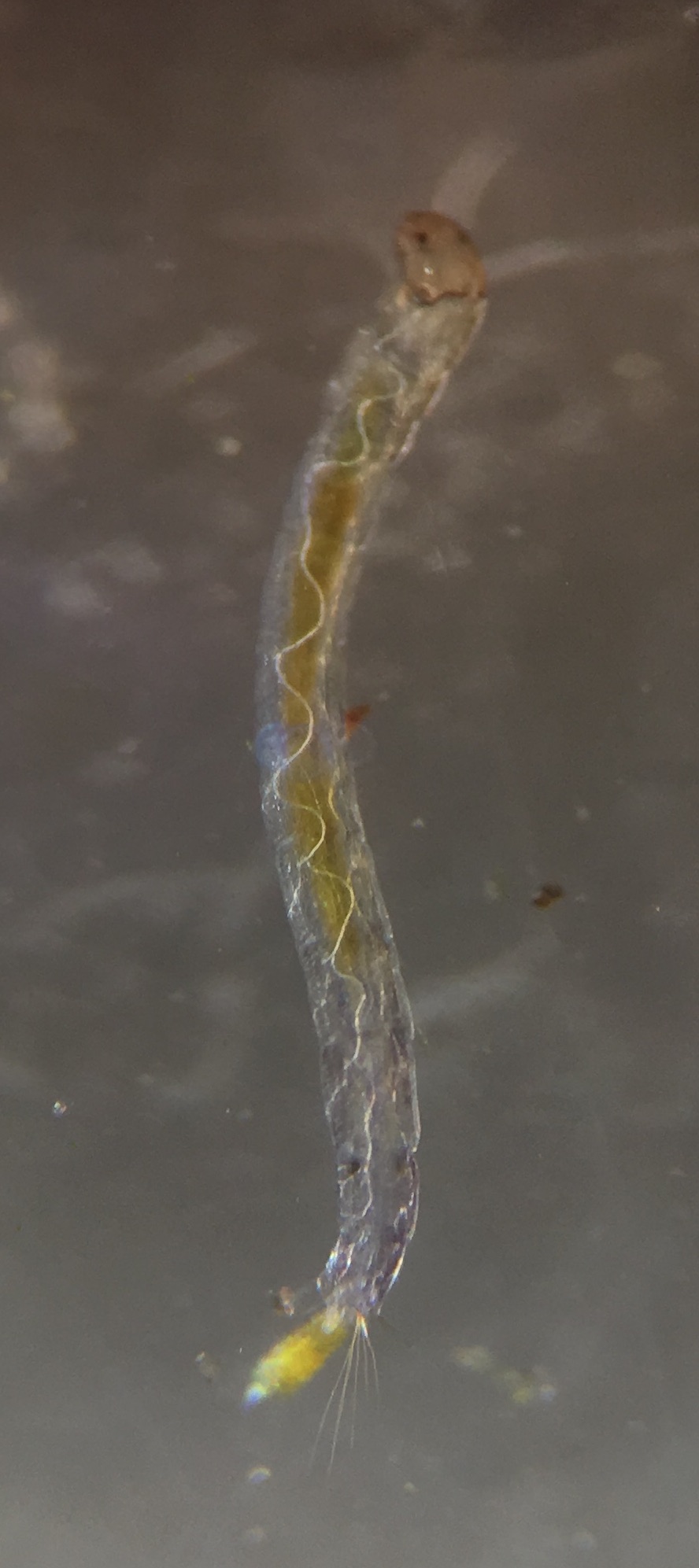
But there are few adults flying at this time of year. Most are still waiting out the winter as larvae underwater. Midge larvae are fun to look at under the microscope, as their exoskeletons are clear, allowing a great view of the inner workings of their bodies.

Seeing the inside of an insect larva helps one appreciate the job a young larva is tasked with—eat. Eat as much as you can and grow as fast as you can. A larva is little more than a mobile digestive system. The brownish streak you can see running the length of this midge larva is the animal’s gut, filled with the algae and other debris it has eaten. At the tail end, you can see, this little larva is having a poo.

Also at the tail end is a wee snorkel of sorts. These midge larvae can survive in low-oxygen water by sucking air from the surface using their snorkel. The silver lines meandering the length of the body are trachea that carry oxygen to all the insect’s cells.

This midge larva was tiny—about two millimetres long—it still has a while to grow before it’s ready to become an adult. But there are lots of other larvae out there getting ready to emerge with the upcoming warm days of spring.

Making the Most of It

August adventure day at Rakaia Gorge

August is always a month of frustration for me. On the one hand, I’m excited, because spring planting starts, and though the weather might not be the best, there is the promise of spring on its way.

But with the promise of spring on its way is the threat of winter being over. I look at the gardening tasks ahead, feeling overwhelmed and wanting to get cracking on them. But I look back at winter and feel I haven’t accomplished nearly enough while the cold weather lasted. All those sewing projects that I meant to get to, that extra writing I had hoped to do in the long dark evenings, the photographs I meant to print and put into the family photo album…August reminds me that the time for finishing indoor projects is running short.

It’s not that I didn’t do anything over winter. I was busy sewing, knitting, and writing. But there simply aren’t enough winter days for me to accomplish everything on the to-do list. When August comes round, I have to resign myself to not getting things done. I have to prioritise. That photo album? It’s been three years since I’ve put a picture in it. Looks like it’ll have to wait one more year. The jacket I wanted to make for myself will take backseat to the one my son has asked for–he needs it more. The pair of socks I started knitting last winter…well, I still have hope I’ll finish that project.

Half of me is ready for spring. Eager for warm sunny days to whip the garden into shape. The other half of me wants a succession of rainy weekends so I can finish all those winter projects.

The only reasonable thing I can do is make the most of whatever the weather gives me in August. If it rains, I’ll dive into the sewing with gusto. And as soon as the sun comes out, I’ll don gardening gloves and head outside. And if the weather is so fine, it begs for an adventure, I’ll leave everything on the to-do lists for another day.

Pre-planting Chore

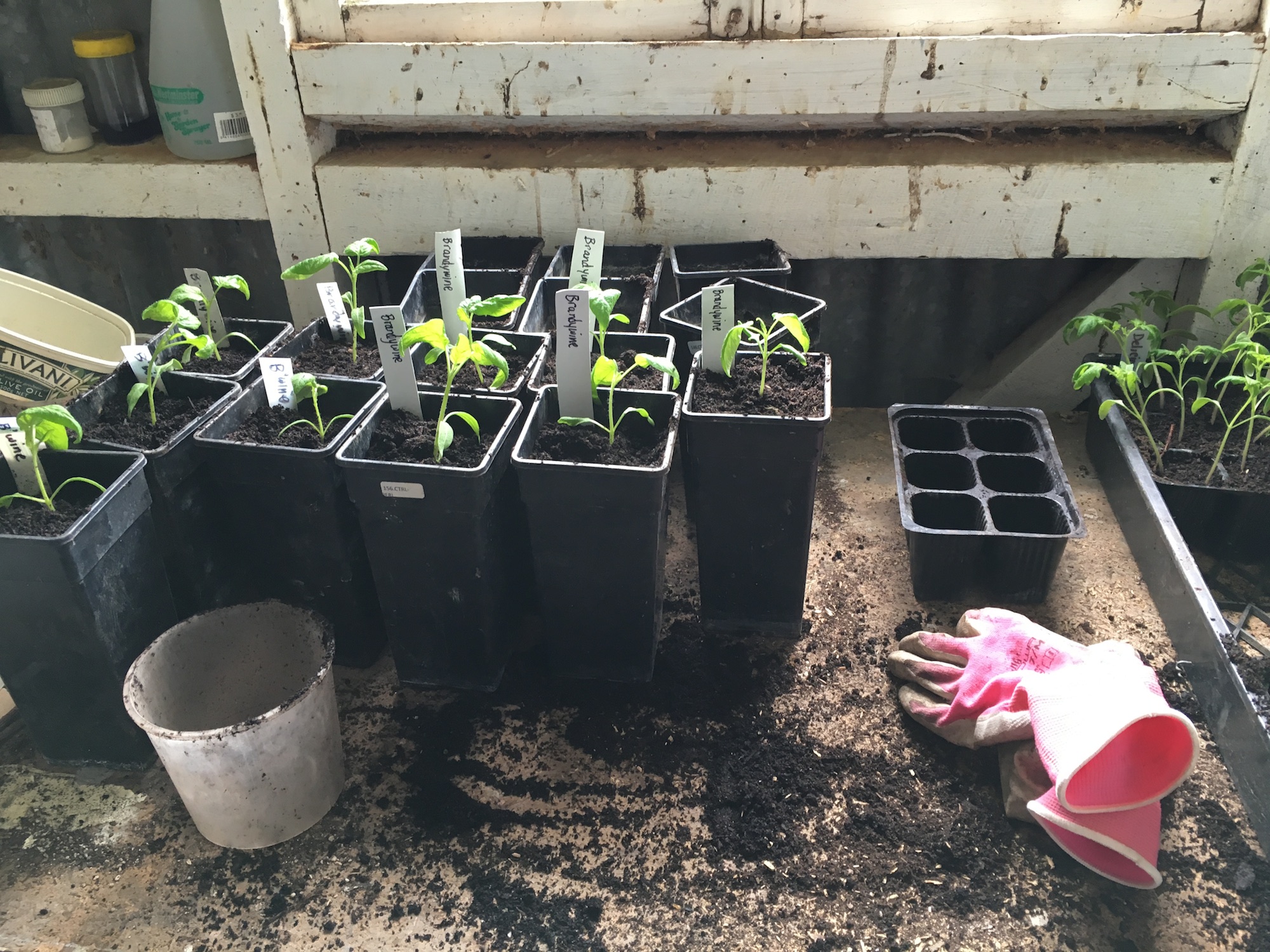
The potting bench in better times…

I suddenly realised today that tomorrow is the first of August. That means just two weeks until I start planting seeds for the vegetable garden!

Two weeks! Woo hoo!

That unalloyed excitement lasted a whole ten minutes, until I stepped into the garden shed.

It’s a scene of utter destruction. All through the autumn and winter, I’ve been walking in, tossing something on (or in front of) the potting bench, and then walking out.

Yeah, yeah…I’ll deal with that later…

Well, later has come.

Later is now.

I have two weeks to whip the shed into shape, or I won’t be doing any planting on the 15th of the month.

I know what’s on next weekend’s to-do list.

Spring is Coming

Last weekend we were hit by a major winter storm. The weekend before, another storm dropped snow almost to sea level. A third storm is forecast to blow in over the next couple of days.

But John Snow needs to change his tune.

Spring is coming.

No question about it.

I’ve felt it.

The plants have felt it.

The birds have felt it.

Spring is coming.

Get ready.

Spring is coming.

Pear Crisp

We’ve run out of our own frozen and bottled fruit from summer, so when I found a tin of pears in the cupboard yesterday I immediately decided we needed dessert.

Commercial tinned pears can be overly sweet, so I ‘pimped’ my usual crisp recipe to enhance them. The result was truly spectacular.

First, I tossed the pears into a shallow baking dish and squeezed an entire lemon over the top of them.

Then I made the topping. I mixed:
1/2 cup whole wheat flour

scant 1/2 cup brown sugar

1/4 tsp each cloves and nutmeg

Into this mixture I cut 1/4 cup of cold butter

Then I mixed in 1/2 cup of finely chopped walnuts.

I spread the topping over the fruit and baked it for 30 minutes at 190ºC (375ºF).

I served it warm with a dollop of unsweetened yogurt and a dollop of lemon curd (which ended up looking like a fried egg…).

The sour lemon and yogurt and the bitter walnuts beautifully balanced the sweet pears.

Tinned pears never tasted so good!