Water gardens

2016-02-15 18.46.03 smMy husband always wanted a water garden. In our pre-children days when we rented, he put a tiny fountain in a half-barrel, but it didn’t really satisfy him.

Within minutes of moving in here, he was scheming a “real” water garden.

It took about eight years for him to get to it. It was necessarily lower on the to-do list than re-piling the house, replacing weatherboards, remodelling the kitchen and bathroom, creating a third bedroom, and a host of other tasks.

And then when he started it, it took a lot of planning, digging, refilling, and digging again to get the basic structure right.

Then there were countless trips to the beach to collect the rocks to line it and complete the landscaping around it.

Then two years to kill off the twitch around it so he could even think about planting perennials there.
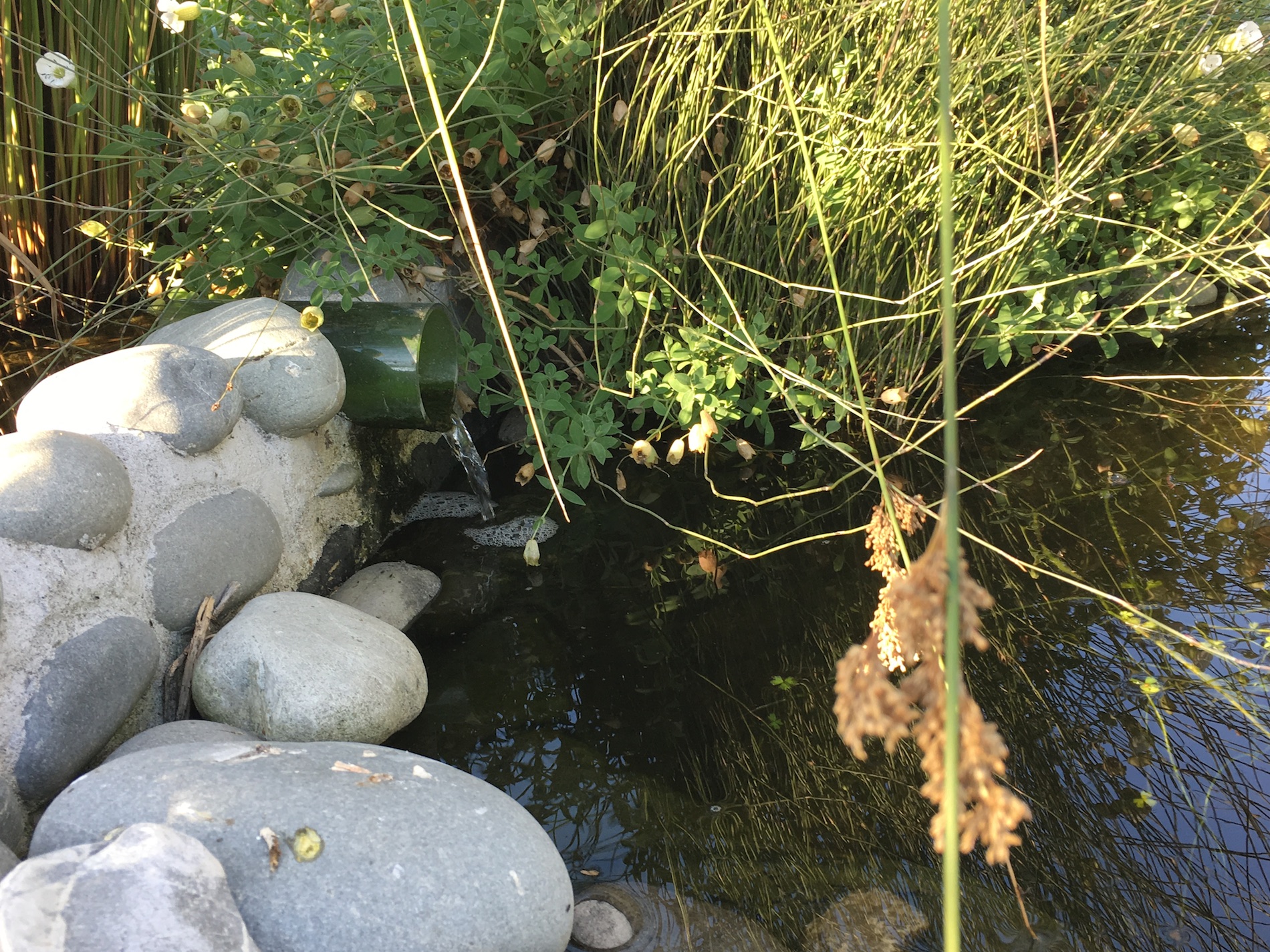
2016-02-15 18.48.44 smAdd dozens of broken wine bottles in his attempts to create the little waterfalls coming down the hill toward the pond.

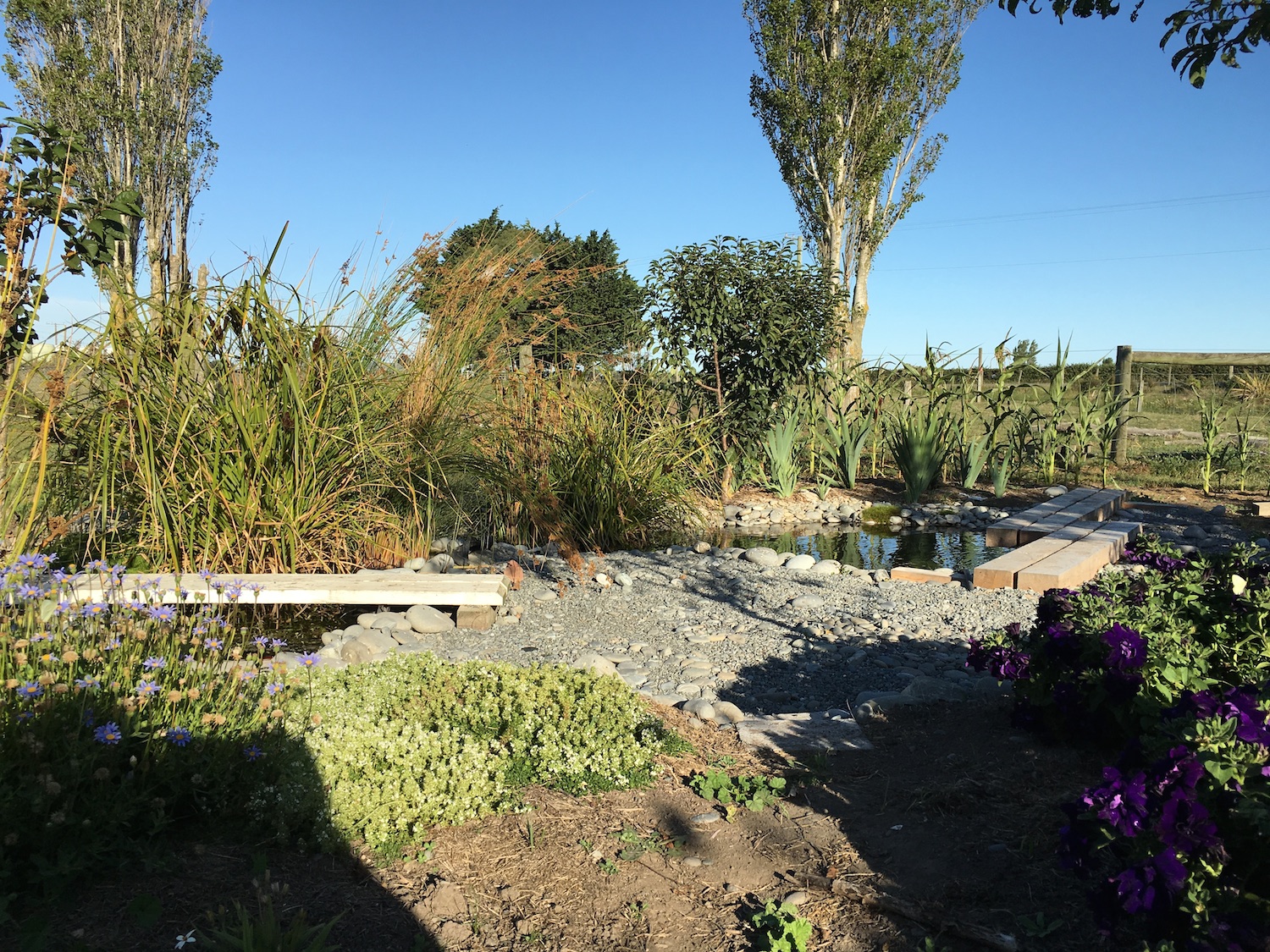
A solar pump to keep the water flowing, nine goldfish (now blossomed to a standing population somewhere around 40), two bridges, and a whole lot of plants, and it’s looking quite settled into place.

We all enjoy the garden. I could sit for hours watching the fish and the invertebrates in the water. The birds love to bathe in it, and the cat loves to prey on the birds bathing in it (he likes to drink from it too—must taste fishy). Herons come and snare fish, and the plovers hang out around it in springtime.

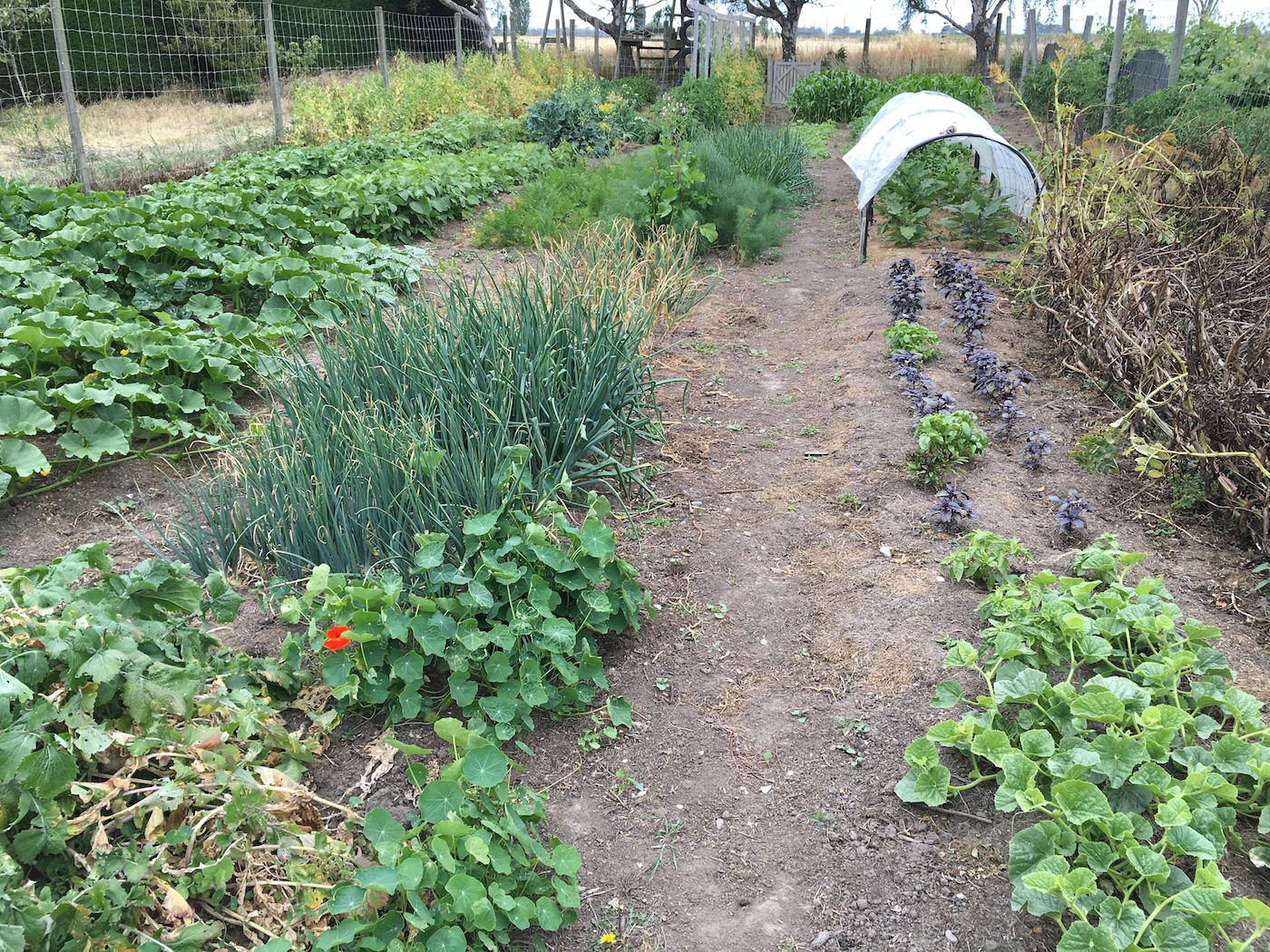
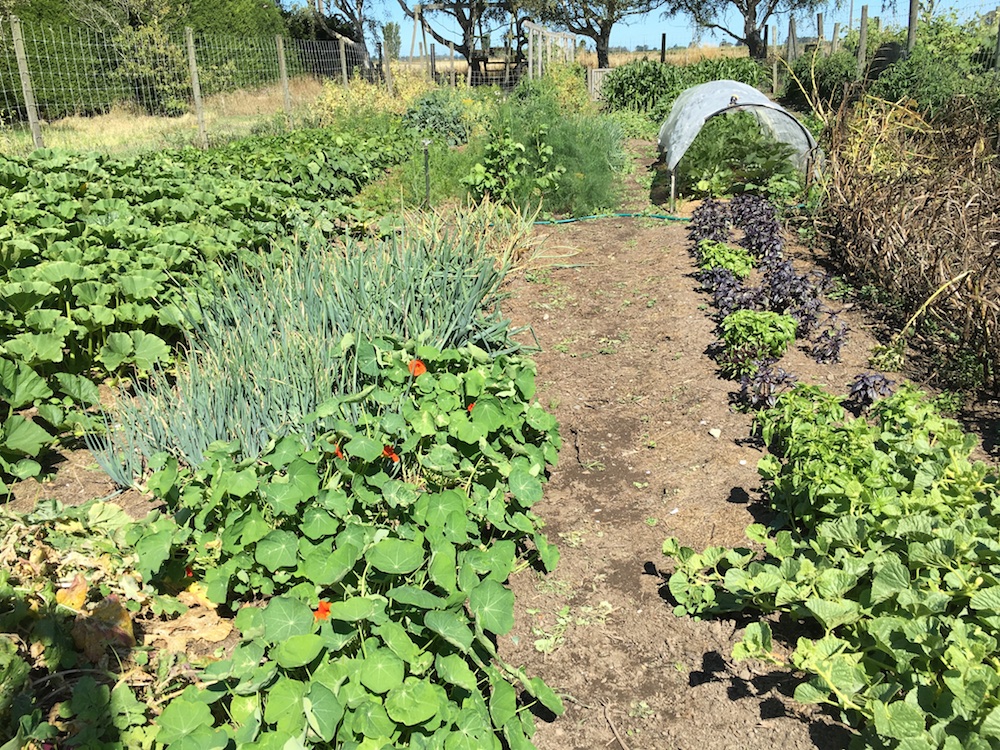
The pond garden has become something of a potager, too, with fruit trees, herbs, vegetables, and annual flowers nestled together with an eclectic mix of native and non-native perennials. A lovely change from the rank grass that filled the space for the first eight years we lived here!
Thrips

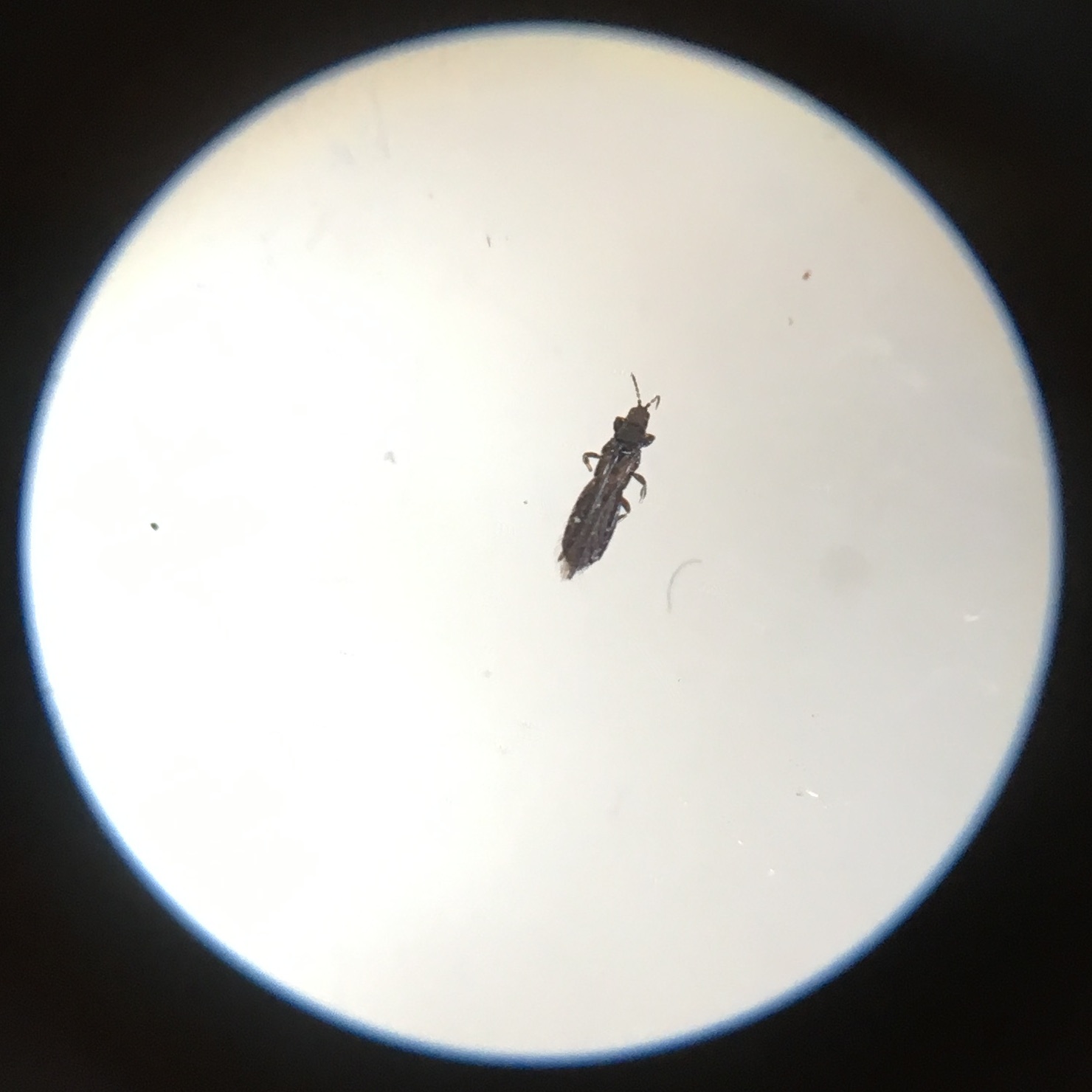
2016-02-12 10.51.28I can’t help but think about thrips at this time of year. They seem to love my office. They crawl everywhere. I’m constantly swiping them off my face and arms, and they end up in drifts on my desk when they die.

Thrips are tiny cigar-shaped insects with hairy wings (the order name, Thysanoptera, means fringe-winged). Most suck plant juices, and they leave characteristic little puncture wounds in leaves. Some transmit plant diseases.

Thrips are fascinating insects for a number of reasons.

Their development from egg to adult is not quite incomplete metamorphosis (in which the young look like the adults, but lack wings), and is not quite complete metamorphosis (in which the young look very different, and go through a pupal stage before adulthood). It’s a mix of both, and differs among species within the order.

Thrips are also left handed. As a south paw myself, I appreciate this. Instead of having a symmetrical mouth, like most other insects, with mandibles on both sides, thrips only have a left mandible. No one knows why this is the case. I like to think it’s because left handedness is just better.

Another thing I find intriguing about thrips is that some species will bite people, though they feed on plant juices. Our thrips, which I believe are Limothrips cerealum, the grain thrips, have this annoying tendency. They don’t bite often, but now and again you’ll feel a little stab and wonder what the insect is playing at.

Even linguistically, thrips are interesting. “Thrips” is both singular and plural—one thrips, many thrips. Thus, in the following poem, I couldn’t rhyme thrip with trip, it had to be thrips with sips…;)


Thysanopteran

Little thrips,

What does it think

As it delicately sips

The juices of plants?


Does it prefer

My prizewinning rose?

Or does the pollen

Tickle its nose?


Does it find

The broccoli sweeter?

And how can it be

Such a big eater?


Attack of the Killer Squash

2016-02-08 14.12.02 smOne of the new varieties in my garden this year is the Jumbo Pink Banana Squash.

It is neither pink, nor banana-like, but it IS jumbo—both plant and fruit.

Really jumbo.

Like, scary jumbo.

Like, “how are we going to eat even one of those?” sort of jumbo.

And earlier this week, they grew to, “OMG they’re going to take over” jumbo.

45 cm (18 inches) long and still growing...

45 cm (18 inches) long and still growing…

I walked down the centre path in the garden, past the sweet corn, and something grabbed my face.

It was a pink banana squash tendril, a good five metres from the closest plant and hovering at eye level. As I recoiled and realised what it was, I couldn’t help exclaiming out loud, “It’s a pink banana squash!”

I was sure I heard a deep, “Mwahahaha!” in response.

Jewellery

2016-02-01 15.47.45I don’t wear jewellery.

No earrings—they irritate my ears—the last time I wore them was at my sister’s wedding twenty-three years ago, and that was the first time in years.

No necklaces or bracelets—they hang down and catch on things as I’m working.

And rings are hopeless. I lost the stone from my engagement ring twice—knocked out by some violent motion—before I gave up on wearing that. I even regularly threaten to remove my wedding band, as it catches in tools and branches.

Frankly, no jewellery stands a chance of survival on me.

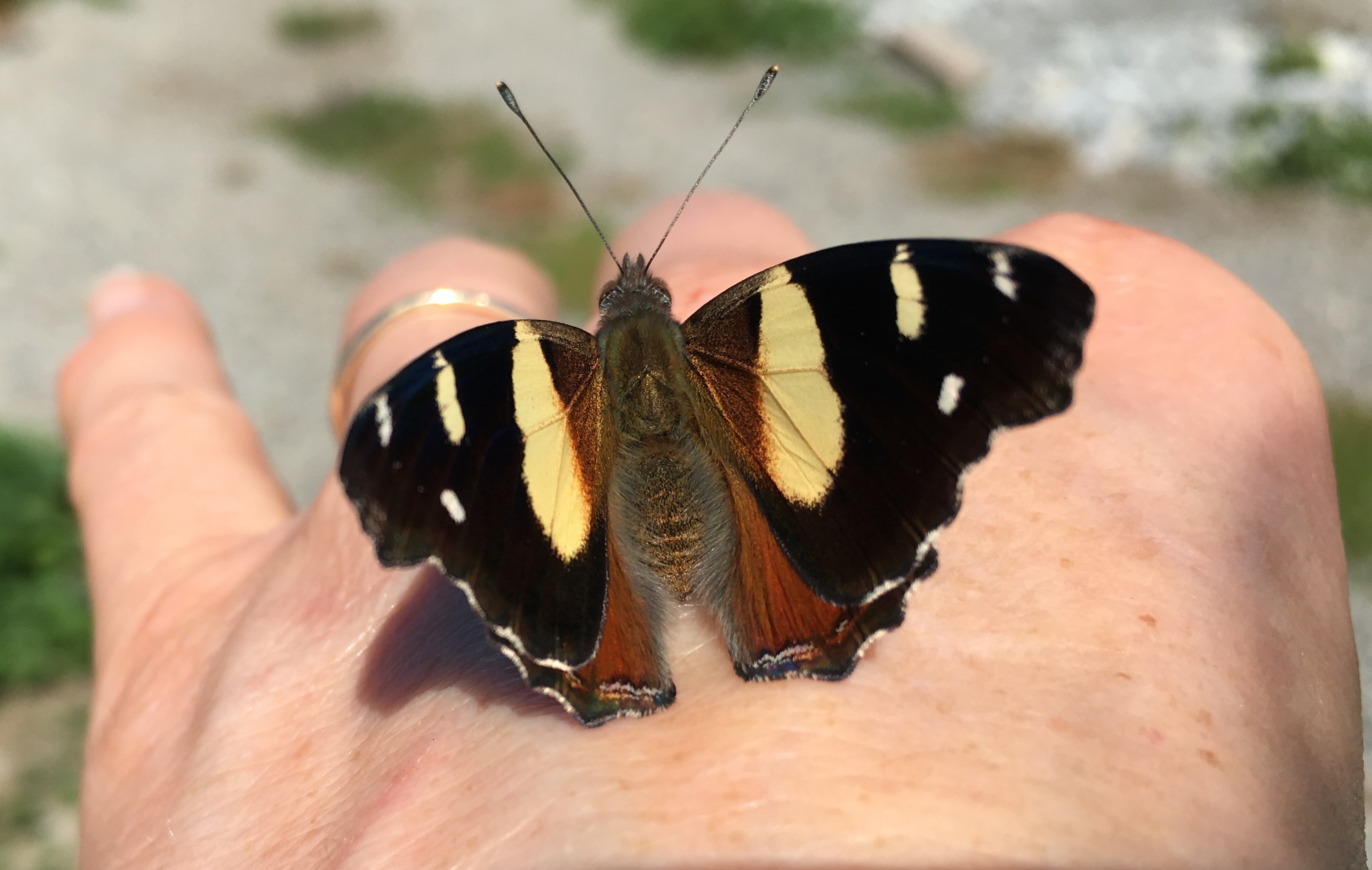
But when this gorgeous ornament (a yellow admiral) landed on my hand today, I stopped what I was doing. I ignored my work for as long as it was content to stay there. This sort of jewellery, I’ll wear.

Damselflies

2016-01-31 13.44.27 cropTwo years ago, my husband did what he’d been threatening to do for years—he dug a pond. At some point, I’ll write a blog post on the pond itself, but today I want to talk about the damselflies that live there.

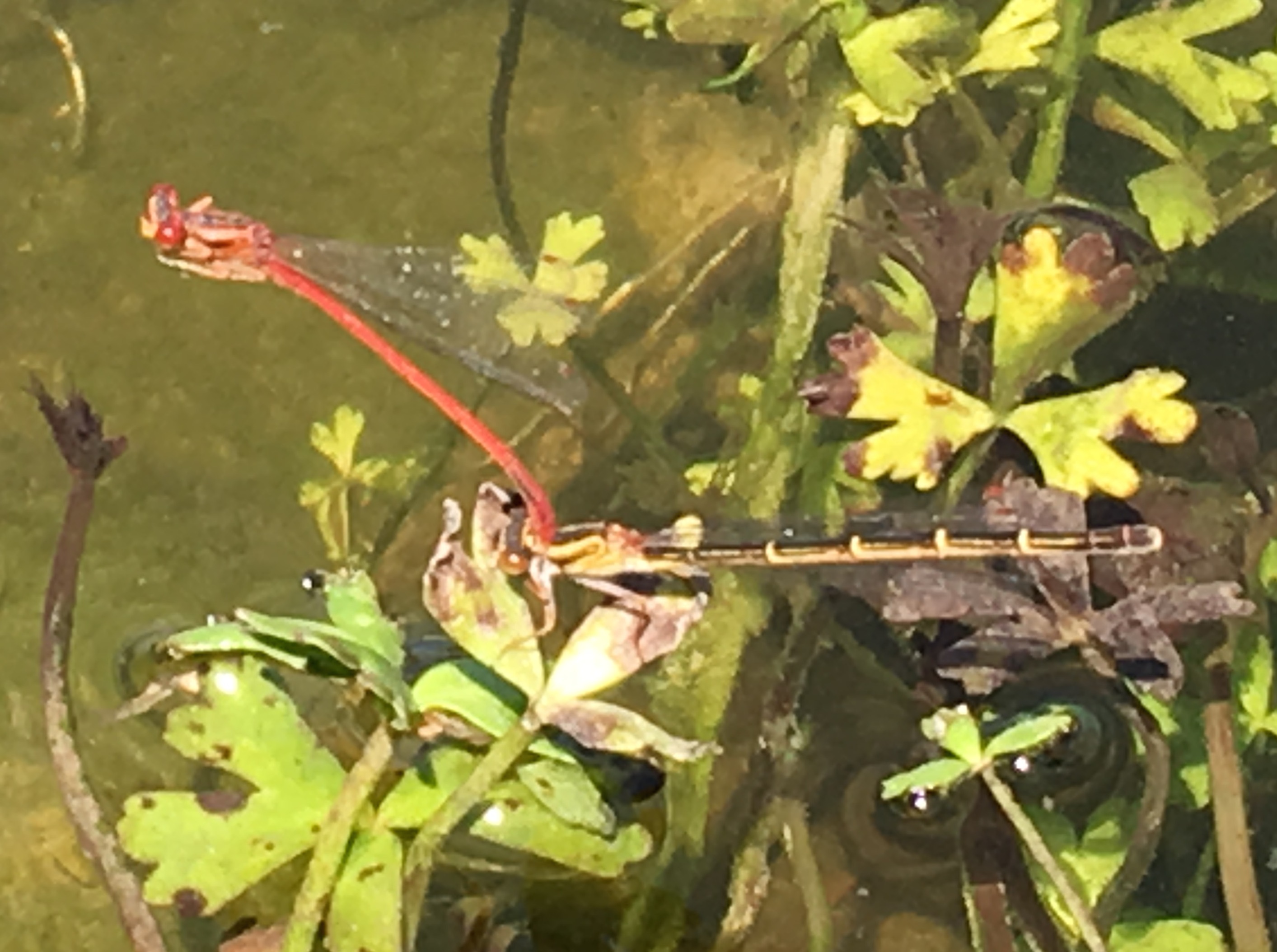
I took a break from my work this morning and spent a few minutes sitting beside the pond. It was swarming with red damselflies (Xanthocnemis zealandica). They were mostly males jockeying for the best territories—chasing and dive bombing each other, all short jabs of snapping wings.

2016-01-31 13.44.40 cropThe females were there, too. Every one I saw was being guarded by a male as she flitted from plant to plant, dipping her abdomen into the water to lay her eggs in the plant’s submerged stem. Damselfly mate guarding is awkward at best—the male grasps the female behind the head with claspers on the end of his abdomen and discourages other males from mating with “his” female. Both insects must beat their wings to keep the pair aloft, and as I watched them, it wasn’t at all clear to me who chooses the spots to stop and lay eggs.

When a pair stops, the male often supports himself entirely with his claspers, tucking in wings and legs and forming a bizarre appendage to the female as she gets down to business. She appears completely oblivious of her escort, resting after laying each egg, as if to say, “If you want to cling there in that ridiculous pose, that’s fine by me, but you’re not going to rush me.”

The eggs these girls lay will hatch in a week or two, and the nymphs will spend nearly a year living in the pond, eating other aquatic invertebrates with a hinged, extrusible mouth that is the stuff of horror movies, before emerging from the water as adults.

I sat and watched the spectacle for a while, and just as I was about to leave, I was treated to the sight of the other damselfly resident in this part of New Zealand—the blue damselfly (Austrolestes colensonis)—a large neon-blue insect that makes the red damselfly look dull.

Unfortunately, he didn’t stick around for a photograph, but I’ll be looking for his nymphs in the water later in the year.

Archaeological Adventures

100_2163 smDigging in our yard is an archaeological adventure. A hundred and thirty years of rubbish deliberately buried or accidentally lost is hidden under the sod.

Our little acre and a half was separated from a large sheep run in the mid-1800s and used as a Council gravel reserve—the braided rivers that crisscrossed this area over the past 20,000 years left a rich lens of rocks here. The pit and hill of the quarry are about the only relief we have on the property.

Then the property was freeholded, and a house was built (which we live in today). There came a succession of mostly poor and often strange owners. There has never been rubbish pick up here (not even today), so much of the trash produced by early owners was buried on site.

There was once a woman who appreciated cosmetics—the little glass pottles that held face cream and powder attest to her taste.

Somebody made a homemade handle for a knife, then dropped it while building the ablutions shed (now our bathroom).

More than one pitchfork was either discarded or lost. The head of one now acts as a convenient set of hooks in my garden shed.

Then there were the brothers who brewed moonshine. According to the more senior neighbours, who were just young’uns at the time, these two each had their own brew, and neither wanted to share with the other. So they hid bottles all around the property. Under the floor of the calf sheds, under the house…the brown bottles were everywhere when we moved in, their lids rusted away, hoarded moonshine long gone.

There are crockery and cutlery, wire and chain, hinges and gate pins, cow bones and tomato sauce bottles…Dig a hole just about anywhere and you’ll find all the debris of a rural property.

Usually we can identify the items we find—our lifestyle isn’t much different from the former inhabitants, and many items are familiar.

Occasionally we come across something we don’t even know how to begin to identify, like this strange metal disk sprouting wires. Our little archaeological mysteries—glimpses into the more obscure aspects of our predecessors’ lives. These items ultimately end up in our local landfill—maybe some archaeologist excavating the landfill in a couple of hundred years will know exactly what those things are.

Hedgehogs

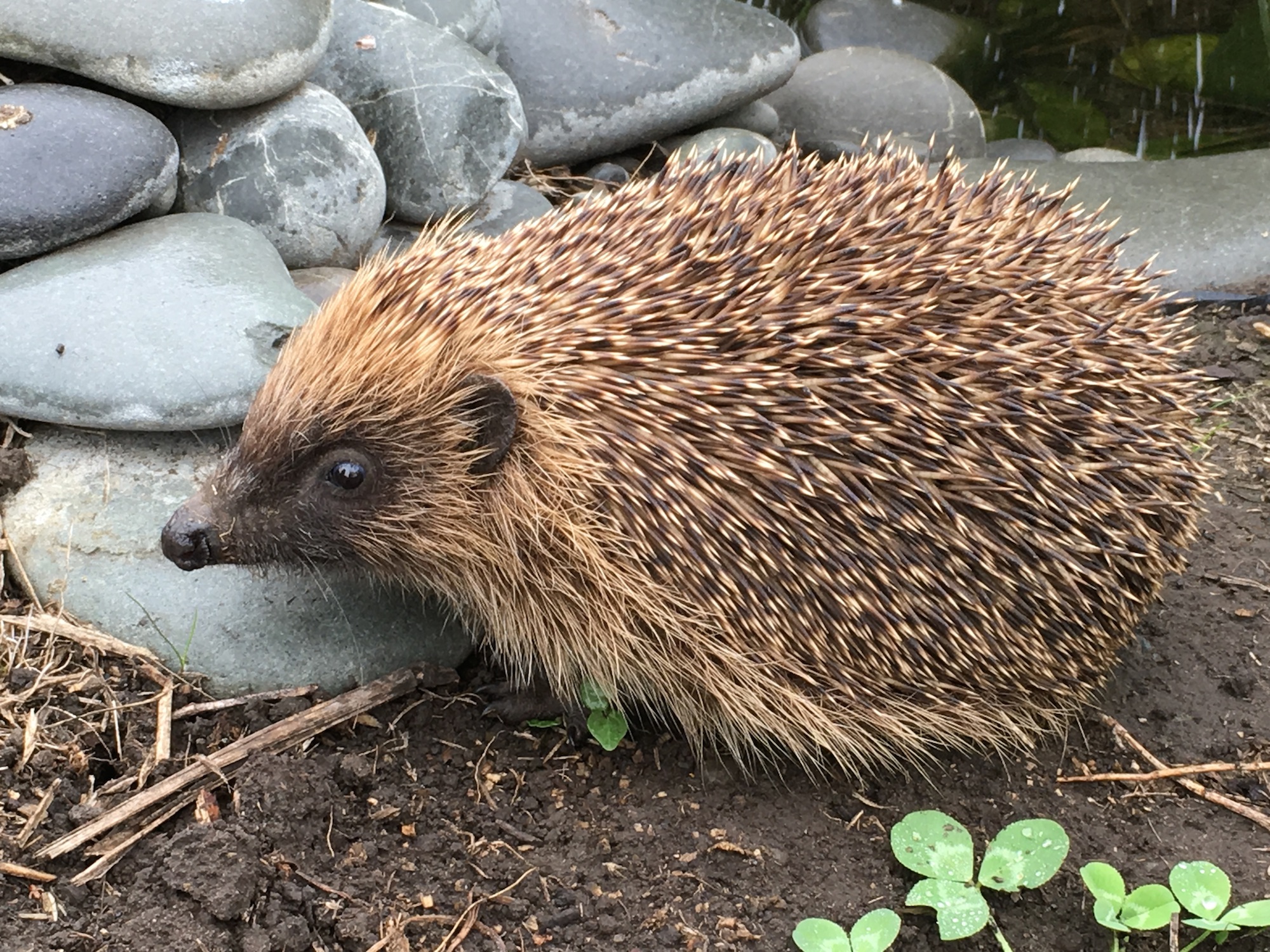
2016-01-26 18.07.41 smThey’re adorable and unafraid of humans. They eat snails, slugs and grass grubs. What’s not to like about hedgehogs?

Unfortunately, a fair bit, here in New Zealand. In addition to eating pests, they also feast on ground nesting bird eggs and chicks, skinks, and many native and endangered invertebrates.

And they’re more common in New Zealand than they are anywhere in their native habitat.

And I think they’re more common in our yard than anywhere else in New Zealand.

Now that the days are getting shorter, I regularly step on them in the dark when I’m out milking and feeding the animals. I certainly wouldn’t walk barefoot through the yard at night here.

They snuffle around the flower beds, snorting and grunting, oblivious to anything non-edible. They spread compost all over the yard.

They also apparently love cucumbers—last year I had to trap one out of the garden after it managed to squeeze in through a hole in the rabbit fencing. It took a bite out of each cucumber—obviously trying to find the perfect one.

They like the apples and peanut butter I bait the possum traps with, and though I don’t aim to kill them, I will admit that I’m not upset when I catch a hedgehog instead of a possum (my trapping seems to have no effect whatsoever on the population of either pest, anyway…). They snatch the eggs of the spur-winged plovers that nest unsuccessfully every year in our paddock, and I’d much prefer plover chicks to hedgehogs in the yard.

It still doesn’t stop me from smiling when I see one trundling along through the grass.

They are adorable after all…

Rainbows

2016-01-25 20.44.42 smThe cloud hung over us, a smooth grey blanket pouring steady rain.

But out on the edge, near the mountains, the sky was clear—a thin sliver between cloud and mountains. So as the sun set, for a few minutes, it sat in the gap.

Gold rays of sunlight lanced across the plains, setting the trees on fire and casting immense shadows from every obstacle.

And forming a perfect double rainbow so bright it hurt to look at it.

Respite

Before the rain...

Before the rain…

A week ago, I was looking at a garden struggling to stay alive, even with my regular watering and mulching. Relentless days of hot sun and no rain to speak of since early spring—things were grim.

Then, last Friday night it rained. Saturday was cloudy and rainy. Sunday, Monday and Tuesday were cloudy and misty. Four days of relief.

After the rain.

After the rain.

The garden responded. Many plants doubled in size in the past week. Zucchinis matured, pumpkin runners snaked into neighbouring beds, peas began a second flowering.

It will dry out again. The rain wasn’t nearly enough to make up for the drought. Already this afternoon, the temperature is back in the low 30s (nearly 90ËšF).

But I’m thankful for the respite. It made all the difference to this week’s garden, and it will continue making a difference for weeks.

Sometimes that’s all we need—a vacation, a respite, a little time for recuperation, time to grow and fortify ourselves before we are plunged back into a struggle.

And now that it’s rained, my respite from weeding is over. The weeds responded as much as the crops did, and it’s back to the grindstone for me.

But I will do so with more cheer, knowing that the plants have had a break, too.

Sunrise, Sunset

100_3310 smThe days are getting shorter.

You might not notice unless you push the daylight as hard as I do. Because I get up so early, I can feel the shrinking days by early January.

It starts with me oversleeping. I don’t use an alarm, so as the days get shorter, I find myself sleeping longer. Just by a few minutes at first, but by now I don’t open my eyes until 5.15 am, and don’t bother getting up until 5.30—the animals tell time by the sun and won’t look for me until then anyway.

At some point, I’ll have to switch to getting up in the dark. At some point, the days won’t be long enough.

But for now, I’ll enjoy the extra sleep.