Step on a Hedgehog

2016-01-26 18.07.41 smMy daughter came to me frustrated yesterday evening.

“What is fear?”

Knowing she had just been out in the dark, I asked her if she was frustrated because she was afraid of the dark.

“No, I’ve gotten over my fear of the dark. Now I’m afraid of hedgehogs.”

“Ah. You’re afraid of stepping on them in the dark.”

She nodded.

“Well, you learned that from your father, who worries about stepping on hedgehogs in the dark. But I’ve actually stepped on hedgehogs in the dark.” I shrugged. “It’s not so bad—for me or for the hedgie. You tend to feel it before you put all your weight on it, and you pull back before you hurt it.”

She looked relieved.

It got me thinking about the nature of fear, how easily it is taught, and how difficult it can be to overcome.

Teaching children about insects, I see fear all the time. The fear that another living thing might harm us (and sometimes the fear that we might harm another living thing). Much of my teaching is aimed at overcoming those fears.

And in saying ‘overcoming,’ I don’t mean eliminating those fears—that’s the work of decades, not of an hour.

I know that, because I experience those fears, myself—they are deeply rooted in our culture, and I was taught them just like everyone else was. But I have confidence in spite of the fear. Part of that comes from knowing that the worst that can happen is really not all that bad (for most things). I have been bitten, clawed, and stung by songbirds, parrots, raptors, rabbits, rodents, snakes and all manner of insects and spiders, and have survived it all. More importantly, I’ve learned that if I understand the animal and move with confidence and care, I am unlikely to be hurt (or to hurt the animal).

So I don’t try to make children unafraid of insects; instead, I teach them how to move with confidence and care, even if they don’t feel the confidence yet. I teach them how to hold an insect safely. If I think they’re ready for it, I give them an insect that is likely to bite them—a tiny nip they might actually feel, if they’re paying attention. They might cry out, “Oh! It bit me!” They might fling the insect off their hand. But chances are good, they’ll pick it up again, because the worst has happened, and it wasn’t so bad. The act of taking the risk once makes it easier to do it again. Confidence grows. The fear may still be there, but it is diminished by understanding and experience.

I hope my daughter does step on a hedgehog in the dark. She will stumble in her effort to not squash it. She’ll cry out in surprise, and then laugh as the offended hedgehog lumbers away. When she goes out in the dark next, she’ll walk with more confidence. And because the fear will probably still be there, she’ll feel incredibly brave in doing so.

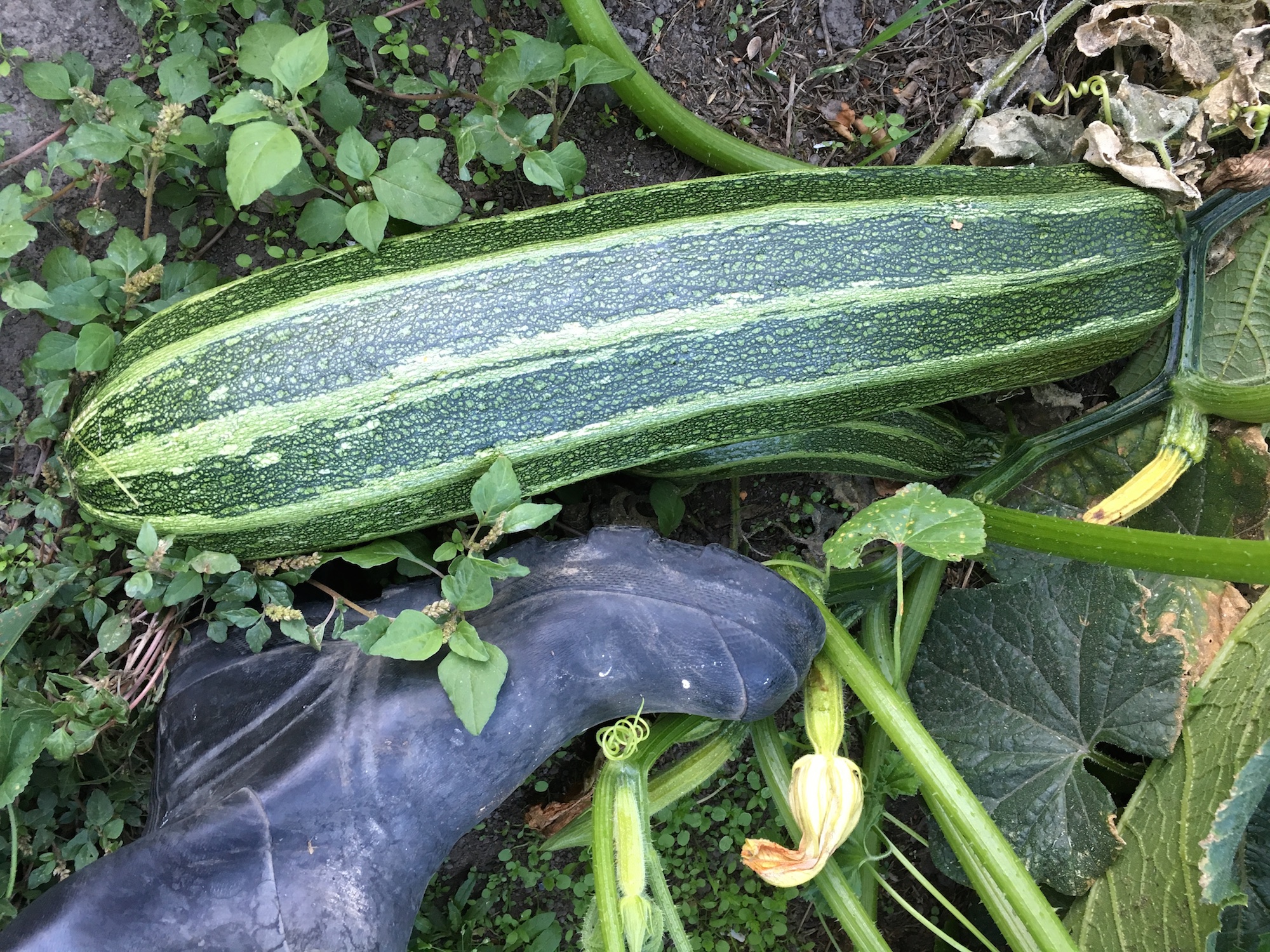
What do you do with a giant zucchini?

2016-04-02 18.47.15 smTo the tune What do you do with a drunken sailor?


What do you do with a giant zucchini?

What do you do with a giant zucchini?

What do you do with a giant zucchini,

Early in the morning?


Hey, they just get bigger.

Hey, they just get bigger.

Hey, they just get bigger.

You can’t eat them all.


zucchinienchiladassmCook ’em in a sauce and make enchiladas,

Cook ’em in a sauce and make enchiladas,

Cook ’em in a sauce and make enchiladas,

Early in the morning!


Hey, they just get bigger.

Hey, they just get bigger.

Hey, they just get bigger.

You can’t eat them all.


chocolatezucchinicakesmBake ’em in a cake and add chocolate chips,

Bake ’em in a cake and add chocolate chips,

Bake ’em in a cake and add chocolate chips,

Early in the morning!


Hey, they just get bigger.

Hey, they just get bigger.

Hey, they just get bigger.

You can’t eat them all.

Puddles of Crickets

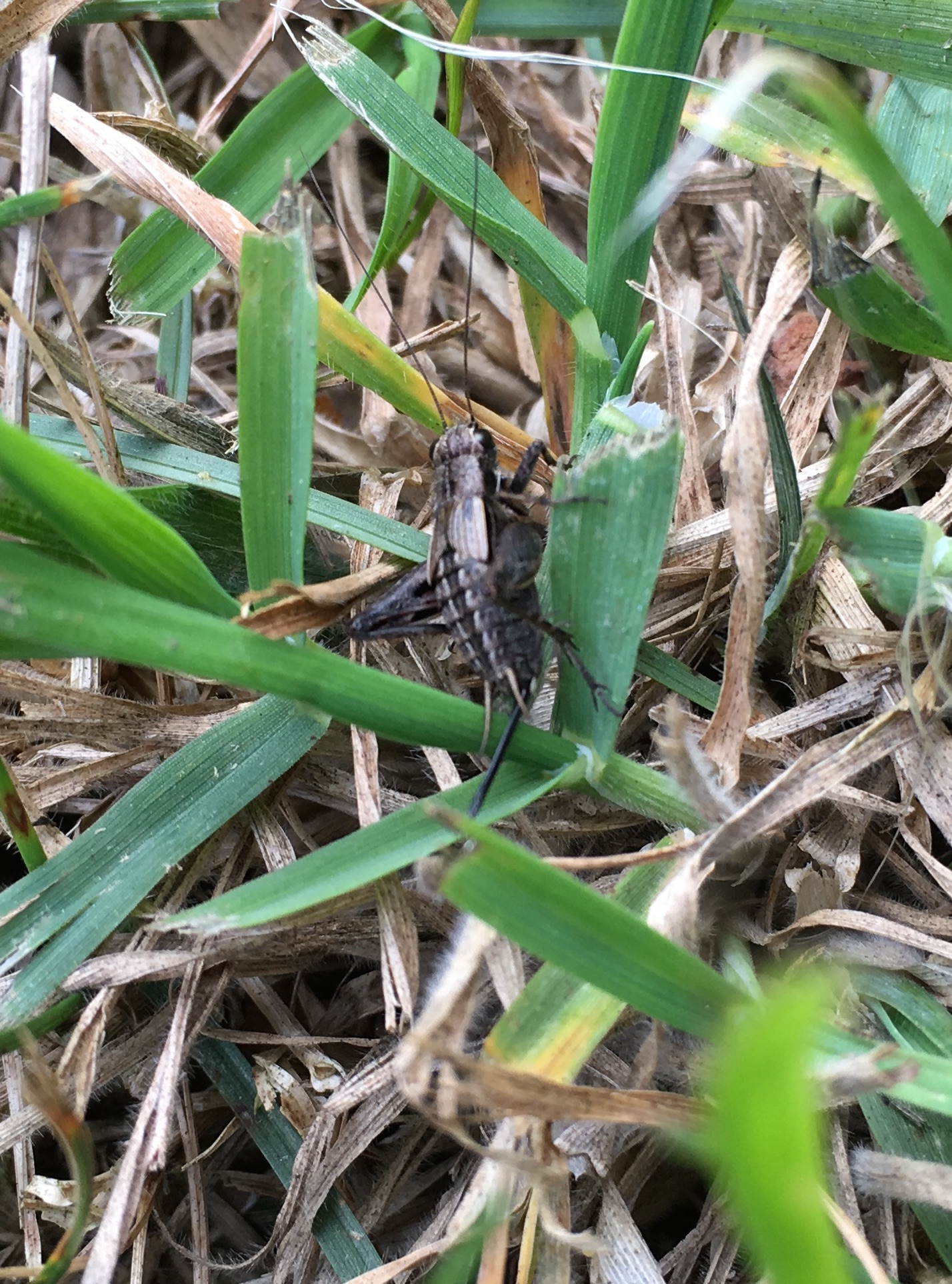
A female small field cricket--the long ovipositor (egg laying tube) at the rear tells you she's a girl.

A female small field cricket–the long ovipositor (egg laying tube) at the rear tells you she’s a girl.

It was like walking through puddles, my daughter said.

There had been no rain.

But the grass was so alive with crickets, they rippled away from every step like splashes of water.

By the time I got there, she had splashed all the crickets away, but I could still hear them. Their little bell-like songs have been a constant background noise all summer, and are particularly loud now, in autumn, when most are adults.

It’s only the males who sing, and they do it by rubbing their short, leathery wings together. The song is fiendishly difficult to locate—it sounds like it’s coming from a dozen places at once, and finding a calling male is all but impossible for a predator. The other crickets are able to do it, though. Males’ calls stake out their territories and attract females.

When I ran the Bugmobile, I used to take crickets to schools, and I always wanted to have a couple of males so the kids could hear them singing. Catching males was a challenge. Not only are they difficult to locate by sound, but if you do stumble across one, it will drop immediately to the ground and scurry underneath the leaf litter like a cockroach. Females, on the other hand, take great bounding leaps to get away, making them easy to catch in a sweep net. I could collect a dozen females in one sweep of the net, but it might take me half an hour to search out as many males.

It was the same story when I went to photograph them for today’s blog post. Males singing all around me, and not one available for the camera. The girls were more obliging. It wasn’t quite like walking in puddles, but there were an awful lot of them hopping around in the grass.

Death in the Paddock

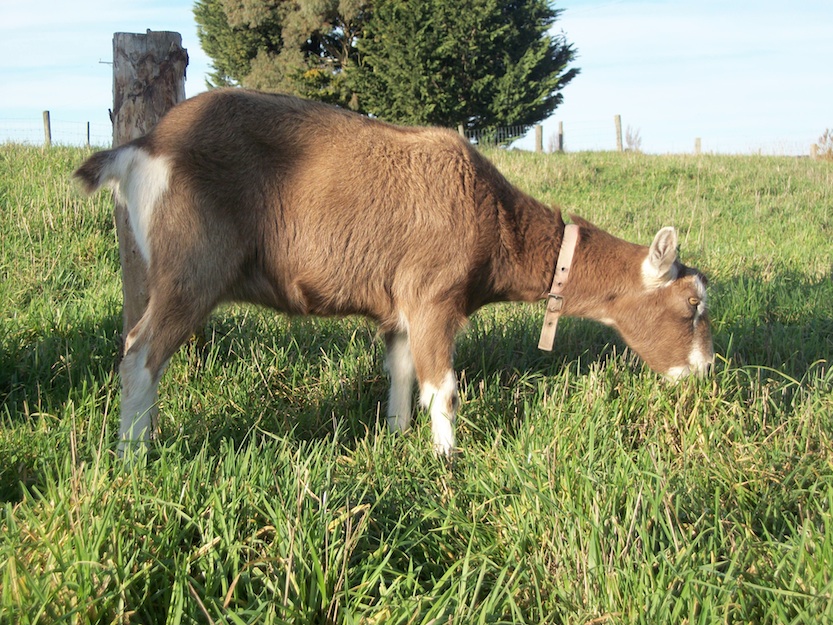
100_1931smI buried a goat today—Ixcacao, my little toggenburg. Well, I considered her little until I had to dig a hole big enough for her, and drag all 65 kg of her deadweight over to it.

I’ve found that, for most of the goats, digging their graves gives me the time and exercise I need to face the loss stoically. Usually, anyway. But each death is a blow.

There was Hebe, 9 months old, dead two weeks after I bought her. No clear cause. Just dead one morning.

Quickly following her was Hebe 2, four months old, who tore the ligaments in one of her knees. “If she were a rugby player, we’d operate on her, but…” was the way the vet delivered the verdict. I had kidded her myself at the end of a long struggle with three tangled kids. She was weak and couldn’t stand properly for the first few weeks, and I’d hand fed her until she could hold her own against her two big brothers. I held her while the vet put her down.

Hebe is the Greek goddess of youth. I should have known no goat named Hebe would live to adulthood.

There was Demeter, eight years old, who poisoned herself on green acorns, destroying her liver and causing her to waste away. She had always been a sweetheart. I sat next to her in the goat shed, stroking her head while the vet injected her.

There was Delilah, three years old, who wasted away, probably from Johnes disease. She was never particularly friendly, but I sat with her, too, when the vet came to put her down.

Ixcacao, four, went too fast for me to call in the vet. She had been off her feed a bit yesterday, which I attributed to being in season. Now, I think she must have had a tumour—she’d been looking a bit lopsided lately. And I wonder if it had been there in the spring when she delivered a dead, malformed kid. I won’t ever know, I suppose. She gave me no signs of trouble until late yesterday.

As a breeder once said to me, “If you have goats, you have dead goats.” It just goes with the territory, I suppose.

And tomorrow we will get up and carry on with another ordinary day.

Small Town Celebration

2016-03-26 10.31.51 smWe spent Friday and Saturday nights last week at the Okarito campground. As it happened, Saturday was Okarito’s 150th anniversary celebration. Okarito used to be a town of about 4000 people, back in the late 1800s when the West Coast gold fields were booming. The town sported a 25 hotels, 3 theatres, two banks, several general stores, and a public swimming pool, Today it has a year-round population of about 30. Most of what was once bustling streets has been reclaimed by the rainforest. There are no hotels (though many of the baches are rented as holiday homes), no banks, no pool, and the only remaining general store serves as a tiny museum and event venue seating 40. You can buy a coffee and insect repellent at the local kayak rental company.

Okarito is 30 minutes drive from the township of Franz Josef Glacier, and 3 hours from Hokitika. In the middle of nowhere, I was curious to see how many people would actually show up to the town’s 150th celebration.

It started off slow…

The festivities were scheduled to start at 9 am and run through to 10 pm on Saturday. At 9.00, there were a few people setting up in the marquis…

About 10.30, the bouncy castle was inflated, and half a dozen kids tumbled around on it. We bought a coffee from a food truck that had parked on the edge of the commons and some baked goods from some girls who had set up a table on the lawn. There was a woodworker, the local scout troupe, a few Department of Conservation staff, some locals selling second-hand goods, a knitter selling baby sweaters, a woman selling jam and goat cheese…And very few customers.

By the time the auction started, there might have been 50 visitors, most locals. A good proportion of the items up for auction were purchased by the auctioneer.

A couple of dozen people enjoyed the barbecue dinner.

When the band started playing at 7pm, there were maybe 30 people in attendance. But the music brought out a surprising number, and within half an hour, there was an audience of 125.

Most of that 125 knew one another. They were local farmers, residents, bach owners, regular visitors, and young people working the local tourism industry. Everyone knew each others’ dogs by name, and the dogs chased each other around the crowd like young cousins at the annual Labour Day get-together. It was a lovely atmosphere—more like a family reunion than a public event.

I don’t know whether the Community Association had hoped for a larger crowd, or if it exceeded their expectations. I don’t know if they made back the cost of the marquis rental. But I do know that those who were there smiled, laughed, and enjoyed the day.

Diptera—the Flies

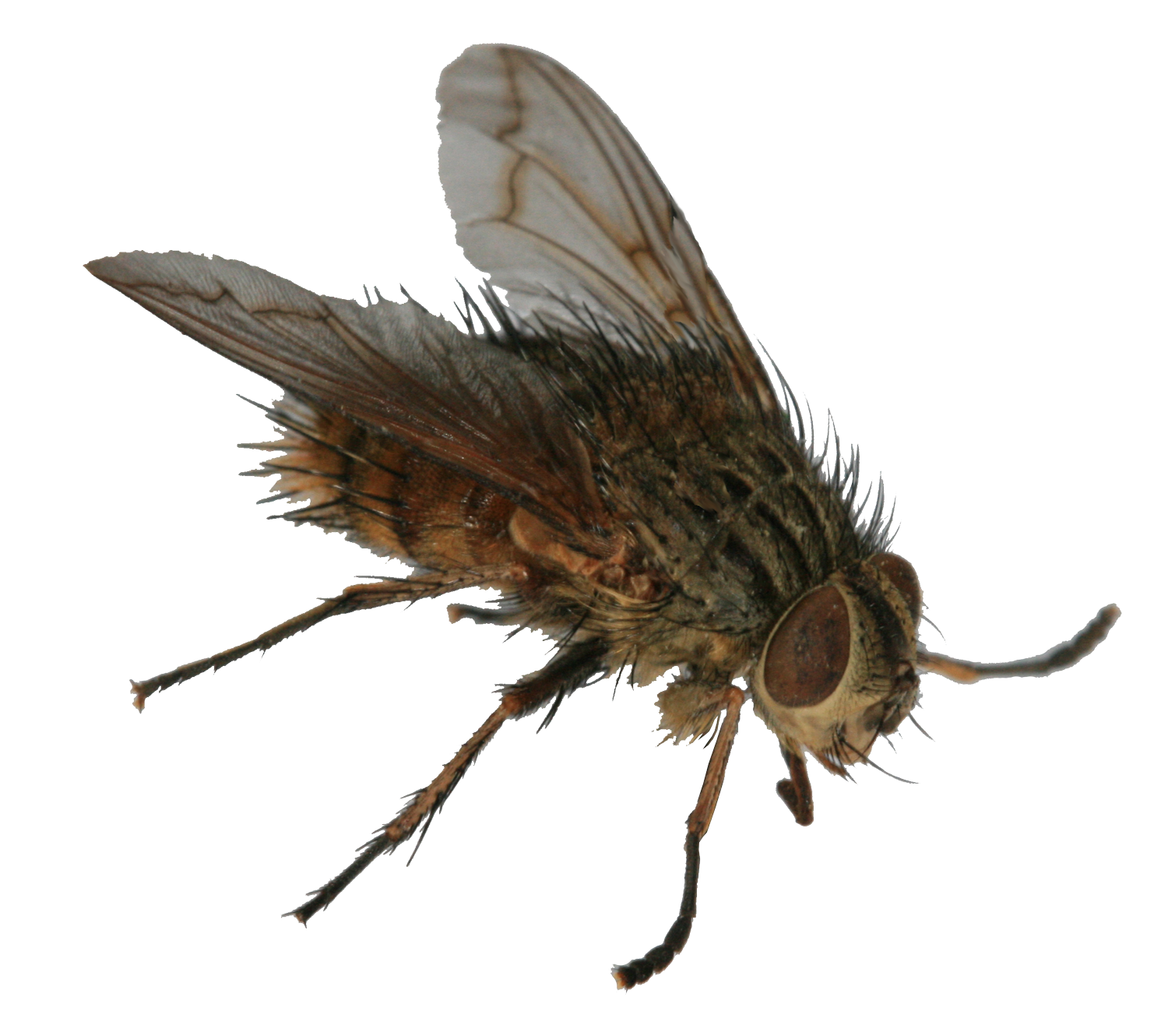
tachinid2With several thousand sheep as neighbours, it’s no surprise the house is full of flies all summer.

There are, of course, house flies, but the Dipterans don’t stop there, and not all of them are around for the sheep poo. We also have lesser house flies, crane flies, fungus gnats, midges (which I’ve mentioned before), several species of blowfly, drone flies, striped dung flies, ginger bristle flies, two species of soldier fly, robber flies, longlegged flies…and those are just some of the flies that find their way into the house.

Not all of the flies are pests, though none really belong in the house. Some are important pollinators, many are decomposers breaking down plant and animal material, some prey on pest flies, and all are food for other animals.

And, like all insects, they are inspiration for doggerel…

The order Diptera
Known as the flies
Have one pair of wings
(I tell you no lies)

They’re often seen flying
‘Round garbage and such
And generally people
Don’t like them too much.

Hedge trimming

Trimmer looming out of the early morning fog. Note the circular blade to the left--he switched to that later.

Trimmer looming out of the early morning fog next door. Note the circular blade to the left–he switched to that later.

THWACK! THWACK! THWACK! THWACK! THWACK! THWACK!

The sound, like a helicopter crashing into a stand of trees, is unmistakable, though the first time I heard it, I had no idea what it was—a giant hedge trimmer.

Hedges are a necessity here on the windswept Canterbury Plains, and autumn is hedge trimming season.

Our hedge, hemmed in by fruit trees and the septic system, has to be trimmed by hand—a full-day job for my husband and me, and one we put off as long as we can every year.

Here's another, snapped along the roadside on the way to town.

Here’s another, snapped along the roadside on the way to town.

Our neighbours, however, have their hedges trimmed by professional hedging contractors. The hedge trimming machines they use are terrifying—giant, armoured vehicles with a long crane arm bearing any one of a number of wicked-looking cutting devices.

There are circular saw blades the size of a man, two-metre wide lawn mower blades, heavy chains that just beat the branches off the hedge. The machines must be Occupational Safety and Health’s worst nightmare. Some have an 18 metre reach, and the result is perfectly trimmed hedges the size of castle battlements.


Doing Nothing

2016-03-19 18.36.29 HDR smMy husband says I don’t spend enough time doing nothing.

He’s probably right—I rarely sit down, and even when I do, I like to keep my hands busy.

But if there was ever an afternoon made for doing nothing, today was it.

It was hot and windy, and the shady front porch offered a cool and calm refuge after a day canning applesauce.

And so I sat.

I chatted with my husband.

I enjoyed a cold beer.

I watched the wind bend the trees in the front yard, and idly noted that the herb garden looked much better for the rain on Thursday.

For nearly twenty minutes, I did nothing.

I reckon that’s not bad, for a novice. With practice and training, someday I might make it to an hour or more!

Fruit overload

2016-03-15 19.20.44 smCan you have too much fruit? I’m not certain, but if you can, I think we’re approaching it.

I mentioned the apples the other day—there’s still a 20 litre bucket and a large bowl full of them in the kitchen. Then there are the melons I mentioned yesterday—a great heaping platter of them, and more to come in the next few days.

And a houseguest brought us a box of apricots as a gift.

And the grapes have started coming in, so there’s a colander full of them in the kitchen.

And today I went to pick up 200 daffodil bulbs I ordered, and it turns out that the woman selling the bulbs was the first person I ever sold goat kids to—she’s still got one of them. Anyway, so we got to talking (as you do), and next thing I know, she’s filling a bag with peaches for me—dead ripe and luscious.

So sitting in the kitchen right now are probably 10 kilos of fruit for every person in the family.

So I wonder, can you have too much fruit?


Cat Games

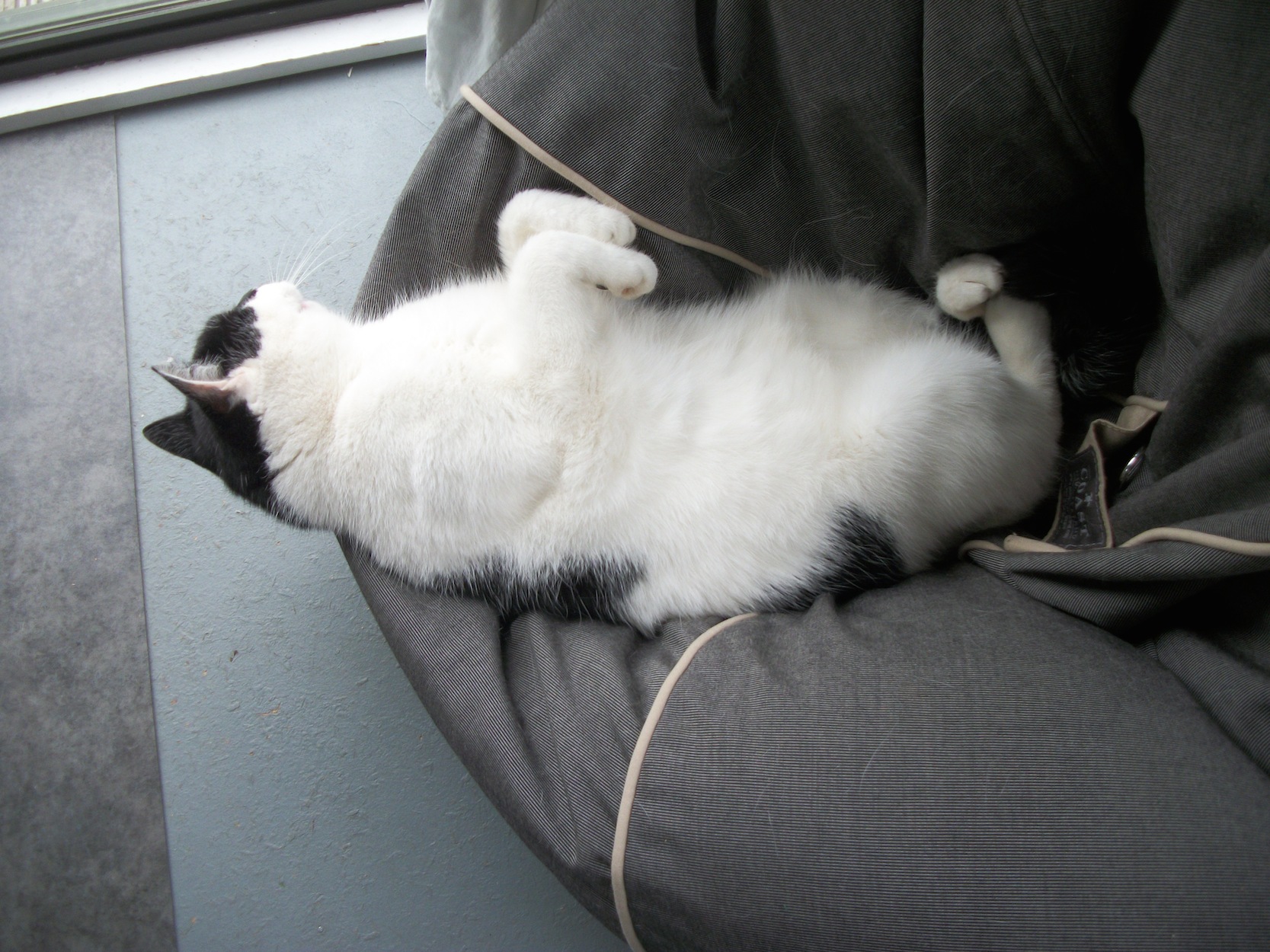
Exhausted after a hard night's hunting.

Exhausted after a hard night’s hunting.

The routine is the same every morning. About 5 am, the cat starts howling at the bedroom window. I eventually roll out of bed, grumbling at him, but knowing I need to get up anyway. On my way through the house to the bathroom, I let him in. He has a snack while I get ready to milk the goats. He comes back outside when I go out.

I set up grain and milk pail at the milking stand, then head out to let the chickens out for the day and feed them.

The cat is there, in the tall grass half way to the chicken coop. His black and white body stands out stark on even the darkest morning. He crouches as I go past on the way to the chickens. When I come back, he pounces. I can almost hear him saying,

“Boo! HAHAHA! Gotcha!”

I head to the paddock to bring out the first goat. As the goat trots up the hill toward the milking stand, the cat bounds across the goat’s path, back arched, leaping menacingly as he goes, as though he is going to bring down an animal ten times his size.

Or he might lie in wait for the goat’s return to the paddock, leaping out from behind the corner of the shed.

Sometimes, he gets more than he bargains for. If it’s Artemis he threatens, it goes badly for him. She has a vendetta against the cat, and lunges at him every chance she gets. If I’m not right there, ready to grab her collar and hold her back, she’ll chase the cat all over the yard to show him who’s boss.

In truth, I think the cat enjoys being chased by the goat. He enjoys pretending to attack me in the dark as I feed the other animals and do the milking.

By the time I’m finished with the milking, the cat is done playing. He trots back indoors with me, has another snack, then finds a cosy place to curl up and sleep for the day.