Yard Long Red Noodle

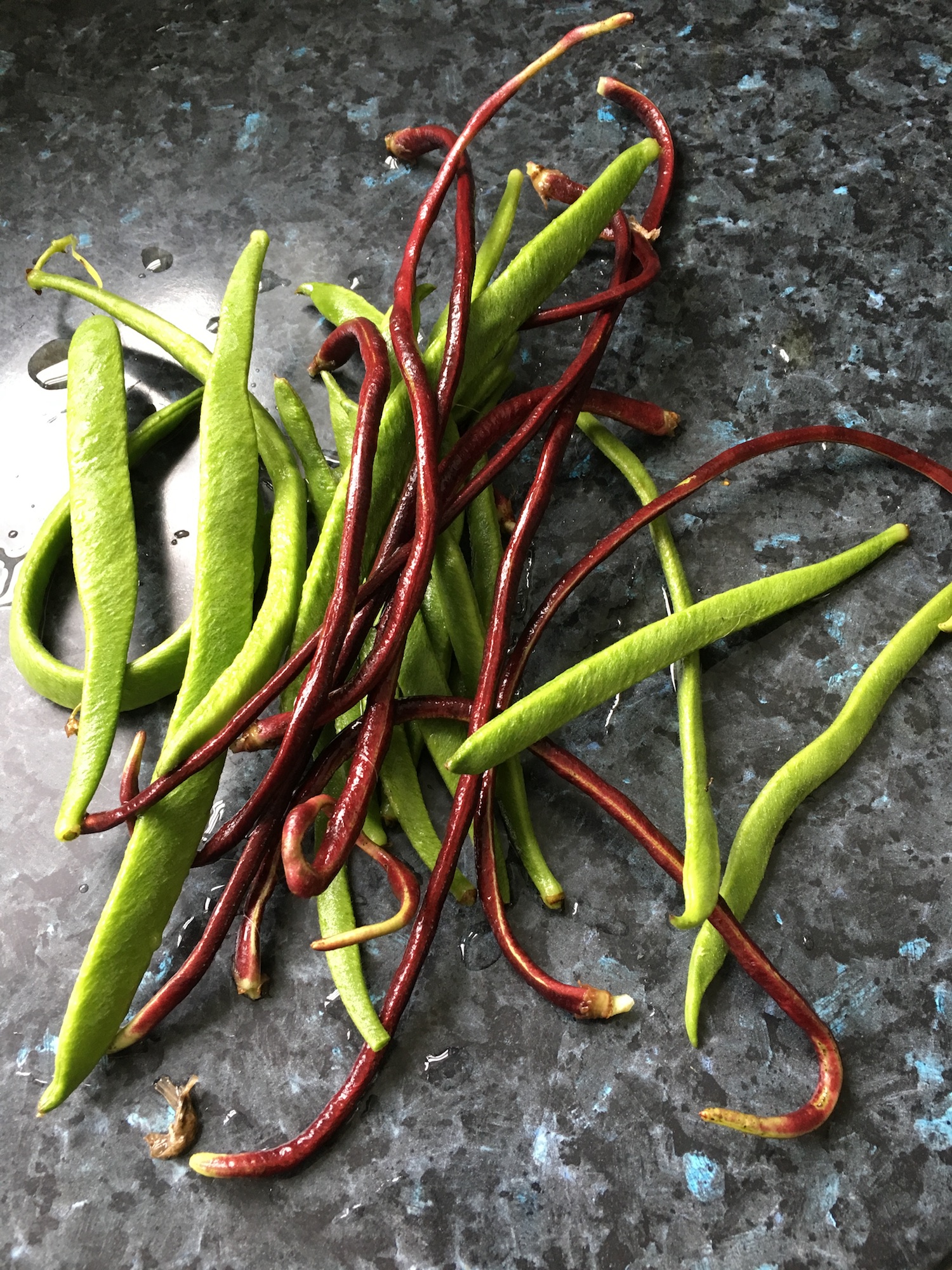
Yard Long Red Noodle alongside scarlet runner beans.

Along with all the other heat-loving plants that did well in this summer’s garden is the bean Yard Long Red Noodle (Vigna unguiculata—the same species as cowpeas). I have never had luck with these beans here in New Zealand—they are particularly sensitive to herbicide overspray, and also prefer it hotter than our summers normally are (ideal temperature for them is 30ºC). But this year, the plants germinated slowly, which spared them the springtime overspray, and the summer was hot and wet. I can’t say they’ve thrived (we grew yard long beans in Panama, and so I know what they’re supposed to grow like), but they have managed to produce a small crop of ridiculous-looking beans. The beans aren’t exactly a yard (90 cm) long, but they’re 30 cm (12 inches) or more, and are the sort of silly crop to make everyone smile.

Their red colour is pretty in the garden, and unlike many other red or purple vegetables, they retain their colour when cooked. Good enough reasons for me to plant them, in spite of their poor performance here—a few go a long way.

Earthworm!

Most people give little thought to earthworms. Even gardeners, who appreciate their presence, don’t spend much time considering which species of worm are present.

But species matters.

Here in New Zealand, we have about 200 species of earthworms, most of which are native. The native and non-native worms are sharply segregated by habitat—natives in native habitats, non-natives in agricultural and urban habitats. So all the worms we see in our gardens are non-native species.

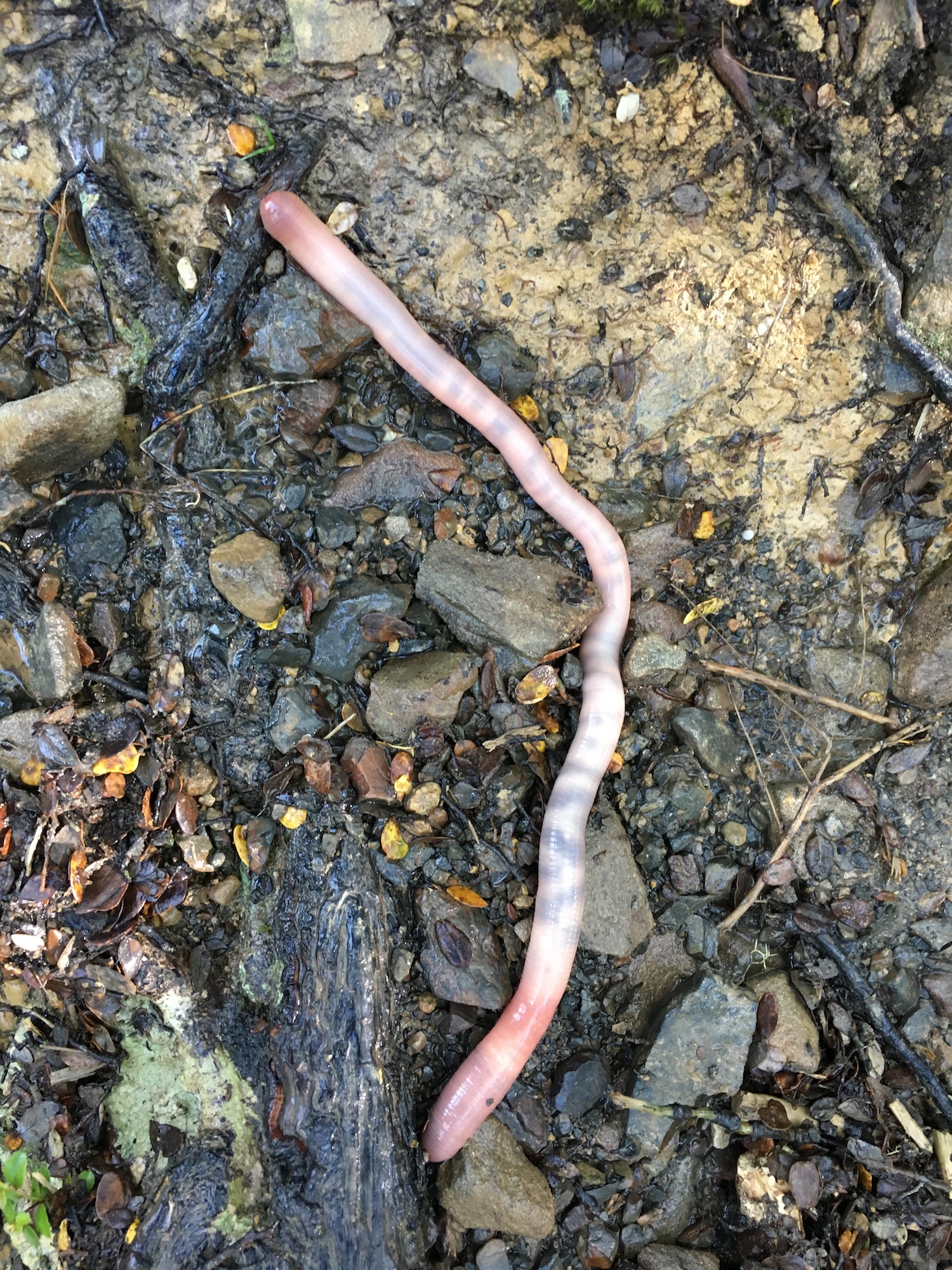
When you’re used to the small to medium sized non-native worms, finding a native worm is exciting. They’re generally larger than the non-native worms—sometimes much larger. Some can grow to nearly a metre and a half (59 in) in length.

We were lucky enough to find this native worm on Mount Oxford over the weekend. I can’t positively identify the species, but it’s likely to be Octochaetus multiporus. This was a young specimen—not yet reproductive age (as evidenced by its lack of a clitellum)—but already about 20 cm (8 in) long and as thick as my pinky finger. This particular species grows to about 30 cm (12 in) long.

O. multiporus is a particularly interesting worm because it is bioluminescent and spits a bioluminescent defence compound when disturbed. On the bright sunny day we found this one, there was no hope of seeing any bioluminescence. Still, it was a great find on our walk.

Watermelons Rule

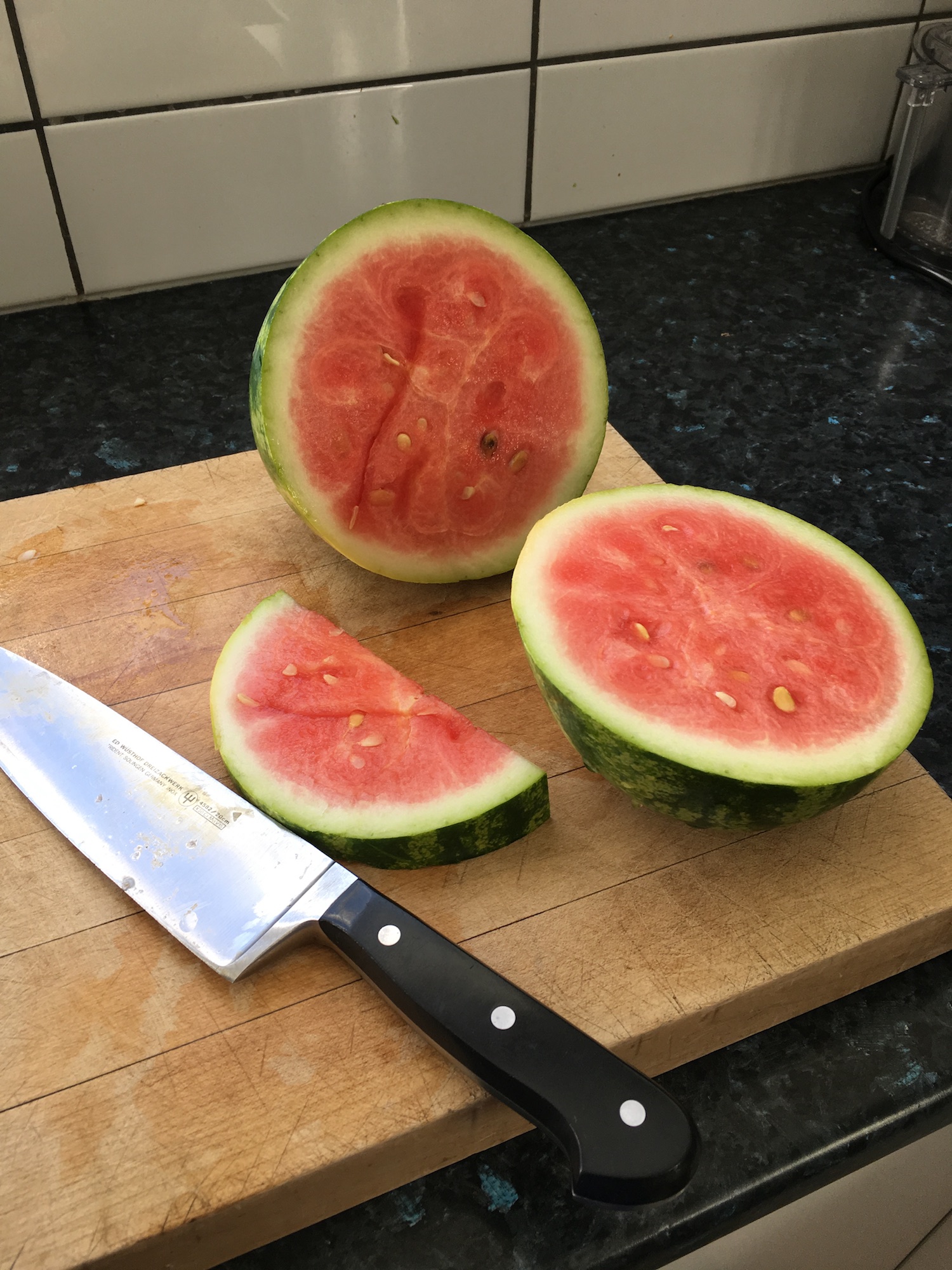
Nothing says summer like watermelon—a seasonal fruit that matures during the hottest days of the year, and doesn’t keep.

Watermelon is an unreliable crop here. Twelve years ago, when we first arrived, I was told watermelon doesn’t grow in Canterbury. I’ve planted it every year, regardless, because I can’t imagine a summer without it.

Some years we get nothing. The plants don’t grow at all, or they grow too slowly to produce mature fruit before the first frost, or they’re nailed by herbicide overspray. Some years we get a few smallish fruits that we savour as rare delicacies.

This year we are awash in watermelon. The fruits aren’t big—even the largest hasn’t reached the weight the seed catalogue says this variety should—but they’re the largest watermelons we’ve managed to grow here. And most importantly, they’re sweet, crisp and delicious. And there are lots of them!

As I sit on my office deck spitting seeds, I am reminded of the magical poem by John Tobias—Reflections on a Gift of Watermelon Pickle Received from a Friend Called Felicity.

I wonder if my kids will remember this year of watermelon as Tobias wrote…

“…During that summer—
Which may never have been at all;
But which has become more real
Than the one that was—
Watermelons ruled…”

Beach Walk

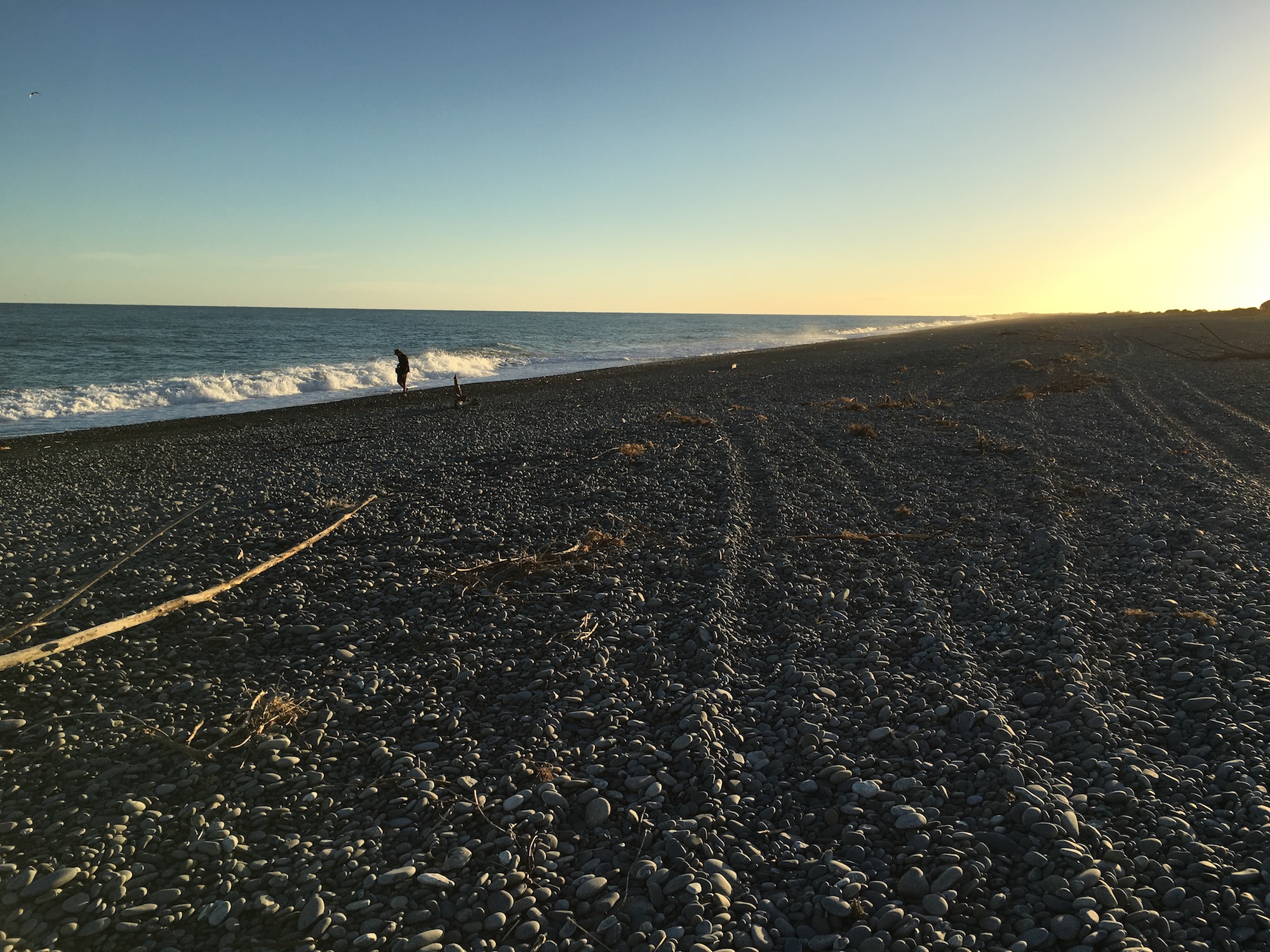
Husband: “How about we go for a walk on the beach after dinner?”

My brain: What? No. I have to write today’s blog, finish the story I was working on, tidy the office, make granola, sweep the floor, fold the laundry, weed the garden, pick tomatoes, sort the recycling…

My brain at the beach: Yeah…Whatever…Did you see this cool pebble?

Green Orb Weaver

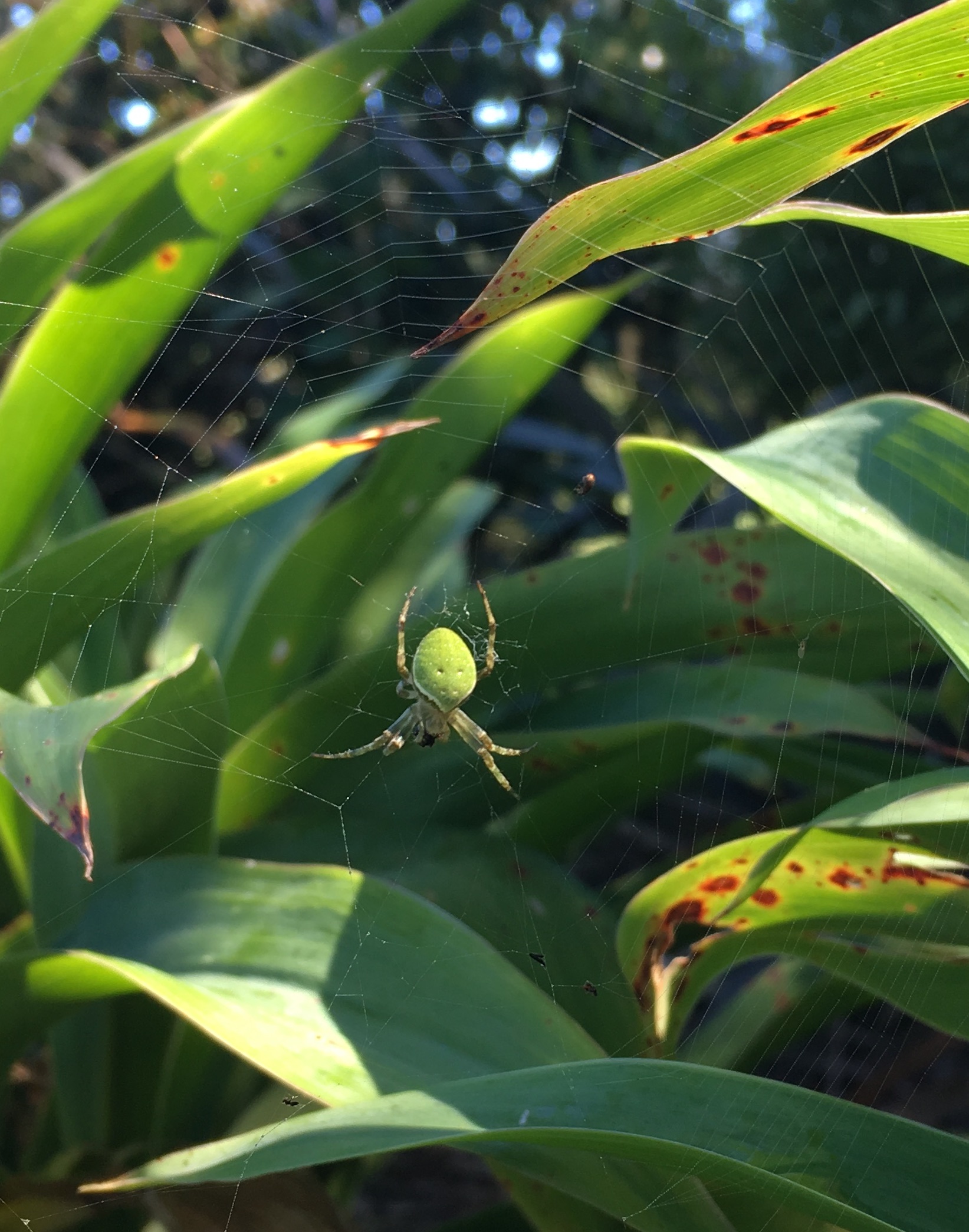
This year has apparently been good for the green orbweb spider (Colaranea viriditas); I usually see them only rarely, but I’ve run across quite a few this summer.

These beauties are pale green with a kelly green leaf-shaped mark covering the abdomen.

As the name implies, these spiders make orb webs—the spiral-shaped webs everyone’s familiar with. Though they’re primarily nocturnal, I’ve regularly seen them hanging out in the middle of their webs during the daytime (often snacking on an insect). These sharp-looking spiders apparently like a tidy web; they rebuild their webs nightly, and the webs are always as attractive as their residents.

The green orb weaver’s main predator is the native potter wasp, which paralyses the spiders with a sting and stuffs them into its nest for its larvae to feed on. However, the green orb weaver appears to be better at hiding from potter wasps than the non-native Australian orb weaver (at least on our property). Earlier this summer, the potter wasps decided that the screw holes in the bottom of the dining room table were perfect nest holes—every one of the dozens of orb weavers they crammed into the table was an Australian orb weaver.

I enjoy finding these little green gems in the garden. They’re as beautiful as they are helpful.

Noddy’s Back!

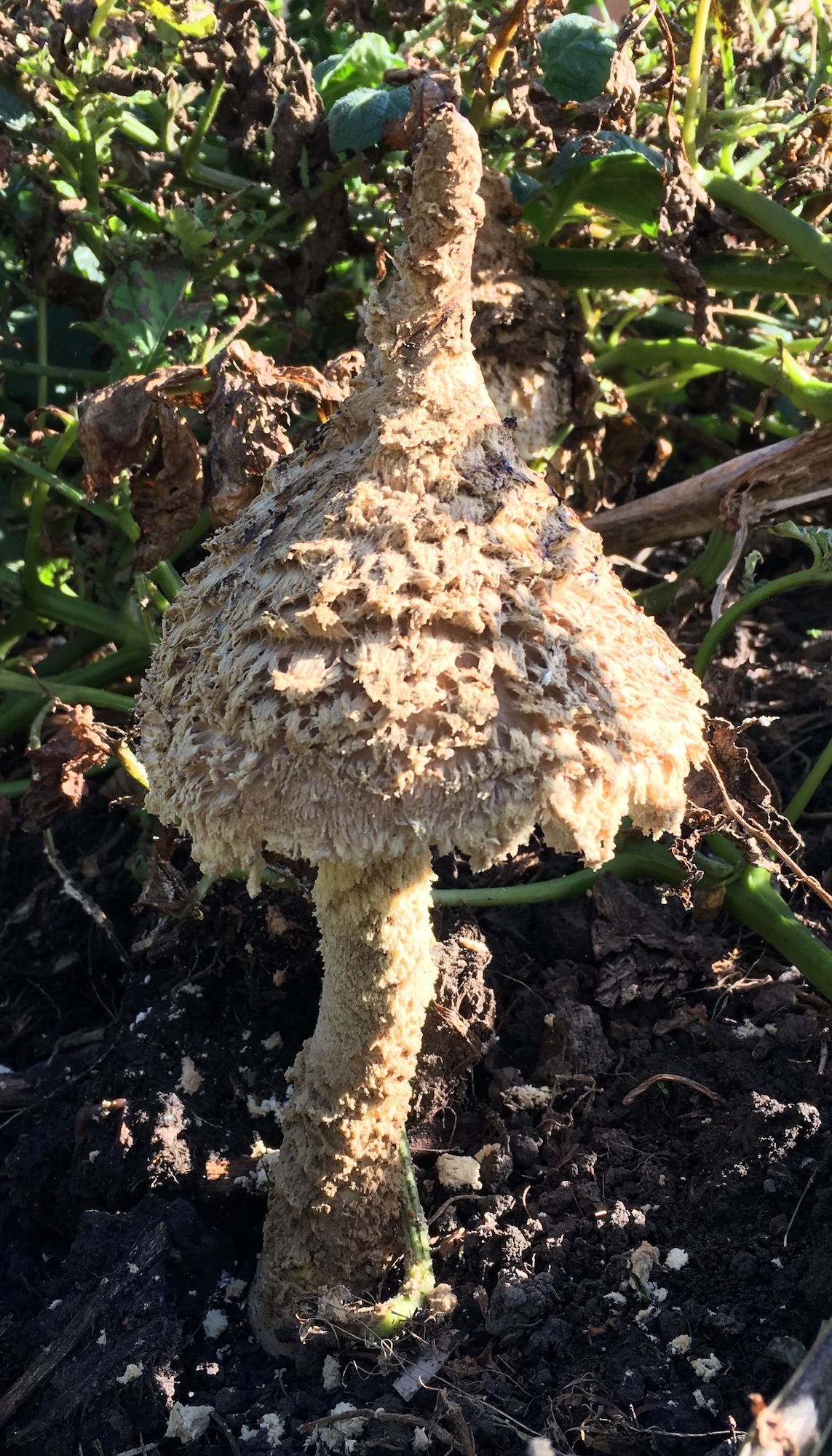
Okay, call me a complete geek, but I’m inordinately pleased about today’s find in the vegetable garden—Noddy’s flycap. This striking and mysterious mushroom showed up last year, causing great excitement and a blog post. The word from the scientific community was we weren’t likely to see it again for a long time, as it doesn’t seem to fruit every year.

Ha! Another thing we can tick off as an unknown for this fungus. Second year in a row Noddy’s has popped up in the garden.

As far as I know, the fungus still has no official scientific name, and its origin remains as mysterious as it was when I wrote about it last year. So for now I’ll simply enjoy the whimsy of this most delightful of fungi.

Magpie Moths

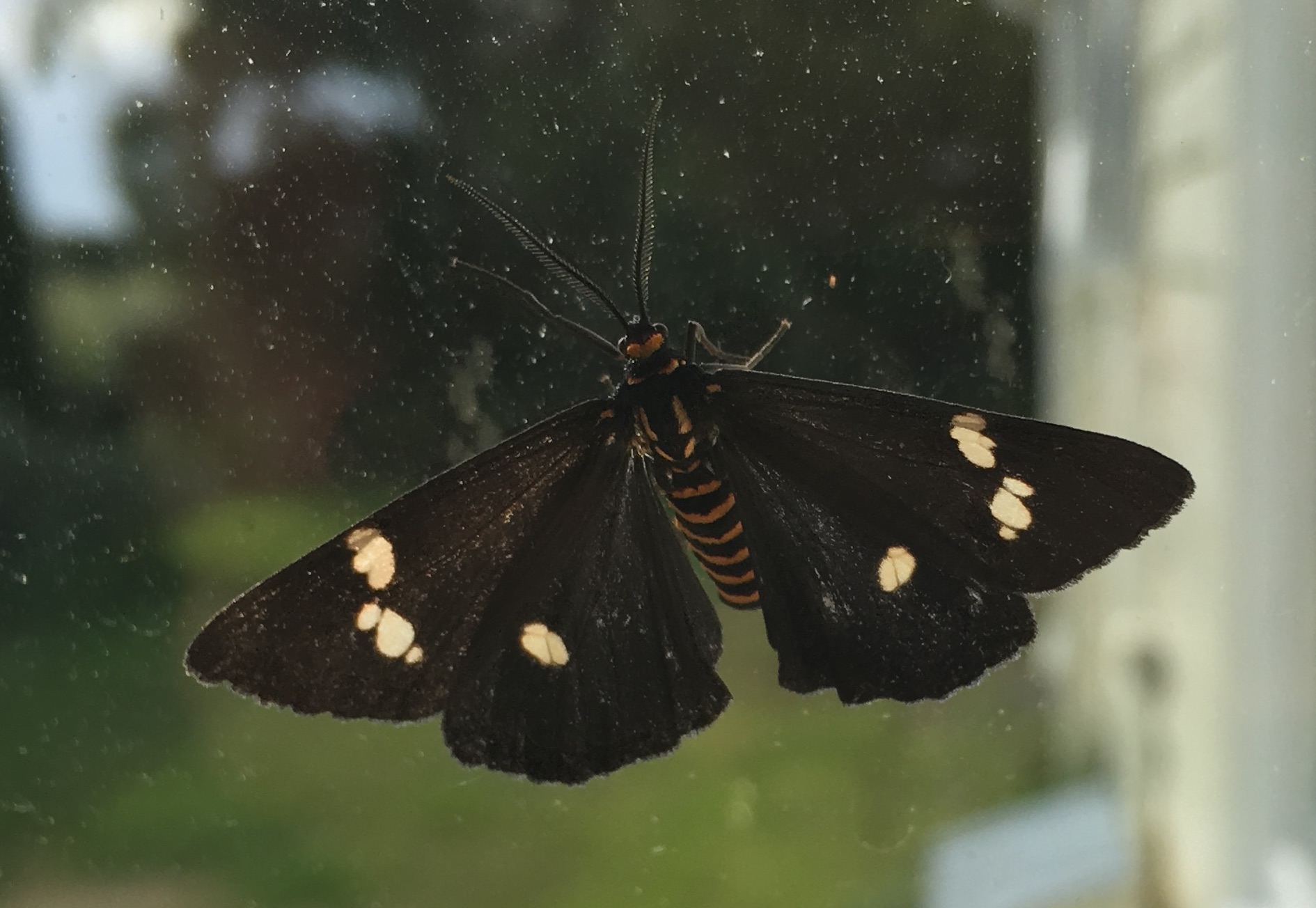
It’s the time of year when one of my favourite moths emerges—the magpie moth (Nyctemera annulata). Magpie moths are in the family Arctiidae—a family including many brightly coloured day-flying moths that threaten to blur the line between moth and butterfly. N. annulata is endemic to New Zealand, though it has a closely related Australian cousin, N. amica, with which it can interbreed.

Magpie moth caterpillars eat plants in the daisy family, especially in the genus Senecio. Common host plants include groundsel (Senecio vulgaris), ragwort (Senecio jacobaea), and cineraria (Jacobaea maritima, formerly Senecio cineraria).

We have large quantities of groundsel, and a few sizeable cineraria on the property, so we always have a healthy population of magpie moths. The caterpillars are black with orange ‘racing’ stripes, and somewhat hairy.

As you can guess from their colouration, magpie moths are poisonous. As caterpillars, they sequester toxins from the plants they eat. These toxins deter most predators. The shining cuckoo, however, is apparently quite fond of magpie moth caterpillars. It avoids the poison by eating only the insides of the caterpillar, leaving the bitter-tasting exoskeleton behind.

In addition to eating weeds like groundsel and ragwort, the magpie moth is a beautiful, colourful addition to the garden. It always makes me smile.

The Crews that Pick up the Pieces

It was a wild night last night. Strong nor’westerlies rattled the windows and tossed things about in the yard for most of the night. Sometime around four in the morning the wind abruptly shifted to the south, bringing squally rain.

Around 5.30, I let the cat out. I had just laid down again, hoping for fifteen more minutes of rest before starting my day, when I heard a car approaching. I heard it skid, and then there was a loud crack.

It wasn’t the first time someone had failed to make the turn at our house. My husband and I grabbed headlamps and ventured out into the rainy darkness.

A white ute (pickup truck) nosed into our fence, a power pole lying across the bonnet (hood).

The driver, seemingly unhurt, was already out of the car, cursing the start of his work week.

A call to emergency services brought the local fire brigade—three trucks and a dozen volunteers, who stood in the rain, managing what little traffic our road gets, and checking the driver. They could do little with live wires sprawling across the road.

As the sky slowly lightened, the ambulance and police arrived. The lines company arrived to turn off the power.

I spoke to the policeman. He had not slept last night—this was his third auto accident since midnight. Likewise, the linesmen had been up all night fixing wind damage.

Eventually, a tow truck came. A larger crew from the power company arrived bearing a new pole and a digger. They worked through the morning’s squally rain—it’s not a small job to install a new pole in our rocky soil.

I’m thankful to all these people, many of whom were volunteers who went off to work after their early-morning foray in the rain. They are the crews who go out at any hour, in all weather, to pick up the pieces when something goes wrong.

As I write this, the power is still out. It is raining, but the linesmen are up the new pole, reconnecting the cables. I may be able to post this by early afternoon, if I’m lucky. I hope they all get to go home after this and have a nice long nap.

Ushering in Autumn


Thursday’s dawn farewell of Gita.

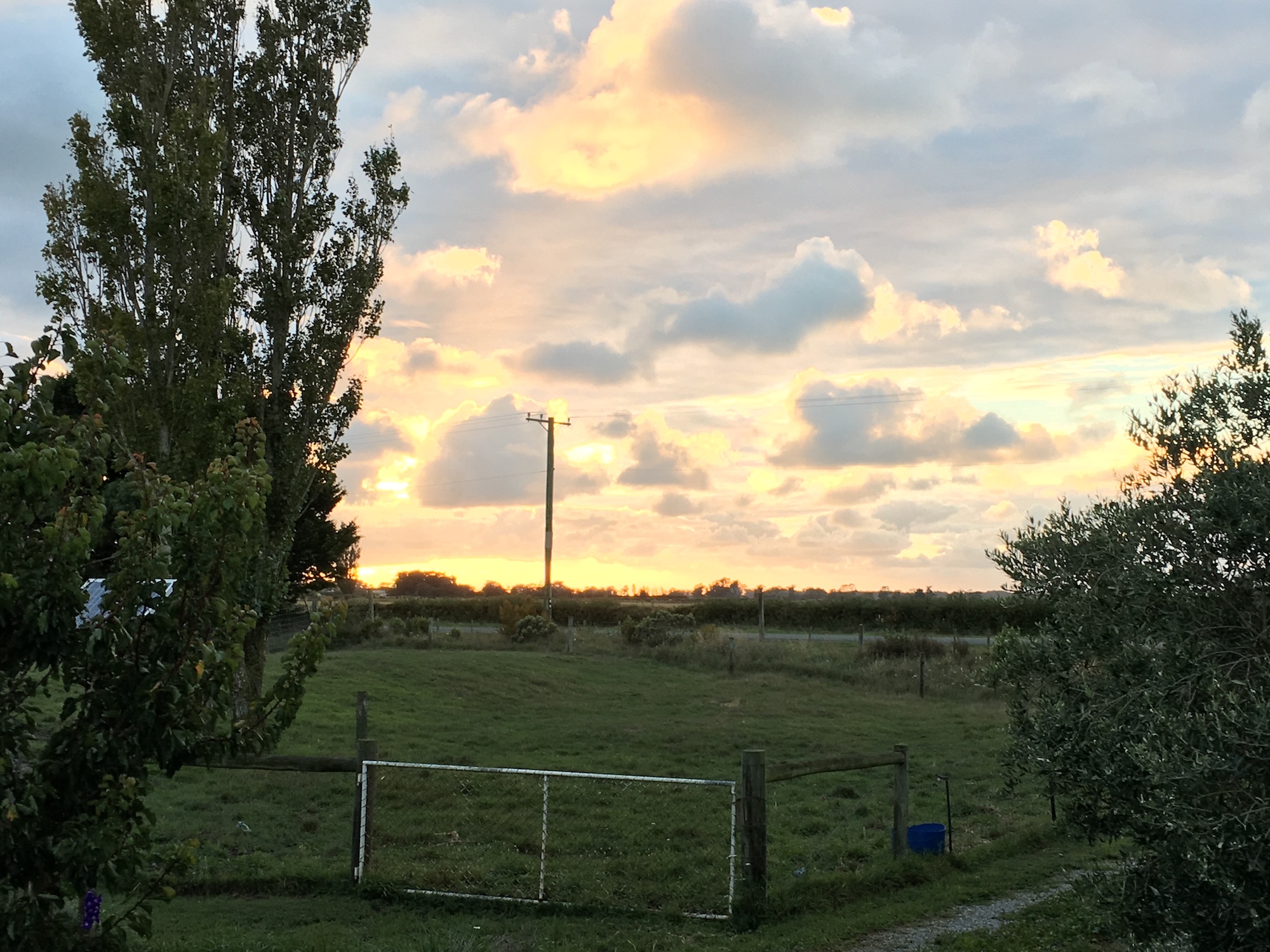
Gita blew through earlier this week, dumping 96 mm (nearly 4 inches) of rain on us. She also seems to have ushered in autumn. Sultry summer heat has given way to crisp air in Gita’s wake. The sun is still hot, but the nights have been chilly. The crickets sing their welcome to a new season. Even the garden has taken on an early autumn look, tired plants beginning to look tattered and yellow. Before Gita, I had ordered my firewood for the winter. It seemed too early at the time, but now, I’ll be happy to see it arrive.

Summer fruits and vegetables should still roll out of the garden for the next six to eight weeks, but the end is in sight. We’ll enjoy it while it lasts.


The Square Trees and other natural wonders…sort of

The rock at Hanging Rock Bridge.

Years ago, when my husband and I were Peace Corps volunteers in the Republic of Panama, we visited the famous Arboles Quadratos (the Square Trees) in El Valle de Anton. The Arboles Quadratos were, according to the guidebooks, amazing freaks of nature—trees with perfectly square trunks. These remarkable plants grew in a special grove in the rainforest behind the hotel in El Valle, and were one of the town’s main tourist attractions.

So we went to see them.

They were buttressed trees, like many rainforest trees are. And the buttresses made them…sort of squarish, if you had a little imagination. I think there were, maybe, four of them in a cluster along the trail. Their beauty was completely overshadowed in my mind by the rest of the forest around them.

My daughter and I recently had a similar experience. On a road trip, we kept passing signs for Hanging Rock Bridge. It seemed all roads led to Hanging Rock Bridge. We figured it must be something pretty spectacular, if so many signs pointed the way to it.

So we went to see it.

And, yeah, there was an overhanging rock near the bridge. It was kind of cool. But the landscape around the bridge, with stunning limestone outcrops in every paddock, was far more spectacular than the bridge’s rock. If you’d gone out of your way to see the rock at Hanging Rock Bridge, you’d be disappointed.

Plenty of other ‘natural wonders’ fall short of the hype surrounding them. Others, unknown by anyone but locals, are truly stunning.

Like the Iglesia de Piedra, the Rock Church, near our village in Panama. This narrow chasm was carved by a small stream, and it’s one of the most incredible places I’ve ever been—maybe 30 metres deep, and so narrow you can touch both walls. Vegetation covers the opening high above, and makes everything look green below. The stream is shallow, and frogs hop away from every step. At the back of the chasm is a waterfall plunging all the way from the surface.

No tourists make pilgrimages to the Iglesia de Piedra. Few outside the surrounding area have ever heard of it. But it knocks the socks off many a popular tourist destination.

The world is full of these hidden gems, and one of the most wonderful things about living in different places is finding the local wonders. The beautiful places tourists never hear about.

I’ll still go to see the Square Trees and the Hanging Rock Bridges of the world, but much of the wonder of the world is reserved for those who live with it every day.