Self-control … yeah, right.

Now that we’re on the upside of the winter solstice, I’ve planted my garlic—108 cloves, which should yield about 100 heads, assuming my usual success rate.

That’s absolutely too much garlic.

It’s a bad omen. I drew up my garden plan this morning—a garden roughly three-quarters the size of the one I’ve planted for the last decade. Hopefully it won’t yield 200 pumpkins and 80 kilos of pickling cucumbers next year when my teenage son won’t be around to eat them all.

But, plan or not, if I plant other crops with the exuberance with which I planted garlic today, I’ll end up with a garden every bit as big as past gardens. Some time in the next two weeks, before this year’s seed catalogue arrives, I need to get control of my gardening urge.

Wish me luck.

Here Comes the Sun

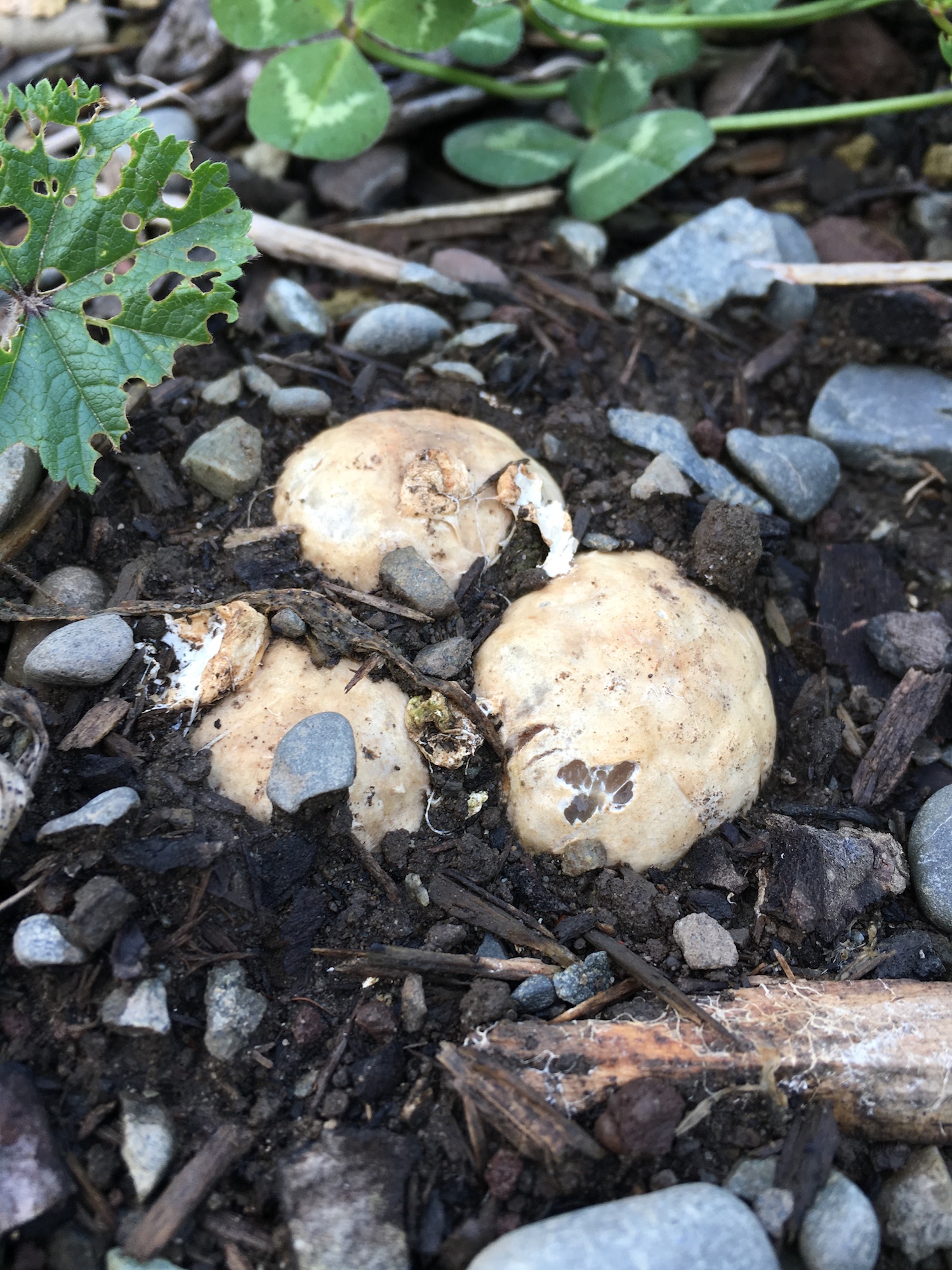
After weeks of grey, unending drizzle, we’re finally seeing a bit of sun. Mushrooms abound in the yard, revelling in the dank mist we’ve been swimming through for a fortnight. We are all eagerly awaiting passing of the solstice and the lengthening of the days.

Though it is still pretty dark and drear, and the days will still be short for some time, there are signs of the spring to come.

Lambing has started. This is the time of year when the neighbours grow noisy, with lambs and ewes calling to one another day and night.

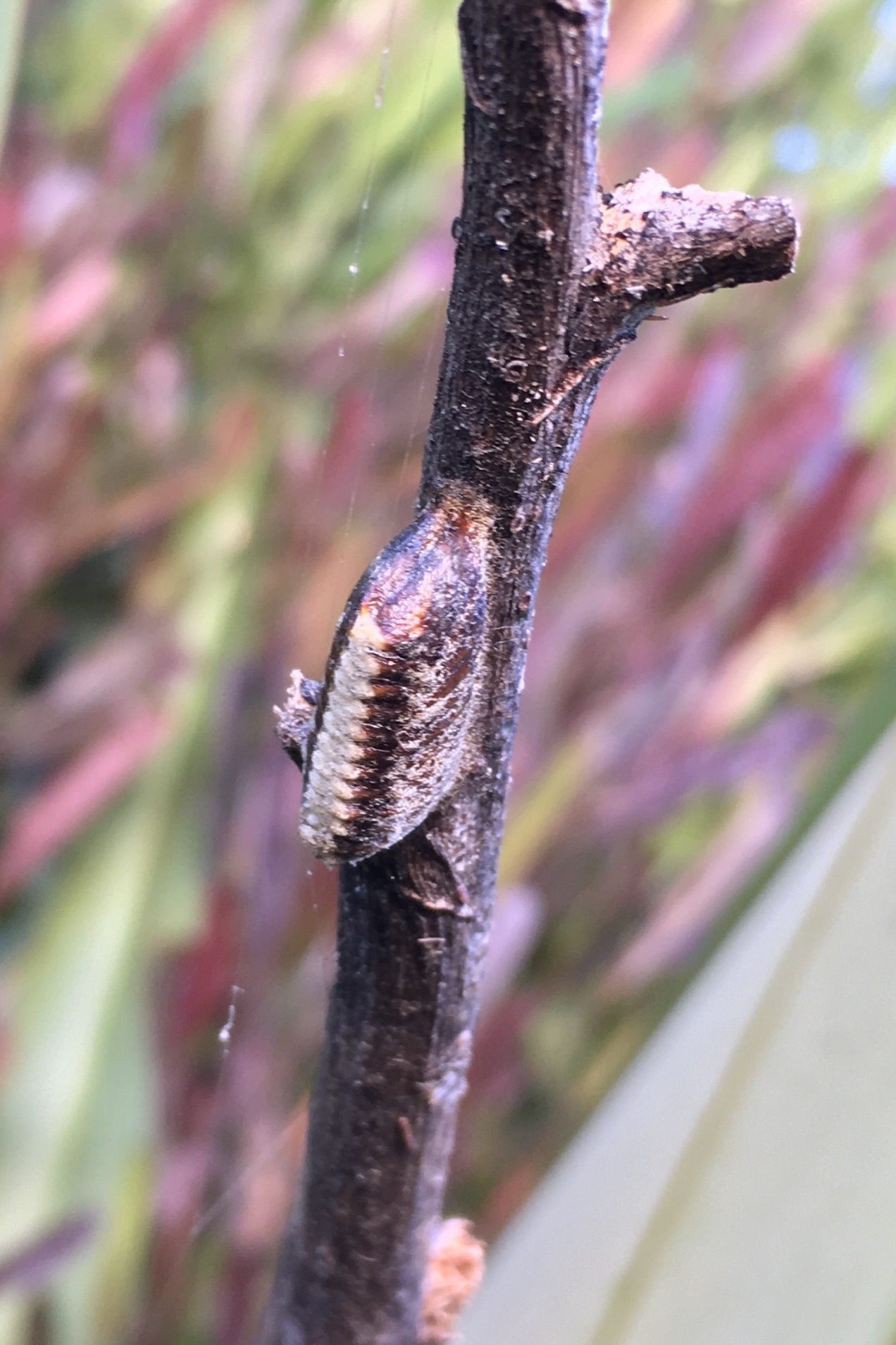
The preying mantids are gone, but their egg cases are dotted around the yard, promising a healthy population of my favourite predators come spring.

The daffodils and snowdrops are coming up, and I’ve even seen them blooming in other people’s yards.

And tomorrow is the solstice. Friday, the sun will remain above the horizon fractionally longer than it did the previous day. We’ll be on the upswing.

Pumpkin Pancakes

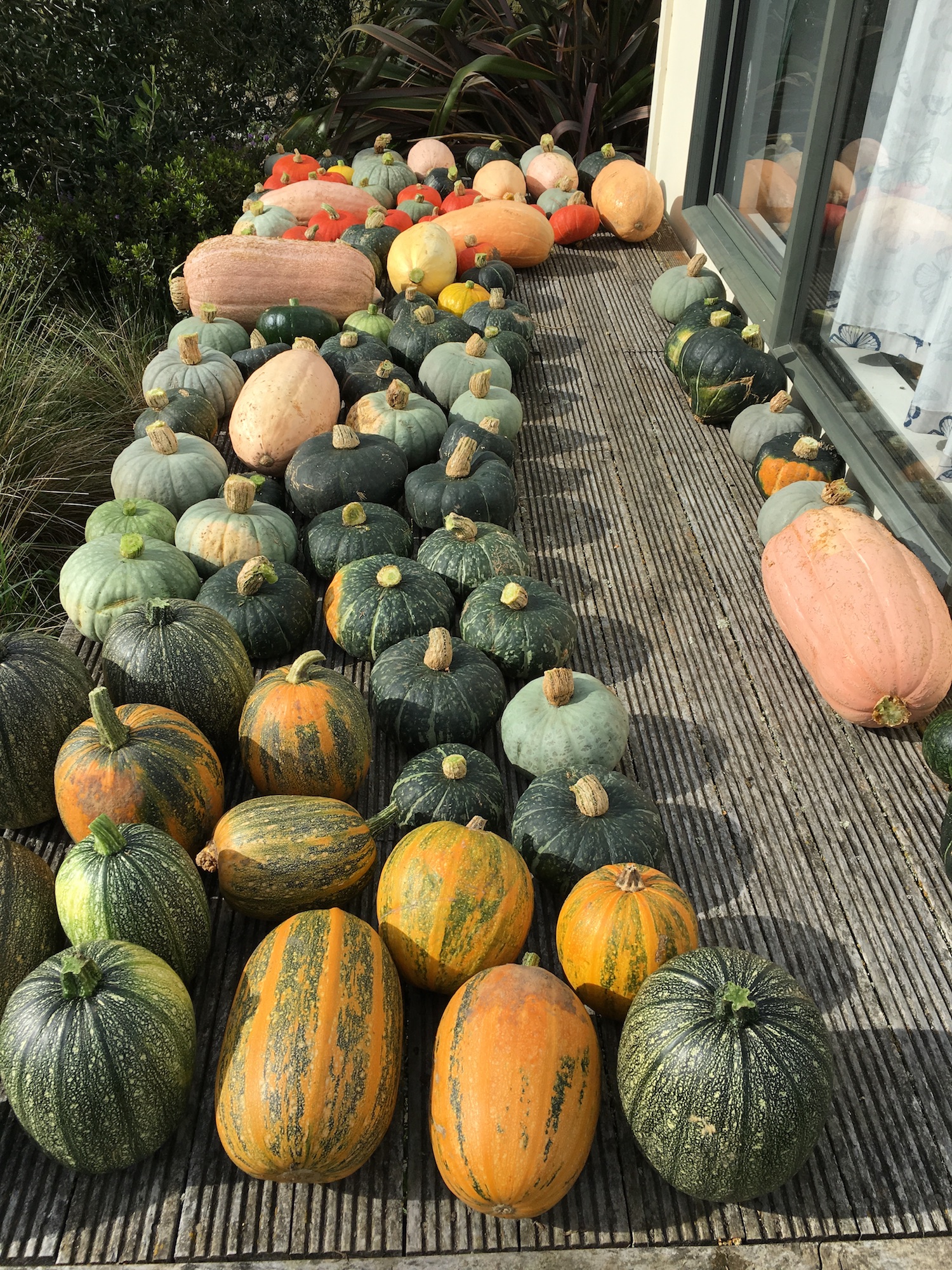
Now that winter has set in, we’ve turned our culinary sights from eggplant and courgettes to pumpkin, pumpkin, and pumpkin. I blogged about our excellent pumpkin harvest earlier this year. That post was written mid-way through the harvest–ultimately we picked nearly 200 pumpkins and other winter squash.

So w’re eating a lot of pumpkin. That’s not a problem.

Yesterday I made lovely pumpkin pancakes for breakfast. They were moist, dense, and spicy—excellent with maple syrup or redcurrant jam.

To make these delicious pancakes, start with a double batch of my World Famous Pancake Recipe. Add 2 tsp cinnamon and 1/2 tsp cloves to the dry ingredients. Add 1 1/2 cups pureed pumpkin (or other winter squash—I used kabocha squash) to the wet ingredients.

If your pumpkin is dry, you may need to increase the milk to achieve the right batter consistency.

We found these pancakes didn’t store/reheat as well as regular pancakes—they became quite fragile upon reheating (though they were still delicious).

Beautiful Basket Fungus

Mature fruiting body

One of my favourite fungi is Ileodictyon cibarium, the basket fungus, native to Australia, New Zealand and Chile. We have been treated this year to an amazing display of these fungi in our recently wood-chipped pond garden. Usually we don’t notice them until the fruiting bodies are fully formed, but because there are so many this year, we’ve been able to watch their whole emergence, from egg-like volva to lacy soccer ball.

Aside from their striking look, there’s nothing particularly lovely about these fungi. The basket fungus is in the family Phallaceae, also known as the stinkhorn fungi. Members of this family—you guessed it—have a foul odour (and many are phallus-shaped). The carrion or dung-smelling fruiting bodies attract flies to disperse the spores. Supposedly, the young fruiting bodies are edible … but not very tasty, as you can imagine.

Immature volvae

In spite of their smell, basket fungi have a certain celebrity status, owing to their remarkable structure. In fact, in Hagley Park in Christchurch there used to be a play structure in the shape of a giant basket fungus. I’m not sure if it’s still there—my kids don’t frequent playgrounds anymore—but it was always a favourite with my kids.

In Praise of Parsnip

The rangy rosette of a parsnip plant.

A bit like carrots, but sweeter and starchier, parsnips are wonderful winter vegetables.

I’m not certain when I first ate parsnip, but I know I’ve eaten a lot of it. When I was breastfeeding my son, nearly everything I ate gave him colic (It took eight weeks of 24-hour-a-day screaming for me to work this out … longest eight weeks of my life). Parsnips were one of the few safe vegetables, so I ate parsnips. Lots and lots of parsnips. But I never got sick of them. Their comforting, earthy flavour only grew on me the more I ate.

I try to grow parsnips every year, but I’m not always successful. Parsnip seed has a short shelf-life, and germination can be poor, even with seed that isn’t officially past it’s ‘plant by’ date. I buy a new packet of seed every year, whether I’ve used all of the old seeds or not. Even so, I don’t always have luck germinating it, because parsnip doesn’t like to be transplanted, and needs to be seeded directly into the garden beds. In my garden, that means the seeds tend to dry out, in spite of my best efforts. It also leaves tender seedlings at the mercy of birds and slugs, which seem to enjoy parsnip as much as I do.

But this past summer the parsnips did well, like many other crops that appreciated the unusually warm, wet weather. The parsnip I picked for dinner yesterday was 15 cm in diameter at the crown, but still tender and delicious. And there are plenty more out there to harvest.

Parsnips are sweeter after the first frost, so they’re a great autumn and winter food. They store well in the ground, so there’s no need to fill your fridge with them at harvest time. When we lived in Minnesota, I used to use a pickaxe to chip them out of the frozen ground through the winter.

Parsnips make wonderful additions to stews and casseroles. Their flavours meld well with potato, carrot, and celeriac. They compliment beans and pulses. They’re great vehicles for butter and cheese. Back when I was subsisting on little beyond parsnips, we used to mash them (like mashed potatoes), braise them, and roast them, in addition to using them in stew and soup.

It’s no wonder these versatile vegetables have been cultivated since long before Roman times. They’re a great winter staple—a vegetable you can eat again and again and still enjoy.

You can take me out, but you can’t dress me up

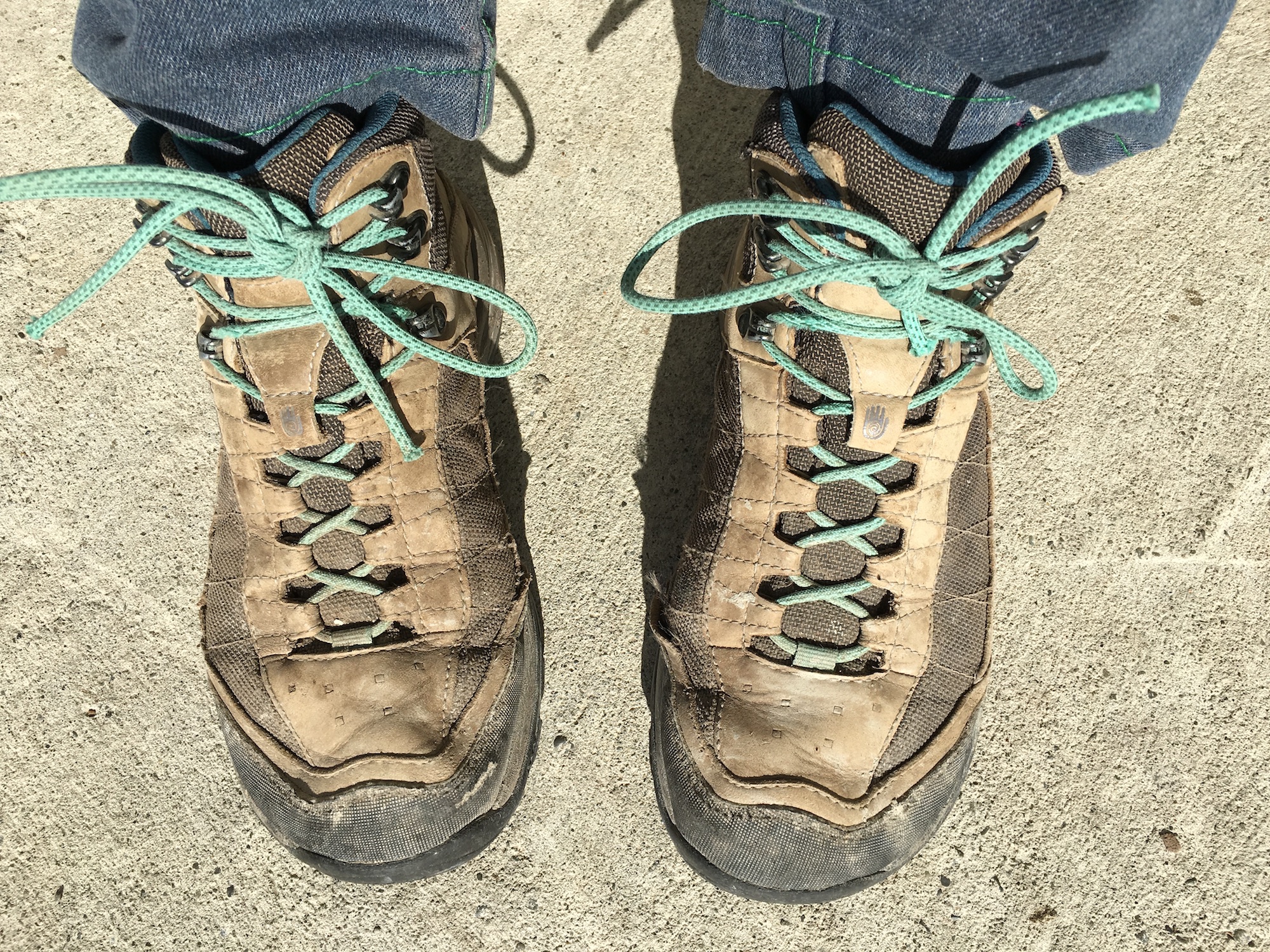
I laced up my shoes to go to town yesterday and thought to myself, “Gosh, these shoes are comfortable.” My next thought was, “Gee these shoes are looking a bit rough for town wear.”

Truth is, I’m a bit rough for town wear. I feel it every time I go for groceries. Other women arrive at the store in high heels and skirts, with flouncy scarves and jewellery. I rock up in my hiking boots, still dusty from my last trip. My clothes are clean, well-made and tailored perfectly for me (because I make the myself), but that’s just it—they’re tailored for me, and not just in the fit. Denim, cotton, lots of pockets, and comfortable enough to walk five kilometres in (because I never know when I’ll have the need or urge to take a brisk walk).

Even my ‘town’ shoes—the ones I wear when I’m trying to look at least somewhat professional—are wide, clunky affairs that are, quite frankly, ugly (but really comfortable).

Most of the time, it doesn’t bother me to be the unfashionable slob in town, but it doesn’t mean I don’t notice my wardrobe is wildly different from others’.

I could theoretically dress up to go to town. Somewhere, deep in the closet is one outfit that could count as marginally dressy. It would pass for normal in the grocery store. I expect it will last the rest of my life, given how seldom it comes out.

You can take me out, but you can’t dress me up.

The Sound of a Story

I sit down at my desk and breathe a sigh of relief. It’s quiet here, in my office. Not like the noisy library where I worked yesterday.

But, no, that’s not true. I hear the roar of the surf in the distance. The trickle of the artificial stream in the garden overlays the sound of the ocean. When I step to the office door, a goat greets me with a maa. Starlings mutter in the treetops, magpies warble on the fenceposts, and a fantail chitters in the shed. A plover’s percussive call is underlain by the chirping of a thousand crickets.

The neighbour rumbles past in his tractor, carrying a bale of silage. I can hear his son in the paddock shouting and whistling at his five barking sheep dogs.

It is far from quiet.

And yet …

Somehow, the sounds here caress my thoughts, rather than intruding upon them like the horrible Muzak from the library cafe, or the screams of tired children, or the drone of the automatic returns machine—please place the item on the trolly.

The fantail flits in and out of the story I’m writing without knocking over my coffee. The goats and sheep graze beside me without barging across the keyboard. The crickets keep to the grass. The tractor rumbles along without leaving tire tracks on my manuscript. The ocean doesn’t even wet my toes.

But somehow, I’m certain these sounds end up in my stories, caught up in the weave of plot and characters. The fantail is there, in the flick of a character’s fingers. The ocean is the relentless sound of the plot line. The tractor is the rumble of disaster bearing down on my protagonist. The goats’ deep maa is the voice of wisdom, and the crickets’ chirping lightens the mood.

The Pumpkin Fairy

It was most certainly the year of the cucurbit—from an abundance of cucumbers to an avalanche of zucchini, to a mountain of melons, and finally, more pumpkins than we can possibly eat.

My daughter picked about three-quarters of the pumpkins over the weekend—the total came to exactly 100, some of which are 15 kg behemoths. That’s a lot of pumpkin. That’s eating pumpkin every three days for a year. That’s only three-quarters of the pumpkins from this year’s garden!

The kids think I should start dropping pumpkins off on random people’s doorsteps—a sort of Pumpkin Fairy. It would certainly get rid of the excess pumpkins, but I wonder what people would think to find a pumpkin on their doorstep …

Would you like to be visited by the Pumpkin Fairy?

Growing Gifts

The first neighbourly gift I was given when we moved into our house twelve and a half years ago was a handful of dried scarlet runner bean pods for seed. A couple of weeks ago, I harvested the twelfth batch of seed from the descendants of those first beans. The neighbour who gave me those beans has since moved away, and I haven’t seen her for years. But her gift still feeds us every year.

Another friend gave us a few raspberry canes about ten years ago. Those raspberries (and their descendant cuttings) now fill a thirty-metre long bed, and yield large quantities of fruit each summer.

A few years after the raspberries, my husband drove one of my son’s classmates and his dad to a school outing. In exchange, the dad gave us a couple of gooseberry plants. A few strategic cuttings, and we now pick almost more gooseberries than we know what to do with each year.

Around the same time, one of my husband’s colleagues was pulling out some artichoke plants, and asked if we wanted a few. I’ve divided those plants twice since then, and we now eat more artichokes than anyone should be allowed to.

For a gardener, these are the best gifts—divisions, cuttings, and seeds from cherished plants. They are gifts that may seem small at the time, but they grow every year.

Belated Poetry Day

I missed World Poetry Day last week, so here’s a belated poem in honour of the day, inspired by the little spider who has built its web over the kitchen window.

David and Goliath

Honeybee caught
In a spider web
Buzzes murder to
All eight-leggers,
Stinger stabbing at
Offending silk.

Alerted,
Out rushes
The tiny spider,
Dwarfed
By its angry prey.

Dart in,
Avoid the sting,
Dart out.
Throw silk with
Frantic hind legs.
Tangle wings, tangle legs.
Dart in.
Avoid the sting.
Bite.
Dart out.
More silk.
More silk.

Bee’s wings are stilled
Though she still buzzes
A warning,
As though through
Gritted teeth.

More silk.
More silk.
Dart in.
Bite again.
Dart out.

The bee’s movements slow.
Abdomen goes slack.
Legs twitch once.
Twice.

More silk.
More silk.

David slays Goliath.