Fabulous Flatworms

Australian flatworm

One of the common animals in my yard and garden is the flatworm. Strictly speaking, “the” flatworm here in New Zealand is actually multiple species—possibly up to a hundred—but they have been poorly studied, so it’s unclear just how many species there are.

Flatworms are some of the most impressive predators in the garden, able to consume prey up to 55 times their own size. That’s the equivalent of your house cat taking down a female elk. They eat snails, slugs, and earthworms, digesting them externally before sucking them up with one or more mouths located midway along their bodies.

I love to find flatworms around the yard. They come in striking colours, and some have lovely brown stripes—the orange Australian flatworm (Australoplana sanguinea) is most common in my garden, followed by the relatively nondescript brown New Zealand flatworm (Arthurdendyus triangulatus). Like the slugs they eat, they prefer damp places, and they protect themselves with a layer of mucous. Flatworm mucus is stickier than slug mucous, and they use it to attach themselves to their prey during feeding.

New Zealand is full of non-native invasive organisms, but New Zealand flatworms are one of the few organisms that have turned the tables and become pests overseas. They are easily transported in potted plants, and have successfully invaded Ireland and Scotland. Though there was widespread panic at first about their potential to threaten the local ecology, they appear to have caused little damage to earthworm populations in the UK. Like most cold-blooded animals, their appetites are small. Far from being a devouring hoard, each flatworm can manage, on average, just one earthworm per week. And if they don’t manage to find an earthworm every week, it’s not a problem—they can go a year without eating.

Weeding Therapy

You know it’s been a good therapy session when it leaves a clear weeding front.

I make no secret of the fact I have a weeding problem. I’ll ignore hunger, thirst and bodily pain to pull just a few more weeds—fill the wheelbarrow, finish the garden bed, never mind the cost.

But in spite of my obsession, I believe there is a place for weeding therapy, even for me.

Today, when the temperature hit a sweltering (for mid-winter, at least) 18 degrees (64ºF), I had no interest in my usual lunchtime walk. No. Today, after weeks of inactivity in the garden, I needed to weed.

I grabbed my gloves, and hove to. A sweaty half-hour later, I was refreshed and ready to get back to work.

The key to good weeding therapy (to avoid it becoming a weeding marathon) is setting limits—I give myself half an hour, and set a timer so I’ve no excuse for running over time. It helps to choose the therapy weeding job well; I go for places that have been irritating me, places that are desperate, or places where the weeds are big and easy to pull. It gives me a greater sense of accomplishment in a short amount of time, so I feel I can quit when my time is up.

And if I do quit before exhaustion, pain or hunger set in, I can return to other work in a focused state of mind, ready to bang out the next chapter or tackle the next editing job.

And the best part is that, with so much garden area here, there will always be more weeds, so therapy is always available when I need it.

Appreciate the season

Drizzle-soaked hebe.

It’s another grey, damp day in a string of grey damp days. We’ve had little rain, but almost no sun, either. Though my last blog was about spring, this weather reminds me it’s still winter.

I’m itching to get out into the garden, to plant seeds, to get on with the business of springtime. The weather hasn’t been cooperating.

In a way, that’s good. It is too early to plant, to early to turn the soil. The weather reminds me to appreciate what winter has to offer—the excuse to stay indoors and sew, the opportunity to play board games and read books, a reason for a mid-afternoon cup of tea. I forget to value these things when I have them, instead looking forward to the next season of frenetic activity. Sometimes I need a week of fog and drizzle to remind me.

Smells Like Spring

I know, technically it’s still winter. We’re still likely to have icky, cold, wet weather. There will be ice on the water troughs, and frost on the grass in the mornings. There are still plenty of weeks left in the skiing season. And I won’t even think about planting anything out in the garden for at least six weeks.

But yesterday smelled like spring.

That heady combination of lanolin, damp soil, and cut grass.

It sounded like spring, too, with magpies warbling in the trees, swallows chittering overhead, and lambs bawling in the paddocks.

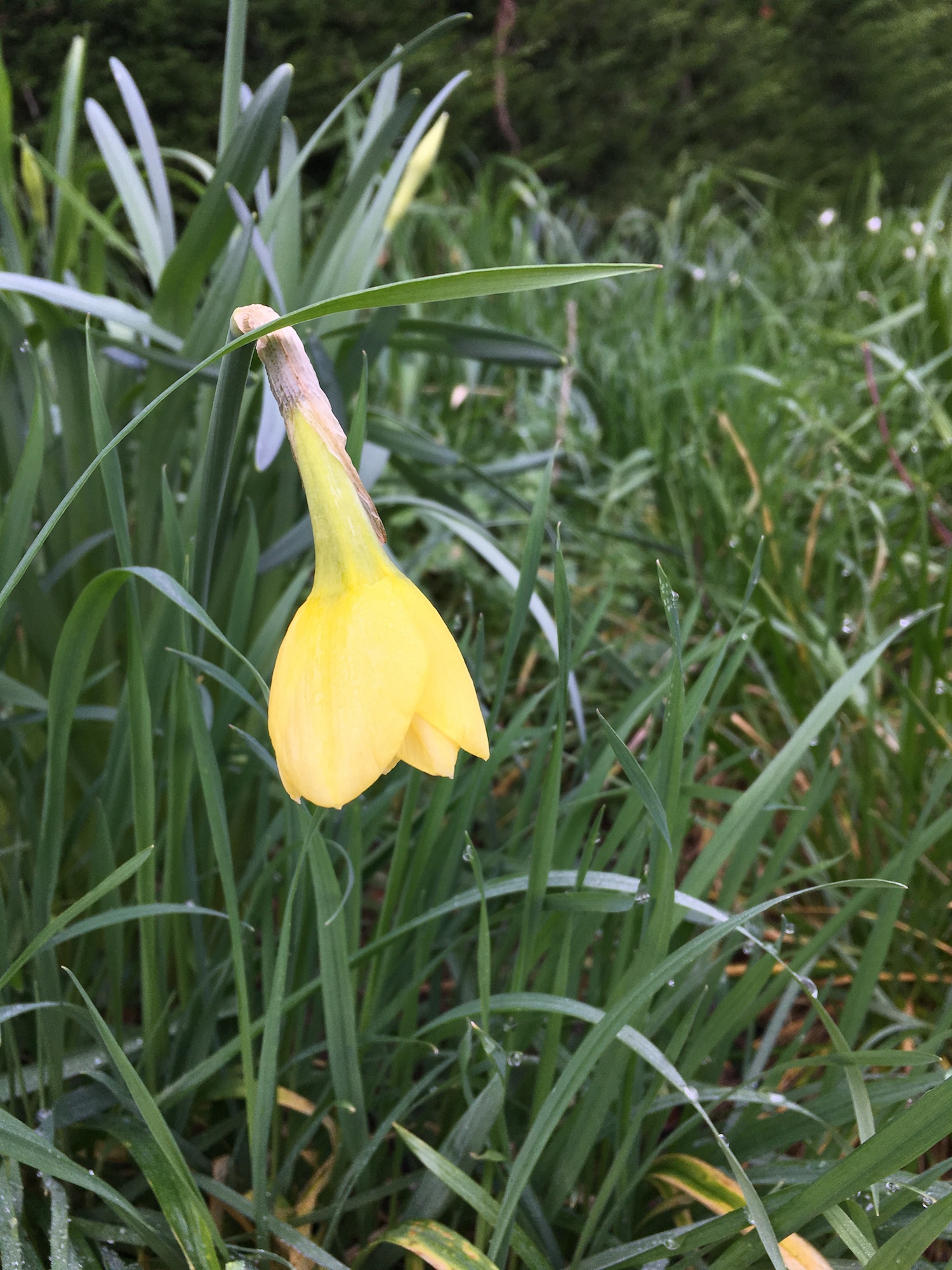
It is not spring. Not yet. But the days are lengthening and the first daffodils are beginning to bloom. It’s time to finish all those indoor winter projects. Spring is on its way.

Red Currant Orange Muffins

I’ve occasionally noted how alike in smell, flavour and texture red currant jam and cranberry sauce are. And since I’ve got a freezer full of last summer’s currants, I decided to use them in a recipe calling for cranberries.

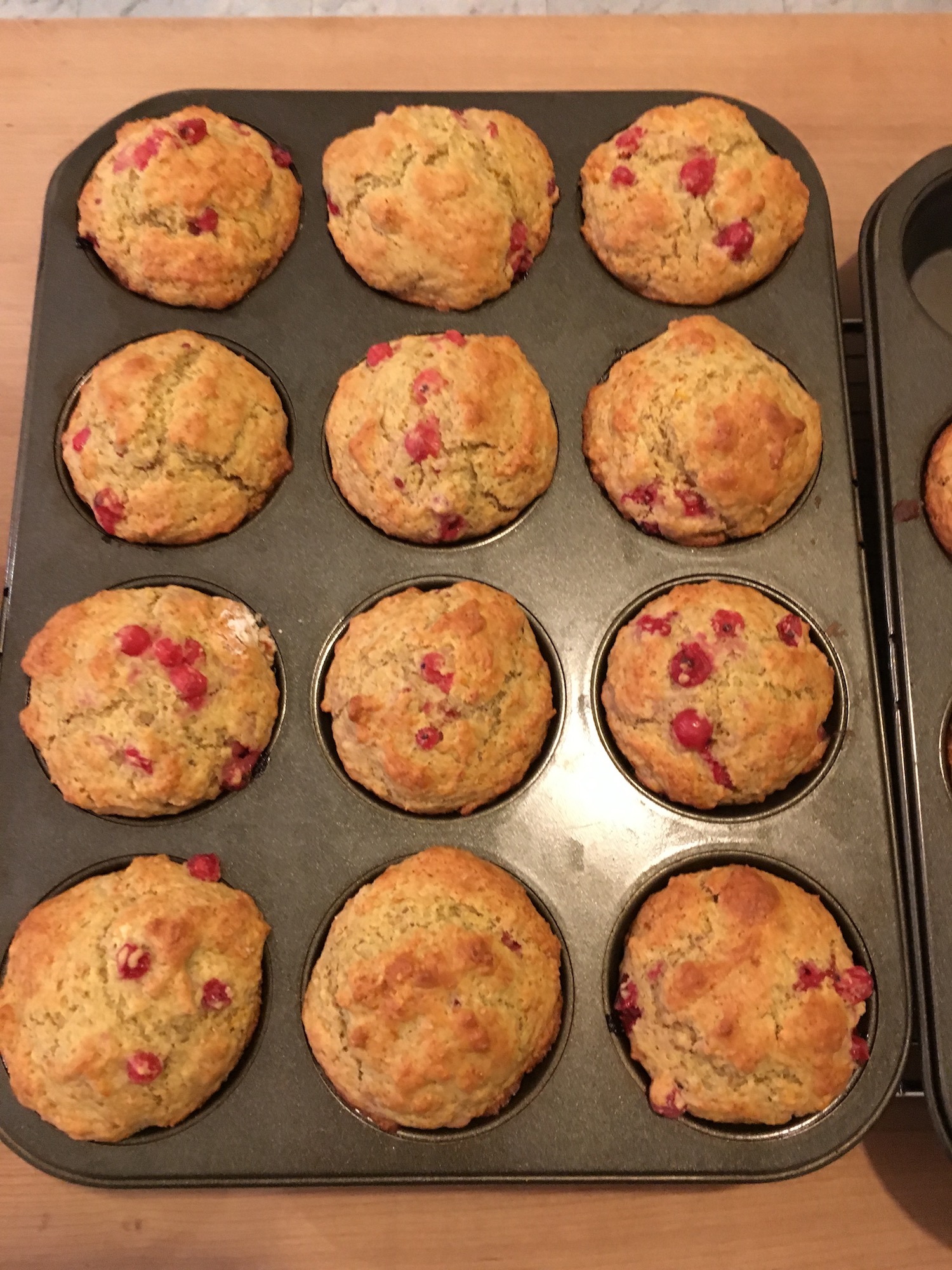
The result was a lovely red currant orange muffin. Even better than the cranberry version, because the fruit came from our own garden.

2 cups all purpose flour
1 c. whole wheat flour
1 Tbs baking powder
3/4 tsp baking soda
1/2 tsp salt
3 eggs
zest of one orange
juice of 1 orange, plus enough yogurt to make 1 1/2 cups
1/2 cup brown sugar
125 g (8 Tbs) melted butter
1 cup fresh or frozen (thawed) red currants

Combine flours, baking powder, baking soda and salt in a large bowl. In another bowl, whisk together the eggs, orange zest, orange juice, yogurt, sugar and butter. Combine wet and dry ingredients, stirring just until evenly moist. Fold in the currants.

Fill well-greased muffin cups—for me, this makes 21 muffins.

Bake 15 minutes at 210ºC (400ºF). Allow to cool in pan 5 minutes before removing.

Still Life with Insects

I’ve written and discarded half a dozen blog posts over the past week. Nothing seems to be quite right. Out of ideas, I resorted to the book of 500 writing prompts I created for my daughter. A random stab at the non-fiction section of the book brought me to the question: What objects tell the story of your life?

I tried to encapsulate everything in four objects:

The fiddle: made by a neighbour in Panama, given to me for my birthday by my husband. The fiddle not only tells the story of our years living and working among the incredible, resourceful people of Panama, but also tells the story of my lifelong interest in learning to play the violin…an interest which always ended up being pushed aside for other interests. Because I’m interested in learning so many things, there simply aren’t enough hours in the day.

The beetle puppet represents my insatiable curiosity about arthropods, and how that curiosity has bled into my other interests. Peanut butter jars full of bugs on my dresser when I was a kid led to the entomology degree, which led to teaching about insects at Penn State University, and then starting the Bugmobile. And the puppet is only one of many insect-themed and inspired artistic projects I’ve done over the years, as art and science mingle in my brain.

The gardening gloves speak of my weeding addiction and my love of growing food. The gloves are never more than a month or two old, because I wear through them in that time. I think that says it all about gardening for me.

The rock represents adventure, the natural world, and the wild places I have visited and lived in. Like me, the rock has traveled far and has been changed by the stresses it has experienced along the way.

Salt-preserved Green Beans

I always struggle with what to do with too many green beans. I can (bottle) some, but none of us really like the taste of canned beans, and their mushy texture leaves a lot to be desired. I don’t freeze any, because freezer space is at a premium, and I prefer to fill it with sweet corn and peas instead.

So this past summer, I preserved some green beans in salt. The recipe I used claimed that the flavour and texture of salt-preserved beans is far superior to canned or frozen.

I pulled out the crock of salted beans the other day to test them out.

At first glance, they didn’t win any beauty contests, especially the yellow wax beans, which came out of the salt a sort of dead-flesh colour.

I rinsed them and soaked them for two hours, as directed, and then tossed them into a green bean and potato charcharis.

Cooked into a flavourful Indian dish, the beans most definitely had better flavour and texture than canned beans. Almost as good as fresh, even.

Unfortunately, they were so excessively salty, they made the dish almost inedible. Even my salty-olive-loving family couldn’t choke them down. Most of the dish ended up on the compost pile, and I expect an epidemic of high blood pressure in the local sparrow and mouse population who dine at chez-compost.

There are still some beans left. I’ll try using them again—small quantities in otherwise unsalted stews or soups might work well (sort of like a salty ham hock in bean soup). Maybe.

But I’m thinking I’ll just give away the extra green beans next year.

Learn Something New

My first skeins of mohair yarn, showing improvement from left to right.

Not long ago I learned to spin. I should have learned earlier, right after my angora goats were shorn the first time, but I looked at all that mohair and lost heart—it was too much for me to deal with. So I dropped it off at a commercial spinner.

A year later, the spinner still hadn’t spun my mohair and finally admitted they had no intention of ever getting to it, so I picked it back up and brought it home.

It was time to learn to spin.

At first I hated it. It was fiddly and frustrating. The resulting yarn, if you could even call it that, was thick and lumpy. I was set to give up on it.

But a friend who spins encouraged me to keep working on it—it’s always hard at first, she said, and that lumpy thick yarn is beautiful and artistic in its own right.

I took her advice, and kept at it. A hundred metres of thick lumpy yarn later, I suddenly found I was producing fairly consistent worsted-weight yarn. And I was enjoying it!

Learning something new is never easy. I know I’ve blogged about this before, but it’s worth repeating. We watch accomplished people at the task, and we think, “I’d like to do that.” Then we try, and our efforts are fumbling, the results uninspired. It takes determination (and often encouragement from others) to push through the initial discouragement and get to the point where you can enjoy the new skill.

I’ve tried to teach my kids that it’s worth pushing through that learning hump to gain a new skill. Sometimes I need reminding myself.

Happy New (Garden) Year!

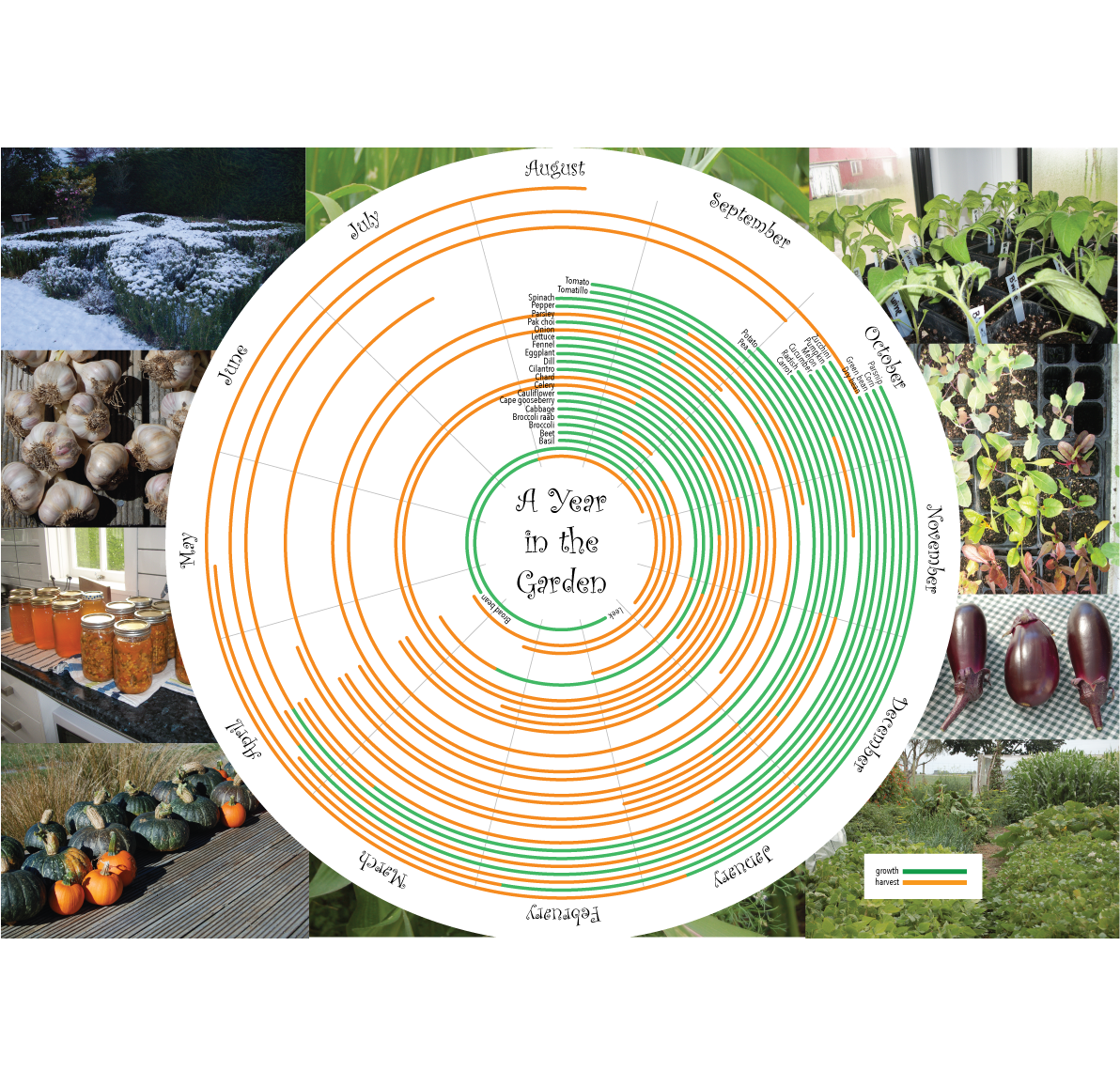
I love the month of July; it’s the beginning of the garden year in my mind, because it’s the month I plan the garden and order my seeds. It’s been a few years since I blogged about my garden year, so I figured it was time to do it again. I unearthed this little graphic my husband helped me create a few years back, showing my annual planting and harvesting schedule. It has changed a little since then, and I notice some crops, like garlic, are missing from it, but it’s still a fairly good indication of my year in the garden.

I struggled the first few years here. Coming from the Northern Hemisphere, I had no idea when I should plant things. And the idea of growing vegetables over winter was foreign to me, too.; gardening in Minnesota and Pennsylvania is sharply seasonal. It’s seasonal here, too, but much less dramatically so.

Instead of growing a ton of spinach over the summer and freezing it for winter, I learned to simply plant small quantities regularly throughout the year, for a perpetual supply of fresh greens. Same with lettuce, chard, broccoli, cabbage, and cauliflower.

Today my garden year ebbs and flows, but there is never a down time in the garden. There is always something to plant, weed or pick. The end of last year overlaps with the beginning of this year, so while I plan my seed order, I’m harvesting the lettuces, broccoli, leeks and other late crops planted in the autumn, and I’m weeding the garlic and broad beans that will be harvested in the coming spring and summer.

Sometimes I miss the complete downtime of gardening in Minnesota—the winter lull when there’s no need to go out and weed in the cold. But only sometimes. The never-ending garden year here has its perks in garden-fresh vegetables year-round.

To the Beach

While all you folks in the Northern Hemisphere are flocking to be beach for a swim and some sun and sand, we are shivering down here in the dark days of winter. But that doesn’t mean we don’t go to the beach.

Research from England has found that people living by the coast have better physical and mental health than those living inland. I can certainly understand that.

Growing up three hours’ drive from the beach, I visited the ocean about once a year. My husband, raised in the midwestern US, doesn’t remember seeing the ocean until age twelve or thirteen.

Today, we live a mere four kilometres from the beach. When the wind is calm, we can hear the surf. When the wind is high, we can smell the sea. Even without research to back us up, we’ve learned to head to the beach when we’re stressed.

Our beach isn’t a white-sand swimming beach—it’s made of cobbles, and the waves pound viciously on the shore. It’s not a place to swim, nor really a place to sit for very long (those rocks get uncomfortable fast). It’s a place to walk. A place to search for wave-polished rocks in glittering colours. A place to watch sea birds, dolphins, and the occasional seal. A place to leave all the stress of daily life behind (I challenge anyone to remain stressed while watching dolphins cavorting in the waves).

Researchers point to the calming blue colour, the hypnotic sound of waves, and the cultural context of the beach to explain its calming effect. But for me its influence is more profound. Our beach is usually free of other people—on a busy day you might see four others. From the beach, it is difficult to see any sign of humans at all—the odd bit of flotsam, but not even much of that. On our beach, the world is reduced to sky, water, and rock, shared only with wildlife. It’s easy to imagine the world is in better shape than it is. It’s easy to believe the vast ocean will endure, in spite of human stupidity. It’s easy to think those rare Hector’s dolphins, which we see nearly every time we visit the beach, are actually common. For the space of time we inhabit the beach, all is right in the world.

It doesn’t last, of course, but it’s good to have that escape so close at hand.