In Praise of Parsnip

The rangy rosette of a parsnip plant.

A bit like carrots, but sweeter and starchier, parsnips are wonderful winter vegetables.

I’m not certain when I first ate parsnip, but I know I’ve eaten a lot of it. When I was breastfeeding my son, nearly everything I ate gave him colic (It took eight weeks of 24-hour-a-day screaming for me to work this out … longest eight weeks of my life). Parsnips were one of the few safe vegetables, so I ate parsnips. Lots and lots of parsnips. But I never got sick of them. Their comforting, earthy flavour only grew on me the more I ate.

I try to grow parsnips every year, but I’m not always successful. Parsnip seed has a short shelf-life, and germination can be poor, even with seed that isn’t officially past it’s ‘plant by’ date. I buy a new packet of seed every year, whether I’ve used all of the old seeds or not. Even so, I don’t always have luck germinating it, because parsnip doesn’t like to be transplanted, and needs to be seeded directly into the garden beds. In my garden, that means the seeds tend to dry out, in spite of my best efforts. It also leaves tender seedlings at the mercy of birds and slugs, which seem to enjoy parsnip as much as I do.

But this past summer the parsnips did well, like many other crops that appreciated the unusually warm, wet weather. The parsnip I picked for dinner yesterday was 15 cm in diameter at the crown, but still tender and delicious. And there are plenty more out there to harvest.

Parsnips are sweeter after the first frost, so they’re a great autumn and winter food. They store well in the ground, so there’s no need to fill your fridge with them at harvest time. When we lived in Minnesota, I used to use a pickaxe to chip them out of the frozen ground through the winter.

Parsnips make wonderful additions to stews and casseroles. Their flavours meld well with potato, carrot, and celeriac. They compliment beans and pulses. They’re great vehicles for butter and cheese. Back when I was subsisting on little beyond parsnips, we used to mash them (like mashed potatoes), braise them, and roast them, in addition to using them in stew and soup.

It’s no wonder these versatile vegetables have been cultivated since long before Roman times. They’re a great winter staple—a vegetable you can eat again and again and still enjoy.

You can take me out, but you can’t dress me up

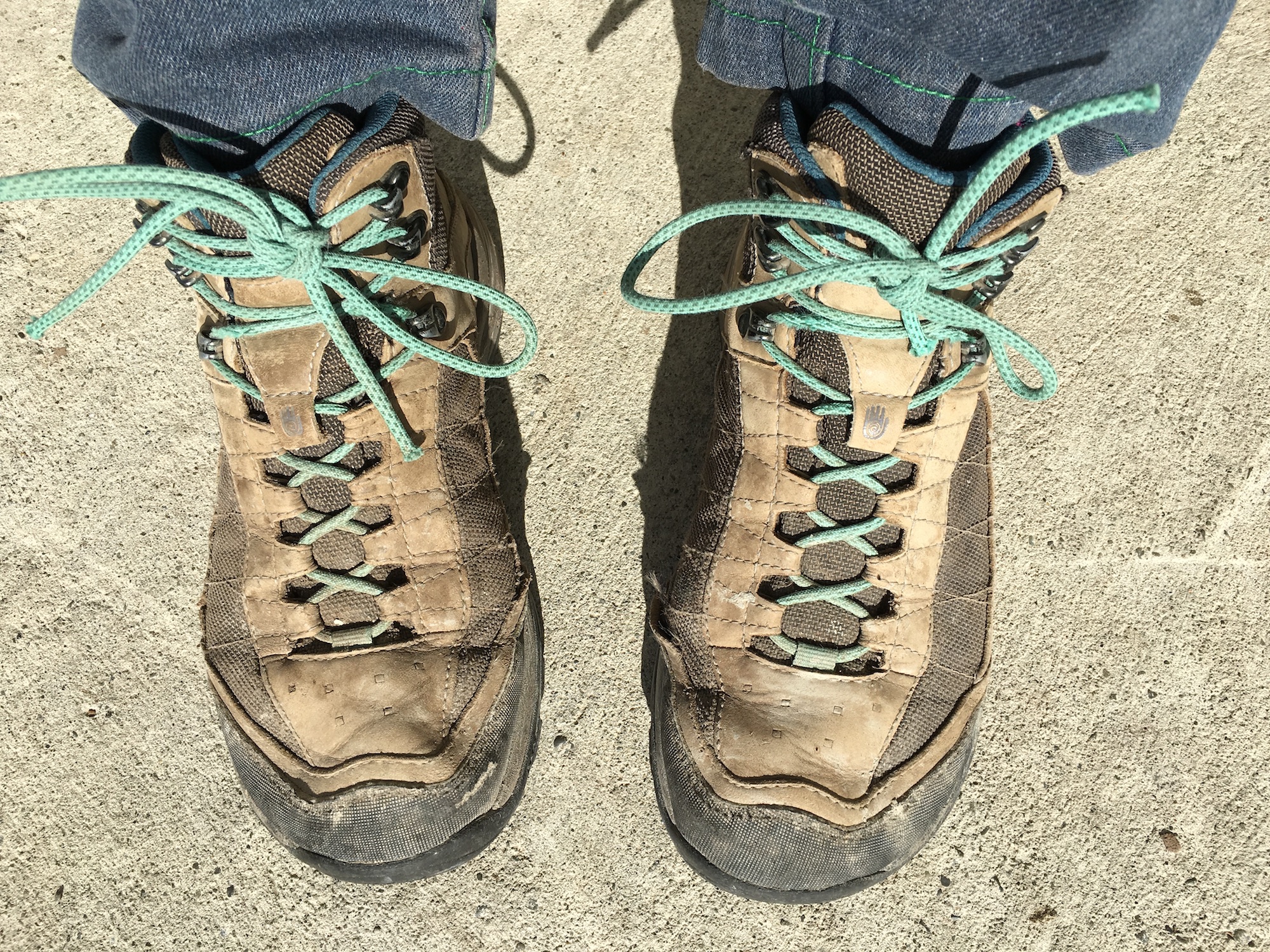
I laced up my shoes to go to town yesterday and thought to myself, “Gosh, these shoes are comfortable.” My next thought was, “Gee these shoes are looking a bit rough for town wear.”

Truth is, I’m a bit rough for town wear. I feel it every time I go for groceries. Other women arrive at the store in high heels and skirts, with flouncy scarves and jewellery. I rock up in my hiking boots, still dusty from my last trip. My clothes are clean, well-made and tailored perfectly for me (because I make the myself), but that’s just it—they’re tailored for me, and not just in the fit. Denim, cotton, lots of pockets, and comfortable enough to walk five kilometres in (because I never know when I’ll have the need or urge to take a brisk walk).

Even my ‘town’ shoes—the ones I wear when I’m trying to look at least somewhat professional—are wide, clunky affairs that are, quite frankly, ugly (but really comfortable).

Most of the time, it doesn’t bother me to be the unfashionable slob in town, but it doesn’t mean I don’t notice my wardrobe is wildly different from others’.

I could theoretically dress up to go to town. Somewhere, deep in the closet is one outfit that could count as marginally dressy. It would pass for normal in the grocery store. I expect it will last the rest of my life, given how seldom it comes out.

You can take me out, but you can’t dress me up.

The Sound of a Story

I sit down at my desk and breathe a sigh of relief. It’s quiet here, in my office. Not like the noisy library where I worked yesterday.

But, no, that’s not true. I hear the roar of the surf in the distance. The trickle of the artificial stream in the garden overlays the sound of the ocean. When I step to the office door, a goat greets me with a maa. Starlings mutter in the treetops, magpies warble on the fenceposts, and a fantail chitters in the shed. A plover’s percussive call is underlain by the chirping of a thousand crickets.

The neighbour rumbles past in his tractor, carrying a bale of silage. I can hear his son in the paddock shouting and whistling at his five barking sheep dogs.

It is far from quiet.

And yet …

Somehow, the sounds here caress my thoughts, rather than intruding upon them like the horrible Muzak from the library cafe, or the screams of tired children, or the drone of the automatic returns machine—please place the item on the trolly.

The fantail flits in and out of the story I’m writing without knocking over my coffee. The goats and sheep graze beside me without barging across the keyboard. The crickets keep to the grass. The tractor rumbles along without leaving tire tracks on my manuscript. The ocean doesn’t even wet my toes.

But somehow, I’m certain these sounds end up in my stories, caught up in the weave of plot and characters. The fantail is there, in the flick of a character’s fingers. The ocean is the relentless sound of the plot line. The tractor is the rumble of disaster bearing down on my protagonist. The goats’ deep maa is the voice of wisdom, and the crickets’ chirping lightens the mood.

The Pumpkin Fairy

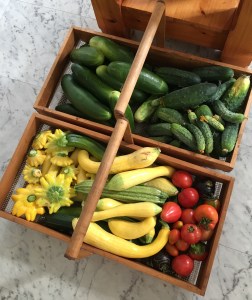
It was most certainly the year of the cucurbit—from an abundance of cucumbers to an avalanche of zucchini, to a mountain of melons, and finally, more pumpkins than we can possibly eat.

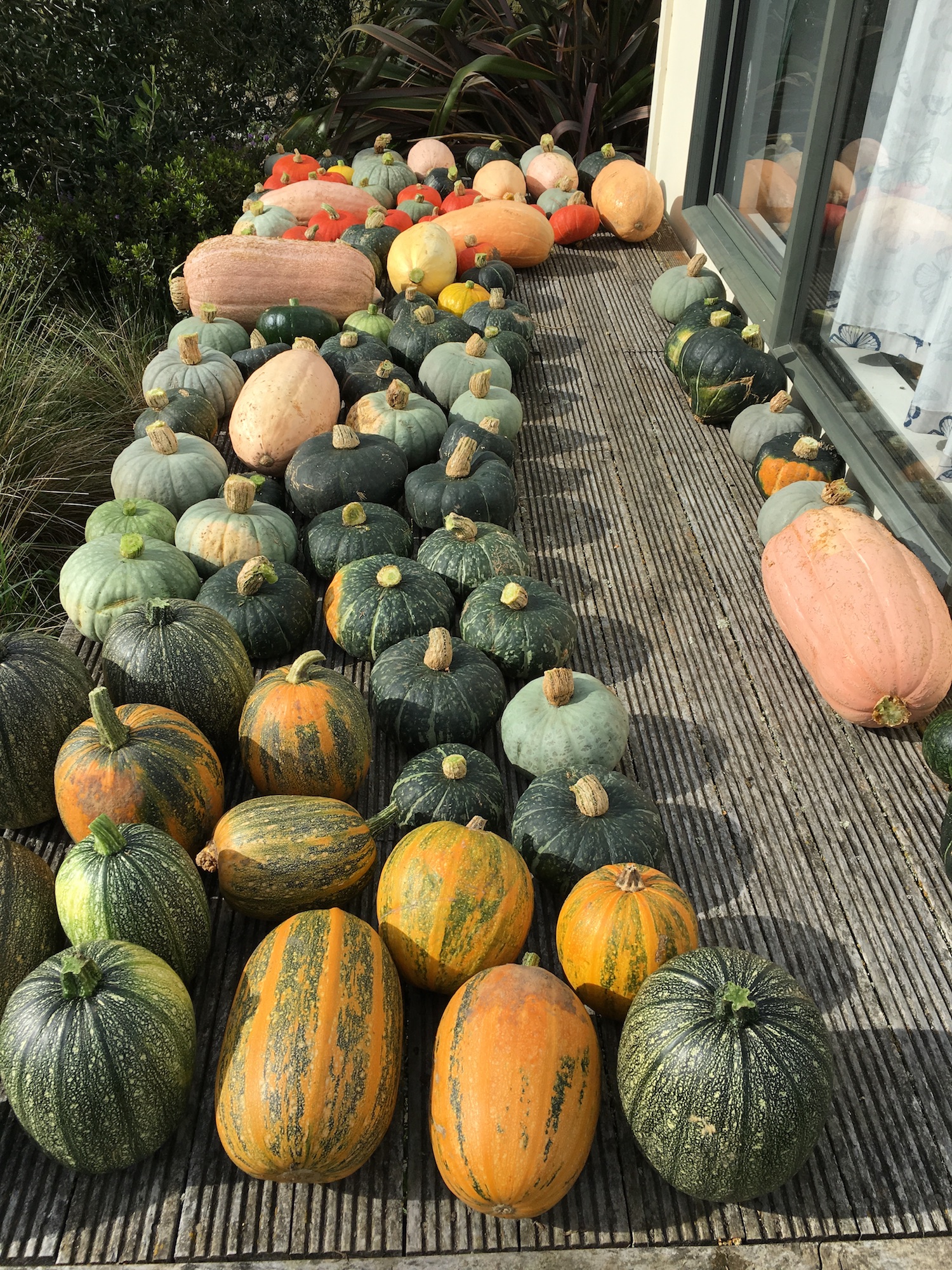
My daughter picked about three-quarters of the pumpkins over the weekend—the total came to exactly 100, some of which are 15 kg behemoths. That’s a lot of pumpkin. That’s eating pumpkin every three days for a year. That’s only three-quarters of the pumpkins from this year’s garden!

The kids think I should start dropping pumpkins off on random people’s doorsteps—a sort of Pumpkin Fairy. It would certainly get rid of the excess pumpkins, but I wonder what people would think to find a pumpkin on their doorstep …

Would you like to be visited by the Pumpkin Fairy?

Growing Gifts

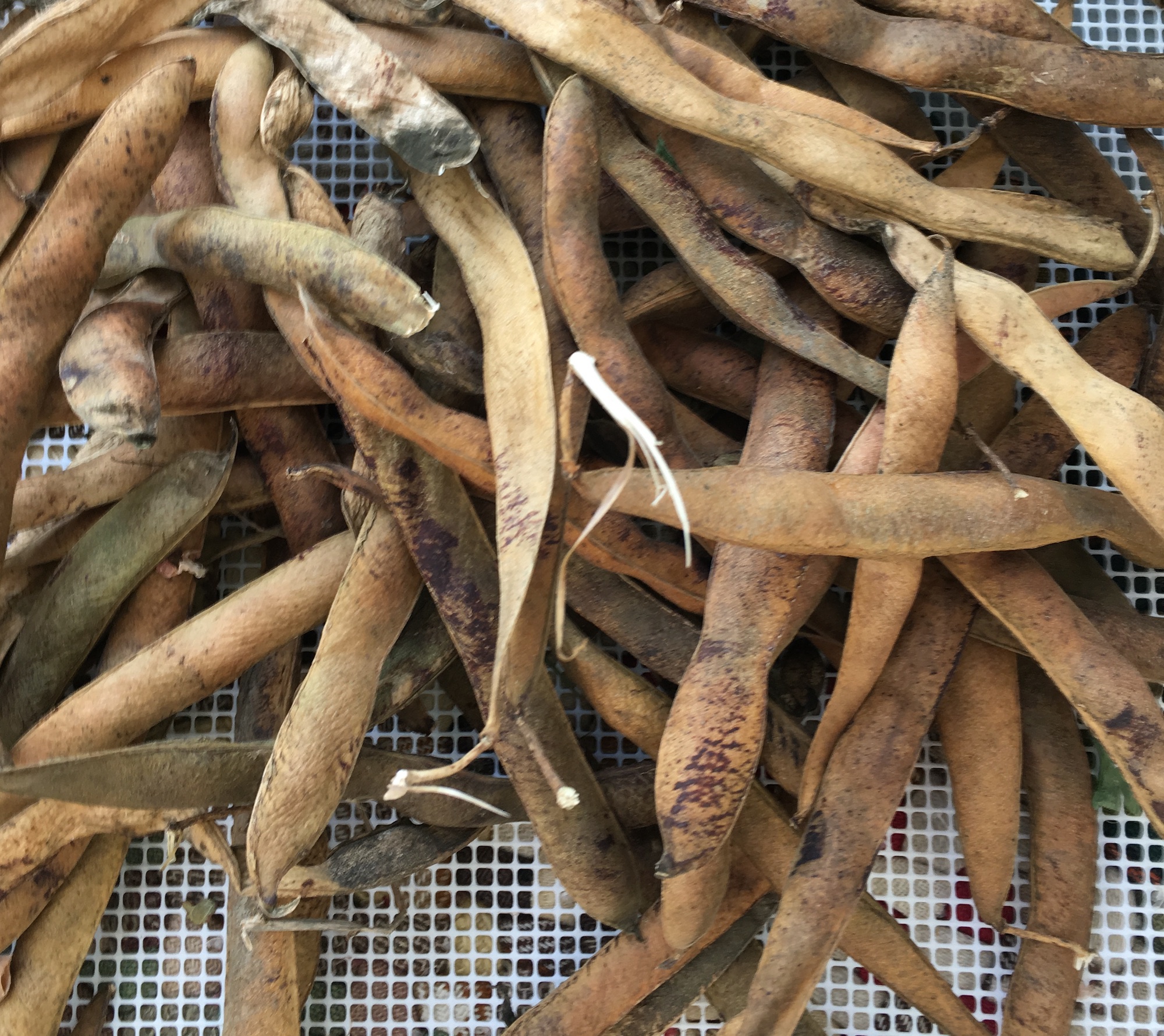
The first neighbourly gift I was given when we moved into our house twelve and a half years ago was a handful of dried scarlet runner bean pods for seed. A couple of weeks ago, I harvested the twelfth batch of seed from the descendants of those first beans. The neighbour who gave me those beans has since moved away, and I haven’t seen her for years. But her gift still feeds us every year.

Another friend gave us a few raspberry canes about ten years ago. Those raspberries (and their descendant cuttings) now fill a thirty-metre long bed, and yield large quantities of fruit each summer.

A few years after the raspberries, my husband drove one of my son’s classmates and his dad to a school outing. In exchange, the dad gave us a couple of gooseberry plants. A few strategic cuttings, and we now pick almost more gooseberries than we know what to do with each year.

Around the same time, one of my husband’s colleagues was pulling out some artichoke plants, and asked if we wanted a few. I’ve divided those plants twice since then, and we now eat more artichokes than anyone should be allowed to.

For a gardener, these are the best gifts—divisions, cuttings, and seeds from cherished plants. They are gifts that may seem small at the time, but they grow every year.

Belated Poetry Day

I missed World Poetry Day last week, so here’s a belated poem in honour of the day, inspired by the little spider who has built its web over the kitchen window.

David and Goliath

Honeybee caught
In a spider web
Buzzes murder to
All eight-leggers,
Stinger stabbing at
Offending silk.

Alerted,
Out rushes
The tiny spider,
Dwarfed
By its angry prey.

Dart in,
Avoid the sting,
Dart out.
Throw silk with
Frantic hind legs.
Tangle wings, tangle legs.
Dart in.
Avoid the sting.
Bite.
Dart out.
More silk.
More silk.

Bee’s wings are stilled
Though she still buzzes
A warning,
As though through
Gritted teeth.

More silk.
More silk.
Dart in.
Bite again.
Dart out.

The bee’s movements slow.
Abdomen goes slack.
Legs twitch once.
Twice.

More silk.
More silk.

David slays Goliath.

Can’t Stand the Heat?

Chilli peppers are one of the prettiest plants in the garden. It’s no wonder there are so many varieties grown largely for their ornamental value.

But I appreciate my chillies for their kick as well as their glossy leaves and cheerful fruit. Unfortunately, chillies are tropical plants, and many varieties need a longer, hotter growing season than I can provide here, even under cover.

Two varieties, however, regularly produce well.

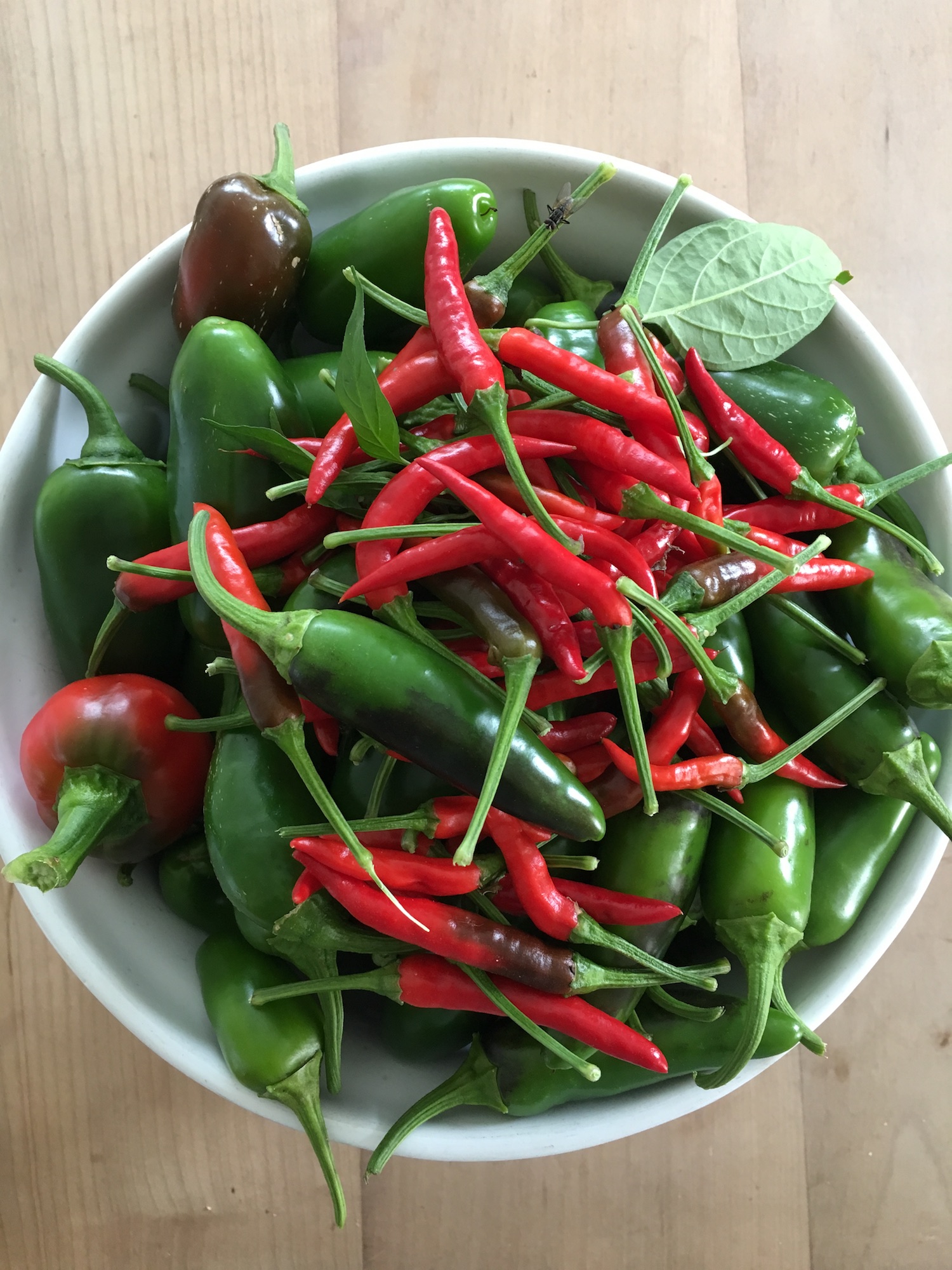
Jalapeño Early—I can’t grow normal Jalapeños, but this variety is a week or two quicker to produce, and that’s enough. One of my favourite chillies because its low heat level (2,500-8,000 Scoville Heat Units) means you can load a dish with them and enjoy the other flavours they impart along with the heat.

Thai Super Chilli—At 40,000 to 50,000 Scoville Units, these peppers are significantly hotter than Jalapeños. Just one of these little gems gives a nice kick to a dish. I particularly like these chillies because they dry well in beautiful strings hanging in the kitchen. They’re easy to grow and preserve, and they lend beauty to the garden and the kitchen all year.

A couple plants of each of these peppers is plenty to grow a year’s supply of spicy goodness, but you know I can’t stop there. I usually plant at least one other mildly spicy pepper. this year, it was Cherry Large Hot. Similar to Jalapeños for heat, these chillies really serve no purpose for me except as a beautiful red contrast to the green Jalapeños in salsas and pickled peppers. Good enough reason for me to plant them!

Equinox Accounting

Happy Equinox!

It is the autumnal equinox, and fittingly, our weather today has started out pure summer heat, and is predicted to turn to wintery wind and rain later on. I can see the clouds piling up to the south as the front approaches.

There are still plenty of summer crops coming out of the garden, but the equinox is a good time to evaluate what worked and what didn’t this past summer.

It was an extreme summer, so there’s no saying this year’s performance will hold in future years, but new varieties that did well include:

Tomato Indigo Apple—I blogged about this beauty when it first began to ripen. It has proven itself over the season, producing plentiful, delicious and attractive fruits that ripened early and continue to ripen as other varieties are giving up for the year.

Tomato Oxheart—This variety was also new to me this year, and it did well enough to deserve another go. The almost disturbingly heart-shaped (as in ox heart, not love heart) fruits were flavourful and plentiful.

Onion Pearl Drop—Cute and fast-growing. I’ll plant these again.

Watermelon Sweet Red—It might have simply been the weather this summer, but Sweet red matured more quickly and produced more fruit than Rapid Red, which I’ve planted in past years. I’ll be curious to see how it does in a cooler summer.

Varieties that didn’t grow so well:

Eggplant Container Pick—I was excited by this smaller variety of eggplant, as mine always end up pressed against the top of the low tunnel I grow them in, but these seeds didn’t even germinate.

Tomato Russian Red—This isn’t a new variety for me. Usually Russian Red, bred for its ability to withstand and produce well in cool temperatures, is my best producer. This year, the plants spent most of their energy on vegetative production, growing to massive leafy plants without actually producing much fruit. And the fruit they did produce was so hidden in all the greenery that I missed half of it. It won’t stop me from planting Russian Red in the future, but it emphasises to me the need to plant a mix of varieties, as year-to-year differences in weather can make a big difference in production.

Pole Bean Jackson Wonder—The jury is still out on this bean, but poor germination and slow growth mean I still haven’t harvested any of these lima beans. There are plenty of pods on the plants, but whether they will fill out properly before frost kills them is debatable. My guess is that in a normal summer here, they wouldn’t have a chance—they appear to need too long a growing season.
Yard Long Red Noodle

Yard Long Red Noodle alongside scarlet runner beans.

Along with all the other heat-loving plants that did well in this summer’s garden is the bean Yard Long Red Noodle (Vigna unguiculata—the same species as cowpeas). I have never had luck with these beans here in New Zealand—they are particularly sensitive to herbicide overspray, and also prefer it hotter than our summers normally are (ideal temperature for them is 30ºC). But this year, the plants germinated slowly, which spared them the springtime overspray, and the summer was hot and wet. I can’t say they’ve thrived (we grew yard long beans in Panama, and so I know what they’re supposed to grow like), but they have managed to produce a small crop of ridiculous-looking beans. The beans aren’t exactly a yard (90 cm) long, but they’re 30 cm (12 inches) or more, and are the sort of silly crop to make everyone smile.

Their red colour is pretty in the garden, and unlike many other red or purple vegetables, they retain their colour when cooked. Good enough reasons for me to plant them, in spite of their poor performance here—a few go a long way.

Earthworm!

Most people give little thought to earthworms. Even gardeners, who appreciate their presence, don’t spend much time considering which species of worm are present.

But species matters.

Here in New Zealand, we have about 200 species of earthworms, most of which are native. The native and non-native worms are sharply segregated by habitat—natives in native habitats, non-natives in agricultural and urban habitats. So all the worms we see in our gardens are non-native species.

When you’re used to the small to medium sized non-native worms, finding a native worm is exciting. They’re generally larger than the non-native worms—sometimes much larger. Some can grow to nearly a metre and a half (59 in) in length.

We were lucky enough to find this native worm on Mount Oxford over the weekend. I can’t positively identify the species, but it’s likely to be Octochaetus multiporus. This was a young specimen—not yet reproductive age (as evidenced by its lack of a clitellum)—but already about 20 cm (8 in) long and as thick as my pinky finger. This particular species grows to about 30 cm (12 in) long.

O. multiporus is a particularly interesting worm because it is bioluminescent and spits a bioluminescent defence compound when disturbed. On the bright sunny day we found this one, there was no hope of seeing any bioluminescence. Still, it was a great find on our walk.