Favourite Kitchen Tools: cast iron skillets

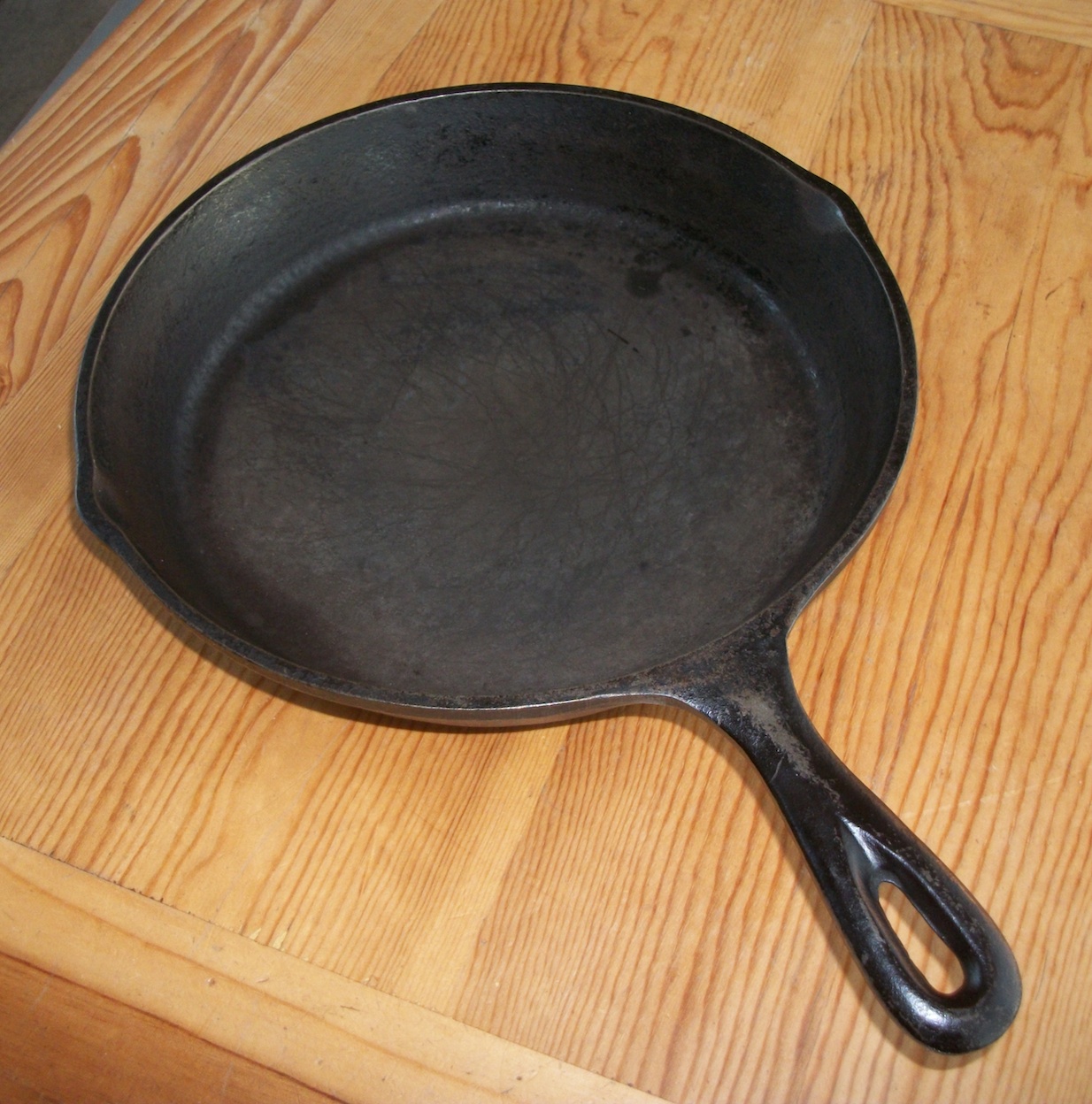
100_3215 copyTime for another tribute to one of my favourite kitchen tools. We have three cast iron frying pans. As I recall, two were garage sale finds and one was a wedding present. At least one of them gets used nearly every day.

I love the cast iron pans for their weight. Though it can take several minutes to heat them up, once they’re warm, they cook gently and evenly, without a searing hot spot in the middle and cold edges. I also love the pans for their ability to go from stovetop to oven—gravies and béchamel sauces made in a cast iron skillet can easily be popped into a warm oven to finish cooking, as can frittata.

I always make cornbread in a cast iron skillet—heating the skillet on the stove before pouring in the batter gives the finished bread wonderful crispy edges! And, of course, making flatbreads of any kind in cast iron is a pleasure—its mass allows it to quickly but gently bake a bread.

And it’s always nice to know I’ve got a handy weapon in the kitchen, you know…just in case Sauruman or Shelob shows up at the door (after all, we do live in Middle Earth…;) )

Seasonal food

100_0535 cropOvernight, the mountains were cloaked in snow, and this morning they seemed to have leapt closer, looming huge and white where all summer they’d been nothing but distant grey peaks. The wind is cold and keen, and brings driving rain and hail clattering against the windows. The cat stretches out in front of the first of the season’s fires in the log burner.

Overnight, it seems, we have broken from our never-ending summer and have been plunged into winter. And overnight, our meals have changed. Though there are still a dozen cucumbers in the fridge, the thought of a cool cucumber salad is not appealing today. Instead I hunger for potato soup, bread warm from the oven, and hot apple crisp. I eye the pumpkins as I could not on the shorts-and-T-shirt day last week when I harvested them, and I think of gallette, soup, and pie. I am excited by the culinary opportunities the change of seasons presents.

There will be more T-shirt weather, I know. The cucumbers will be eaten. Here in the land of perpetual spring, even winter days can call for iced drinks now and again. But for now, I will enjoy the excuse to eat steaming soup with buttered biscuits, and drink hot tea in the middle of the afternoon.

Quince

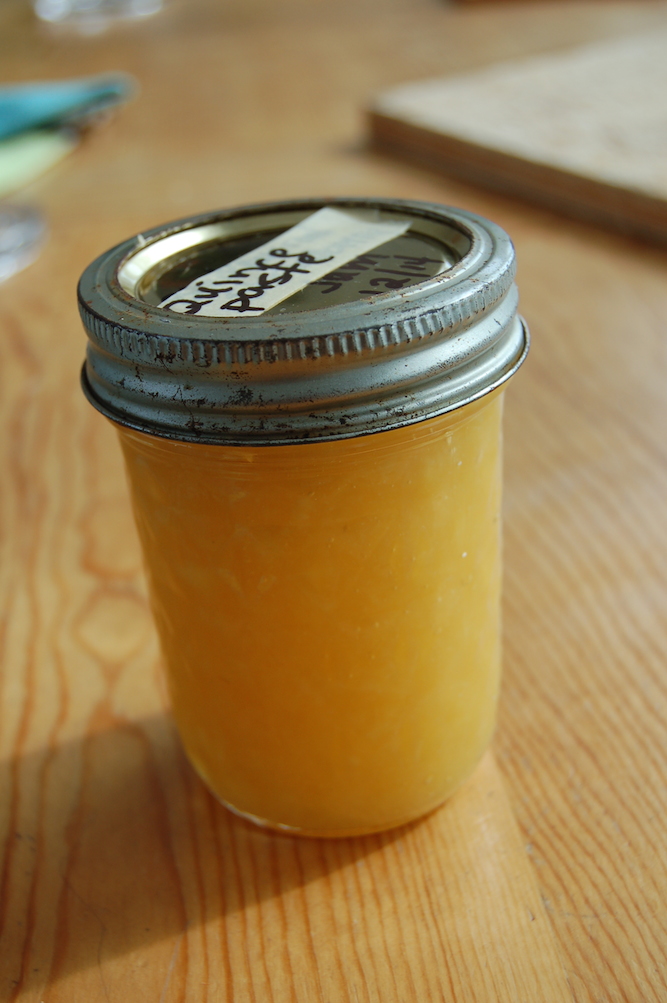
quincepaste1smQuince was a fruit I never knew before we moved to New Zealand. Looking like a fuzzy pear, and inedible raw, they’re not the most inviting fruits at first glance. But cooked into quince paste, they are one of the most delicious and versatile fruits around.

Our little quince tree (not much more than a stick) produced three fruits this year, so I made a very small batch of quince paste—about three cups. I’m afraid that it’s almost gone already. It is delicious on crackers with a thin slice of goat cheese. It’s also lovely on toast in the morning, or on bread as a late-night snack. It goes well with yogurt and granola, and…well, it never had a chance of lasting long.

The end of summer

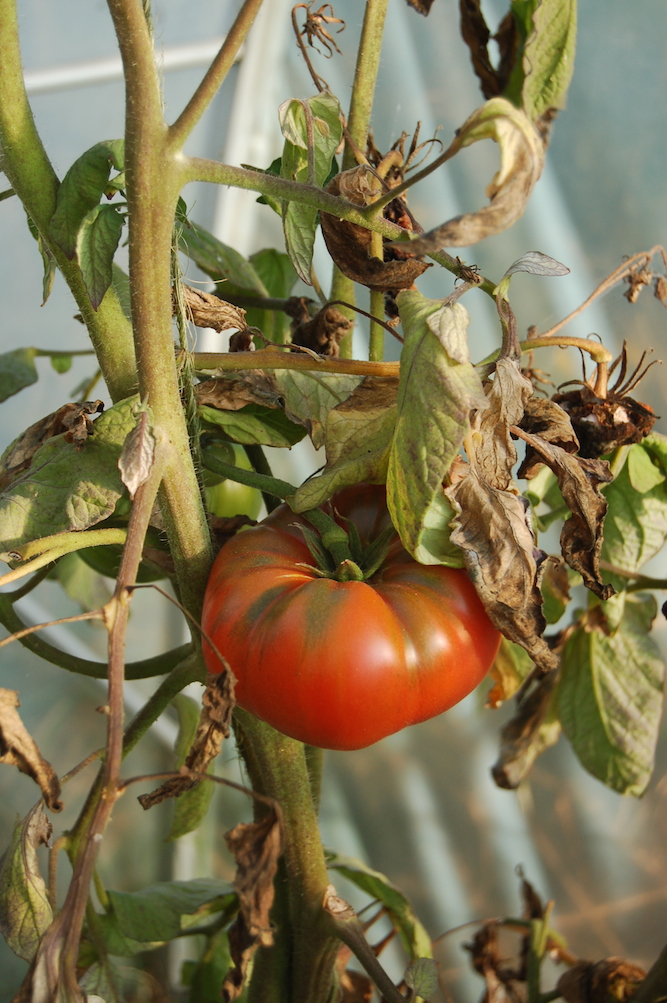
Tomatoes in the greenhouse, still going strong...for now.

Tomatoes in the greenhouse, still going strong…for now.

And here it comes…the Metservice forecast for tomorrow…

A few spots of early rain, followed by fine spells and scattered showers with hail, and possible squally thunderstorms. Snow lowering to 400 metres from afternoon. Cold southwesterlies, becoming strong about the coast in the afternoon.

It’s time to batten down the hatches, rescue the last tomatoes and zucchini, and bring firewood to the porch. I gave the goats some extra bedding (and will do the same for us, too!), and I’ve tucked down the edges of the small tunnel house in the garden, in the hopes of eking out a few more peppers and eggplants.

I’m ready, as I usually am by mid-April, for the summer to be well and truly over. I’m ready to let the chickens loose in most of the vegetable garden, to control the weeds for me over winter. I’m ready to stop frantically preserving the summer’s bounty and start eating what I’ve saved.

Not that there isn’t gardening to do in the winter. My “winter” vegetable garden is bigger than many people’s summer garden, but it is still less than a quarter the size of the summer garden, and feels like a holiday. I’m looking forward to starting that holiday soon.

Fall Foraging

DSC_0016 copyI enjoy foraging for forgotten food, and university campuses often offer good pickings. Development marginalises former research and demonstration plots. The plants are abandoned in some corner between buildings, and are forgotten by everyone but the groundsmen who have to mow around them.

Apples used to be a huge crop around Lincoln (until growing houses became more profitable), and the university has done research on apples for many decades. The “Orchard Carpark” is presumably the former site of the University orchard, but only one lone apple tree remains on the edge of the pavement. No one officially picks its fruit, but passersby avail themselves. This year, the tree is groaning under a heavy crop.

This morning, when I stopped by, the tree was well-picked on the lower branches, but there was plenty of fruit on the ground, and my daughter climbed into the tree to reach a few higher up. We came home with a bag full of tart, firm apples. Perfect for pie.

Step Away From The Kitchen!

There's more to life than the kitchen!

There’s more to life than the kitchen!

“I don’t know what is more terrifying…that your blog makes you seem like this insane woman who spends all day in the kitchen, or that you really are an insane woman who spends all day in the kitchen.”

I just want to make it perfectly clear that I do not spend all day in the kitchen. I may be insane (indeed, I’m pretty sure I am), but not in that way.

For example, I spent all afternoon Saturday in the garden, and Sunday morning I cleaned the house and payed a social call to the dentist. I just finished editing a resource management plan for a client, and soon I will move on to the main task of each week day, writing and selling (well, trying to sell) my books (which have nothing to do with food, though sometimes characters do eat).

Have I spent an inordinate amount of time in the kitchen lately? Yes, at least on weekends. But it is harvest time, and extra work now means I can spend winter evenings sewing, or curled up with a book. I intend to enjoy every one of the frozen and canned meals I’ve been working so hard on lately, and I will take full advantage of the extra hours I gain later, spending them out of the kitchen.

Soy: The Asian/Pennsylvania Dutch Cultural Conundrum

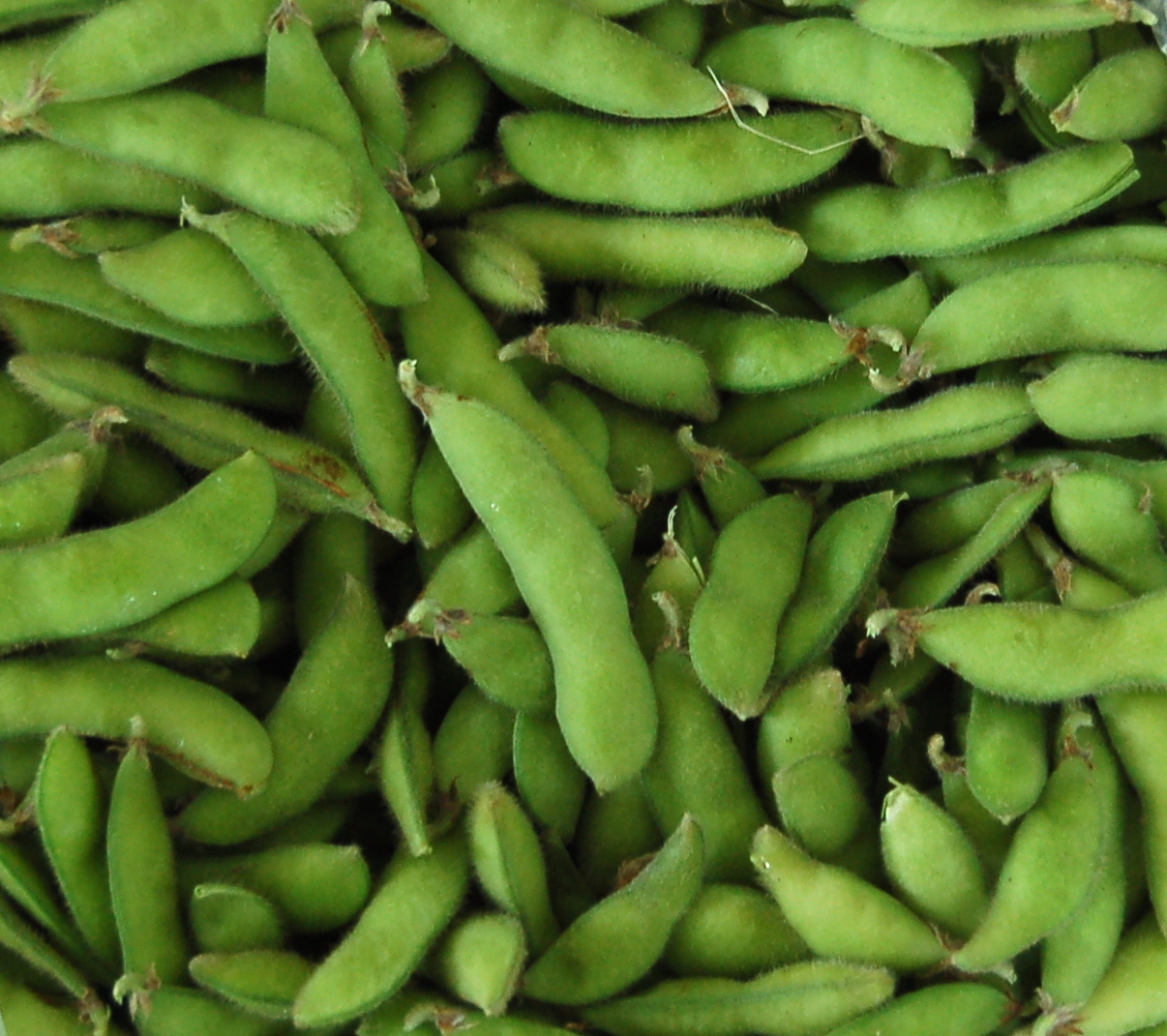
soycropI grew up thinking soy beans were an ordinary garden vegetable. Every year, my mother planted soy from seeds purchased at the tiny general store in Mastersonville. It wasn’t until I was 21 and finally living in a “real” house on my own (not in the university dormitories) that I realised the rest of America didn’t even know what soy beans were. My attempts to find fresh soy beans in 1990 in Ann Arbor, Michigan failed. In fact, the only soy product I could find were “soy nuts”—roasted, salted soy beans—at a health food store. They were stale and mealy, and so hard they nearly broke my teeth.

It seemed that no one outside of Lancaster, Pennsylvania ate fresh soy beans as a vegetable. Everyone thought I was nuts. I started asking my mother to send me a packet of seeds every spring, from the store in Mastersonville.

Many years later, I learned about Japanese edamame and recognised it as the fresh soy beans of my youth. Fresh soy beans have been eaten since at least the 1200s in China, Japan and other Asian countries, and are apparently popular bar food in Japan, served steamed and salted in the pod to be snacked on alongside your beer.

Soy beans arrived in the American Colonies in 1765, but were mostly used as a forage crop. When and why the people in south eastern Pennsylvania began to eat fresh soy is unclear. And why no one else in America did is even more unclear, since soy’s sweet, nutty flavour beats the socks off of other beans Americans commonly eat fresh (I’m thinking about those mealy lima beans…).

Soy beans as garden vegetable only arrived in New Zealand in the past 6 years or so. I was unable to get seeds when we first arrived, and when I first contacted an Asian seed supplier to enquire about them, I was told they were still building up their stock, and couldn’t sell them yet.

Even now, though I can get soy bean seeds, I have been unable to locate the appropriate bacterial inoculant for them, and they grow poorly here. Still, I grow them–my garden feels incomplete without them. However it came to be, I feel a cultural connection to soy beans—that Asian/Pennsylvania Dutch fusion food. Go figure.

The French Potager

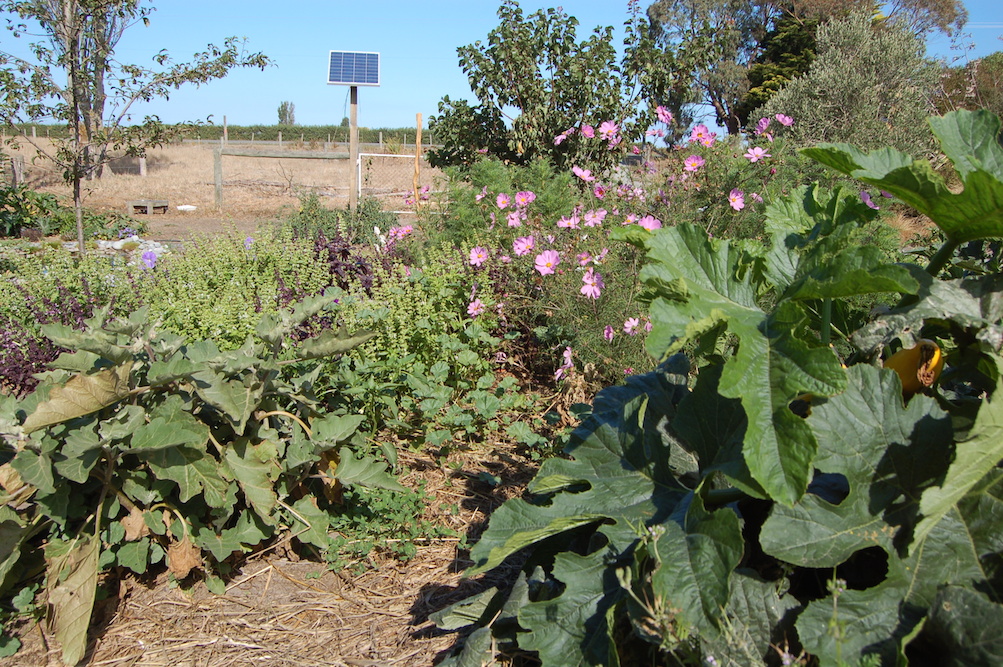
Zucchini, eggplant, basil and cosmos nestle happily together.

Zucchini, eggplant, basil and cosmos nestle happily together.

I love the idea of the French potager—the small garden densely planted with a mix of flowers, herbs, and vegetables. When we lived in St. Paul, Minnesota with a yard the size of a postage stamp, we had a delightful potager in raised beds near the house, and flowing down rocky terraces to the sidewalk. Showy okra flowers competed with cosmos and marigolds for the most beautiful plant award. Eggplants nestled next to thyme, corn formed a backdrop for zinnias, and colourful lettuces marched in a neat border around the whole arrangement.

Now that we have more than enough space, the vegetables are segregated and confined to the vegetable garden, where I can be sure they are well watered and mulched, and I don’t worry about a few spent, ugly plants hanging around. I’ve also found that here in the land of pernicious twitch (couch grass), planting perennials and annuals together is usually a recipe for disaster—annuals don’t compete well with twitch, and the perennials harbour fragments of twitch among their roots, providing an endless source of the weed.

But this spring, Ian was looking for temporary plantings for his new pond garden—plants he wouldn’t mind killing off along with the weeds in the fall when he plants the perennials he wants there. He picked up a few flats of annual flowers, took all my leftover vegetable plants, and created a delightful potager bursting with colour, fragrance and flavour. It’s a lovely reminder that you don’t need a “vegetable garden” to grow food, and that vegetable plants are beautiful, too.

Cultural Icons

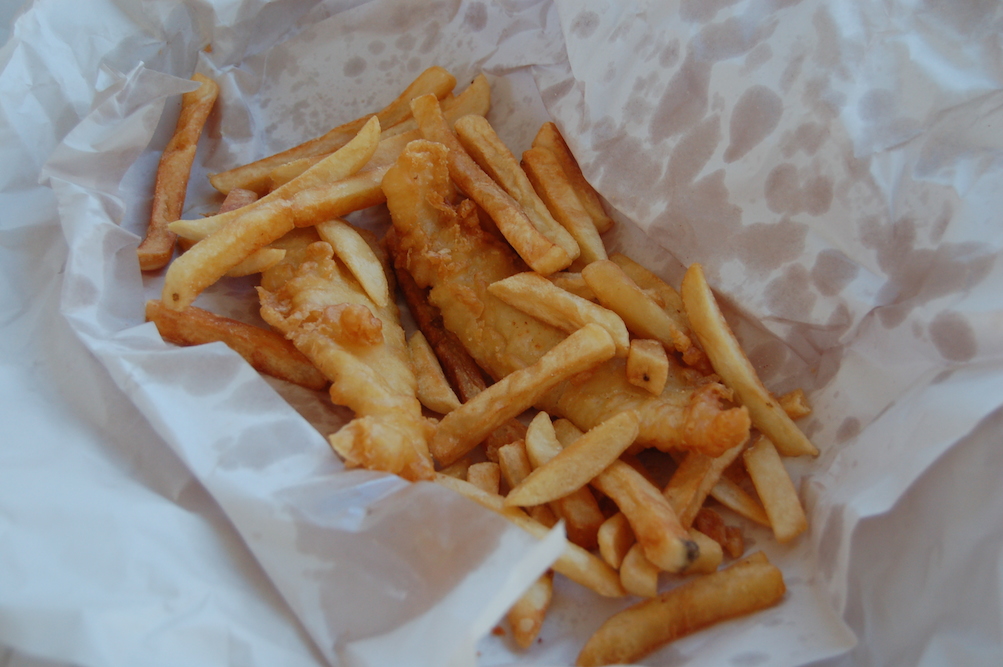
fishnchipssmWhat does it take to become a Kiwi? An appreciation for the uses of number 8 wire? The ability to pronounce Whangaparaoa without stumbling? Knowing the culturally acceptable way to pass a mob of sheep on the road? Understanding that a statement like “I wonder if you should move your car out of the way?” actually means “MOVE YOUR F#*&%^ CAR OUT OF THE WAY!” An ability to converse coherently about rugby?

All these things are certainly important. Equally important is an understanding of New Zealand food icons.

Food is central to cultural identity. Apple pie and hot dogs are quintessentially American, a Panamanian festival wouldn’t be complete without ojaldre, and Costa Ricans would lose their sense of self without black beans.

Wherever I’ve travelled, I’ve tried to experience the local, iconic foods so as to fully experience the culture. I try not to let my own dietary choices prevent me from these experiences, so among other things, I’ve eaten spicy chicken salteñas from a street vendor in Bolivia, and titi (muttonbird) traditionally caught and preserved by local Maori. These experiences haven’t always been positive—the spicy salteña tasted a lot worse coming back up an hour later in a public park—but they’ve always taught me something.

Modern Kiwi culture is culinarily represented by pavlova (a meringue topped with fresh fruit), kiwi fruit, and fish and chips. Determined that our kids not be culturally and socially handicapped by vegetarianism, we’ve made a point of occasionally picking up fish and chips at our local shop. We don’t do it often—maybe 3 times a year—so it’s a rare treat for the kids (as greasy, salty fried food probably should be), but it has worked. Though they still speak with an American accent, and have no interest in rugby, they can connect with their peers over the cultural icon of fish and chips. And I can think of no better way to fit in than around the dinner table.

Changing Perspectives

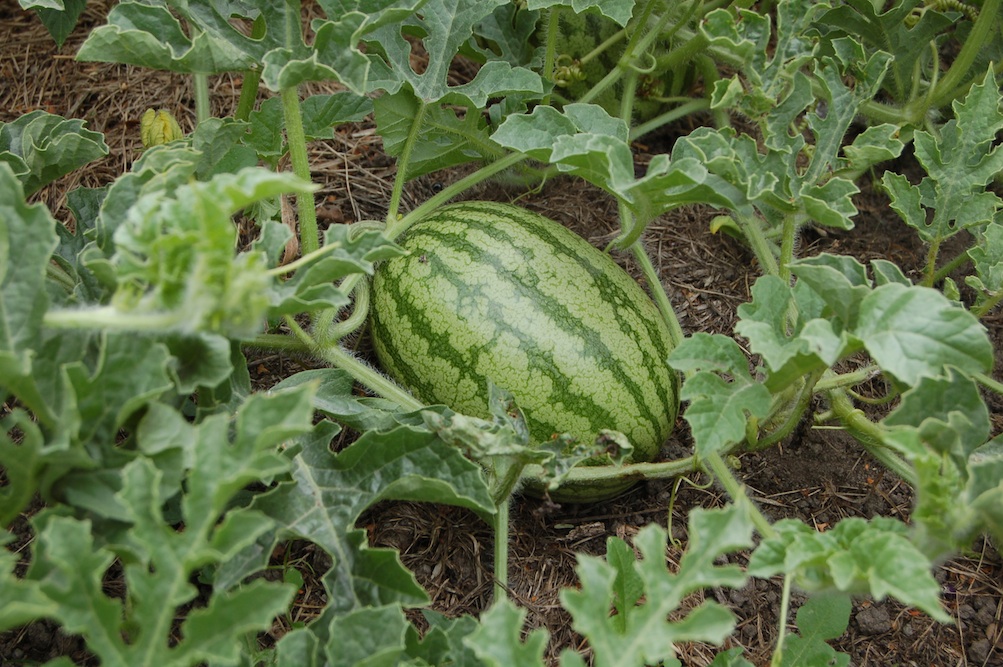
DSC_0019smWhen I first mentioned to a neighbour years ago that we were enjoying home grown watermelon, she was incredulous.

“Watermelon!? In Canterbury?!”

It’s true, melons are a hit-and-miss crop here. Summers are just too cold for these heat-loving plants. My first attempts were mediocre at best—we were lucky to get anything before frost killed the plants. Year after year, they failed. Since then, I’ve learned to start my seeds early in a heated room, and let the plants get nice and big before putting them out. They never go out into the garden until the end of November, and I try to tuck them into one of the more sheltered beds so they don’t have to deal with cold winds. With a bit of coddling, they do reasonably well.

Reasonably well for Canterbury, New Zealand, that is.

My standards for melons have changed dramatically in the last decade. If I were still gardening in North America, I would be sorely disappointed in my melon crop. The fruits are small and few—no giant rattlesnake watermelons or big fat cantaloupes here! Only the most rapidly maturing varieties give at all, and even on these varieties, most fruits don’t make it to maturity before the growing season ends.

But the few, small melons we do get are incredibly sweet and juicy. Even more so, because we shouldn’t be able to grow them at all here. Each one is a blessing and a marvel.