Cultural Icons

fishnchipssmWhat does it take to become a Kiwi? An appreciation for the uses of number 8 wire? The ability to pronounce Whangaparaoa without stumbling? Knowing the culturally acceptable way to pass a mob of sheep on the road? Understanding that a statement like “I wonder if you should move your car out of the way?” actually means “MOVE YOUR F#*&%^ CAR OUT OF THE WAY!” An ability to converse coherently about rugby?

All these things are certainly important. Equally important is an understanding of New Zealand food icons.

Food is central to cultural identity. Apple pie and hot dogs are quintessentially American, a Panamanian festival wouldn’t be complete without ojaldre, and Costa Ricans would lose their sense of self without black beans.

Wherever I’ve travelled, I’ve tried to experience the local, iconic foods so as to fully experience the culture. I try not to let my own dietary choices prevent me from these experiences, so among other things, I’ve eaten spicy chicken salteñas from a street vendor in Bolivia, and titi (muttonbird) traditionally caught and preserved by local Maori. These experiences haven’t always been positive—the spicy salteña tasted a lot worse coming back up an hour later in a public park—but they’ve always taught me something.

Modern Kiwi culture is culinarily represented by pavlova (a meringue topped with fresh fruit), kiwi fruit, and fish and chips. Determined that our kids not be culturally and socially handicapped by vegetarianism, we’ve made a point of occasionally picking up fish and chips at our local shop. We don’t do it often—maybe 3 times a year—so it’s a rare treat for the kids (as greasy, salty fried food probably should be), but it has worked. Though they still speak with an American accent, and have no interest in rugby, they can connect with their peers over the cultural icon of fish and chips. And I can think of no better way to fit in than around the dinner table.

Changing Perspectives

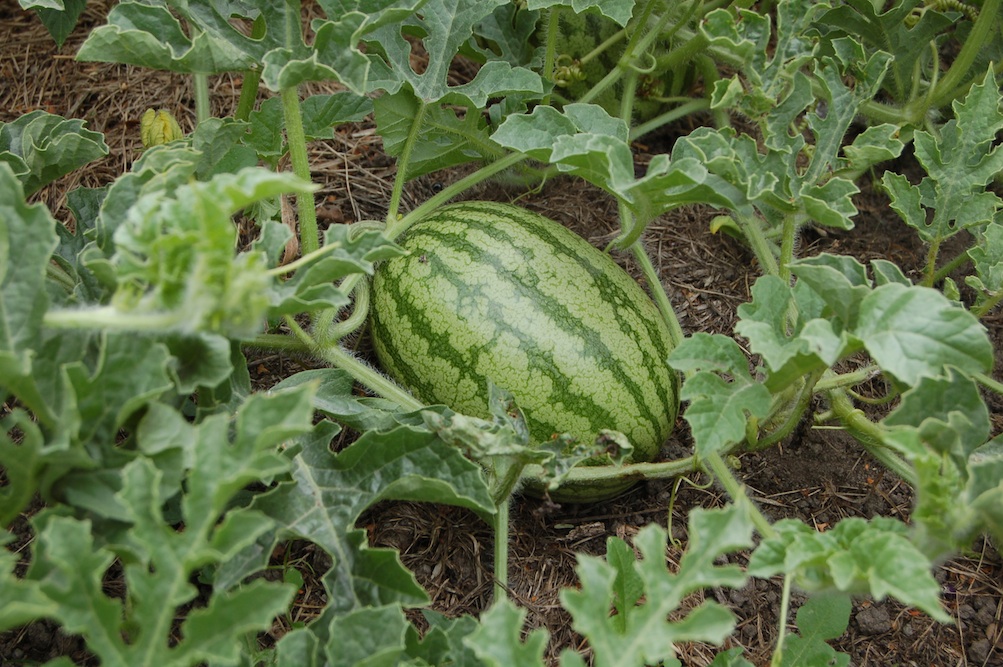
DSC_0019smWhen I first mentioned to a neighbour years ago that we were enjoying home grown watermelon, she was incredulous.

“Watermelon!? In Canterbury?!”

It’s true, melons are a hit-and-miss crop here. Summers are just too cold for these heat-loving plants. My first attempts were mediocre at best—we were lucky to get anything before frost killed the plants. Year after year, they failed. Since then, I’ve learned to start my seeds early in a heated room, and let the plants get nice and big before putting them out. They never go out into the garden until the end of November, and I try to tuck them into one of the more sheltered beds so they don’t have to deal with cold winds. With a bit of coddling, they do reasonably well.

Reasonably well for Canterbury, New Zealand, that is.

My standards for melons have changed dramatically in the last decade. If I were still gardening in North America, I would be sorely disappointed in my melon crop. The fruits are small and few—no giant rattlesnake watermelons or big fat cantaloupes here! Only the most rapidly maturing varieties give at all, and even on these varieties, most fruits don’t make it to maturity before the growing season ends.

But the few, small melons we do get are incredibly sweet and juicy. Even more so, because we shouldn’t be able to grow them at all here. Each one is a blessing and a marvel.

Milking in the Dark

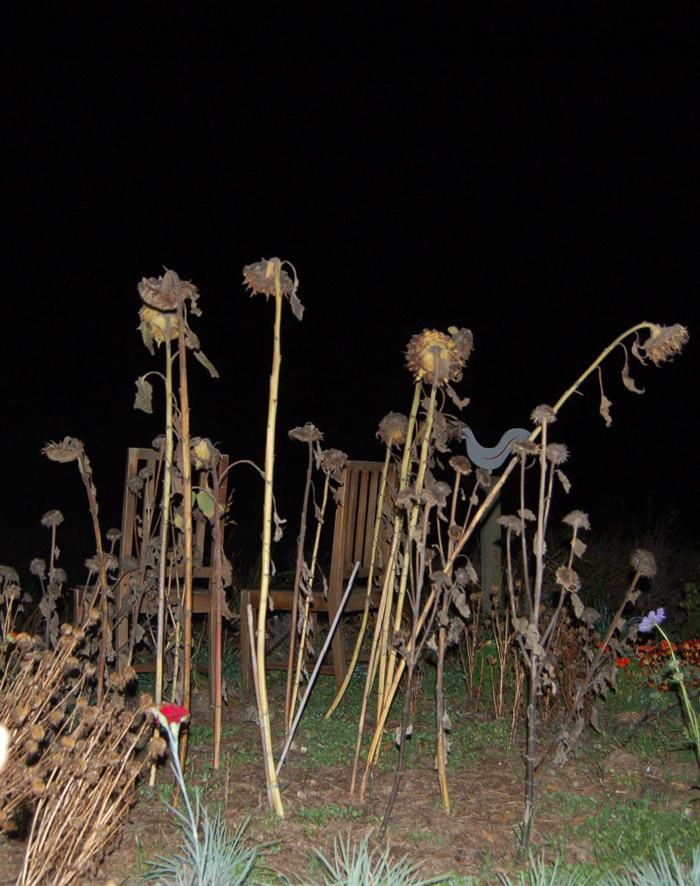
DSC_0012cropIt’s the time of year when milking gets difficult. The air is chilly, and it is still full night at 5:30 when I roll out of bed. I’ve already given up milking at 5—even I have trouble at that hour this time of year. If I start my day at 5.30, the sky is at least starting to lighten a bit by the time I finish milking and feeding the animals. In another week or two, I won’t even have that meagre consolation.

But there is something magical about stepping out the door in the pre-dawn darkness, the sky blazing with stars above, and no sound but the distant surf. Even the goats, who usually clamour for me every time they see me, are silent at that hour. They wait patiently for their turn on the milking stand, their turn to be fed. In the distance I can see the light from a neighbour’s milking shed, and I know I’m not the only one out in the darkness. While the neighbour works in the light and noise of a 60 cow rotary milking shed, though, I walk my goats one at a time to the solitary milking stand behind the shed. Weak light streams from the shed window—just enough to see the teats and the milking pail. I milk largely by Braille these mornings.

As I finish, and the eastern sky begins to lighten, a rooster crows in the distance, the neighbour’s peacocks mew. I stop for a moment on my way back into the house to admire the stars, listen to the sea. I won’t experience this stillness for the rest of the day; I need to savour it, store it up. When I step back into the warmth and light of the house, there will be a hundred frantic tasks waiting, and by the time I step back outside, the sun will be up, birds will be chattering in the trees, the goats will whine for attention, the neighbours will be passing back and forth on tractors, and the magic of the night will be gone.

And so I am thankful for this chore, the milking, that forces me out of bed and into the night, that I might have a moment or two of stillness in my day. Those brief moments are better than an extra hour of sleep any day.

Gifts from the Soil

DSC_0001 smAccording to Wikipedia, the price of porcini mushrooms (Boletus edulis) ranges from $20-$80/kg in the U.S., though it’s been known to rise to over $200/kg (wholesale) in years when it is scarce.

Porcini is expensive because of its ecology. It is a mycorrhizal fungus, meaning it lives in association with the roots of plants. This is a mutualistic relationship—the plant provides sugar, and the fungus provides nutrients. Neither one can grow properly without the other. Porcini’s mycorrhizal partners are oak trees. In order to grow porcini, you have to grow oak trees, so it is difficult to cultivate. The result is that porcini is largely collected from the wild, and is subject to wide fluctuations in production.

Sitting down to a picnic lunch today (in a location that shall remain secret), Ian and I picked 730g of porcini. It’s very early in the mushroom season, and quite dry, so we were surprised to see it, though Ian regularly finds it nearby. Ian manages several hundred dollars worth of porcini foraging in the autumn, even calculated by the lowest prices. It’s a delicious and welcome gift that is overlooked by thousands of passersby.

Porcini is a firm and meaty mushroom. Strongly flavoured, a little can go a long way when it needs to. But in autumn when the porcini are fruiting, we need not skimp, and a meal can easily include half a kilo of mushrooms. I dry the excess for use over winter in soups and stews. It goes well with thyme and rosemary, and lends a deep earthy flavour to dishes.

So, thanks to whoever brought these two non-native organisms—oaks and Boletus edulis—to New Zealand. Their presence is a gift to our table.

Starfish for lunch?

Eye candy only.

Eye candy only.

As I was casting about for a blog idea for today, I remembered the rock pool hopping I did with my daughter yesterday. She is doing a school project on echinoderms (starfish, sea cucumbers, sea urchins), and we went looking for them. I know sea cucumbers are eaten in some Asian countries, and sea urchins (kina) are a traditional Maori food, and I was curious whether starfish were edible. The short answer is that apparently some people eat their gonads, but the rest of them is poisonous. Of course! I should have recognised that by their bright colours—those warning colours that so many animals use to advertise their toxicity.

Their poisons include tetrodotoxin, the same neurotoxin found in the infamous puffer fish, and saponins that can cause red blood cells to burst.

And that, of course, explains how these easily spotted, slow moving denizens of shallow rock pools avoid being eaten by the gulls, herons, and oystercatchers that prowl the shore.

So next time you’re at the beach, take your lunch with you and leave the starfish alone.

Old Farmers

My winter goat feed was delivered yesterday afternoon by the same father/son pair who delivers it every year. “Dad” isn’t a day under 90, and his son is in his late 60s. I always leap to help when they arrive. They would happily unload all the hay and stack it in the shed for me, but I can’t watch these two elderly gentlemen hauling hay bales while I do nothing.

Truth is, many of the neighbouring farmers could trade their tractors in for walkers. They work until their bodies give out, or until an accident or death claims them.

You might wonder why. Most of these guys are sitting on a fortune of land. They could sell out and retire in style instead of working themselves to death.

Paths wide enough for a walker?

Paths wide enough for a walker?

I understand, though. Will I give up gardening as long as I can drag myself to the garden? No. It’s who I am. Even injury can’t keep me away—I’ve been known to do my gardening on hands and knees when a back injury prevented me from standing. Farmers are the same. Farming isn’t a job; it’s an identity. To retire is to lose oneself. The 90 year-old who delivers my hay every year is cheerful and spry for his age. He will always be a farmer. One day he’ll stop working, but not until he stops breathing.

Salt

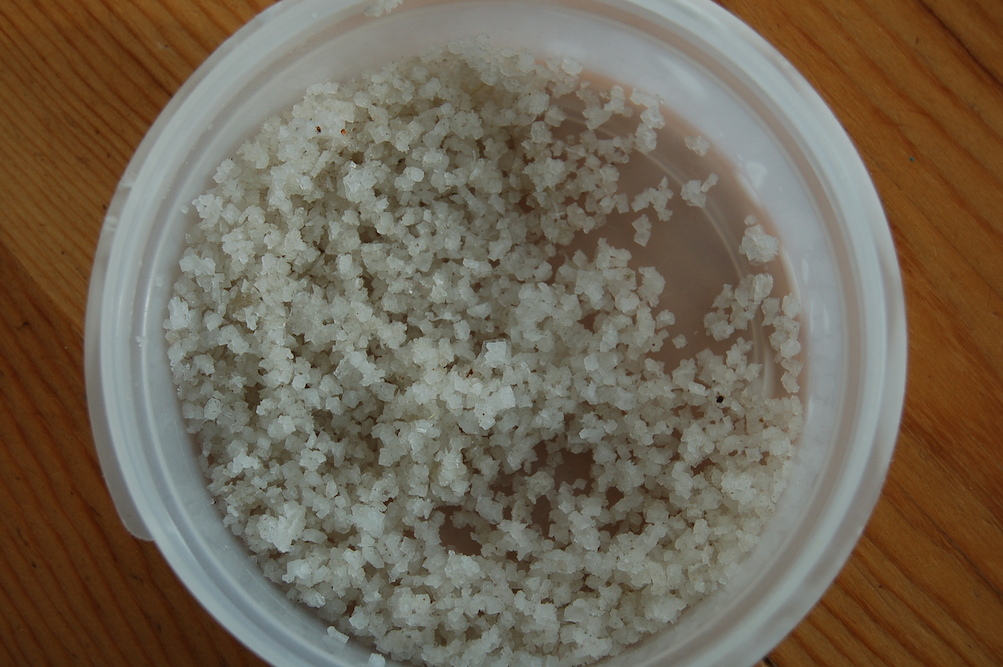
SaltsmIt preserves and flavours almost all our food. It’s been traded commercially for over 2600 years. It features in the language of nearly all cultures—you are “worth your salt”, you are “the salt of the earth”, you take things “with a grain of salt”, you “rub salt in a wound”.

Central as it is, it is one of those ingredients we don’t produce ourselves. During summer, our meals often consist entirely of products we’ve produced…except for the salt.

My daughter was determined to rectify that. Last week, she declared she was going to make salt. We popped out to the beach and snatched a bucket of sea water from a large and violent surf. She poured the water into a pan and set it on the porch. Within two days, she had a pan of salt…and, due to a dust storm, dirt. She tried again, this time protecting the pan from dust with a sheet of Perspex, propped up to allow air circulation.

The result was delightful, and surprising to us all. From a jelly roll pan full of seawater, she harvested about half a cup of salt. Even with the cover, some was too dirty to use, but the rest is beautiful. We enjoyed it on our corn on the cob last night, and it was everything a gourmet salt should be—a full-bodied taste of the sea. And so easy to harvest!

Half of New Zealand’s salt is produced just a few hours north of Christchurch at Lake Grassmere. The industrial scale process of harvesting 70,000 tonnes of sea salt each year is little different from our tiny experiment in a baking pan. Like we did, the process at Lake Grassmere relies on summer sun and strong, drying nor’west winds. We buy a lot of salt from Lake Grassmere, for cheese making, preserving, and cooking. But we might be buying less from now on. There’s something wonderful about harvesting this most basic of ingredients, this gift from the sea.

Water

waterglasssmI was most of the way through a pond life lesson and leading 30 kids back to the nature centre when I had my first real lesson in dehydration. My world went black. I fainted. When I came to, I retched until long after my stomach was empty. Years later I watched a fellow Peace Corps Volunteer do the same after a long hot day in the field.

For a while, a small skink lived in our house in Panama. We named him Smaug. One day we found him listless and dull. It was the dry season, and we wondered if he might be thirsty. We offered a jar lid of water. He instantly pounced on it and began to drink. He was pert and perky the next day.

Last week, our son was complaining about helping with a garden task. He was dragging his feet and grumbling. “Have you had anything to drink today?” asked Ian. No. A glass of water, and he was a different boy—energetic and helpful.

Water.

Taken for granted when it’s there, terribly missed when it’s not.

I’ve been thinking a lot about water lately—naturally so, since it’s in such short supply here at the moment. I am ever grateful for the new well, and its ability to keep the vegetable garden green and our water glasses full.

We lost the old well in the September 2010 earthquake. When the power came back on, after four days of near-constant shaking, the pump poured out a slurry of sand instead of water. We spent five months trying to salvage the old well. They were five months of not knowing whether we’d have water or not each day; of carefully filling every vessel we could on the “wet” days, so we were sure to have water on the “dry” ones; of daily conversations with the technicians at Allied Water, who began to feel like family, they were here so often. More than once, I washed the laundry with rainwater in a 5-gallon bucket, just as I used to do in Panama. The garden went without, so we and the animals could drink.

It was a relief when the new well was dug, and we could again count on water for drinking, cooking, washing and irrigating. The careful habits stuck, though, and I try to make every drop count. And just in case, a week’s worth of drinking water sits in the shed, and a barrel of rainwater stands ready for watering and washing.

The Food Year

GardenYearThe modern food system, with international trade and refrigerated transport, ensures that fresh tomatoes, cucumbers and other summer crops are always available, even in Maine in February. Want eggplant parmesan for New Year’s dinner? A special cucumber salad for Valentine’s day? Even in Maine, it’s no problem—you’ll find the ingredients in the supermarket.

A gardener’s food year is more seasonal. Some might say having year round supplies of summer fruits and vegetables is a great thing, and I don’t deny its appeal. But there is something to be said for seasonality. Nothing tastes sweeter than the first strawberry of the year, when you’ve been dreaming of strawberries for months. Nothing is more poignant than the last tomato, knowing it heralds winter, and eight months wait for the next juicy bite. Absence makes the heart grow fonder. Vegetables herald, define, celebrate, and farewell seasons and annual events.

It’s difficult to capture the essence of seasonality in the garden. There is the early spring scrounge for anything still alive and edible, while you madly plan and plant for the future. There is the overwhelming abundance of summer, when the question shifts from “what is there to eat?” to “what needs to be eaten?” There is the frantic preserving of late summer, when you realise it all has to end. There is the calm of autumn, when the larder is full, and you know you can curl up like a chipmunk in your well-provisioned nest when the winter winds blow.

I tried to capture some of the garden year’s seasonality in this little graphic. It includes most of the annual crops we grow, though some are lumped together and others left out to minimise clutter. None of the perennial crops are included. But I hope it gives you an idea of what’s in and coming out of the garden at different times of year.

Special thanks to Ian for writing the R code to create this nifty little graphic.

There’s only two things that money can’t buy…

DSC_0033 smTrue love and home grown tomatoes—the only two things that money can’t buy, according to singer Guy Clark. I could add a few other foods to that list, but he’s definitely right about the tomatoes.

Home grown tomatoes are the only ones we’ll eat any more. Life’s too short to eat the store bought ones. I plant 6 or 7 varieties every year—a couple of new ones, and a bunch of old favourites. Each variety has different uses.

Brandywine is without a doubt, the best tasting tomato on the planet. So good that I plant it every year, even though the summers are really too short and cool for it here. For raw eating, nothing beats a Brandywine.

Delicious is almost as good as Brandywine. It’s my insurance policy; it grows better in cool weather than Brandywine does. I’m sure to get some Delicious, even if the Brandywines don’t give well, or they all get eaten by the birds (they think Brandywines are best, too, and even eat them green).

Amish Paste is robust and prolific. Unlike many other paste tomatoes, it manages well with erratic watering. Fleshy and dry, it makes great sauces.

Russian Red is my prolific, hardy workhorse tomato. It has small fruits with a fine, but not stellar flavour. Its value lies in its ability to flourish in cold weather, ripening fruits long after other varieties have succumbed to frost.

Suncherry is a lovely red cherry tomato that not only fills lunchboxes with juicy goodness, but also dehydrates well, providing us with lovely sweet/tart dried tomatoes all through winter.

Of course, the best way to enjoy a tomato is standing up in the garden, but here’s one of my favourite tomato dishes. This is straight out of Vegetarian Cooking for Everyone, by Deborah Madison. Make it with the best tomatoes you have, and don’t use an iron skillet or the tomatoes will taste tinny.

Tomatoes Glazed with Balsamic Vinegar

1 ½ pounds tomatoes

2 tablespoons butter

3 tablespoons balsamic vinegar

1 plump shallot, finely diced

salt and pepper to taste

Cut tomatoes into wedges about 1 ½ inches across at the widest point. In a skillet large enough to hold the tomatoes in a single layer, heat the butter until it foams. Add the tomatoes and sauté over high heat, turning them over several times, until their colour begins to dull, about 3 minutes. Add the vinegar and shallot and shake the pan back and forth until the vinegar has reduced, leaving a dark, thick sauce. Season with salt and plenty of pepper.