Parsley

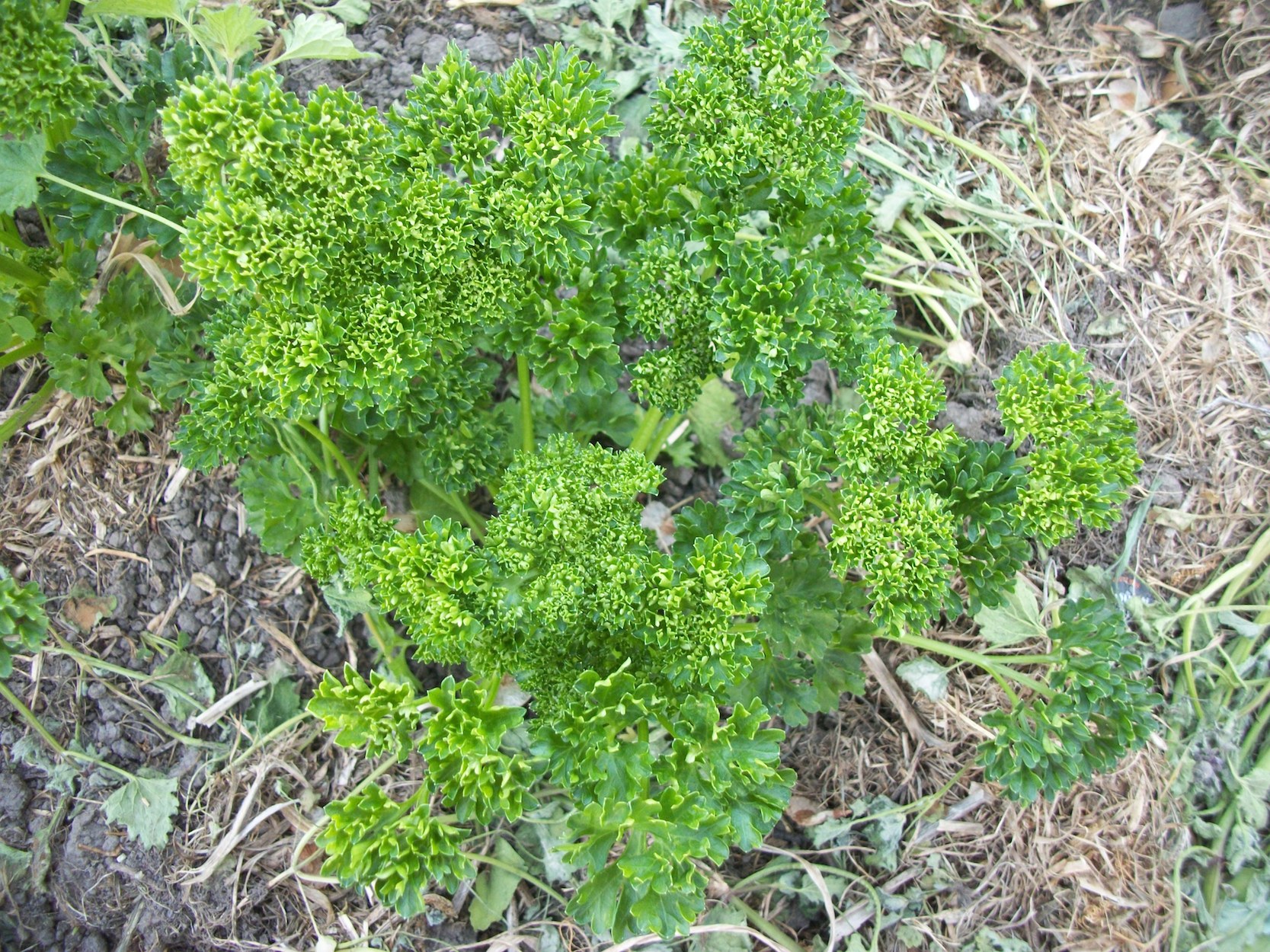
100_4036 smParsley is a ubiquitous herb, easy to overlook, easy to undervalue.

It is said its seeds must go to the devil and back seven times before germinating. I don’t think it takes quite that long, but parsley is slow to germinate.

Once up, though, parsley is tough and long-lasting. The plants I start in August will survive spring frosts to flourish through the heat and drought of summer, and continue flourishing through the cold wet winter, to be finally pulled out in October of the following year, when they begin to bolt, to make room for new plants.

We eat parsley by the handful (none of this Tablespoon stuff), and love it in risi e bisi, soup, potatoes, and gratins.

We grow both the Italian flat-leaf and the curly varieties (because, why not?), and enjoy the flat-leaf parsley fresh in salads (or just standing up in the garden as we pass by). We also enjoy parsley mixed with other fresh herbs to make a non-basil pesto that is lovely on pasta or as a topping for polenta crostini.

Of course, the best reason to grow parsley in much of the world is to attract the beautiful swallowtail butterflies, whose caterpillars specialise on parsley and related plants, incorporating the toxins from the plants into their exoskeletons to serve as defence. Unfortunately, we have no swallowtails in New Zealand, but the flowers of parsley attract bees, flies, and our native butterflies in large numbers.

Gather Ye Rosebuds…

100_3978 smRunning late

After a hard day,

Back aching,

Dinner to be made,

Laundry to be folded.


I stood at the kitchen sink

Washing the dishes that I didn’t have time to wash

After lunch.


Outside the window

A bloom danced in the breeze.

A rose

Frothy pink.

Another

Burgundy

Like wine I wished I had time to enjoy.

There were more, I knew

Out of sight.


I left the dishes,

Dried my hands.


Dinner would have to wait.


Scissors in hand, I abandoned my work

To gather roses.


An Apartment in Town

100_4017Some days make me want to live in an apartment in the city.

Today was one of them.

As I mentioned in a previous post, I planted out all the frost-tender plants last weekend.

Earlier this week, it frosted. In spite of my efforts to save them, I lost nearly 200 plants. I saved hundreds more, so I tried to make the best of it. I replanted what I could.

When it looked like it was going to frost again last night, I covered everything I could.

But it didn’t just frost last night. It froze.

When I tried to spray the plants down in the morning to save what was left, my hoses were frozen. I managed to get a sprinkler going eventually, but when I came back half an hour later, the water it had sprayed had frozen solid.

I won’t know until tomorrow, but I expect I have now lost all of my frost-tender crops, except the few plants that fit in the greenhouse.

After the plant disaster, I headed to the goat paddock to do the milking and noticed that one of my yearlings was scouring badly. The result of worms, no doubt (she was the one goat I didn’t manage to dose the last time I drenched them). Treatable, but in a goat so small, I worry—they can go down fast once they start scouring. I gave her an injection of Dectomax, but like the plants, I won’t know until tomorrow what the outcome is.

So I rushed around trying to save lives this morning before driving an hour into the city to take the kids to school…makes that apartment in town look really attractive.

Overspray

100_4002Planting out, I scrutinise each plant for health. I discard damaged or poorly growing plants. I pick off pests.

But there are some problems I can’t do anything about.

The neighbour’s 2,4-D overspray is one of those.

2,4-D is a broadleaf herbicide that has become increasingly popular with our neighbours over the past five years. Unfortunately, it is extremely volatile, so if the wind is blowing our direction when they spray, we are enveloped in a cloud of herbicide.

It usually doesn’t kill our plants outright, but it has long-lasting effects on them. Grapes are particularly susceptible, but we’ve had damage to nearly every vegetable crop in some years. Some plants, like the green beans, seem to be able to ‘grow out’ of the damage. Others never do, and the effects of an early spring spray can still be seen at harvest time in late summer.

This year, the first overspray hit us in mid-October. Though the frost-tender crops weren’t in the garden yet, they were in the greenhouse, and didn’t escape damage.

I’d surveyed the damage in general as the plants were massed in the greenhouse, but as I inspected each plant at plant out time, I saw the full extent of the damage.

The most obvious early sign of 2,4-D damage is deformation of the leaves—they elongate and curl, and develop odd-looking venation. They can also bleach, sometimes looking nearly white. This year, the tomatoes were particularly hard-hit, with almost all the young leaves deformed. Eggplants, too. Thankfully, the peppers seem to have escaped, and many plants weren’t even up yet, so they made it, too.

I accept that my neighbours aren’t organic farmers, and that they have little control over when the contractor comes to do their spraying, but still it is discouraging to face the same overspray problems year after year.

Plant out!

100_4005 smIt’s Canterbury weekend here, and that means it’s time for all the vegetables to head to their prepared spots in the garden. In theory, the frost is over and summer is upon us!

The approach to plant out weekend is always a bit stressful. Plants are overly large for their pots, and there’s a temptation to plant out too early (and Murphy’s Law says that if you plant out before Canterbury Day, it WILL frost). It’s a mission just to keep the plants watered in the greenhouse. And with all the plants crammed together in one place, all it would take is one hungry possum discovering the greenhouse, and the entire garden would be destroyed for the year.

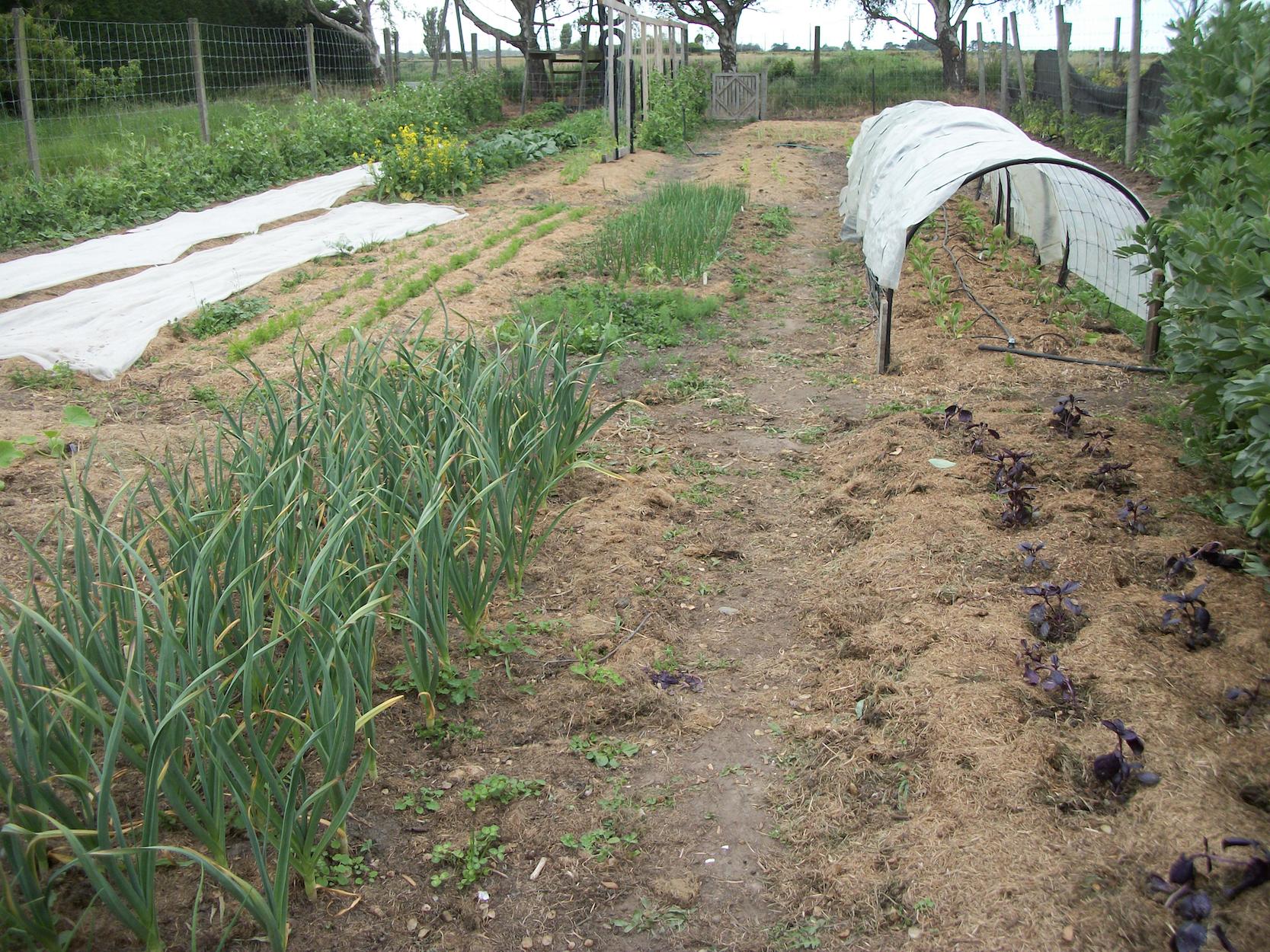
And then there’s the task of making sure all the garden beds are ready to receive those plants in time for plant out weekend. I start mapping out each weekend’s jobs in late September so that I’m not caught with half a dozen beds still full of weeds at plant out time.

This year, plant out went beautifully. The weather cooperated—it was cool and cloudy so the transplanted plants and I weren’t stressed by heat. The beds were all ready to go, and most of the plants were in good shape.

And now I get to rest, right?

Ha!

Now the early crops are desperate to be weeded, the berry beds are sprouting full of thistles, and I’m probably 10 days from being inundated by strawberries, gooseberries and currants.

Never a dull moment!

Broad Beans

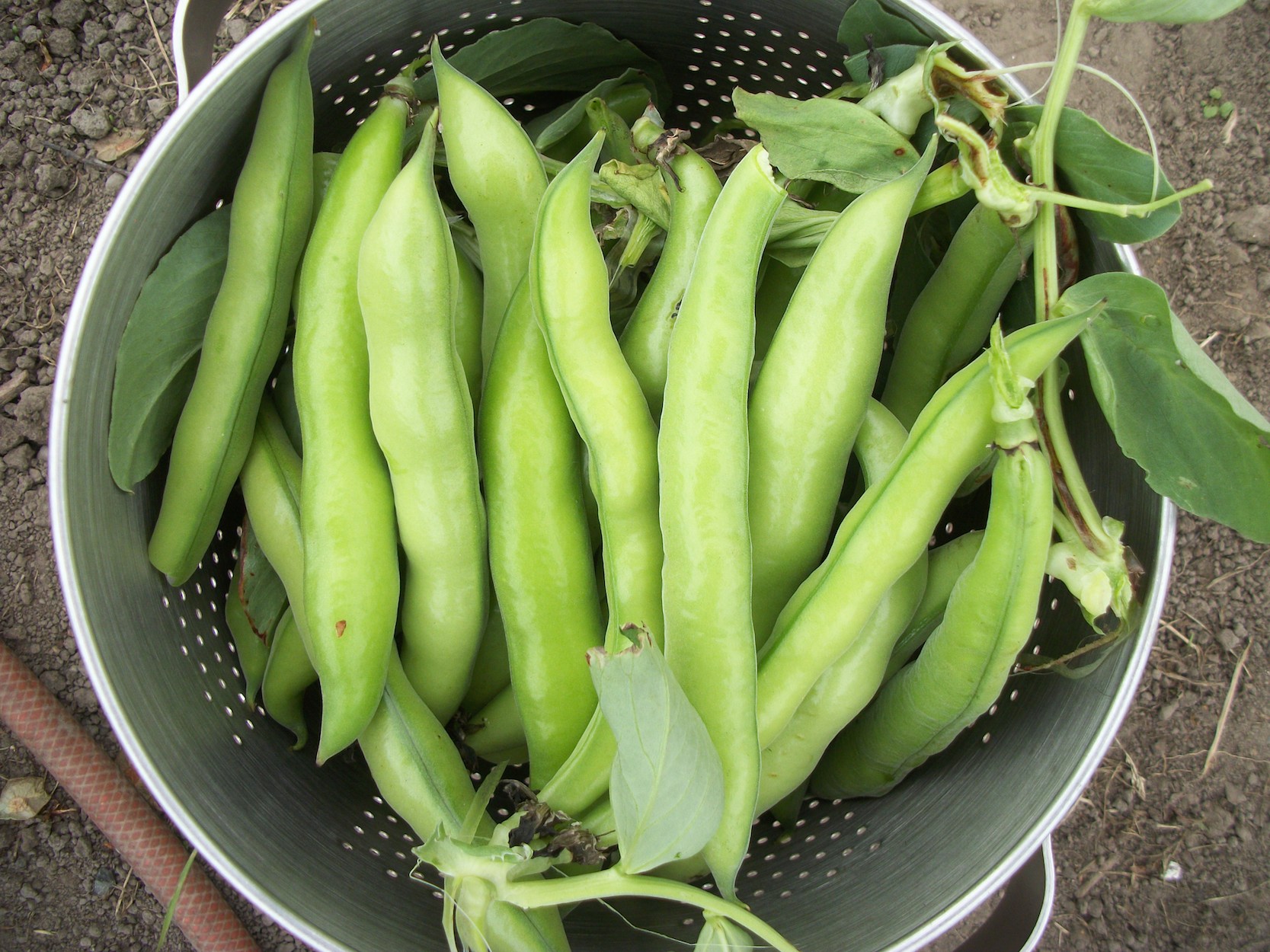
100_4007 smI had never eaten broad beans (aka fava beans) before moving to New Zealand, but now I can’t imagine early summer without them. They’re uncommon in the U.S., and even here where they’re grown by the hectare, they’re often considered “old people’s food”. During my brief stint selling vegetables at the Leeston market, I never sold broad beans to anyone under the age of 80.

But his attitude is unfair. Broad beans are more versatile than that. They have a bold, almost floral flavour that needs no embellishment. When young, the beans are sweet like peas, and they grow starchier as they mature. Somewhere between sweet and starch, they are at their best.

The “usual” way to eat broad beans is to blanch them, peel the skin off each bean, then serve them or cook them into a dish. Nothing wrong with that, unless you’re the cook, who has to shell and peel all those beans.

We prefer to make the consumers do half the work. We blanch the beans and serve them as finger food. They make a lovely appetizer—pop them out of their skins right into your mouth. Paired with a nice Sauvignon Blanc and eaten outdoors on a summer evening, they are no longer “old people’s food”. They become urbane and sophisticated. Something to be savoured with intelligent conversation.

And if you’re more the beer and burgers type, broad beans will oblige. They make a mean green burger that goes well with cheese, mushrooms and ketchup. Light enough for a lager, strong enough for a stout, broad bean burgers go with just about anything.

Broad beans—a versatile legume that’s not just for old people.


(ch)Eating from the garden

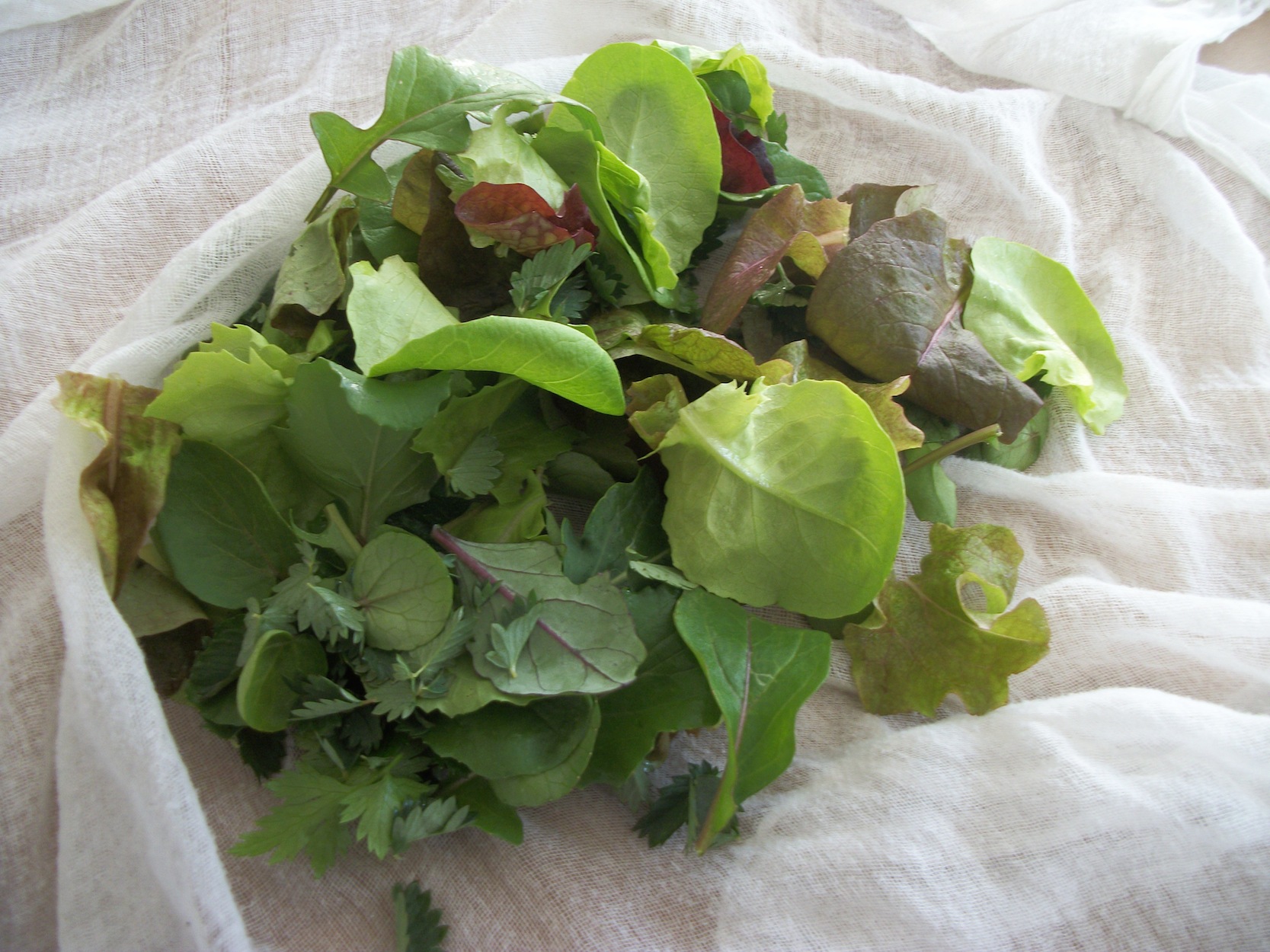
saladgreens1 smSometimes it feels like cheating.

I came home today tired and not feeling like cooking. I had 16 litres of milk that needed to be made into cheese waiting for me in the fridge. Dinner was going to be a slap-dash affair cooked in the wait times during cheese making. I didn’t expect much.

But with vegetables so fresh they’re still photosynthesizing as they go into the pot, herbs snipped moments before cooking, and homemade cheese on hand, even a thrown together meal is bound to be something special.

I whipped up a pasta from whatever was on hand in the garden and could be picked in 6 minutes, threw in some feta cheese and a handful of olives, and had a meal I would have happily served to company.

You just can’t help but eat well when you’re eating out of the garden.

I can, can you?

100_3986 cropsmFaced with 45 artichokes, there’s really only one thing to do—pull out the pressure canner, and bottle them up for later.

We thought long and hard before buying a pressure canner years ago—it was expensive, and signalled a whole new level of commitment to preserving than a simple water bath canner.

And then, of course, there are all the horror stories about exploding pressure canners. When the canner arrived, emblazoned with more warning stickers than a case of TNT, it didn’t alleviate my concerns.

But now I can’t imagine being without it. We can preserve so much more of what we grow, and not everything needs to be pickled to be preserved.

Pressure canning changes vegetables—the high pressure and temperature destroys their structure and basically turns them to mush. I wouldn’t want to subsist on pressure canned vegetables.

But our summer soup

LINK provides a burst of summer flavour, and wonderfully convenient instant meals through the winter. A few jars of canned green beans mean we can make our favourite Indian charcharis any time of the year. And canned artichokes add incredible flavour to pizzas, regardless of their texture. We could freeze these things, of course, but especially here where the power goes out with such frequency, having some of our preserved food not dependent on a continuous supply of electricity is a good idea. It also saves room in the freezer for those things that really don’t do well in the canner—berries, corn, peas, and of course the bread and baked goods from our baking days.


Compost Pile

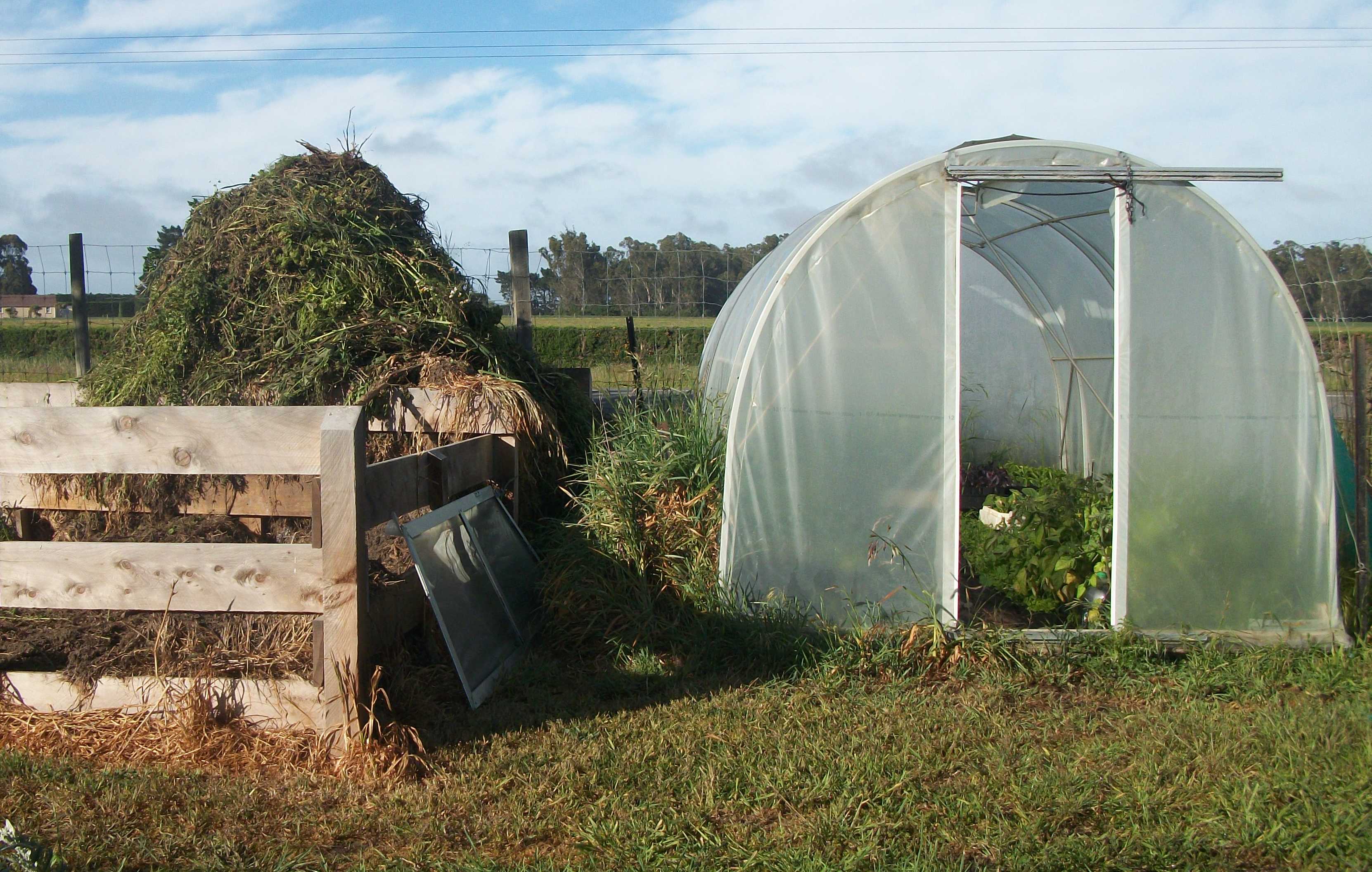
100_3973 cropMy husband calls it Mt. Robinne, and sometimes it feels like I’ve heaved an entire mountain onto the compost pile. This is my first spring with the new compost bins. They constrain the spread of the pile, forcing it upward.

Today I put the last of the winter weeds on the pile. From here on out, I’ll leave most weeds lying in the garden paths to act as mulch. This is as tall as the compost pile will get this year.

Good thing, as it reached the height of the greenhouse this morning. The pile will sit there sintering for a few weeks. When I’ve recovered from the springtime garden preparation, and when all the plants are planted out, I will move the mountain again, turning and watering the pile so that it composts properly.

For now, though, I’ll enjoy the respite from mountain building.

Siren Call

100_2141I fidget at the computer.

Perhaps the greenhouse needs watering.


I fling open the office door.

The smell of grass reminds me I need to mow.


I type a few words

Then delete them.

Do the goats need their hooves trimmed?

Maybe I should go have a look.


I check my e-mail.

I watch a pair of sparrows build their nest.


I should be working, but

You know, if I just did half an hour of weeding now

There would be less to do on the weekend.


Perhaps an early lunch.

I’ll sit in the sun, bare feet in the grass.


And then, perhaps…


I will give in, and follow the siren’s call

To the garden.