Backpack meals

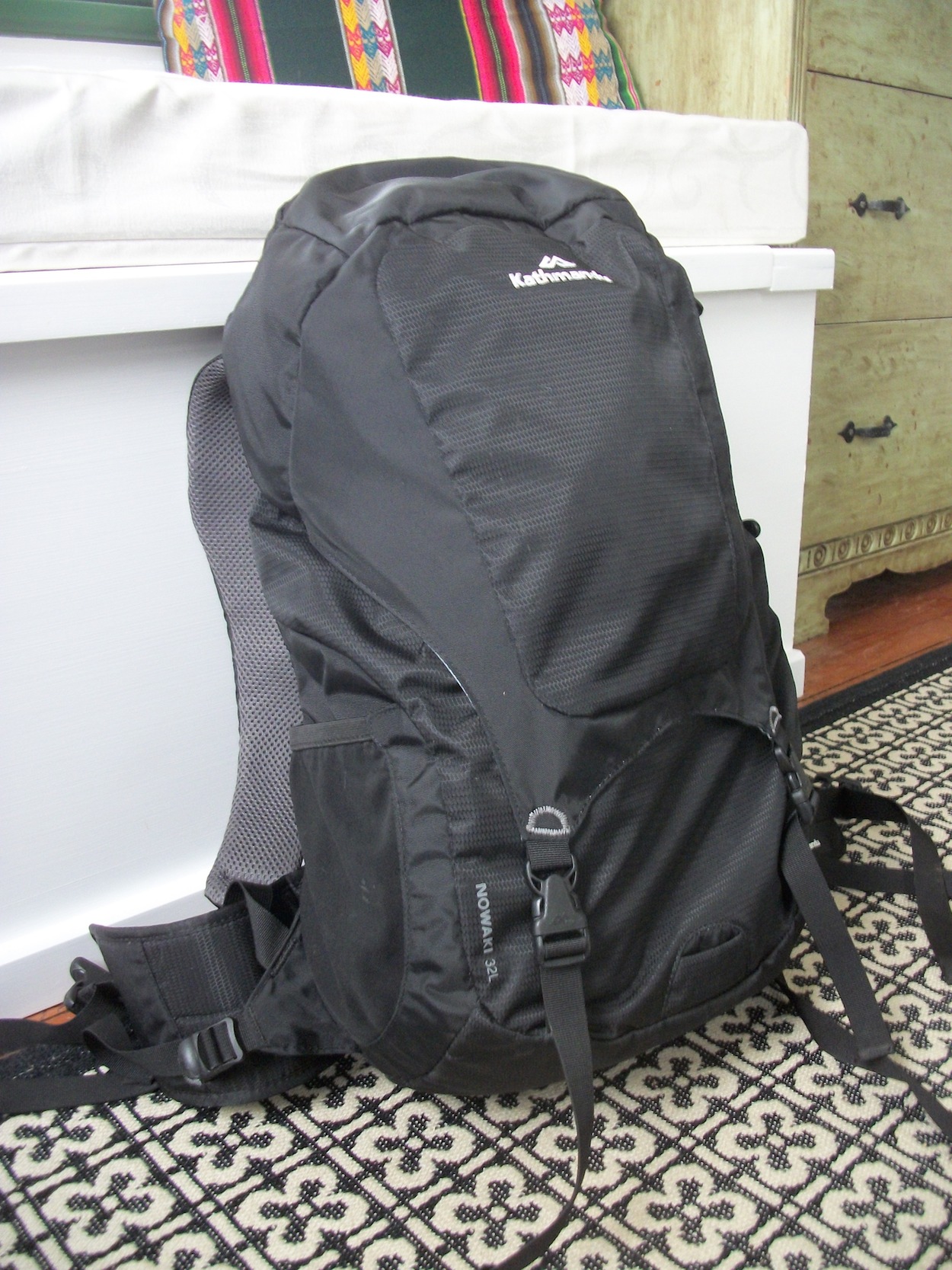
100_4233 smI picked up the food for a backpacking trip today. All I can say is BLECH, and HOLY COW THAT STUFF’S EXPENSIVE! And we don’t go for the “backpacker” food—we just buy the instant meals available in the grocery store.

To buy over-salted, over-sugared, freeze-dried, highly processed food when there is fresh produce pouring out of the garden is physically painful.

I suppose we should plan in advance. As vegetables come into season, we should dry enough for our trips, make up our own highly-processed, over-salted backpacking food. Once upon a time—before children—we did some of that.

But it’s actually a lot of work…to change a delicious vegetable into something we would only consider eating if it were the only option. I just can’t get excited about that.

So, we’ll probably just keep buying those icky instant meals. It’s backpacking, after all—you don’t do it for the food.

Currently Jammin’

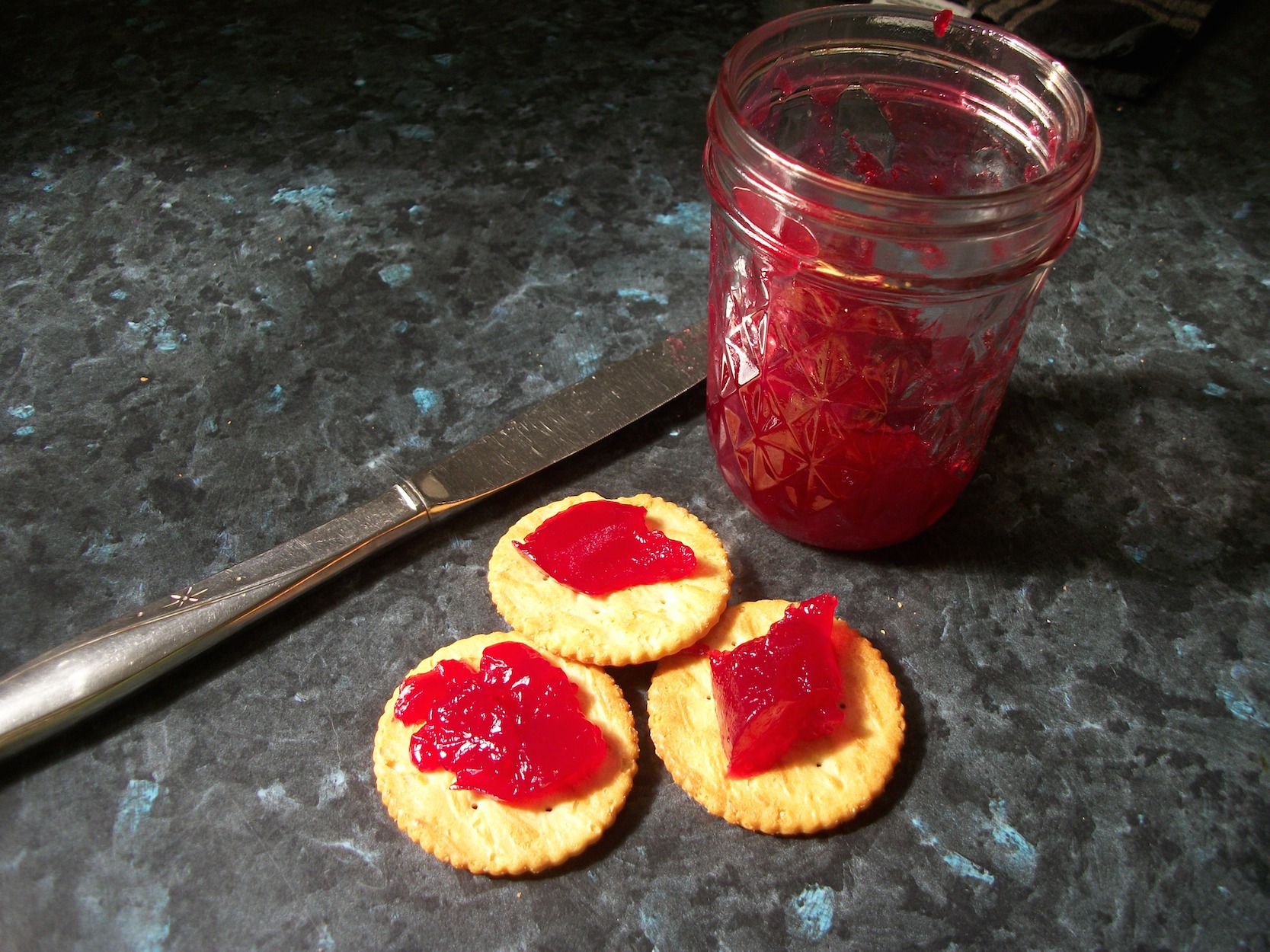
100_4220 smIt was a fruity day today—picked and processed cherries, blackcurrants, and red currants.

We enjoy mixed berry jams, but this is the first year we have enough red currants to make straight red currant jam. Naturally, I had to try it.

I am in love.

The jam is incredibly tart and hits you with waves of flavours.

And it is impossibly red!

I tried some on a cracker, then had another and another…

I can tell that it’s main problem is that it won’t keep well 😉


Currants

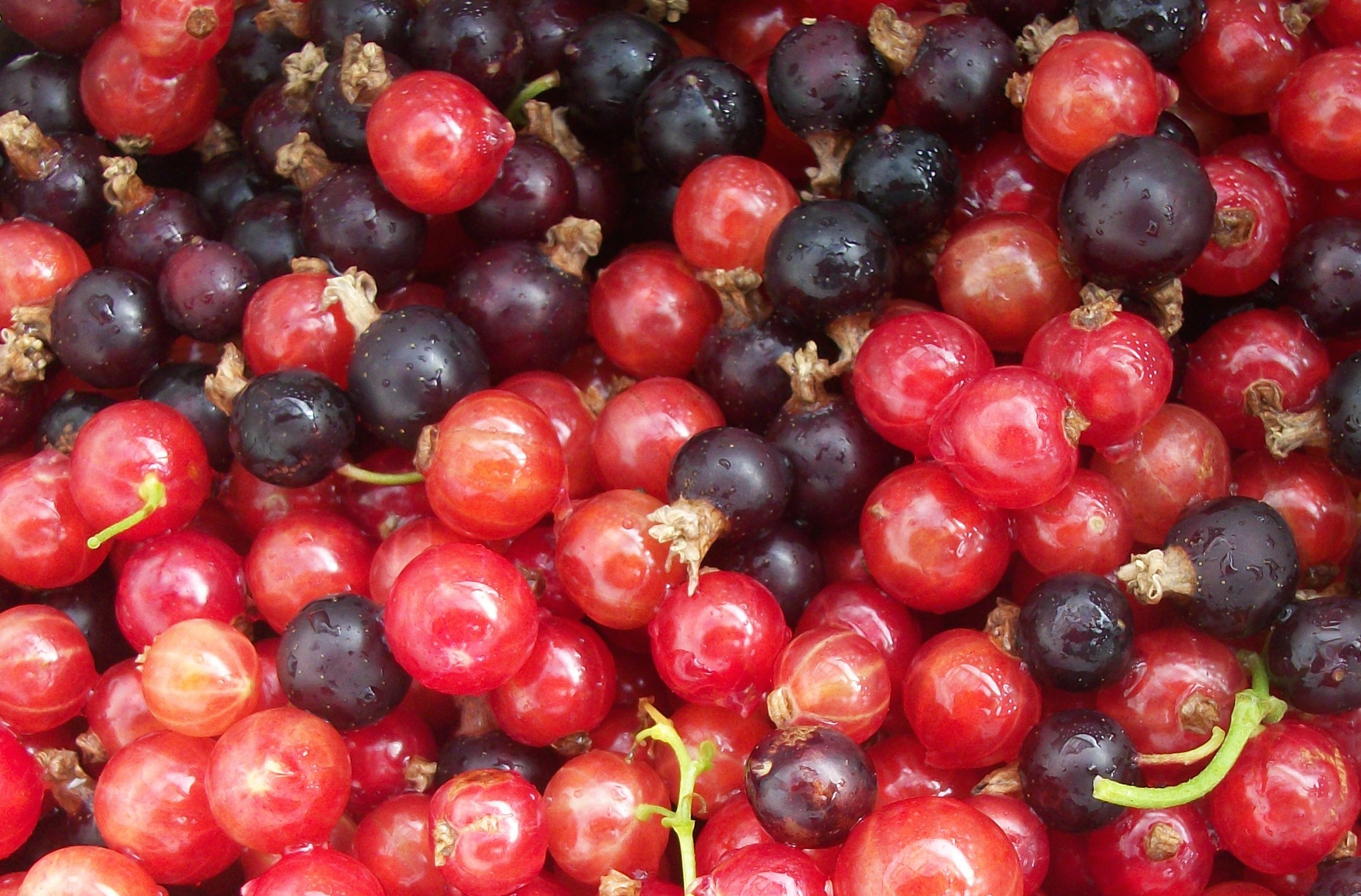
100_4192 cropNew Zealand produces about 8,000 tonnes of blackcurrants each year—5% of world production. We have at least one large blackcurrant farm nearby, and more popping up, as a craze for blackcurrant products grows. Marketing for blackcurrant products focuses on their health benefits (antioxidants, vitamin C).

We grow both red and black currants, but not for their health benefits. We grow them for their flavour, colour, and prolific production.

Let’s forget healthy entirely–currants’ bright colours and tart flavour make for beautiful and decadent pies, jams and ice cream. They liven up fruit salad, and their juice makes a lovely drink on a hot day, mixed with tonic water and a splash of gin.

And you can toast your health with that!

See! Three Pea! Oh!

100_4187 smI couldn’t help myself, what with Star Wars release date coming up…

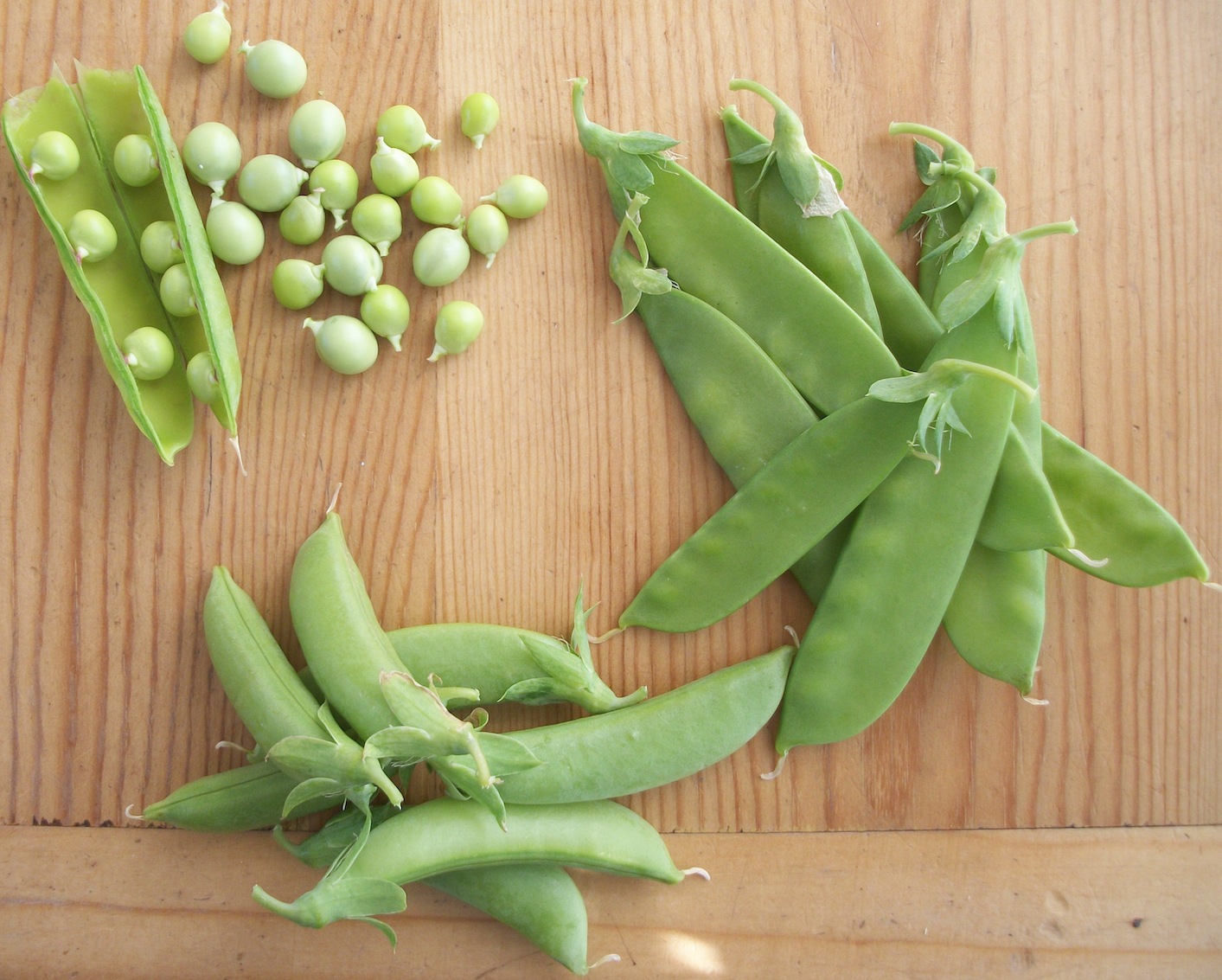
In truth, it’s four pea varieties. I just can’t seem to stop myself from planting them. And it’s still not enough to get us through the year—peas are so good in just about everything!

I plant snow peas, sugar snap peas, and two varieties of shelling pea each year. My favourites have become the purple shelling peas. The plants are tall and vigorous, they have gorgeous purple flowers and pods, and they just keep on giving through the heat of summer, even after all the other peas have given up. The only problem is that the peas themselves are grey when cooked—delicious, but not so attractive.

My favourite way to eat peas is standing up in the garden as a pick-me-up while weeding—juicy, crunchy and sweet. The kids take them in their lunch boxes, and a big bowl of them vanishes faster than cookies at Christmas parties.

And Santa’s reindeer will eat as many as we put out for them!

Carrot thinnings

100_4178 smI used to hate thinning carrots—it’s tedious work at best. But that was before I changed how I thin.

When thinning most crops, I naturally pull out the smallest plants, leaving the robust ones to grow and produce. This is how I used to thin carrots.

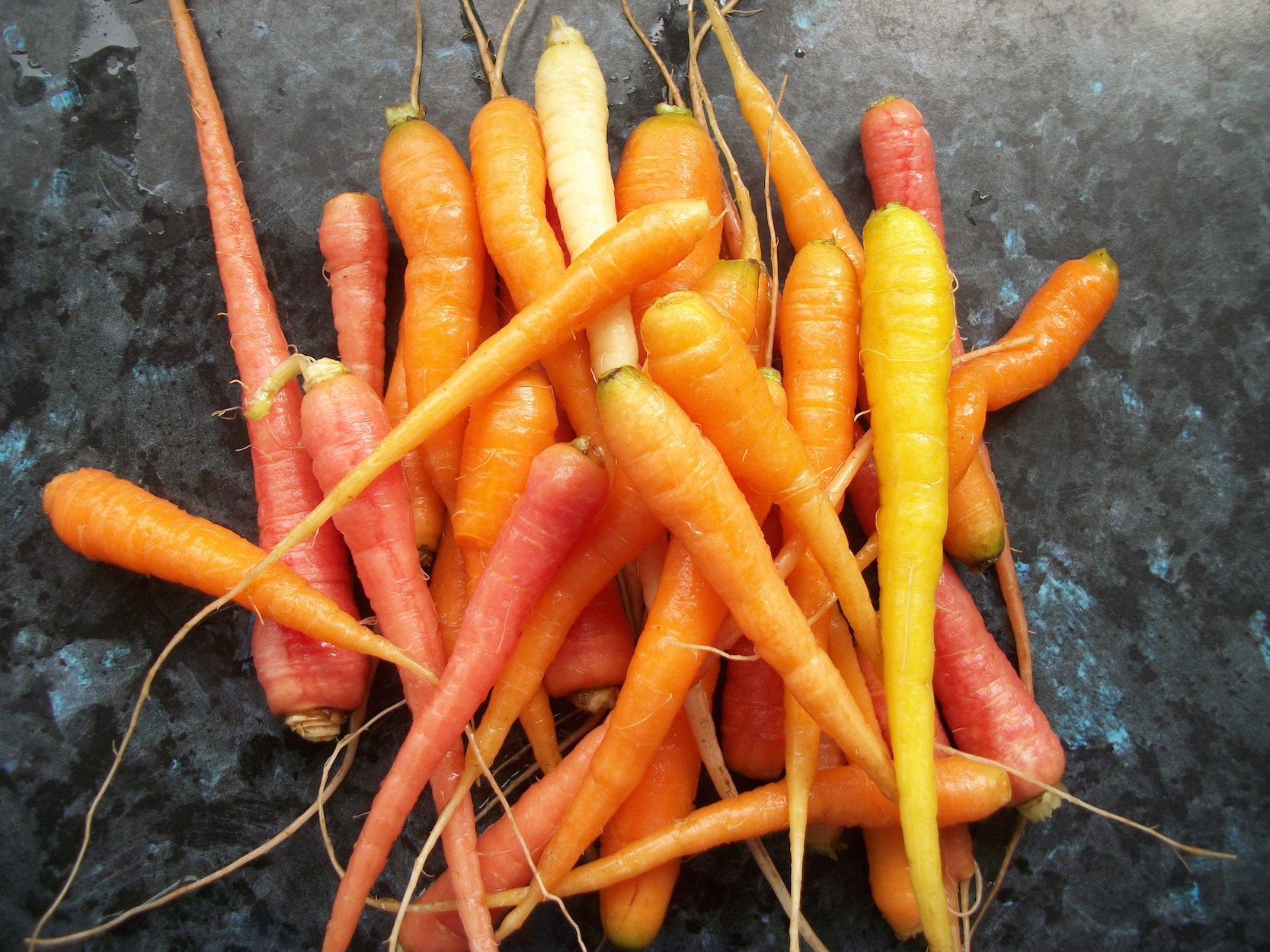
But if I thin the carrots by pulling out the biggest ones, I end up with a big bag full of beautiful little carrots to eat. Then the smaller ones will grow, and I’ll get to pick and eat them later on. Makes the thinning job so much nicer, because I know I’ll get dinner out of the deal.


The Cherry Mystery

100_4169 smWhen you move onto an old property, it takes a while to become familiar with all the plants previous owners planted. Our property was blessed with a variety of fruit trees. There are a few apples—three varieties, from what we’ve seen, though we can only identify one of them. There’s a late-season peach. And there is a cherry tree. The cherry tree is old and had been damaged repeatedly over the years.

In the spring, the first years on the property, we would watch as the tree put out a few flowers, but we never saw a ripe fruit. The birds seemed to eat them all before they ripened.

Then one year the tree flowered profusely. It was loaded with cherries. But still, they didn’t seem to ripen before they were eaten by the birds.

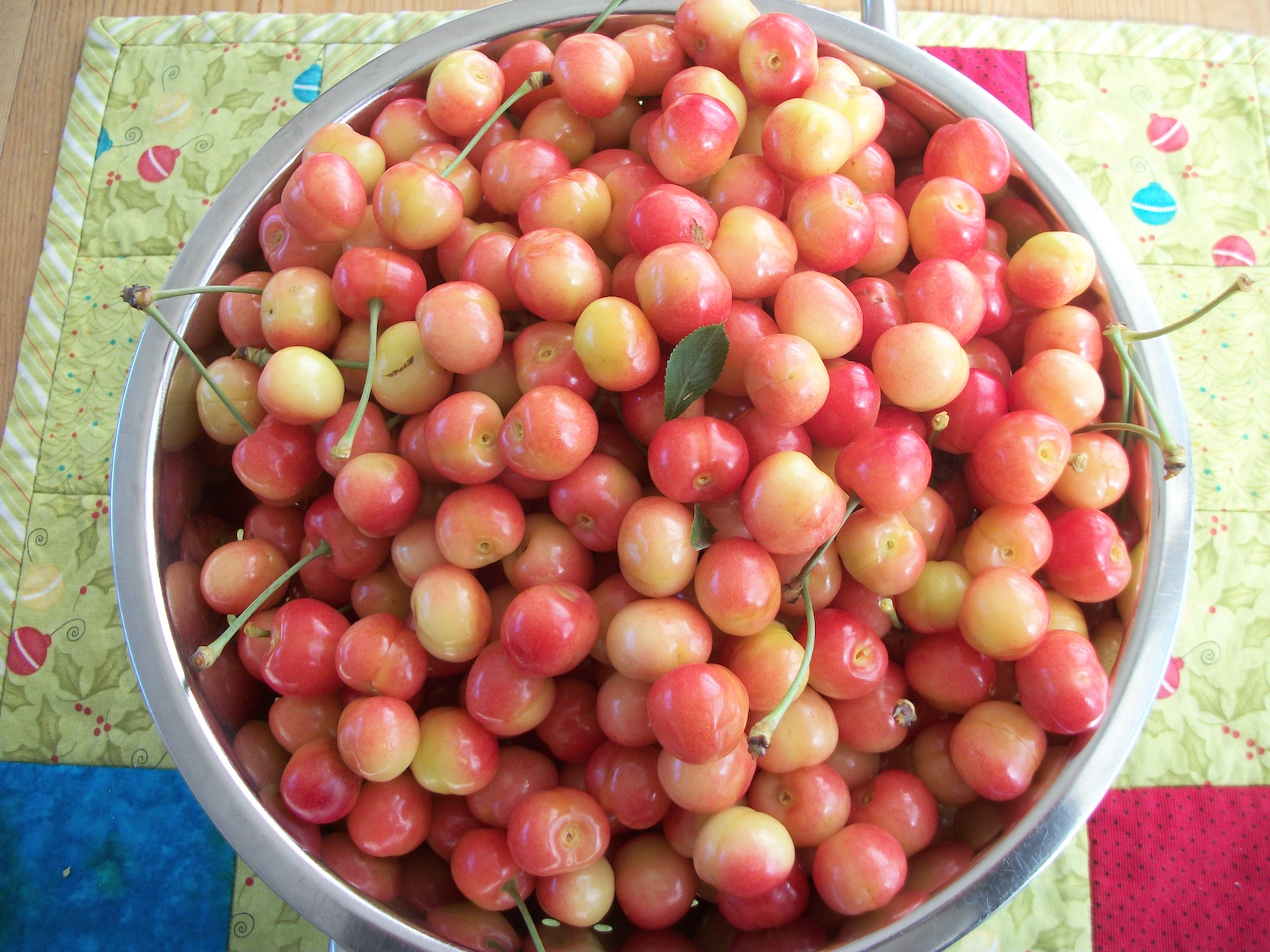
That’s when it finally dawned on us—it was a yellow cherry! The fruits were ripening. The birds knew that—they can see the change in reflected UV light when a berry is ripe—but we didn’t.

Once we knew what the cherries were, we were able to get a harvest most years, in spite of the birds. It’s still difficult for me to tell when one is ripe by look, but I pick by feel—a ripe cherry is subtly softer than a nearly ripe one.

We still don’t know the variety. The fruits are relatively small. They’re sweet, but very heavy in cyanide flavour, and we can’t decide if they’re better for eating fresh or baking.

This year is a bumper year for cherries, so we’ll be able to have them both ways. This morning’s harvest was more than enough for a pie, so you can guess what we’re having for dessert tonight!

Colours of the Season

100_4093 smStrawberries, gooseberries, black currants, red currants, cherries, raspberries—they all seem to come at once in a tsunami of colour and flavour.

The weeks before Christmas are filled with jam, pies, and shortbread. Fingers are permanently stained with juice. Festive splatters decorate the kitchen walls and floor. Bowls of green and red fruit stand in for more traditional holiday decorations.

Today, we put up the Christmas tree and made the first jam of the season.

It’s beginning to look a lot like Christmas!

Watch Out—She’s Packing Secateurs!

Among my favourite garden tools is a pair of small, straight-bladed secateurs. In addition to the secateur function, the tool also acts as a knife—the “back” edge of each blade is sharpened.

It took me a few very deep, nasty cuts to my fingers before I quite got the hang of this tool. When I use it to trim goat hooves, I have to wear heavy gloves, because the goats always kick and send the blade into my hand.

Thankfully, the tool comes with a sheath. The sheath clips to a belt or pocket, and I’ve found it quite handy to always have a knife and secateurs with me in the garden. So I’ve taken to automatically clipping it on when I go to the garden.

With my secateurs at my hip, I feel like I’m packing heat.

**Apologies—I spent most of my day away from internet access, only got home at 10.30 pm, and didn’t get a photo for today’s post. At least I got it posted…just an hour to go in the day!

Oyster Mushrooms

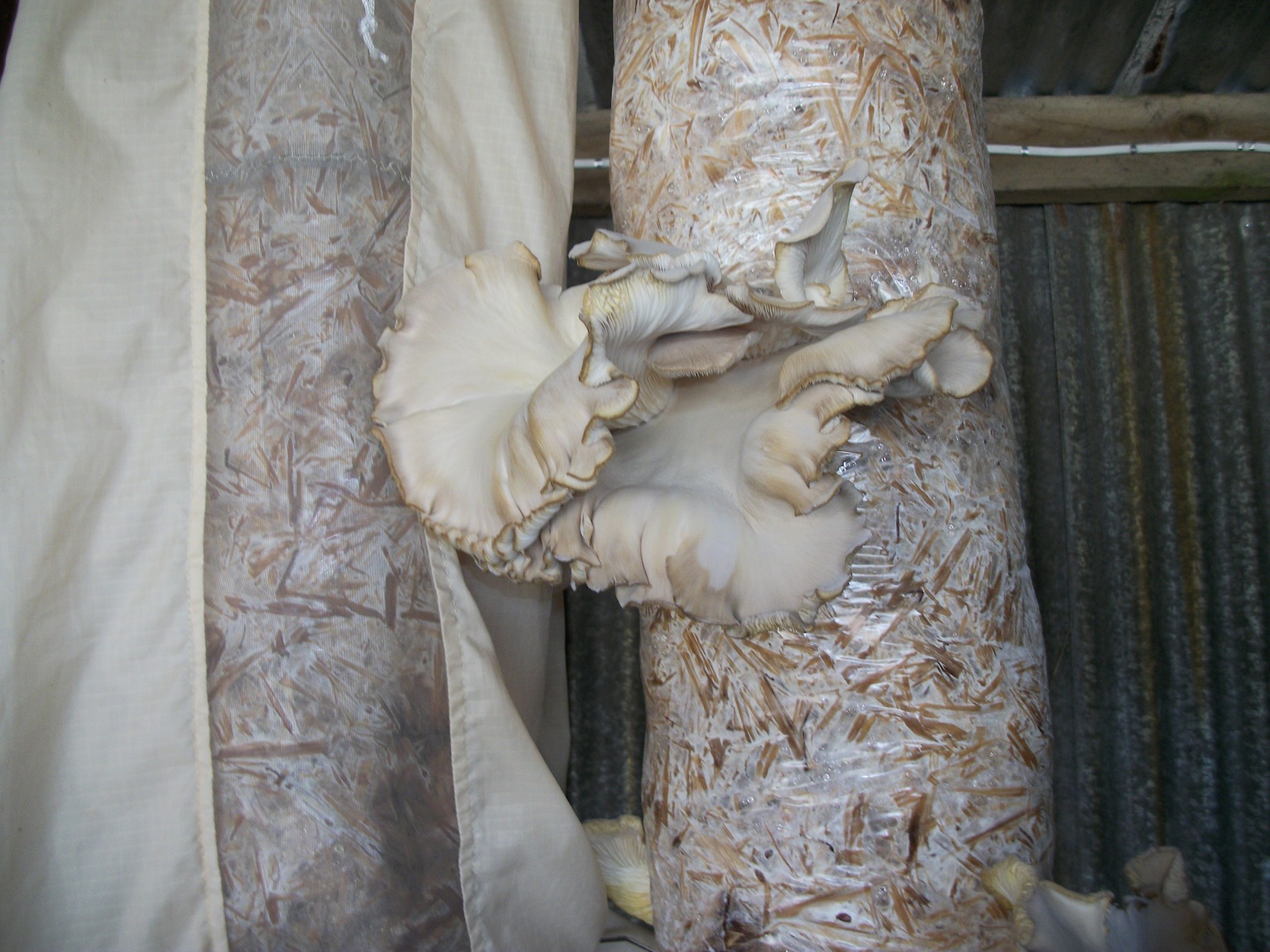
100_4082 smWay back in June I blogged about the mushroom growing bags I made from a repurposed tent. About a month ago, my husband and daughter started a batch of oyster mushrooms, and the bags were finally put to the test.

Today, we had our first harvest from them—mushrooms as big as my hand! And not a single fungus gnat larva in them (which was the purpose of the bags—to keep the fungus gnats from eating them before we did).

I can taste tonight’s mushroom stir-fry already!

Aphids

20151127_125023710It’s aphid season here. Lettuce, strawberries, dill, parsley, and roses are covered in the little green girls.

I used to fret about aphids—they can certainly cause a great deal of damage, particularly to young plants. But I’ve learned to live with them. Here are a few of my aphid strategies:

  1. When I plant out, I check every plant carefully, and squish any aphids—knocking back these early individuals goes a long way to limiting damage.
  2. If a plant is heavily infested, I turn my hose on jet and blast the aphids off. This technique doesn’t get them all, but it does knock the population back to manageable levels.
  3. I allow some plants to get covered. In my garden, my early dill always gets nailed by aphids. I accept this. I don’t kill the aphids, either. The aphids on the dill attract ladybugs, lacewings, and parasitic wasps that eat aphids. Lots of aphids on the dill means lots of predators later in the season.
  4. I plant purple varieties of crops, which are usually less attractive to aphids.
  5. I accept aphids as a source of extra protein and vitamin B in our diets. We eat aphids. They’re good for us.
  6. I have patience. By midsummer, the aphids have all but vanished, decimated by the predators I cultivated in springtime.
  7. I admire aphids’ abilities and beauty—parthenogenic reproduction (that is, the females clone themselves—no need for males), dainty legs and antennae, and a remarkable ability to survive.