Spring Babies

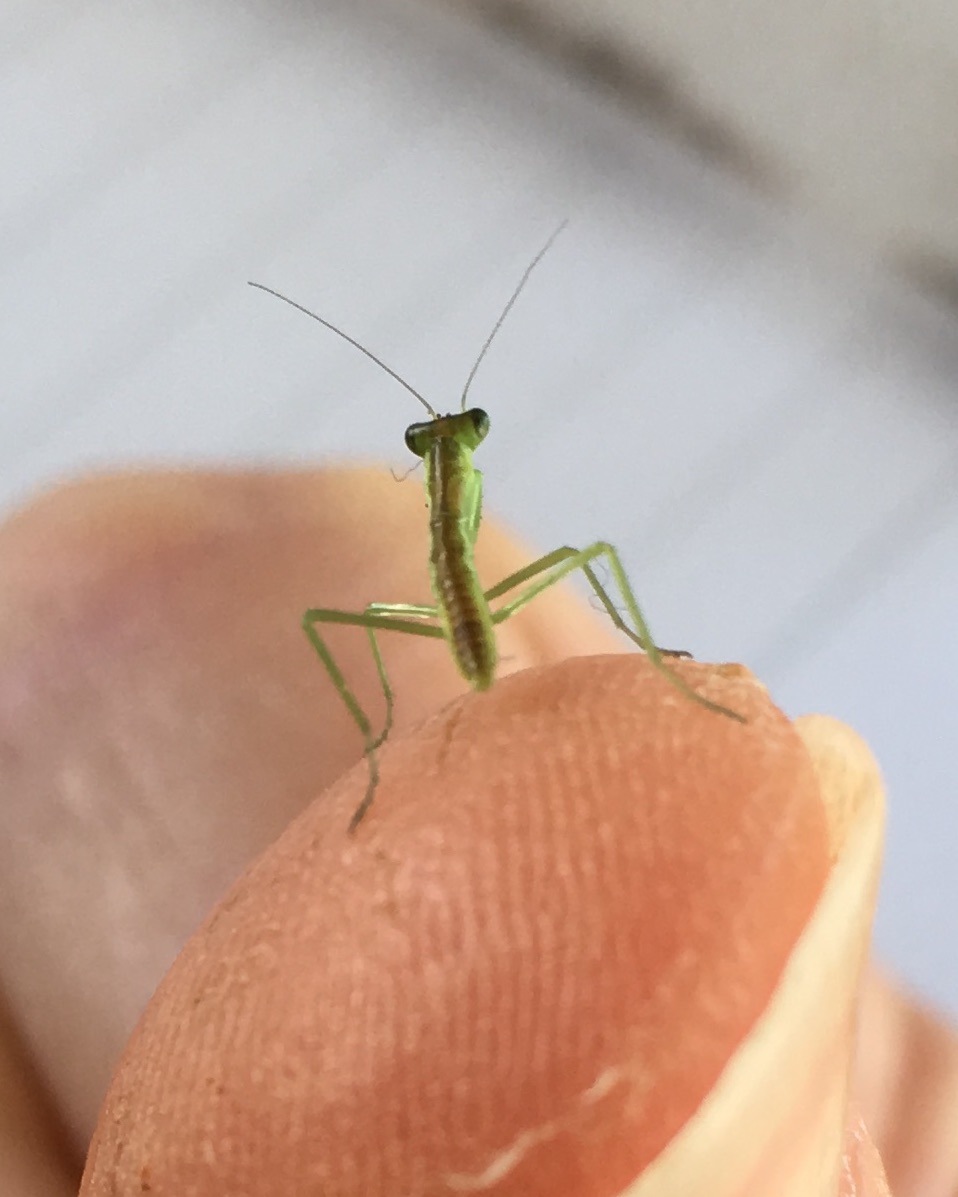
It’s that time of year again! The preying mantis egg case I collected in the autumn is hatching.

Because these mantids were in the warm office for half the winter, they’re early. Mantids in the egg cases outdoors haven’t yet emerged. So they need a little extra care. As the babies emerge, I transfer them to a large tank where they’ll be warm and well-fed for a few weeks while the weather improves. Eventually, I will release most, keeping only a few for use in educational programmes.

I never tire of this annual event. I love watching the newborn mantids stretch their legs and catch their first meal. And I’m always amazed that so many insects can emerge from such a small egg case. The current one, just 15 mm long, has disgorged 35 mantids so far, and only half the case has hatched. The mantids don’t all hatch at once—hatching seems to progress from one end of the egg case to the other over the course of a few days. In the wild, I suspect most of the later hatchlings are eaten by the early ones—it’s a mantid-eat-mantid world out there. It happens in my tanks, too, though I try to minimise cannibalism by spreading them out as much as possible and giving them plenty of hiding spots. I used to raise each individual in its own peanut butter jar, but that gets to be pretty time and space-consuming when there can be 70 mantids in each egg case.

Everyone’s heard the sensational ‘fact’ that female preying mantids eat the males after mating. It does happen, sometimes, in some species, but not as often as you might think. Mantids are creatures of instinct, and one of their most powerful instincts is to capture prey. In fact, this urge is so strong that, even when their digestive system is completely full, and they can’t actually eat anything else, they will continue to capture prey.

So it’s no surprise that a female mantid might snack on her mate, especially since she’s bigger than he is. In species where the females are significantly larger than the males, there’s a higher incidence of cannibalism after mating. Among New Zealand mantids, cannibalism at mating is rare—females are only slightly larger than males, and so the males have a good chance of fighting off the females. I’ve seen this in action in captivity—one of my females had a go at her mate, but he was every bit as feisty as she, and their tussle ended with both alive and unharmed.

My little babies won’t have to worry about mating cannibalism for a while yet, but there are plenty of other dangers out there—other predators, parasites, pathogenic fungi, freezing weather, and careless gardeners all take their toll. Of the maybe 70 mantids that will hatch from my egg case, only one or two are likely to survive to adulthood.

I’ll give my babies the best start I can, and then they’ll be on their own. Watching them now, catching gnats like pros, I think they’re well-equipped.

5 Simple Things You Can Do to Help Conserve Species

It’s Conservation Week here in New Zealand. Fittingly, one of the kōwhai trees we planted years ago has chosen this week to flower for the first time.

Conservation week is a good time to talk about backyard biodiversity. I’ve blogged more than once about biodiversity issues. It’s a topic near to my family’s heart, and something we strive to improve all the time.

Our yard is, unfortunately, home to a wide variety of non-native weeds, but it also sports native plantings (and even a fair number of native ‘weeds’). Here are just a few of the simple things we’ve done to improve the habitat value of our back yard for native organisms. You could do these, too.

  1. Plant natives instead of non-natives. Here in New Zealand this is especially important, but it’s a good rule of thumb wherever you live. Native vegetation will best support native wildlife, because they evolved together. Choose plants that provide food and shelter for local wildlife—shrubs with berries for birds and lizards to eat, dense grasses that provide hiding spots for invertebrates, and flowers that provide food for insects.
  2. Create lizard refuges. A pile of rocks or a stack of broken terracotta pot shards makes a nice refuge for lizards—the rocks and terracotta warm up in the sun, making a convenient basking spot for the lizards, and the little cracks between ensure a quick, safe get-away when predators appear.
  3. Just add water. Birds, insects, and other animals all need water to survive. Provide a bird bath, a small pond, or an attractive water feature, and you’ll find many more animals drawn to your yard.
  4. Kill non-native predators. Less important in some places, but here in New Zealand, protecting native birds and lizards requires controlling invasive predators. Trap out possums, stoats, and rats to give native birds a chance to nest successfully. Put a bell on your cat and keep it indoors around dusk and dawn when the birds are most vulnerable.
  5. Learn what you’ve got. No matter how small, your yard teems with species. Look closely, and you may be surprised at the diversity. Though our yard tends to be quite dry, we’ve discovered half a dozen species of moisture-loving slime moulds on the property. Once you know you an organism is present, you can tweak your planting and maintenance to protect and encourage it.

And that brings me back to the kōwhai tree, finally blooming. It’s not enough, yet, to attract bellbirds or tūī, across the vast stretches of agricultural land between us and the nearest populations, but someday, our kōwhai and flaxes, along with the neighbours’, may very well support a healthy population of native birds. All it takes is for each of us to care for our own backyards, and collectively we can improve the habitat for all our native species.

Springtime in the Office

And so it begins…

It’s been nearly a week since my last blog post, but I have a good excuse—I’ve been working very hard, and have just finished the first draft of The Dragon Defence League, book 3 in my Dragon Slayer series.

Spring has crept into my office, though, in spite of my focus on writing. Over the weekend, I started my first seeds for the season: peppers, eggplants, herbs, brassicas, onions, lettuce and spinach. I’ve been writing in a greenhouse the past two days, with the smell of moist potting mix mixing with the smell of my morning coffee.

Next week I’ll add another batch of seeds to the office, and before long I’ll be hauling newly-sprouted seedlings out to the greenhouse. And not long after that, those seedlings will be ready to set out in the garden.

So much excitement in spring! And now a new book to nurture along with the plants!

Weeding Therapy

You know it’s been a good therapy session when it leaves a clear weeding front.

I make no secret of the fact I have a weeding problem. I’ll ignore hunger, thirst and bodily pain to pull just a few more weeds—fill the wheelbarrow, finish the garden bed, never mind the cost.

But in spite of my obsession, I believe there is a place for weeding therapy, even for me.

Today, when the temperature hit a sweltering (for mid-winter, at least) 18 degrees (64ºF), I had no interest in my usual lunchtime walk. No. Today, after weeks of inactivity in the garden, I needed to weed.

I grabbed my gloves, and hove to. A sweaty half-hour later, I was refreshed and ready to get back to work.

The key to good weeding therapy (to avoid it becoming a weeding marathon) is setting limits—I give myself half an hour, and set a timer so I’ve no excuse for running over time. It helps to choose the therapy weeding job well; I go for places that have been irritating me, places that are desperate, or places where the weeds are big and easy to pull. It gives me a greater sense of accomplishment in a short amount of time, so I feel I can quit when my time is up.

And if I do quit before exhaustion, pain or hunger set in, I can return to other work in a focused state of mind, ready to bang out the next chapter or tackle the next editing job.

And the best part is that, with so much garden area here, there will always be more weeds, so therapy is always available when I need it.

Appreciate the season

Drizzle-soaked hebe.

It’s another grey, damp day in a string of grey damp days. We’ve had little rain, but almost no sun, either. Though my last blog was about spring, this weather reminds me it’s still winter.

I’m itching to get out into the garden, to plant seeds, to get on with the business of springtime. The weather hasn’t been cooperating.

In a way, that’s good. It is too early to plant, to early to turn the soil. The weather reminds me to appreciate what winter has to offer—the excuse to stay indoors and sew, the opportunity to play board games and read books, a reason for a mid-afternoon cup of tea. I forget to value these things when I have them, instead looking forward to the next season of frenetic activity. Sometimes I need a week of fog and drizzle to remind me.

Smells Like Spring

I know, technically it’s still winter. We’re still likely to have icky, cold, wet weather. There will be ice on the water troughs, and frost on the grass in the mornings. There are still plenty of weeks left in the skiing season. And I won’t even think about planting anything out in the garden for at least six weeks.

But yesterday smelled like spring.

That heady combination of lanolin, damp soil, and cut grass.

It sounded like spring, too, with magpies warbling in the trees, swallows chittering overhead, and lambs bawling in the paddocks.

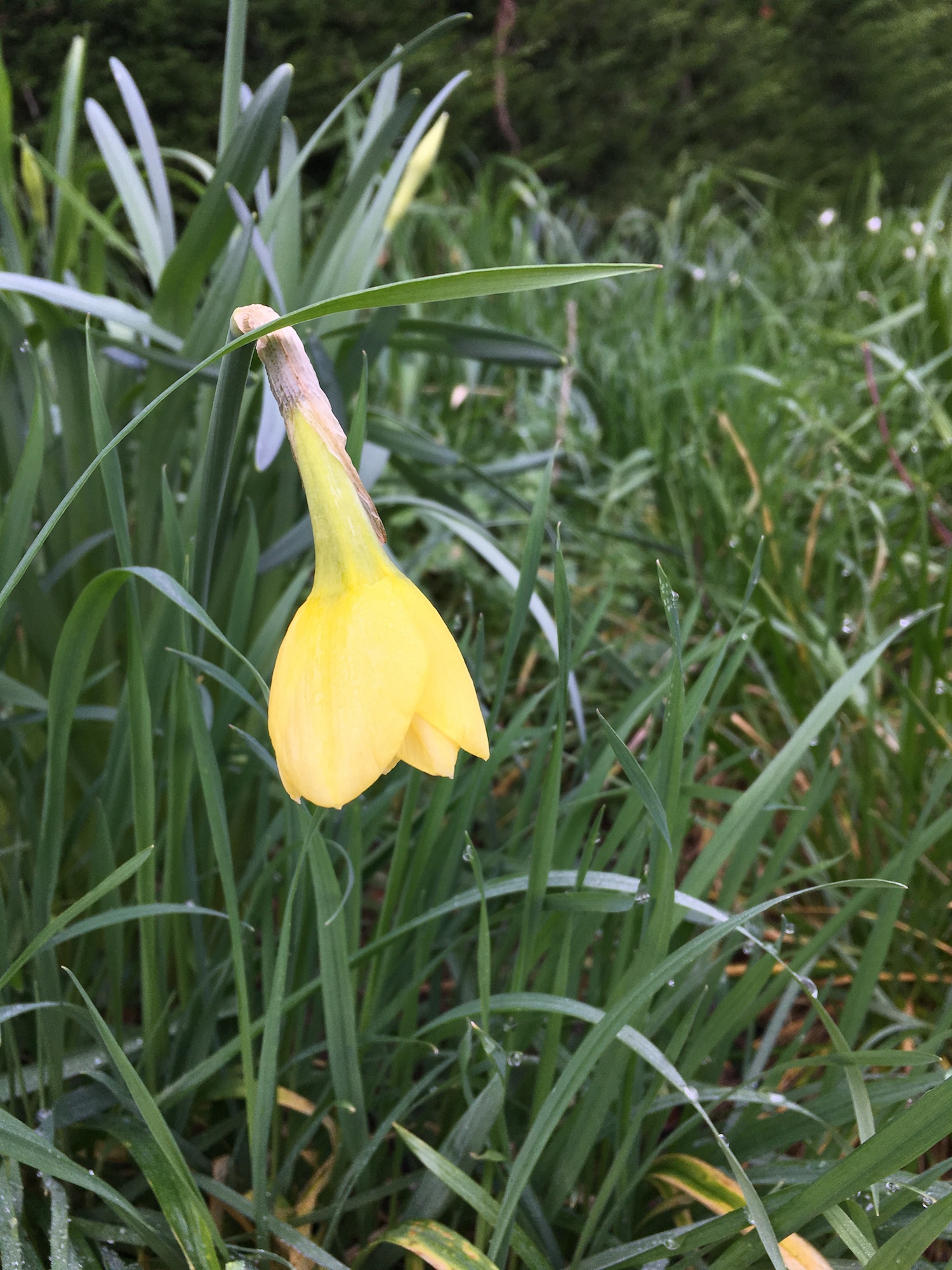
It is not spring. Not yet. But the days are lengthening and the first daffodils are beginning to bloom. It’s time to finish all those indoor winter projects. Spring is on its way.

Red Currant Orange Muffins

I’ve occasionally noted how alike in smell, flavour and texture red currant jam and cranberry sauce are. And since I’ve got a freezer full of last summer’s currants, I decided to use them in a recipe calling for cranberries.

The result was a lovely red currant orange muffin. Even better than the cranberry version, because the fruit came from our own garden.

2 cups all purpose flour
1 c. whole wheat flour
1 Tbs baking powder
3/4 tsp baking soda
1/2 tsp salt
3 eggs
zest of one orange
juice of 1 orange, plus enough yogurt to make 1 1/2 cups
1/2 cup brown sugar
125 g (8 Tbs) melted butter
1 cup fresh or frozen (thawed) red currants

Combine flours, baking powder, baking soda and salt in a large bowl. In another bowl, whisk together the eggs, orange zest, orange juice, yogurt, sugar and butter. Combine wet and dry ingredients, stirring just until evenly moist. Fold in the currants.

Fill well-greased muffin cups—for me, this makes 21 muffins.

Bake 15 minutes at 210ºC (400ºF). Allow to cool in pan 5 minutes before removing.

Still Life with Insects

I’ve written and discarded half a dozen blog posts over the past week. Nothing seems to be quite right. Out of ideas, I resorted to the book of 500 writing prompts I created for my daughter. A random stab at the non-fiction section of the book brought me to the question: What objects tell the story of your life?

I tried to encapsulate everything in four objects:

The fiddle: made by a neighbour in Panama, given to me for my birthday by my husband. The fiddle not only tells the story of our years living and working among the incredible, resourceful people of Panama, but also tells the story of my lifelong interest in learning to play the violin…an interest which always ended up being pushed aside for other interests. Because I’m interested in learning so many things, there simply aren’t enough hours in the day.

The beetle puppet represents my insatiable curiosity about arthropods, and how that curiosity has bled into my other interests. Peanut butter jars full of bugs on my dresser when I was a kid led to the entomology degree, which led to teaching about insects at Penn State University, and then starting the Bugmobile. And the puppet is only one of many insect-themed and inspired artistic projects I’ve done over the years, as art and science mingle in my brain.

The gardening gloves speak of my weeding addiction and my love of growing food. The gloves are never more than a month or two old, because I wear through them in that time. I think that says it all about gardening for me.

The rock represents adventure, the natural world, and the wild places I have visited and lived in. Like me, the rock has traveled far and has been changed by the stresses it has experienced along the way.

Salt-preserved Green Beans

I always struggle with what to do with too many green beans. I can (bottle) some, but none of us really like the taste of canned beans, and their mushy texture leaves a lot to be desired. I don’t freeze any, because freezer space is at a premium, and I prefer to fill it with sweet corn and peas instead.

So this past summer, I preserved some green beans in salt. The recipe I used claimed that the flavour and texture of salt-preserved beans is far superior to canned or frozen.

I pulled out the crock of salted beans the other day to test them out.

At first glance, they didn’t win any beauty contests, especially the yellow wax beans, which came out of the salt a sort of dead-flesh colour.

I rinsed them and soaked them for two hours, as directed, and then tossed them into a green bean and potato charcharis.

Cooked into a flavourful Indian dish, the beans most definitely had better flavour and texture than canned beans. Almost as good as fresh, even.

Unfortunately, they were so excessively salty, they made the dish almost inedible. Even my salty-olive-loving family couldn’t choke them down. Most of the dish ended up on the compost pile, and I expect an epidemic of high blood pressure in the local sparrow and mouse population who dine at chez-compost.

There are still some beans left. I’ll try using them again—small quantities in otherwise unsalted stews or soups might work well (sort of like a salty ham hock in bean soup). Maybe.

But I’m thinking I’ll just give away the extra green beans next year.

Happy New (Garden) Year!

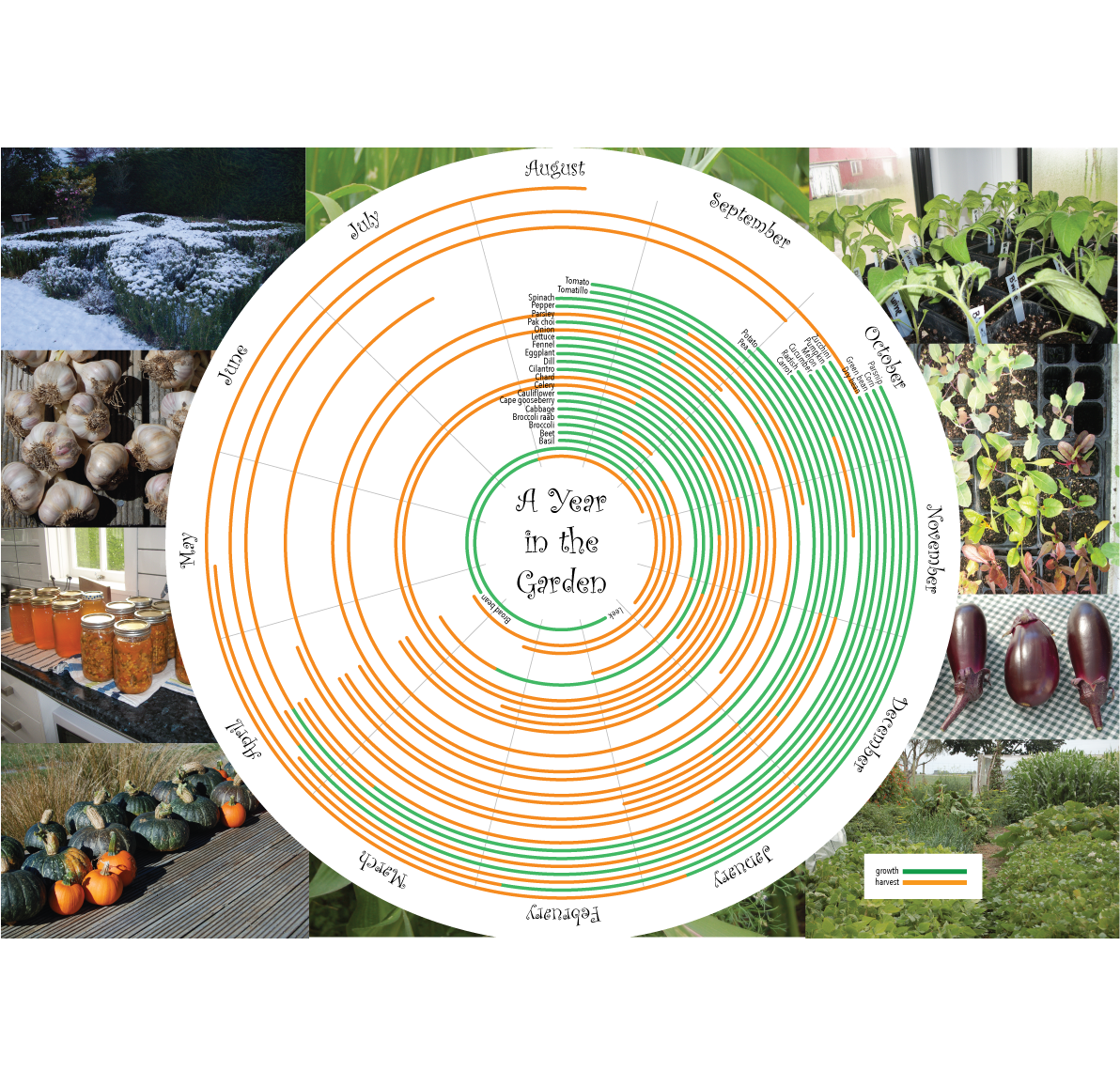
I love the month of July; it’s the beginning of the garden year in my mind, because it’s the month I plan the garden and order my seeds. It’s been a few years since I blogged about my garden year, so I figured it was time to do it again. I unearthed this little graphic my husband helped me create a few years back, showing my annual planting and harvesting schedule. It has changed a little since then, and I notice some crops, like garlic, are missing from it, but it’s still a fairly good indication of my year in the garden.

I struggled the first few years here. Coming from the Northern Hemisphere, I had no idea when I should plant things. And the idea of growing vegetables over winter was foreign to me, too.; gardening in Minnesota and Pennsylvania is sharply seasonal. It’s seasonal here, too, but much less dramatically so.

Instead of growing a ton of spinach over the summer and freezing it for winter, I learned to simply plant small quantities regularly throughout the year, for a perpetual supply of fresh greens. Same with lettuce, chard, broccoli, cabbage, and cauliflower.

Today my garden year ebbs and flows, but there is never a down time in the garden. There is always something to plant, weed or pick. The end of last year overlaps with the beginning of this year, so while I plan my seed order, I’m harvesting the lettuces, broccoli, leeks and other late crops planted in the autumn, and I’m weeding the garlic and broad beans that will be harvested in the coming spring and summer.

Sometimes I miss the complete downtime of gardening in Minnesota—the winter lull when there’s no need to go out and weed in the cold. But only sometimes. The never-ending garden year here has its perks in garden-fresh vegetables year-round.