Salt-preserved Green Beans

I always struggle with what to do with too many green beans. I can (bottle) some, but none of us really like the taste of canned beans, and their mushy texture leaves a lot to be desired. I don’t freeze any, because freezer space is at a premium, and I prefer to fill it with sweet corn and peas instead.

So this past summer, I preserved some green beans in salt. The recipe I used claimed that the flavour and texture of salt-preserved beans is far superior to canned or frozen.

I pulled out the crock of salted beans the other day to test them out.

At first glance, they didn’t win any beauty contests, especially the yellow wax beans, which came out of the salt a sort of dead-flesh colour.

I rinsed them and soaked them for two hours, as directed, and then tossed them into a green bean and potato charcharis.

Cooked into a flavourful Indian dish, the beans most definitely had better flavour and texture than canned beans. Almost as good as fresh, even.

Unfortunately, they were so excessively salty, they made the dish almost inedible. Even my salty-olive-loving family couldn’t choke them down. Most of the dish ended up on the compost pile, and I expect an epidemic of high blood pressure in the local sparrow and mouse population who dine at chez-compost.

There are still some beans left. I’ll try using them again—small quantities in otherwise unsalted stews or soups might work well (sort of like a salty ham hock in bean soup). Maybe.

But I’m thinking I’ll just give away the extra green beans next year.
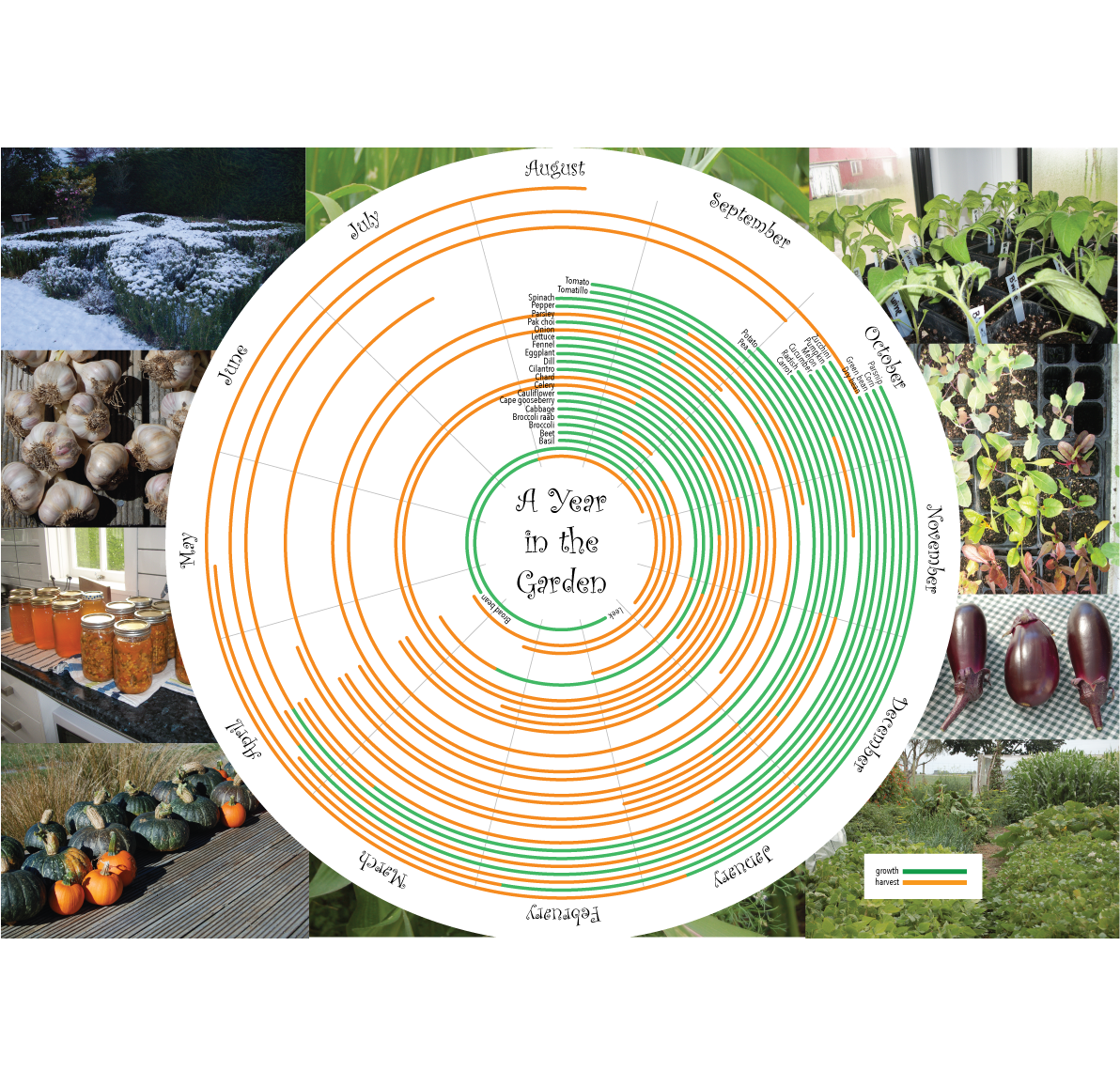
Happy New (Garden) Year!

I love the month of July; it’s the beginning of the garden year in my mind, because it’s the month I plan the garden and order my seeds. It’s been a few years since I blogged about my garden year, so I figured it was time to do it again. I unearthed this little graphic my husband helped me create a few years back, showing my annual planting and harvesting schedule. It has changed a little since then, and I notice some crops, like garlic, are missing from it, but it’s still a fairly good indication of my year in the garden.

I struggled the first few years here. Coming from the Northern Hemisphere, I had no idea when I should plant things. And the idea of growing vegetables over winter was foreign to me, too.; gardening in Minnesota and Pennsylvania is sharply seasonal. It’s seasonal here, too, but much less dramatically so.

Instead of growing a ton of spinach over the summer and freezing it for winter, I learned to simply plant small quantities regularly throughout the year, for a perpetual supply of fresh greens. Same with lettuce, chard, broccoli, cabbage, and cauliflower.

Today my garden year ebbs and flows, but there is never a down time in the garden. There is always something to plant, weed or pick. The end of last year overlaps with the beginning of this year, so while I plan my seed order, I’m harvesting the lettuces, broccoli, leeks and other late crops planted in the autumn, and I’m weeding the garlic and broad beans that will be harvested in the coming spring and summer.

Sometimes I miss the complete downtime of gardening in Minnesota—the winter lull when there’s no need to go out and weed in the cold. But only sometimes. The never-ending garden year here has its perks in garden-fresh vegetables year-round.

Self-control … yeah, right.

Now that we’re on the upside of the winter solstice, I’ve planted my garlic—108 cloves, which should yield about 100 heads, assuming my usual success rate.

That’s absolutely too much garlic.

It’s a bad omen. I drew up my garden plan this morning—a garden roughly three-quarters the size of the one I’ve planted for the last decade. Hopefully it won’t yield 200 pumpkins and 80 kilos of pickling cucumbers next year when my teenage son won’t be around to eat them all.

But, plan or not, if I plant other crops with the exuberance with which I planted garlic today, I’ll end up with a garden every bit as big as past gardens. Some time in the next two weeks, before this year’s seed catalogue arrives, I need to get control of my gardening urge.

Wish me luck.

Pumpkin Pancakes

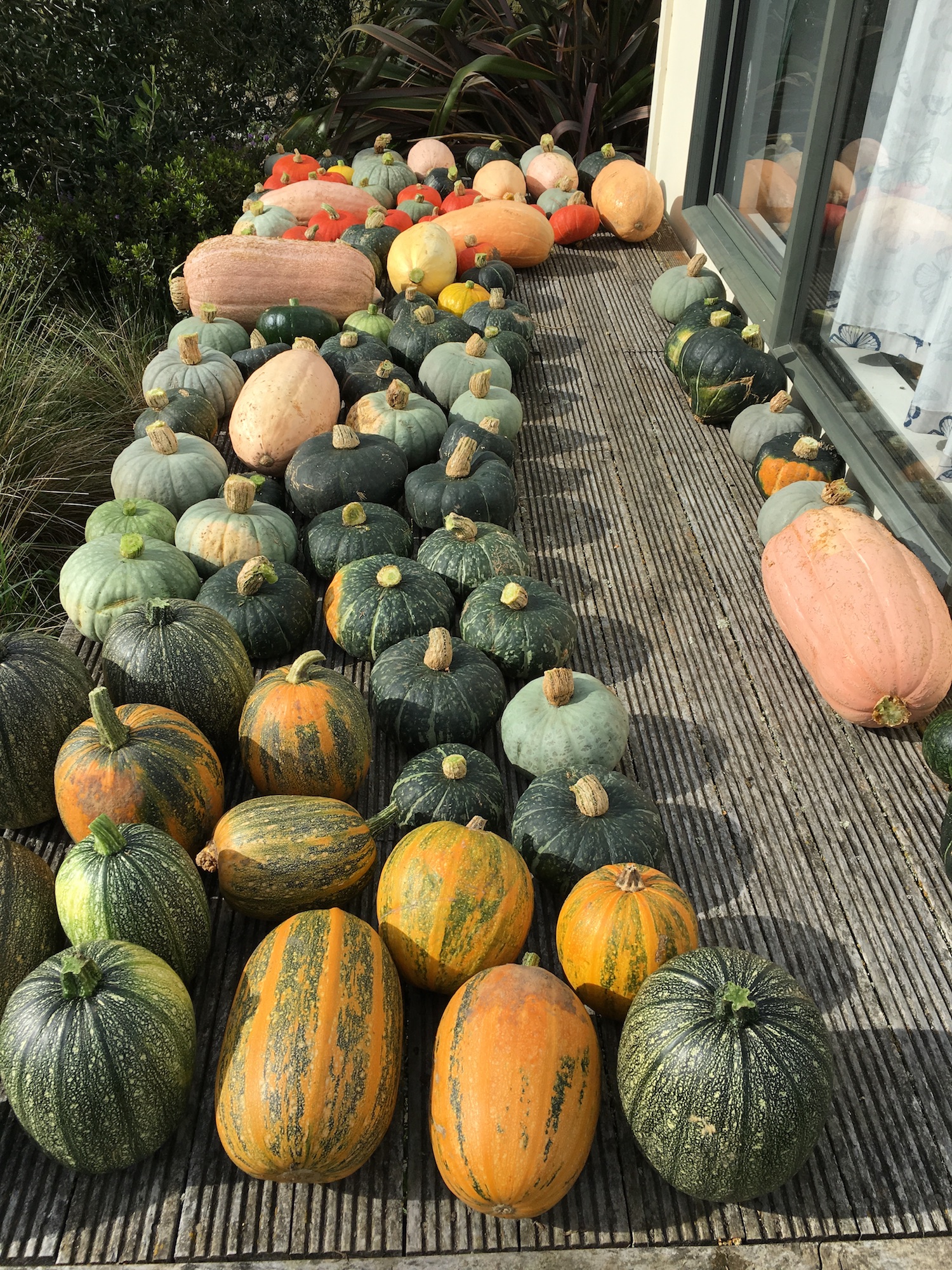
Now that winter has set in, we’ve turned our culinary sights from eggplant and courgettes to pumpkin, pumpkin, and pumpkin. I blogged about our excellent pumpkin harvest earlier this year. That post was written mid-way through the harvest–ultimately we picked nearly 200 pumpkins and other winter squash.

So w’re eating a lot of pumpkin. That’s not a problem.

Yesterday I made lovely pumpkin pancakes for breakfast. They were moist, dense, and spicy—excellent with maple syrup or redcurrant jam.

To make these delicious pancakes, start with a double batch of my World Famous Pancake Recipe. Add 2 tsp cinnamon and 1/2 tsp cloves to the dry ingredients. Add 1 1/2 cups pureed pumpkin (or other winter squash—I used kabocha squash) to the wet ingredients.

If your pumpkin is dry, you may need to increase the milk to achieve the right batter consistency.

We found these pancakes didn’t store/reheat as well as regular pancakes—they became quite fragile upon reheating (though they were still delicious).

In Praise of Parsnip

The rangy rosette of a parsnip plant.

A bit like carrots, but sweeter and starchier, parsnips are wonderful winter vegetables.

I’m not certain when I first ate parsnip, but I know I’ve eaten a lot of it. When I was breastfeeding my son, nearly everything I ate gave him colic (It took eight weeks of 24-hour-a-day screaming for me to work this out … longest eight weeks of my life). Parsnips were one of the few safe vegetables, so I ate parsnips. Lots and lots of parsnips. But I never got sick of them. Their comforting, earthy flavour only grew on me the more I ate.

I try to grow parsnips every year, but I’m not always successful. Parsnip seed has a short shelf-life, and germination can be poor, even with seed that isn’t officially past it’s ‘plant by’ date. I buy a new packet of seed every year, whether I’ve used all of the old seeds or not. Even so, I don’t always have luck germinating it, because parsnip doesn’t like to be transplanted, and needs to be seeded directly into the garden beds. In my garden, that means the seeds tend to dry out, in spite of my best efforts. It also leaves tender seedlings at the mercy of birds and slugs, which seem to enjoy parsnip as much as I do.

But this past summer the parsnips did well, like many other crops that appreciated the unusually warm, wet weather. The parsnip I picked for dinner yesterday was 15 cm in diameter at the crown, but still tender and delicious. And there are plenty more out there to harvest.

Parsnips are sweeter after the first frost, so they’re a great autumn and winter food. They store well in the ground, so there’s no need to fill your fridge with them at harvest time. When we lived in Minnesota, I used to use a pickaxe to chip them out of the frozen ground through the winter.

Parsnips make wonderful additions to stews and casseroles. Their flavours meld well with potato, carrot, and celeriac. They compliment beans and pulses. They’re great vehicles for butter and cheese. Back when I was subsisting on little beyond parsnips, we used to mash them (like mashed potatoes), braise them, and roast them, in addition to using them in stew and soup.

It’s no wonder these versatile vegetables have been cultivated since long before Roman times. They’re a great winter staple—a vegetable you can eat again and again and still enjoy.

The Pumpkin Fairy

It was most certainly the year of the cucurbit—from an abundance of cucumbers to an avalanche of zucchini, to a mountain of melons, and finally, more pumpkins than we can possibly eat.

My daughter picked about three-quarters of the pumpkins over the weekend—the total came to exactly 100, some of which are 15 kg behemoths. That’s a lot of pumpkin. That’s eating pumpkin every three days for a year. That’s only three-quarters of the pumpkins from this year’s garden!

The kids think I should start dropping pumpkins off on random people’s doorsteps—a sort of Pumpkin Fairy. It would certainly get rid of the excess pumpkins, but I wonder what people would think to find a pumpkin on their doorstep …

Would you like to be visited by the Pumpkin Fairy?

Growing Gifts

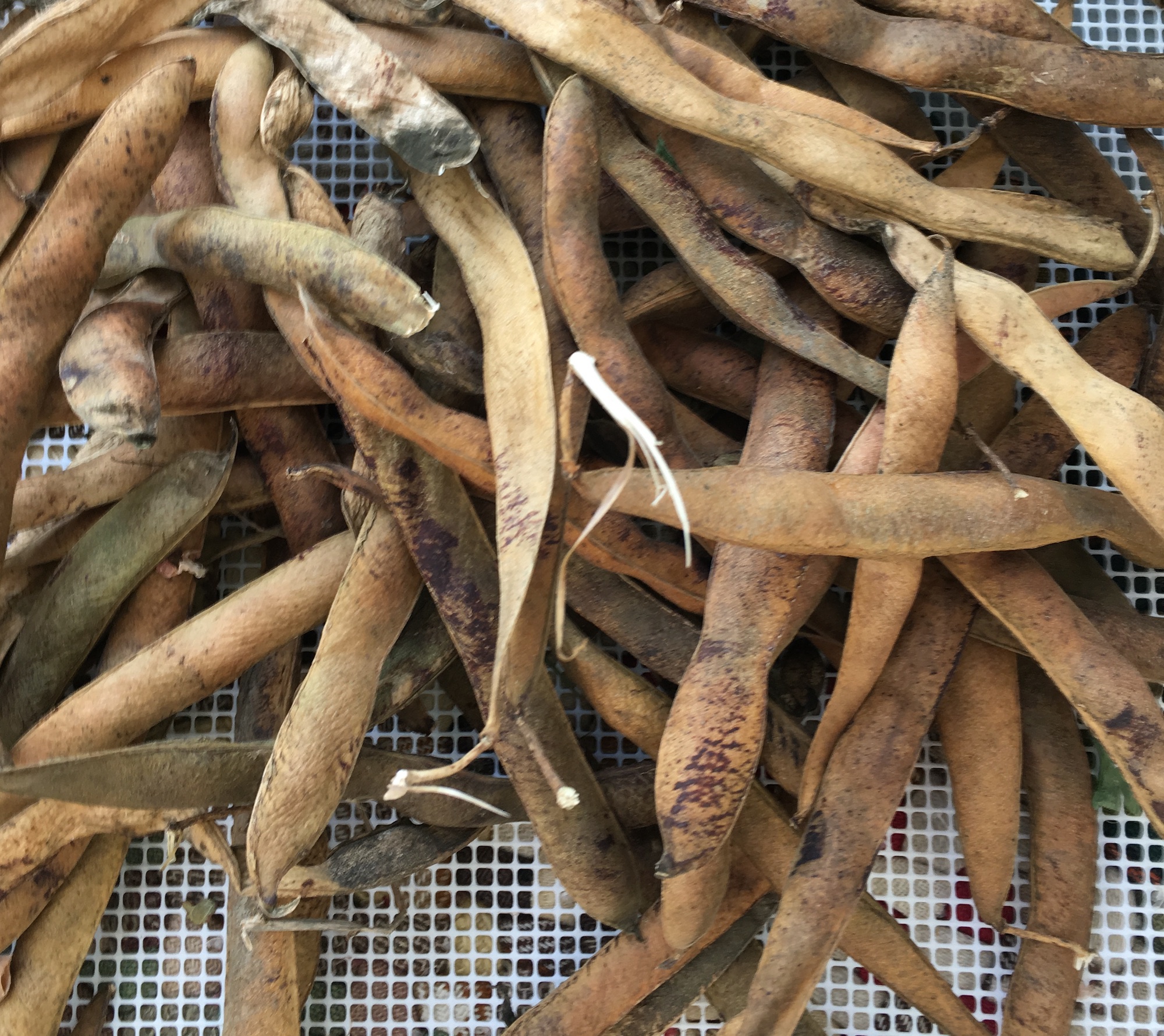
The first neighbourly gift I was given when we moved into our house twelve and a half years ago was a handful of dried scarlet runner bean pods for seed. A couple of weeks ago, I harvested the twelfth batch of seed from the descendants of those first beans. The neighbour who gave me those beans has since moved away, and I haven’t seen her for years. But her gift still feeds us every year.

Another friend gave us a few raspberry canes about ten years ago. Those raspberries (and their descendant cuttings) now fill a thirty-metre long bed, and yield large quantities of fruit each summer.

A few years after the raspberries, my husband drove one of my son’s classmates and his dad to a school outing. In exchange, the dad gave us a couple of gooseberry plants. A few strategic cuttings, and we now pick almost more gooseberries than we know what to do with each year.

Around the same time, one of my husband’s colleagues was pulling out some artichoke plants, and asked if we wanted a few. I’ve divided those plants twice since then, and we now eat more artichokes than anyone should be allowed to.

For a gardener, these are the best gifts—divisions, cuttings, and seeds from cherished plants. They are gifts that may seem small at the time, but they grow every year.

Can’t Stand the Heat?

Chilli peppers are one of the prettiest plants in the garden. It’s no wonder there are so many varieties grown largely for their ornamental value.

But I appreciate my chillies for their kick as well as their glossy leaves and cheerful fruit. Unfortunately, chillies are tropical plants, and many varieties need a longer, hotter growing season than I can provide here, even under cover.

Two varieties, however, regularly produce well.

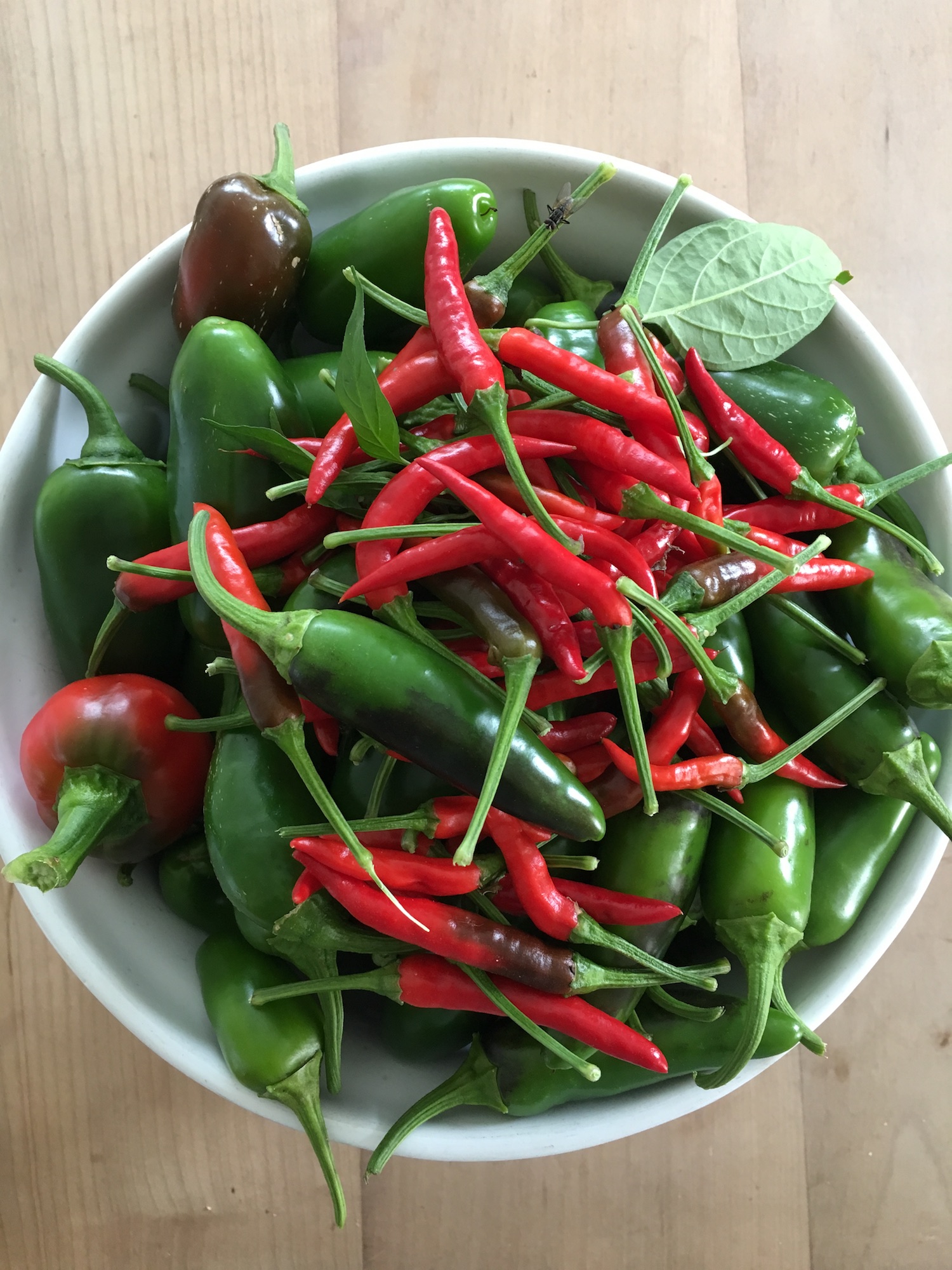
Jalapeño Early—I can’t grow normal Jalapeños, but this variety is a week or two quicker to produce, and that’s enough. One of my favourite chillies because its low heat level (2,500-8,000 Scoville Heat Units) means you can load a dish with them and enjoy the other flavours they impart along with the heat.

Thai Super Chilli—At 40,000 to 50,000 Scoville Units, these peppers are significantly hotter than Jalapeños. Just one of these little gems gives a nice kick to a dish. I particularly like these chillies because they dry well in beautiful strings hanging in the kitchen. They’re easy to grow and preserve, and they lend beauty to the garden and the kitchen all year.

A couple plants of each of these peppers is plenty to grow a year’s supply of spicy goodness, but you know I can’t stop there. I usually plant at least one other mildly spicy pepper. this year, it was Cherry Large Hot. Similar to Jalapeños for heat, these chillies really serve no purpose for me except as a beautiful red contrast to the green Jalapeños in salsas and pickled peppers. Good enough reason for me to plant them!

Equinox Accounting

Happy Equinox!

It is the autumnal equinox, and fittingly, our weather today has started out pure summer heat, and is predicted to turn to wintery wind and rain later on. I can see the clouds piling up to the south as the front approaches.

There are still plenty of summer crops coming out of the garden, but the equinox is a good time to evaluate what worked and what didn’t this past summer.

It was an extreme summer, so there’s no saying this year’s performance will hold in future years, but new varieties that did well include:

Tomato Indigo Apple—I blogged about this beauty when it first began to ripen. It has proven itself over the season, producing plentiful, delicious and attractive fruits that ripened early and continue to ripen as other varieties are giving up for the year.

Tomato Oxheart—This variety was also new to me this year, and it did well enough to deserve another go. The almost disturbingly heart-shaped (as in ox heart, not love heart) fruits were flavourful and plentiful.

Onion Pearl Drop—Cute and fast-growing. I’ll plant these again.

Watermelon Sweet Red—It might have simply been the weather this summer, but Sweet red matured more quickly and produced more fruit than Rapid Red, which I’ve planted in past years. I’ll be curious to see how it does in a cooler summer.

Varieties that didn’t grow so well:

Eggplant Container Pick—I was excited by this smaller variety of eggplant, as mine always end up pressed against the top of the low tunnel I grow them in, but these seeds didn’t even germinate.

Tomato Russian Red—This isn’t a new variety for me. Usually Russian Red, bred for its ability to withstand and produce well in cool temperatures, is my best producer. This year, the plants spent most of their energy on vegetative production, growing to massive leafy plants without actually producing much fruit. And the fruit they did produce was so hidden in all the greenery that I missed half of it. It won’t stop me from planting Russian Red in the future, but it emphasises to me the need to plant a mix of varieties, as year-to-year differences in weather can make a big difference in production.

Pole Bean Jackson Wonder—The jury is still out on this bean, but poor germination and slow growth mean I still haven’t harvested any of these lima beans. There are plenty of pods on the plants, but whether they will fill out properly before frost kills them is debatable. My guess is that in a normal summer here, they wouldn’t have a chance—they appear to need too long a growing season.

Yard Long Red Noodle

Yard Long Red Noodle alongside scarlet runner beans.

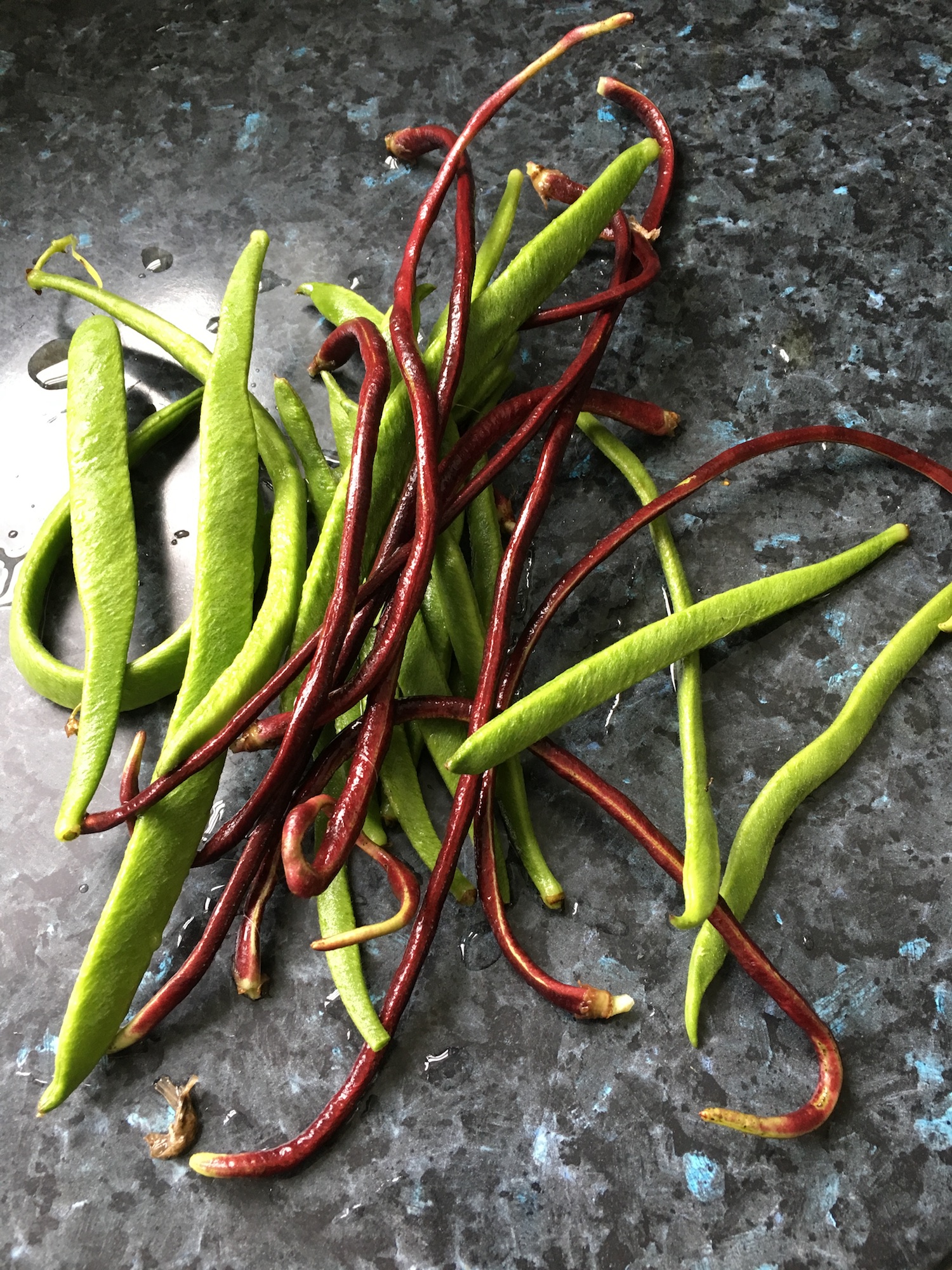
Along with all the other heat-loving plants that did well in this summer’s garden is the bean Yard Long Red Noodle (Vigna unguiculata—the same species as cowpeas). I have never had luck with these beans here in New Zealand—they are particularly sensitive to herbicide overspray, and also prefer it hotter than our summers normally are (ideal temperature for them is 30ºC). But this year, the plants germinated slowly, which spared them the springtime overspray, and the summer was hot and wet. I can’t say they’ve thrived (we grew yard long beans in Panama, and so I know what they’re supposed to grow like), but they have managed to produce a small crop of ridiculous-looking beans. The beans aren’t exactly a yard (90 cm) long, but they’re 30 cm (12 inches) or more, and are the sort of silly crop to make everyone smile.

Their red colour is pretty in the garden, and unlike many other red or purple vegetables, they retain their colour when cooked. Good enough reasons for me to plant them, in spite of their poor performance here—a few go a long way.