Artichokes

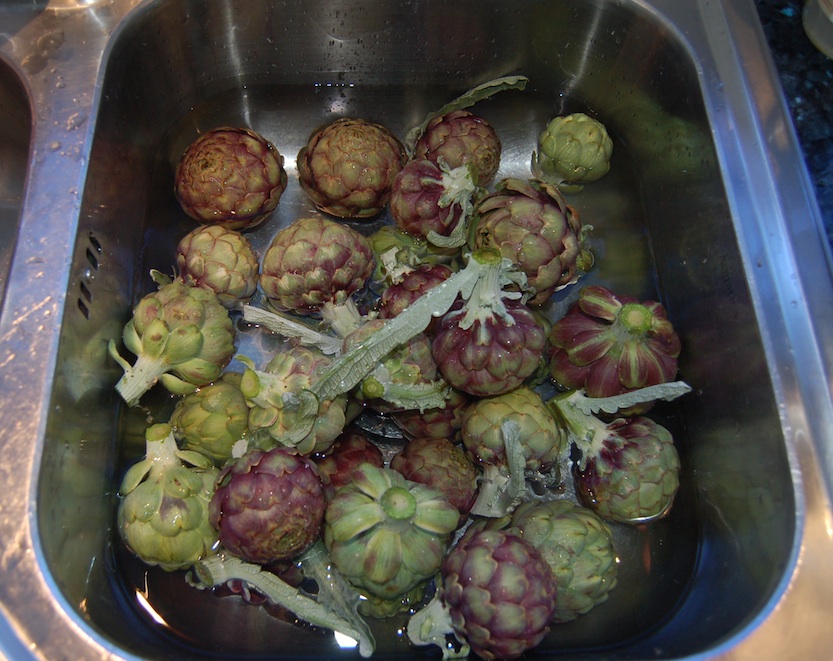
artichokes2cropsmI don’t think I ever ate an artichoke until I was an adult. They just weren’t a part of the diet in eastern Pennsylvania in the 1970s and 80s.

I probably could have counted on one hand the number of artichokes I’d eaten until I started growing them. And I had no idea how incredible and prolific they could be until I lived in a place where artichokes were perennial.

Now I can hardly imagine springtime without them.

The globe artichoke is a thistle (not to be confused with the very different Jerusalem artichoke, which is a sunflower). It grows as a large rosette of leaves and can reach over 1.5 metres tall. The edible part is the unopened flower bud. If you let the buds mature, they open into giant purple flowers that bumblebees can’t resist.

Artichokes are the same species (different variety) as cardoon which is more commonly planted as an ornamental. Cardoon flowers are smaller, and it is generally the leaf stems that are eaten. I grew cardoon for food briefly, before realising that blanching the leaves (by wrapping the plants in straw and cardboard as they grow) is time-consuming, and the final product—the cooked leaf stems—tastes a lot like artichoke, only more bitter and less rich. (Then, of course, I tried to get them out of the garden—it took four years—they are thistles after all) Now I keep just one in the flower garden as a stunning centrepiece plant.

The first records of artichokes come from ancient Greece, where wild varieties were selected and bred into the large-flowered plants we grow today.

Today Egypt and Italy produce about half the world’s artichokes, but with new cultivars that can tolerate cold winters, they can be grown just about anywhere. Put them in the perennial part of your garden, and even if you don’t like to eat them, you can enjoy their beauty!

Omelettes

IMG_3731 smIt’s funny how quickly we can go from being desperate for eggs to having more than we know what to do with. My new chickens have all started laying now, and so this afternoon when I was looking for a quick dinner after getting home late, I found a fridge full of eggs.

Of course, that meant omelettes! Filled with cheese, mushrooms and herbs, they’re a delicious, quick-to-make, high protein meal that everyone loves. I served ours tonight with roast potatoes slathered in ketchup.


Favourite Kitchen Tools—Mortar and Pestle

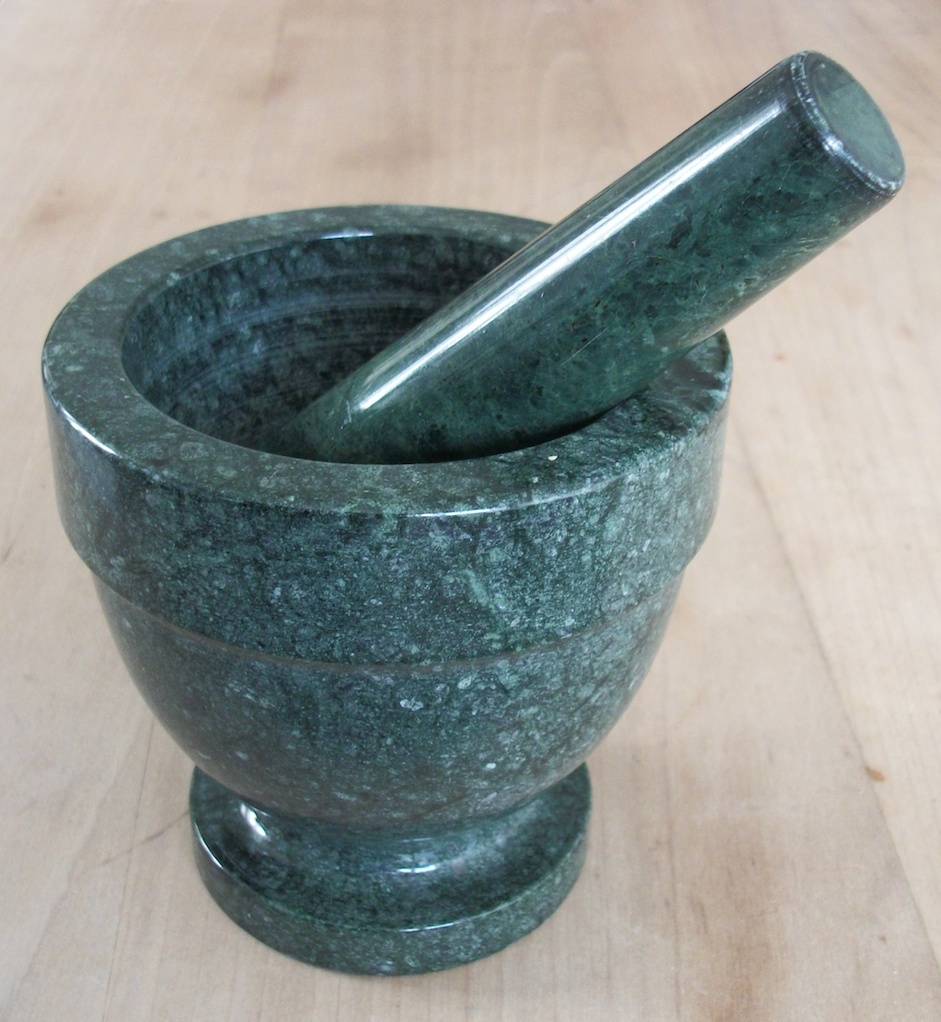
100_3915 smOkay, I admit it. We own two mortar and pestles—a large wooden one, and this small stone one. And we use them both.

There’s something satisfying about a mortar and pestle. There’s the timelessness of the act of grinding food between two stones—people have been doing that probably since we first used tools. There’s the rewarding transformation of some seed, herb, or vegetable into a powder or paste. There’s the lovely aroma of whatever it is you’re crushing. And there’s the joy of the physical work (which always makes me think of the Luddite’s Kitchen Weight Loss Programme). You just don’t get all that from a spice grinder or food processor.

We grow all of our own herbs, and some of the spices, too, so the mortar and pestle gets used regularly on herbs and spices. It’s great for crushing the dried garlic we use at this time of year, too. And with the milking season underway, I’ll soon be using it to grind rock salt to just the right consistency for salting cheeses.

A very handy tool to have around!

Orange cake

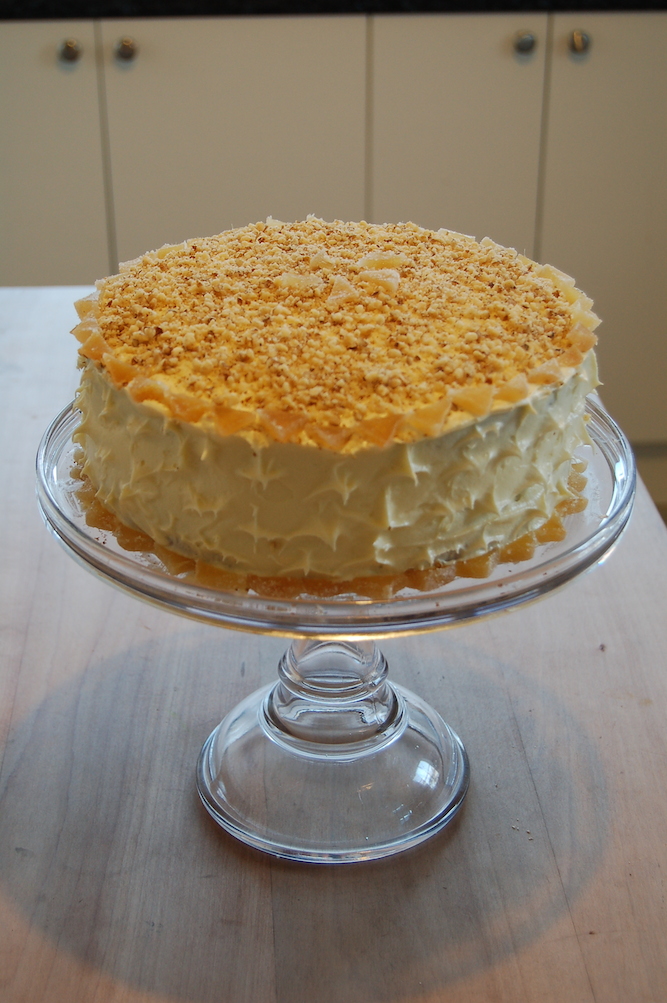
100_3918 cropsmI made a new cake today. It was supposed to be the Orange Cake from King Arthur Flour’s Whole Grain Baking. But my husband had just used the last of the whole wheat flour for bread, and since I was going to change the type of flour in the recipe, I made a few other changes…

The result was lovely! Crunchy on the outside and divinely soft inside. It was difficult not to just sit down and eat several slices all at once!

So here’s the recipe in all its untested glory.

2 ½ cups barley flour
1 cup all-purpose flour
2 tsp baking powder
¼ tsp salt
1 cup (250g) butter, softened
1 ¼ cup sugar
4 eggs
1 cup milk
Zested rind of 1 orange

Mix together the flours, baking powder and salt in a medium bowl. Cream the butter and sugar until light and fluffy (this will take about 5 minutes). Beat in the eggs, one at a time. Add the flour mixture alternately with the milk. Stir in the orange zest.

Spoon batter into two greased and floured 9 x 5-inch loaf pans. Bake about 1 hour at 180°C (350°F). Remove the pans from the oven and allow to cool for about 5 minutes before turning out onto a rack. Place the rack over a large baking tray, and brush the glaze (see below) over the tops, bottom, and sides of the hot loaves, allowing it to soak in. Cool fully before serving.

Orange glaze:

½ orange juice
zested rind of 1 orange
¾ cup sugar

Put all glaze ingredients into a heat proof bowl and microwave for 1 minute. Stir until the sugar is dissolved. Brush onto cake.

**The crust on these loaves is fabulous! Next time I make these I’m going to bake them in mini-loaf pans in order to increase the crust to interior ratio! They’d probably also be great as cupcakes!

Watercress

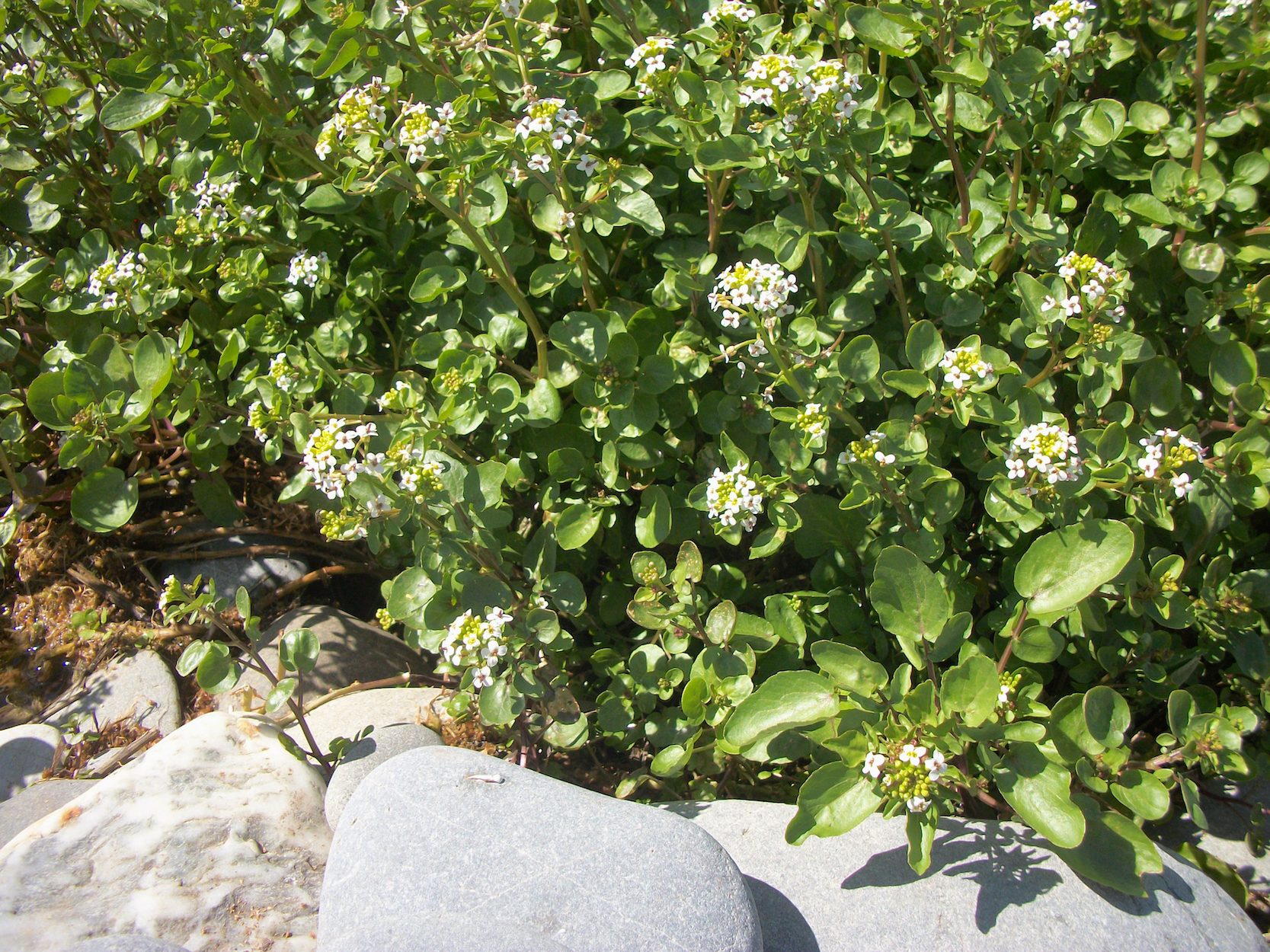
100_3897 smI probably first read The Trumpet of the Swan, by E.B. White when I was 7 years old. I remember being enthralled by the book, and ever since, I have loved the song, Beautiful Dreamer, which the mute swan Louis plays to woo his lady friend, Serena. I don’t remember much else about the book, but for some reason I vividly remember that Louis and 11-year-old Sam eat watercress sandwiches.

This was the only experience I ever had with watercress until we grew it ourselves (though thinking back, I’m pretty sure it grew in the neighbour’s stream, growing up, but I didn’t know what it was at the time).

Now, I’m very impressed that Sam ate watercress sandwiches. I can’t imagine many 11-year-olds who would do that.

Watercress is in the mustard family, and it’s glossy leaves are sharply bitter, like a mixture of arugula and radishes. They are delicious, but challenging for the palate of a child. I enjoy them on a cheese sandwich (and my 11-year-old does, too), but I’m not sure I would want an entire sandwich of nothing but watercress.

Still, watercress is a great way to spark up salads and sandwiches, and I look forward to trying it in soups and stir-fries as well.

Salad Burnet

100_3894 smSanguisorba minor, salad burnet, began primarily as a medicinal herb. Sanguisorba means “blood absorber”, and it was thought to stanch the flow of blood. Later, it was also used as a cure for diarrhoea, digestive disorders, rheumatism and gout. It was also thought to protect against plague.

Sadly, salad burnet’s real virtues are more modest and culinary in nature. Its toothy, slightly bitter, cucumber-flavoured leaves make a delicious addition to salads, herbed butters, and cheeses. We use salad burnet heavily in the spring, when the fresh new growth is less bitter, and before the cucumbers are in—a springtime taste of summer in our salads.

But it’s virtues aren’t confined to the kitchen. Perennial, drought tolerant, and pretty, too, salad burnet is a perfect addition to your landscaping.

Cut the Cake

DSC_0008 copyThere are many ways to cut a cake, depending on the shape and size of the cake and the occasion. There is a protocol for wedding cakes, and techniques for large sheet cakes (the first time I saw someone pull out dental floss to cut a birthday cake, I was very impressed). There is the all-important first piece for the birthday kid—usually determined by where the most interesting bit of decoration is.

But, for the most part, your average person doesn’t think much about how a cake is cut. We just cut it the way we’ve always done.

But that’s not good enough for some people.

I’ve recently run across two intriguing videos about cake cutting that take the art to a whole different level.

First, there’s the guy who wanted to be able to cut more interesting shapes, without wasting cake, so he designed and built a hexagonal cake cutter.

Then there’s the cake-cutting technique that was actually published in the scientific journal Nature in 1906, that prevents the half-eaten cake from drying out.

Clearly, these men didn’t have enough other household chores to do!

Blue Sky Blues

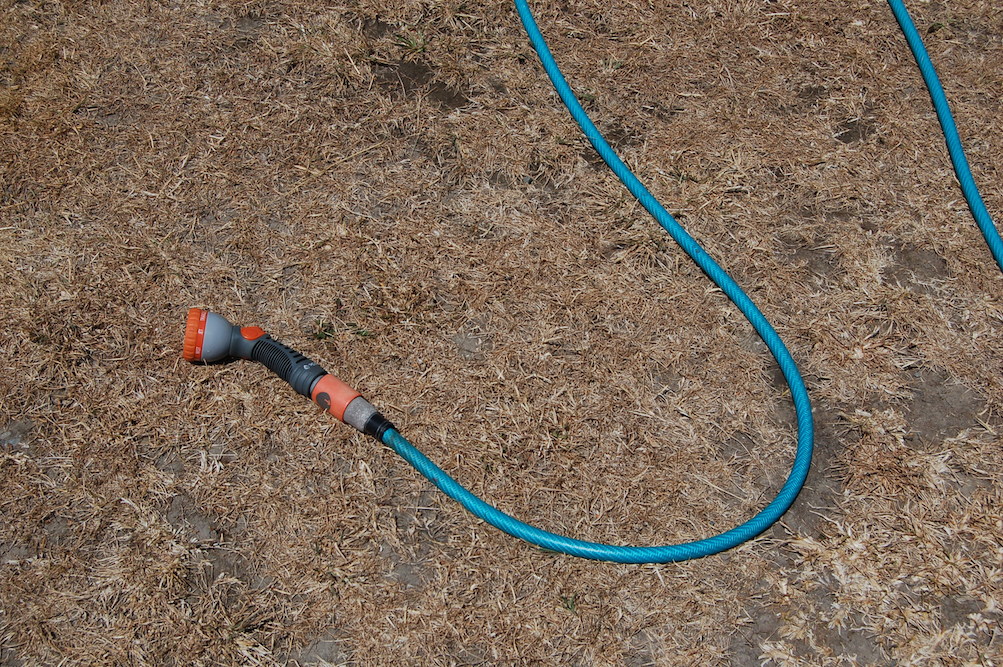
Are we in for another dry summer?

Are we in for another dry summer?

We had our first “dry southerly” today—a storm that is forecast to bring rain, but doesn’t. I fear it is a harbinger of the season to come.

Our rain comes primarily from southerly storms rolling in off the ocean. When the wind shifts to the south, we expect rain.

But during the summer, those southerly shifts often arrive without rain. The weatherman might forecast showers, but they never materialise.

A dry southerly at this time of year is not unheard of, but it’s not particularly common, either. With a dry year behind us, I worry about what an early dry southerly means for the spring and summer ahead.

A strong El Nino is predicted for this year. For us that means a parched summer. If we start off dry…well, there’s the grumpy farmer in me talking.

But I’m thankful to have the new water tank full. All I can do beyond that is mulch well, water while I can, and pray for rain.

Oregano

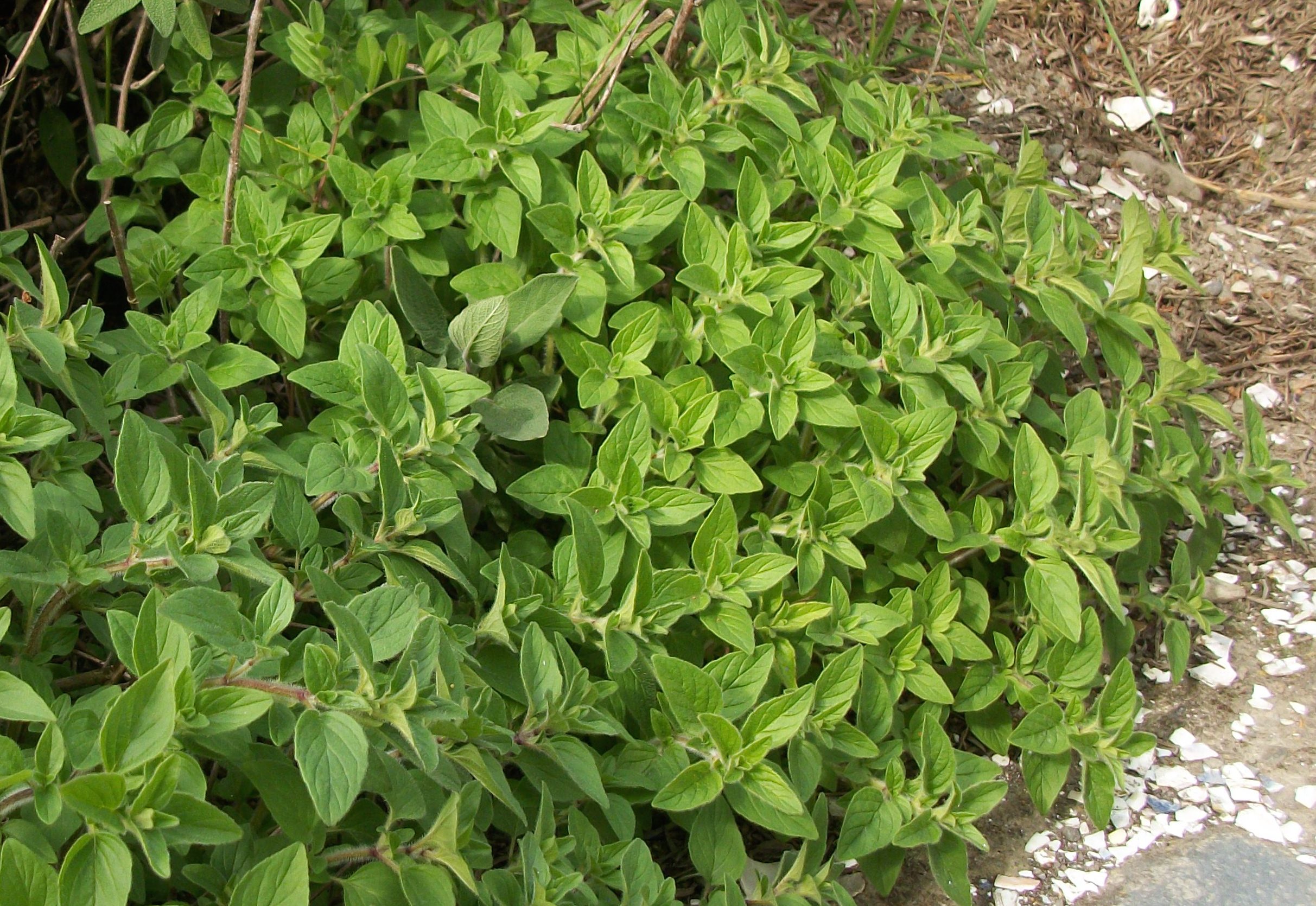
100_3863 cropOregano is marjoram’s wild cousin, and as such, is pungent and weedy. It seeds in all over the garden, and thrives even in the dry, rocky former driveway-turned-flowerbed. It is the first plant ready for harvest and storage each spring, and some years I miss it because I’m so busy planting everything else.

A woody perennial, oregano is available fresh almost all year in our mild climate, but the classic oregano flavour we all love on pizza comes only from the dried herb.

In winter, I cut the plants back nearly to the ground; the scraggly stems that have already flowered would survive and sprout new growth in the spring, but oregano needs an annual “haircut” to look good.

Early in spring, the trimmed plants send up a beautiful green cushion of new foliage. This fresh, even growth is easy to harvest and dry, and the plants will reward me with another crop when the first is shorn.

But for me, the best thing about oregano is its flowers. They aren’t particularly showy or pretty, but they attract a huge array of insects—bees, butterflies, hover flies—and those in turn attract preying mantids and spiders. When the oregano is flowering, I often take my lunch into the herb garden, just to watch the insects.

Bienestar

100_3810 cropThe day’s wind has died

Dust rises from my hoe

And falls in place.

The body is tired,

But at peace

In the rhythm of work,

In the calm setting of the sun

In the midges wafting like ghosts

Through the silence.


Heat gives way to cool air

And the scent of the sea.


Purple clouds glow orange

At the edges

In a turquoise sky.


I pause to rest,

To listen

To breathe

The smell of my garden.


I should stop,

Go inside,

Wash the dirt off my arms and legs.


One more minute.

A few more weeds.

Then one last gaze.


The peas glow in the gold

Of the evening sun.

The onions stand proud.

The lettuces reach up in supplication.

I see it

And declare it good.