Cut the Cake

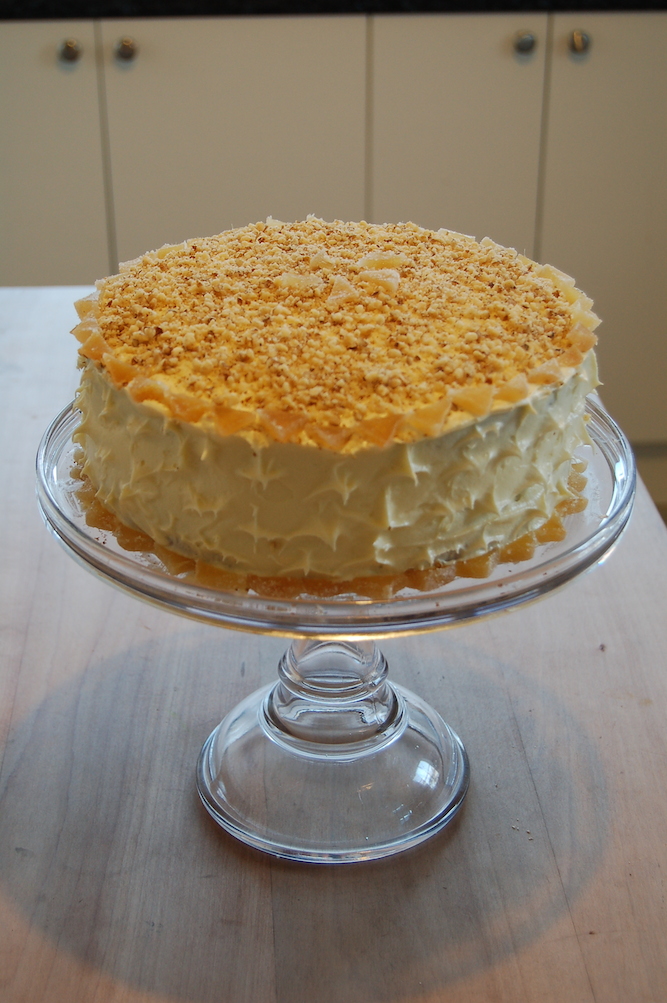
DSC_0008 copyThere are many ways to cut a cake, depending on the shape and size of the cake and the occasion. There is a protocol for wedding cakes, and techniques for large sheet cakes (the first time I saw someone pull out dental floss to cut a birthday cake, I was very impressed). There is the all-important first piece for the birthday kid—usually determined by where the most interesting bit of decoration is.

But, for the most part, your average person doesn’t think much about how a cake is cut. We just cut it the way we’ve always done.

But that’s not good enough for some people.

I’ve recently run across two intriguing videos about cake cutting that take the art to a whole different level.

First, there’s the guy who wanted to be able to cut more interesting shapes, without wasting cake, so he designed and built a hexagonal cake cutter.

Then there’s the cake-cutting technique that was actually published in the scientific journal Nature in 1906, that prevents the half-eaten cake from drying out.

Clearly, these men didn’t have enough other household chores to do!
Blue Sky Blues

Are we in for another dry summer?

Are we in for another dry summer?

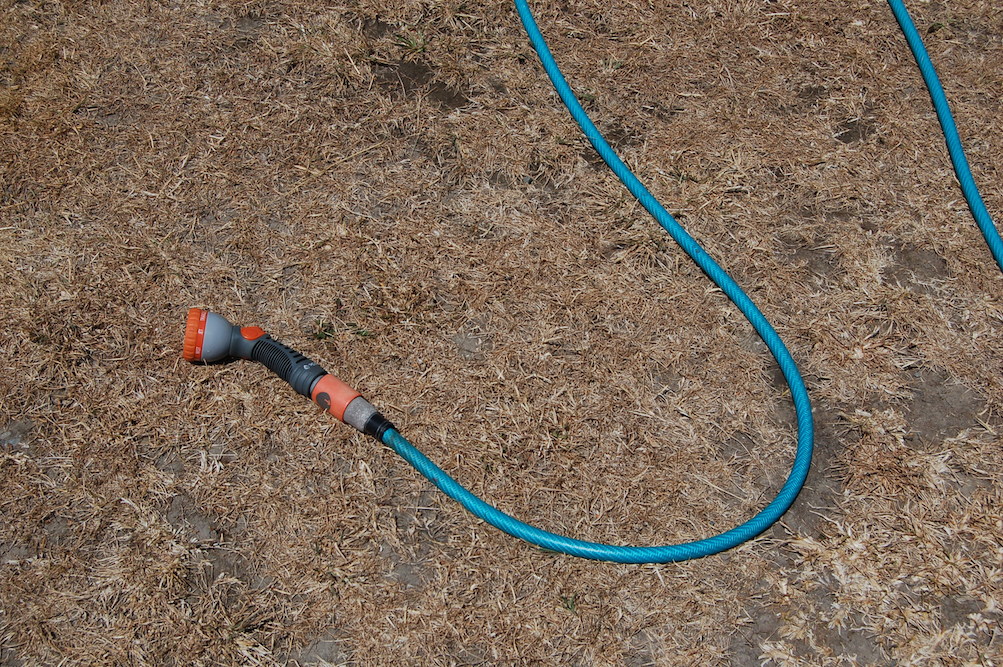
We had our first “dry southerly” today—a storm that is forecast to bring rain, but doesn’t. I fear it is a harbinger of the season to come.

Our rain comes primarily from southerly storms rolling in off the ocean. When the wind shifts to the south, we expect rain.

But during the summer, those southerly shifts often arrive without rain. The weatherman might forecast showers, but they never materialise.

A dry southerly at this time of year is not unheard of, but it’s not particularly common, either. With a dry year behind us, I worry about what an early dry southerly means for the spring and summer ahead.

A strong El Nino is predicted for this year. For us that means a parched summer. If we start off dry…well, there’s the grumpy farmer in me talking.

But I’m thankful to have the new water tank full. All I can do beyond that is mulch well, water while I can, and pray for rain.

Oregano

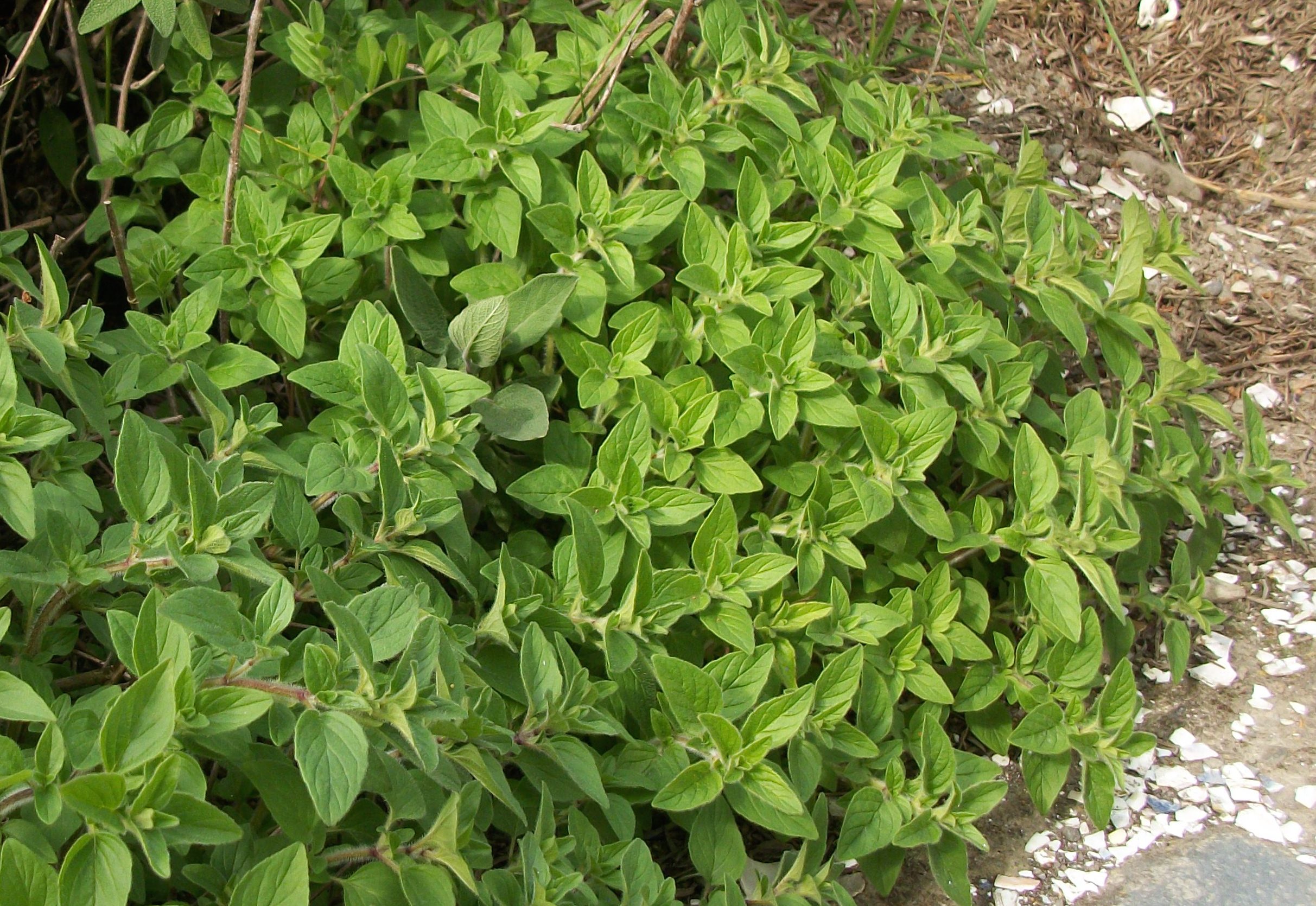
100_3863 cropOregano is marjoram’s wild cousin, and as such, is pungent and weedy. It seeds in all over the garden, and thrives even in the dry, rocky former driveway-turned-flowerbed. It is the first plant ready for harvest and storage each spring, and some years I miss it because I’m so busy planting everything else.

A woody perennial, oregano is available fresh almost all year in our mild climate, but the classic oregano flavour we all love on pizza comes only from the dried herb.

In winter, I cut the plants back nearly to the ground; the scraggly stems that have already flowered would survive and sprout new growth in the spring, but oregano needs an annual “haircut” to look good.

Early in spring, the trimmed plants send up a beautiful green cushion of new foliage. This fresh, even growth is easy to harvest and dry, and the plants will reward me with another crop when the first is shorn.

But for me, the best thing about oregano is its flowers. They aren’t particularly showy or pretty, but they attract a huge array of insects—bees, butterflies, hover flies—and those in turn attract preying mantids and spiders. When the oregano is flowering, I often take my lunch into the herb garden, just to watch the insects.

Bienestar

100_3810 cropThe day’s wind has died

Dust rises from my hoe

And falls in place.

The body is tired,

But at peace

In the rhythm of work,

In the calm setting of the sun

In the midges wafting like ghosts

Through the silence.


Heat gives way to cool air

And the scent of the sea.


Purple clouds glow orange

At the edges

In a turquoise sky.


I pause to rest,

To listen

To breathe

The smell of my garden.


I should stop,

Go inside,

Wash the dirt off my arms and legs.


One more minute.

A few more weeds.

Then one last gaze.


The peas glow in the gold

Of the evening sun.

The onions stand proud.

The lettuces reach up in supplication.

I see it

And declare it good.

A Real Farmer

100_1931smIt said it right on the form, right where I signed: Farmer’s name.

And at that moment, I felt like a farmer.

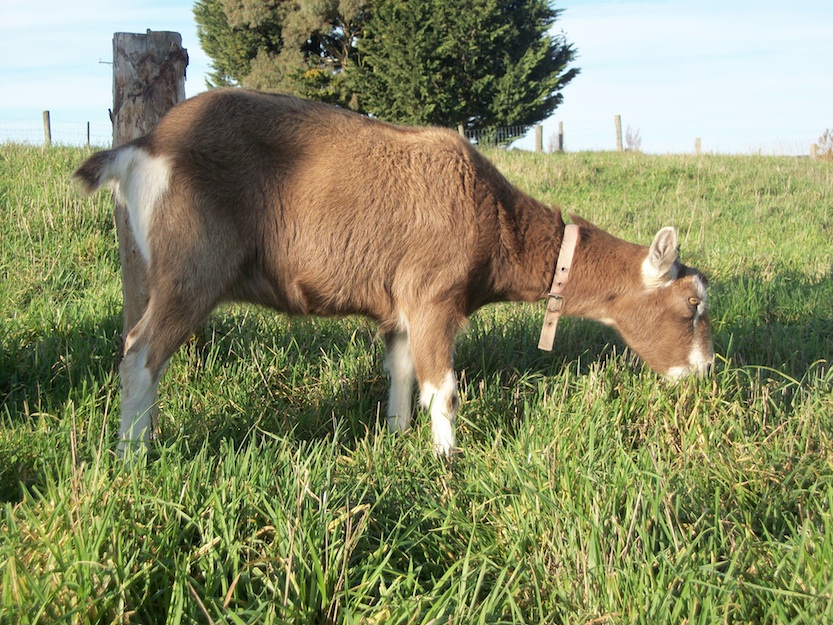
I’d just spent hours with a goat as she tried and failed to deliver a kid. I was covered in blood and dirt, and at the end of my midwifing skills.

The emergency after-hours vet—Olivia was on call yesterday evening—did a lovely job, but even she struggled to extract the huge dead buck stuck like a cork in my little Toggenburg doe.

While Olivia washed up, I deposited the dead kid in a bucket and wearily trudged out of the paddock with it, leaving my doe toked up on painkillers and antibiotics. I thanked the vet, smiled, and apologised for dragging her out on a Friday evening. I made small-talk as she filled out the paperwork. I signed the form.

All the while, what I wanted to do was cry. Out of exhaustion, out of compassion for what my doe had endured, out of sadness for the loss of a kid.

A real farmer.

Salad Spinner

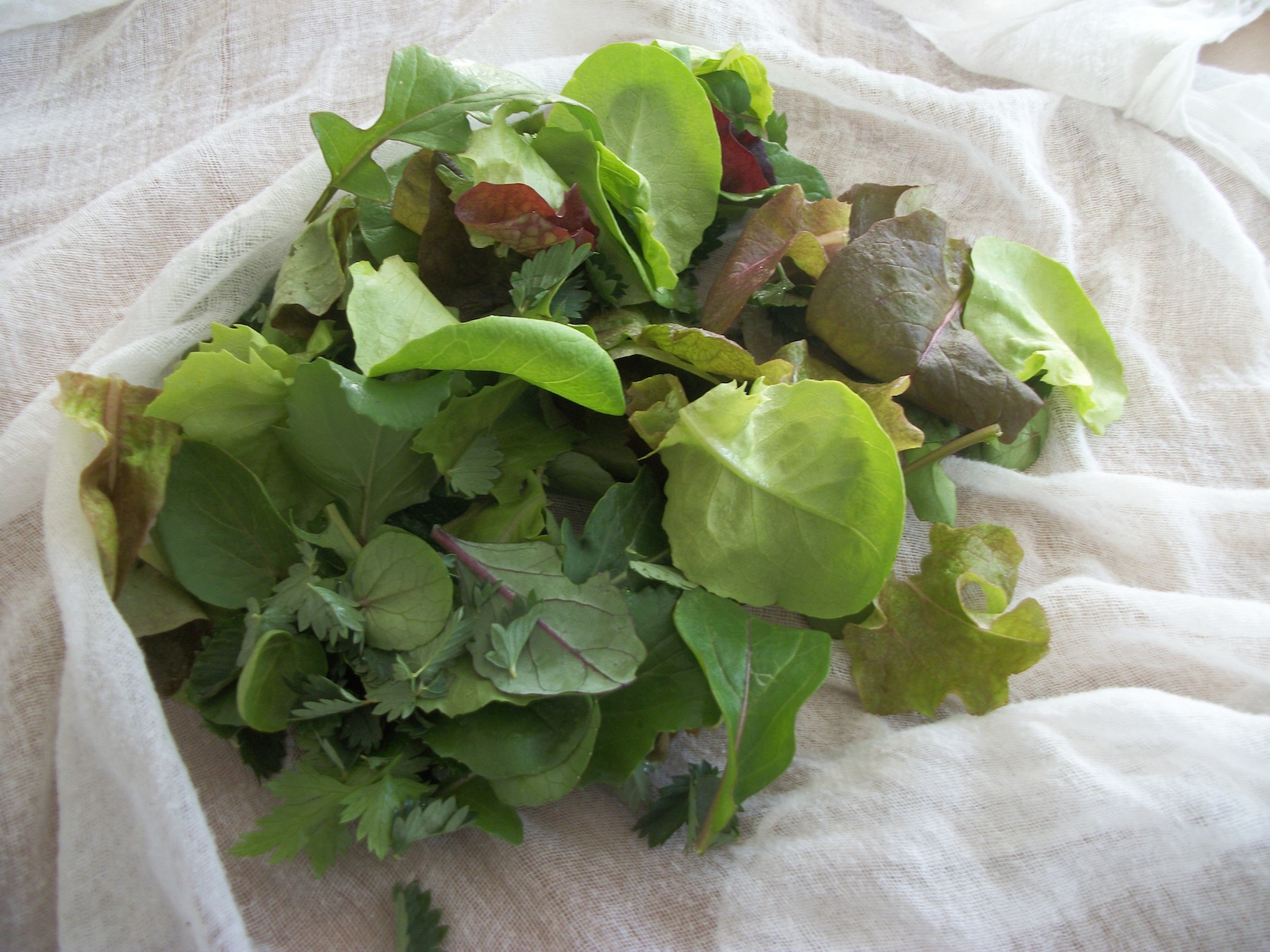
100_3890 smWe had our first salad from the new, spring-planted lettuces yesterday—a carnival of colours and flavours!

It got me thinking about salad, and the preparation of salad.

Which of course, led me to think about salad spinners.

Now, I don’t own a TV, so I don’t know if there are still salad spinner commercials, but I remember back in the 1980s when they were all the rage—fancy machines that spun your salad leaves dry. A quick Google search tells me that salad spinners are still out there, though whether they rank as such a gourmet sort of tool anymore or not, I have no idea.

Growing up, I never considered the water on my lettuce leaves. You washed it, gave it a good shake, and that was that.

But when I married, I found my husband prefers dry lettuce. I wasn’t about to buy a salad spinner, and I wasn’t going to put my lettuce in the spin cycle of the washing machine, as I’ve heard some people do (What?!).

Instead, we use a high-tech, oh-so-fancy way of spinning our salad.

Remember when you were a kid and you learned the trick where you swing a bucket full of water around without spilling a drop? Now, put your salad greens in a tea towel (I use my cheese cloths—they’re perfect!), hold onto the corners, step outside, and do the same. A few good twirls, and your salad greens are nicely dried.

Best of all, the kids LOVE doing it, especially if they get to spray a sibling with the water as they whip the towel around. One more dinner preparation task Mum doesn’t have to do!

Out of the Comfort Zone—Lavender Cupcakes

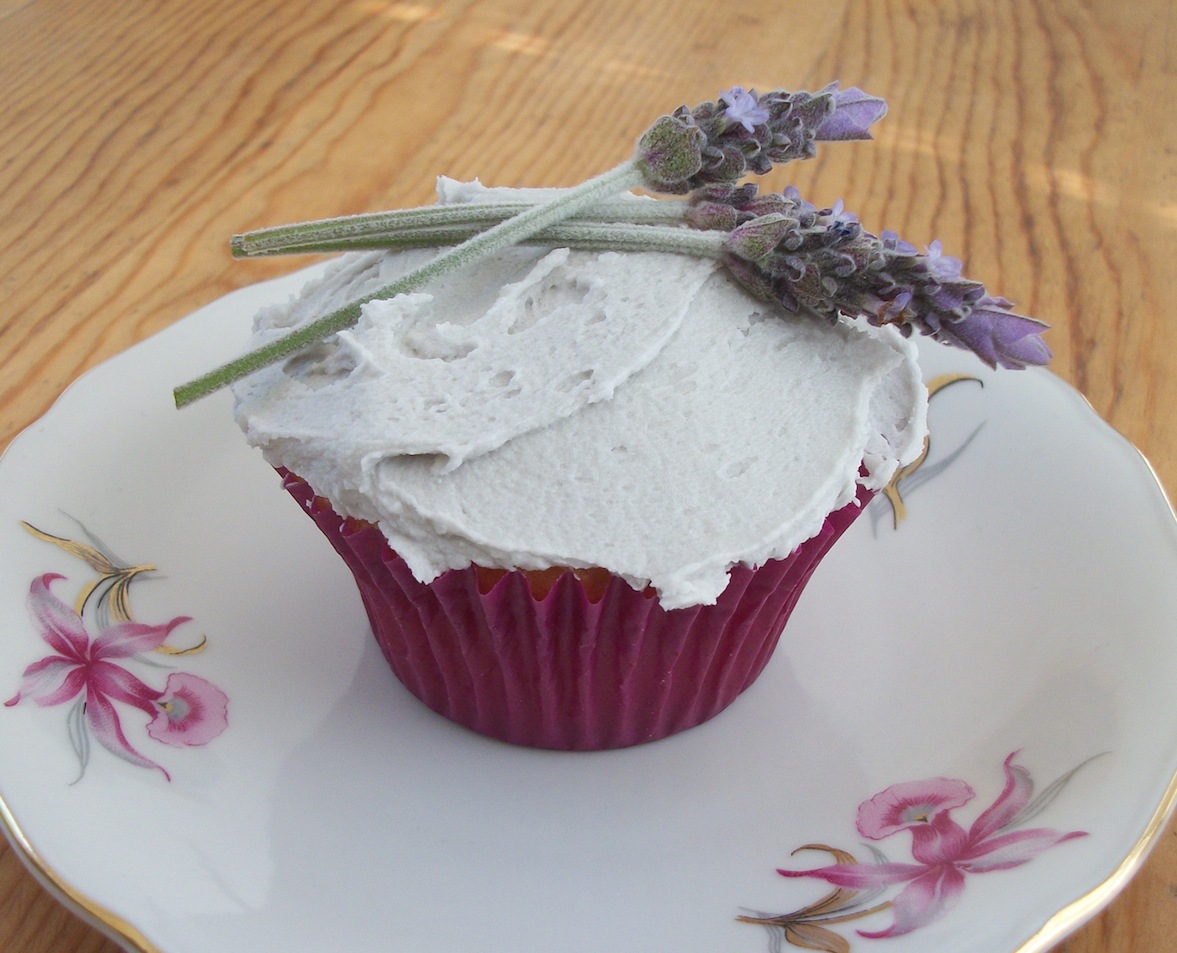
100_3879 cropsmAs with everything in life, the only way to grow is to move outside your comfort zone, to push yourself beyond your normal boundaries.

In that spirit, several months ago I photocopied a recipe for lavender cupcakes from a book I checked out of the library.

I had to wait until the lavender was flowering to make them, but today was the day.

I don’t generally like floral flavours, and lavender is an incredibly strong one. The only way I normally use lavender is as a small component of a fresh herb mixture I put on the outside of some of my cheeses. I’ve never used it as the only flavouring for anything.

I was intrigued, but dubious. Would the cupcakes even be edible? Who wants to munch on a lavender flower? Eaten directly, lavender flowers have an overpowering bitter resinous taste.

But then, so does rosemary, and I was won over to rosemary shortbread when my mother-in-law made it for us a few years ago.

I vowed to remain open-minded.

The cupcakes came out of the oven, and I iced them with lavender icing.

With some trepidation, we tried them.

“Peculiar,” said my daughter, a thoughtful look on her face. “Yes. Not bad, just…peculiar.”

I agree. This isn’t a recipe I will necessarily make again, but I’m glad I did it, at least once.

Fennel Salad

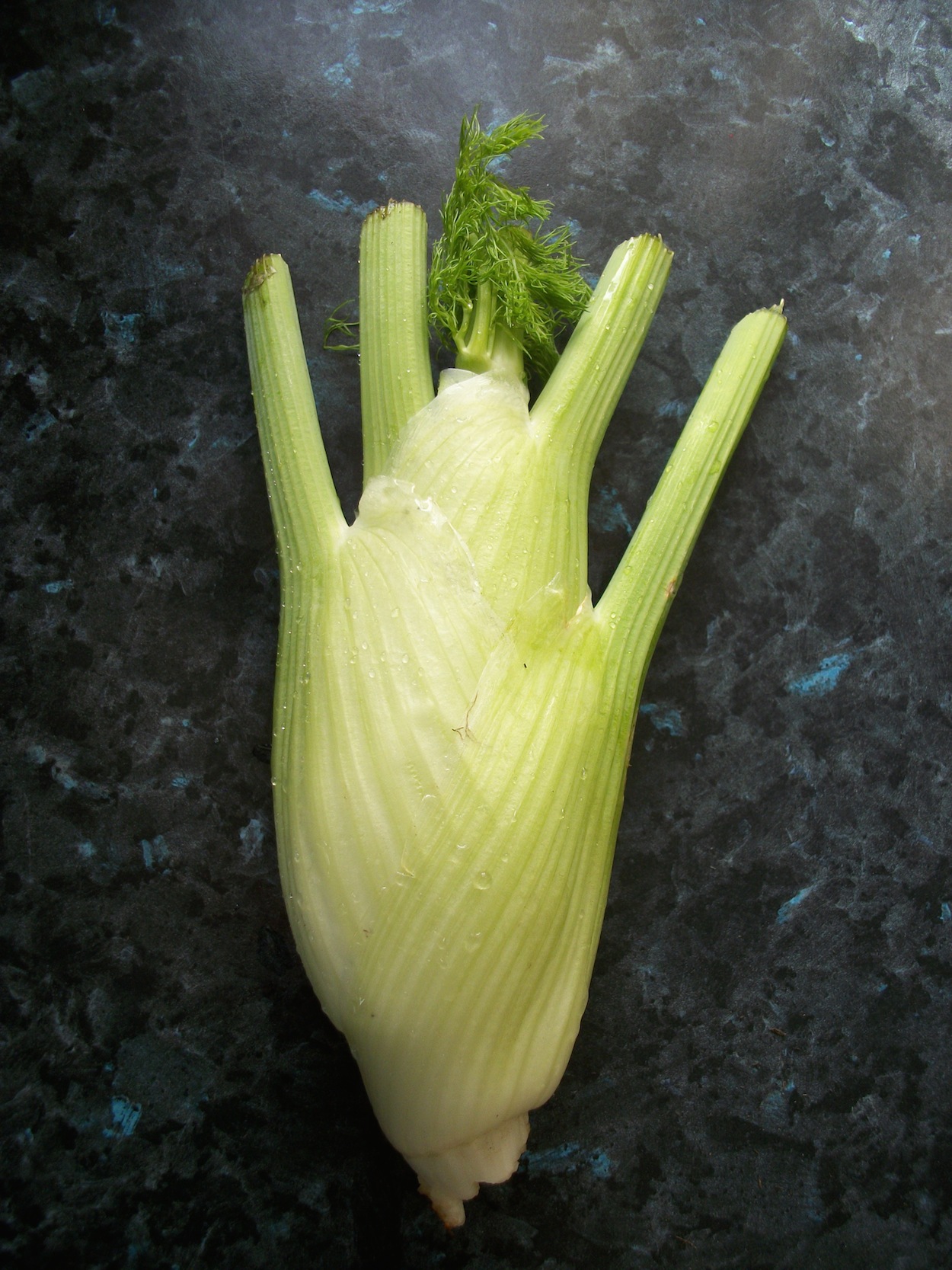
100_3864 smIn the course of clearing the winter weeds from the garden every spring, I always find some volunteer fennel that’s perfect for the picking.

With our summery weather this week, I decided to make a simple fennel salad with my find. It was perfect with a light pasta for a hot day, but would also be excellent as a side dish to lighten a heavy winter gratin.

4 fennel bulbs, plus a few fronds

4-5 sprigs flat-leaf parsley

1 ½ Tbsp each olive oil and white wine vinegar

salt and pepper to taste

Slice the fennel as thinly as possible, and coarsely chop a small amount of the frond. Pull the leaves off the parsley. Whisk together the oil and vinegar, and add salt and pepper to taste. Toss the fennel and parsley with the oil and vinegar.


Strawberry care

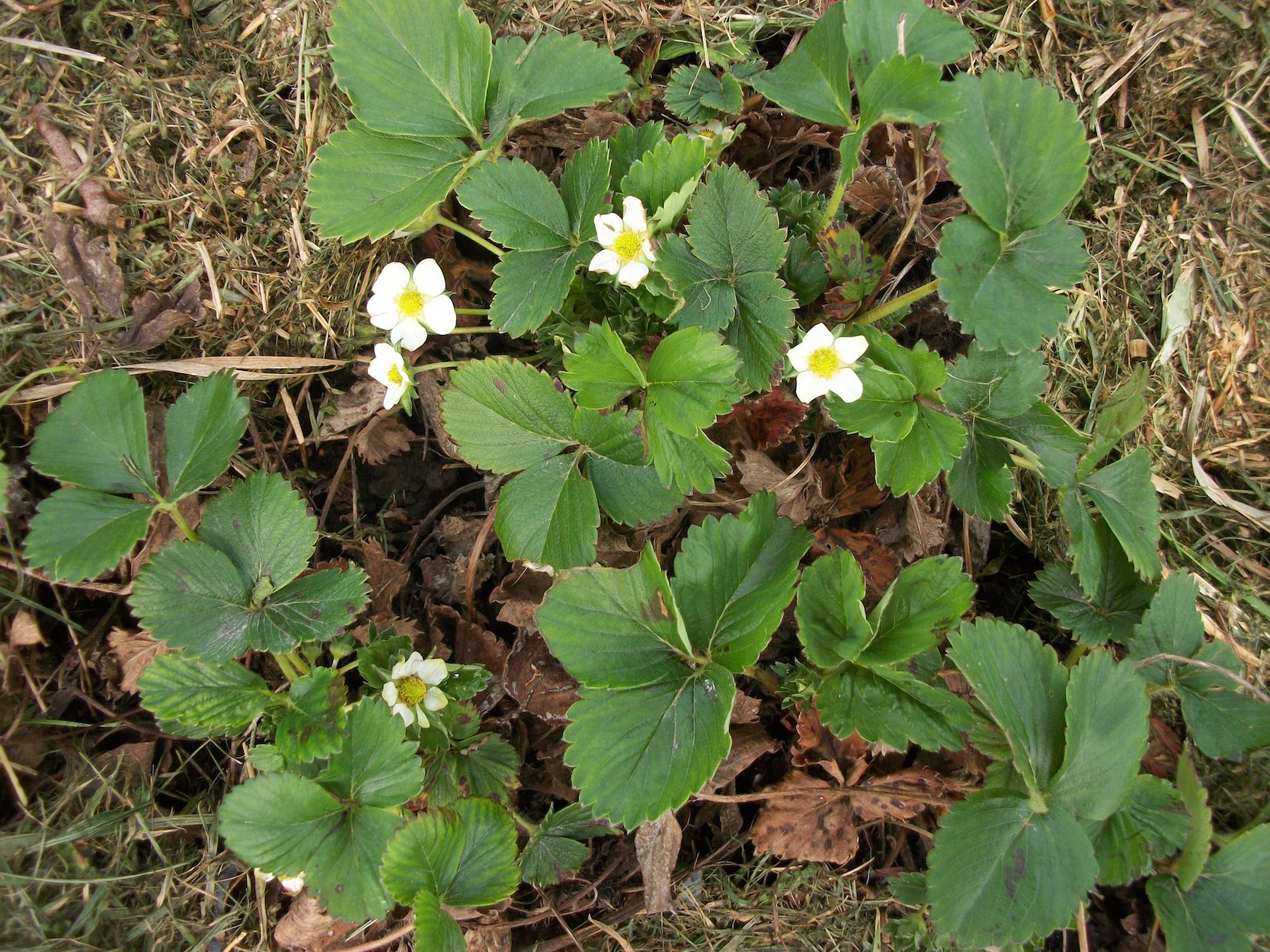
100_3855 smI have always been a strawberry-aholic (see my previous post about them). I just can’t get enough of those lovely sweet-tart gems! I’ve planted them most everywhere I’ve lived, and I appreciate the plants as much as I do the fruit.

Here at Crazy Corner Farm, I have a generous strawberry patch. Okay, okay, it’s ridiculously huge…*sigh* I admit I’m a problem strawberry eater. But anyway…

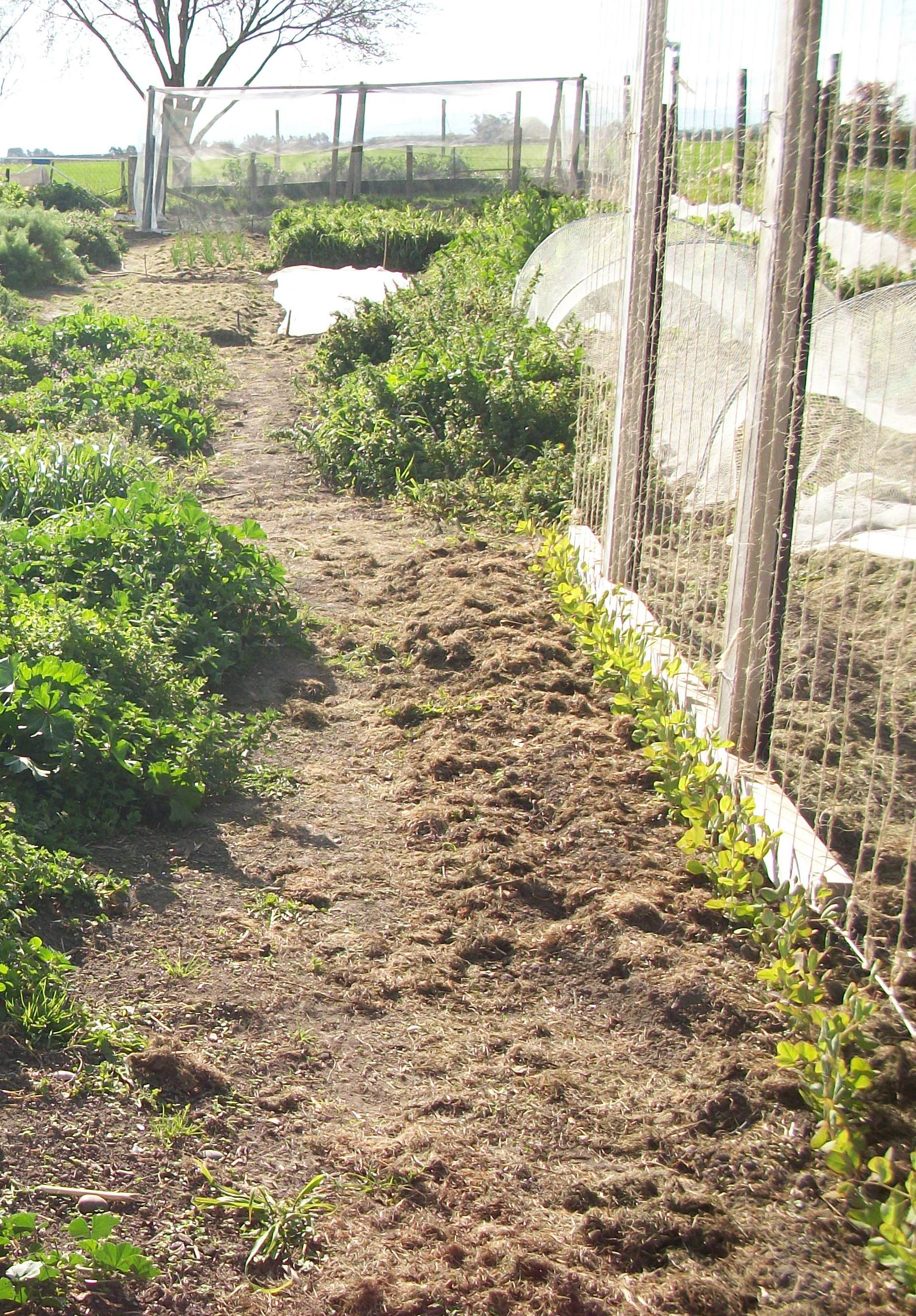
I have a dog’s breakfast of strawberry varieties, and I try to manage my strawberry patch to favour the ones I like best. Even so, I do precious little to the strawberries. I keep them weeded. I re-establish my paths every winter by digging out and replanting “stray” plants. I mulch them with grass clippings. I water them when they get particularly dry.

I don’t fertilise them, I don’t prune them, I don’t fluff their pillows and straighten their blankets.

No, for the most part, my strawberries are on their own.

Friends and acquaintances regularly ask me how I manage to grow such luscious strawberries, and in such quantity. They run down a long list of all the things they’re doing to their plants, and end it with, “But I’m just not getting many berries, and they’re not as good as yours.” I tell them my berries are so good because I abuse my plants.

My theory is that strawberries need to suffer a little. They need to have to fight for nutrients, they need to get a little thirsty now and again—not to extremes, of course, but if you coddle the plants too much, they’ll be bland.

I think it’s the same with people. We all need a little hardship in our lives, or else we turn bland, boring. In order to develop character, we need challenges on which to test our character. We need challenges in order to become the best we can be. Without them, we’d be as tasteless and dull as a supermarket strawberry.

Asparagus!

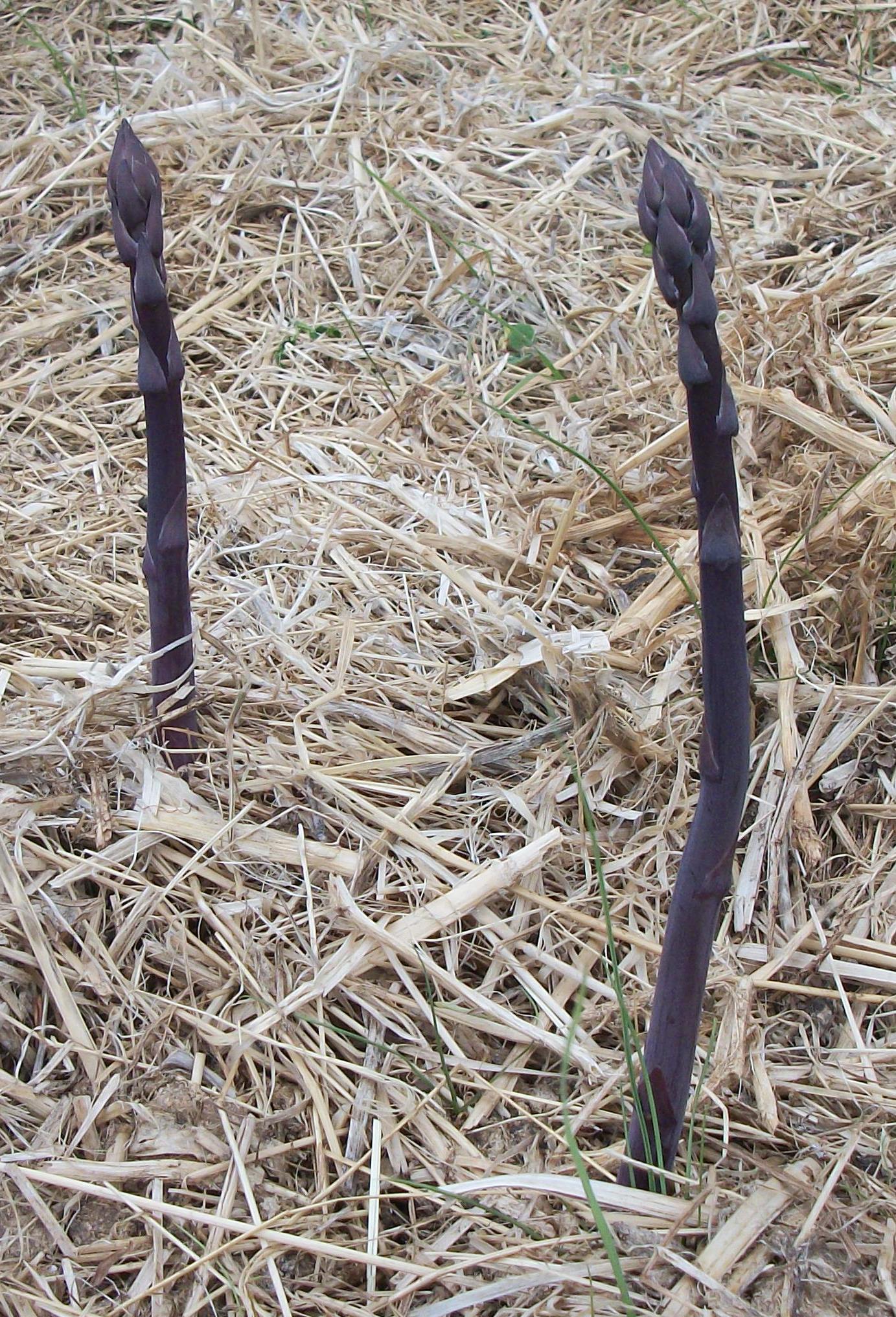
100_3847The long winter wait is over! The first of the spring crops is here! We’ve been watching carefully for weeks now, hoping, waiting…

And yesterday the first asparagus pushed up through the mulch (and, yes, these are purple asparagus. We have green, too). Asparagus and artichokes are the two perennial vegetable crops that get us through the end-of-winter gap. They always show up just in the nick of time (just a few freezer-burned bags of summer veggies left). That they are delicious, gourmet foods is a special bonus to the spring season. While we wait on the early lettuces, spinach, broad beans, and other crops, we will gorge on asparagus and artichokes.

Asparagus has been eaten for at least 5000 years, and I can imagine that it was an even more welcome springtime sight in the days before our modern food system did away with the lean periods of the year for many of the world’s inhabitants. Full of nutrients, it would have served to bolster people’s health in spring, just like the spring herbs like dandelion.

We always have plenty of food, with the supermarket making up any deficiencies in our own production, but we still feel that lean season. We crave fresh greens and fresh green vegetables. We’re tired of potatoes and pumpkin. So when the asparagus comes on and the artichokes begin to put up flower buds, it’s a cause for celebration.

So happy spring to everyone!