Everyday Beautiful

I don’t need an excuse to make cake, but today’s icy southerly gales were an excellent excuse, regardless.

I chose to make a devil’s food cake. I generally don’t ice ‘everyday’ cakes–too much work, and none of us needs the extra sugar. This intensely dark cake, though, cried out for something to show off it’s colour.

I filled it with gooseberry jam, and then made up a simple powdered sugar/lemon juice icing to drizzle over the top. The icing was purely for decoration.

Because every day deserves something beautiful.

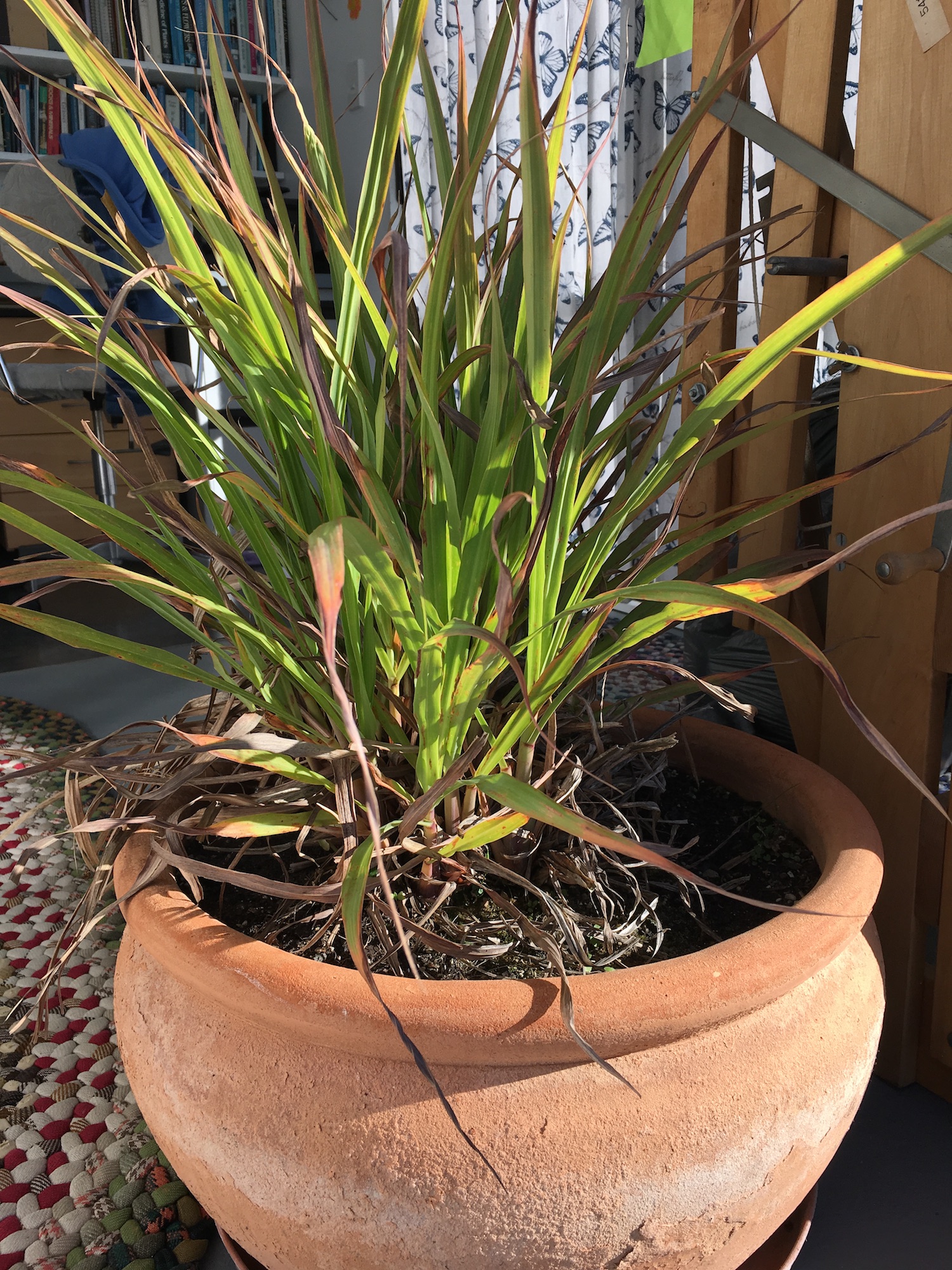
Lemongrass

I brought the lemongrass (Cymbopogon citratus) indoors last weekend. It’s not supposed to be able to handle freezing temperatures. It does, but it doesn’t like them. The one winter I left it outside, it died back to just a few well-protected shoots in the centre of the plant.

Thankfully, it doesn’t need much protection. My office is unheated at night, but it provides enough protection to keep the lemongrass alive.

We don’t use much lemongrass. Though its lemony flavour is nice, it doesn’t have the sourness of real lemon, so I find lemongrass tea too sweet.

However, we do occasionally use it in stir fries, marinades and salad dressings, where it imparts its lemony flavour alongside other, more sour ingredients. We were first introduced to its use in salad dressings by Yotam Ottolenghi’s wonderful cookbook Plenty (which I’ve mentioned before). His sweet winter slaw recipe calls for the following dressing:

100ml lime juice
1 lemongrass stalk, chopped
3 Tbsp maple syrup
2 Tbsp toasted sesame oil
1 tsp soy sauce
1/4 tsp chilli flakes
4 tbsp light olive oil or sunflower oil

Place all ingredients except the oil in a saucepan and boil for 5-10 minutes until thick and syrupy. Allow to cool, then strain. Whisk in the oil and toss with your salad.

It’s an excellent way to use lemongrass, pairing with salty, oily, and sour ingredients that enhance its flavour. It’s worth giving up office space to the plant, just for this dressing.

Pear Tart

Several kilos of beautiful pears in the house inspired pear tart for dessert last night. Taking inspiration from a few recipes, I came up with the following. It was lovely!

Peel, core, and slice 4 large pears.

Combine and sprinkle over the pears:
1/4c flour
3 Tbsp sugar
3/4 tsp cinnamon
1/4 tsp nutmeg
1/8 tsp cloves

Toss pears with flour mixture until evenly coated.

Make your favourite pie crust recipe—enough for a one-crust pie. Roll the crust into a large round (about 15 in/38 cm in diameter) and place on a baking sheet.

Arrange the pear slices in the middle of the crust, leaving about 5 cm/2 in around the edge. Bonus points if you can make a pretty spiral, but it tastes the same either way. Pour any remaining juice over the top, then fold the edge of the crust up and over the pears.

Bake at 190ÂşC (375ÂşF) for about 40 minutes. Allow to cool at least 15 minutes before cutting.

**Pears are incredibly sweet, and though this tart was divine, I like a little tartness in my tarts. Next time I will add some grated lemon peel to the filling or serve it with yogurt.

Colours of Autumn

Growing up in eastern North America, autumn meant colourful leaves, fading to brown, bare branches. Green fields gave way to gold, then brown.

So it was a lovely surprise to find when we first moved here that in Canterbury, the opposite is true. Summer has its green bits, but because there is little summer rainfall, the summer landscape is predominantly brown.

But with autumn come cooler temperatures and more rain. Grass begins to grow again. Plants that were dormant through summer sprout new leaves. Autumn is a time of lush green—a time of life, not death.

For certain, the days are shortening, and the growth won’t last. Soon there won’t be enough sunlight hours to fuel plant growth. But winters are mild, and the green will remain all the way through until spring.

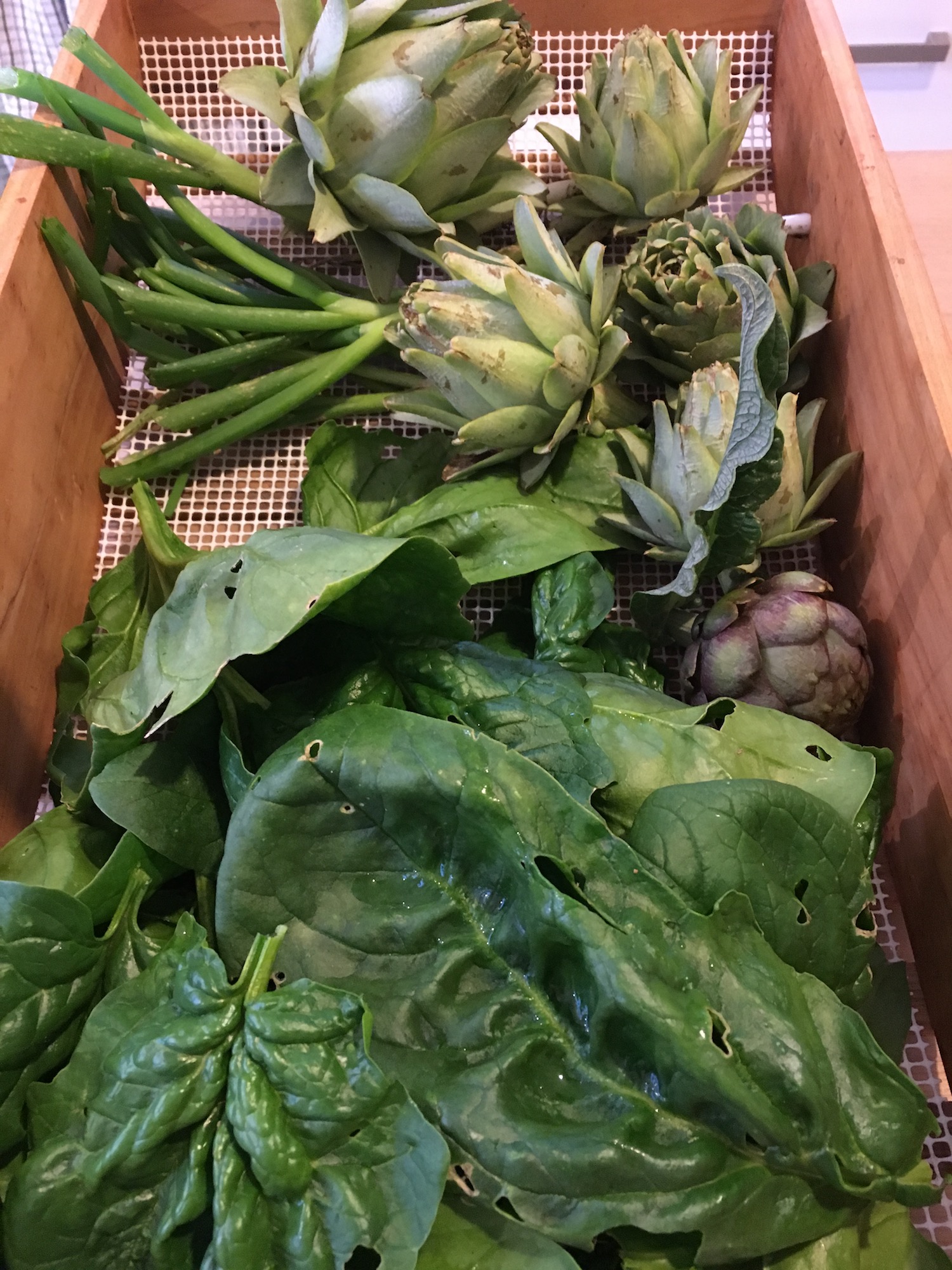
Today I picked a basket of autumn crops for dinner—all in shades of green.

Recipes from Real Kitchens

I made quince paste today, using a recipe written out for me by the neighbour who first introduced me to the fruit. There are countless recipes for quince paste online, and they’re all similar. But the recipe I use is something special. Though it doesn’t diverge much from other recipes, the rambling missive concludes by saying the paste is ready when it “parts like the red sea” around the spoon as you stir.

You just don’t find descriptions like that in proper cookbooks. All the character has been edited out by the time a cookbook goes to print. All the personality in a recipe has been smothered by detailed directions and precise quantities, honed in spotless test kitchens.

Cooking in real life is never quite so orderly or linear as it is presented in cook books. Personal and family recipes reflect that reality.

A recipe from my husband’s family has you form cookie dough into long rolls and refrigerate it overnight. Then it simply says “Bake in hot oven.” As an afterthought, it says “Note–cut slices off roll.”

As I flip through my own handwritten recipes for dishes I’ve invented or modified, I find similar directions that would never pass muster with an editor. For parslied tomato soup, I wrote, “simmer until tomatoes disintegrate and consistency is souplike.”

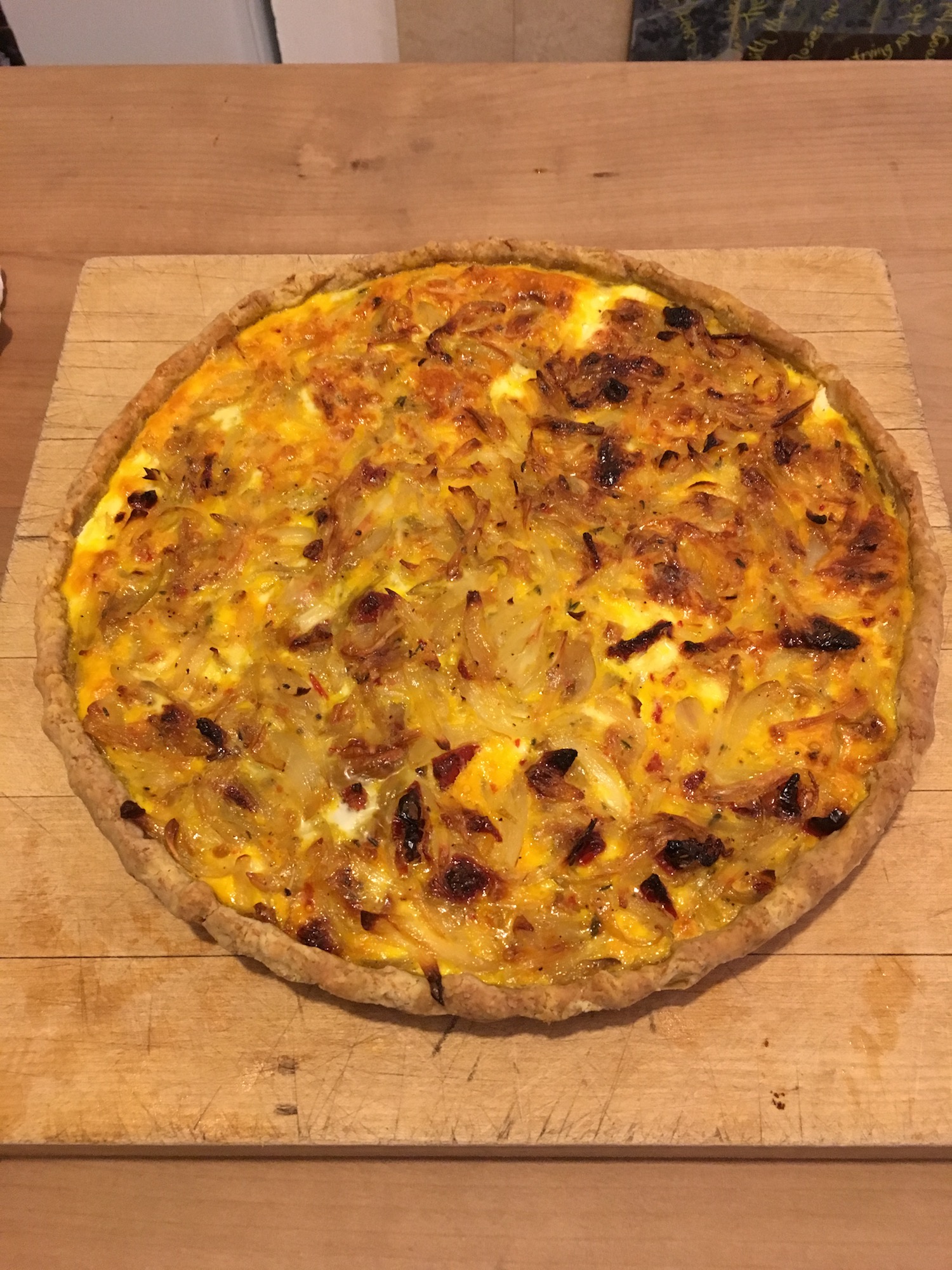
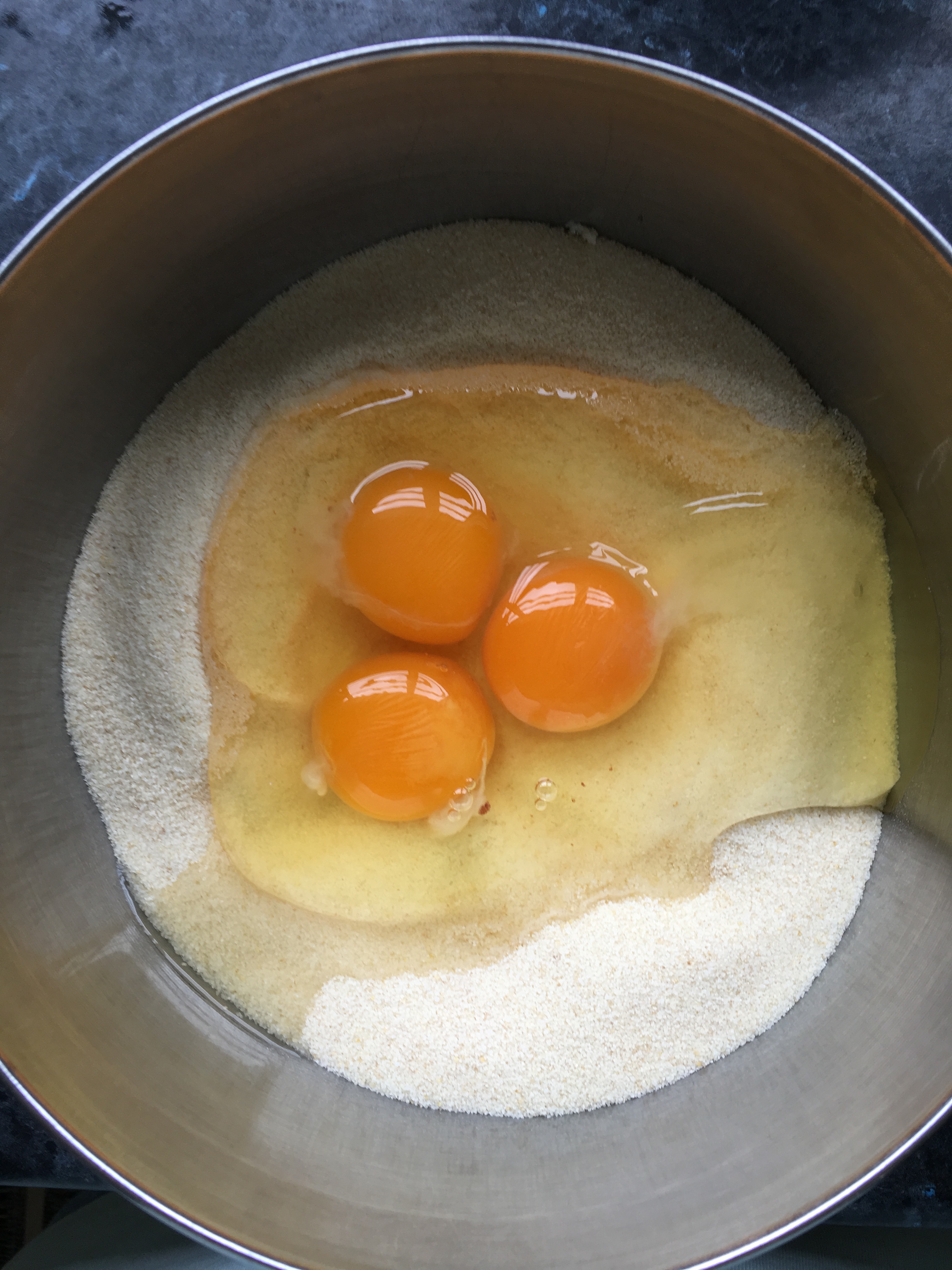
Then there’s the recipe for lasagna noodles. In it’s entirety, “3 c. semolina + 2 eggs.” And the spinach feta quiche recipe which states the quantity of fresh spinach needed as “fill dish pan to overflowing”. And the pizza dough recipe that calls for a “bit of honey.”

I’ve sometimes considered creating a proper cookbook from my recipes, but then I look at my scribbled notes and think that, to form them into recipes that would pass an editor’s muster, I would have to destroy their spirit.

So, here’s to all those messy, scribbled recipes, passed from person to person and written for real kitchens. May they never be constrained by the covers of a book.

Whole Wheat Bread

I ran across this photo today–one I took several years ago–and thought it was worth sharing.

Most of the bread my husband bakes is utilitarian. It’s beautiful but, since he bakes two dozen loaves at a time, he necessarily can’t take a lot of time on each loaf. So he sticks with the tried-and-true bread shapes that are quick to form, and take advantage of the different stages of heat in our wood-fired bread oven.

But now and again, he makes different shapes. This one is simple and clever to form. The dough is rolled out into a long, flat shape, then slashed through at regular intervals down one side, leaving just a small edge uncut on the opposite side. Flip every other ‘flap’ created by the slashes to the opposite side, and when the bread is baked, the loaf resembles a stalk of wheat.

Simple and beautiful. The bread is perfect for parties, because it’s easy to tear off individual ‘grains’ from the stalk–it’s practically pre-sliced.


Homemade Pasta

2 1/4 cups of flour
3 eggs

It is one of the simplest ingredient lists ever. It is the recipe for homemade pasta.

I don’t make pasta often–maybe once every two months or so–but it’s always a pleasure to eat homemade noodles. With such a short ingredient list, I should probably make them more often, but there’s more to a recipe than the ingredients.

There’s a learning curve to pasta. It takes patience to master the feel of the dough–to know when to add just a little more flour, or when to stop kneading it and start rolling it thin.

I used to stress about making pasta. I found it quite frustrating. It was always too wet or too dry. It ripped when I tried rolling it through the pasta machine, or it wouldn’t go through at all. It became too elastic and chewy. It seemed everything that could go wrong did.

I’ve learned a lot about handling the dough through making mistakes. But I think the most important thing I’ve learned is to have patience–with the dough and with myself.

The dough will behave badly. I must accept that and have patience, working with it until it starts to feel just right, and not getting upset when it takes longer than I want it to.

Once I think the dough is perfect, it will prove me wrong, and tear as it is rolled thin. I must accept this, set the offending dough aside to rest for a few minutes, then try again.

Even the most perfect noodles will clump, or break, or otherwise be marred before they are cooked. I must accept this, and cook them anyway–they’re going to be chewed up and swallowed, and no one but me will pay attention to whether they have been broken beforehand.

Making homemade noodles is a luxury and a privilege. Not everyone has the opportunity to do so. I must accept this, appreciate this, recognise that I do this because I enjoy it, not because I have to. Even if it goes badly, it need not cause me stress. Even if I struggle with it, the end result will be delicious.

Garden Rescue Mission

A southerly storm blew through yesterday, and the clouds cleared around midday today. The sun was warm this afternoon, but the wind remained chilly. This evening was clear and still. Perfect conditions for a frost.

There are few summer vegetables left at this point. The tomatoes outside the greenhouse are all dead. The peppers and eggplants are ripening their final fruits, the zucchinis and cucumbers are maturing at a tiny size. The corn has all been eaten, and the runner beans are giving just a handful every few days.

A frost will kill everything left in the summer garden, so I went on a rescue mission this evening. I gathered in everything that was still decent, whether it was fully ripe yet or not, assuming that anything left in the garden will be dead by morning.

It felt oddly good.

It’s not that I won’t miss the fresh tomatoes and eggplants of summer, but I also look forward to the pumpkins, potatoes, and beans of winter. As they say, variety is the spice of life. I would say that seasonality is the spice of life. Food marks the course of the year, and each crop has its own time. It gives the year variety and interest. It gives us things to look forward to with each season.

So, while I mount my summer vegetable rescue mission, I don’t worry about the loss of those summer crops. There are other delights to come.

Going Overboard

I know people for whom to spend half an hour preparing dinner is an unthinkable chore.

I don’t understand those people.

Don’t get me wrong, I totally understand the got-home-late-from-some-after-school-activity sort of feeling. The days when we know we’ll be coming in late and hungry, I pull something out of the freezer that needs only a few minutes in the microwave.

But on ‘normal’ days, making dinner is a way to make every day special. If it takes an hour to do that, who cares? An hour spent nurturing my family is an hour well-spent, in my mind. And if, some days, that hour expands to two or three…well, I at least make sure on those days I’m making enough to put a meal or two in the freezer for when I need an instant meal.

I also don’t mind going overboard now and again on dinner, because our family has a culture of food appreciation. From an early age, the kids learned to appreciate new flavours, interesting textures, and the culinary effort it takes to create a meal. If I spend two hours making dinner, I know the people who eat it will appreciate the extra effort. I know they will recognise it as one of the ways I show my love for them–a culinary hug. As teenagers, they resist real hugs, but they love a good culinary hug. It’s not just conditioning that they thank the cook at each meal–they actually mean it.

So if I go a bit overboard sometimes…well, you can never have too many culinary hugs.

Coloured Cornmeal

Our beautiful Painted Mountain corn is fully dry. Today my son and I ground enough to make corn chips.

It ground quite nicely in our coffee grinder (well-cleaned, first). I was a bit disappointed to note that the interior of the kernels was white. The resulting cornmeal wasn’t the rosy colour I’d hoped. Instead it was flecked with colour–confetti cornmeal.

The resulting corn chips were delicious. Right out of the oven, the taste was reminiscent of popcorn, but fully cooled, the popcorn flavour diminished.

Were they better than corn chips made with commercial cornmeal? The jury is out. I think we need to do side-by-side taste testing to determine which is better. I suspect my family will be thrilled to oblige. We might just have to have a chip and dip party (ooh, this gets better and better).

Am I happy I planted Painted Mountain corn? Absolutely! My son is grinding the next batch of meal as I type, and we’re looking forward to trying it in all manner of dishes. Maybe the taste will be no different from commercial cornmeal, but we will know it came from our garden, and that will make it taste twice as good.