Garden Rescue Mission

A southerly storm blew through yesterday, and the clouds cleared around midday today. The sun was warm this afternoon, but the wind remained chilly. This evening was clear and still. Perfect conditions for a frost.

There are few summer vegetables left at this point. The tomatoes outside the greenhouse are all dead. The peppers and eggplants are ripening their final fruits, the zucchinis and cucumbers are maturing at a tiny size. The corn has all been eaten, and the runner beans are giving just a handful every few days.

A frost will kill everything left in the summer garden, so I went on a rescue mission this evening. I gathered in everything that was still decent, whether it was fully ripe yet or not, assuming that anything left in the garden will be dead by morning.

It felt oddly good.

It’s not that I won’t miss the fresh tomatoes and eggplants of summer, but I also look forward to the pumpkins, potatoes, and beans of winter. As they say, variety is the spice of life. I would say that seasonality is the spice of life. Food marks the course of the year, and each crop has its own time. It gives the year variety and interest. It gives us things to look forward to with each season.

So, while I mount my summer vegetable rescue mission, I don’t worry about the loss of those summer crops. There are other delights to come.

Going Overboard

I know people for whom to spend half an hour preparing dinner is an unthinkable chore.

I don’t understand those people.

Don’t get me wrong, I totally understand the got-home-late-from-some-after-school-activity sort of feeling. The days when we know we’ll be coming in late and hungry, I pull something out of the freezer that needs only a few minutes in the microwave.

But on ‘normal’ days, making dinner is a way to make every day special. If it takes an hour to do that, who cares? An hour spent nurturing my family is an hour well-spent, in my mind. And if, some days, that hour expands to two or three…well, I at least make sure on those days I’m making enough to put a meal or two in the freezer for when I need an instant meal.

I also don’t mind going overboard now and again on dinner, because our family has a culture of food appreciation. From an early age, the kids learned to appreciate new flavours, interesting textures, and the culinary effort it takes to create a meal. If I spend two hours making dinner, I know the people who eat it will appreciate the extra effort. I know they will recognise it as one of the ways I show my love for them–a culinary hug. As teenagers, they resist real hugs, but they love a good culinary hug. It’s not just conditioning that they thank the cook at each meal–they actually mean it.

So if I go a bit overboard sometimes…well, you can never have too many culinary hugs.

Coloured Cornmeal

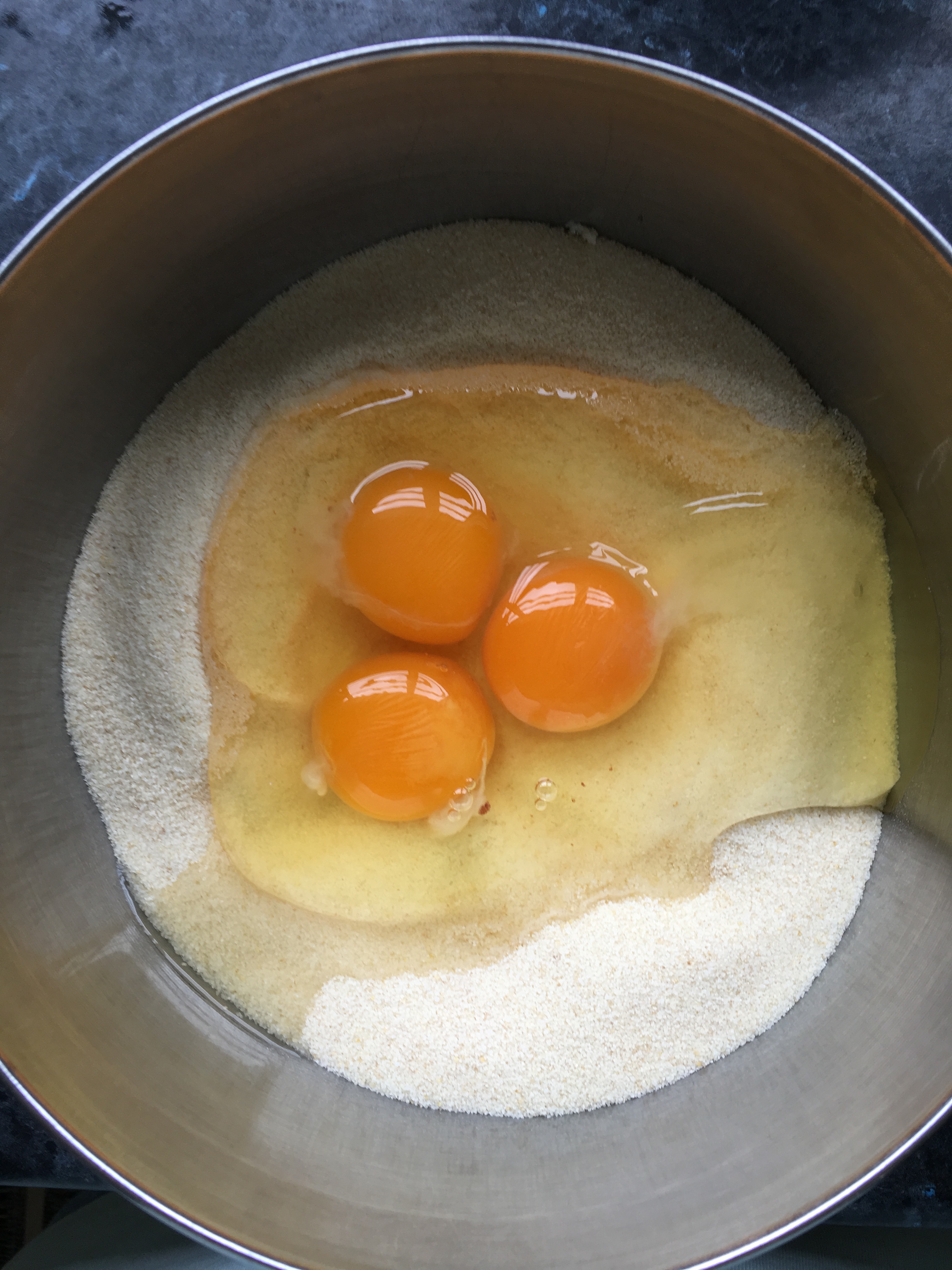
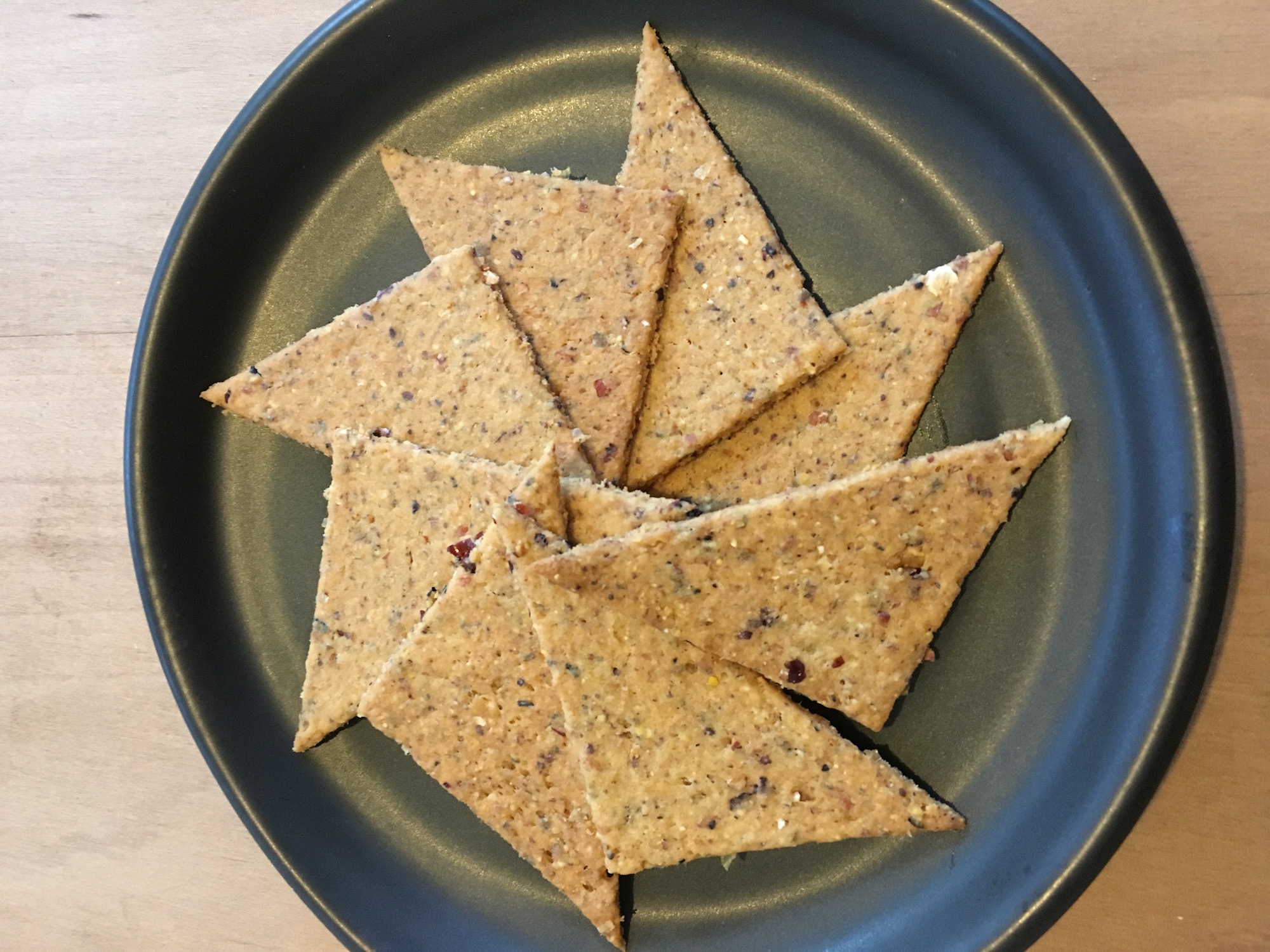
Our beautiful Painted Mountain corn is fully dry. Today my son and I ground enough to make corn chips.

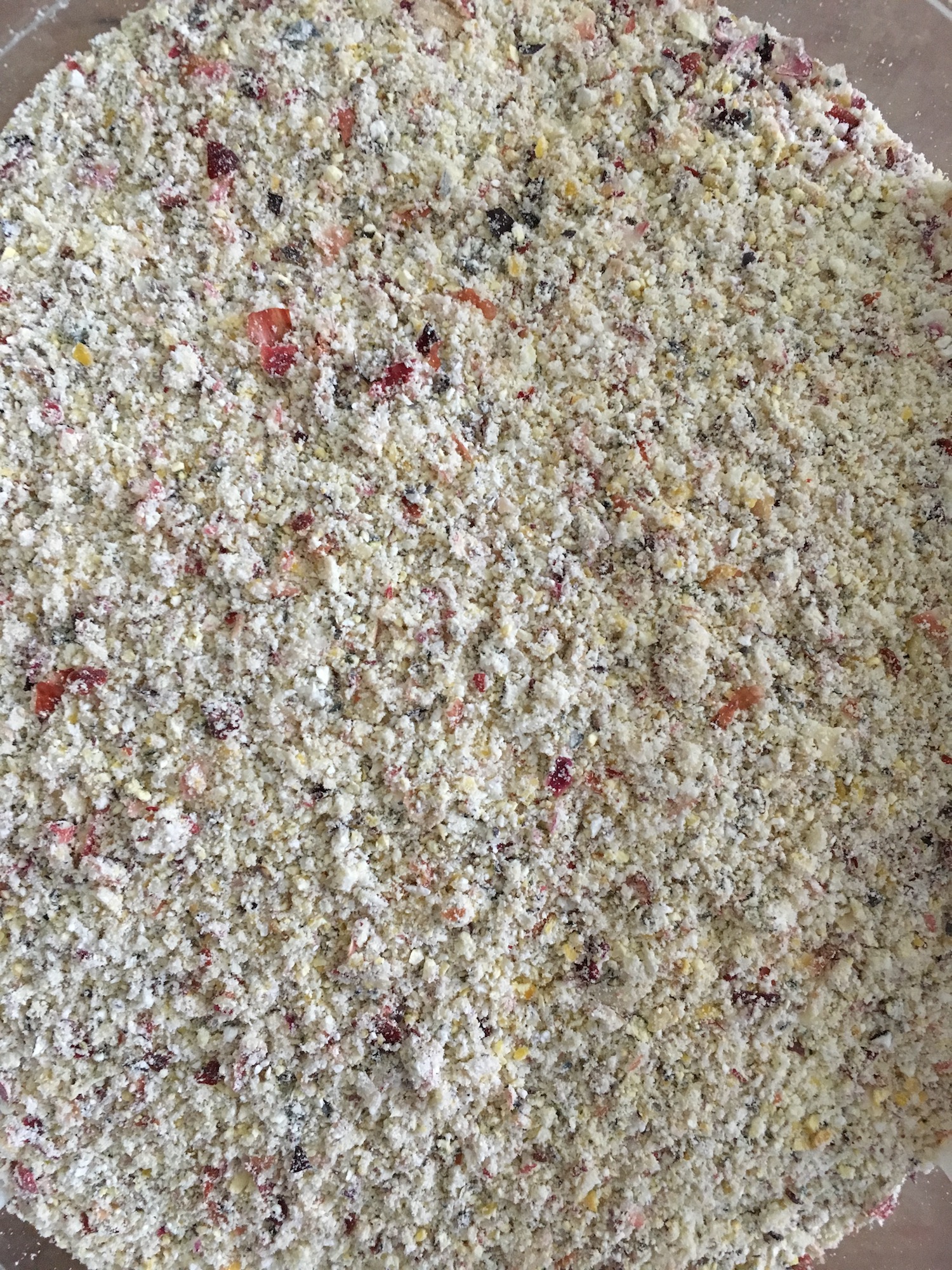
It ground quite nicely in our coffee grinder (well-cleaned, first). I was a bit disappointed to note that the interior of the kernels was white. The resulting cornmeal wasn’t the rosy colour I’d hoped. Instead it was flecked with colour–confetti cornmeal.

The resulting corn chips were delicious. Right out of the oven, the taste was reminiscent of popcorn, but fully cooled, the popcorn flavour diminished.

Were they better than corn chips made with commercial cornmeal? The jury is out. I think we need to do side-by-side taste testing to determine which is better. I suspect my family will be thrilled to oblige. We might just have to have a chip and dip party (ooh, this gets better and better).

Am I happy I planted Painted Mountain corn? Absolutely! My son is grinding the next batch of meal as I type, and we’re looking forward to trying it in all manner of dishes. Maybe the taste will be no different from commercial cornmeal, but we will know it came from our garden, and that will make it taste twice as good.

Haloumi

I admit, it’s taken me eleven years of cheese-making to finally decide to make haloumi. I needed a cheese that would keep, but didn’t require several days of salting/turning/etc. Haloumi met that description.

I’d never made it because the processing time (for a proper, cultured haloumi) is so long and, frankly, the result is quite like paneer, which I can whip up in no time.

From a 7.00 am start, I finally put the finished cheese in the fridge at 3.45 pm. Hours of stirring, pressing, simmering, and salting.

We enjoyed some of it this evening, fried and served over a lovely warm salad of lentils and quinoa. The salad included salted lemons (which I blogged about back in September last year) which were just the right flavour with the cheese, pulses and quinoa.

A side of baked pumpkin slices rounded out the meal to perfection.

Truly delicious.

But will I make haloumi again? Maybe.

Traditional Easter Jack-o-lantern

The traditional Northern Hemisphere holidays make absolutely no sense here. Easter falls at the Northern Hemisphere seasonal equivalent of mid-October. So a celebration of spring flowers, new-season’s growth, resurrection, etc. just doesn’t work.

We’ve just brought in the last of the harvest–pumpkins, apples, popcorn. The only summer crops left are those in the greenhouse, and they won’t be around much longer, either. Trees are losing their leaves. We’ve brought out the candles, and dream of sitting by a crackling fire in the coming months. Clearly, painted eggs, bunnies, and spring flowers are inappropriate.

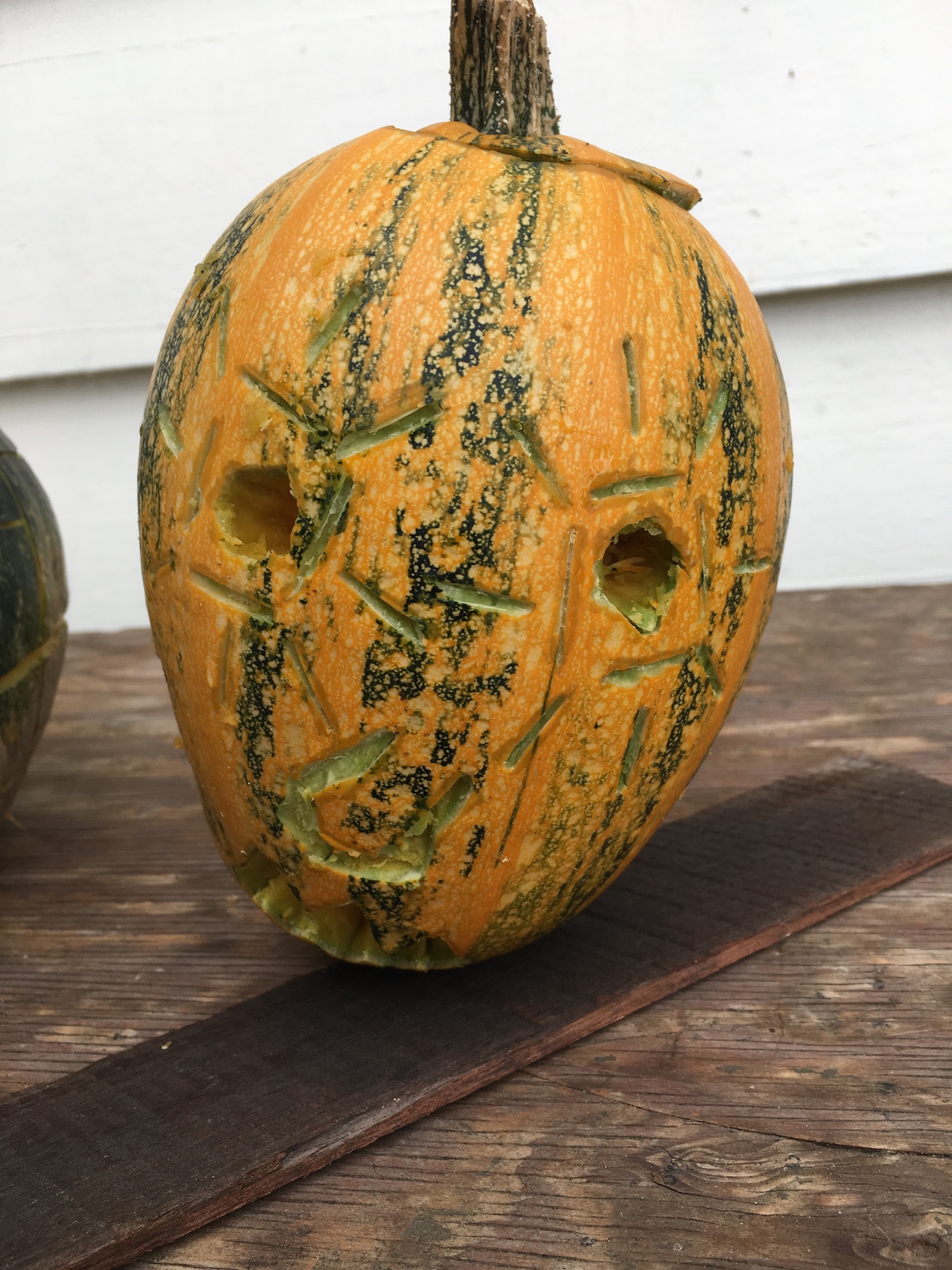
So I introduce the traditional Easter Jack-o-lantern. Carved while snacking on roasted pumpkin seeds.

Great fun for the kids, and better for them than chocolate bunnies!

Apple Dumplings!

I only make them once a year–any more frequently and they would be a serious health hazard. Eating an entire apple dumpling must be one of the seven deadly sins–each one is about a week’s worth of dessert.

Yesterday was the annual dumpling-fest. I loosely use the apple dumpling recipe from the 1997 edition of Joy of Cooking. The recipe involves what you would expect–peel and core your apples, stuff them with a butter/sugar/spice mixture, and wrap them in pastry dough–but the coup de grace of this recipe is the basting syrup.

Yes, these apple bombs are basted as they bake, giving them a crusty glaze on top. The syrup is a mix of sugar, water, butter, and spices, as you might expect. But boiled along with these is a whole lemon, sliced thinly.

The lemon lends a wonderful tang to a dish that could easily end up too sweet.

Add a generous dollop of whipped cream, drizzle the extra basting syrup on top, and you have the best apple dumpling ever.

A Tale of Two Walnuts

We have two walnut trees, both of them young. The older of the two gave us a few walnuts last year and one the year before. This year it gave us several good handfuls of nuts.

That’s not anywhere close to satisfying our annual walnut consumption. We put walnuts in granola, baked goods, burgers, tofu meatballs, and rice pilaf, among other things. We eat them as snacks, too, and I buy them in kilo-sized bags.

But walnuts here are all the mild English walnut (Juglans regia). They’re a good staple, but somewhat tame. Not something to feature in a dish.

Not like American walnuts (Juglans nigra). To me, these are the true walnuts–piney-flavoured and bitter, difficult to shell, with thick green husks that leave your fingers black. There aren’t many foods from the US that I miss anymore, but American walnuts are one of them.

When I was a kid, every Christmas my mother made walnut crescents–moon-shaped shortbread cookies packed with American walnuts and rolled in confectioner’s sugar. They melted on the tongue, and burst with nutty flavour. I made the mistake of making these with English walnuts once. They were vapid little sugar bombs. Not at all like real walnut crescents.

I have looked high and low for American walnuts here in New Zealand, with no luck. One time I saw a label in the grocery story saying “American walnuts”, and I was thrilled. Then I looked at what they were selling. The nuts weren’t American walnuts, they were English walnuts grown in America.

So I buy the cultured, mild-mannered English variety and dream of the wild, brash variety of my homeland.

Rich in Mushrooms

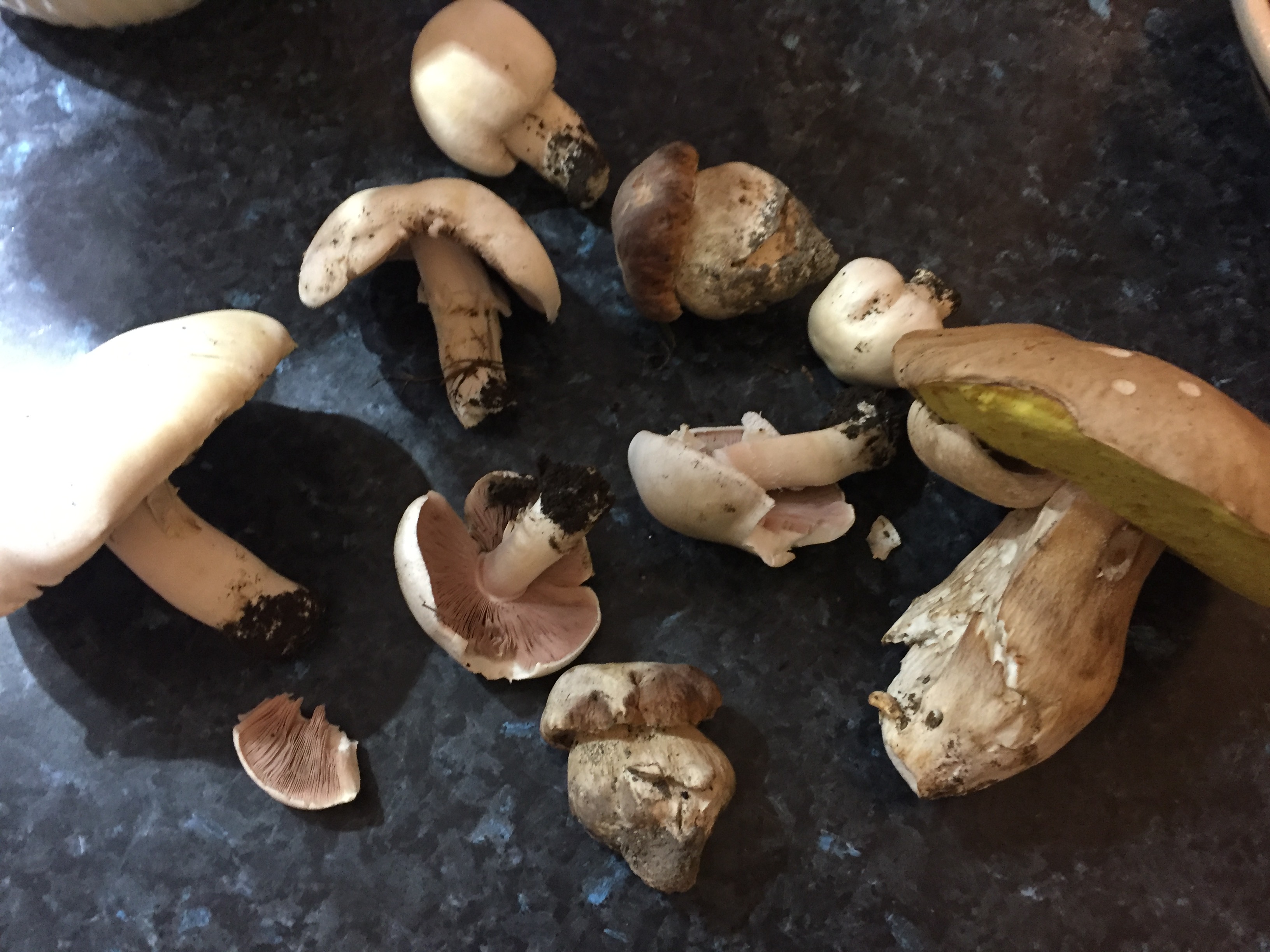
I come to the computer under the delightful glow of my third meal of wild mushrooms in the past two days. As I mentioned a few days ago, the recent deluge has brought all the fungi out to play.

Agaricus arvensis and Boletus edulis are this week’s two wild additions to our meals. Their rich, earthy flavours have topped burgers and adorned home made pasta (because how can you possibly serve such wonderful mushrooms on store-bought pasta?)

There’s no doubt I love these wild mushrooms for their flavours, but I also appreciate them for their provenance. There’s something satisfying and primal about foraging for dinner. And it becomes even more satisfying when you consider these mushrooms can retail for $40/lb ($88/kg) in the US, if you can get them at all.

I smile to think that the dinner we’ve just eaten might have easily cost $30 to $40 a plate in a restaurant. But with wild-picked mushrooms, vegetables from the garden, and home made pasta (made with eggs from our own chickens), we spent well under $1 per person (and we all had seconds, and there are leftovers for tomorrow’s lunch). It’s no wonder we feel far wealthier than we actually are.

Indeed, you’d be hard-pressed to buy such a meal at any price, with vegetables just minutes out of the garden, eggs laid today, and obscene quantities of gourmet mushrooms. I almost feel sorry for rich people. All they have is money.


Apple Ring Pancakes

My husband mentioned he’d seen apple ring pancakes on the internet the other day, so I had to try them. I’m sorry I can’t attribute this idea to someone in particular, because I never actually saw the page. It’s a great idea, though.

To make mine, I started with a double batch of my usual World Famous Pancake Recipe, and added a teaspoon of cinnamon and half a teaspoon of cloves to the batter. You want a thick batter, to cling to the apples.

I peeled, cored, and sliced into rings four apples.

To make the pancakes, I dipped each apple ring into the batter and laid it on the hot skillet. My skillet was too hot at first, and I was having trouble getting them cooked through without burning on the outside–they’re thicker than normal pancakes. But even the dark ones were delicious.

Fun to make and fun to eat. I’ll definitely be making these again.

Apple Season

This year’s apple harvest was small, but unlike last year’s, it ripened on the tree instead of being blown off before it was ready, so the quality is good, even if the volume isn’t.

Truthfully, I’m thankful there aren’t too many apples to deal with. We’ve run out of canning jars and freezer space, so I’m not sure what I’d do with them if I had more.

So I’ve been considering how to process the fruits to encourage us to eat a lot of apples.

Naturally, apple pie is near the top of my list. Last year, with vast quantities of apples, I came across a particularly nice apple pie recipe that allows you to pack more fruit into a pie by pre-cooking the apples slightly. The recipe indicated it was a good way to avoid the empty space between fruit and upper crust that’s so common in apple pie, but I took it as an invitation to add more apples. And who could resist a thick, dense apple pie? Maybe with a little whipped cream?

Here’s the recipe, paraphrased from the 1997 edition of Joy of Cooking:

Make your favourite pie crust–enough for a double crust pie.

Roll out half the dough and fit it into a 9-inch (23 cm) pie pan. Roll out the other half of the dough. Refrigerate both until you’re ready to use them.

Peel, core and slice 3 pounds (about 1.5 kg) of apples. The recipe says you want 7 cups of slices–go for 8 cups.

Heat 3 tablespoons (40 g) unsalted butter in a wide skillet until sizzling. Add the apples and toss until glazed with butter. Reduce the heat to medium, cover, and cook, stirring frequently, until the apples are soft on the outside, but still slightly crunchy (5-7 minutes).

Stir in 3/4 cup of sugar, 1/2 tsp ground cinnamon, and 1/8 tsp salt.

Increase the heat to high and cook until the juices become thick and syrupy (about 3 minutes). Spread the apples on a baking sheet to cool to room temperature.

When cool, pour the apples into the bottom crust, add the top crust, cut steam vents, and bake 40-50 minutes at 425°F (220°C). Cool completely before serving.