Random Acts of Kindness

2016-10-17-08-54-55I noticed this article in the news today, and thought it was worth sharing as an antidote to all the hate that’s on the news.

http://www.stuff.co.nz/travel/themes/adventure/85392553/How-kind-acts-by-strangers-renew-faith-in-peoples-goodness-the-world-over

In it, the author writes about several instances in which the kindness of strangers renewed her faith in humanity. Most the experiences she relates happened while she was travelling, and the kindness she was shown often required sacrifice and bravery.

I had a similar experience in Panama one day while waiting for the bus in Panama City. My husband and I were staying in a seedy part of town—Peace Corps volunteers have little money, so we stayed in the cheap hotels when we had to go to the city. We were headed from the hotel to the Peace Corps office, and waiting for the bus on a busy street.

We were wary, and prepared for pickpockets and the like, but we both froze when a huge man stalked over to me. A good 30 cm taller than me, he came right into my personal space and hung over me. Didn’t say a word, but glared at me with bloodshot eyes, his whole body screaming murder.

I blinked at him for a moment, waiting for him to say something, threaten me, whatever. When it was clear he wasn’t going to, I smiled and said good morning to him. This elicited a grudging good morning back, but didn’t soften his stance.

On the busy street, the confrontation didn’t go unnoticed. A pair of policemen began to saunter toward us. The situation was about to get ugly.

That’s when the little old lady selling lottery tickets on the sidewalk took matters into her own hands. Though she was easily another 15 cm shorter than me, she picked up her umbrella and began whacking the threatening man with it, scolding him for giving Panama a bad name.

She couldn’t possibly have been actually hurting him, but he withered under her attack, shrinking away and looking ashamed of himself, and finally slinking off.

The bus came, and we quickly hopped on. Life on the busy street returned to normal.

I’ve blogged before about other experiences I’ve had giving and receiving kindness from strangers. Whether the gesture is little or big, random acts of kindness make everyone feel good.

We could use a little more of it, by the sound of the news these days. Go ahead. Practice a little random kindness today.
Peace Corps

2016-10-15-20-10-59Fifty-six years ago today, John F. Kennedy introduced a new public service challenge to the American people. That challenge would become known as the Peace Corps. While it is considered a foreign aid programme, Peace Corps’ value (and, in fact, it’s stated goal) is far more than the aid it provides to people in developing countries.

Peace Corps is about connecting people and cultures, one volunteer at a time. It is about cultural exchange, friendship, and understanding. It is about breaking down the ideas of ‘us’ and ‘them’. It is about promoting peace and understanding.

We need the Peace Corps as much today as we did fifty-six years ago. Perhaps more.

Twenty-four years ago, my husband and I, newly married, took up Kennedy’s challenge, becoming Peace Corps Volunteers in the Republic of Panama.

Those two years of service remain a defining time of our lives.

We left our homes and families in order to serve—to give of ourselves. In the end, we received far more than we could ever have given.

Nothing about Peace Corps service was easy. There were cultural misunderstandings, dangerous situations, language barriers, frustration, boredom, discomfort, failure, homesickness, and loneliness. But there were also laughter, friendship, curiosity, wonder, success, music, and dancing.

We watched our actions empower young farmers to become leaders, and they in turn empowered us. Together, we made a difference in our little corner of the world. Together, we learned that the colour of our skin, the language of our birth, our education, and the luxuries we either have or have not don’t matter. We are all alike inside, and it is the qualities of our hearts that matter.

If we give ourselves to the world, the world will give back and make us better. I entered Peace Corps as an American citizen, I left as a citizen of the world.

Making Music

file-8-09-16-7-34-10-pmI attended another high school music programme this evening and was struck once again at how important making music is to human culture.

Not listening to music, though that is nice, too.

Making music.

I have always loved music—classical, rock, country, folk, hip-hop, jazz—doesn’t matter what it is. If I could live my life inside a musical, I would. In fact, some days you could be forgiven for thinking I do, the number of times my husband or I break out in song.

Young people seem to understand this need to make music—kids sing on the playground when they’re younger, and gather with friends and a few guitars when they’re teens.

They make up songs about their high school teachers. The one we heard tonight was loving; some of the ones I remember singing with my friends in high school were not so kind.

They beat drums, tap silverware on the table, clap their hands and do beat boxing. They write music, they play music, they make it their own. They use it to say the things they cannot speak. They use it to be the people they want to be.

And somewhere along the line, they stop making music.

Somewhere along the line, music becomes something that ‘professionals’ do.

They start to believe that making music is embarrassing, a waste of time.

They start to believe that music must be performed for an audience.

Gatherings no longer include the guitars. Beat boxing gets rolled eyes instead of an on-the-fly rap to go with it. Show tunes no longer feature in everyday conversation.

Oh, there are adults who still do this, for sure. But usually they have a reason for doing it—they’re in a band, or music is part of their work. The average adult with 2.5 kids, a mortgage, and a job doesn’t.

It is a loss.

A loss, not just to the individual, but to society as a whole. We lose our ability to express the things we cannot say. We forget to be the people we want to be. Celebrities become demi-gods, because we forget that we can all make music—we don’t need a recording contract, a gig, an audience, or even an ounce of musical ability. We can make music because we are human. We need to make music to remain so.

Literary Peanut Butter

2016-09-20-07-22-52I don’t normally get into endorsing products, but I feel compelled to comment on this one.

Pic’s Peanut Butter has recently started showing up in our local supermarkets. Shopping for a family for whom peanut butter is a major food group, I was immediately attracted to the large jars Pic’s came in. Glancing at the label, I found it was made with Australian peanuts by a small company in Nelson. That appealed to my social and environmental conscience, and I thought I had to try it.

It wasn’t until we had the first jar sitting on the kitchen table that one of the kids noticed the nutrition information. After the usual list of energy, protein, fat, carbohydrates, fibre, and sodium was…

Poems: quantity per 100 g—1.

And, sure enough, on the inside of the label was a poem. It wasn’t about peanuts; it was just a poem. There purely for our enjoyment.

2016-09-20-07-21-25And not all jars have the same poem, we have discovered. It’s a mystery until you’ve used enough peanut butter to be able to read the inside of the label (because we’re not nearly patient enough to wait until the jar is empty and soak the label off).

The poem is reason enough to spend a little extra for this peanut butter (though it is delicious peanut butter, too, and worth the money).

It is the sort of creativity I like about small businesses—the sort of creativity that is all too rare in this day of giant multi-national corporations that stamp out cookie-cutter products for the lowest cost possible in order to maximise profit to shareholders. It recognises that peanut butter is not just peanut butter, and consumers aren’t just units sold. It recognises the humanity of those making the peanut butter, and those eating it. It recognises that whimsy and wonder are critical parts of what it means to be human.

Okay, maybe the folks at Pic’s didn’t think all that when they were trying to work out how to make their peanut butter stand out among the cheaper products on the shelf. Maybe they just wanted to sell more peanut butter. Maybe they just have a desperate poet on staff who can’t publish otherwise. Either way, they’ve created something joyful from an ordinary food, and I, for one, am happy to support that.

Competition Ploughing

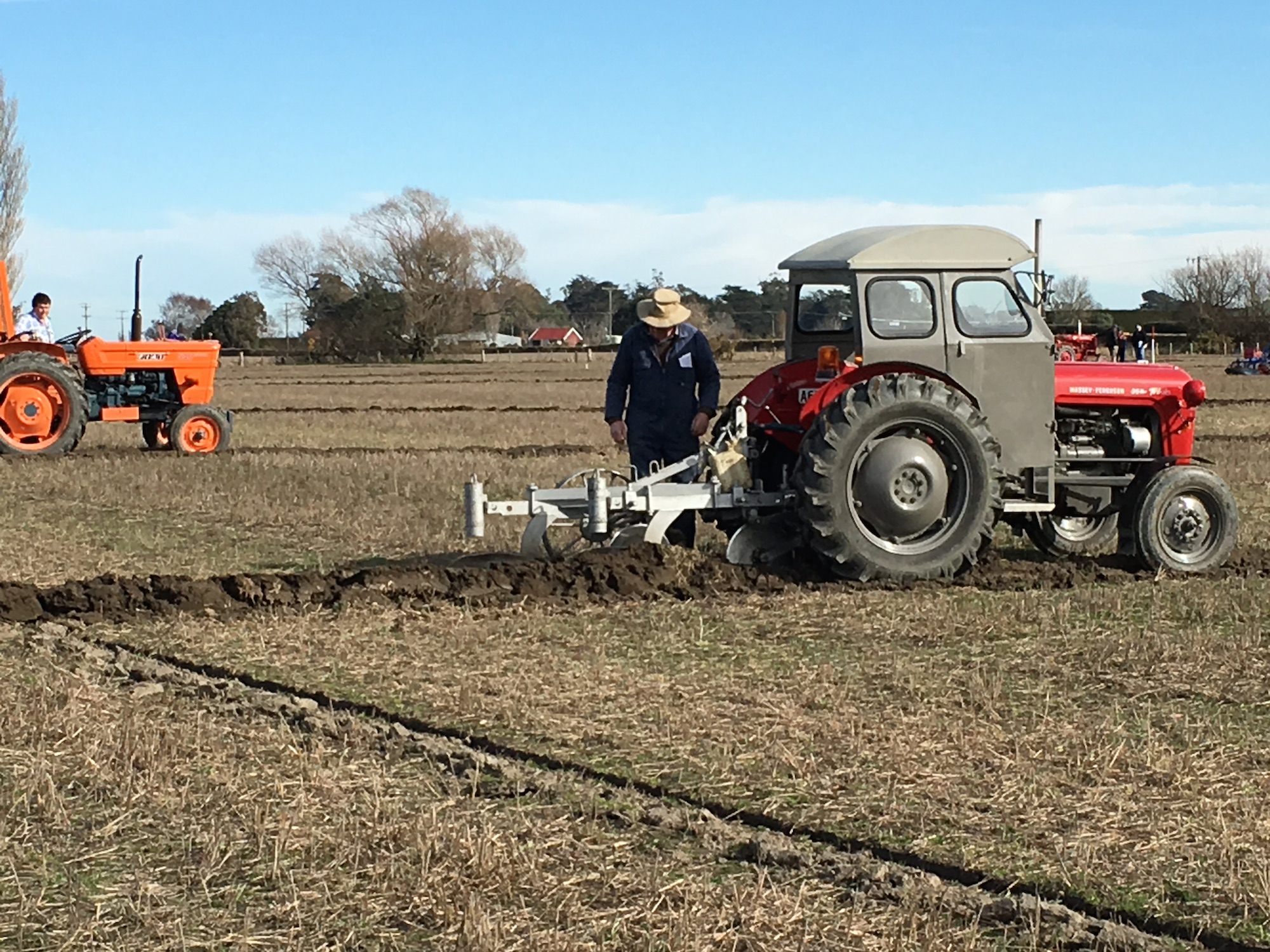
2016-08-20 11.18.35 smThis past weekend was the annual Ellesmere Vintage Club’s Ploughing Match. Our neighbour hosts the event, so we walked down there on Saturday morning to watch the action.

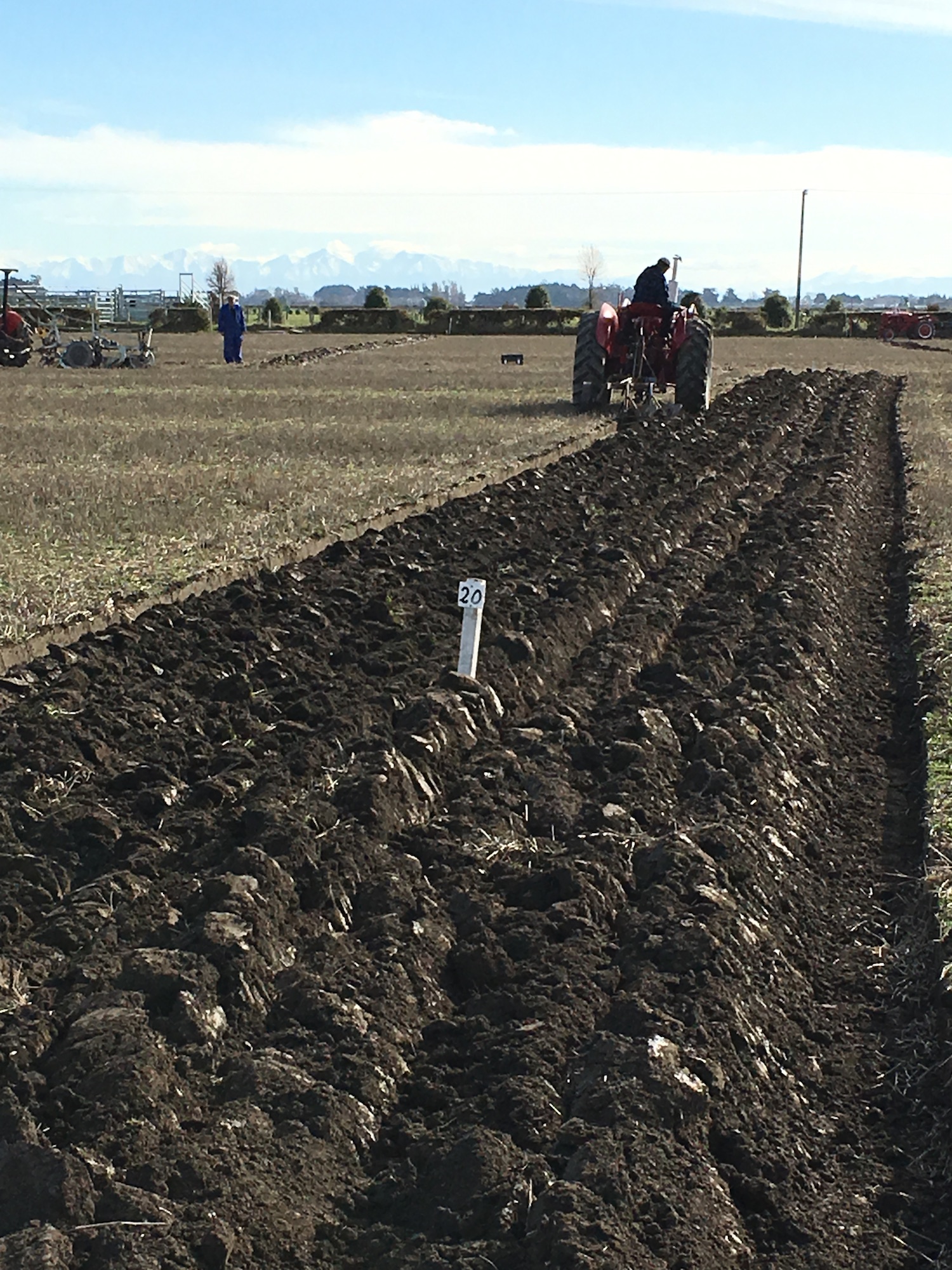
It was slow-motion action. No big thrills or adrenalin. Just the rumble of diesel engines and the smell of freshly turned soil. It was clear the point was a perfectly-turned patch of ground, not speed. There was a lot of starting and stopping, and adjusting of freshly-painted ploughs.

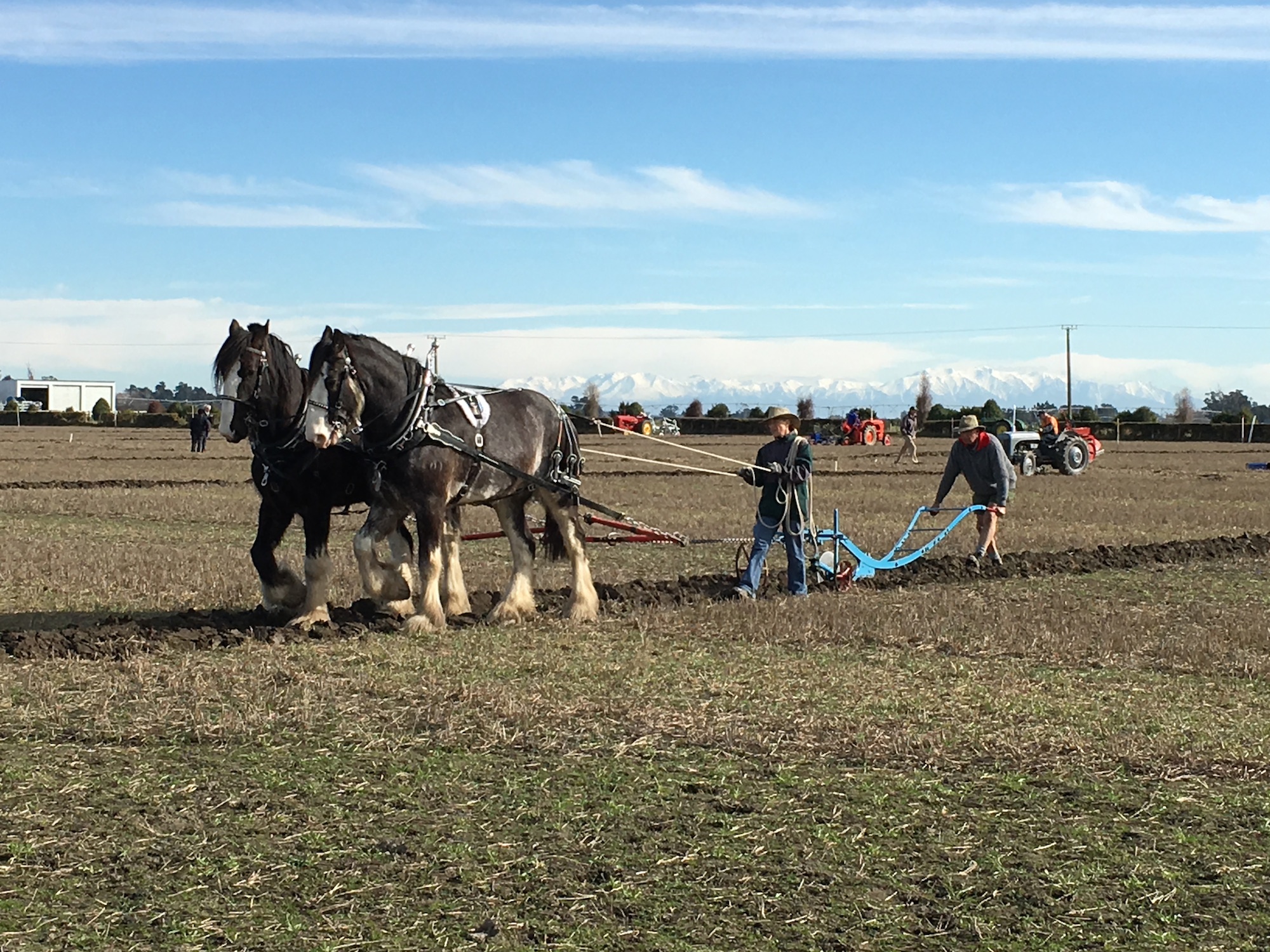
2016-08-20 11.22.21 smA pair of horses joined the 1940s and ’50s era tractors. Watching them work, it’s clear why tractors have taken over on the farm—there was significantly more fiddling to be done by the horse team in order to perfect their rows.

The demographics of the crowd were predictable. Before we arrived, I commented to my daughter that we might be the only women there. Her response was that she would likely be the youngest person there…by about 70 years.

2016-08-20 11.32.18 cropWhile the majority of competitors were as vintage as their tractors, there were a few younger ones. Two or three other children were there, too, though they were sitting in a car playing on an iPad. And there was a small contingent of women. A few wives watched from the sidelines, and a woman drove the horse team.

It was a true small-town event—25 competitors, and perhaps 40 people in total at the event when we were there. Participants were shuttled to the local hall for lunch on two long benches, set back-to-back atop a flatbed trailer.

2016-08-20 11.33.12 smLater, as the event broke up and tractors motored past the house, we laughed—it was hard to tell which vehicles were en route from the competition, and which ones were simply on their way from paddock to paddock. Many of these vintage tractors still get regular use on the farm.

Of course, I have to wonder what will happen as the vintage tractor enthusiasts and their machines age further. Will younger farmers grow nostalgic about tractors from the 60s and 70s as they age? If not, we’ll see a lot fewer than 25 contestants at vintage ploughing matches in future years.

Cricket Flour

IMG_1784I was running errands in town today, and called in to Bin Inn for some flour and cornmeal.

I was excited to find this sitting on the shelf next to the rice flour and barley flour. It was the first time I’ve seen commercial insect products that admit to being insect products sold in an ordinary store (there are plenty of things you’ve probably bought that contain insect products, but manufacturers generally don’t advertise that).

It’s nice to see insects showing up on the grocery store shelves. I am a proponent of entomophagy, even though I am a vegetarian. If you’re going to eat meat, insects are probably the most environmentally sound way to go.

Being cold-blooded, insects convert feed into body mass much more efficiently than our warm-blooded livestock. You can raise a kilo of crickets on just 1.7 kilos of feed. Compare that to chicken at 2.5 kg of feed per kilo of chicken, or cows at 10 kg of feed per kilo of cow. Adjust these numbers for percentage of the animal that’s edible, and they favour insects even more—80 percent of a cricket is edible, whereas only 55 percent of a chicken and 40 percent of a cow is.

It still takes resources to produce insects. Though they convert feed into food more efficiently, insects need to be kept warm—warmer than you need to keep a cow, because they can’t keep their own bodies warm. There is an energy cost in that.

Of course the biggest problem with farming insects is getting people in Western countries to eat them. Most of the world’s people actually do eat insects, but our modern Western culture had separated us so much from our food, that we even get squeamish when we can identify the animal that our cuts of meat came from.

Consumers generally don’t want to actually see the animal when they’re preparing dinner. I’m sure cricket flour goes over better than, say pickled whole crickets (sort of like sliced ham vs. pickled pigs feet).

It will take a change in our attitude toward insects before Westerners will agree to bar nuts that include roast, salted crickets (which are delicious, by the way). When preschoolers learn that a cricket says “chirp, chirp” along with the cow says “moo”, we’ll be on our way. When we begin to view insects, not as enemies to be beaten, but as fellow organisms on Earth, we’ll be on our way. When we stop seeing insects as dirty, but rather recognise that they carry fewer potential human pathogens than our close relatives the cow and pig, we’ll be on our way.

As a vegetarian and a gardener, I value the insects that come into the kitchen on my vegetables. I don’t get enough vitamin B12, because it is only found in animal products. Insects are full of vitamin B12. So, I’m casual about cleaning the insects off our organically grown vegetables. We eat a lot of aphids, and quite a few caterpillars, I’m sure. And that’s great—it gives us all the nutrition we need, without any extra effort on our part (less, in fact).

Indeed, though I support insect farming, I’m afraid I will probably never buy any insect products–there are so many wonderful insects out there free for the taking, I couldn’t see spending $120 per kilo (and that’s half off!) for cricket flour.

Besides, I prefer my crickets whole—the best part about them is the crunch, after all.

Library Complaints

100_3972 smThe interesting thing about working in the public library is watching the people who come in.

Today, one of the notable visitors was a woman who arrived with her husband. As they walked in, they were arguing.

To be more accurate, she was complaining about something to him. He gave monosyllabic answers to her long rants about their plans for the day, and how they were inadequate.

She left him reading the newspaper near the entrance while she descended on the library to plague the librarians with passive-aggressive questions about why they did or did not have the titles she was looking for. When she found a CD she wanted to check out, she complained that the CD wasn’t held in its case well enough—it threatened to fall out when she opened it, she said at great length and with much demonstration to the ever-patient librarian.

As she moved further into the library, I lost track of her, but I’m convinced she complained her way through the shelves, because she was still grumbling when she returned to collect her husband and leave.

I felt sorry for the librarians, who handled her complaints with grace and polite smiles. But I felt more sorry for her.

She was not young—easily in her mid-eighties. She complained with the skill of someone who has made it her life’s work to be unsatisfied, her goal to find fault with everything.

She can’t have had a very nice life.

Not that I think a hard life turned her into a complainer. On the contrary, I expect that complaining made her life hard.

That internal dialogue we play in our heads can colour everything we experience. It’s easy sometimes to let that dialogue turn to complaints.

The library never has the book I want.

Someone ate the last cookie again?

Why can’t people be quiet in the library so I can focus?

I’m not suggesting no one should ever complain. Pointing out problems to those who can do something about it, and standing up for yourself are important things that complaining can sometimes accomplish.

But when every thought becomes a complaint, the complaining turns toxic. Sometimes it pays to turn those complaints around. It doesn’t necessarily solve the problem, but it changes how you feel about it, and that can make all the difference.

The book I want is already checked out? Maybe the librarian has a suggestion for a similar book.

The cookies are gone? What a good excuse to make my favourite kind!

People are distracting me in the library? Maybe I what they do can inspire today’s blog post?

Life never gives us what we want. That’s probably a good thing. If we can remember that, it makes life much better.

Playgrounds of the past


2016-07-14 20.33.37cropsmThough we are back from our visit to the US, there are a few blog posts inspired by the visit still to come over the next few days…

The playgrounds I enjoyed as a child are long gone.

The monkey bars over asphalt have given way to simpler structures over more forgiving surfaces. The high speed pop-your-partner-into-the-air seesaws have been replaced by almost immobile rockers on springs.

Much of this is probably good—I knew more than one kid who broke an arm falling off the monkey bars, and I remember the pain of a finger pinched in the seesaw’s fulcrum.

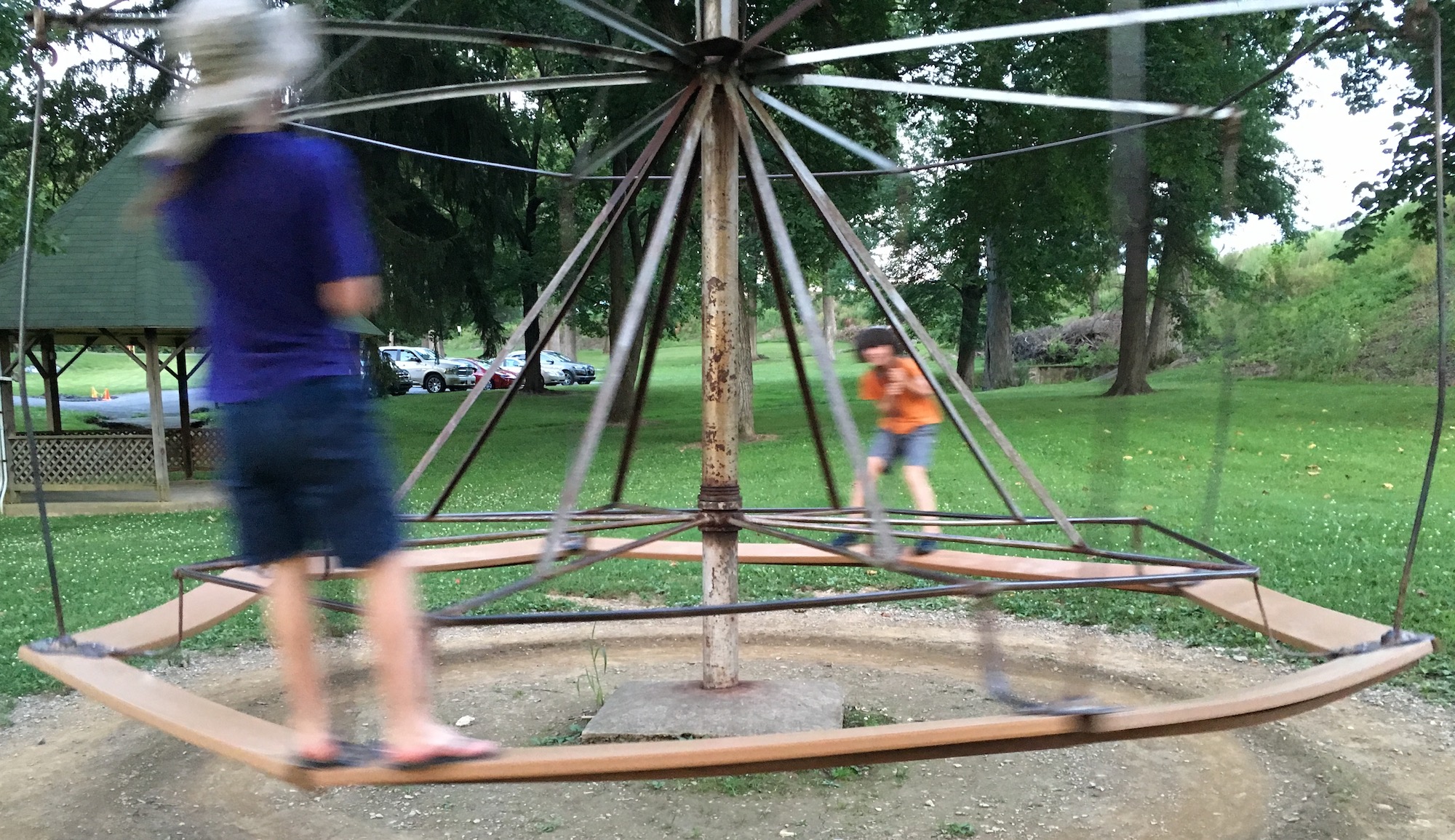
How this merry-go-round has escaped the fate of other aging playground equipment, I don’t know (I shall keep its location secret, lest the safety police go looking to remove it). I remember playing on it as a kid, and my mother does too. By that measure, it must be at least 70 years old.

It still spins, though the ride is rough and squeaky (it was rough and squeaky 40 years ago, too, as I recall). The wooden benches have been replaced…more than once, I’m sure.

But even after 70 years, it’s still fun, as proven by my own kids.

There’s No Place Like Home

100_0785smThe best part of going away is coming back home.

The kids and I had a great time visiting friends and family in the US the past two weeks. We got a chance to do many things that aren’t possible here—picking wild blueberries; riding roller coasters; seeing deer, wolves and eagles; hearing whippoorwills pour their hearts out into the dark. We visited some of my favourite people in the whole world.

But as Dorothy so succinctly put it, there’s no place like home.

Returning home, the house feels small, the garden shabby. The car looks decrepit and filthy. Wind blows in through the windows and cracks in the floor.

But returning home, the wind also feels fresher. The fire is cosy. I know where everything belongs in the kitchen. The things around me are familiar and comforting.

At home I have responsibilities. Things to do. I am needed.

Though I didn’t feel uncomfortable away from home, now that I am back, I can feel the tension draining away. I feel like I am on vacation, moving through my daily chores with pleasure.

So, like Dorothy, I am glad to be home, regardless of how small and shabby that home might be.

There’s no place like home.

Tūrangawaewae

DSC_0095 smIt’s Maori language week, so I thought I’d share one of my favourite Maori words—tūrangawaewae.

Tūrangawaewae is a place to stand, where a person feels strong and at home. It doesn’t really have an English equivalent. Homeland comes sort of close, but one’s homeland is not always one’s tūrangawaewae.

Though I am not a religious person, I am a spiritual one, and the word tūrangawaewae speaks to me in a spiritual way. I know where my tūrangawaewae is. It’s not so much an actual place, but a biome–the forests of the north eastern US. I am an organic part of that biome. It is wired into my nerves and muscles. Every leaf, animal and rock feels familiar.

I have little use for American culture, and no affinity with the cities and interstate highways that encroach upon my tūrangawaewae. I have honestly tried to find a new tūrangawaewae here in my adopted home. There are many places here I love. Many places to which I feel drawn. But none matches my tūrangawaewae for that deep sense of belonging.

Where is your tūrangawaewae?