A Reason to Celebrate

“Wow! What’s the occasion?” he asked.

I shrugged. “I felt like it.”

Then I thought more about it. What’s the occasion?

The sun shone all day today.
I had a good writing week.
The kids have been helpful all day.
The snowdrops are blooming.
Pīwakawakas outside my office door.
The neighbour gave us grapefruits.
My seed order arrived in the post.
I had just enough sugar to make the icing.

Every day is a day to celebrate. Every day is a day to enjoy whatever gifts life offers, no matter how small.

Go ahead. Have some cake. Be sure to try the frosting. It’s one of my favourites:

Grapefruit frosting

Beat until smooth:
250 g (8 oz) cream cheese
1 1/2 cups confectioners (icing) sugar

Add and beat until smooth:
1/2 tsp fresh lemon juice
1 1/2 tsp fresh grapefruit juice
1 Tbsp grated grapefruit zest
1 tsp grated lemon zest

Spread on your favourite cake.

Love your Library

I’ve blogged in the past about how much I appreciate libraries, but it bears repeating. I can’t deny I prefer writing in my lovely office, but modern libraries are beautifully set up for those who need to work away from the office, with power points, standing desks, and quiet spaces. I’ve spent the past two days in the public library. My word count is down, compared to working at home, but I’ve enjoyed the people watching.

One of my key observations from the past two days is how the library is a safe space in the middle of the city. A fellow at the table next to me spent an hour working on a jigsaw puzzle while his computer and phone sat unattended and unobserved on the other side of the room. Parents of toddlers calmly browse the shelves while their little ones scamper around happily out of sight. Those same toddlers swagger through the library to visit their favourite books, posters, and egg chairs as though they’re in their own living room. When their parents eventually look up and find their children gone, they don’t panic, but casually stroll after them, stopping now and again to check out an interesting book on the way. After three o’clock, kids of all ages descend upon the library to read, hang out, and play games until their parents are able to pick them up. The implicit assumption is that everyone in the library is kind, helpful, and honest. I’m sure that’s not entirely true, but the expectation is so high, I think anyone who tried to behave in a socially unacceptable way would be instantly frog-marched out of the library by all the other visitors.

It’s good to have these spaces. It’s a reminder that we can create safe spaces, where strangers from all walks of life can mix and mingle over a shared love of books.

Gluten Culture

“I’m allergic to gluten-free.”

That’s my son’s line when people ask.

In part, it’s true; he’s allergic to buckwheat, which is often used in gluten-free products. But what he’s really saying is that gluten-containing foods are a staple at our house. Our diet and our family culture would break down without gluten.

It’s been a while since I blogged about a bread day, but they still happen. Every two or three weeks my husband fires up the bread oven and bakes two dozen loaves of bread. I follow with a couple of cakes, cookies, or whatever sweets I feel like baking. On the tail-end heat, my husband might throw in some bac-un or seitan—gluten-based meat substitutes.

Between the bi-weekly gluten fests, we make pastries, muffins, scones, crackers, and all manner of other gluten-containing food.

If we took gluten out of our diet, we’d lose a protein source and a suite of family activities.

And, yes, you can bake gluten-free bread, cakes and cookies.

But they’re not the same.

There is something fundamental, something visceral about the feel of gluten—under your hands as you knead bread, in your mouth as you chew it—something that is integral to my family’s enjoyment of food.

Yes, I think we’re all allergic to gluten-free.

You can take me out, but you can’t dress me up

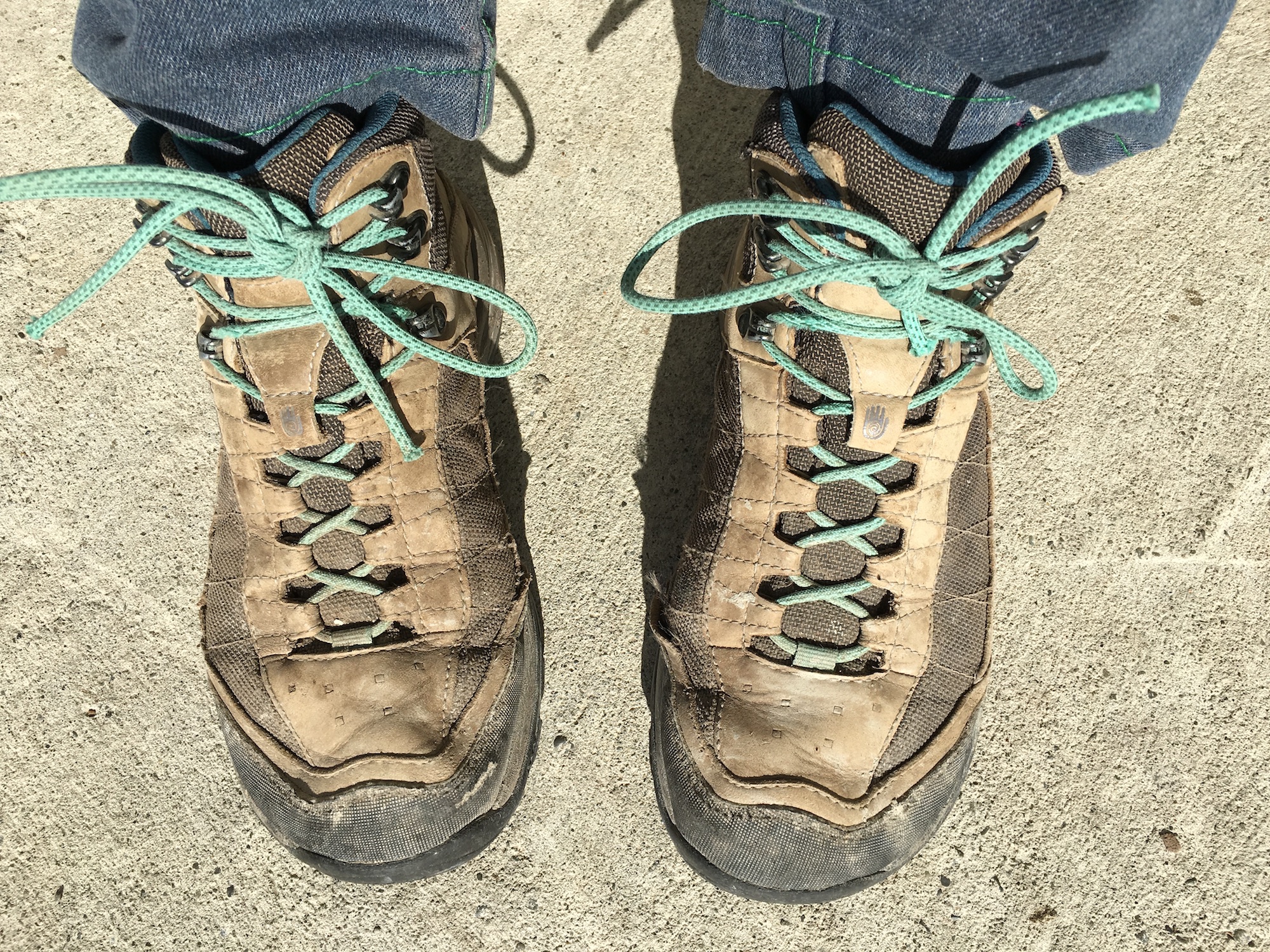
I laced up my shoes to go to town yesterday and thought to myself, “Gosh, these shoes are comfortable.” My next thought was, “Gee these shoes are looking a bit rough for town wear.”

Truth is, I’m a bit rough for town wear. I feel it every time I go for groceries. Other women arrive at the store in high heels and skirts, with flouncy scarves and jewellery. I rock up in my hiking boots, still dusty from my last trip. My clothes are clean, well-made and tailored perfectly for me (because I make the myself), but that’s just it—they’re tailored for me, and not just in the fit. Denim, cotton, lots of pockets, and comfortable enough to walk five kilometres in (because I never know when I’ll have the need or urge to take a brisk walk).

Even my ‘town’ shoes—the ones I wear when I’m trying to look at least somewhat professional—are wide, clunky affairs that are, quite frankly, ugly (but really comfortable).

Most of the time, it doesn’t bother me to be the unfashionable slob in town, but it doesn’t mean I don’t notice my wardrobe is wildly different from others’.

I could theoretically dress up to go to town. Somewhere, deep in the closet is one outfit that could count as marginally dressy. It would pass for normal in the grocery store. I expect it will last the rest of my life, given how seldom it comes out.

You can take me out, but you can’t dress me up.

Home Fires Burning

Cat enjoying a good book by the fire.

I woke yesterday morning shivering under the summer quilt on the bed after a restless night listening to icy rain on the roof.

Time to switch to winter mode, I suppose.

I lit the first fire of the season.

It wasn’t long before the cat joined me by the fire. Then my daughter, then my husband, then my son…Nothing like a hearth to draw everyone together.

I think about the angst over today’s youth, separated from face-to-face interactions by their devices, and I think that perhaps what we all need are small, poorly insulated houses heated by inefficient wood burners. In a big, centrally heated house, it’s easy for everyone to retreat to their own rooms—shut the door, pull out the phone and troll the internet. But in our house, the only comfortable room in the winter is the 3×4 m living room. A teen who retreats to their room and shuts the door pretty quickly returns to warm up by the fire.

Yes, we may all sit here doing our own thing, but by gathering around the fire together, we share what we’re doing with each other. Someone might share a good line from the book they’re reading, or show a dumb cat video they thought was funny, or ask for help on a maths problem. Simply by virtue of proximity, we connect in other ways.

I will admit that on winter mornings, crawling out of a warm bed into the freezing air to light the fire, I dream of luxuries like heat pumps. And sometimes it would be really nice to have some space to myself, rather than do my knitting cheek-by-jowl with a teenager practicing a new juggling trick. But on the whole, I suspect the benefits outweigh the drawbacks. We humans are hardwired to sit around the fire talking to one another. Our ways of relating to one another, passing on wisdom and culture, and finding our place in a community evolved around the fire.

So, again this winter, I will keep the home fires burning.

Market Smells

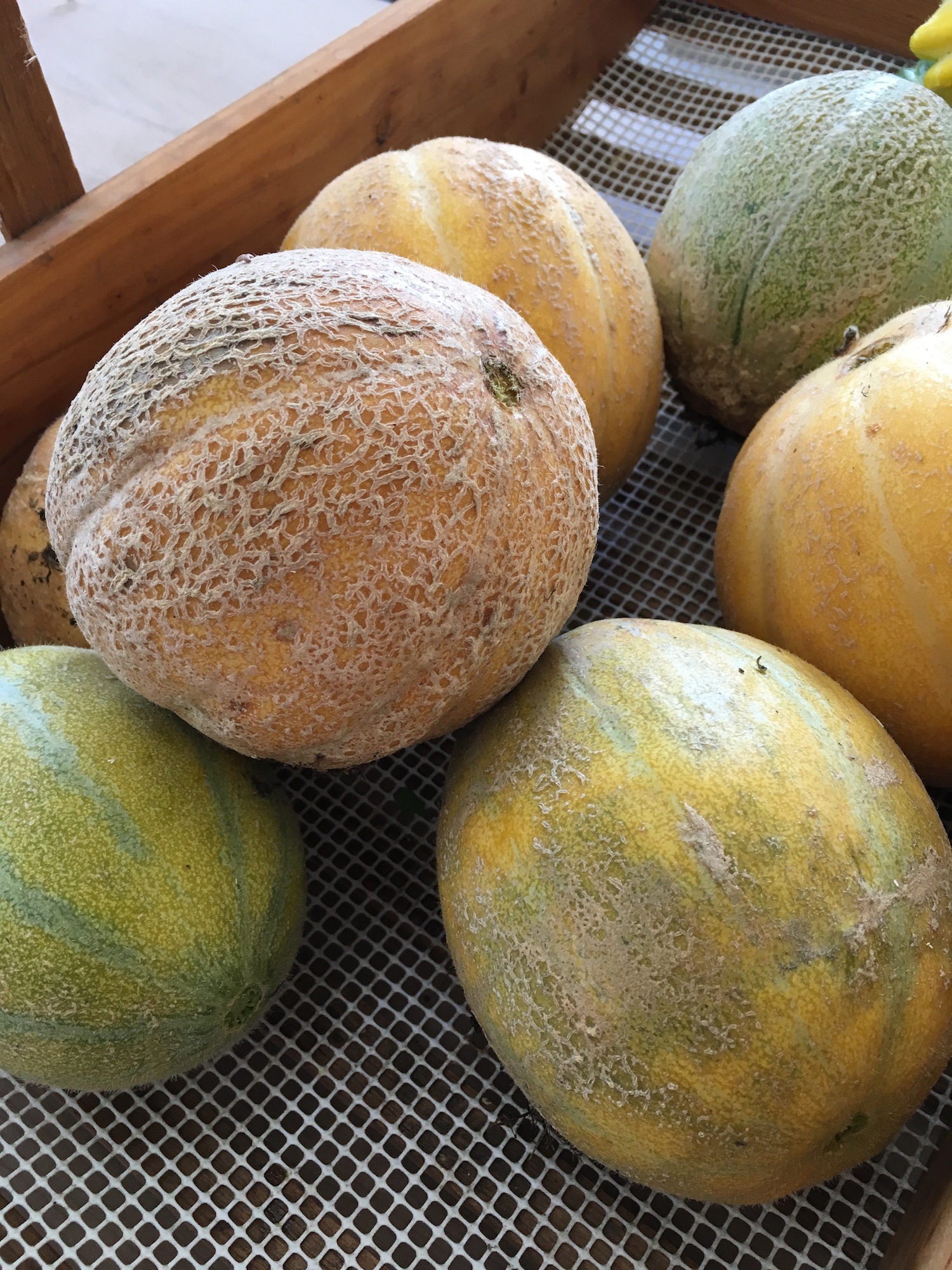
I brought seven dead-ripe rock melons in from the garden yesterday afternoon. The smell in the kitchen was overpowering, and took me directly to Roots Market, a large farmers’ market in Lancaster County PA, on a hot July day.

For me, the smell of ripe melons = Roots. I’m not entirely certain why—there are many competing smells at the market. Perhaps because in the mid-1980s a melon grower had a stall at the entrance where my family always arrived, so it was the first smell I experienced every time. Whatever the reason, that smell will forever be associated with that market in my mind.

I’ve been to many farmers’ markets since the mid-80s. Memorable smells accompany many of them.

In Ann Arbor, Michigan, it was basil, which my housemates and I bought by the grocery-bag for pesto.

In Panama, the market in Penonome was where my husband and I shopped every week or two. The meat-sellers’ area was screened from the flies, but the screen didn’t stop the smell of beef, pork, chicken and fish on display in the tropical heat from wafting through the market.

In St. Paul, Minnesota, I remember the smell of flowers and sweet corn.

I haven’t been to many farmers’ markets here in New Zealand, because I grow all our vegetables, but as a seller in Leeston, I remember the smell of my friend Cris’s homemade bagels.

Pretty cool how smell can act as a teleportation device, spanning distance and time in an instant.

Hawksbeard: a Cheerful Weed

We’ve had recent, much-appreciated rain, and the grass is unusually green for January. But even with the grass growth, summer is weed season in the lawn.

More specifically, summer is weed flowering season.

Some of the weed flowers are uninspiring, and merely annoying—the dull greenish flowers of plantain, for example.

Others bring a splash of colour to what is normally a bleak time in the lawn.

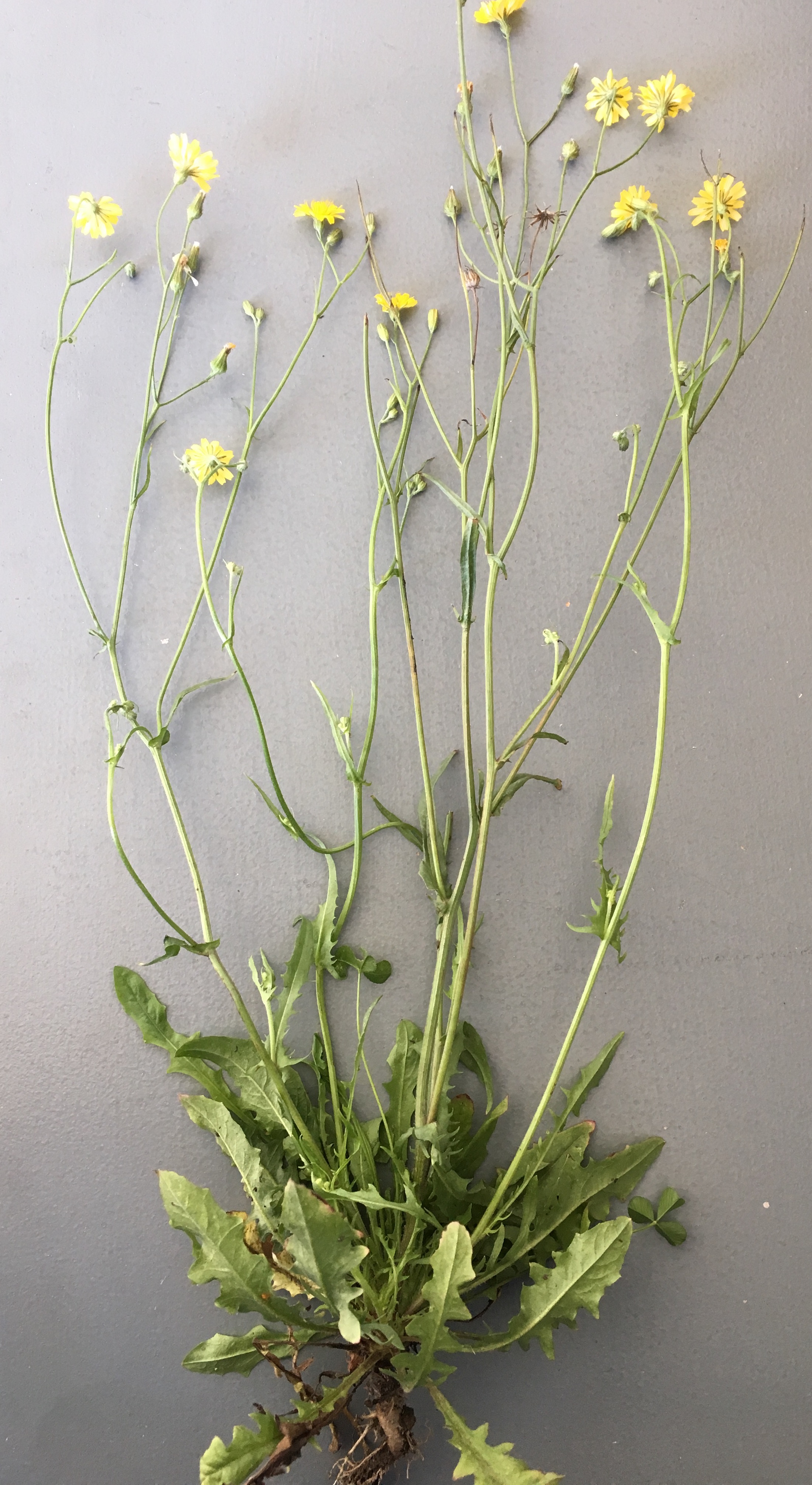
Hawksbeard (Crepis capillaris) is one of the more prolific colourful weeds in the lawn in summer. An annual or biennial member of the dandelion family, this plant bears small, cheery yellow blooms on tall, branched stems.

The NZ Plant Conservation Network shows hawksbeard as being naturalised in 1867 from Europe. Like its cousin dandelion, it was most likely brought to New Zealand on purpose as a food plant—it’s young leaves are edible. Like the dandelion, it is no longer valued as a food, but is considered a weed.

I will admit, the tall flower heads of hawskbeard can be annoying in the lawn. They seem to spring up overnight between mowings, and they slap against your legs as you walk through the yard. But I do appreciate their yellow blooms at a time of year when most other plants give up from the heat and drought. I have been known to use hawksbeard in flower arrangements, and their green rosettes are sometimes the only green to be found around the yard.

The Christmas Season

Twelve years ago, I was facing my first Christmas in the Southern Hemisphere. Everything felt wrong. I tried to carry on the traditions my husband and I had established in the States; I made truffles and cookies, I decorated with fresh greenery, we strung Christmas lights, we planned a big Christmas dinner, we played Christmas music.

The truffles melted, the greenery turned brown, the Christmas lights were invisible in the long summer evenings, the heavy dinner sat like lead on a hot summer day.

I longed for snow, and all the indoor family time of the northern holiday. I wanted long nights, candles and a roaring fire. I wanted hygge. But it was summer—time to be outdoors, on the beach, enjoying the sun.

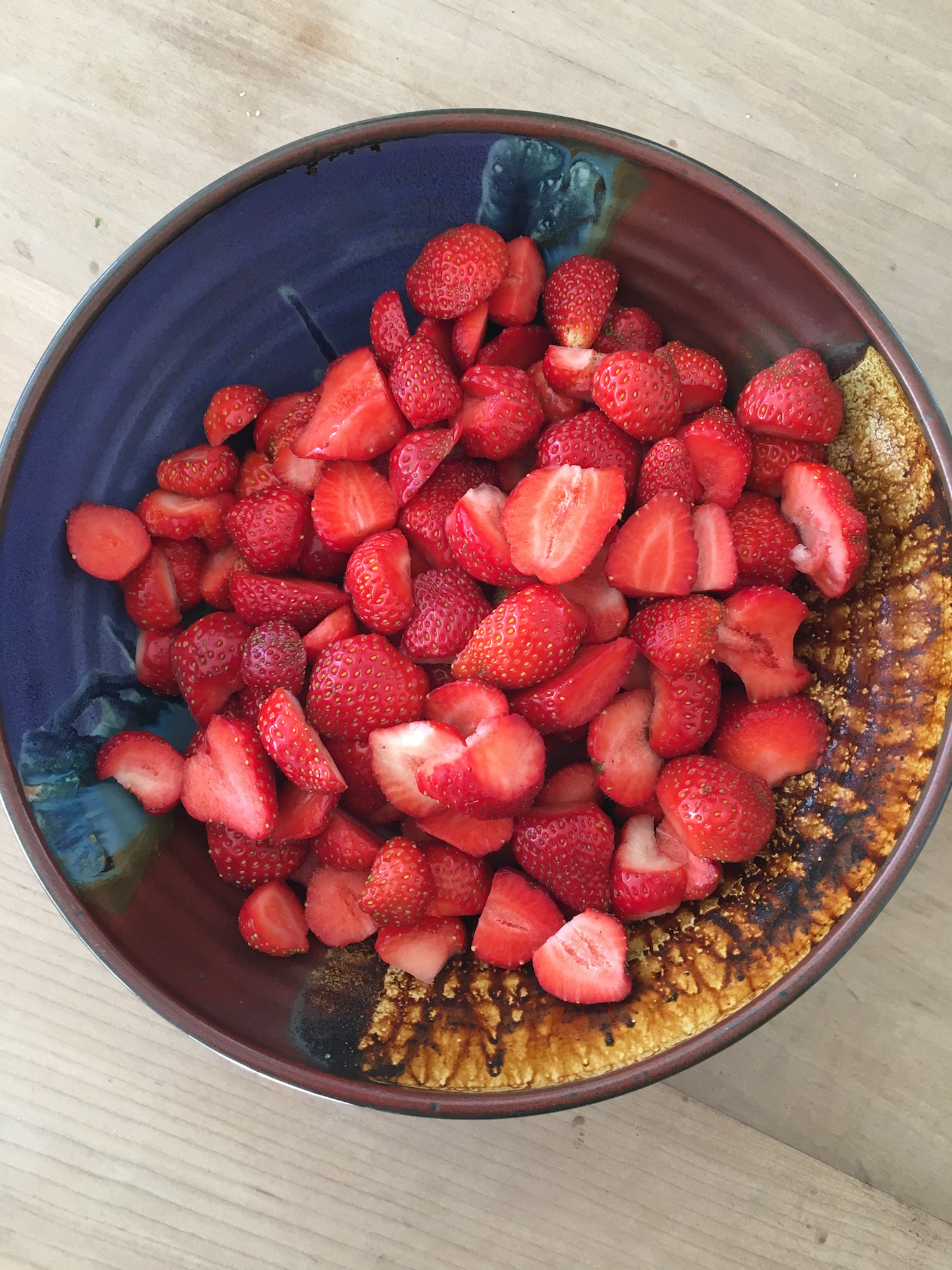
Slowly our traditions have adapted to this southern holiday. I realised how far I’d come on Sunday morning. Slicing strawberries for breakfast, the smell of berries made it feel so Christmassy, I started humming carols. Then I laughed at the idea that strawberries equal Christmas.

I thought about all the things my kids have grown up associating with Christmas—long days at the beach, gardening, strawberries, cherries, making jam, making sauerkraut (which usually happens about Christmas eve every year), the ‘traditional’ Christmas salad, the first new potatoes, broad beans, backpacking.

We rarely play Christmas carols anymore (who wants to be indoors?). We bake fruit pies, and not many cookies. We use red carnations from the garden for Christmas decorations. Rather than being a time for focusing inward, Christmas is a time for adventuring—traveling, hiking, exploring.

And so, as we start into this Christmas season, I am looking forward to our travel plans. I’m looking forward to many days at the beach. I’m looking forward to the summer bounty from the garden. I’m looking forward to ice cream, roadside stands selling Otago cherries, outdoor dinners, and warm sun.

And that, I think, is the key of the season—to celebrate what is good about the here and now. To celebrate the bounty we’ve been given, whatever form it comes in—love, friendship, snow or strawberries. To be mindful. To be present in the moment.

Summer Rock Concert

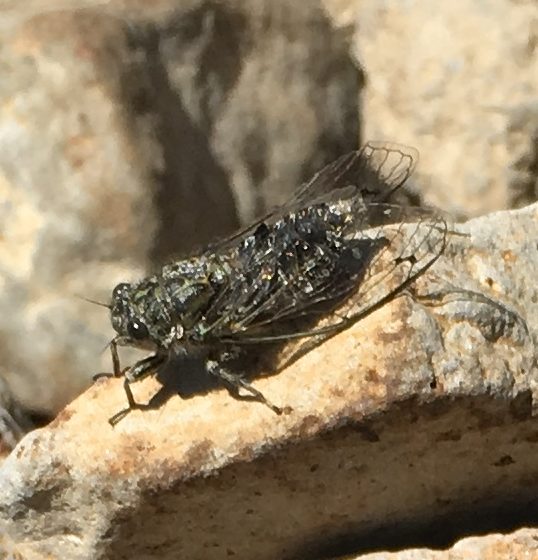
It’s a cicada; it must be summer.

The main cicada season doesn’t really start until the chorus cicadas (Amphisalta zealandica) come out after Christmas, but two weeks ago, we found a few chirping cicadas (Amphisalta strepitans) on the rocks around Okains Bay.

Cicadas are largish, as insects go, but they’re well camouflaged. Usually, you find them by sound. As with most insects, it’s the males that do the singing. The main part of a cicada’s song is made by flexing plates (tymbals) on top of the body. Built-in amplifiers (opercula) pump up the volume to an astonishing level. Cicadas are noisy. I don’t know if any of the New Zealand species have been tested, but the calls of some North American cicadas are over 105 decibels at a distance of 50 cm. That’s nearly as loud as a rock concert (115 decibels). When the chorus cicadas here in New Zealand come out in large numbers, they can be so loud in some places that it’s impossible to carry on a conversation.

Some New Zealand cicadas add an extra feature to their song—a bit of drumming called clapping. The cicada snaps the leading edge of its wings against a branch to make a sharp click. Females also clap, and I’ve read (though I’ve never tried it) that you can call the males to you by snapping your fingers.

There are about 2500 species of cicada worldwide. Because of their size and volume, they seem to be culturally important wherever they live. They are eaten as food in many areas, and sometimes used as fish bait. Growing up, my siblings and I used to collect the shed exoskeletons of cicadas and attach them to our clothing like jewellery. When I lived in Panama, the children would catch cicadas and tie strings to their feet, then carry them like helium balloons, flying on the end of the string.

Wherever they live, they mark the seasons. Here in New Zealand, and in America where I grew up, summer hasn’t really started until the cicadas sing.

Loud singing? Drumming? Must be a summer rock concert!

Eau de Paddock

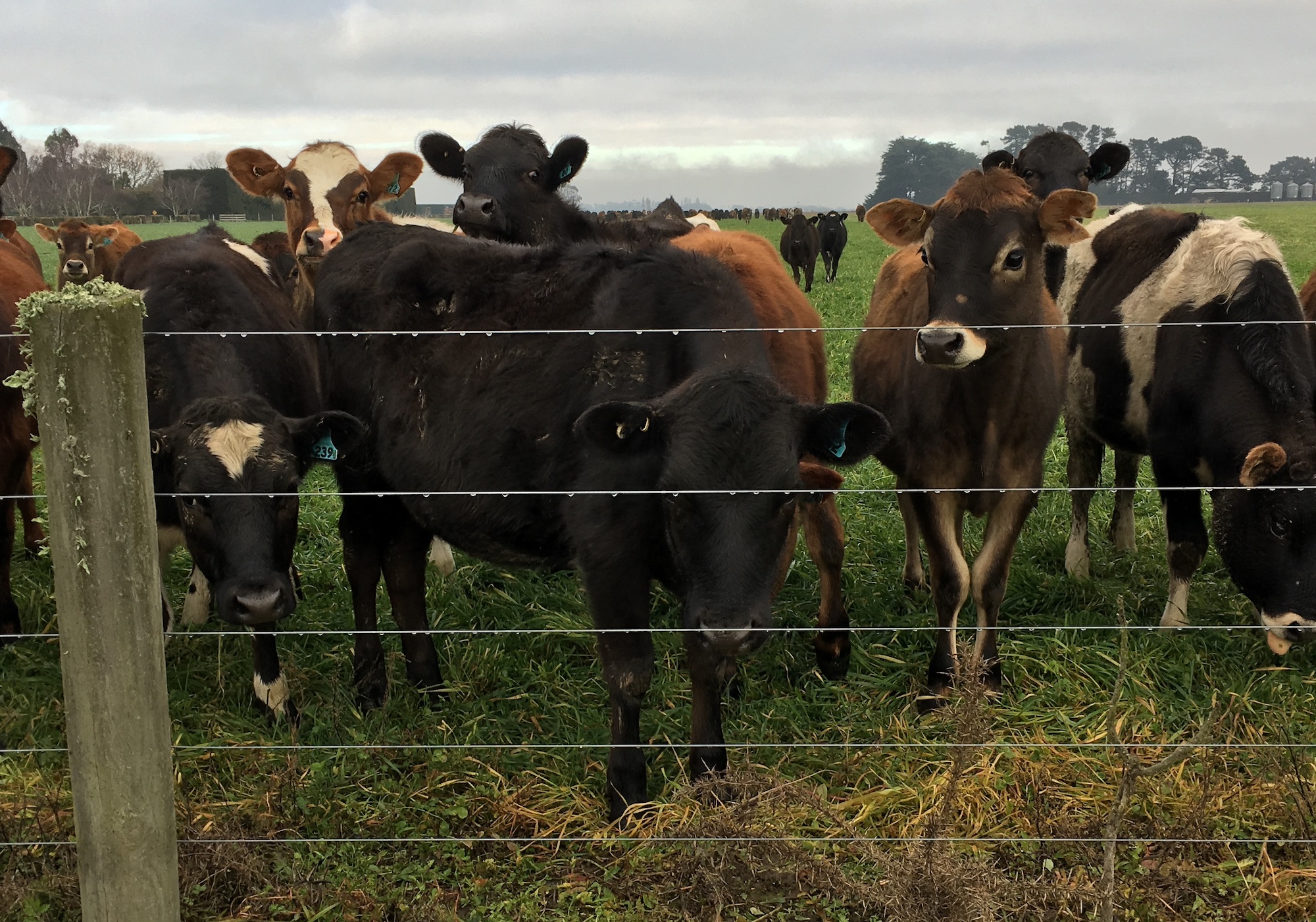
The smell of cattle and rank pasture grasses.

Most of you are saying, “Ew! Disgusting!”

But a few, I’m sure, are thinking, “Yep! Nothing else says summer like that smell.”

And I can guess that, if you’re in the second group, you grew up running barefoot through yours or the neighbours paddocks as a kid. You hopped the fence, dodged the cows (or if you were unlucky, the bull), and swished through tall grass to the creek where you’d wade in the ankle-deep water for hours in the hot sun, catching crayfish, water striders, and dragonfly nymphs. You’d follow the trickle upstream to ‘the dam’, made by countless ten-year-old hands over decades of summers. The pool behind the dam always teemed with minnows, and you’d stand still, hands outstretched in the water hoping to catch one.

The whirligig beetles loved the pool behind the dam, too, and their jiggling, twirling dance on the water’s surface sent ripples across the water, bouncing and refracting into mesmerising patterns.

All the while, the sun heated grass and cow pies, and the perfume of the paddock hung in the hot air and clung to the back of your neck like your sweaty hair.

And when the sun finally began to sink in the west, and you knew dinner was waiting for you at home, you’d climb up from the stream and swish through the paddock again, the cows further off now, in the lengthening shade of the trees. You’d climb back over the fence and take one last, deep breath, storing the summer day, and saving it for tomorrow.

And now, forty years later, you drive past a paddock on a hot day, and in a single breath, you are suddenly ten again, ankle-deep in a creek catching crayfish.