Cranberry Orange Scones

I wanted lemon scones for breakfast this morning, but had no lemons. I made these instead, based loosely on my lemon scone recipe. I can’t think why I ever wanted lemon…

1 1/2 cups all-purpose flour
2 cups barley flour
1/2 cup brown sugar
1 tsp baking soda
1 tsp baking powder
1/4 tsp salt
125 g (1/2 cup) butter
1 egg
2/4 cup unsweetened yogurt
1/4 cup orange juice
grated rind of 1 orange
3/4 cup dried cranberries

Combine the flours, baking soda, baking powder and salt in a large bowl. Cut in the butter with a pastry knife until the mixture resembles coarse crumbs. Whisk together the egg, yogurt, juice and orange rind in another bowl. Toss the cranberries with the flour mixture, then mix in the wet ingredients. Once all the flour is incorporated, gently knead the dough in the bowl (just 2 or 3 turns). Divide the dough in half. On a floured board, pat each half into a round about 2 cm (3/4 inch) thick. Cut each round into 8 wedges, and arrange the wedges on an ungreased baking sheet.

Bake at 190ºC (375ºF) for 15 to 20 minutes, until nicely browned.

Eat them quickly, before someone else gets to them!
The Pumpkin Fairy

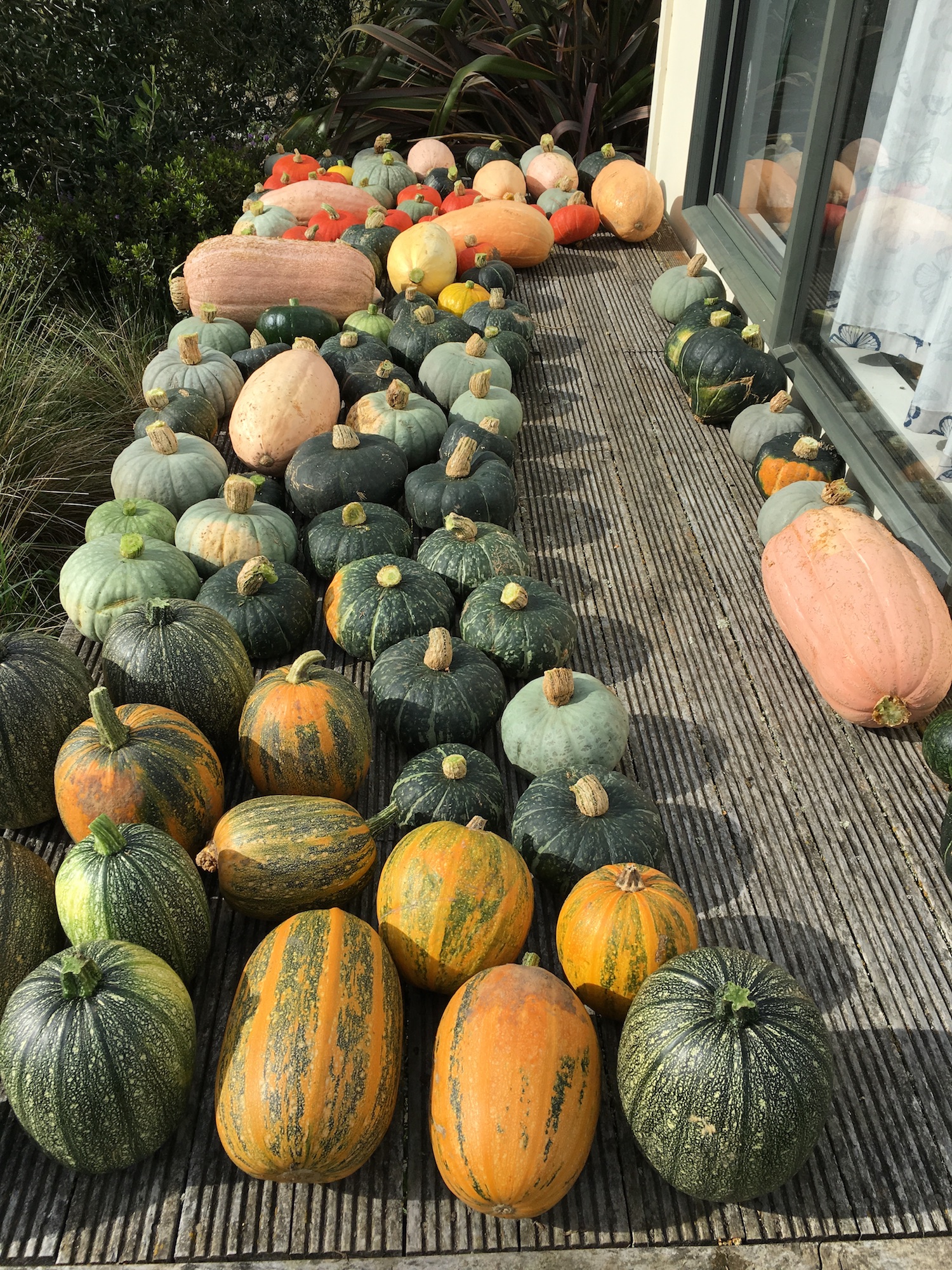
It was most certainly the year of the cucurbit—from an abundance of cucumbers to an avalanche of zucchini, to a mountain of melons, and finally, more pumpkins than we can possibly eat.

My daughter picked about three-quarters of the pumpkins over the weekend—the total came to exactly 100, some of which are 15 kg behemoths. That’s a lot of pumpkin. That’s eating pumpkin every three days for a year. That’s only three-quarters of the pumpkins from this year’s garden!

The kids think I should start dropping pumpkins off on random people’s doorsteps—a sort of Pumpkin Fairy. It would certainly get rid of the excess pumpkins, but I wonder what people would think to find a pumpkin on their doorstep …

Would you like to be visited by the Pumpkin Fairy?

Growing Gifts

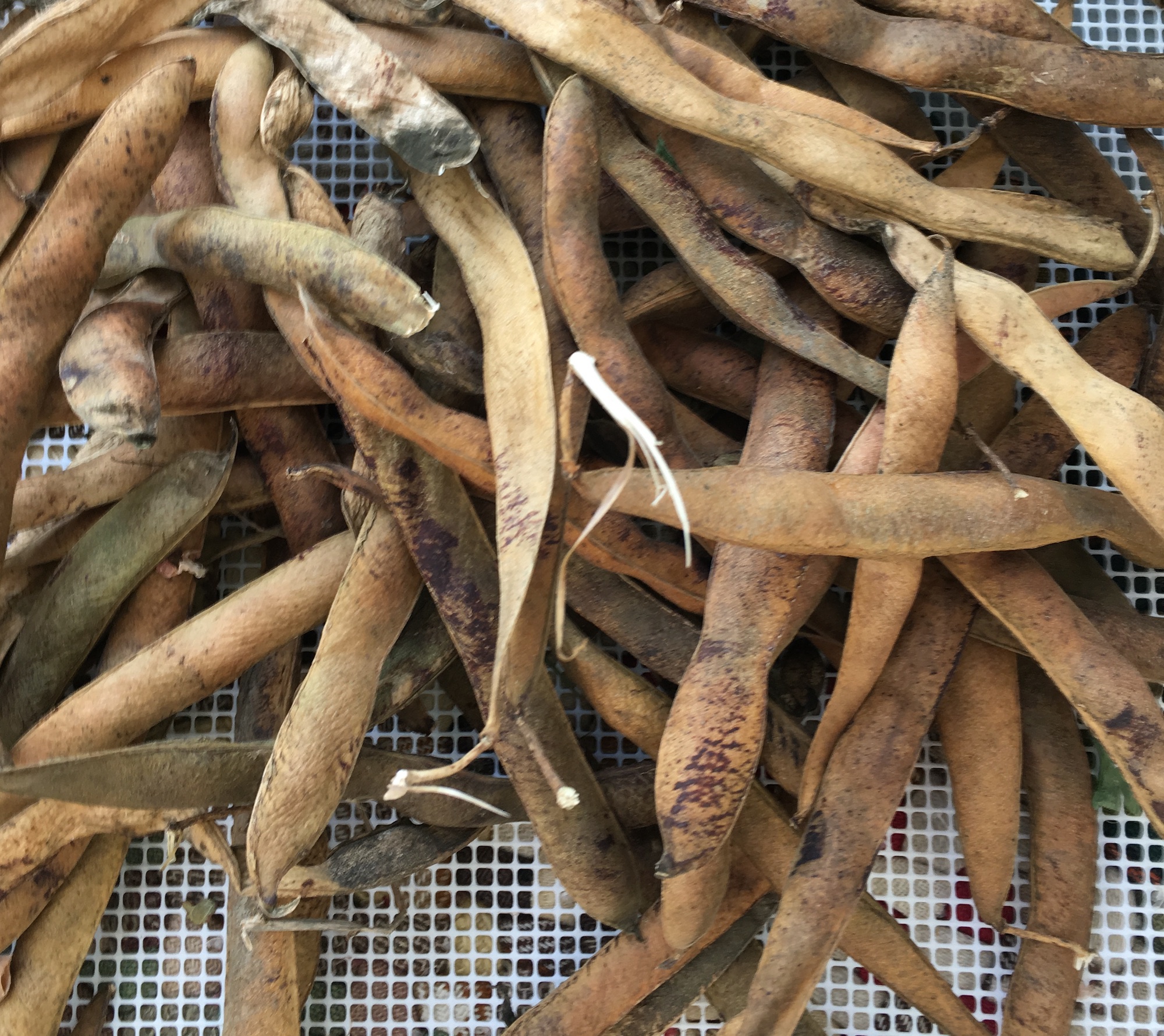
The first neighbourly gift I was given when we moved into our house twelve and a half years ago was a handful of dried scarlet runner bean pods for seed. A couple of weeks ago, I harvested the twelfth batch of seed from the descendants of those first beans. The neighbour who gave me those beans has since moved away, and I haven’t seen her for years. But her gift still feeds us every year.

Another friend gave us a few raspberry canes about ten years ago. Those raspberries (and their descendant cuttings) now fill a thirty-metre long bed, and yield large quantities of fruit each summer.

A few years after the raspberries, my husband drove one of my son’s classmates and his dad to a school outing. In exchange, the dad gave us a couple of gooseberry plants. A few strategic cuttings, and we now pick almost more gooseberries than we know what to do with each year.

Around the same time, one of my husband’s colleagues was pulling out some artichoke plants, and asked if we wanted a few. I’ve divided those plants twice since then, and we now eat more artichokes than anyone should be allowed to.

For a gardener, these are the best gifts—divisions, cuttings, and seeds from cherished plants. They are gifts that may seem small at the time, but they grow every year.

Recipe Rescue

As you all probably know by now, my husband and I develop a lot of our own recipes. We also have recipes collected from friends and family members, magazines, and library books.

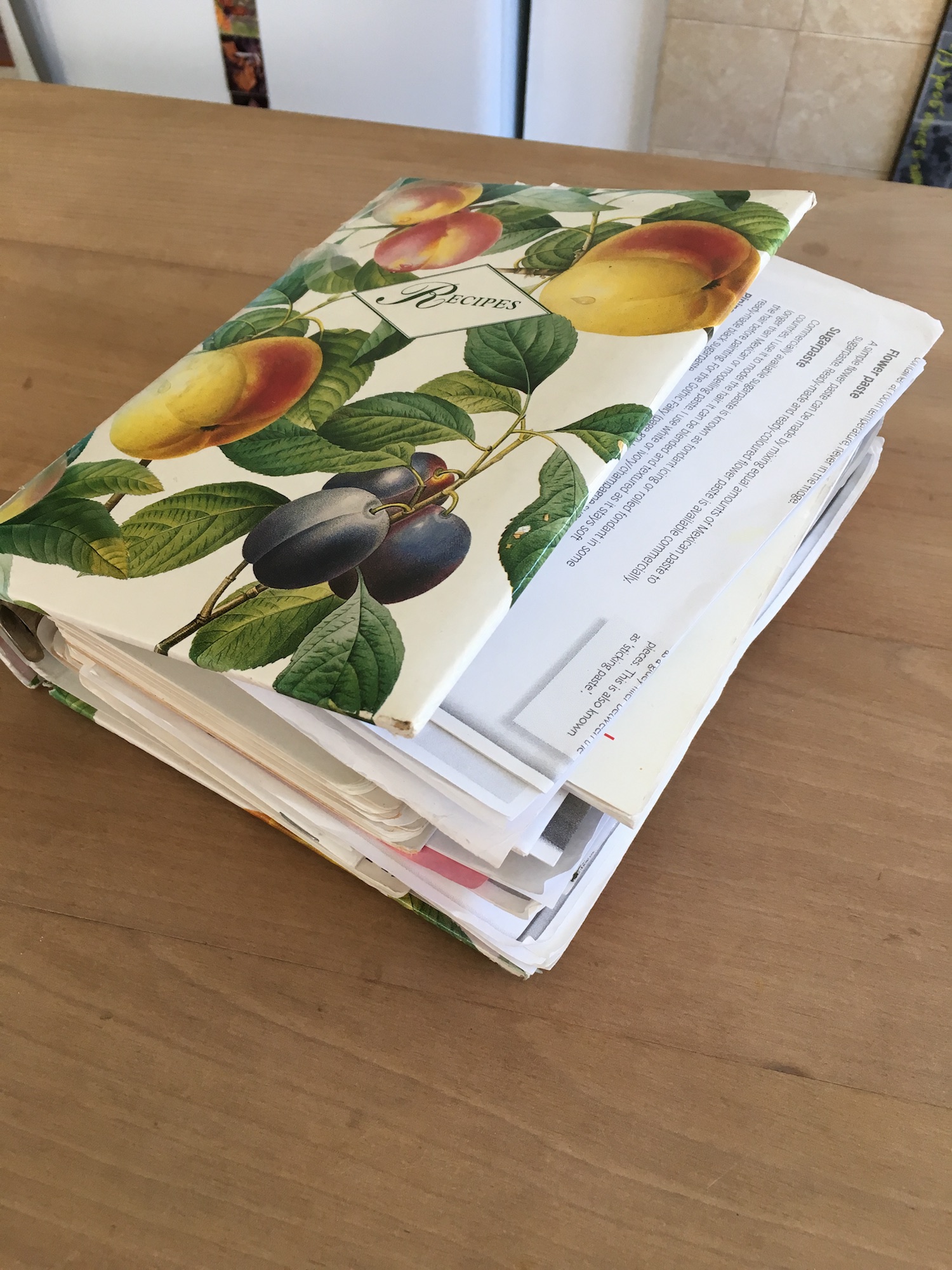
For over twenty-five years, we collected all these recipes in a notebook that was never designed to manage so much paper. I looked for a replacement for a long time and found nothing suitable.

Nothing marketed as a recipe notebook, that is. When I got creative (read desperate) I found the perfect solution.

  • One D-ring binder, A5 size
  • A pack of 100 A5 sheet protectors
  • One A5 size lined notebook

I added some homemade card stock tabs to help me organise, and voila—a perfect recipe notebook, with plenty of space for all our recipes.

I can slip photocopied recipes into the sleeves where they’re visible, not wadded together in the back of the notebook like they used to be, and I didn’t even have to copy the handwritten recipes—I just slipped the pages from the old notebook into the sleeves of the new. And the bonus is that recipes are now protected from the inevitable spills.

Can’t Stand the Heat?

Chilli peppers are one of the prettiest plants in the garden. It’s no wonder there are so many varieties grown largely for their ornamental value.

But I appreciate my chillies for their kick as well as their glossy leaves and cheerful fruit. Unfortunately, chillies are tropical plants, and many varieties need a longer, hotter growing season than I can provide here, even under cover.

Two varieties, however, regularly produce well.

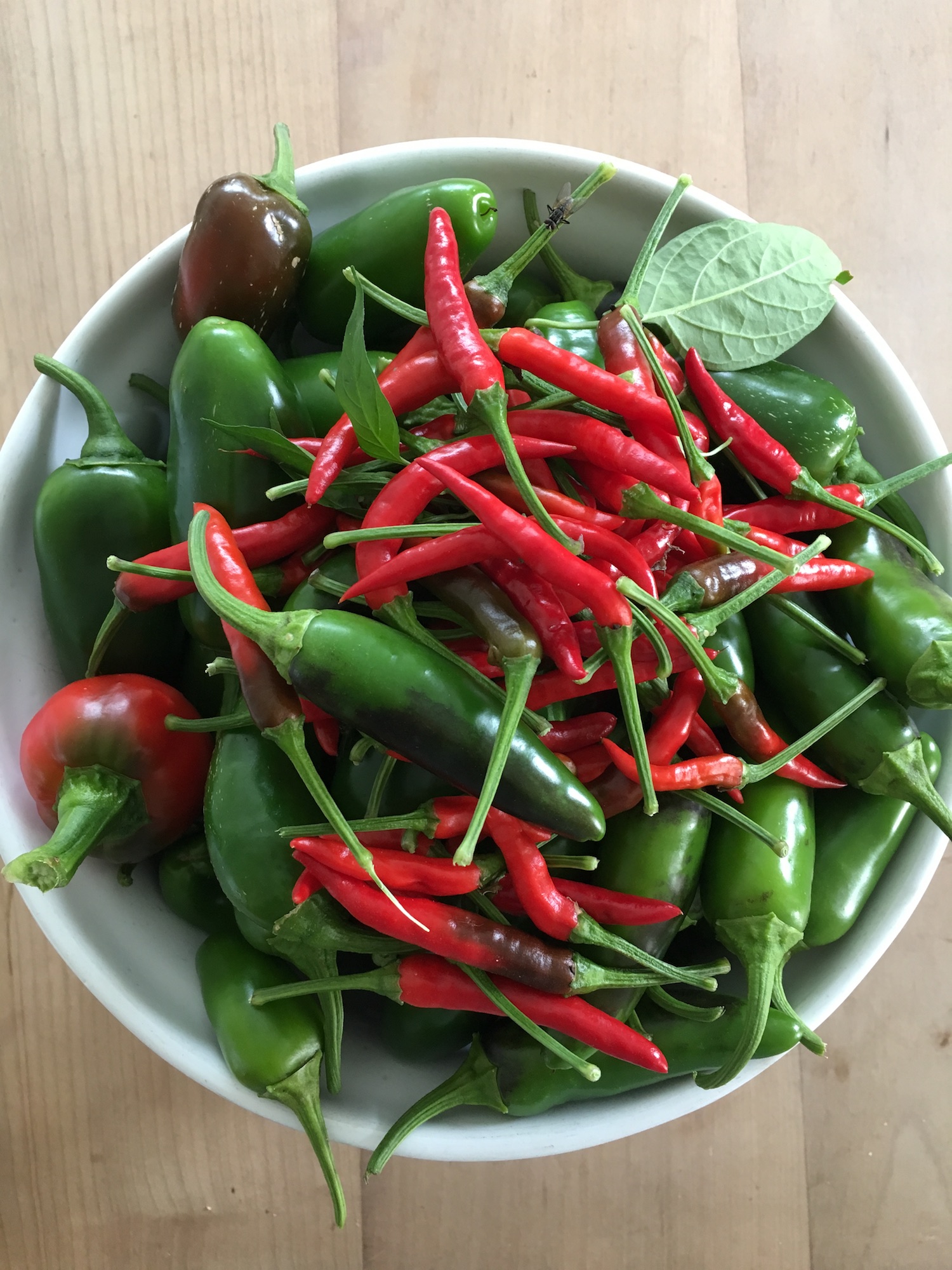
Jalapeño Early—I can’t grow normal Jalapeños, but this variety is a week or two quicker to produce, and that’s enough. One of my favourite chillies because its low heat level (2,500-8,000 Scoville Heat Units) means you can load a dish with them and enjoy the other flavours they impart along with the heat.

Thai Super Chilli—At 40,000 to 50,000 Scoville Units, these peppers are significantly hotter than Jalapeños. Just one of these little gems gives a nice kick to a dish. I particularly like these chillies because they dry well in beautiful strings hanging in the kitchen. They’re easy to grow and preserve, and they lend beauty to the garden and the kitchen all year.

A couple plants of each of these peppers is plenty to grow a year’s supply of spicy goodness, but you know I can’t stop there. I usually plant at least one other mildly spicy pepper. this year, it was Cherry Large Hot. Similar to Jalapeños for heat, these chillies really serve no purpose for me except as a beautiful red contrast to the green Jalapeños in salsas and pickled peppers. Good enough reason for me to plant them!

Yard Long Red Noodle

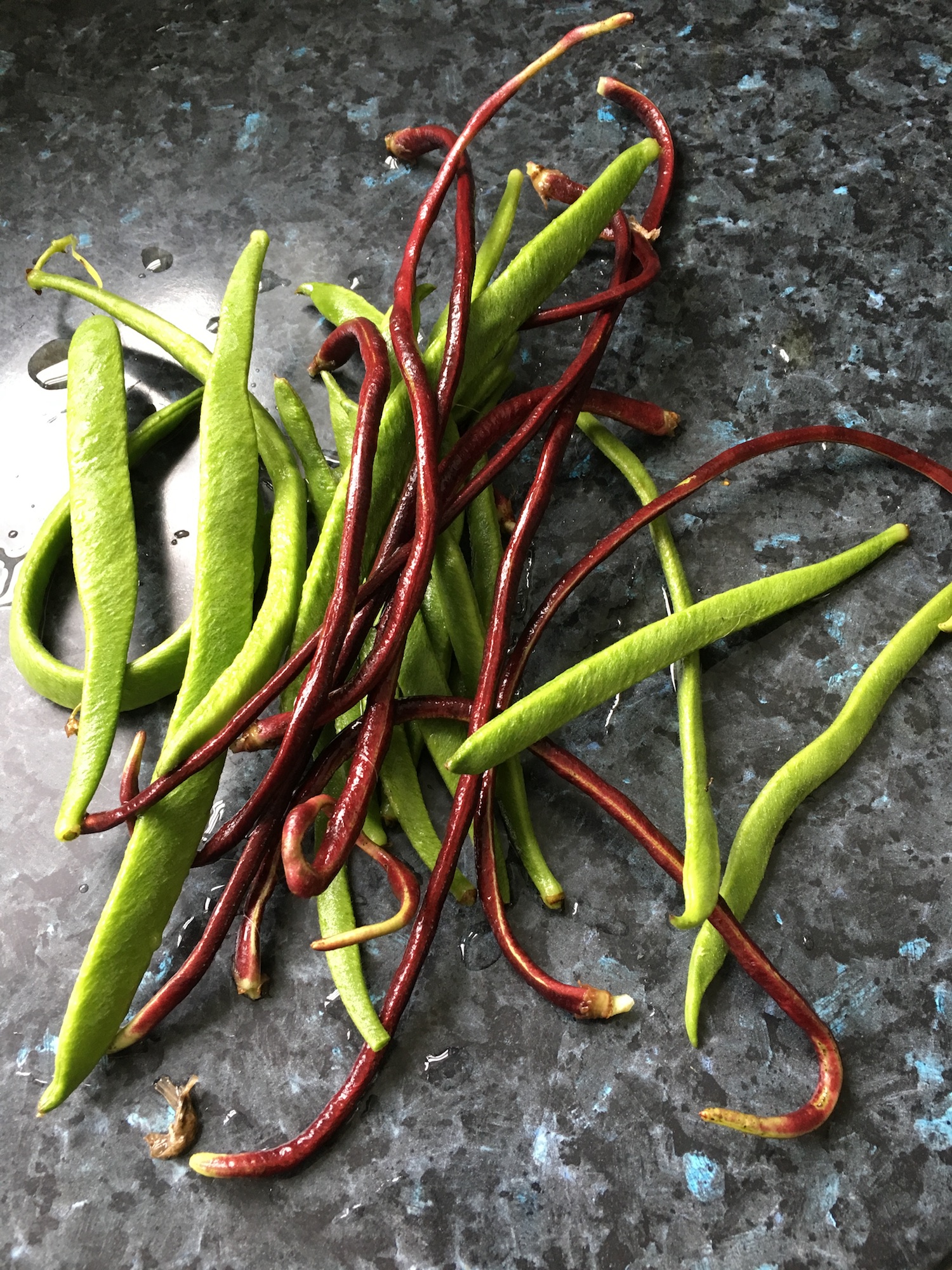
Yard Long Red Noodle alongside scarlet runner beans.

Along with all the other heat-loving plants that did well in this summer’s garden is the bean Yard Long Red Noodle (Vigna unguiculata—the same species as cowpeas). I have never had luck with these beans here in New Zealand—they are particularly sensitive to herbicide overspray, and also prefer it hotter than our summers normally are (ideal temperature for them is 30ºC). But this year, the plants germinated slowly, which spared them the springtime overspray, and the summer was hot and wet. I can’t say they’ve thrived (we grew yard long beans in Panama, and so I know what they’re supposed to grow like), but they have managed to produce a small crop of ridiculous-looking beans. The beans aren’t exactly a yard (90 cm) long, but they’re 30 cm (12 inches) or more, and are the sort of silly crop to make everyone smile.

Their red colour is pretty in the garden, and unlike many other red or purple vegetables, they retain their colour when cooked. Good enough reasons for me to plant them, in spite of their poor performance here—a few go a long way.

Watermelons Rule

Nothing says summer like watermelon—a seasonal fruit that matures during the hottest days of the year, and doesn’t keep.

Watermelon is an unreliable crop here. Twelve years ago, when we first arrived, I was told watermelon doesn’t grow in Canterbury. I’ve planted it every year, regardless, because I can’t imagine a summer without it.

Some years we get nothing. The plants don’t grow at all, or they grow too slowly to produce mature fruit before the first frost, or they’re nailed by herbicide overspray. Some years we get a few smallish fruits that we savour as rare delicacies.

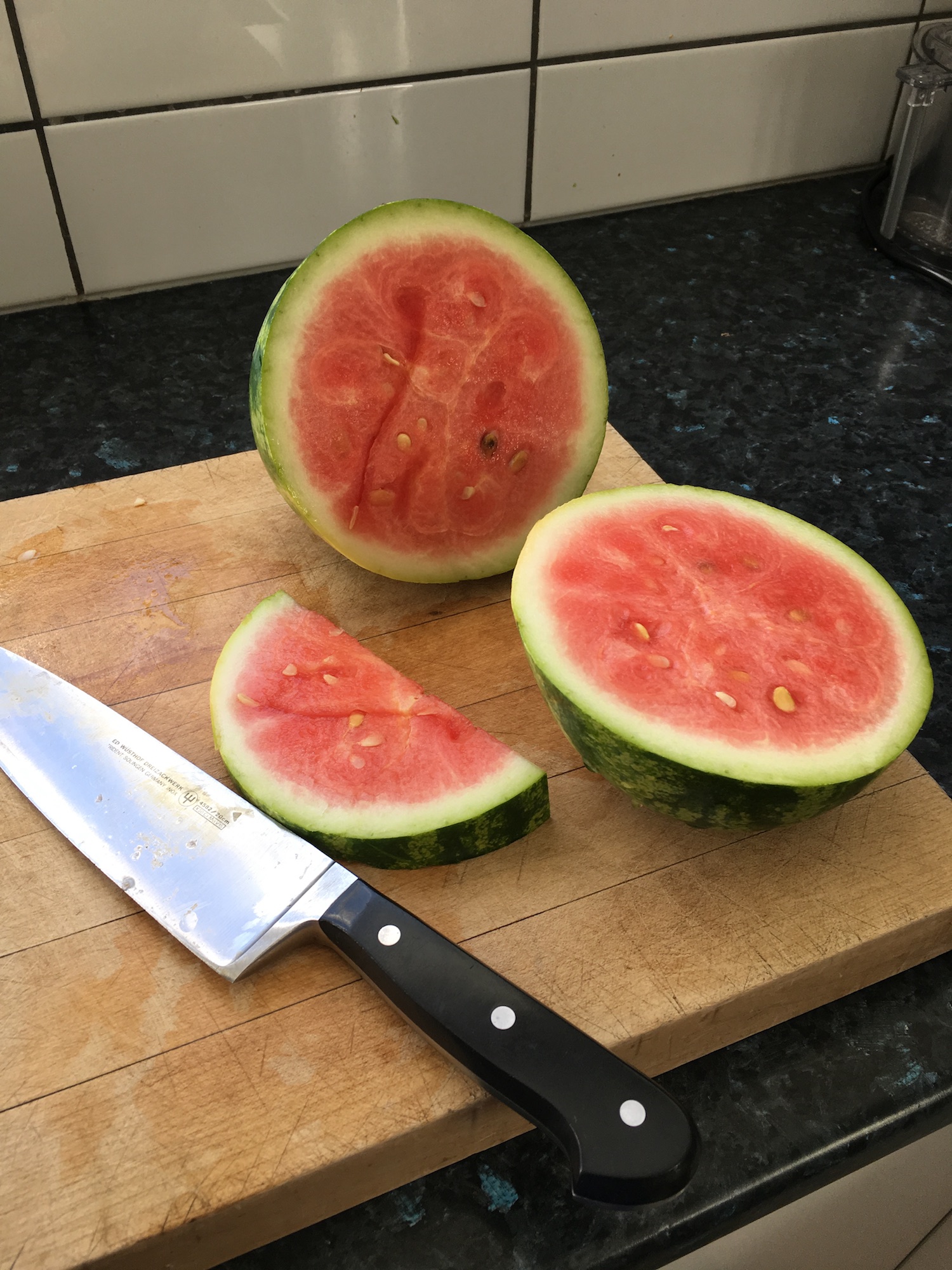
This year we are awash in watermelon. The fruits aren’t big—even the largest hasn’t reached the weight the seed catalogue says this variety should—but they’re the largest watermelons we’ve managed to grow here. And most importantly, they’re sweet, crisp and delicious. And there are lots of them!

As I sit on my office deck spitting seeds, I am reminded of the magical poem by John Tobias—Reflections on a Gift of Watermelon Pickle Received from a Friend Called Felicity.

I wonder if my kids will remember this year of watermelon as Tobias wrote…

“…During that summer—
Which may never have been at all;
But which has become more real
Than the one that was—
Watermelons ruled…”

Summer Soup 2018

I feel like a broken record sometimes (those of you under the age of 45, ask your parents what I mean by that). The garden season repeats itself each year in a pretty predictable fashion, and I find myself blogging about the same events every year.

Saturday was Summer Soup day, which I’ve blogged about more than once before (in 2015 and again in 2016). This year’s production was 25 quarts of soup and 6 quarts of vegetable stock, bottled and ready for quick meals throughout the year. Production time, just over 14 hours.

It always feels good to fill every pot in the kitchen with delicious vegetable soup…at least for the first hour or so. But by the end of the day, I’m sick of being in the kitchen and ready to collapse. I need to remember the feeling later in the year when I’m feeling guilty about just pulling a jar of soup out of the cupboard for dinner. I’ve put in the time. We all have, because even the kids help pick and chop vegetables for summer soup. We’ve earned every ‘free’ meal we get from it.

Crazy Cake Season 2018—#2

My son left it wide open for me this year. He wanted his usual spice cake (the one I’ve marked with his name in the cookbook), but he left it up to me how I decorated it.

I swear that was more difficult than being told what he wanted.

After many hours scouring the cupboards and looking at cake photos online for inspiration, I came up with a large geode.

Most geode cakes online are, frankly, weird—an ordinary tiered cake covered smoothy in fondant, with a slash down the side filled with geode crystals. They don’t look like a geode at all, and some look disturbingly like vaginas. I didn’t think my son would appreciate that. I strove for a more natural geode look.

I also hoped for a tastier geode material. I was inspired to do a geode by a bag of crystalised ginger in the cupboard. Most geode cakes, though, are made with rock candy, which isn’t the nicest accompaniment to cake. On a spice cake, I thought crystalised ginger would be a much more appropriate flavour (and texture). Unfortunately, my experiments with colouring ginger were uninspiring—the ginger had a beautiful sparkling appearance, but light colours looked grey on the yellowish ginger, and dark colours looked black. I couldn’t manage a nice geode-like lavender.

So I made purple hard candy and broke it into shards for the crystals.

The result was reasonably geode-like, and easy to make. And better than a crystal vagina.

Crazy Cake Season 2018–Cake #1

It’s that time of year again, when I get to indulge in all things cakey.

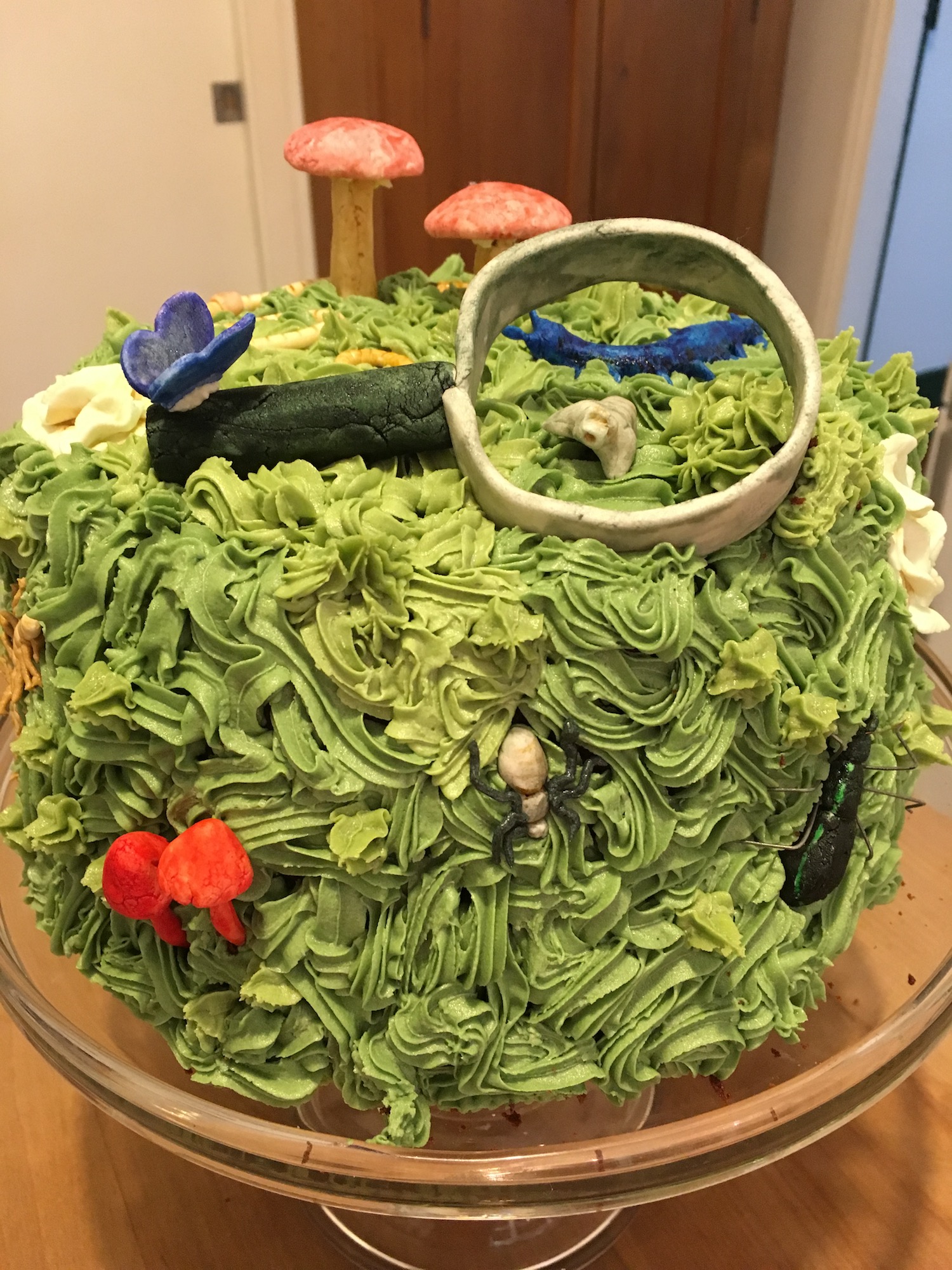
The girl asked for ‘a mossy hummock with life’ this year. I had fun creating invertebrates and fungi from Mexican paste. In hindsight, I should have made more critters—when it came time to place them on the cake, it felt sparsely populated. But the final effect was fun, and the overly decadent chocolate cake underneath was spectacular.