Lovely Leftovers

2017-02-20-20-05-18-smMost days I eat dinner leftovers for lunch. Sometimes they’re okay, sometimes they’re lame, occasionally they’re quite good.

But some leftovers are always nice.

During crazy cake season, I make a lot of icing, marzipan, and other special items for decorating cakes. Invariably I make too much–after all, I don’t want to run out in the middle of decorating a cake.

Some leftovers are eaten as-is–meringue mushrooms were a huge hit one year, as I recall, as were chocolate leaves.

Other leftovers need to be incorporated into something else to be enjoyable. This week I had a lot of marzipan leftover. Marzipan is okay on its own, but it’s much better with chocolate.

I rolled the leftover marzipan into 24 little balls, and placed each ball into the middle of a chocolate cupcake. The presence of the marzipan flattened the cupcakes (and made little belly buttons in some), but the chocolate-almond combination is excellent.

Best leftovers I’ve eaten in a long time. Now, if only I could justify eating them for lunch…

Ginger Slice

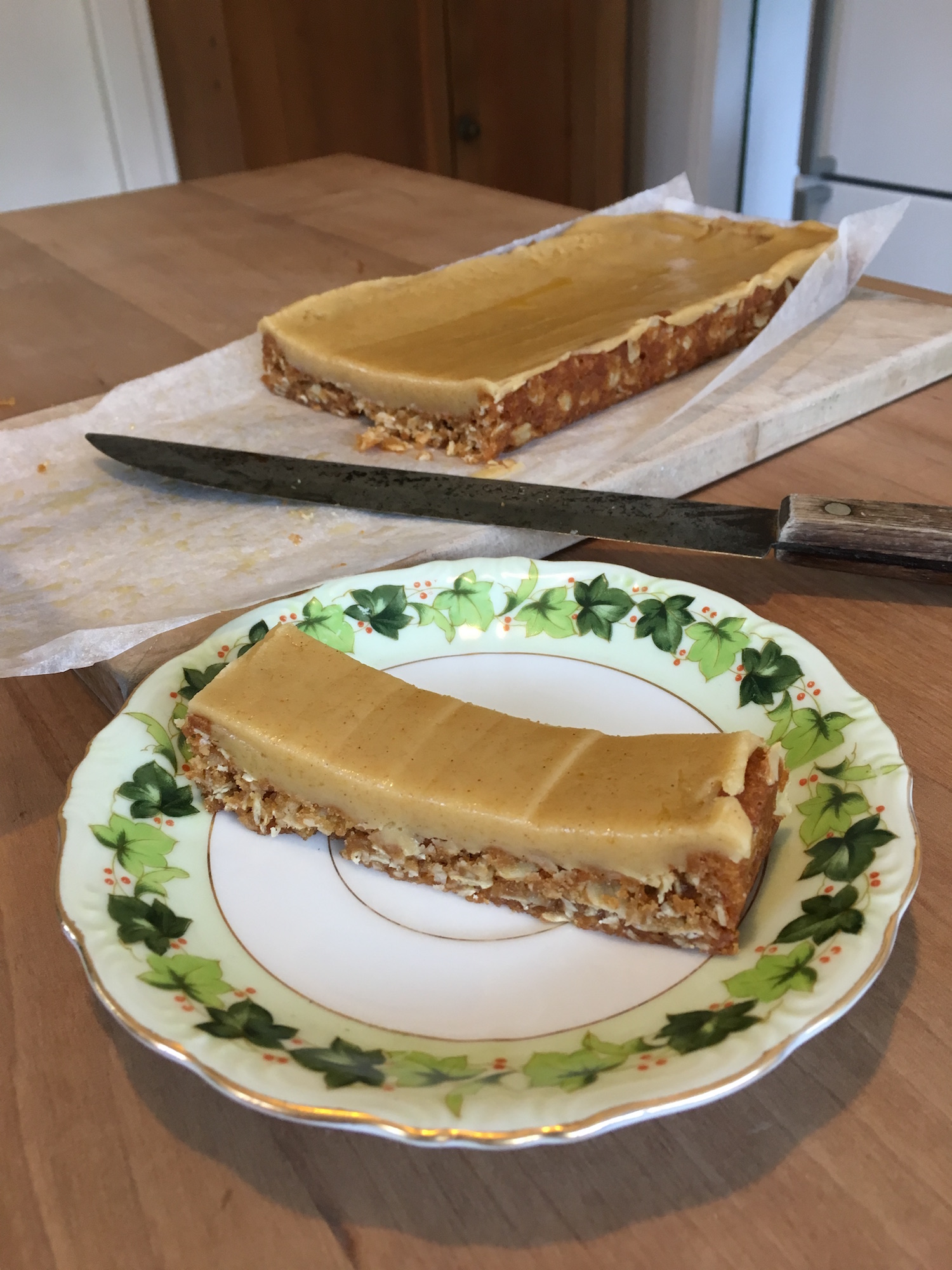
img_3132I asked my daughter if she had any requests for today’s baking, and she asked for ‘those ginger slices’. I have no idea what she was talking about, because I’ve never made ginger slice. Sounded like a good excuse to try something new. Besides, making a slice let me use the slice pans Santa brought me for Christmas this past year.

A quick on-line search took me to this recipe, posted by Chelsea Winter. The recipe was quick and easy, if rather high in butter and sugar.

The result was greeted with praise by my ginger-loving family. Even I (not really a fan of ginger) thought they were pretty good, especially with a cup of tea.

Uplifted Polenta Lasagne

2017-02-11-18-05-05-smLet me start by saying I had nothing to do with this meal, aside from growing the raw ingredients and making the feta and parmesan cheese. I was off doing other things while my husband cooked this. I didn’t even do the dishes afterwards–the kids washed.

Do I have the best family, or what?

This incredible dish is actually quite simple. My husband started by making firm polenta (flavoured with parmesan cheese, rosemary, salt and pepper) and allowing it to cool in an oiled jelly roll pan. When the polenta was firm, he cut it into squares, and layered the squares at an angle in an oiled lasagne pan with slabs of raw zucchini, slices of tomato, salt and pepper, and a mix of feta and grated edam cheese. He sprinkled fresh basil, chopped garlic, and diced tomato on top, and baked it at 220°C (on fan bake) for about 20 minutes. The result was rich, juicy and flavourful.

My contribution to the dinner was a simple salad of thinly sliced cucumbers tossed with salt, red wine vinegar, olive oil, and chopped fresh fennel leaves–a perfect accompaniment.

Summer cooking just doesn’t get better than this.

Cake #2 of Crazy Cake Season

img_3078He asked for a cube. Said I could decorate it however I wanted to. My first thought was to create a building (because he’s keen on architecture) but, truth is, a cubical building just looks wrong. Then I thought a Rubix cube or Lego block would be cute…but dreadfully boring to make. I wanted to create something unexpected, something not meant to be cubical. And I wanted an excuse to play with more Mexican paste.

So, inspired by Terry Pratchett’s Discworld, I created Cubeworld. Instead of elephants holding it up, there is a dragon holding it down…or something.

Along the way, I learned more about Mexican paste (or maybe I learned more about my sculpting skills…). Creating largish shapes with it is easy–it’s lovely to work with–but fashioning tiny animals was almost impossible (again, probably my skill here, not the Mexican paste at fault). I tried to make the dragon smaller, in keeping with the scale of the other parts of the scene, but I just couldn’t manage the tiny spikes and other sculptural details needed. And the longer I fussed with it, the drier it got, until the thin parts started crumbling. I just couldn’t work fast enough at a tiny scale.

In hindsight, it would have been good to practise with modelling clay or plasticine until I could form the dragon quickly.

Despite its limitations, the Mexican paste was, again, fun to play with, and was able to do things icing just can’t do.


Size Does Matter

img_3065The weather was finally cool enough today to think about baking. Knowing there’s another birthday cake to make Thursday evening, I decided to make something entirely different today–peanut butter cookies.

I’ve made a number of different peanut butter cookie recipes over the years, and there was a new one I wanted to try; it used wholegrain flours and whole peanuts in addition to peanut butter.

But as I glanced at the recipe, I realised it only made two dozen cookies. What kind of cookie recipe is that? I know I could have doubled the recipe, but it was the principle of the thing. Two dozen is hardly any cookies at all (especially with two teens in the house). It’s not worth the kitchen mess to make that few cookies, and they would look lost in the cookie jar.

So I pulled out Old Faithful–the 1975 edition of Joy of Cooking. Sixty-five peanut butter cookies later, I was pleased I had.

Salty Pretzels, Shiny Pots

img_3057I love soft pretzels. If I had an unlimited supply of them, I’m certain I would simply eat them until I was sick. So it’s a really good thing they’re basically not available in New Zealand.

They’re easy to make, though, and the kids enjoy shaping them. We make them with some regularity, usually timed so that they’re coming out of the oven at lunchtime. Served with dill pickles, mustard, and a good sharp cheese, they make an excellent meal (if a bit salty).

I love these pretzel meals, but even after the pretzels are gone, they leave a lasting bonus.

A shiny pot.

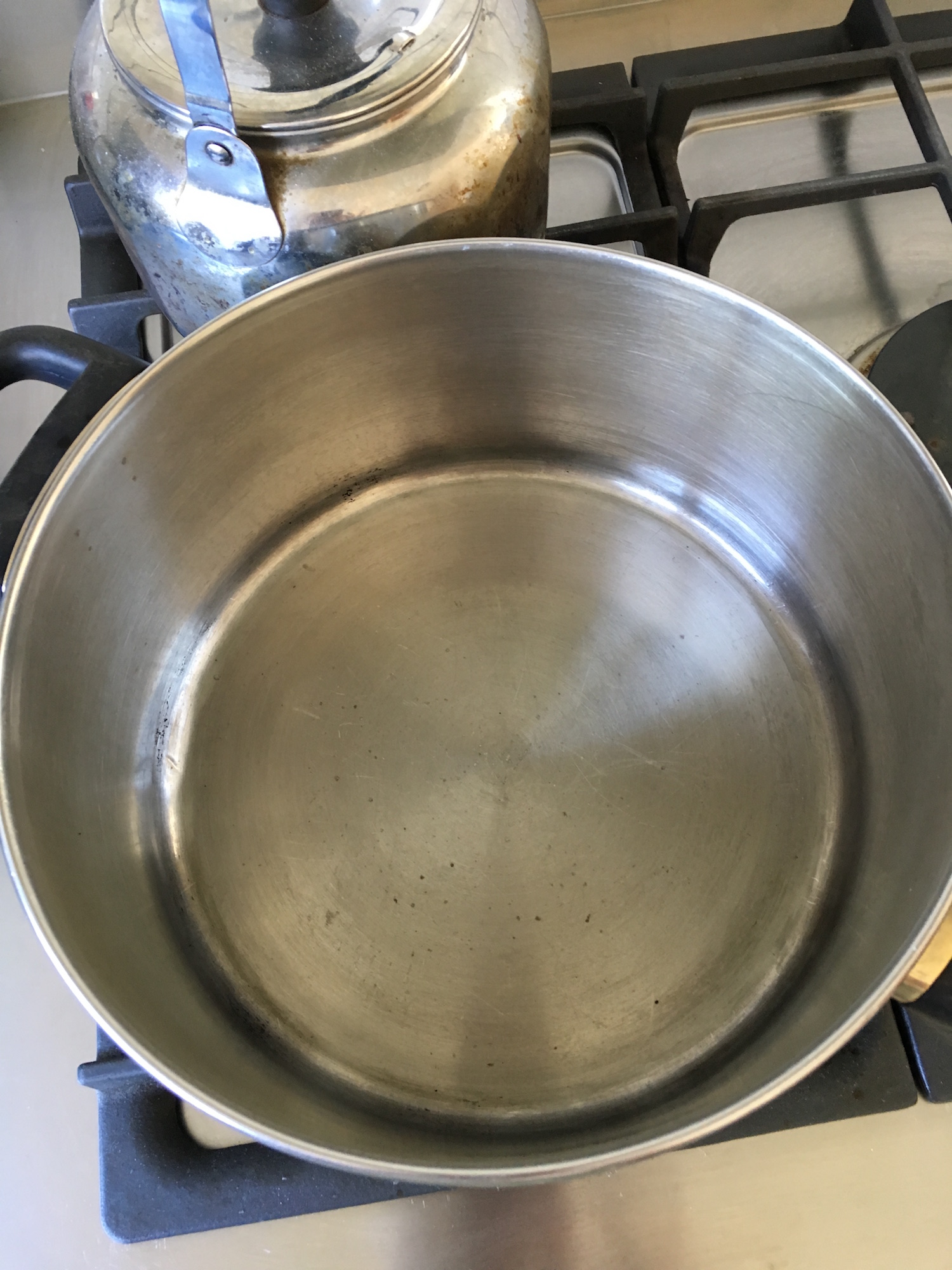
Boiling the pretzels in a baking soda/water mixture loosens all the burnt-on oil from my cooking pots. You know, all those dark spots you chalk up to ‘patina’ because they’re a real pain to wash off. Loosened by the baking soda, they lift right off when you wash the pretzel-boiling pot.

I learned this years ago, and regularly boil water and baking soda in my pots to get them nice and clean. But I never have the patience to boil it long enough–by making pretzels in the baking soda mixture, I leave it boiling long enough to lift the stains.

Pots looking dingy? Maybe it’s time to make pretzels!

Greengages

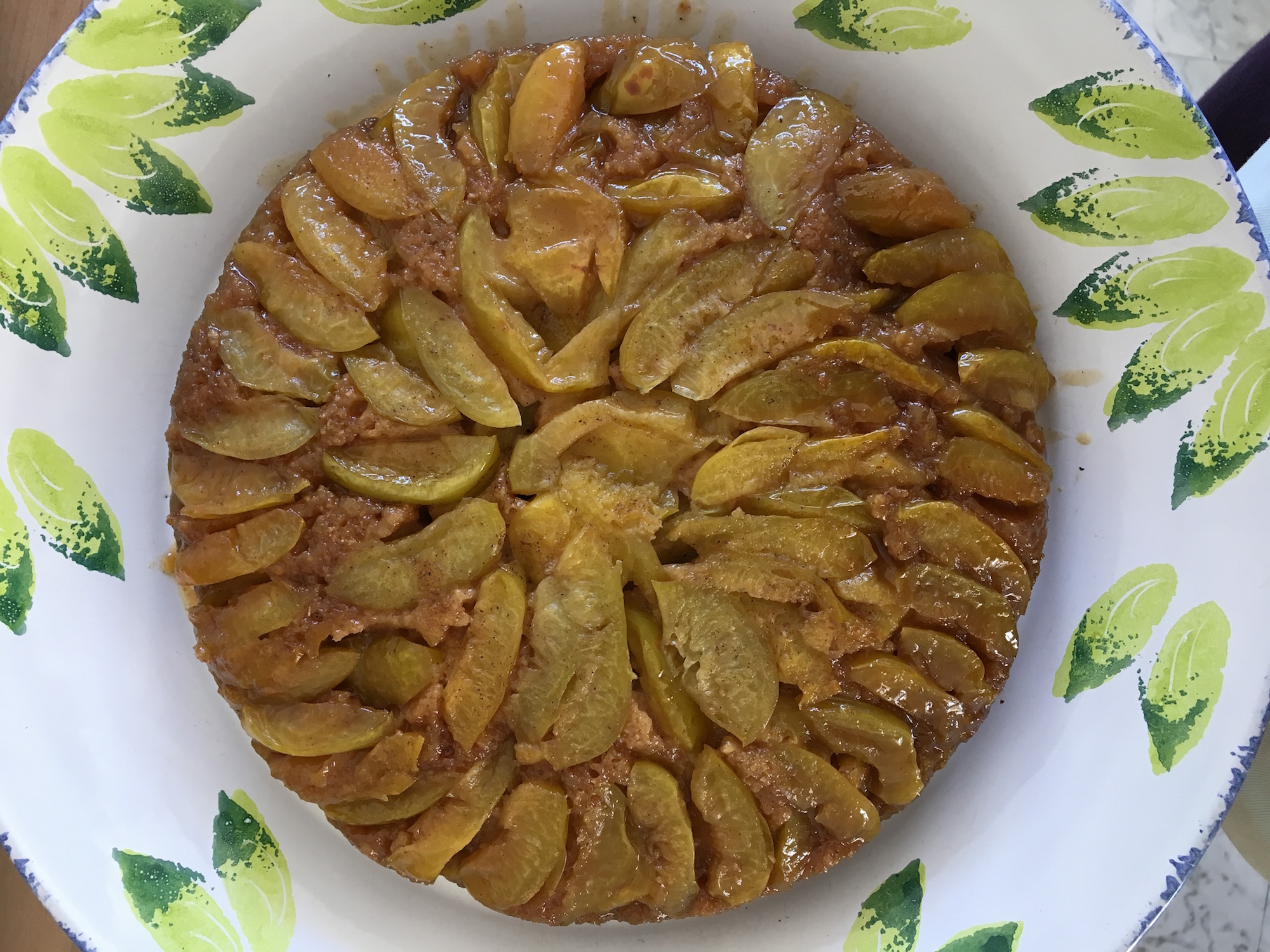
2017-01-25-14-58-09-smWe don’t often get many greengage plums. Our tree is small, and it sits in a windy location, so many fruits blow down before they are anywhere close to ripe. This year wasn’t too bad–we harvested about three kilos of fruit. Plenty to enjoy.

One of my favourite things to do with summer stone fruits is to make upside down cake. Indeed, I’ve blogged about it three times in the past two years. So today I’ll ignore the cake, and mention the plum, instead.

I didn’t know a lot about greengages before coming to New Zealand, where I found a fair number of people had them growing in their yards.

Greengages are named after Sir William Gage, who imported them to England from France in 1724. The cultivar he imported had another name, but apparently the tag was lost in transit (These were the days before anyone considered biosecurity…Importing a strange plant? Whatever). They were popular in America in the 1700s, but fell out of favour in the 1800s.

According to a 2004 article in the New York Times, there’s good reason greengages fell out of favour. The trees take longer to mature than other plums, they fruit erratically (I thought it was just our tree), the ripe fruit is fragile, and they’re prone to cracking and rotting on the tree. Not exactly an easy plum for commercial production.

But the greengage is considered one of the finest plums for flavour. Grown commercially, it fetches a high price. According to the New York Times article, in 2004 fewer than 100 greengage trees were harvested commercially in the United States. They are more common in Europe and New Zealand. New Zealand exports a small quantity of greengages to the US each year, where they are sold in specialty markets.

So I feel much better about my 3 kilo harvest of greengages. They are wonderful, and if they’re a bit finicky to grow? Well, that just makes them all the more special when we have a good year.

Crazy Cake Season Begins!

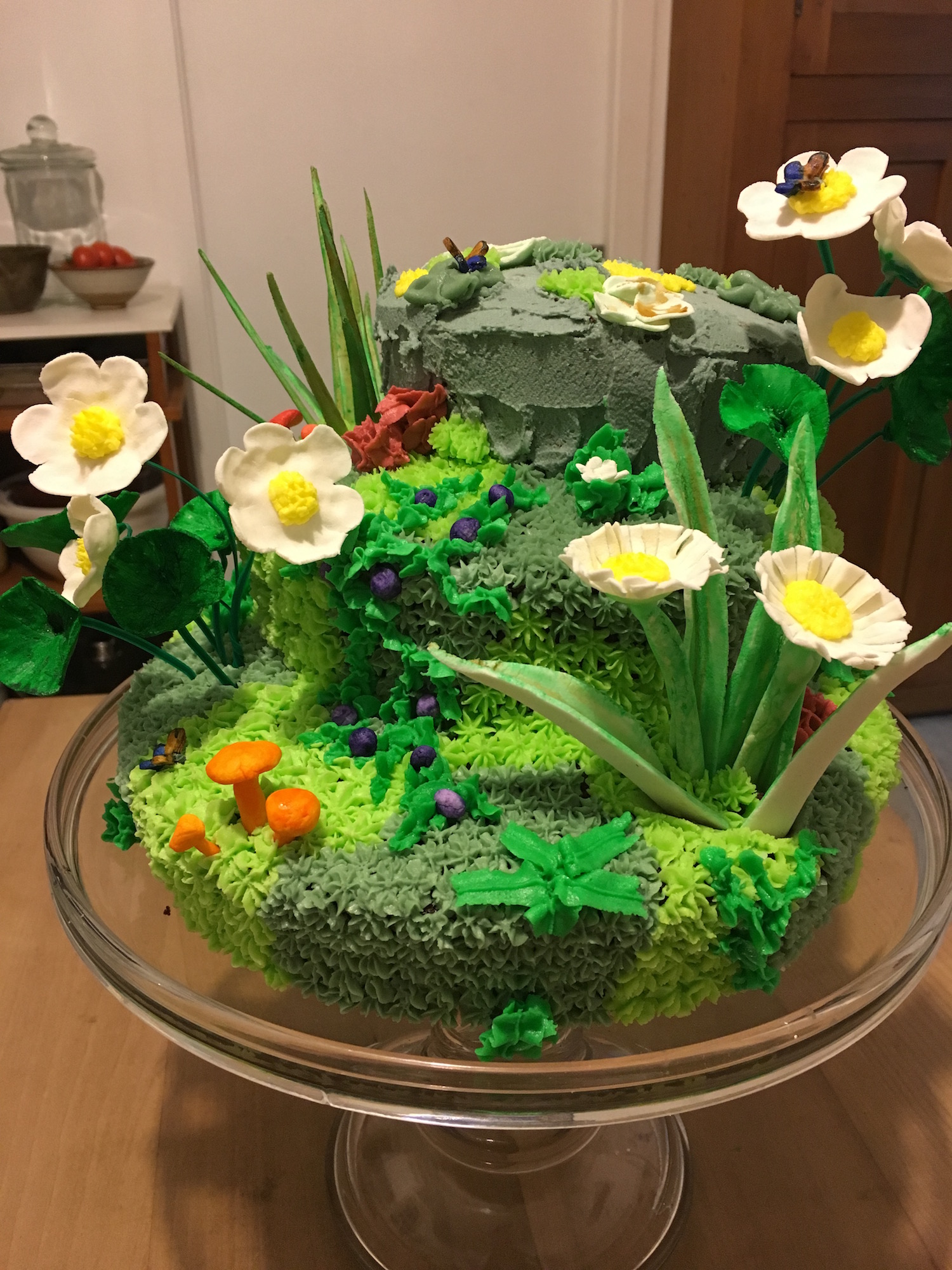
2017-01-26-21-49-17-smWoo hoo! My favourite time of year–the time when I have lots of excuses to make ridiculous cakes–has begun with the daughter’s birthday.

I like to try new cake decorating techniques, and this year I’m using Mexican paste. It’s surprisingly easy to make and to work with, if you don’t mind remortgaging your house to pay for the gum tragacanth that gives it the right texture. I expect the stuff is dirt-cheap elsewhere in the world, but here the price was shocking (about $10 per tablespoon).

Great fun to work with, though. I’ve already gotten my money’s worth in entertainment.

Combine 227 g (8 oz) icing sugar (confectioner’s sugar) and 1 Tbsp (15ml) gum tragacanth in a bowl. Add 2 Tbsp water. Stir until it becomes crumbly and damp. Turn out of the bowl and knead until pliable. Place in a plastic bag and leave at room temperature for 12 hours until firm. When you’re ready to use it, break off a small piece and knead until softened.

The paste can be moulded into shapes, or rolled thin and cut with cookie cutters. It works a lot like modelling clay, though it tends to stick. I rolled mine out on a non-stick baking sheet, and would have appreciated a non-stick rolling pin, too, but with care I managed with an ordinary wooden rolling pin. I picked up a cheap set of fondant shaping tools that proved very helpful for producing the shapes I wanted.

After you’ve made your shapes, you need to let them dry and harden for about 24 hours. Then they can be painted with paste food colouring thinned with gin. You can also knead food colouring into the paste.

Once the paste hardens it is quite tough, but thin pieces are brittle (reminds me of unfired ceramics). I didn’t plan very well for my leaf and flower stems. I made the leaves and flowers, and only considered what I was going to use for stems after they’d dried. In hindsight, I should have attached the stems while the paste was still pliable. Nothing a little gingerbread icing, used as glue, couldn’t fix.

So, where was all this sugary sculpture heading?

My brief was an alpine scene atop chocolate cake.

Brioche

2017-01-22-07-09-00-smI’ve been threatening to make brioche for some time. Last time I made it was about seventeen years ago.

Not that I don’t like brioche–I love it–but I reckon that’s about how frequently one should eat it if one wants to live to a ripe old age. Three eggs provide most of the liquid, and 175 grams of butter give it that unbelievable silky texture. The butter and egg also make the dough incredibly sticky and difficult to work with, so it’s not something to make every weekend.

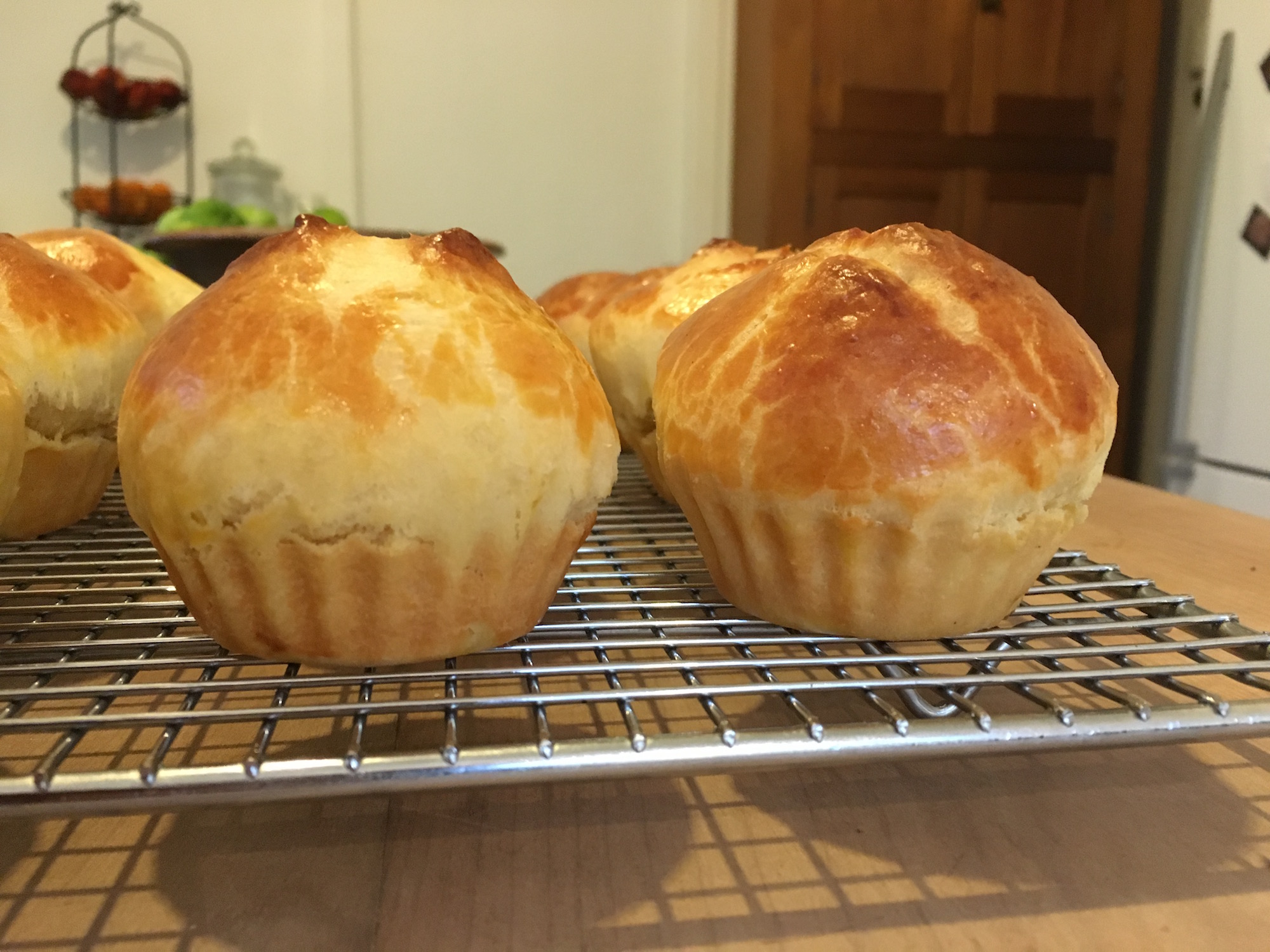
A cool, drizzly evening and the promise of a rainy day today made Sunday morning decadence sound like a good idea. I made up the dough after dinner Saturday and left it in the fridge overnight. This morning, it was a simple thing to roll balls of dough around chunks of intense dark chocolate and spoonfuls of sparkling red currant jam and pop them into little tart tins.

Half an hour later, these gorgeous little buns emerged from the oven. They were every bit as good as I remember them being seventeen years ago.

It may be another decade or two before I make brioche again, but something that decadent doesn’t need to come around too often. The memory is just as tasty as the real thing.