Cicada Killers

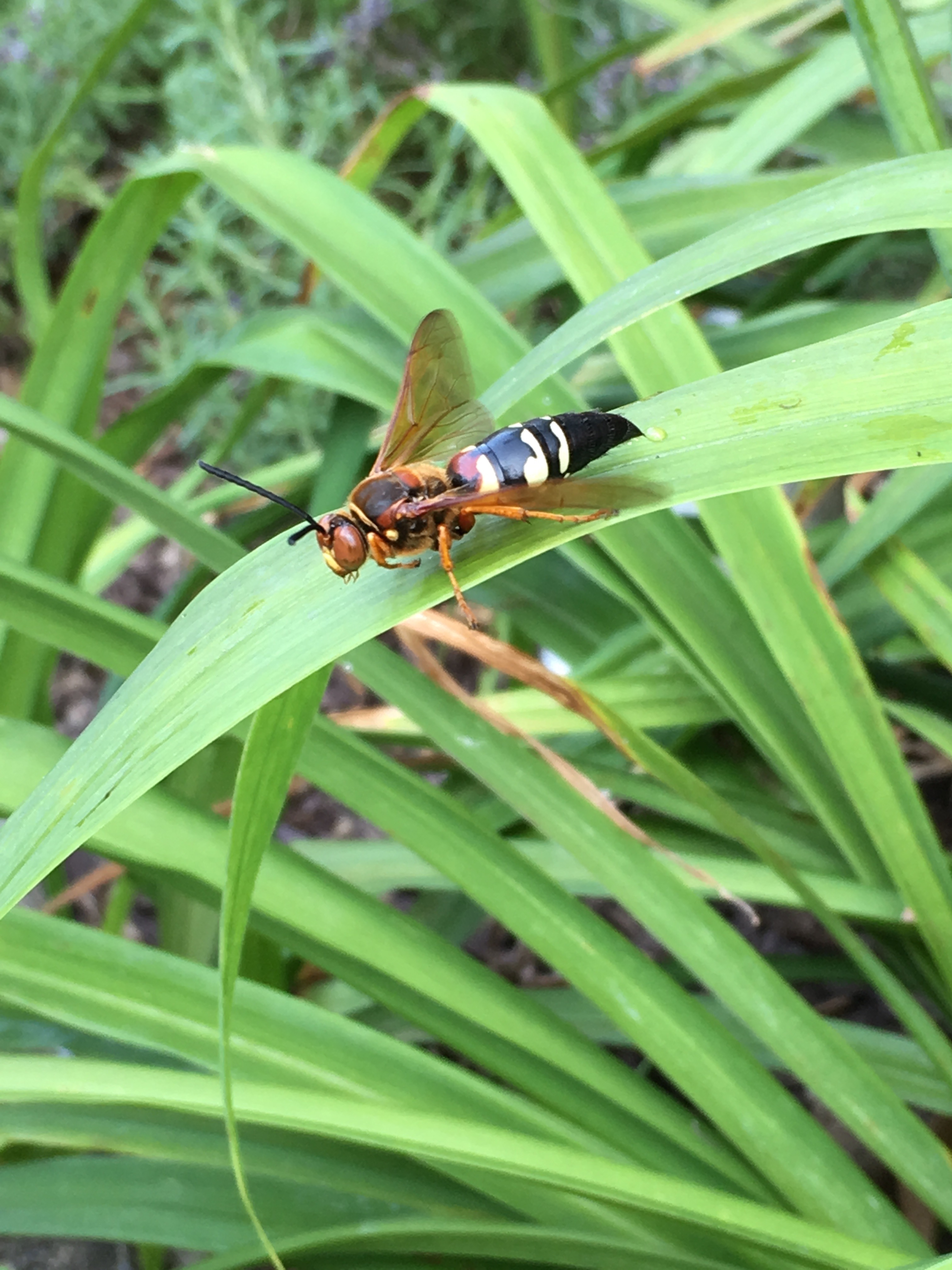
IMG_1470How can you not love an insect called a cicada killer?
The eastern cicada killer (Sphecius speciosus) is a solitary burrowing wasp. One of the largest wasps in eastern North America, the females top out at about 5 cm (2 inches) in length. These beautiful, large wasps are harmless to humans, but deadly to cicadas.

The female catches and stings adult cicadas. The sting paralyses, but doesn’t kill the cicada. The wasp then takes her immobilized prey to her underground burrow where she lays eggs on them. Male eggs get one cicada each, and female eggs get two or three cicadas (because females are bigger and need more food to reach adulthood). The eggs hatch out, and the wasp larvae eat the cicadas.

Cicada killers, looking a lot like giant hornets, strike fear into most people’s hearts. Their behaviour can be frightening, too. Males defend territories from other males, and can be seen fighting one another, grappling in midair. But males have no stinger, so they’re completely harmless to humans. Female cicada killers can theoretically sting, but unlike the social wasps, they don’t sting to defend their nests. You’re only likely to be stung by a cicada killer if you pick it up and squeeze it.

The cicada killer in this photo is a male. His territory is in my mother’s garden, and he is reliably found on a particular plant in the morning sun, sallying forth to challenge other males who get too close.

Garden of Colour

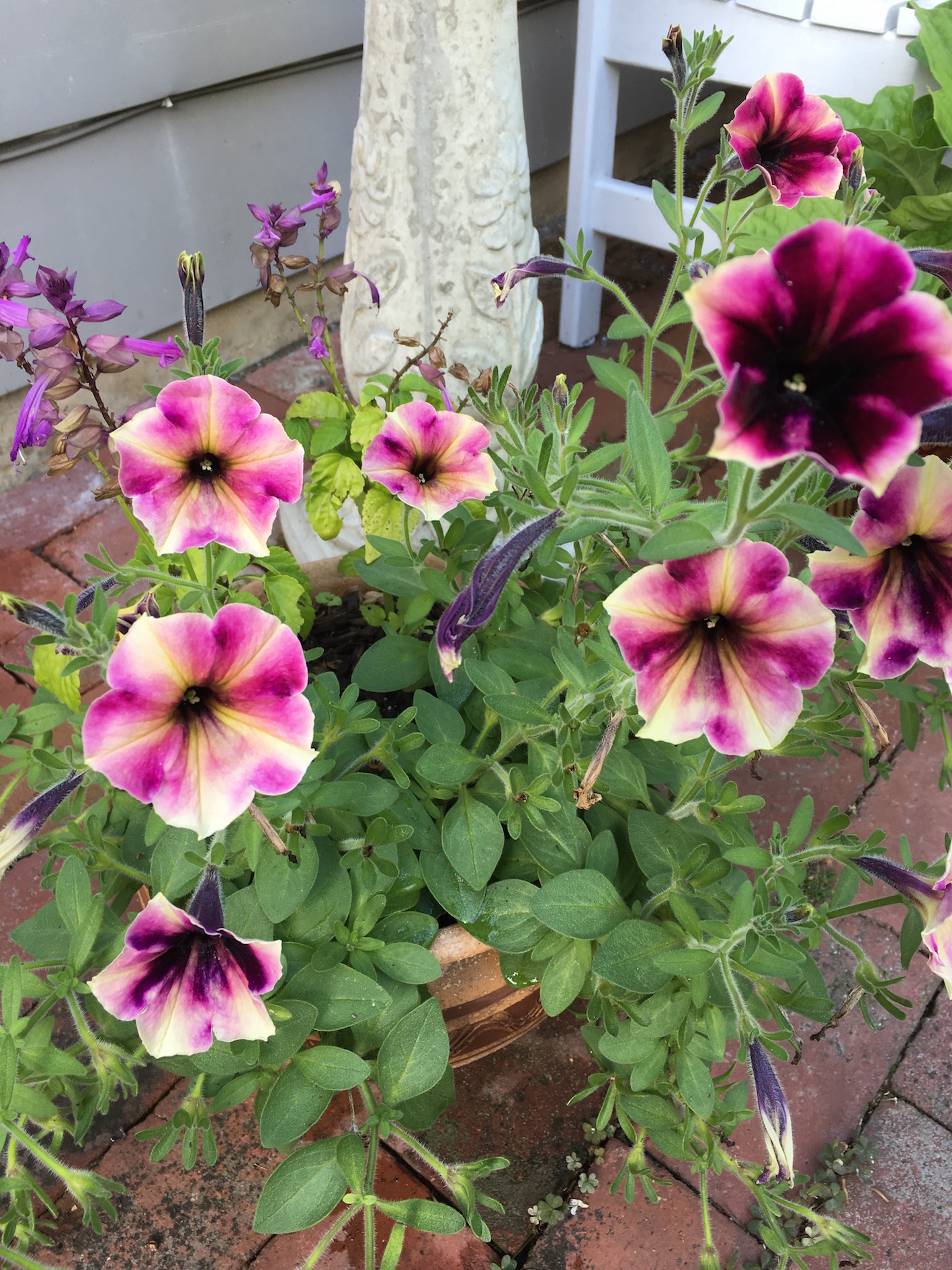
IMG_1454I don’t get to visit my parents very often, as they live on the other side of the planet. When I do, I am always struck by my mother’s garden.

For me, flowers are a second-thought. I like them, but I’m so focused on the vegetable garden, I don’t have the energy leftover for the effort of growing flowers. Nor do I really have the water to keep them growing through summer.

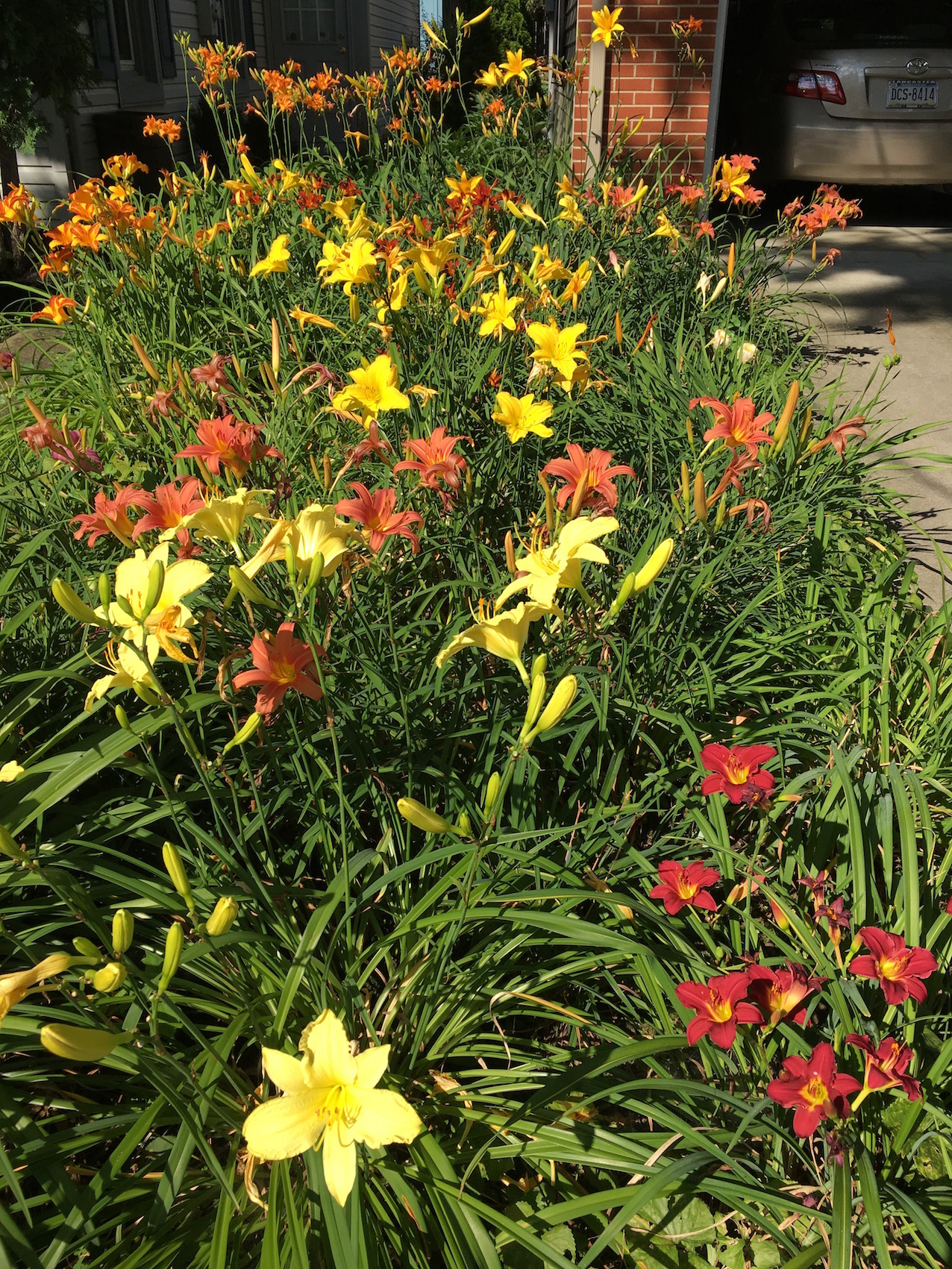
IMG_1453 (1)My mother, however, focuses on flowers, and her garden is a stunning show of colour. It’s amazing to me the wide variety of plants she packs into such a small space!


IMG_1448


Like Those Lichens

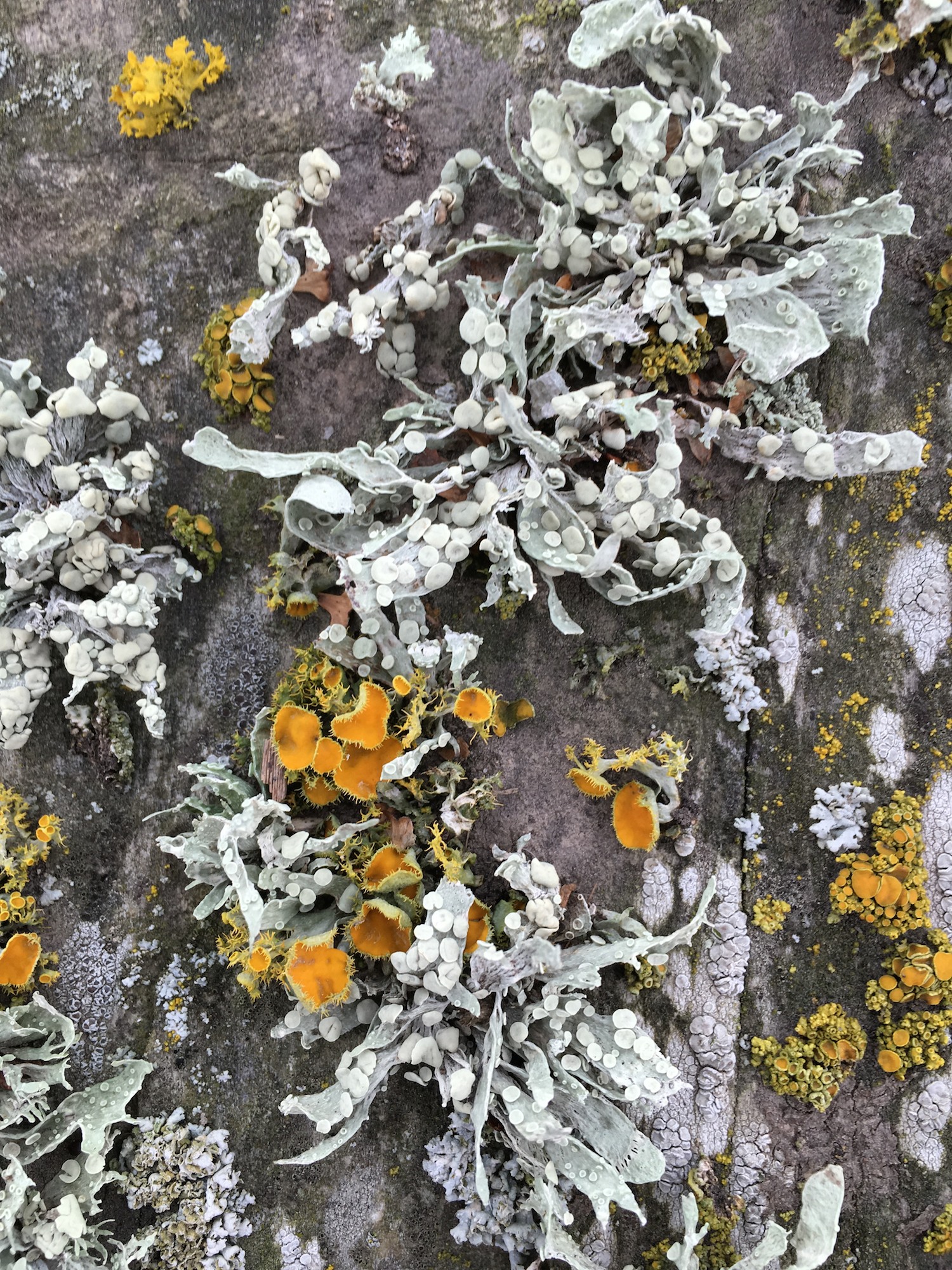
2016-07-04 10.32.44 smLichens are one of those groups of organisms that defies categorisation. A lichen is a symbiosis between a fungus and either a green alga or cyanobacteria. As such, they are neither strictly fungus, nor plant, nor bacteria.

Nor are all lichens the same. The relationships between fungi and their photosynthesising partners did not all evolve from a common ancestor, so each relationship is unique. In all cases, the fungus has the upper hand—capturing and enveloping its algal partner, and drawing carbohydrates from it. In some relationships, the fungus is only mildly parasitic, and in others it better resembles a disease on the alga.

The algae, however, do reap some benefit from the relationship. The fungal hyphae protect the alga from excess sunlight and keep it moist, allowing it to thrive in places it would otherwise be unable to survive.

Then there are the lichens that are parasitic on other lichens, stealing their algae, and those that begin as a lichen, but then become independently living fungi—there seems no upper limit on the complexity of lichen relationships.

Separate a lichen into its component organisms, and each will take on a form quite different from their joint lichen form–the lichen is more than the sum of its parts.

Together, lichens can colonise some of the most inhospitable places on the planet—bare rock, polar regions, mountain peaks, intertidal zones, and even the backs of living insects.

They certainly like to colonise my yard—benches, tree trunks, my office deck, even the roofs of house and shed are home to lichens. Many of the lichens in our yard are leaflike or shrubby in form, which is a good indication that our air quality is high. Shrubby and leaflike lichens don’t like air pollution, and tend to vanish in more industrial areas.

Biology and ecology aside, lichens are simply beautiful, with their intricate shapes and sometimes vivid colours. There’s a lot to like about lichens.

Be a Plantain

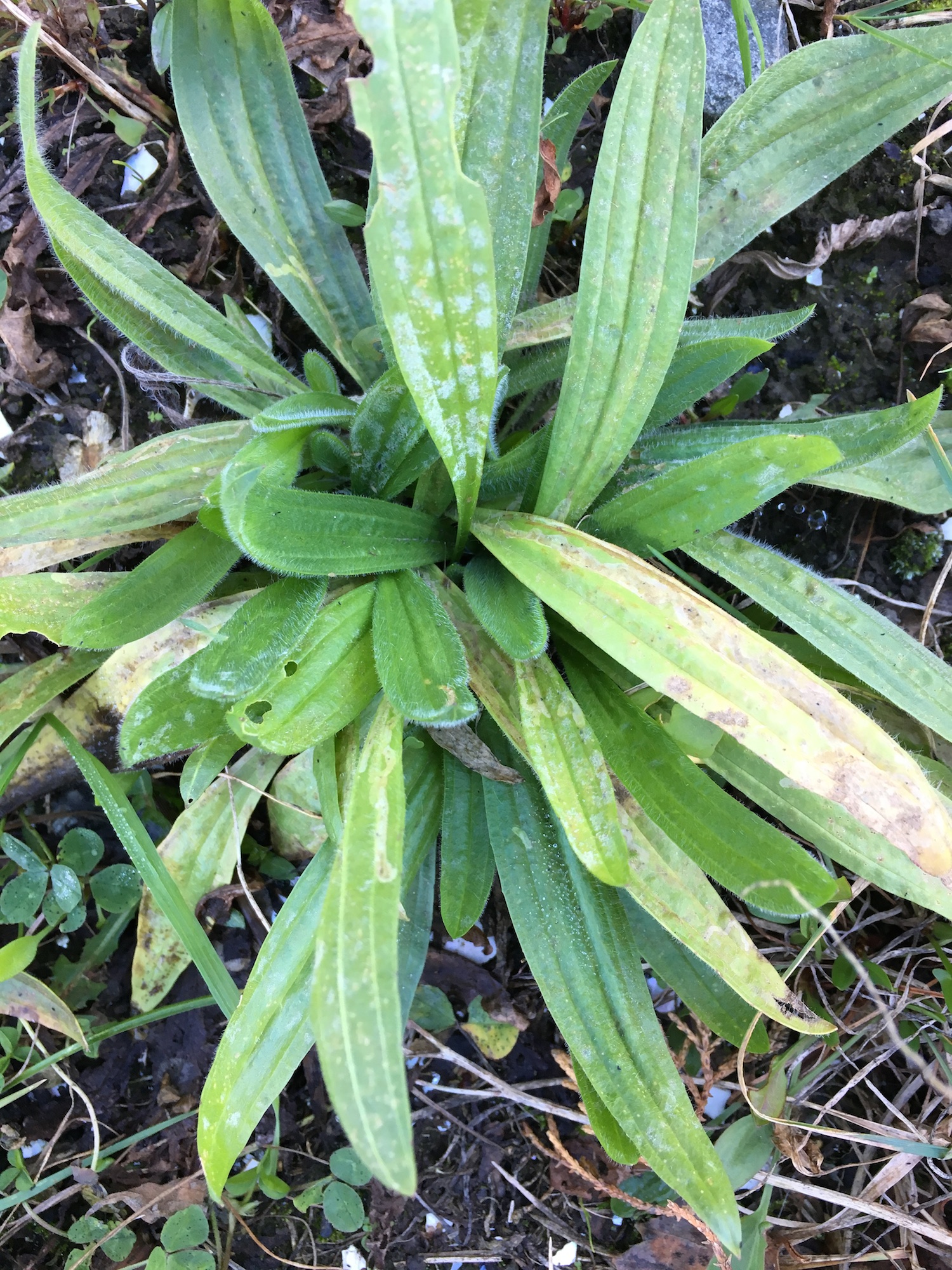
2016-06-29 14.01.15 smWeeds are survivors—that’s part of what makes them weeds—and none more so than the lowly plantain. This plant, carried throughout the world by European colonists for its medicinal uses, thrives in even the most inhospitable places.

It is common along roadsides and paths, in lawns, and even in the tiniest of cracks in pavement. It withstands trampling and mowing, and can resprout from pieces of root left in the soil.

It was known by the Anglo-Saxons as waybread or waybroad, for its habit of colonising roadsides, and it was revered for its tenacity.

And thou, Waybroad,
Mother of Worts,
Open from eastward,
Mighty within;
Over thee carts creaked,
Over thee Queens rode,
Over thee brides bridalled,
Over thee bulls breathed,
All these thou withstoodest
Venom and vile things
And all the loathly ones,
That through the land rove.

Anglo-Saxon poem about plantain, as reproduced in A City Herbal, by Maida Silverman.

As a gardener, I should despise plantain’s tenacity, it’s ability to invade and overtake my garden. Instead, I side with the Anglo-Saxons—I admire it. I might even say I aspire to be as tenacious myself.

Be tough. Be strong. Thrive in spite of the tramplings of life (or the bridalling of brides). Be a plantain.

Creative Combinations

2016-07-08 13.14.04 smOne of the cool things about having teenaged children is their increasing ability to combine ideas and skills in new and exciting ways.

Last weekend, my daughter was weaving flax fronds. I noted she had the Fun with Flax book out, and assumed she was making one of the projects in that book.

Some time later, I saw her with a wide cylinder of woven flax and a stick. She was using the stick to spin and toss the flax cylinder into the air.

I thought the idea must have come from the book, but no–she’d used weaving techniques in the book to create a unique shape, then used new skills in plate spinning (learned in PE in their circus arts unit) to manipulate the woven shape at the end of a stick.

How awesome is that?

Tūrangawaewae

DSC_0095 smIt’s Maori language week, so I thought I’d share one of my favourite Maori words—tūrangawaewae.

Tūrangawaewae is a place to stand, where a person feels strong and at home. It doesn’t really have an English equivalent. Homeland comes sort of close, but one’s homeland is not always one’s tūrangawaewae.

Though I am not a religious person, I am a spiritual one, and the word tūrangawaewae speaks to me in a spiritual way. I know where my tūrangawaewae is. It’s not so much an actual place, but a biome–the forests of the north eastern US. I am an organic part of that biome. It is wired into my nerves and muscles. Every leaf, animal and rock feels familiar.

I have little use for American culture, and no affinity with the cities and interstate highways that encroach upon my tūrangawaewae. I have honestly tried to find a new tūrangawaewae here in my adopted home. There are many places here I love. Many places to which I feel drawn. But none matches my tūrangawaewae for that deep sense of belonging.

Where is your tūrangawaewae?

Presiding Over Death

Artemis in her younger years.

Artemis in her younger years.

It was bound to happen, this winter or next. My ‘old girl’, Artemis is showing her age.

She’s been coughing for a couple of weeks. At first I suspected lung worms, as she was due for a worming. But a drench didn’t help. Then I thought she must have pneumonia.

But when the vet visited today, she diagnosed heart problems. Artemis is just old, and her heart is starting to give out, allowing fluid to build up in her lungs. No injection or pill is going to fix that. The only thing we can do is keep her as comfortable as possible.

In a way, it’s almost a relief, to have a goat dying of old age and not any one of the myriad ills that have befallen my other animals. But it also makes it that much more difficult to face the farewell I know is coming. She’s been a fixture in the paddock for nearly eleven years—it will seem bare when she’s gone.

Until then, my job will be to fill the remainder of her life with treats and scratches. To keep the bedding where she spends more and more of her time thick and fresh. And when the time comes, to make her passing as painless as possible.

Throw the Windows Open

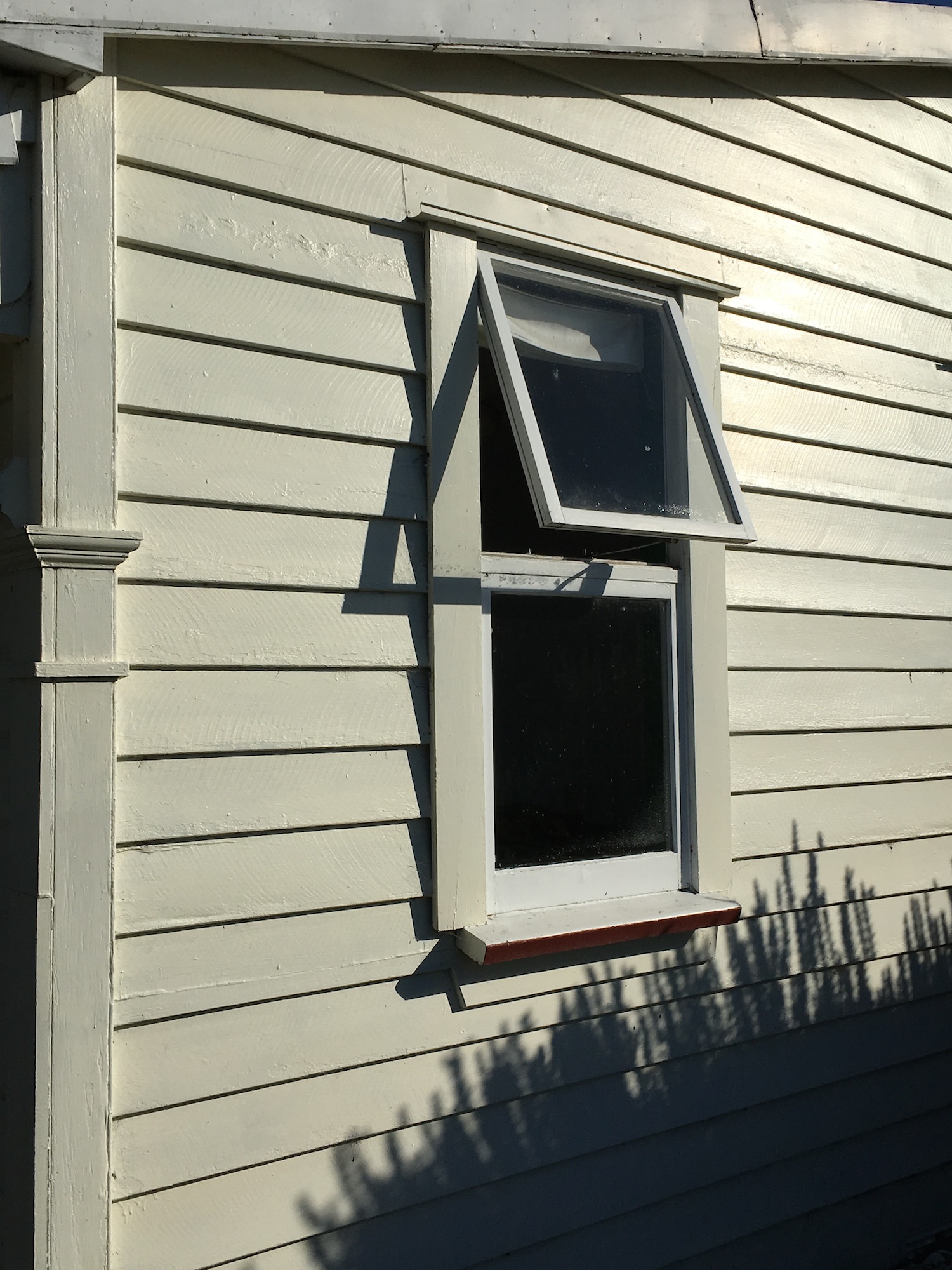
2016-06-29 13.02.59Until we moved to New Zealand, I would have laughed at the idea of opening the windows and doors in mid-winter. When it’s well below zero, a fresh breeze through the house isn’t exactly welcome.

Somehow here, the idea of a fresh breeze through the house at any time of year is welcome.

It helps that the climate is warm—there’s never a day that remains below freezing, even in the depths of winter. But even so, I noted after I flung the house open today that the outside temperature is only 11°C (52°F). I’m sure I never opened the windows at that temperature in Minnesota or Pennsylvania.

Of course, in Minnesota and Pennsylvania, the windows never ran with moisture. Puddles didn’t form on the windowsills every morning (in MN, it was ice, but that’s another story). The winter air here is warm enough to hold plenty of moisture, and without central heating to dry out the air, it can get pretty damp indoors. A couple of hours of a brisk breeze on a sunny afternoon can do wonders for the indoor humidity.

Perhaps that’s part of what I like about living here—the opportunity to invite the outdoors in, even during the wintertime.

As Horace Everett wrote (to Aaron Copland’s music): Stomp your foot upon the floor / Throw the windows open / Take a breath of fresh June air and dance around the room.

Functional and Meaningful

2016-06-28 16.00.01The pattern weights in the slick sewing magazine were tempting, for sure—sleek brass cylinders that screamed ‘professional sewer’. Just looking at the picture, I could feel their delicious heft and smooth finish.

But my life is not one of polished brass. Though the fancy pattern weights were elegant and undoubtedly fit for the job, my beach rocks are, too.

Smooth greywacke cobbles I collected myself from the beach just 4km away beat out the fanciest weights. They belong here. They fit my hand nicely, come in many sizes and weights, and they speak to me of waves and water, sun and sand. Nothing purchased can do that.

My pie weights come from the beach, too, and work just as well as a fancy set of ceramic beads. More so, because they make me smile whenever I use them.

Objects that are of a place. Objects that belong.

In our global economy, with the products of the world just one click (and a credit card number) away on the Internet, it’s easy to forget that what is in our back yard may be just as useful, and far more meaningful, than anything manufactured and stamped with a brand name.


Playing with Fire

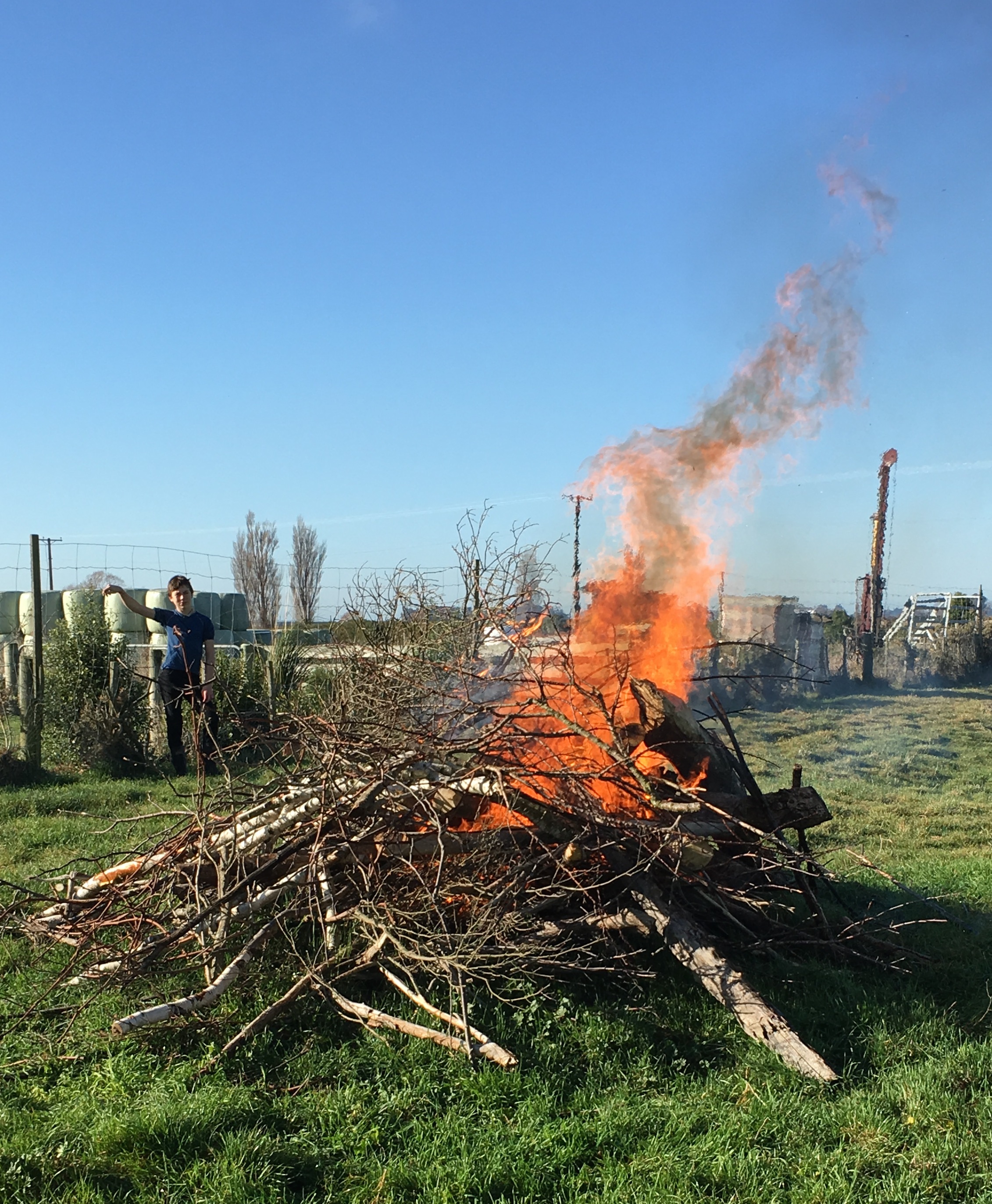
2016-06-25 11.56.06There is nothing better calculated to get my teenage son outside than the prospect of fire.

Most weekends, he spends the day indoors reading books or playing computer games. He’ll come out to help in the yard or garden if we ask him to, but as soon as he’s released, he’ll be back inside.

Tell him we’re going to burn off the brush pile, though, and he’s out the door like a shot, and will spend all day pottering around the fire—tossing sticks in, raking coals together, hosing down the grass around the fire to keep it from spreading.

What makes fire so compelling, especially for teenage boys?

Believe it or not, scientists have actually tried to answer this question. Researchers at the University of Alabama found that gazing at even a video of a fire reduced subjects’ blood pressure. The longer they watched the fire, the more relaxed they became. The researchers suggest that the multisensory aspect of a fire focuses our attention and reduces anxiety.

Whether that is simply an outcome of meditation associated with this sensory focus, or an evolutionary response to the social and physical security that a fire was to our ancestors is a matter of speculation.

Fire is, in fact, essential to humans. Our power-hungry brains need the extra nutrition provided by cooked food (about one-fifth of our calories are used by our brain). We can’t grow and develop properly on a raw diet, and human culture never would have evolved without it, so it stands to reason it would be important to us.

So, why are kids so interested in fire—more so than adults?

Researchers at UCLA have studied fire play among children in various cultures, and have concluded that the desire to master the control of fire is common among cultures. This makes sense from an evolutionary standpoint—we need fire to survive, so those able to control it historically did better and produced more children.

In westernised cultures, where open fires aren’t used on a daily basis, children’s interest in fire lasts longer than in cultures where fire is a daily necessity for cooking or heating. They remain fascinated by fire until they’ve learned to master it.

This doesn’t fully explain my teen—he mastered fire years ago, learning to light and maintain a fire in our log burner. But I do think there is an aspect of control that keeps us coming back to fire, especially when we’re young. Fire has incredible destructive power. To ignite that power, then hold it in check to achieve a goal (heating the house, cooking dinner, or disposing of brushwood), is a heady thing, particularly for teens who have so little control over their own lives.

All of which leads me to believe that it’s important for us to teach our kids to safely light and control fires. Research indicates they will play around with it until they learn—it’s an innate need. Better they learn safely than by burning down the house.

I also think that giving kids safe ways to exert control is important for their growing sense of accomplishment and self-worth. There is so much we can’t let them control—they can’t drive, they have to go to school, they can’t leave home—I remember all those restrictions eating away at me when I was a teen, eager to exert myself on the world.

So, yeah, we let our kids play with fire. It’s good for them.