Billy Stoneface

“Quit making faces or your face will get stuck that way!”

Billy laughed at his mum when she said that. He kept on pulling faces.

***

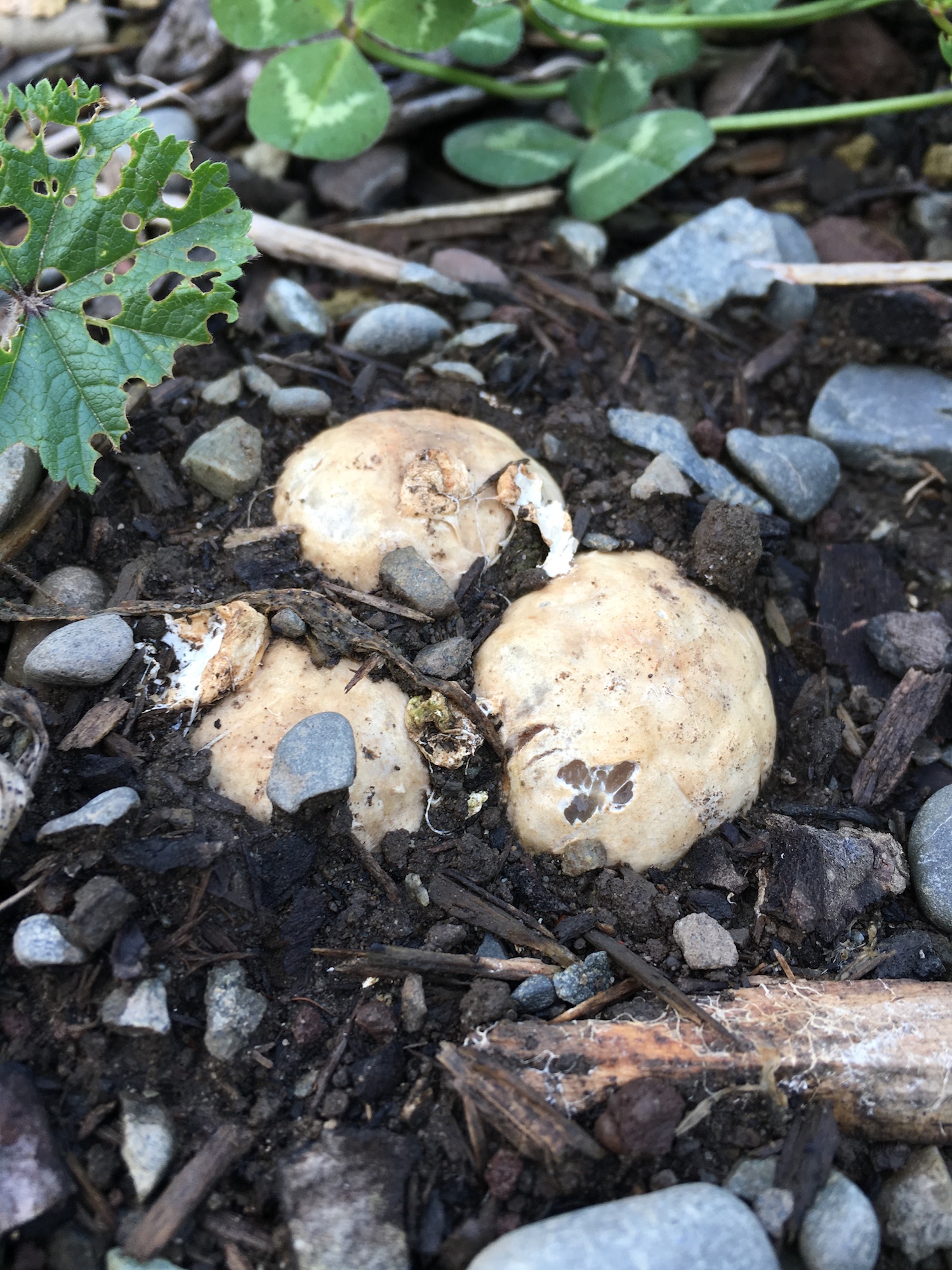
“Mum, look at that funny rock. It looks just like a face.” Kaleb scrunched his own face up, imitating the stone.

“Careful. Your face will get stuck that way.”

Useful Crafts?

I do a fair bit of crafting—I weave, sew, knit, embroider, etc.—but almost all of what I create is useful. Clothing, rugs, bags, household furnishings … if I need something, I make it.

It’s unusual for me to create something with no utility at all.

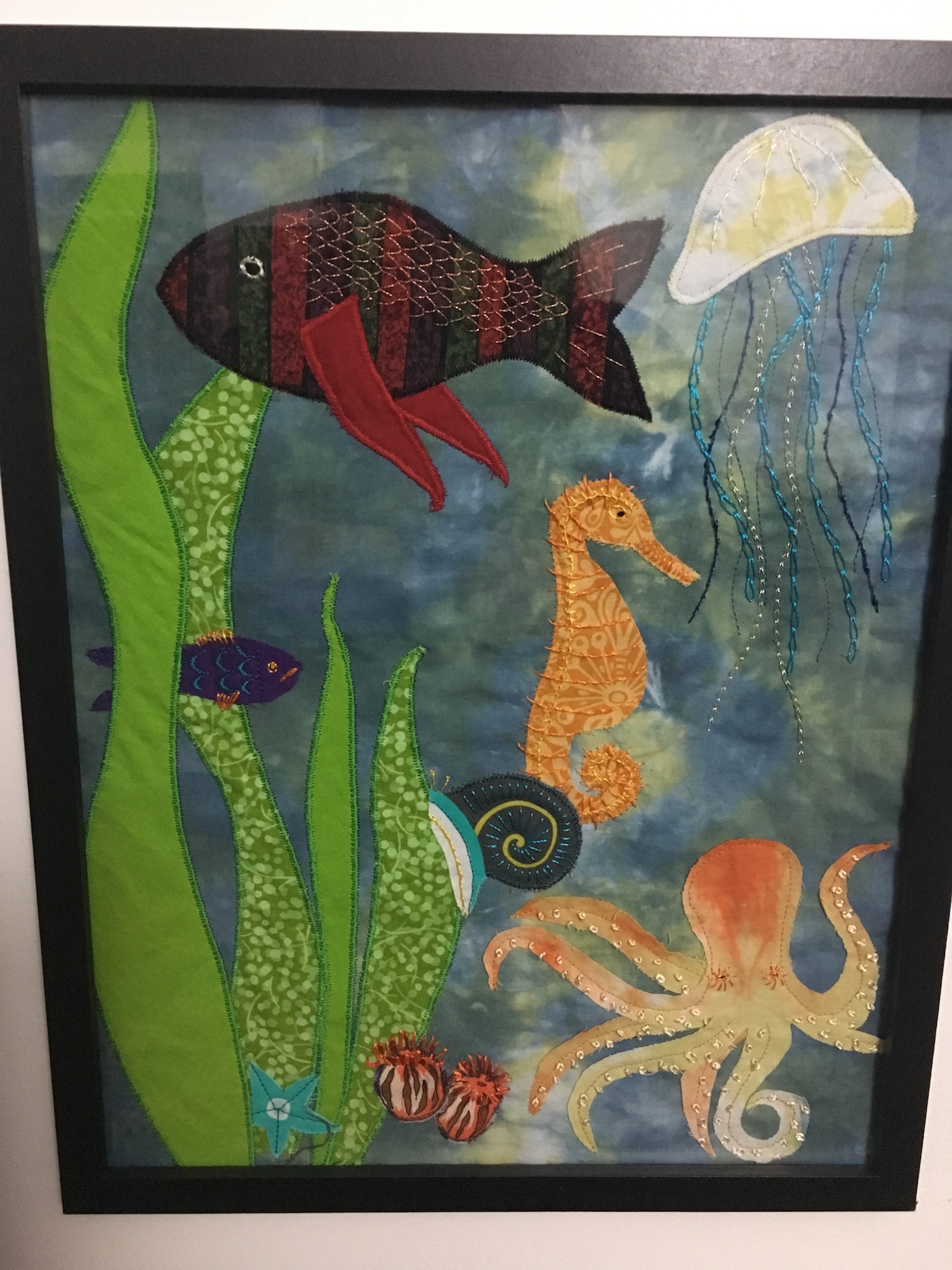
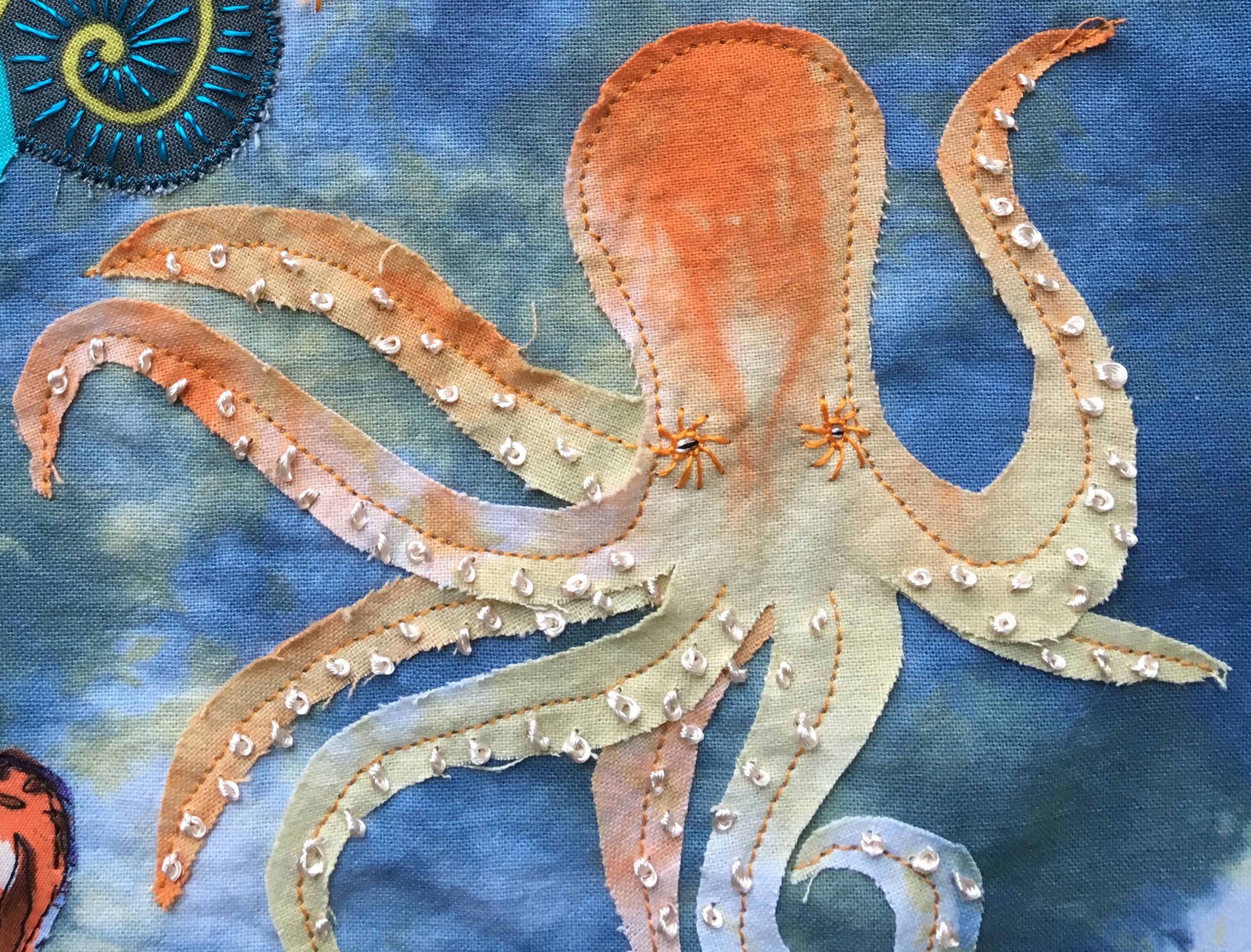
Maybe that’s why I had so much fun making this fabric collage wall hanging. There is no purpose for this piece of whimsy, beyond fitting the ocean theme my husband declared for the new family ‘art installation’ in the living room.

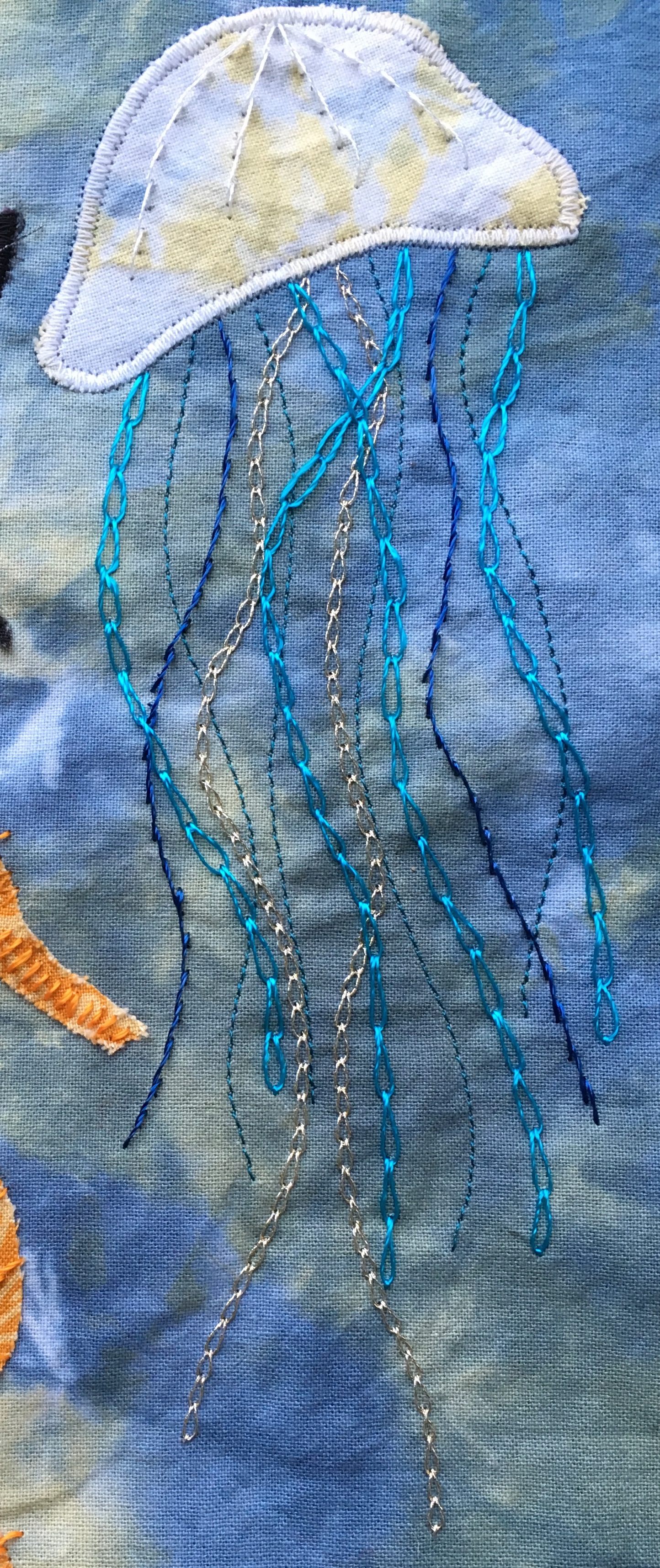
I didn’t have to worry about whether the metallic threads would hold up to use, or whether the long embroidery stitches would snag on anything. I didn’t have to finish all the edges of every piece of fabric. It didn’t have to be machine washable, warm, comfortable, or something I’d want to be seen wearing in public. It didn’t have to be biologically accurate or to even make sense in any way. I could make it as silly as I liked. I could do whatever I wanted and call it finished when I got sick of it.

What started as a project I felt obligated to do (because everyone else in the family was contributing to the art installation) turned out to be a joy. I spent twice as long on it as I originally intended and, though I’m not sure it particularly counts as Art with a capital A, it makes me smile when I see it on the wall.

Maybe it was useful after all.

Gluten Culture

“I’m allergic to gluten-free.”

That’s my son’s line when people ask.

In part, it’s true; he’s allergic to buckwheat, which is often used in gluten-free products. But what he’s really saying is that gluten-containing foods are a staple at our house. Our diet and our family culture would break down without gluten.

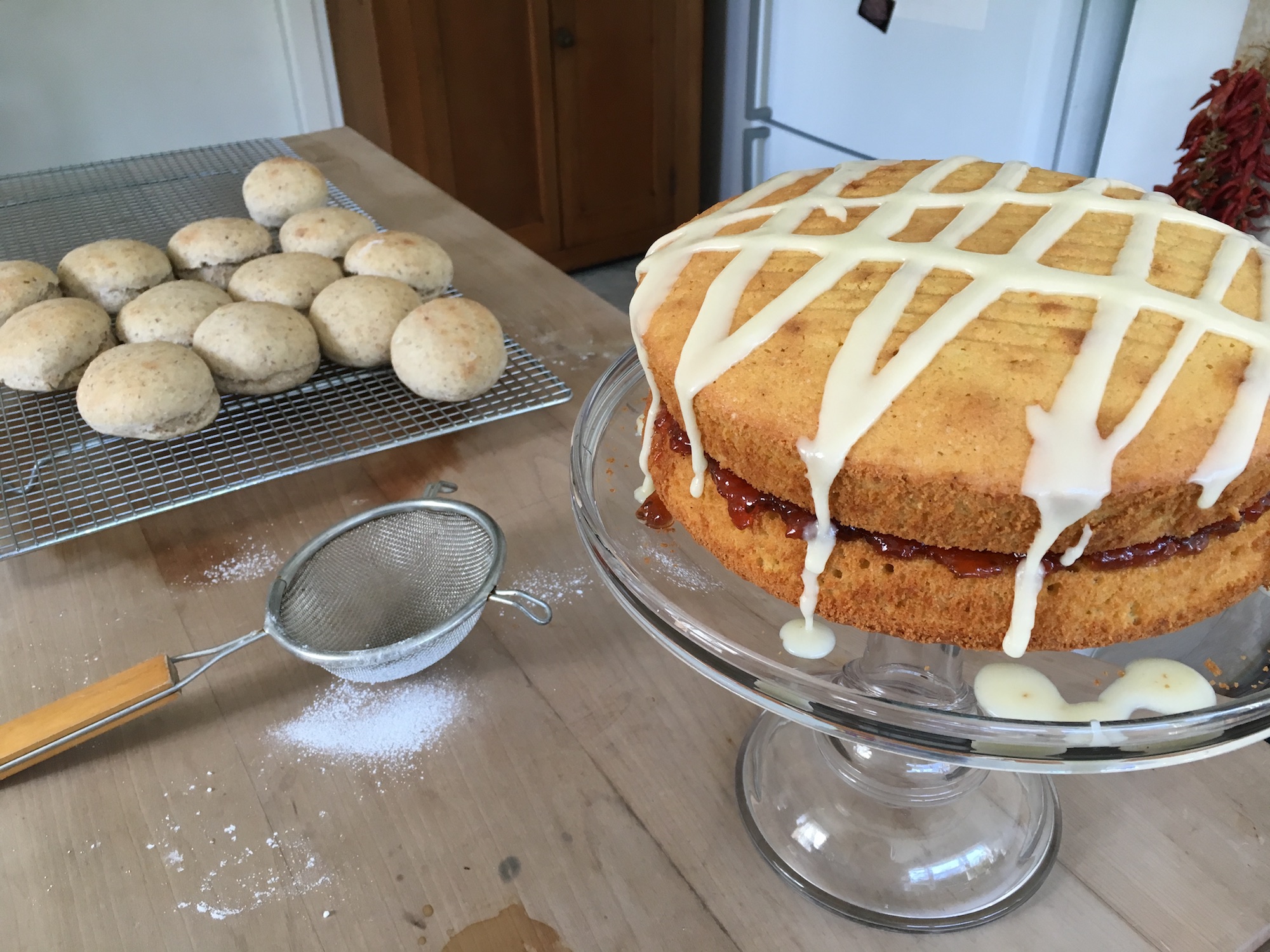
It’s been a while since I blogged about a bread day, but they still happen. Every two or three weeks my husband fires up the bread oven and bakes two dozen loaves of bread. I follow with a couple of cakes, cookies, or whatever sweets I feel like baking. On the tail-end heat, my husband might throw in some bac-un or seitan—gluten-based meat substitutes.

Between the bi-weekly gluten fests, we make pastries, muffins, scones, crackers, and all manner of other gluten-containing food.

If we took gluten out of our diet, we’d lose a protein source and a suite of family activities.

And, yes, you can bake gluten-free bread, cakes and cookies.

But they’re not the same.

There is something fundamental, something visceral about the feel of gluten—under your hands as you knead bread, in your mouth as you chew it—something that is integral to my family’s enjoyment of food.

Yes, I think we’re all allergic to gluten-free.

Conversation Overheard in the Park

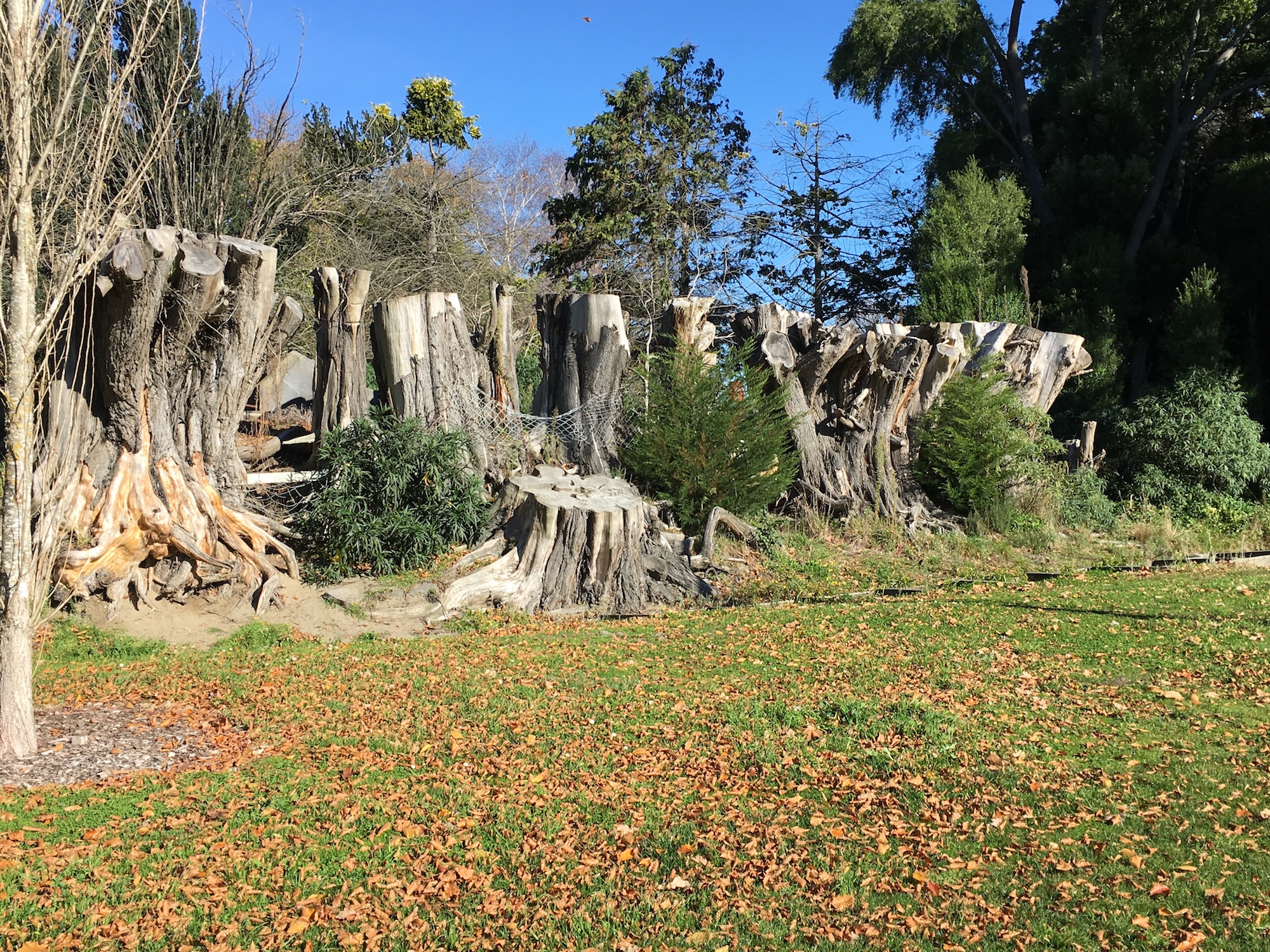
Every time I see these trees, I think they look like old men sitting around talking.

“Remember,
When we were just saplings?
How we thought the wind was so strong?
Thought it was going to blow us right over.”

“Well, it almost did, didn’t it?
Joe was nearly bent in two
In the cyclone in ’17.”

“Aw, he was a youngster.
He came right.”

“Ah, but ‘17 wasn’t half as bad
As that big blow in ’44,
When Carol and I lost nearly half our limbs.
I thought the rot might get us after that, you know?”

“I heard a pair of poplars the other day,
Young things,
Hardly able to grow lichens yet,
Complaining about the wind.
Ha!
What do they know about wind, I thought.”

“They don’t make wind like they used to.”

“Or snow.
I remember snow so heavy it took off branches.”

“Yes, but don’t you think the sun was brighter back then?
When the sun was up it was up,
And you knew it.
Not like this weak sun nowadays,
Hiding behind clouds,
Hardly enough to photosynthesise with.”

“Absolutely. Water tasted better, too.
When we were young.
Cleaner.
Modern water just isn’t the same.”

“Do you remember those kids?
The ones who used to climb right to the top of my branches?”

“Then there was that one,
The boy with red hair,
Who fell.”

“Broke his arm, didn’t he?”

“Do you think that’s why they did it?
Why they cut us down?”

“Don’t be stupid.
That was years ago.
Humans have short memories.”

Geek 1: Fear 0

I was in Christchurch for an all-day workshop on Saturday. The closest all-day parking was in the Art Gallery carpark. I resisted the idea of parking there. I never liked basement carparks, even before the 2010-2011 earthquakes, and I like them even less now.

Stupid, I thought. Time to get over this fear. Thousands of people park in multi-storey and basement carparks every day in this city. I can do it for one day.

I dove into the carpark, leapt out of my car, and practically sprinted to the exit. I was dismayed to find the pedestrian exit was through a couple of doors, down a corridor, and up a flight of stairs.

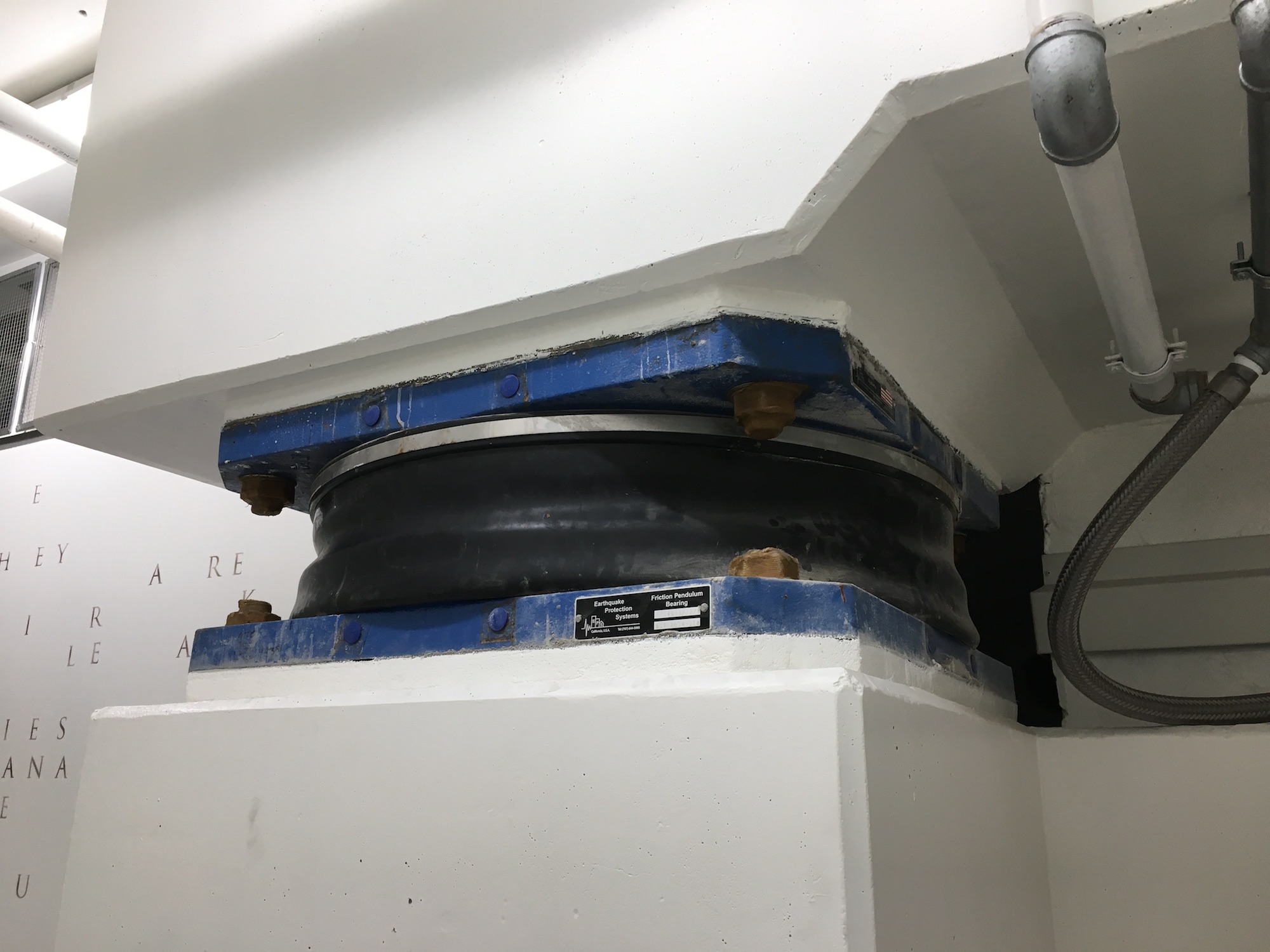
But just as I was about to climb the stairs, I noticed one of the seismic base isolators the building is equipped with. The geek in me overrode the scaredy cat, and I had to stop to snap a photo.

These isolation units are a cool piece of technology. They essentially decouple the building from the ground, so that when the earth shakes, the building stays still. In a quake, the top and bottom plates of the unit slide contrary to one another—the building’s inertia keeps the top plate relatively still while the lower plate jiggles around.

The isolation units were retrofitted to the art gallery (along with lots of other repairs) after the 2010-2011 earthquakes.

According to the manufacturer’s website, the Triple Pendulum Bearings like those installed in the Art Gallery are designed to dampen the wide range of lateral vibrations from small, medium, and large quakes. They don’t make the building completely quake-proof, but they did make me more comfortable leaving my car there for the day.

You can take me out, but you can’t dress me up

I laced up my shoes to go to town yesterday and thought to myself, “Gosh, these shoes are comfortable.” My next thought was, “Gee these shoes are looking a bit rough for town wear.”

Truth is, I’m a bit rough for town wear. I feel it every time I go for groceries. Other women arrive at the store in high heels and skirts, with flouncy scarves and jewellery. I rock up in my hiking boots, still dusty from my last trip. My clothes are clean, well-made and tailored perfectly for me (because I make the myself), but that’s just it—they’re tailored for me, and not just in the fit. Denim, cotton, lots of pockets, and comfortable enough to walk five kilometres in (because I never know when I’ll have the need or urge to take a brisk walk).

Even my ‘town’ shoes—the ones I wear when I’m trying to look at least somewhat professional—are wide, clunky affairs that are, quite frankly, ugly (but really comfortable).

Most of the time, it doesn’t bother me to be the unfashionable slob in town, but it doesn’t mean I don’t notice my wardrobe is wildly different from others’.

I could theoretically dress up to go to town. Somewhere, deep in the closet is one outfit that could count as marginally dressy. It would pass for normal in the grocery store. I expect it will last the rest of my life, given how seldom it comes out.

You can take me out, but you can’t dress me up.

Author Jam–mark your calendars!

Tickets have just gone on sale for Wham Bam Author Jam on 24 November in Christchurch. Lots of authors, and lots of books–what more can you want? It’s a great chance to meet NZ authors (and a few from farther afield), buy their books, and support the Mental Health Foundation of New Zealand at the same time.

Be sure to stop by my table and say hello!

The Sound of a Story

I sit down at my desk and breathe a sigh of relief. It’s quiet here, in my office. Not like the noisy library where I worked yesterday.

But, no, that’s not true. I hear the roar of the surf in the distance. The trickle of the artificial stream in the garden overlays the sound of the ocean. When I step to the office door, a goat greets me with a maa. Starlings mutter in the treetops, magpies warble on the fenceposts, and a fantail chitters in the shed. A plover’s percussive call is underlain by the chirping of a thousand crickets.

The neighbour rumbles past in his tractor, carrying a bale of silage. I can hear his son in the paddock shouting and whistling at his five barking sheep dogs.

It is far from quiet.

And yet …

Somehow, the sounds here caress my thoughts, rather than intruding upon them like the horrible Muzak from the library cafe, or the screams of tired children, or the drone of the automatic returns machine—please place the item on the trolly.

The fantail flits in and out of the story I’m writing without knocking over my coffee. The goats and sheep graze beside me without barging across the keyboard. The crickets keep to the grass. The tractor rumbles along without leaving tire tracks on my manuscript. The ocean doesn’t even wet my toes.

But somehow, I’m certain these sounds end up in my stories, caught up in the weave of plot and characters. The fantail is there, in the flick of a character’s fingers. The ocean is the relentless sound of the plot line. The tractor is the rumble of disaster bearing down on my protagonist. The goats’ deep maa is the voice of wisdom, and the crickets’ chirping lightens the mood.

Slashing the Stash

It rained all weekend, so what was I to do but bake and sew for two days? It felt decadent, indulgent (though I did get my weekend chores done; I wasn’t a total slacker).

It was a rewarding weekend, too. My fabric stash has been getting out of control lately. I only buy fabric when I have a project in mind, but there’s always a little left over from any project, and it builds up. Not enough to make clothing for me or my now adult-sized kids, but enough for clothes for little kids and babies.

So this winter I’m on a mission to reduce the stash by making clothing to give to charity. On this chilly, wet weekend, I started in on my scraps of polar fleece. I made a whole raft of warm hats, and cut out the pieces for five little jackets (I need to get zips for the jackets before I can sew them). It was great fun turning all that ‘waste’ fabric into useful items.

Next weekend, I hope to start in on the knit fabric—I have patterns for baby t-shirts that’ll be perfect for using up those scraps. And then there’s the denim, cotton broadcloth, corduroy … so many fabrics, and so many creative possibilities, once you think small.

I managed to cut my polar fleece volume down by half—my stash reduced to pieces useful for my own clothes. If I can do the same with all my other fabrics, I’ll be thrilled. I get more space in my cupboard, I get to indulge in sewing I enjoy doing, and someone in need gets new clothes. It’s a win for everyone.

Hiking Under the Influence of Parenthood

My daughter and I went hiking for two days this week, taking advantage of the school holidays to get out. On our first day, we summited Little Mount Peel. Several years ago the whole family hiked the same track, though not to the top. In those days, my husband and I pulled the kids along behind us. Encouraging them on, waiting for them while they took breaks.

These days, it’s the other way around. I determined we would go at my pace, not the 14 year-old rock climber’s pace. She pulled me up the mountain, stopping occasionally to let me catch up. (Where did she learn that bland, patient smile, calculated to hide her boredom?)

I wish I could be as oblivious as the children I used to pull up the mountain.

Though I hiked behind her, I was still out in front, assessing risk, calculating her need for food and rest, figuring hiking times and return times, keeping an eye on her warmth. I was still the worrier, still the responsible parent.

When the kids were young, I dreamed of the day they could keep up. Now I fear the kids’ ability to get into trouble has outstripped their ability to manage risk. Not surprising. That’s what teens do.

But now I dream of a day when I can simply hike, without worrying about anyone’s safety but my own. I will go at my own pace, stop when I am tired, sit on rocky outcrops for hours contemplating the patterns of ridge lines in the distance. Perhaps once again I will experience a place fully, and not through the fog of parental responsibility.