My husband and I spent Canterbury weekend on the West Coast. We stayed in Hokitika, because I had a market there on Sunday, but on Saturday, we drove down to Franz Josef Glacier.

We hiked up to Alex Knob. This 17 km hike is a steady, occasionally steep climb of about 1000 metres. It’s not technically difficult, but it’s a good hike. It’s rated as 8 hours return, but we did it in about 5 1/2—it’s easy to speed on the way down. On our way up, we got glimpses of the glacier. Unfortunately, by the time we reached the top, where the view should have been spectacular, the whole top of the knob was in cloud, and a fierce wind was driving snow into our faces. Despite the wind, snow and cold, we tucked ourselves behind a tussock and had a snack, enjoying the sheer wildness of the weather, before driving hail hurried us down.
It’s been ten years since I’ve been to the glacier. What I saw on this visit was heartbreaking.
Sixteen years ago, I did some interpretation work for the Department of Conservation, researching and writing text for interpretive panels at Franz Josef Glacier and Fox Glacier. I also did some research around visitor behaviour at the glaciers and the effectiveness of various warning messages. At the time, the glaciers were easily accessible on foot. They were advancing and dropping deadly chunks of ice on visitors who ignored warning signs and crossed barrier ropes to get up close.
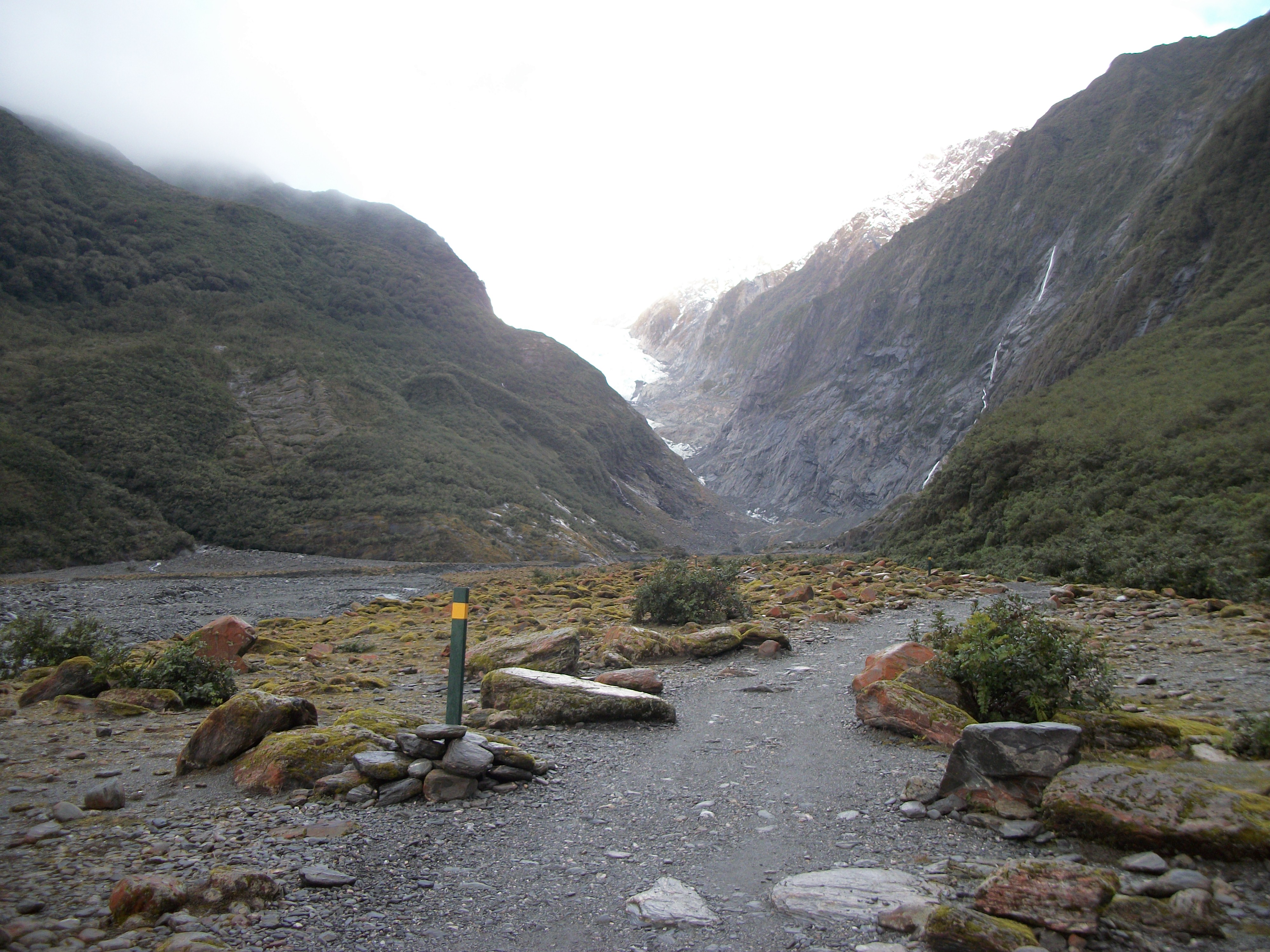
Today, Franz Josef Glacier has retreated so far, it is not possible to walk to it. Ironically, the only way to visit the glacier these days is by helicopter—further spewing the greenhouse gases that are killing the glaciers.
There were thousands of tourists in Franz Josef Township last weekend, and the glacier carpark and tracks were crowded. Many of these tourists were here for the lure of New Zealand’s spectacular glacial landscape. New Zealand used to be the only place on earth where you could see glaciers reaching down into temperate rainforest. Today the glaciers come nowhere close to the forest, and soon there will be no glaciers left at all.
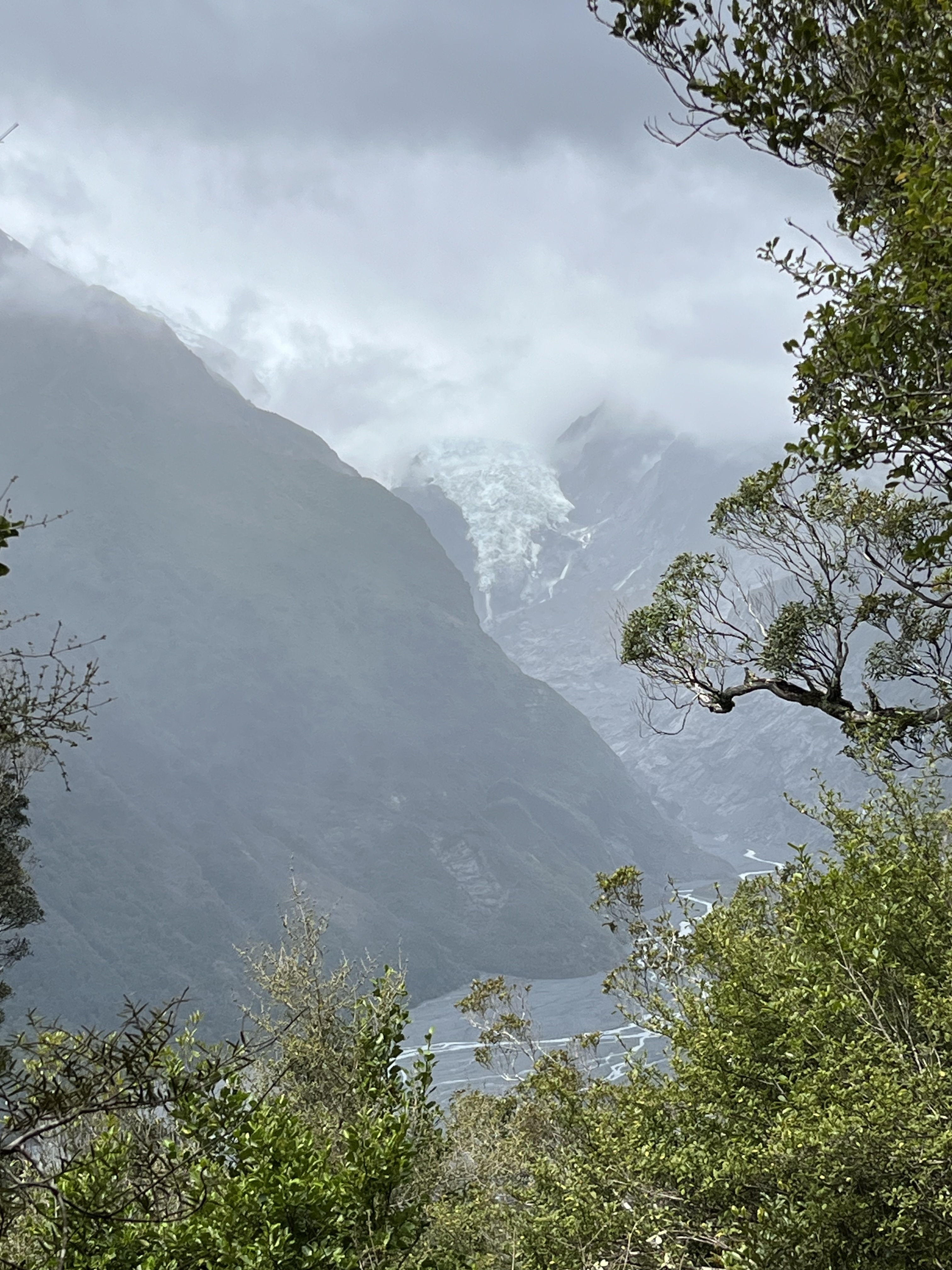
There are many other wonders on the West Coast—the rainforest, the mountains, wildlife and beaches—but the loss of the glaciers is tragic, not just because of their natural beauty, but also because of their role in water storage and release. Their loss will have long term consequences for all of New Zealand.
It may be another decade before I go to Franz Josef Glacier. I hope there is still a glacier to see when I get there.
Discover more from Robinne Weiss
Subscribe to get the latest posts sent to your email.
 Robinne Weiss