I love hiking at any time of the year, but there’s something particularly enjoyable about winter hikes.

Part of that enjoyment for me is that it’s the only chance here in Aotearoa New Zealand to walk in snow, because it rarely snows at lower elevations. To get to snow, you’ve got to hike to it. (Yes, you can hike to snow even in summer, but it’s easier to do so in winter, and there’s more of it.)
Last weekend, my husband, daughter and I headed to Red Hill, which sits between Lake Lyndon and Lake Coleridge. At 1640 metres, Red Hill is higher than nearby Porters Skifield, but lacks the snow making machines. So the snow was patchy, even at the top.
Still, winter hiking was in its full glory. On the way up, we hiked across crunchy frozen mud, pushed up by countless ice needles. We teetered on icy tussock mounds as we crossed a wetland. As we gained altitude, the wind increased and the temperature fell. We passed pockets of spectacular frost, with ice crystals so long, it looked like leaves. Snow in the shady hollows was wind sculpted and hard, more ice than snow.
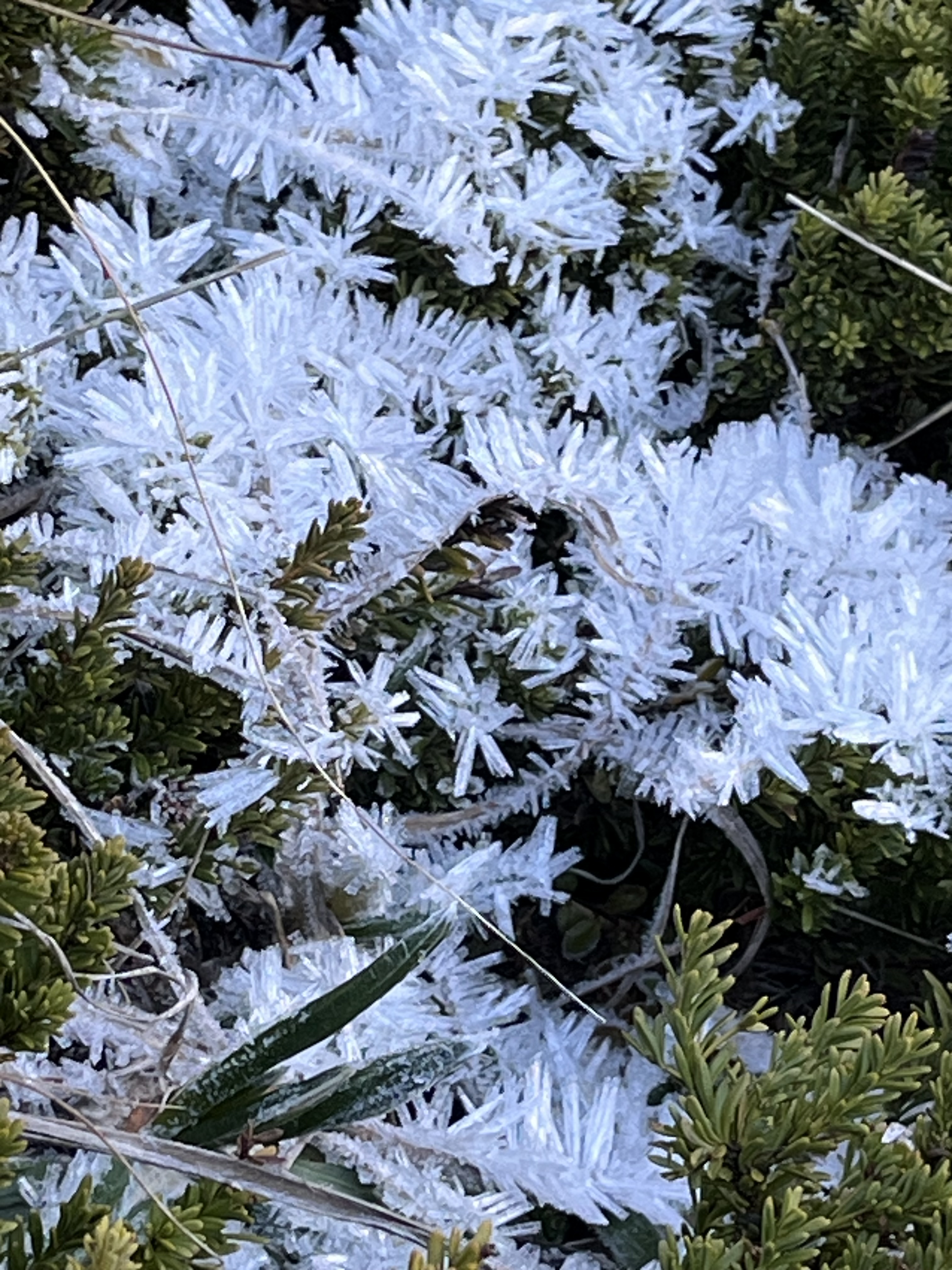
By the time we hit the open tussock and scree-covered tops, the freezing wind was burning my cheeks, and I was thankful for my snood, which I pulled over my face to block the worst of the wind.
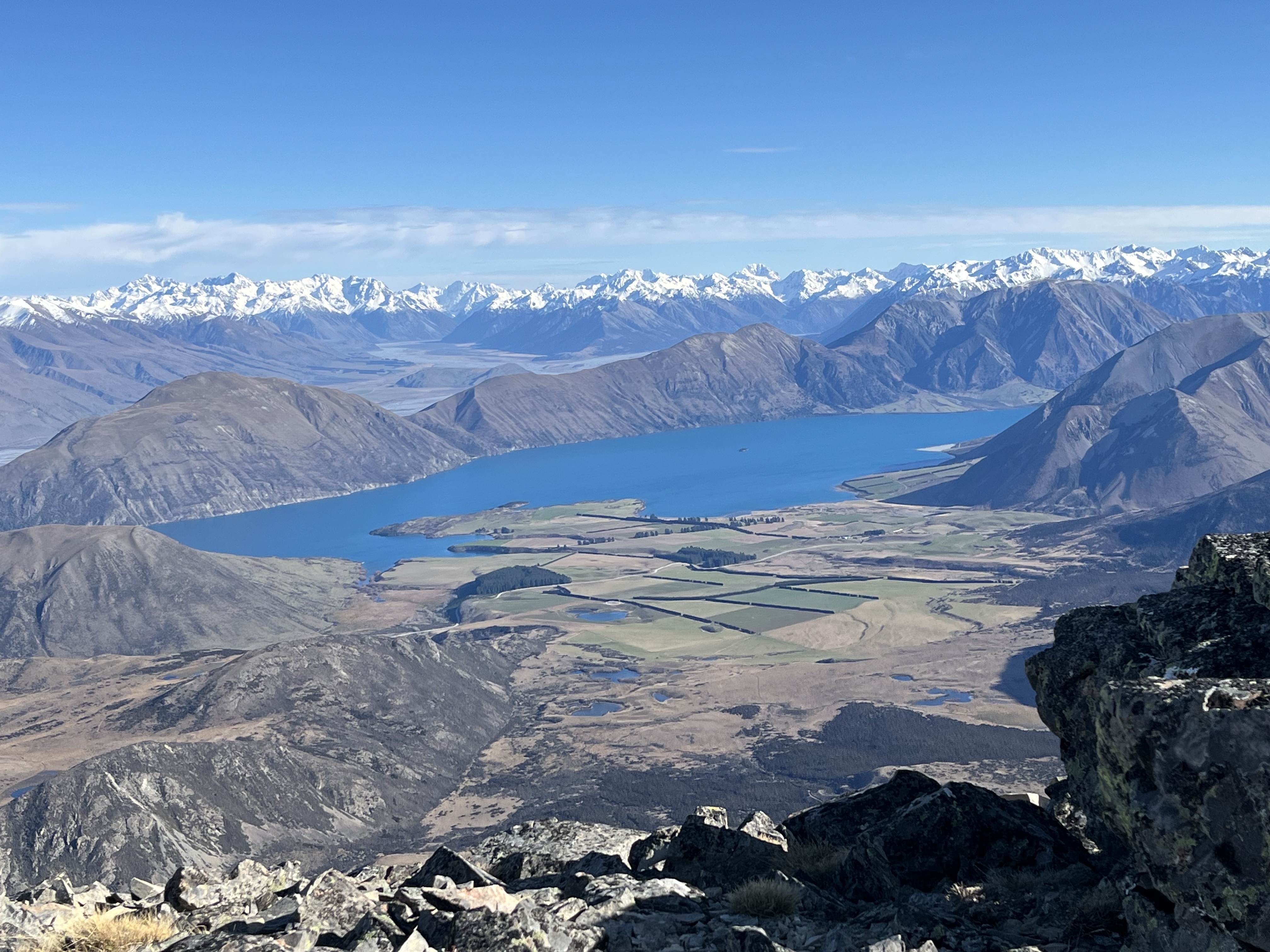
The view from the top was definitely worth the windburn. Winter mountains—covered in snow—stretched across the skyline. Down below us, the water of Lake Coleridge glistened blue in the sun.
The only bad part about winter hiking is that it’s often not pleasant to sit on the top for lunch, and last weekend was absolutely not a weekend to hang out on top of any mountain. After a quick look around and some photos, we hightailed it back down.
But one of the cool things about winter hiking is that, on a sunny day, you can start the hike in winter conditions, and end in spring or summer-like conditions.
Having donned all our warm layers at the top of Red Hill, we began shucking them as we descended. We went from thermals, jacket, hat and gloves to just t-shirts by the time we were back to the car. It was a balmy 17℃. Warm enough for a swim … according to our daughter. (We decided not to swim that day, but she did take a swim the following day after a hike with a friend.)
As someone with mediocre circulation, I struggle with overheating when I hike. I can be sweating, but still have numb fingers and toes, because my body doesn’t push the heat to my extremities. It turns summer hiking into a sweat-fest. But hiking during winter is much more pleasant. I can shuck my jacket to cool my core, but keep hat and gloves on to warm my extremities. It makes for a much more pleasant experience.
We’ve enjoyed some memorable winter hikes: Cragieburn under a freshly fallen 15 centimetres of fluff, a trek to Woolshed Creek Hut in fresh calf-deep snow, followed by barefoot wading in the stream at the top, a winter wonderland of wind-sculpted ice atop Mount Isobel … Winter landscapes are spectacular.
Hopefully, we’ll get out for a few more hikes before the end of winter. Gotta enjoy the snow while it’s there!
Discover more from Robinne Weiss
Subscribe to get the latest posts sent to your email.
 Robinne Weiss