 Two years ago, my husband did what he’d been threatening to do for years—he dug a pond. At some point, I’ll write a blog post on the pond itself, but today I want to talk about the damselflies that live there.
I took a break from my work this morning and spent a few minutes sitting beside the pond. It was swarming with red damselflies (Xanthocnemis zealandica). They were mostly males jockeying for the best territories—chasing and dive bombing each other, all short jabs of snapping wings.
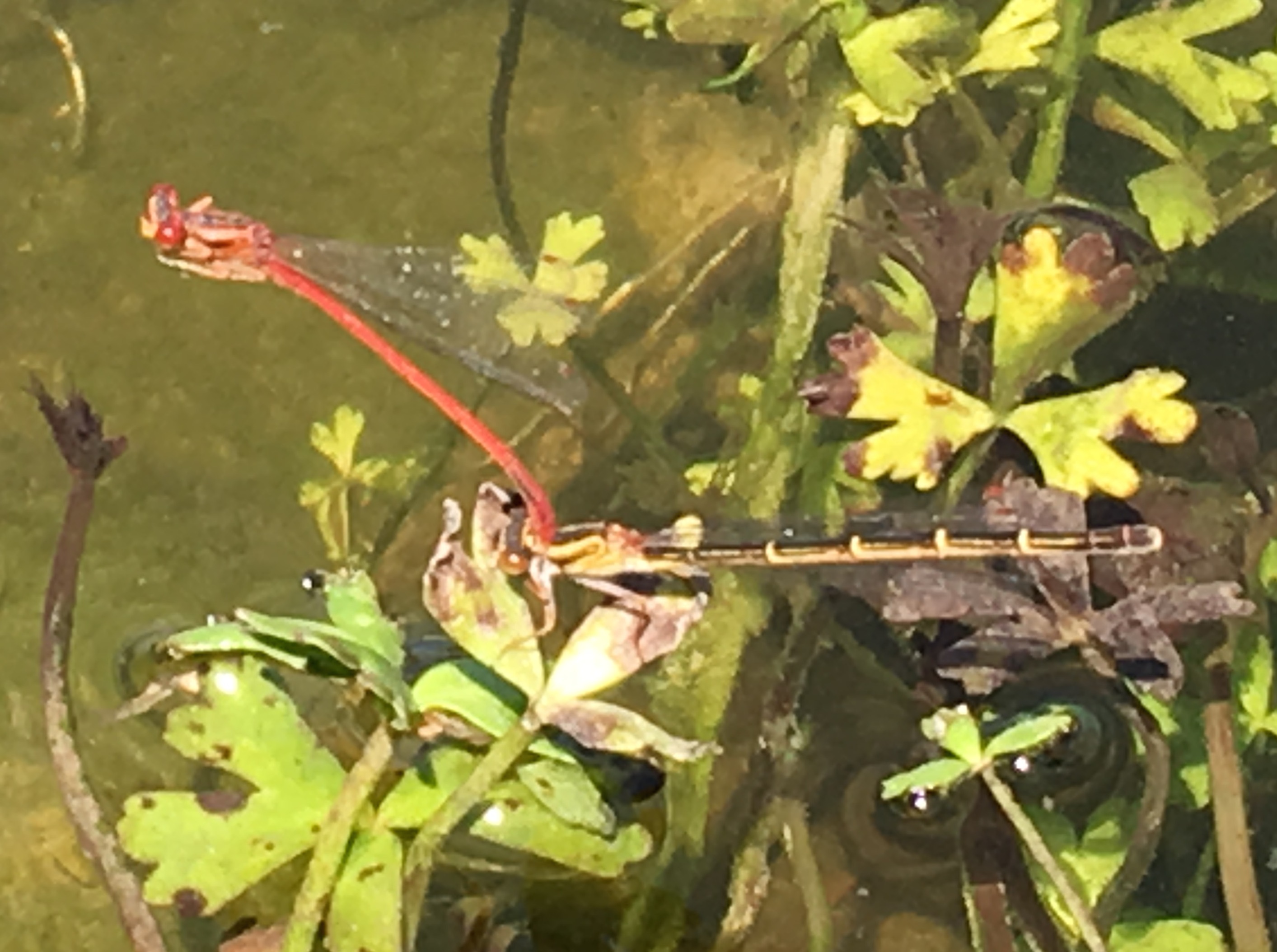 The females were there, too. Every one I saw was being guarded by a male as she flitted from plant to plant, dipping her abdomen into the water to lay her eggs in the plant’s submerged stem. Damselfly mate guarding is awkward at best—the male grasps the female behind the head with claspers on the end of his abdomen and discourages other males from mating with “his” female. Both insects must beat their wings to keep the pair aloft, and as I watched them, it wasn’t at all clear to me who chooses the spots to stop and lay eggs.
When a pair stops, the male often supports himself entirely with his claspers, tucking in wings and legs and forming a bizarre appendage to the female as she gets down to business. She appears completely oblivious of her escort, resting after laying each egg, as if to say, “If you want to cling there in that ridiculous pose, that’s fine by me, but you’re not going to rush me.”
The eggs these girls lay will hatch in a week or two, and the nymphs will spend nearly a year living in the pond, eating other aquatic invertebrates with a hinged, extrusible mouth that is the stuff of horror movies, before emerging from the water as adults.
I sat and watched the spectacle for a while, and just as I was about to leave, I was treated to the sight of the other damselfly resident in this part of New Zealand—the blue damselfly (Austrolestes colensonis)—a large neon-blue insect that makes the red damselfly look dull.
Unfortunately, he didn’t stick around for a photograph, but I’ll be looking for his nymphs in the water later in the year.


 Robinne Weiss