The Midges!

A male midge, with feathery antennae.

A male midge, with feathery antennae.

It was like a scene from an Alfred Hitchcock film. The sliding glass doors of my office were swarming with midges, commonly called lakeflies here (because they lay their eggs in nearby Te Waihora/Lake Ellesmere, and rise off the lake in huge swarms in summer). By their density (at least 1 per square centimetre), and the size of the doors, I estimated that there were at least 90,000 on the doors alone, not counting the ones swarming around looking for landing space.

I had been working late in the office, with the lights on, and they were attracted to the light. I turned off the light, took a deep breath (breathing in midges is horrible), and bolted out the door, slamming it closed behind me.

A female midge, with thread-like antennae.

A female midge, with thread-like antennae.

There were about a hundred on my ceiling in the morning. I reckon that was pretty good, given how many were knocking on the door.

I actually don’t mind the midges much. They don’t bite, and their appearances are brief, if dramatic.

But the question is, what are they all doing in those great big swarms? Well, the swarms are great big mating displays called leks. Male midges (they are the ones with feathery antennae), fly around in large swarms trying to attract the eye of a female. The females drop by the lek, pick out their favourite male, and mate with him. The resulting eggs are laid in slow-moving bodies of water (or sometimes on wet car parks, where I imagine they don’t live long).

The larvae of our particular midges are called bloodworms. They are one of the few insects that have haemoglobin in their blood. That’s what gives our blood its red colour, and it does the same to the midge larvae. The haemoglobin allows the midge larvae to live in low-oxygen, stagnant water, because it can capture and store oxygen, just as it does in our blood.

Midge larvae are a critical part of the food chain in many terrestrial aquatic ecosystems, feeding fish and other insects. They also must be important food on land, too. The spiders and songbirds certainly enjoy them when they swarm.

Still, in spite of their harmlessness and their ecological importance, I think Hitchcock could have had made a great movie of them.
Summer Soup 2016

2016-03-06 19.55.54 smEight pm, and I feel like I’ve hardly stepped outdoors today.

I remember the air was still and warm early this morning. I milked by the light of the stars and a sliver of a crescent moon.

I remember the cool drips of water in the freshly watered vegetable garden just after breakfast.

But, aside from a hurried trip to the goat paddock with an armload of corn husks or carrot tops, I haven’t been outside since eight am.

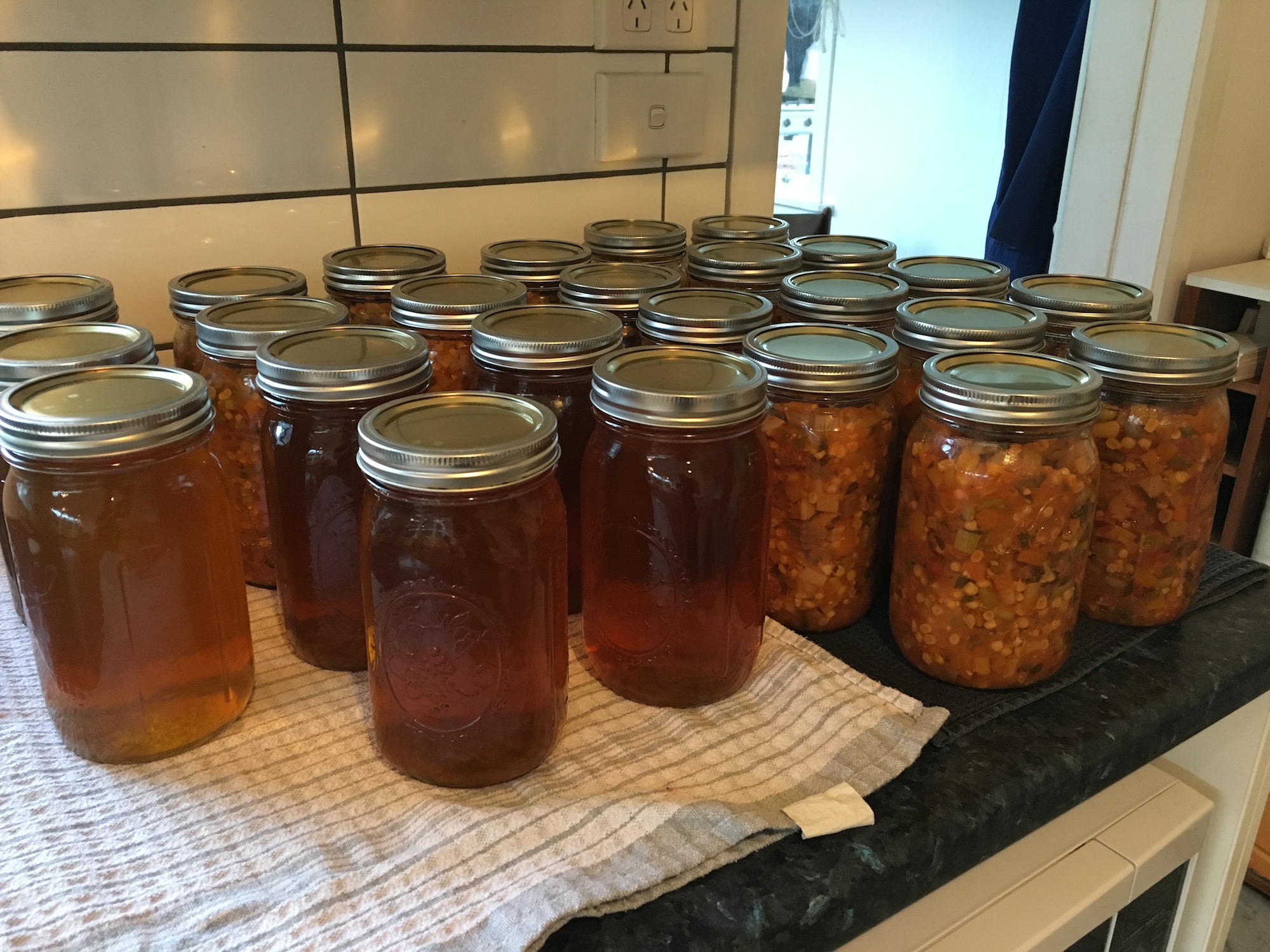
Just after breakfast, the whole family got to work making the year’s Summer Soup (which I’ve blogged about before). We spent the morning chopping vegetables and making up the soup together, then I settled in alone for the long slog at the pressure canner.

It was a hot day to be in the kitchen canning soup. I thought it was just that I had four burners and the oven going much of the afternoon, but when my daughter walked through the kitchen looking wilted, I realised it was just a hot day.

That was the closest I got to knowing what it was like out there.

But I’ll appreciate this lovely summer day spent indoors—over and over again all winter. The final tally for the day was nineteen quarts of soup and six quarts of vegetable stock. That’s a lot of summer, stored up to cheer us on a cold winter evening.

Ballistic Plants

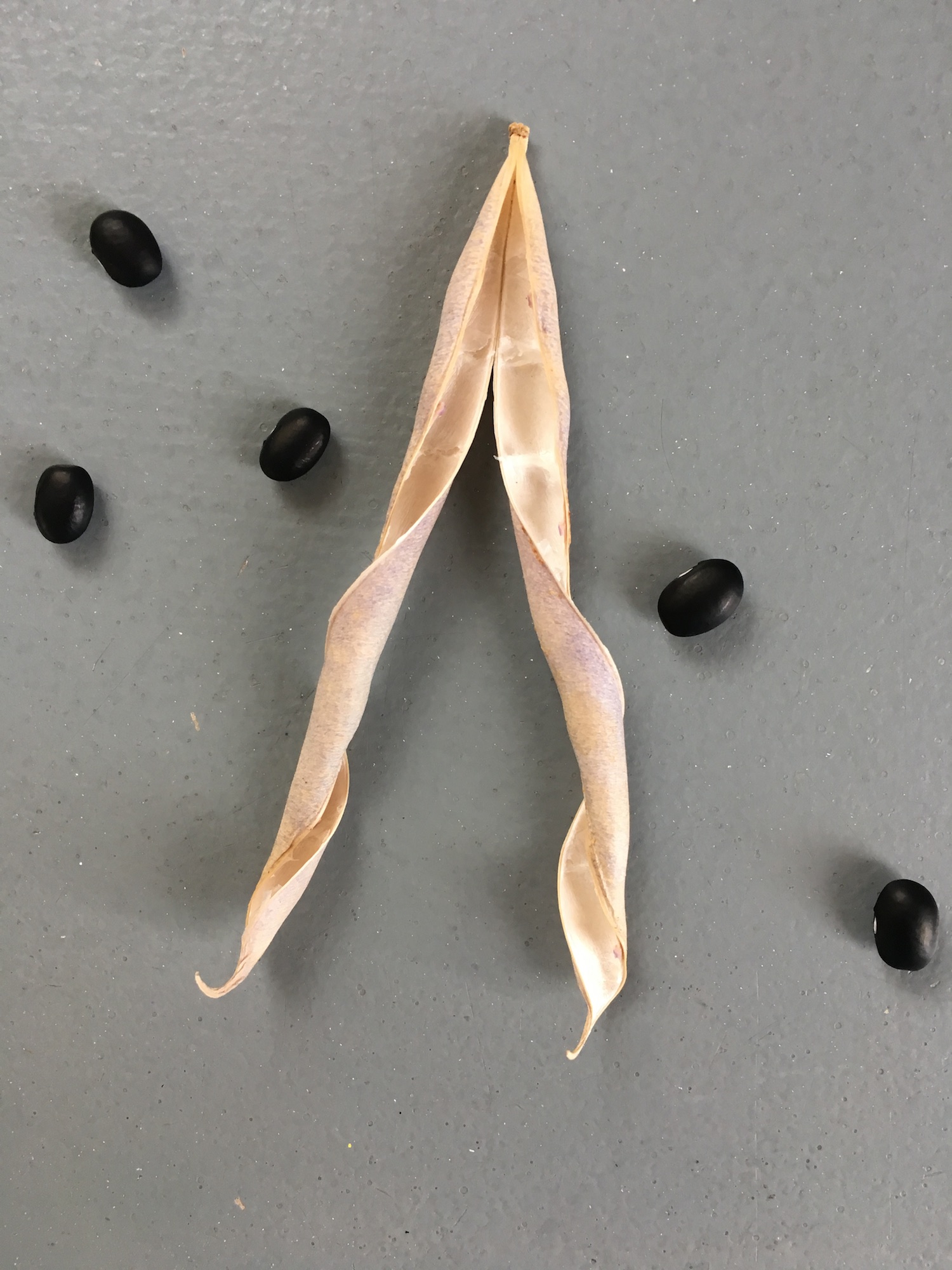
2016-03-05 19.16.53 smI only just harvested the black beans before they all exploded in the garden. It was the hot sun Thursday and Friday that did it. Friday afternoon, when I realised how dry the beans were, I raced to pick as many as I could, and was able to bring in the last of them this morning, with only a few losses.

Though it can be a pain for harvesting, I love plants with explosive seeds. As much as the explosion and shower of seeds, I like the empty pod afterwards. The tension that caused the explosion is gone, and the empty pod twists into attractive little corkscrews.

We have a weed in the yard with seeds so explosive, my daughter and I have dubbed it the seed-in-your-eye plant. It’s real name is bitter cress (Cardamine hirsuta). It’s common in the flower beds around the house, and has a habit of detonating just as a hapless weeder grabs hold of it (hence the seeds in the eye).

My favourite explosive plant is touch-me-not. Where I grew up, touch-me-nots sprang up in any moist hollow. As soon as they started flowering in summer, I’d start searching for ripe seed pods. I’d give each seed pod a gentle squeeze—if the pod was ready, it would burst under my fingers, sending yellow seeds scattering, and turning into a curly work of art. I loved the feel of the deforming fruit.

Sadly, my own children only have beans and bitter cress to detonate here. Now, if I can just convince them that shelling dry beans by detonating them is great fun…


The Beginning of the End

Pumpkins are filling out and beginning to harden off.

Pumpkins are filling out and beginning to harden off.

March 1—first day of autumn here. It is appropriately autumnal today, with a grey sky and brisk, cool wind.

But it didn’t take a cool day, or the calendar to tell me summer was coming to a close. I have been milking in the dark for weeks—a sure sign the equinox is coming. Last week, the first of the elm leaves crunched brown and crisp underfoot. The poplar trees are looking sparse. The dry beans have started to senesce—pods bleaching, yellow leaves plopping to the ground.

The coming weekend will be full of harvest activities—no time for the beach, regardless of how hot it is. Soy beans, dry beans, and corn will all need harvesting. We’ll make the year’s summer soup. I’ll make another batch of pesto for the freezer before the basil is finished. I’ll dry some tomatoes.

There will be plenty more hot days, and likely a few trips to the beach. There will be many more tomatoes, eggplants, beans, and melons. Summer’s not really over. But it’s beginning to pack its bags and get rid of whatever it can’t take with it when it leaves for the Northern Hemisphere.

Soundtrack For the Drive Home on a Summer Evening

(with special thanks to Dave Dobbyn)


2016-02-24 20.57.32Traffic thins, dusk falls

Be mine tonight.

Windows down, breathe cool air

Just add water and dissolve, Baby.

100 kilometres per hour past disinterested sheep

Guilty through neglect.

Moths in the headlights make furry windshield thuds

The outlook for Thursday, your guess is good as mine.

Stray hairs tap tap tap a rhythm on my cheek

It’s magic what she do.

Purple mountains against a bruised apricot sky

Shouldn’t you ought to be in love?

Kids playing frisbee in the dusk

            Call me loyal

Round the bend, the neighbour’s dogs bark

Welcome home.

A Sense of Place

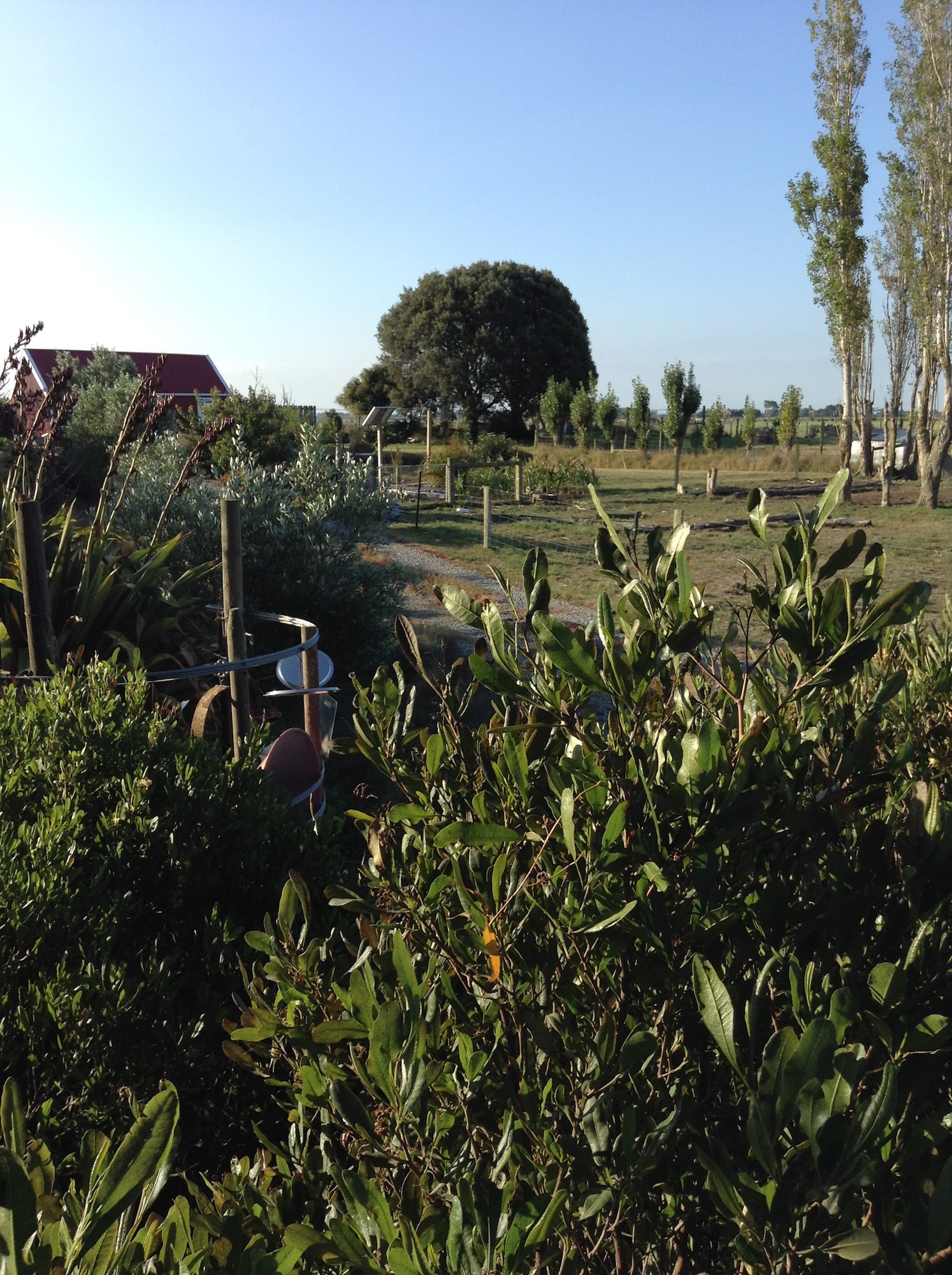
IMG_0147 copyMy daughter’s homework today involved exploring the idea of gratefulness.

One of the questions asked her to photograph the thing she was most grateful for.

This is the photograph she took. It is of our property, and includes a bit of everything here—trees, paddocks, sheds, gardens, and art.

Her answer doesn’t surprise me, and I echo her sentiments. I, too, am grateful for this piece of land that feeds us, shelters us, and provides us the vast majority of our entertainment.

And though some parents might have wished for her to say that she was most grateful for her family, I am pleased that my daughter has put her roots into the soil. I am pleased that she has developed a strong sense of place. In fact, I would have expected nothing less from the girl who spends every waking minute outdoors.

We develop relationships with places, just as we develop relationships with people. Those place relationships help us shape our identity, and place us in context in the larger world around us. They provide us an anchor, a whakapapa (cultural identity), and a homeland.

Our sense of place gives us a solid foundation from which to explore and learn to love the rest of the world. It makes our relationship to the entire planet more personal.

In order to care about the earth in general, we must first care about a special place.

In order to understand the tragedy of the loss of a rainforest, we must first understand the tragedy of the loss of our favourite climbing tree.

In order to understand the magic of an unknown place, we must first feel the magic of our own special place.

And so, for today, I am most grateful for this piece of land that has rooted my daughter’s sense of self, family and community in the earth.

Sing to Your Plants

DSC_0006smMy plants are fond of show tunes—Oklahoma!, Pirates of Penzance, The Music Man.

At least, I hope so, because I sing show tunes in the garden.

Sometimes I switch up the words so the song is appropriate to the moment:

Oh what a beautiful eggplant!

Oh what a beautiful bean.

I’ve got a wonderful feeling

I’m going to eat like a queen.


I sing to the chickens and goats, too, though they prefer folk songs.

Oh my chickens, oh my chickens,

Oh my darlin’ little birds.

You’re revolting, you’re disgusting,

You’re obnoxious little turds.


I don’t know if any of my charges like it. I don’t believe that my singing will actually make my plants grow better. But when I’m pulling stubborn weeds, mucking out the chicken house, or trimming goat hooves, I can either grumble or sing. I choose to sing.

Apricots…with recipe

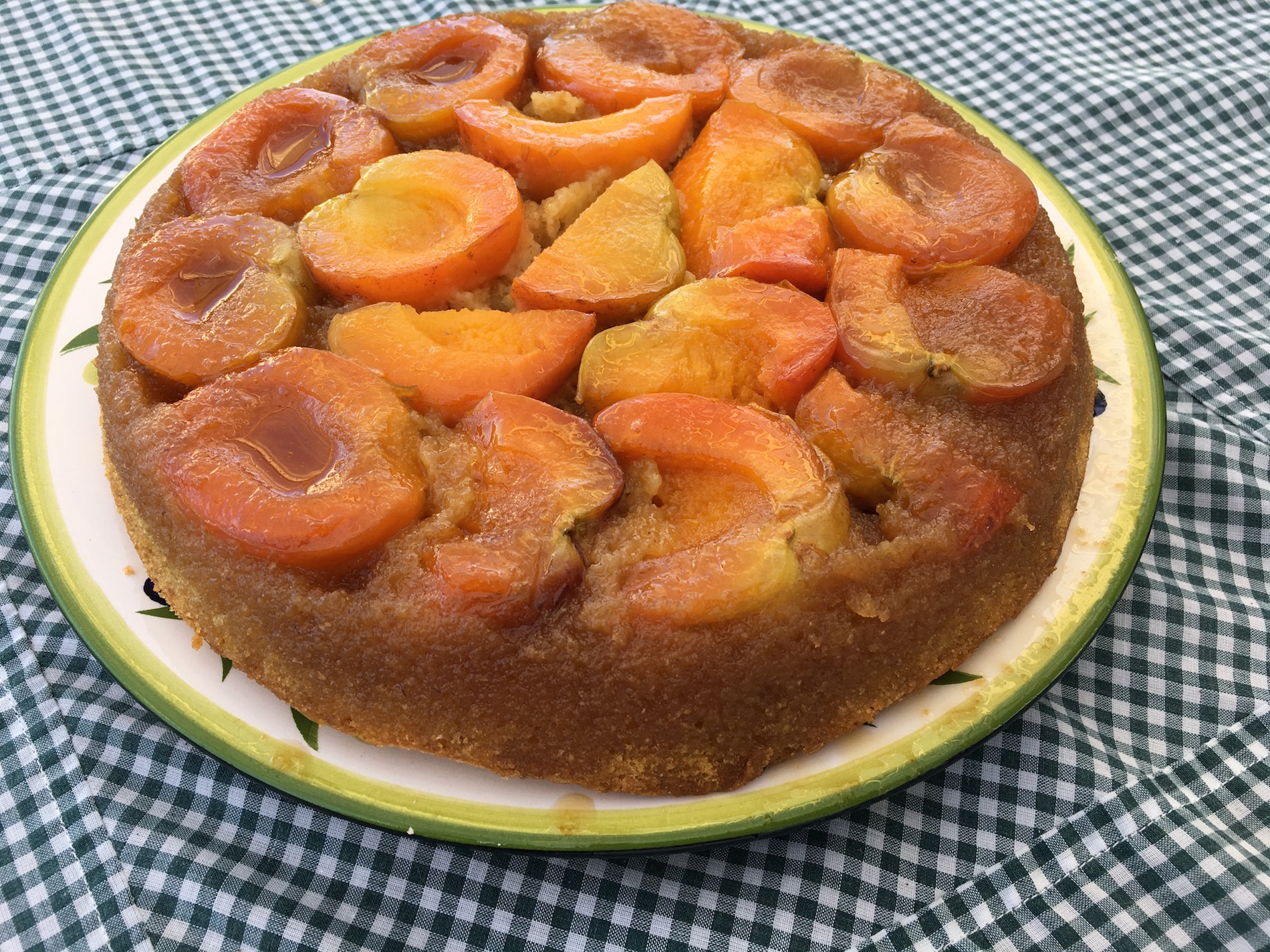
2016-02-16 18.53.39 smAs I wandered through the pond garden yesterday evening, watching the fish and the damselflies, I noticed that the apricots had blushed. I tested one. It was soft and ripe—so ripe, the juice dripped down my arm when I bit into it.

This was the first year the apricot tree has given us anything, and the wind stripped many of the fruits a month ago, but there were still about two dozen on the tree, and they were all ready to pick.

So this afternoon, I made apricot upside down cake—for the second time in a month. This time, I’ll give you the recipe…

This is adapted from a recipe in the 1997 edition of Joy of Cooking.

Melt 3 Tbsp butter in a 9-inch (20cm) cast iron skillet or round cake pan. Tilt the pan to coat all sides with butter.

When the butter is melted, sprinkle ½ cup brown sugar evenly over the bottom.

Arrange apricot halves, cut side down in the bottom of the skillet, completely covering the bottom.

Whisk together in a medium bowl:

2 large eggs

2 Tbsp buttermilk

½ tsp vanilla

Combine in a large bowl:

½ cup all-purpose flour

½ cup whole wheat flour

½ cup brown sugar

Âľ tsp baking powder

ÂĽ tsp baking soda

ÂĽ tsp salt

Add to the flour mixture:

6 Tbsp softened butter

6 Tbsp buttermilk

Beat on low speed just until the flour is moistened, then increase the speed to high and beat for 1 ½ minutes. Add one-third of the egg mixture at a time and beat 20 seconds after each addition. Pour batter over fruit.

Bake at 180C (350F) for 35-40 minutes. Cool in the pan for 2-3 minutes before unmolding. To turn the cake out, run a knife around the edge to ensure the cake has separated from the pan. Place a plate on top of the pan and quickly flip pan and plate together. Carefully lift off the pan.

Fire!

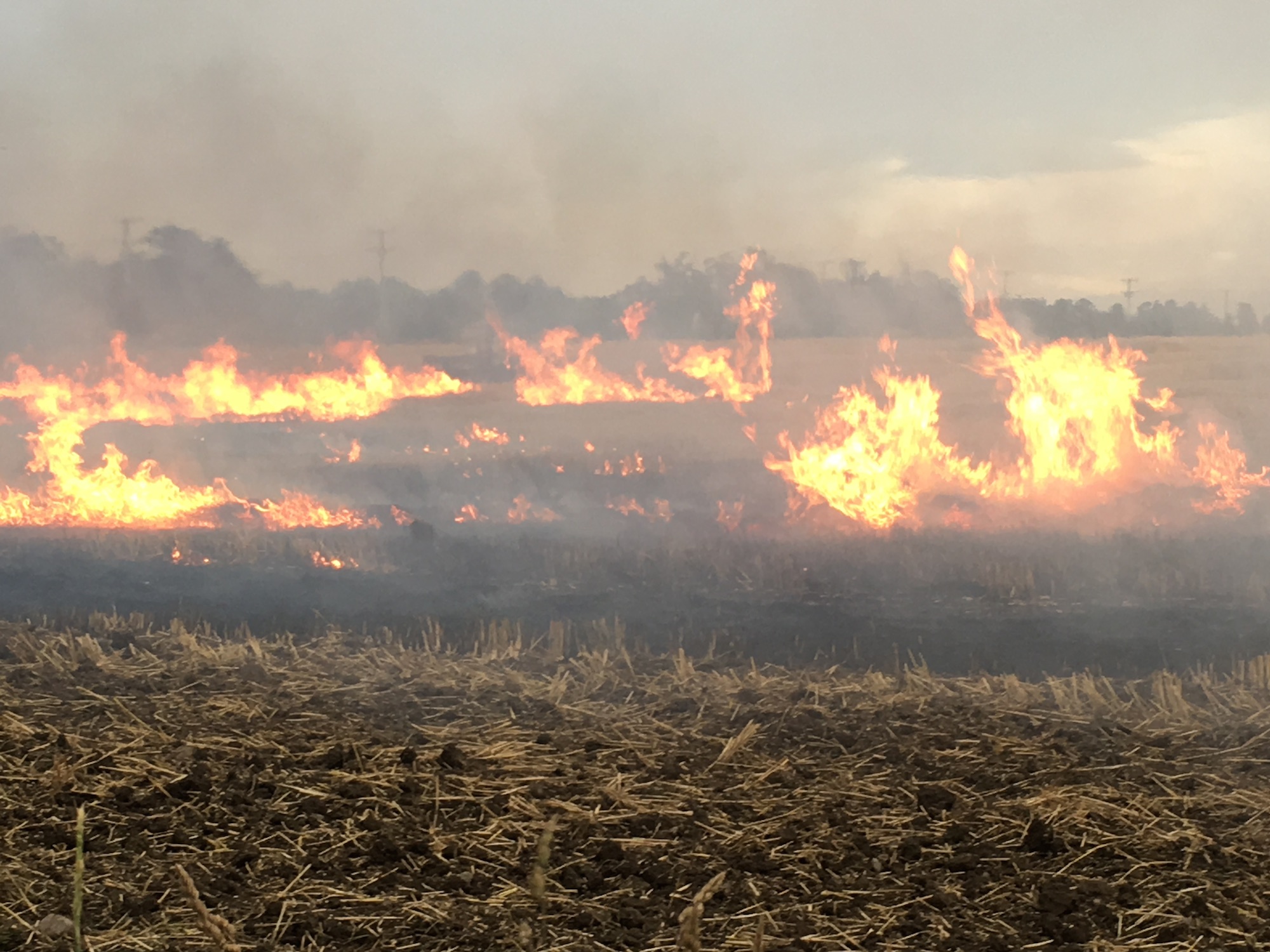
2016-02-17 08.58.04 smPreying mantises were leaping out of the flames, scaling the fence and jumping on my face in panic.

And rightfully so. The neighbour (the one who harvested yesterday) burned off the stubble today to prepare the field for replanting.

I have to say, that though I hate the practice of burning off stubble—it mostly ends up sending nutrients into the air as pollution, rather than back into the soil—I still love to watch a good burn-off. Something about fire…

I had extra incentive to watch this one, as the fire was lit five metres from our fence line, and the wind was blowing towards our property.

It was while I watched that the preying mantises began landing on me. I’m sure there were other insects (and probably a whole lot of mice) fleeing the fire, but I only noticed the mantids.

It won’t be long, though, before they’re back in the neighbour’s field. By this afternoon, it will be planted in grass, to provide winter grazing for his sheep. In a week, you’ll hardly be able to tell it was burnt.

Harvest

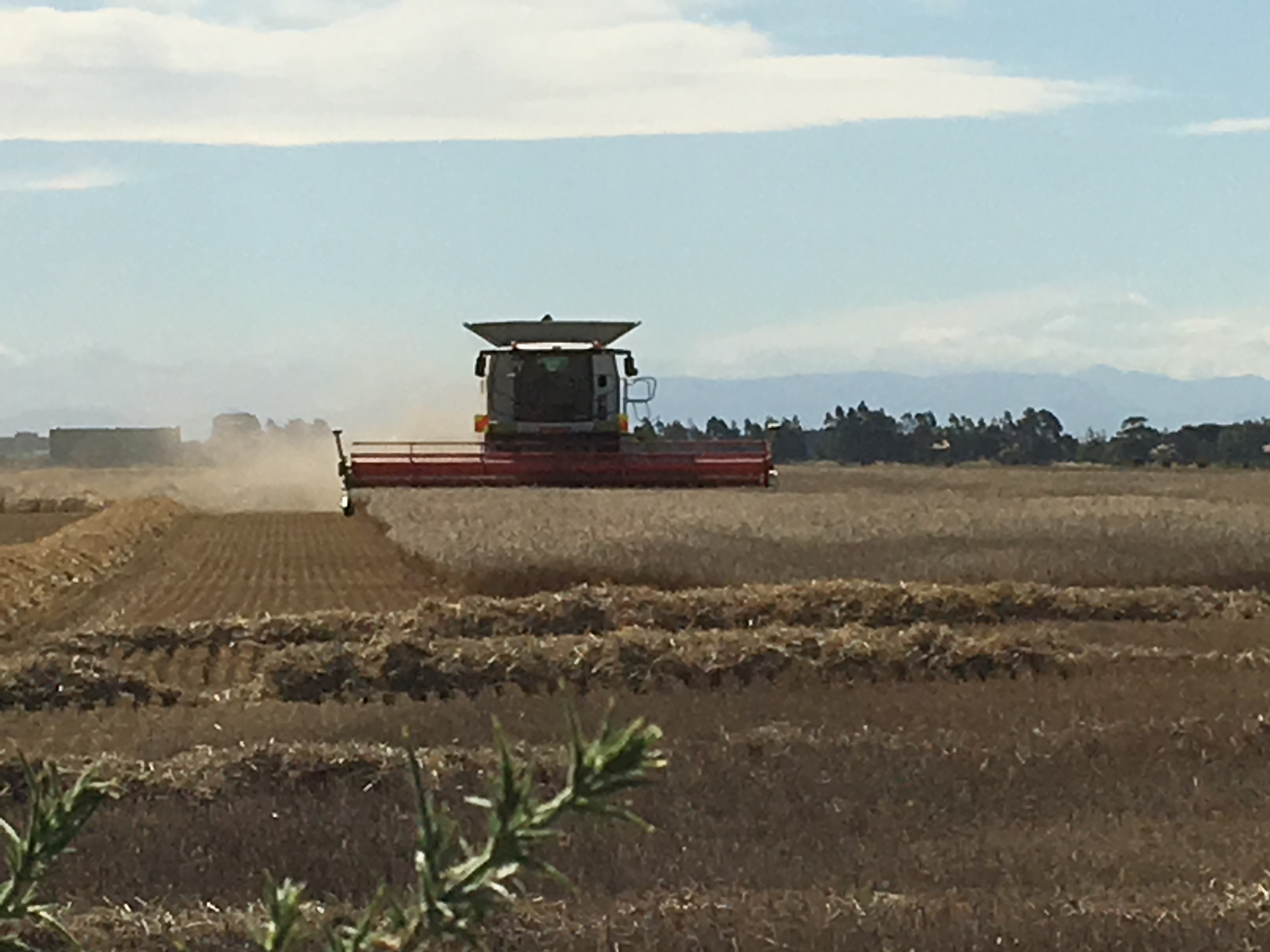
2016-02-16 16.41.47It’s time to harvest barley.

For us that means the rumble of combine harvesters all day and long into the night.

And it means realising how tiny our property is. Never does our property feel so small as when the neighbour harvests next door.

He’s been harvesting for weeks—distant fields—but today he cut the barley behind our house. The harvester dwarfs every building on our property. If I planted every inch of our land in barley, he’d be able to harvest it in just a few passes.

When he drives down the road between fields, the machine fills the road entirely—good thing there’s little traffic out here.

It’s a reminder of the massive scale modern agriculture works on. And these Canterbury farms are nothing compared to the ones in the Midwestern US.

It’s also a reminder that my view of agricultural life, as a “subsistence” farmer is entirely different from my neighbours’ views.

I count my plantings by the square metre or by the plant, they measure theirs in the tens of hectares.

I measure the harvest by the colander, they by the truckload.

My tools are a hoe, a spade and a knife—at a garage sale, you might buy them all for under $20. His tools include multiple machines clocking in at over $100,000 each.

I can produce $50,000 worth of food over the course of a year. He can lose twice that amount in a bad storm.

My soil and water conservation strategies—mulching with grass clippings, using drip irrigation, composting everything—don’t scale up to two hundred hectares. Nor do my planting, harvest and storage techniques.

There is very little resemblance, in fact, between what I do and what my neighbours do, though we both produce food.

And so, I stand and watch in awe as the harvester roars by and the trucks fill up with grain.

And he marvels at the variety and quality of my summer squash and beans.

And we find our common ground in the sun, wind and rain that rules us both.