An Unusual Moth

2016-04-22 15.36.36One day last week I was folding the laundry, which had been hanging out on the line all day. As I shook a t-shirt to fold it, up flew a tiny moth. When it landed again, I noticed that it looked odd. It sat with wings wrapped around it, a bit like a grass moth. But it held its spiky back legs high in the air, unlike any moth I’d seen. I took a couple of photos, none of which came out great—the iPhone just wasn’t made for macrophotography.

Still, even with a grainy photo, I was able to identify the moth to the genus Stathmopoda.

That’s where it started to get weird.

Everyone knows that butterflies and moths start off their lives as caterpillars, and that caterpillars eat plants, right?

Not so, in the genus Stathmopoda. Instead of munching leaves, the caterpillars of Stathmopoda eat other insects.

Yes, they’re carnivorous caterpillars.

They prey primarily on scale insects, so some species are actually used as biological control agents to help control these pests.

They are not the only carnivorous caterpillars. Though carnivory is rare among butterflies and moths, it has evolved separately several times in at least eight different lineages. Most carnivorous caterpillars eat small, slow-moving or sedentary insects, as you might expect from an animal that is neither speedy nor particularly formidable itself. As far as we know, there is only one moth that is carnivorous as an adult—the ‘vampire moth,’ Calyptra eustrigata, which feeds on the blood of ungulates.

I’m quite happy that this little Stathmopoda is carnivorous. Our currants suffered a bad case of scale insects this summer, so I hope there are lots more Stathmopoda out there. Here’s wishing it great reproductive success in the garden!

Crazy Corner Farm

2016-04-17 11.13.55 sm“So, what do you grow here at Crazy Corner Farm, eh?” asked the man who delivered 500 bricks earlier this week.

I laughed.

“Well, it’s basically a subsistence farm. A little milk and cheese. A lot of vegetables.”

It was a good enough answer, and appropriate to the situation. But other things came to mind.

What do we grow here at Crazy Corner Farm?

A lifestyle. A lifestyle of hard work rewarded by the fruits and vegetables of our labour.

Kids. Kids who know where their food comes from. Kids who understand the work that goes into a simple block of cheese. Kids who can tell a bee from a syrphid fly, use a machete and an axe safely, and design and plant a garden.

Creativity. Creativity in food, garden, crafts, DIY problem-solving, circus arts…everything. By providing the space, materials, and encouragement to let it flourish.

Stories. Or, as my husband said it, “Organic hand-picked words available in convenient poem, economic story, and family-size novel packs.”

So, we grow a lot here on our tiny farm. More than you might guess at first glance.

Managing Water

2016-04-22 15.51.16 smMake hay while the sun shines, they say.

They could also say fix your roof while the sun shines.

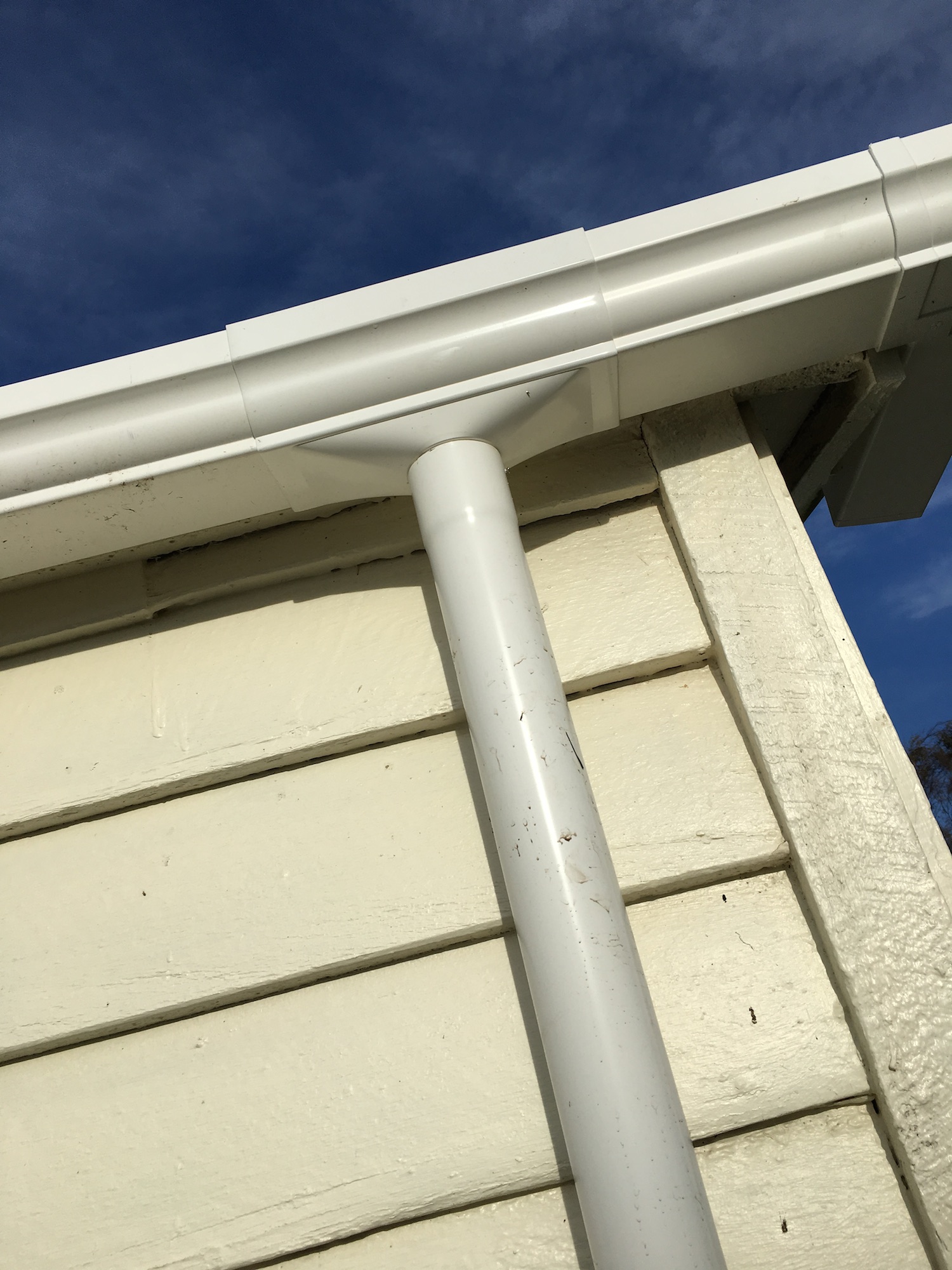
The sun shone so much over the summer (and now well into autumn), that it would have been easy to forget the leaky roof and broken gutters. And we did manage to ignore them both all summer, but one of these days (hopefully very soon) it’s going to start raining again. It was time to get the work done.

I enjoy being on the roof. But roof work is never fun—wrestling sheets of corrugated iron roofing around in the wind, pulling rusty lead-topped nails, dealing with rotting roof beams, and doing it all on an angle four metres above the ground.

Still, it is good to have roof and gutters repaired. And after we prepared for rain, I weeded the artichokes.

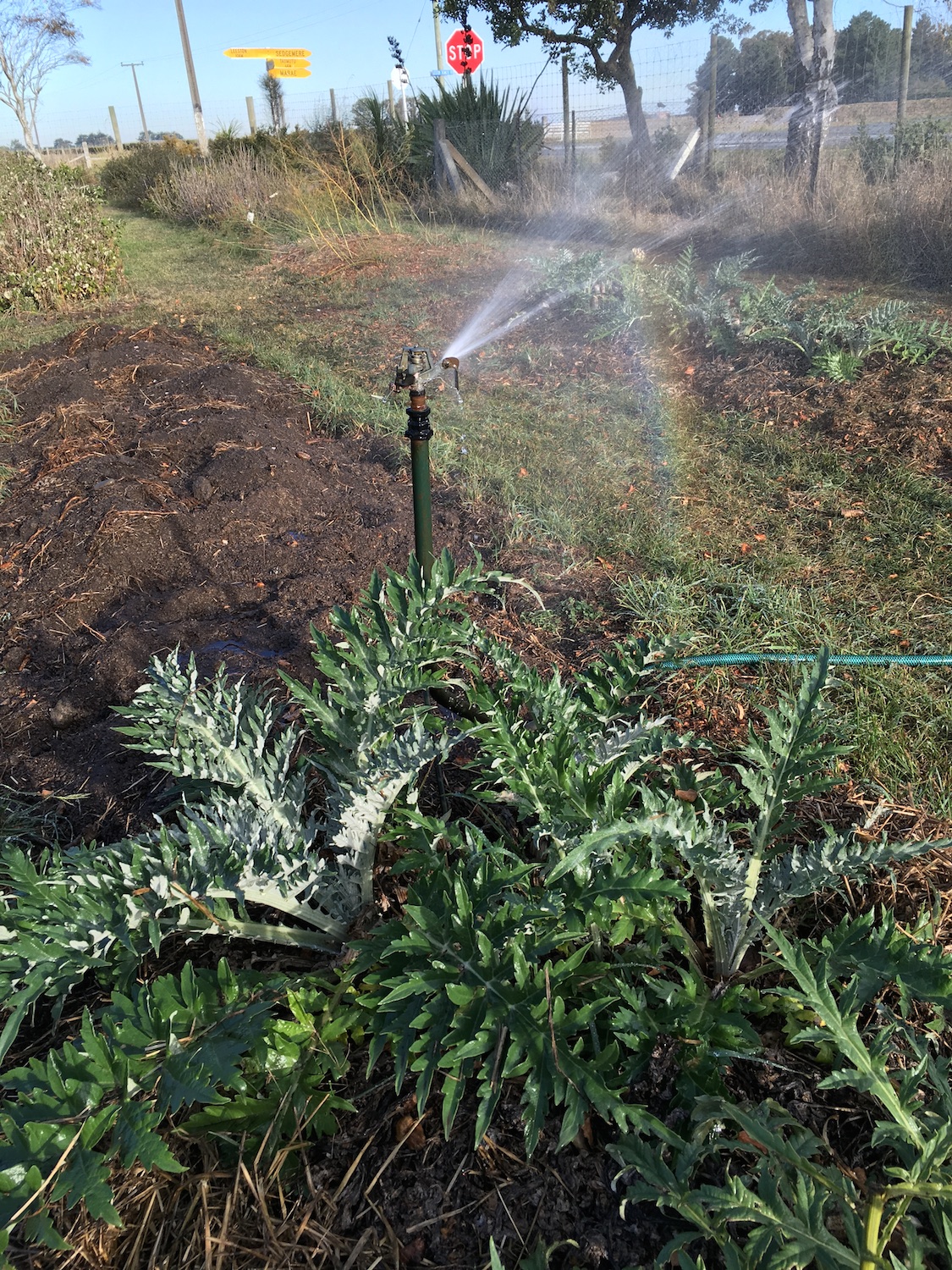
2016-04-22 15.50.14 HDR smIt was a lesson in dry—the ground was dust, and the poor water-loving artichokes were suffering. So I turned the sprinkler on them, dealing with an extreme lack of water after preparing for an overabundance of it.

Some day I do hope it begins raining again. It would be good to know if the roof and gutters are properly fixed, and it would be nice if we didn’t have to water the garden all winter. Either way, we’ll be managing water—either too much or too little of it.

When it rains, it pours, as they say.

Ahh…sweet love!

'Tis the season.

‘Tis the season.

I swear I’m going to kill my goats.

They caught a whiff of buck a couple of days ago, and all hell has broken loose in the paddock.

Last night, I barely even heard the d*#&$ cat howling at the window over the F@#$^&*ng goats in the paddock. I finally gave up trying to sleep at four this morning and got up and fed them. I figured if they were eating, they’d have to be quiet, right?

Unfortunately, love-sick goats aren’t interested in food. The novelty of it kept them quiet for a few minutes, at least. Around five, I went out and hung out with them for a while—again, it was good for a few minutes, until they decided I wasn’t nearly as interesting as the prospect of a buck. Somewhere. If only they could call loud enough for him to hear.

They’ve worn a path around the perimeter of the paddock—pacing and calling all night.

And they’ve worn a path in my nerves. I’ve warned them. Another peep out of them, and we’re having goat for dinner.

Touched by Frost

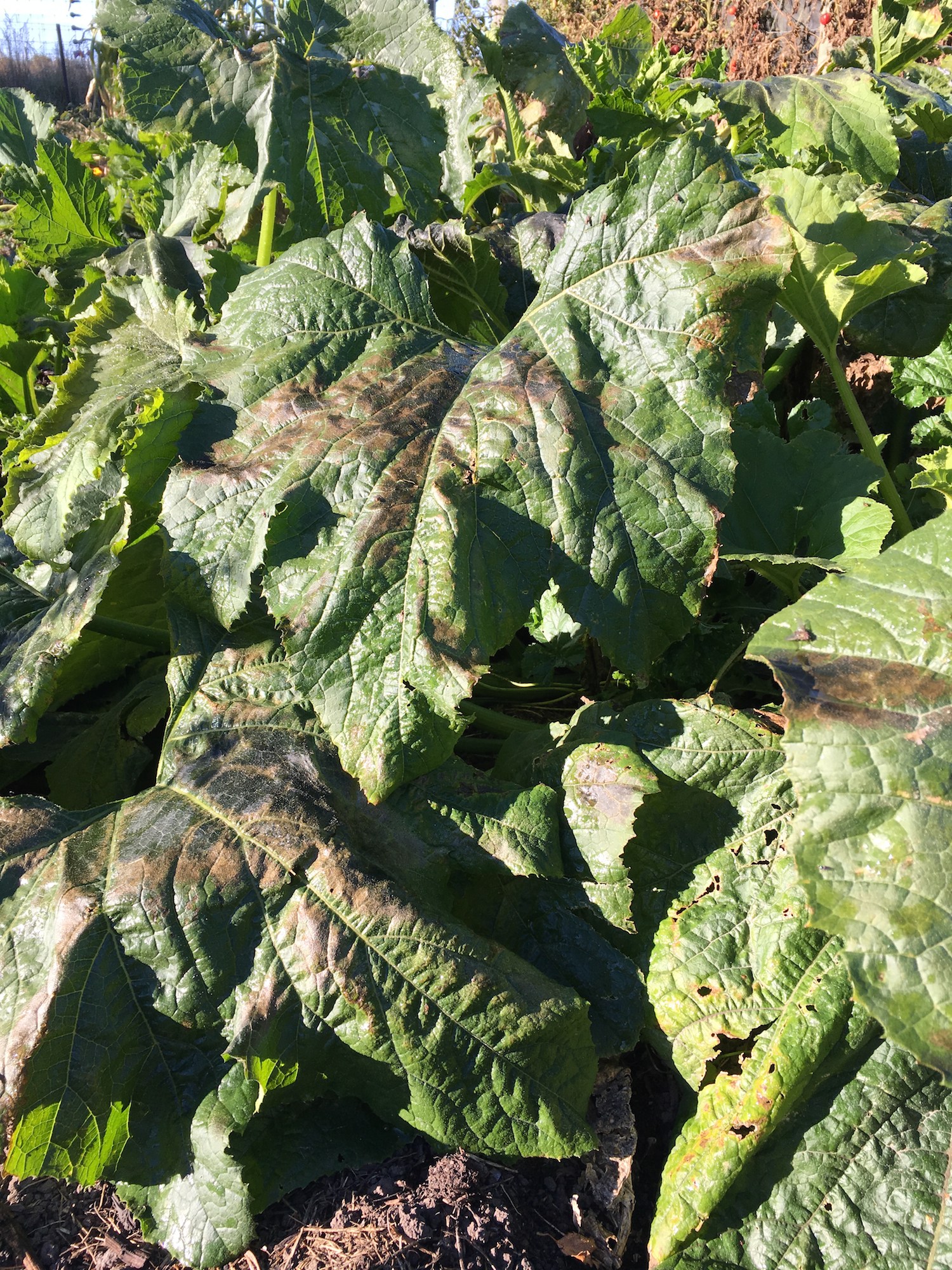
2016-04-14 08.42.53 smIt happened. The first frost hit the vegetable garden. Not hard, but enough to show. Most of the tender and unprotected plants were already done for the year, anyway—the tomatoes had largely succumbed to drought, the cucumbers had given up, the melons were done, the pumpkins were already harvested, and the basil had gone to seed. The summer squashes were only lightly touched—a few of the leaves browned, but most of the growing tips in good shape.

Of course, at this time of year, any day could be the last.

So we savour each day—enjoying the tastes of summer while they last.

Daylight Savings Cat

None the worse for wear.

None the worse for wear.

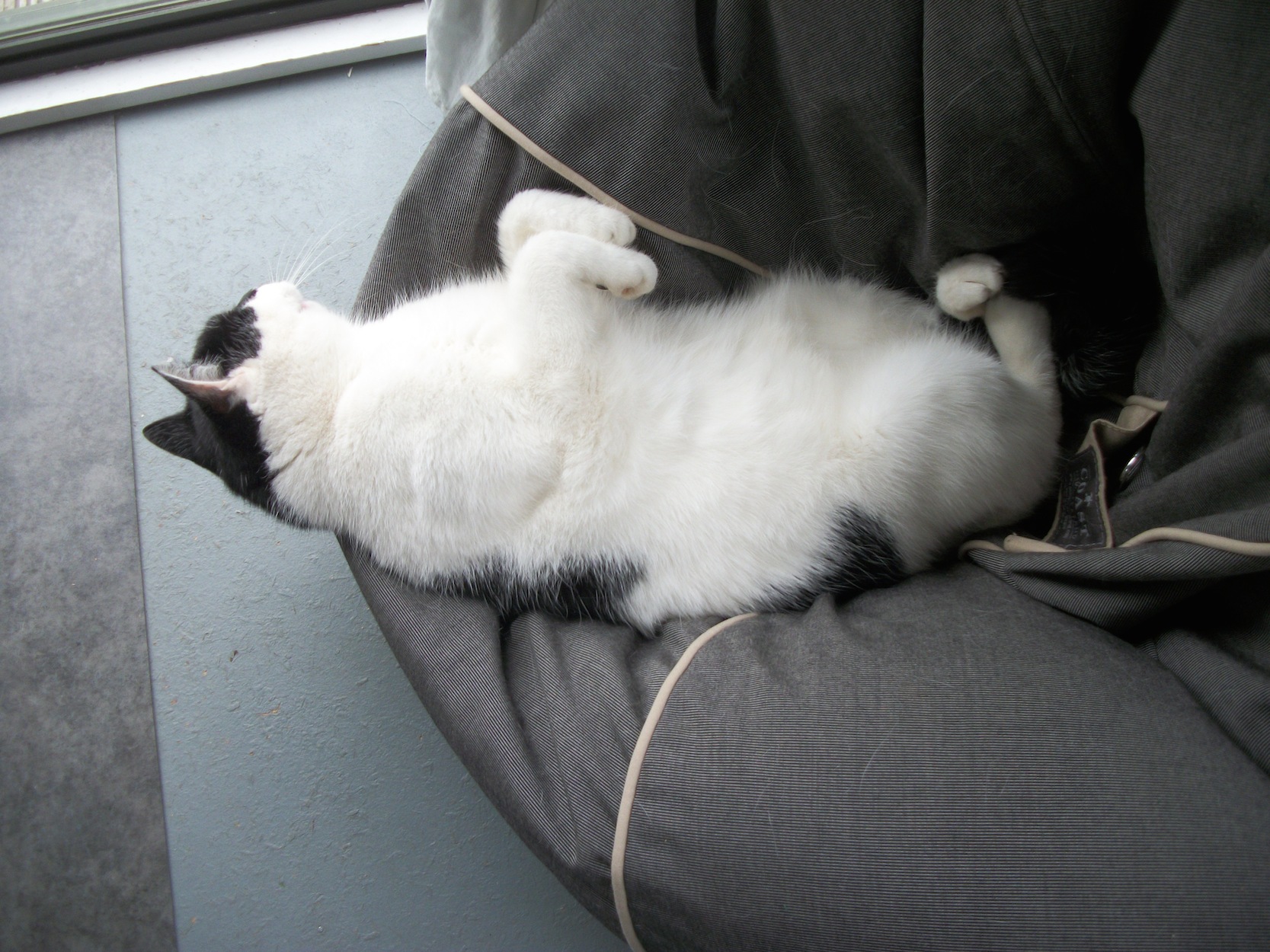
The cat has been particularly annoying lately. Usually he meows at my bedroom window around five am to be let in.

But when we came off daylight savings time last week, he refused to change his schedule. And out of spite, he even started meowing earlier, which means he’s been waking me up before four am for a week.

Ignoring him only makes it worse. If I don’t get up and start my day when the cat calls, he hurls himself at the front door until I do.

I can ignore a meowing cat, and even fall back asleep if I try. I can’t ignore seven kilos of fury rattling the front door for an hour.

So this morning when my eyes opened at 4.30 am I was surprised it was so late. All was quiet, and for ten minutes I lay blissfully thinking the cat had finally gotten the message about daylight savings time. I was just drifting back to sleep when I remembered…

About 4.30 pm yesterday, I was balanced on the top of a ladder, hanging a sack of pumpkins on a rafter in the shed. The cat was slinking around in the shed, and the wind blew the door shut. I remember seeing his tail slip in, just before the bang.

I never let him out.

Darn cat. Even locked in a shed forty metres from the house, he was able to get me out of bed early.

Because, once you realise your daughter’s cat has been locked in a shed for twelve hours, you can’t lounge around in bed enjoying the quiet.

Stormy Weather

Somewhere out there...

Somewhere out there…

Don’t know why
There’s no internet or wi-fi
Stormy weather…

Rural life is great, but these days, when so much of our lives revolve around connecting with others via the internet, rural living can be a lesson in frustration.

Not only does our normal “broadband” speed make us wax lyrical about dial-up, but on rainy days, we’re lucky to connect at all.

Our internet comes to us via a transmitter on the Port Hills, about 50 km away. The receiving dish on the roof must have line-of-sight access to that transmitter in order to receive a signal. Installing it required cutting down two trees that were in the way, and involves regular trimming of a bush that threatens to grow too tall.

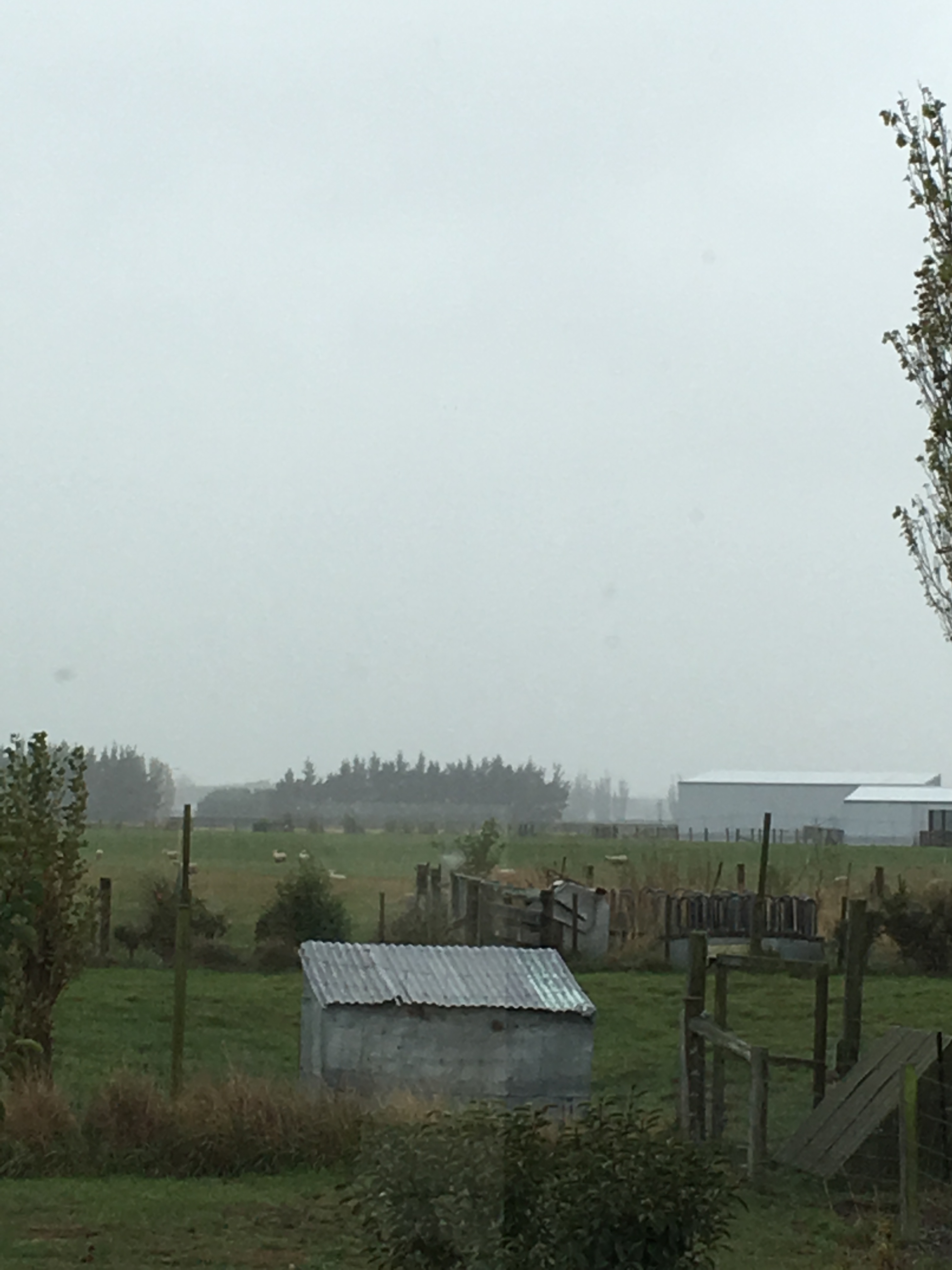
It also means that when there’s a lot of rain between us and the transmitter—particularly if it’s a fine, misty rain—we get no internet signal. Compound that with the fact that our phone line now goes through the internet, and rainy days cut us off from the world.

Enter today’s weather—exactly the sort of fine, misty rain that isolates us. Want to do some research? You’re stuck with whatever books you’ve got in the house. Want to ring the vet? Not today. Post your blog? Not likely. Check your e-mail? Forget it.

Makes it a good day for writing, I suppose.

And if I’m lucky, the rain will clear briefly so I can post this blog…

Pumpkins

About a third of the harvest.

About a third of the harvest.

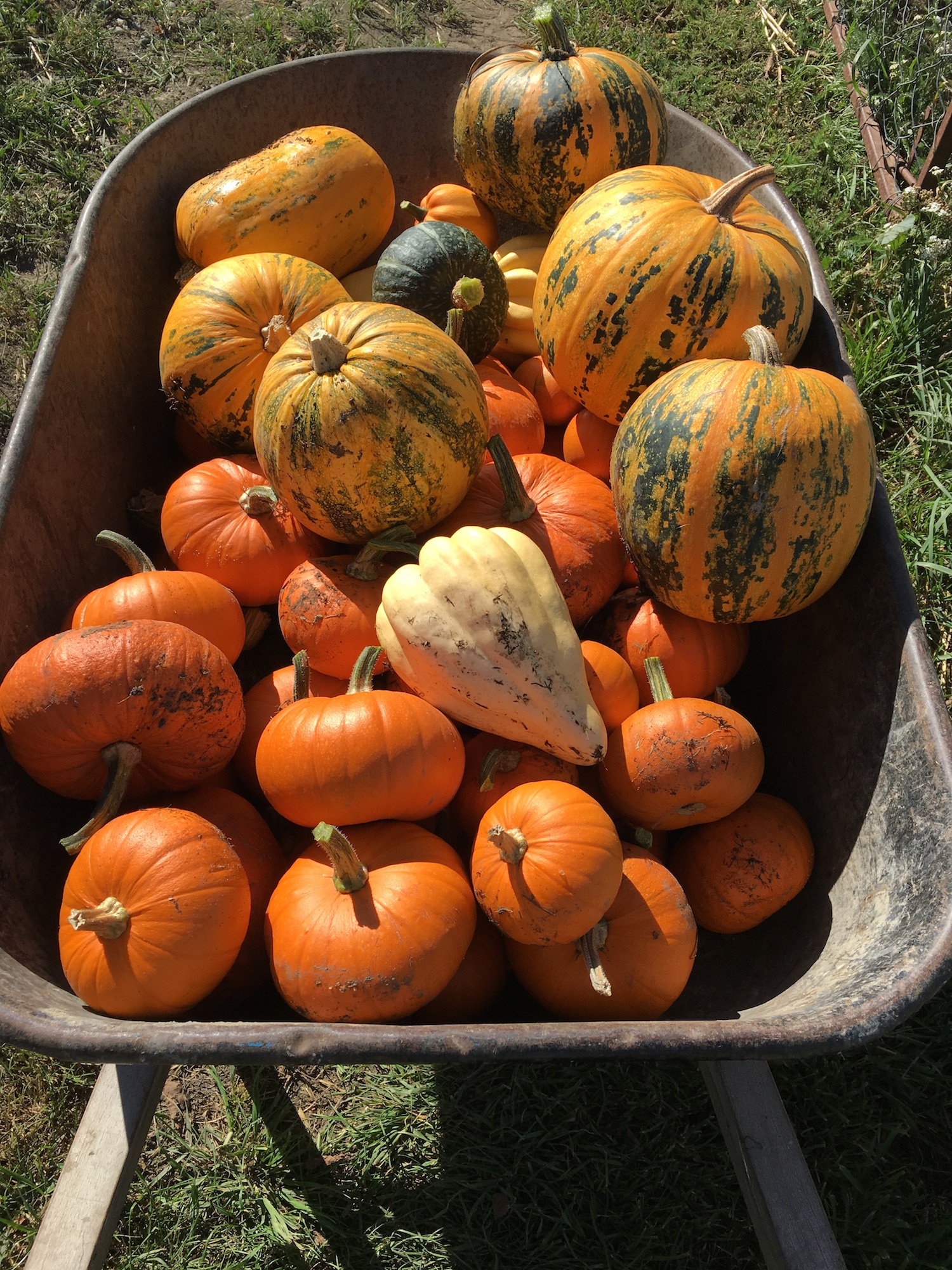
Autumn wouldn’t be complete without the requisite wheelbarrow loads of pumpkins and other winter squash. In spite of some late-frost drama this spring, the harvest wasn’t bad.

My kids ask every year, “Which are the pumpkins and which are the squash? What makes a pumpkin a pumpkin?”

The short answer is that a pumpkin is a squash that we call a pumpkin. There are four species and countless varieties that variously get called pumpkin and squash. Some fruits are known as pumpkins in one place, and squash in another.

I don’t bother with the distinction. The important distinctions are between varieties. Some are best made into soup, others make splendid pies. Some have robust, dry flesh that holds up well in savoury galettes. Some are just the right size for baking whole. Some keep well, and others need to be eaten quickly after harvest. Some have flesh only useful as goat food, but have naked seeds that are wonderful toasted with salt and spices.

Which is, of course, how I justify planting so many pumpkins of so many varieties. I need them all!

The Aphipocalypse

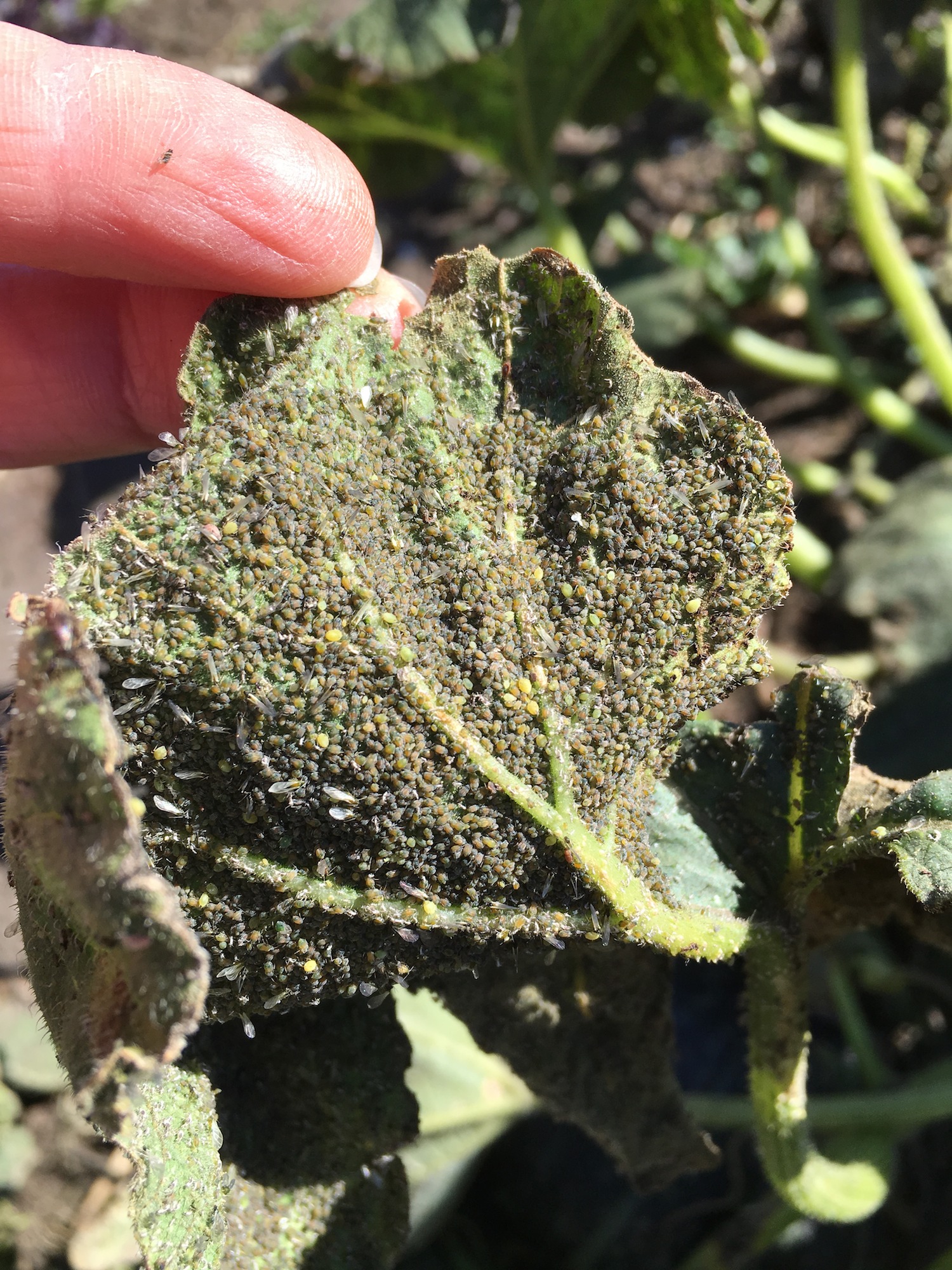
2016-04-09 11.19.43 smIt has been years since I’ve seen an aphid infestation quite this bad, and rarely at this time of year.

As I’ve mentioned before on this blog, I usually have aphids in early spring, and then the predators and parasitoids knock them back to almost nothing through the summer.

But somehow, the predators and I all missed the aphids on the pumpkins. I expect the warm dry summer was perfect for their growth. I rarely take note of the pumpkins from December to April—they need little weeding, and are generally pest free.

So when I went to harvest, it was a bit of a surprise to find millions of aphids on the underside of nearly every leaf in a back corner of the pumpkin patch.

All summer, the aphids have been cloning themselves, producing dozens of replicas every week—an army of little green girls. Only girls. It wouldn’t have taken them long to build up the population level out there right now. Some of the generations of aphids had wings (you can see some on the left side of the leaf in the photo), and dispersed to other plants, but most stayed put, slowly spreading across one leaf after another.

But, as big as the population is today, they will all die over winter. About this time of year, the females will start producing a few males—also genetically identical to themselves, with the exception of a missing sex chromosome. Only in the fall will females mate and produce eggs. The eggs will overwinter, hatching out in spring (all female) to start the cycle over again.

I think I won’t wait for these girls to lay eggs. I’m afraid that, now that the pumpkins are gone, the infested vines will be dunked in a bucket of soapy water and buried deep in the compost pile. No sense in letting them get a head start on next spring!


Step on a Hedgehog

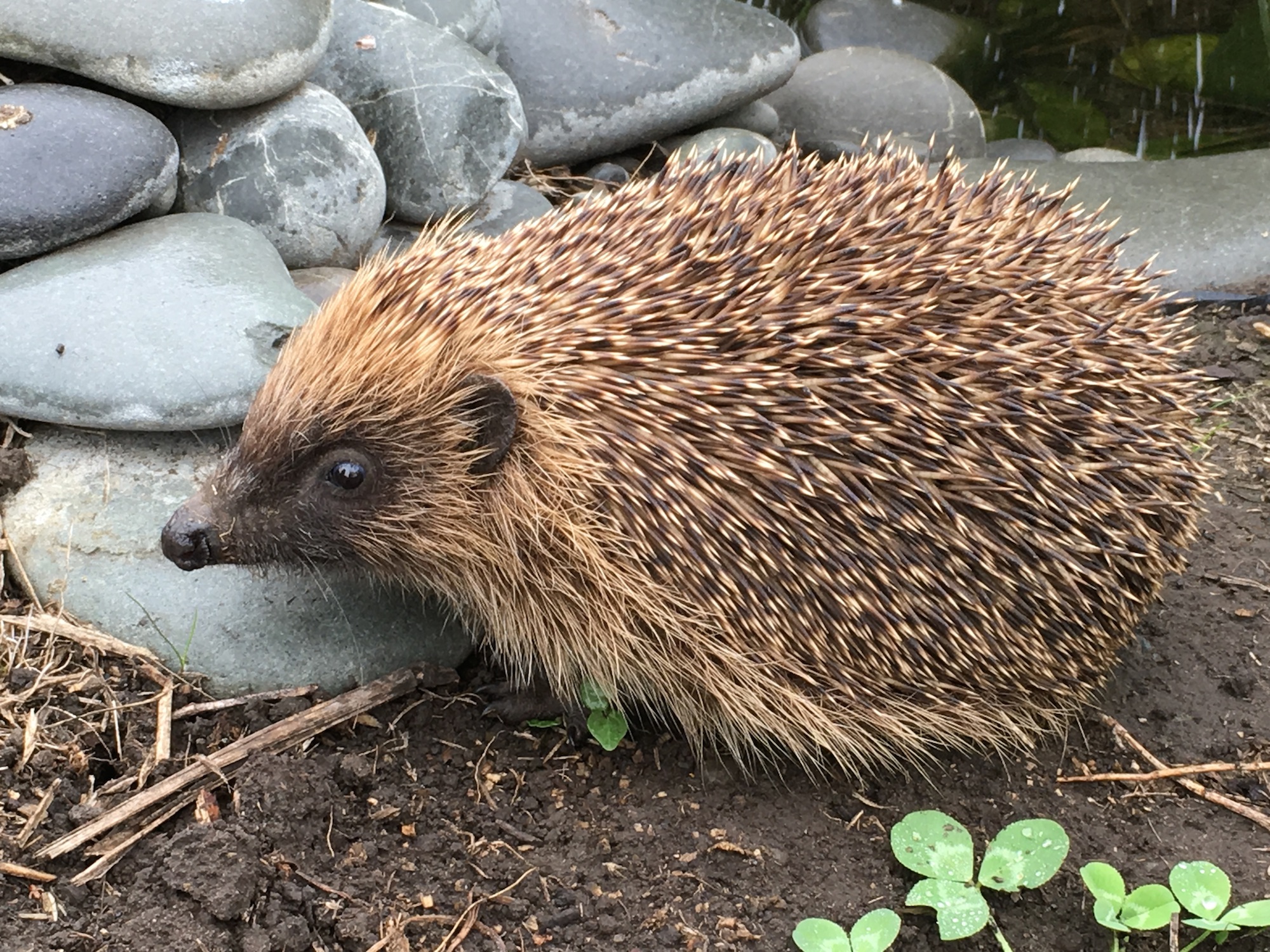
2016-01-26 18.07.41 smMy daughter came to me frustrated yesterday evening.

“What is fear?”

Knowing she had just been out in the dark, I asked her if she was frustrated because she was afraid of the dark.

“No, I’ve gotten over my fear of the dark. Now I’m afraid of hedgehogs.”

“Ah. You’re afraid of stepping on them in the dark.”

She nodded.

“Well, you learned that from your father, who worries about stepping on hedgehogs in the dark. But I’ve actually stepped on hedgehogs in the dark.” I shrugged. “It’s not so bad—for me or for the hedgie. You tend to feel it before you put all your weight on it, and you pull back before you hurt it.”

She looked relieved.

It got me thinking about the nature of fear, how easily it is taught, and how difficult it can be to overcome.

Teaching children about insects, I see fear all the time. The fear that another living thing might harm us (and sometimes the fear that we might harm another living thing). Much of my teaching is aimed at overcoming those fears.

And in saying ‘overcoming,’ I don’t mean eliminating those fears—that’s the work of decades, not of an hour.

I know that, because I experience those fears, myself—they are deeply rooted in our culture, and I was taught them just like everyone else was. But I have confidence in spite of the fear. Part of that comes from knowing that the worst that can happen is really not all that bad (for most things). I have been bitten, clawed, and stung by songbirds, parrots, raptors, rabbits, rodents, snakes and all manner of insects and spiders, and have survived it all. More importantly, I’ve learned that if I understand the animal and move with confidence and care, I am unlikely to be hurt (or to hurt the animal).

So I don’t try to make children unafraid of insects; instead, I teach them how to move with confidence and care, even if they don’t feel the confidence yet. I teach them how to hold an insect safely. If I think they’re ready for it, I give them an insect that is likely to bite them—a tiny nip they might actually feel, if they’re paying attention. They might cry out, “Oh! It bit me!” They might fling the insect off their hand. But chances are good, they’ll pick it up again, because the worst has happened, and it wasn’t so bad. The act of taking the risk once makes it easier to do it again. Confidence grows. The fear may still be there, but it is diminished by understanding and experience.

I hope my daughter does step on a hedgehog in the dark. She will stumble in her effort to not squash it. She’ll cry out in surprise, and then laugh as the offended hedgehog lumbers away. When she goes out in the dark next, she’ll walk with more confidence. And because the fear will probably still be there, she’ll feel incredibly brave in doing so.