Crocuses to the Rescue

2016-08-29 18.00.55It was a long day. I was working in town. At the library. Trying to focus sitting next to a man who spent the day ripping pungent farts, then next to a pair having a loud business meeting. It was a spectacularly unproductive day. I went for groceries, and the store smelled of rotting fish. I sat in the hot car waiting for the kids, who were late getting out of their after-school activity.

With a splitting headache, I drove home, an hour later than I expected, and two hours later than I’d hoped. I took the route with fewer intersections, knowing my exhaustion and pounding head would throw my judgement off.

I got home (thankfully to find my husband was making dinner) and raced to do the afternoon chores before the light was gone. I was ready for some good rural silence, but the neighbour was ploughing next door, and the rumble of the tractor rattled my brain. Last thing I had to do was go collect the mail.

On the way to the mailbox, I saw the crocuses—the first of the year. They were as limp and spent as I was, but they made me smile. The rest of the unpleasant, frustrating day didn’t matter—the crocuses were enough.


When Summer Meets Winter

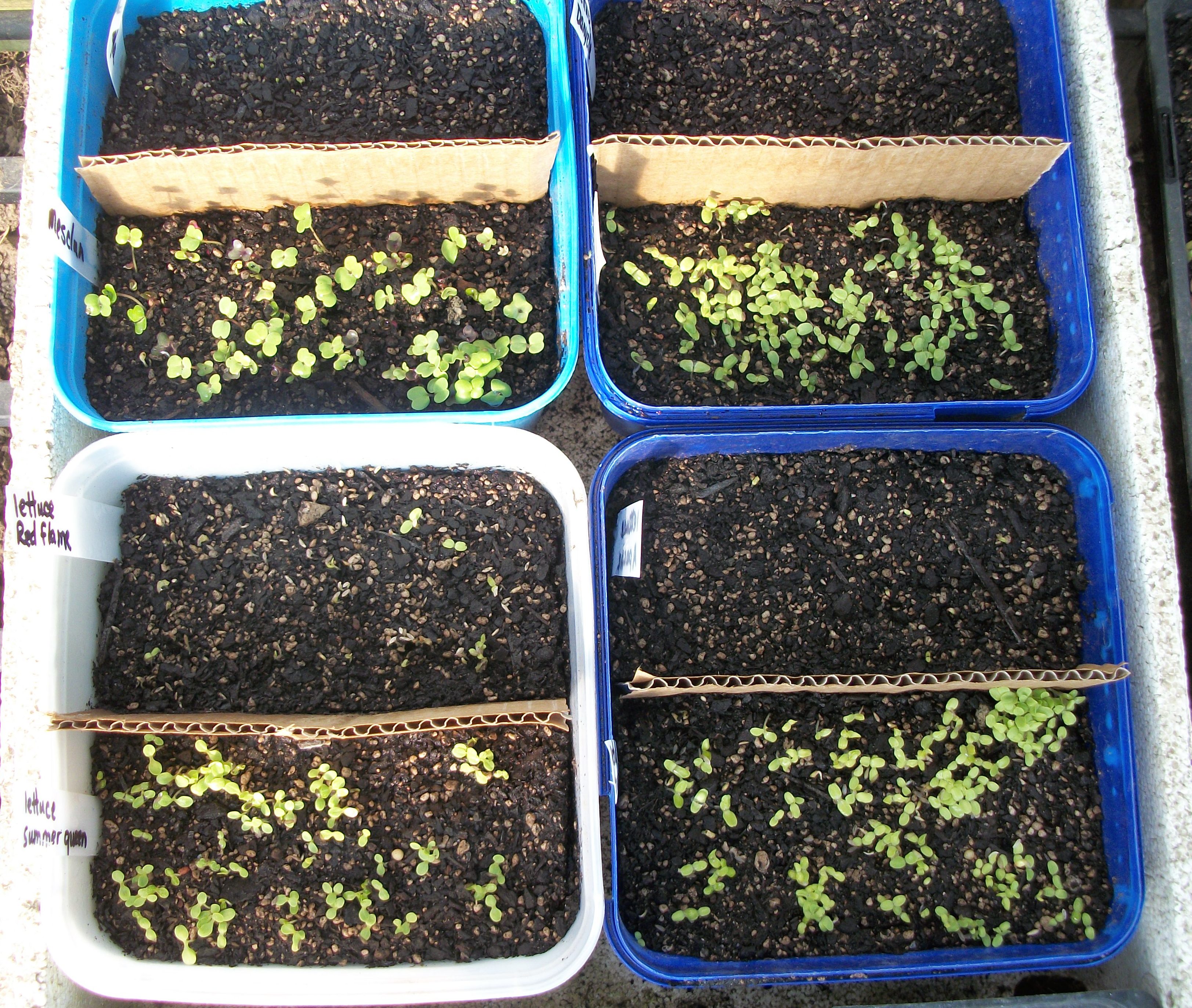
2016-08-21 10.36.07Early spring is an awkward time in my office. The office is used, not just for work, but also for sewing, crafts, and as a heated greenhouse.

In springtime, it can get awfully crowded in there.

I do a lot of sewing over winter, when the garden doesn’t demand so much of my time, and it’s not particularly pleasant outside. In summer, I do almost none—I have little free time, and my hands are so garden-rough that working with fabric is a lesson in frustration.

But in springtime, the two often overlap. My winter sewing list is always longer than I have time for, and I try to squeeze as many projects in as possible before I run out of time. That means I’m usually still frantically trying to finish the last project when it’s time to start vegetable seeds. The plant shelves go into the office and are filled with seedling trays while the sewing machine and iron are still set up.

It’s crowded, fabric invariably gets dirty, pins and scissors end up getting dropped on fragile seedlings.

Some day, maybe I’ll have a dedicated, heated greenhouse so that sewing and gardening can be separate. Until then, winter will rub shoulders with summer for a few weeks every year.

Saturday Stories: Gardener’s Ballad

DSC_0003 copy

I couldn’t resist a story in verse this week…

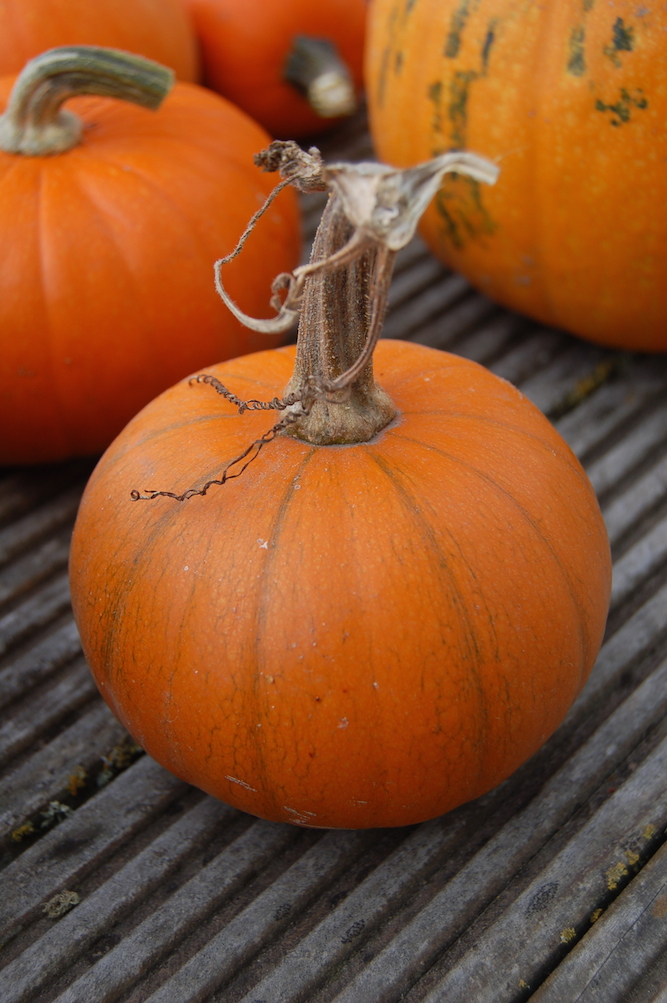
A gardener’s life is full of shit
And compost is the best of it.
Now hear a tale of a gardener who
Rose to fame on a pile of poo.

T’was springtime when, as all do know
Young green things are apt to grow.
And Sally, your young gardener fair
Prepared the soil with skill and care.

She turned it with her spading fork.
And pulled the weeds, such heavy work.
Then went she to the compost pile.
Which had been rotting for a while.

Cow pies, weeds and chicken poo,
Mouldy hay she’d added, too.
It made a rick and crumbly mix.
The deficiencies of her soil to fix.

Into the soil her compost went.
She mixed, raked it, then she bent
And lovingly she planted seed
‘Atlantic Giant’, yes indeed.

For this year, she would beat them all
Win biggest pumpkin in the fall.
All summer she did weed and water
As though the pumpkin were her daughter.

The pumpkin grew, and grew, and grew.
Drawing nutrients from the poo.
And Sally grinned as the contest neared.
She thought of past competitors who jeered.

But this year, she would have last laugh.
She had the biggest pumpkin by half.
Fifteen hundred pounds it weighed.
A large blue ribbon on it laid.

Sally was famous, her gardening lauded.
And all the spectators loudly applauded.
And when she was asked, just what did she do,
She calmly replied, “I just fed it some poo!”

Ode to a Seed

100_3612

Oh, little seed
Barely a speck.
Germ and cotyledon armoured
In seed coat.
You hold such potential–
A pea, a bean, a sprawling melon
Waits inside your humble shell.
Such modest desires you possess–
Soil, sun, water, warmth.
It is my pleasure to provide for you
Knowing you, someday, will provide for me–
Succulent tomatoes, crisp lettuce, spicy radishes.
I can taste your future.

Grow, little seed.
You are my sun, my life, my lunch.
You are spring itself.

Sedgemere Haiku–Spring

In honour of National Poetry Day this Friday, the remainder of my posts this week will be in verse.

2016-04-18 14.50.46 cropFog billows in wet.
Frosting hair, spider webs, grass
With silver gilding.

_______

Magpie warbles loud
In early morning darkness,
Waking up the sun.

_______

Bees hum in purple
Lavender blooms, blue pollen
Dusting hairy backs.

_______

Seedlings defy frost,
Growing tall in warm sunshine,
Sheltered under glass.

_______

Sparrows descend to
Old sheds, bringing straw, grass, noise
Leaving poo, feathers.

_______

Ploughs plough, seagulls wheel
Overhead seeking
The freshly turned worm.

Competition Ploughing

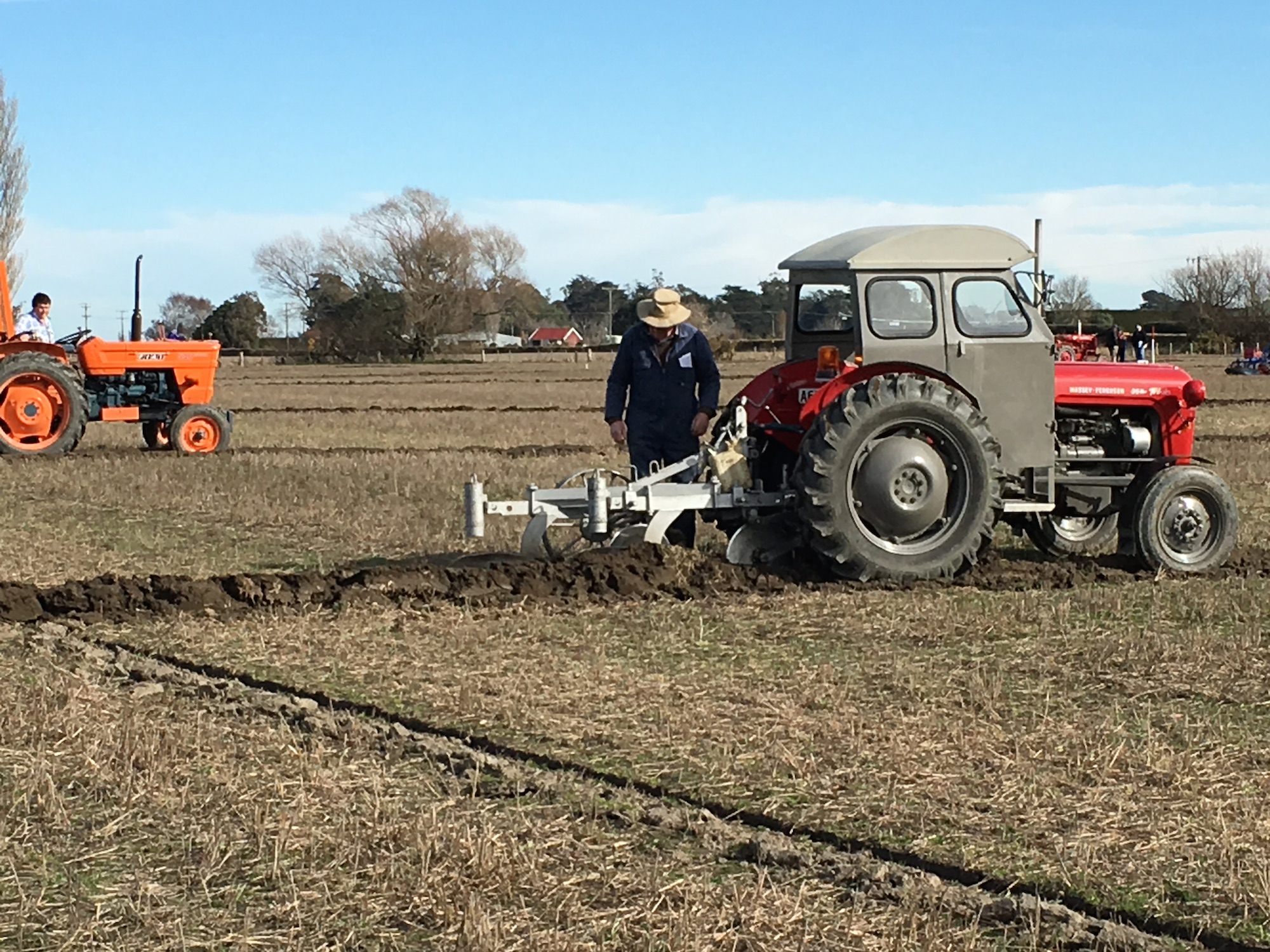
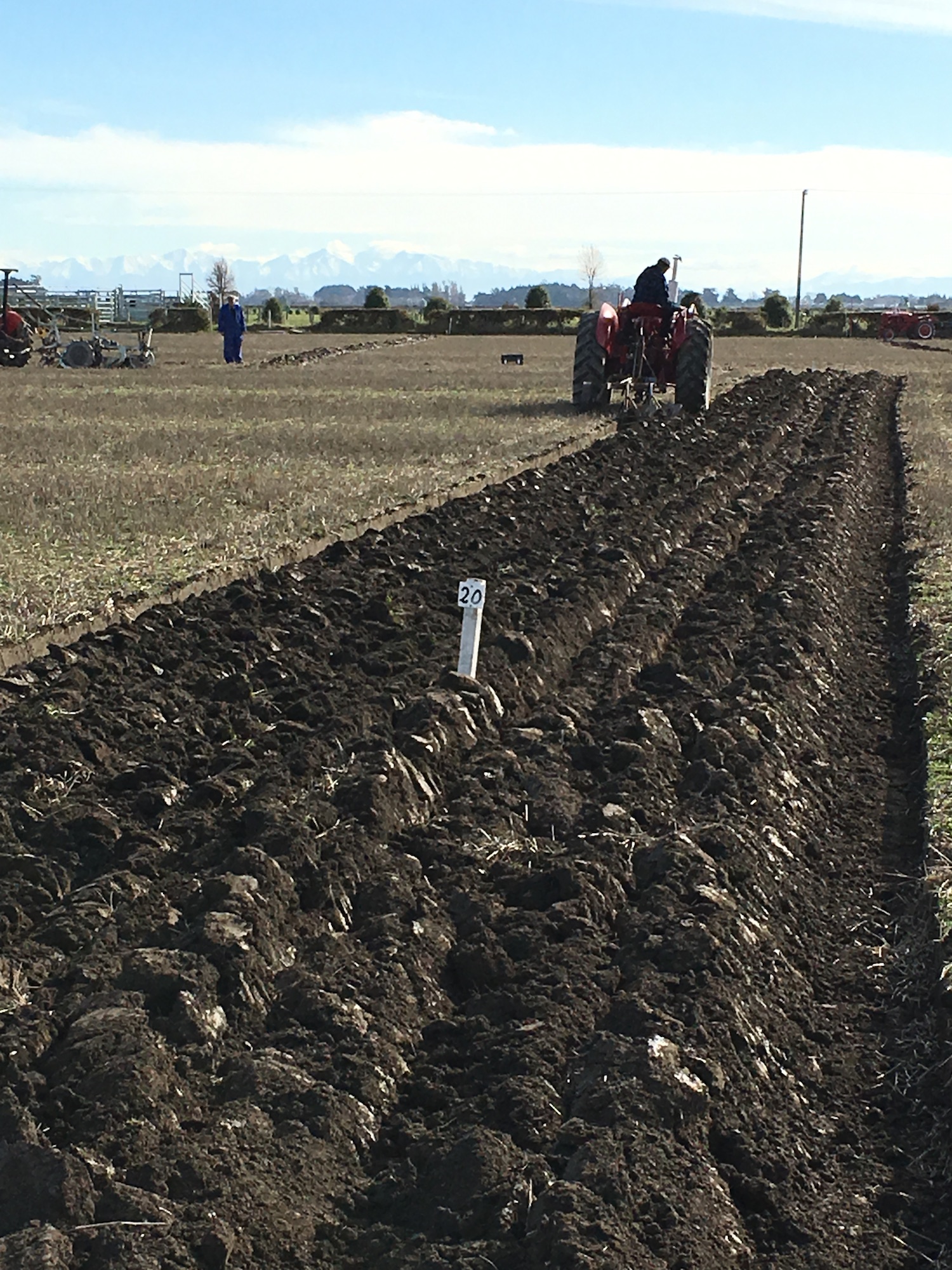
2016-08-20 11.18.35 smThis past weekend was the annual Ellesmere Vintage Club’s Ploughing Match. Our neighbour hosts the event, so we walked down there on Saturday morning to watch the action.

It was slow-motion action. No big thrills or adrenalin. Just the rumble of diesel engines and the smell of freshly turned soil. It was clear the point was a perfectly-turned patch of ground, not speed. There was a lot of starting and stopping, and adjusting of freshly-painted ploughs.

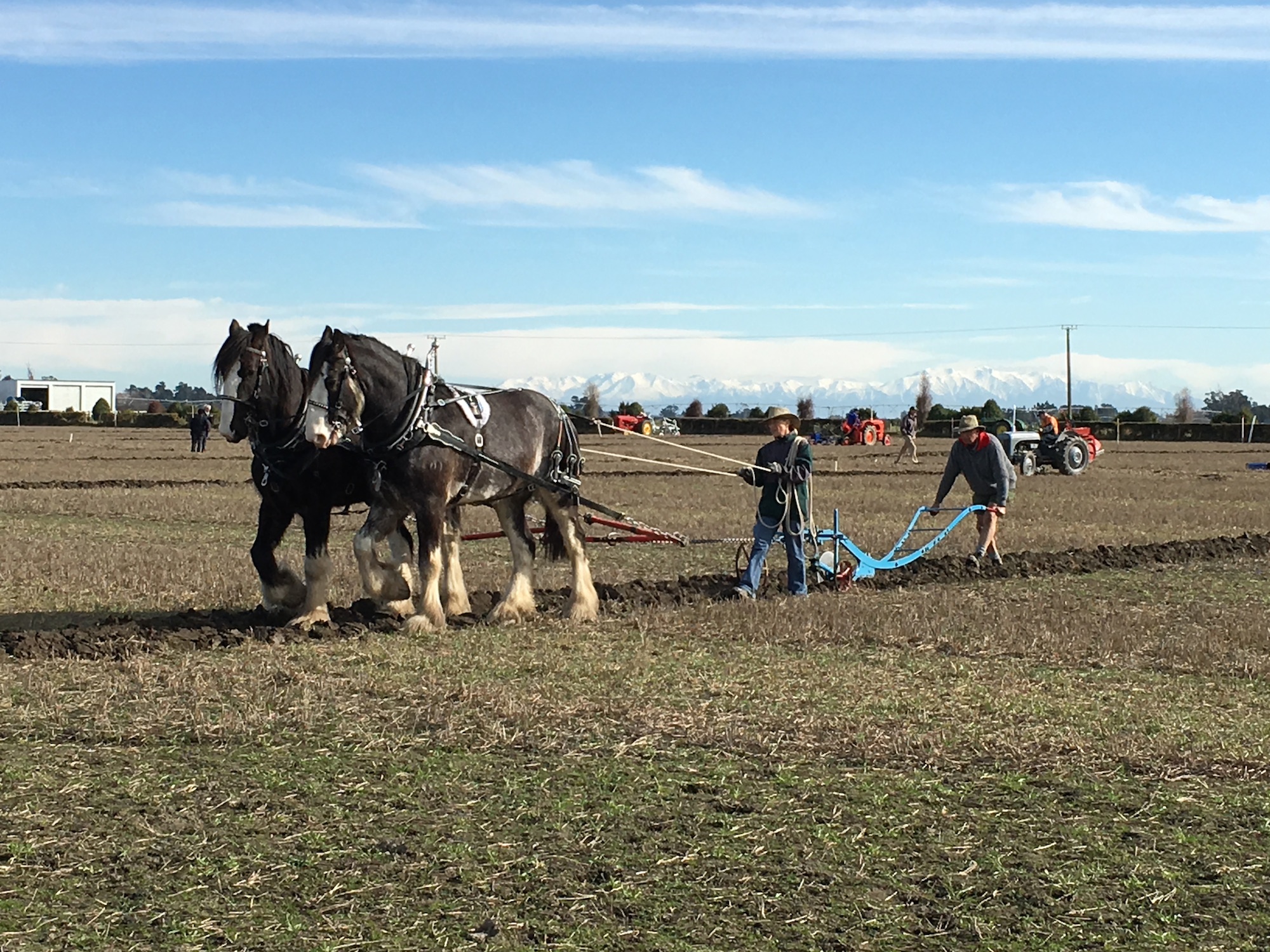
2016-08-20 11.22.21 smA pair of horses joined the 1940s and ’50s era tractors. Watching them work, it’s clear why tractors have taken over on the farm—there was significantly more fiddling to be done by the horse team in order to perfect their rows.

The demographics of the crowd were predictable. Before we arrived, I commented to my daughter that we might be the only women there. Her response was that she would likely be the youngest person there…by about 70 years.

2016-08-20 11.32.18 cropWhile the majority of competitors were as vintage as their tractors, there were a few younger ones. Two or three other children were there, too, though they were sitting in a car playing on an iPad. And there was a small contingent of women. A few wives watched from the sidelines, and a woman drove the horse team.

It was a true small-town event—25 competitors, and perhaps 40 people in total at the event when we were there. Participants were shuttled to the local hall for lunch on two long benches, set back-to-back atop a flatbed trailer.

2016-08-20 11.33.12 smLater, as the event broke up and tractors motored past the house, we laughed—it was hard to tell which vehicles were en route from the competition, and which ones were simply on their way from paddock to paddock. Many of these vintage tractors still get regular use on the farm.

Of course, I have to wonder what will happen as the vintage tractor enthusiasts and their machines age further. Will younger farmers grow nostalgic about tractors from the 60s and 70s as they age? If not, we’ll see a lot fewer than 25 contestants at vintage ploughing matches in future years.

Well, you don’t see that every day…

2016-08-19 17.44.37I couldn’t possibly post a story for Saturday Stories today—there were just too many interesting things to blog about…

The neighbours are always busy moving sheep around at this time of year—there’s shearing, lambing, tailing…sheep being shifted from paddock to paddock for all sorts of reasons. Nearly every day a mob or two pass the front gate.

Even if I don’t see them pass, I can always tell when sheep have been by, because the road is sprinkled with sheep pellets afterwards.

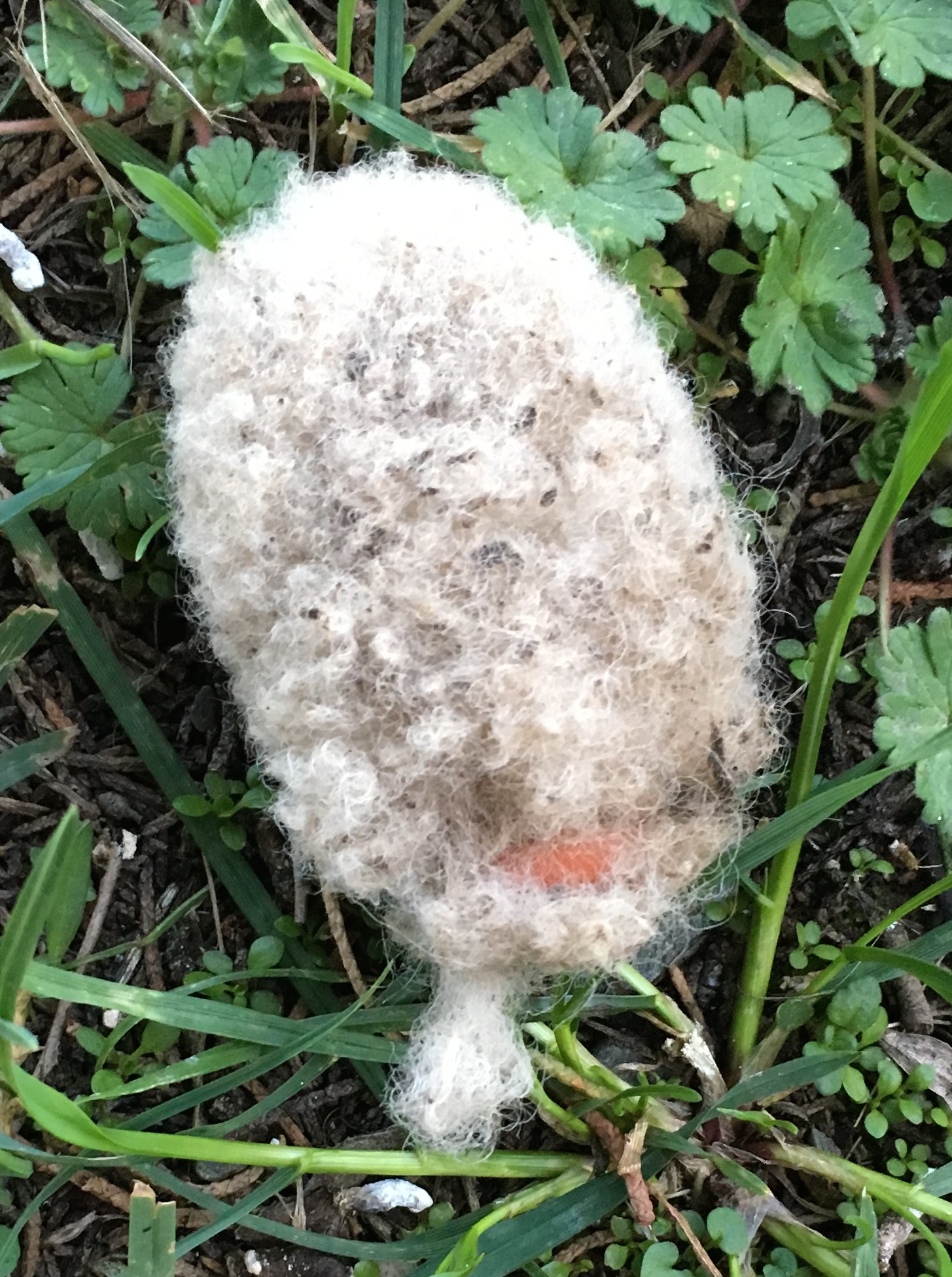
But yesterday, a sheep left a bit more than poo at our gate.

You know you live in rural New Zealand when…

Special prize to you if you know what this is. I’ll give you the answer tomorrow.


Cricket Flour

IMG_1784I was running errands in town today, and called in to Bin Inn for some flour and cornmeal.

I was excited to find this sitting on the shelf next to the rice flour and barley flour. It was the first time I’ve seen commercial insect products that admit to being insect products sold in an ordinary store (there are plenty of things you’ve probably bought that contain insect products, but manufacturers generally don’t advertise that).

It’s nice to see insects showing up on the grocery store shelves. I am a proponent of entomophagy, even though I am a vegetarian. If you’re going to eat meat, insects are probably the most environmentally sound way to go.

Being cold-blooded, insects convert feed into body mass much more efficiently than our warm-blooded livestock. You can raise a kilo of crickets on just 1.7 kilos of feed. Compare that to chicken at 2.5 kg of feed per kilo of chicken, or cows at 10 kg of feed per kilo of cow. Adjust these numbers for percentage of the animal that’s edible, and they favour insects even more—80 percent of a cricket is edible, whereas only 55 percent of a chicken and 40 percent of a cow is.

It still takes resources to produce insects. Though they convert feed into food more efficiently, insects need to be kept warm—warmer than you need to keep a cow, because they can’t keep their own bodies warm. There is an energy cost in that.

Of course the biggest problem with farming insects is getting people in Western countries to eat them. Most of the world’s people actually do eat insects, but our modern Western culture had separated us so much from our food, that we even get squeamish when we can identify the animal that our cuts of meat came from.

Consumers generally don’t want to actually see the animal when they’re preparing dinner. I’m sure cricket flour goes over better than, say pickled whole crickets (sort of like sliced ham vs. pickled pigs feet).

It will take a change in our attitude toward insects before Westerners will agree to bar nuts that include roast, salted crickets (which are delicious, by the way). When preschoolers learn that a cricket says “chirp, chirp” along with the cow says “moo”, we’ll be on our way. When we begin to view insects, not as enemies to be beaten, but as fellow organisms on Earth, we’ll be on our way. When we stop seeing insects as dirty, but rather recognise that they carry fewer potential human pathogens than our close relatives the cow and pig, we’ll be on our way.

As a vegetarian and a gardener, I value the insects that come into the kitchen on my vegetables. I don’t get enough vitamin B12, because it is only found in animal products. Insects are full of vitamin B12. So, I’m casual about cleaning the insects off our organically grown vegetables. We eat a lot of aphids, and quite a few caterpillars, I’m sure. And that’s great—it gives us all the nutrition we need, without any extra effort on our part (less, in fact).

Indeed, though I support insect farming, I’m afraid I will probably never buy any insect products–there are so many wonderful insects out there free for the taking, I couldn’t see spending $120 per kilo (and that’s half off!) for cricket flour.

Besides, I prefer my crickets whole—the best part about them is the crunch, after all.

Literary Fog

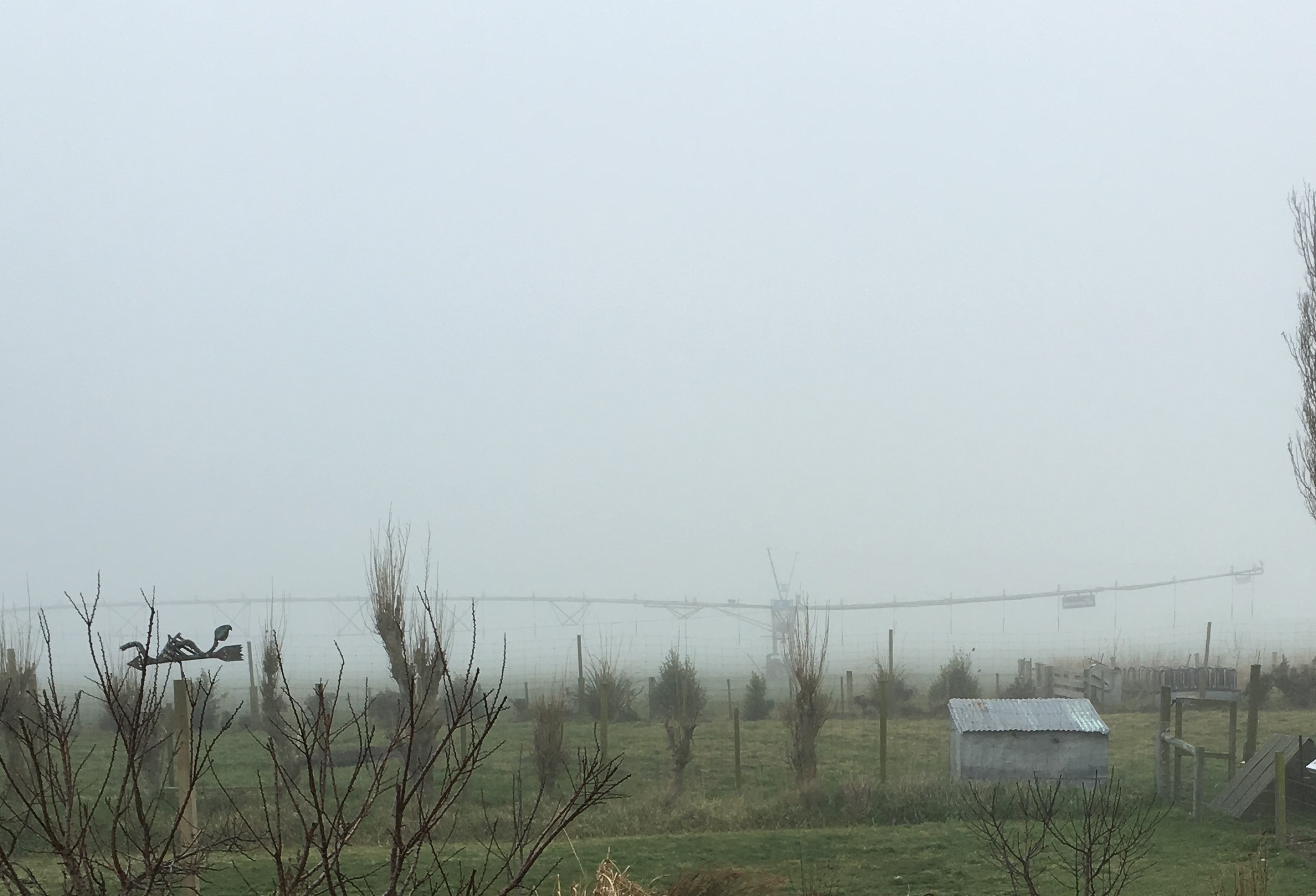
The view extended no farther than the neighbour's irrigator.

The view extended no farther than the neighbour’s irrigator.

“The fog came pouring in at every chink and keyhole, and was so dense without, that although the court was of the narrowest, the houses opposite were mere phantoms. To see the dingy cloud come drooping down, obscuring everything, one might have thought that Nature lived hard by, and was brewing on a large scale.”
–Charles Dickens, A Christmas Carol

This is one of my favourite quotes about fog. It’s actually quite a bit longer than this (Dickens certainly couldn’t dispense with such an atmosphere in just two sentences.)—I’ve just transcribed the second half of it here.

Today put me in mind of this quote. We were in the grip of a chilly sea fog most of the day. Heavy, wet and cold. I’m sure that a mere kilometre away, it was a warm and sunny day—that was the forecast, at least. But this close to the sea, our weather sometimes defies the land-based predictions.

I worked in hat and fingerless gloves most of the day, even indoors. When I went outdoors to care for the animals or get the mail, the trees dripped sullenly, and I came back in with my hair frosted with water droplets.

For about an hour—between 11 am and noon—the fog retreated. The sun shone warm on paddocks sparkling with water. I threw open the windows and took off my hat and gloves.

But soon the dull grey blanket came rolling back. I saw it coming, while the sun still shone, and closed the windows. And then we were plunged into the chill darkness again.

I would have liked the sun today—my laundry, hung on the line in the morning, ended up being thrown into the dryer in the afternoon, wetter than it had started. But there is something so delicious and…Dickens…about fog, that I can’t resist spending time out in it. There is mystery in fog. There is introspection and contemplation. Who knows, but the Hound of the Baskervilles could be out in that fog. Fog is literary. Fog is visceral, tangible like a sunny day can never be.

I do hope we see the sun tomorrow, but if it is fog, well, I’ll sharpen my pencil and keep an eye out for strange door knockers and large black dogs.

My life in gumboots

2016-08-16 12.32.47My daughter and I wear the same size gumboot, but there’s never any problem telling them apart.

That’s because gumboots tell the story of their wearer’s activities.

Mine tell many tales.

A smear of paint—Sicily White—tells of a hot summer day scraping and painting the house. A job that had to be called off, because the paint was drying so fast, I couldn’t spread it.

Another glob—brick red—tells of another summer day fixing and painting the roof, balancing paint bucket and feet on the peak, and looking out over the hedges to the lake and sea beyond.

Lavender speckles recount an afternoon drenching goats, when a syringe of purple medicine burst open and splattered everywhere.

Bits of hay relate frosty mornings feeding the animals in the dark, by moonlight and starlight.

Smears of mud describe weeding and planting in the vegetable garden.

Clumps of goat poo tell of afternoons in the paddock, hand-feeding grain to eager goats who push and shove to get more than the others.

The tales are fleeting—even the most enduring splatters fade in time, replaced by the next instalment of my life in gumboots.