Everyday Beautiful

I don’t need an excuse to make cake, but today’s icy southerly gales were an excellent excuse, regardless.

I chose to make a devil’s food cake. I generally don’t ice ‘everyday’ cakes–too much work, and none of us needs the extra sugar. This intensely dark cake, though, cried out for something to show off it’s colour.

I filled it with gooseberry jam, and then made up a simple powdered sugar/lemon juice icing to drizzle over the top. The icing was purely for decoration.

Because every day deserves something beautiful.

Lemongrass

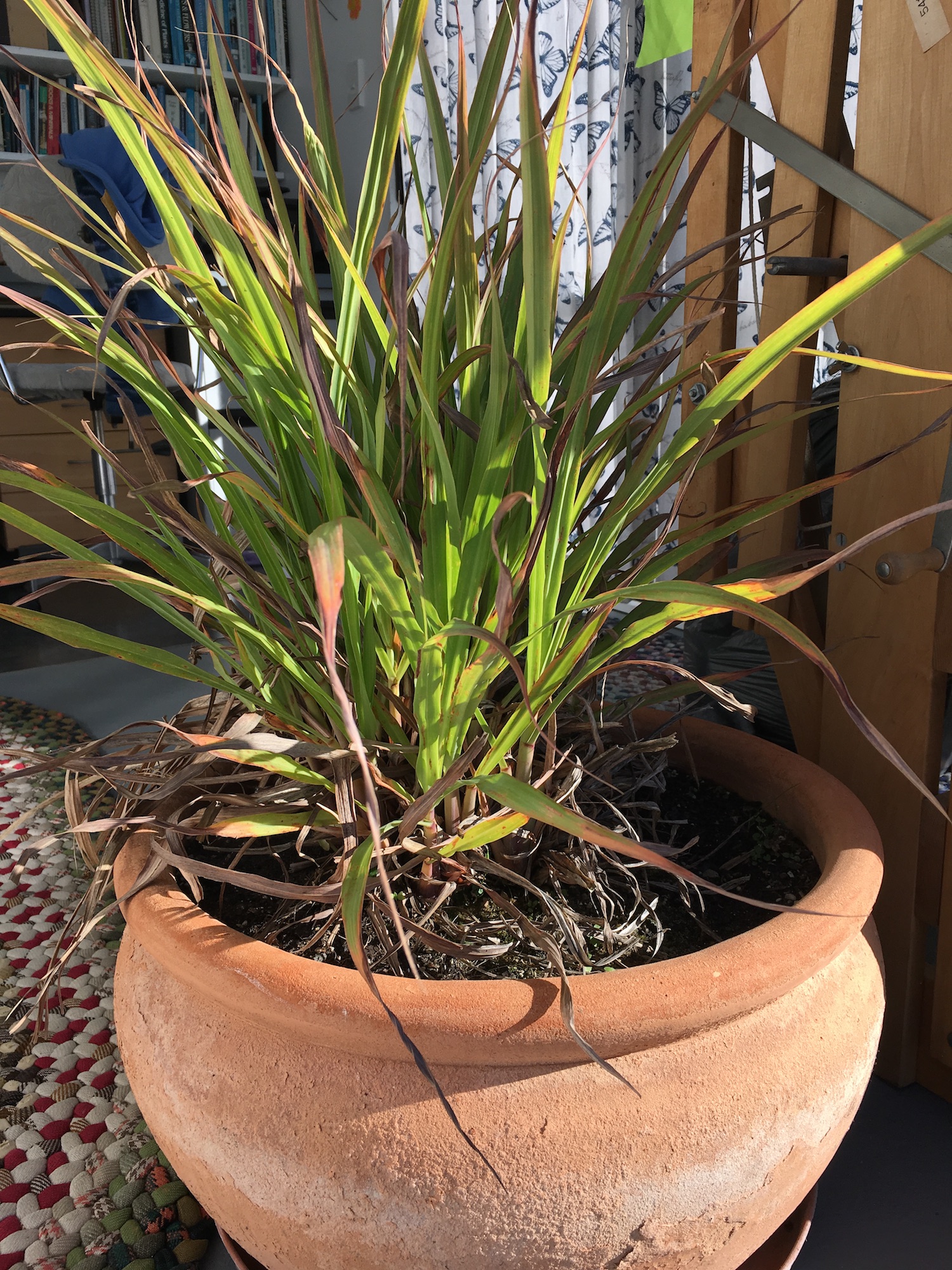
I brought the lemongrass (Cymbopogon citratus) indoors last weekend. It’s not supposed to be able to handle freezing temperatures. It does, but it doesn’t like them. The one winter I left it outside, it died back to just a few well-protected shoots in the centre of the plant.

Thankfully, it doesn’t need much protection. My office is unheated at night, but it provides enough protection to keep the lemongrass alive.

We don’t use much lemongrass. Though its lemony flavour is nice, it doesn’t have the sourness of real lemon, so I find lemongrass tea too sweet.

However, we do occasionally use it in stir fries, marinades and salad dressings, where it imparts its lemony flavour alongside other, more sour ingredients. We were first introduced to its use in salad dressings by Yotam Ottolenghi’s wonderful cookbook Plenty (which I’ve mentioned before). His sweet winter slaw recipe calls for the following dressing:

100ml lime juice
1 lemongrass stalk, chopped
3 Tbsp maple syrup
2 Tbsp toasted sesame oil
1 tsp soy sauce
1/4 tsp chilli flakes
4 tbsp light olive oil or sunflower oil

Place all ingredients except the oil in a saucepan and boil for 5-10 minutes until thick and syrupy. Allow to cool, then strain. Whisk in the oil and toss with your salad.

It’s an excellent way to use lemongrass, pairing with salty, oily, and sour ingredients that enhance its flavour. It’s worth giving up office space to the plant, just for this dressing.

Darkness, My Old Friend

I was off today. Scatterbrained, uncentred. I couldn’t focus on a task long enough to complete it. I forgot to hang up the wet washing before leaving the house for the day. I left things at home that I needed to take with me. I grumbled through the day. Everything irritated me.

So when I finally remembered the washing late this evening, I was seriously annoyed with myself–a beautiful clothes-drying day wasted. I snatched up the basket of wet clothes and stomped out the door headed for the shed where the clothes dryer is…

And stopped dead.

The chill night air.

The gibbous moon illuminating a mackerel sky.

Silence.

Darkness.

I took a deep breath. Centred. Collected.

And walked slowly to the shed, letting the cool night and glittering stars bring back my good humour.


Garden Rescue Mission

A southerly storm blew through yesterday, and the clouds cleared around midday today. The sun was warm this afternoon, but the wind remained chilly. This evening was clear and still. Perfect conditions for a frost.

There are few summer vegetables left at this point. The tomatoes outside the greenhouse are all dead. The peppers and eggplants are ripening their final fruits, the zucchinis and cucumbers are maturing at a tiny size. The corn has all been eaten, and the runner beans are giving just a handful every few days.

A frost will kill everything left in the summer garden, so I went on a rescue mission this evening. I gathered in everything that was still decent, whether it was fully ripe yet or not, assuming that anything left in the garden will be dead by morning.

It felt oddly good.

It’s not that I won’t miss the fresh tomatoes and eggplants of summer, but I also look forward to the pumpkins, potatoes, and beans of winter. As they say, variety is the spice of life. I would say that seasonality is the spice of life. Food marks the course of the year, and each crop has its own time. It gives the year variety and interest. It gives us things to look forward to with each season.

So, while I mount my summer vegetable rescue mission, I don’t worry about the loss of those summer crops. There are other delights to come.

Coloured Cornmeal

Our beautiful Painted Mountain corn is fully dry. Today my son and I ground enough to make corn chips.

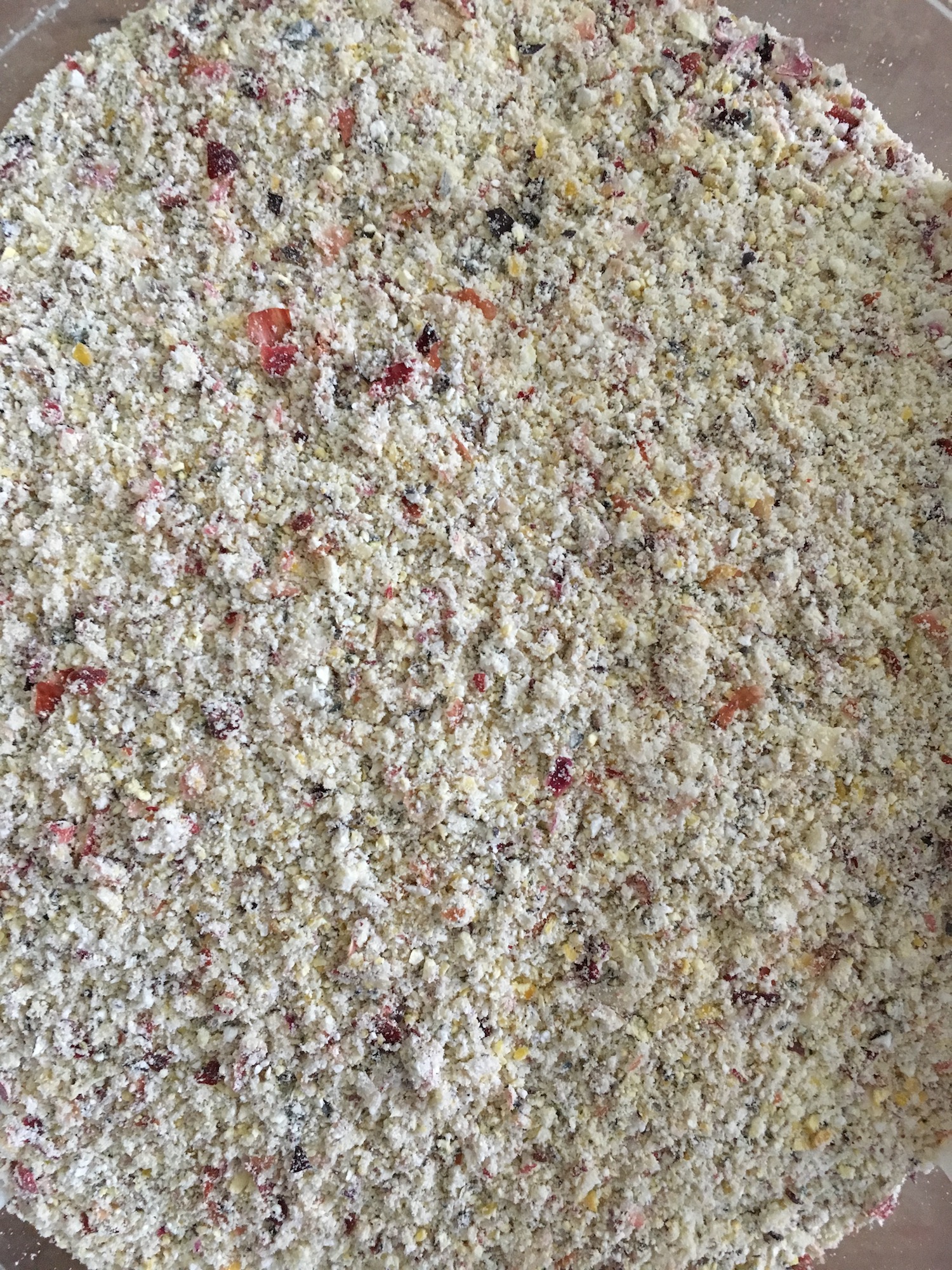
It ground quite nicely in our coffee grinder (well-cleaned, first). I was a bit disappointed to note that the interior of the kernels was white. The resulting cornmeal wasn’t the rosy colour I’d hoped. Instead it was flecked with colour–confetti cornmeal.

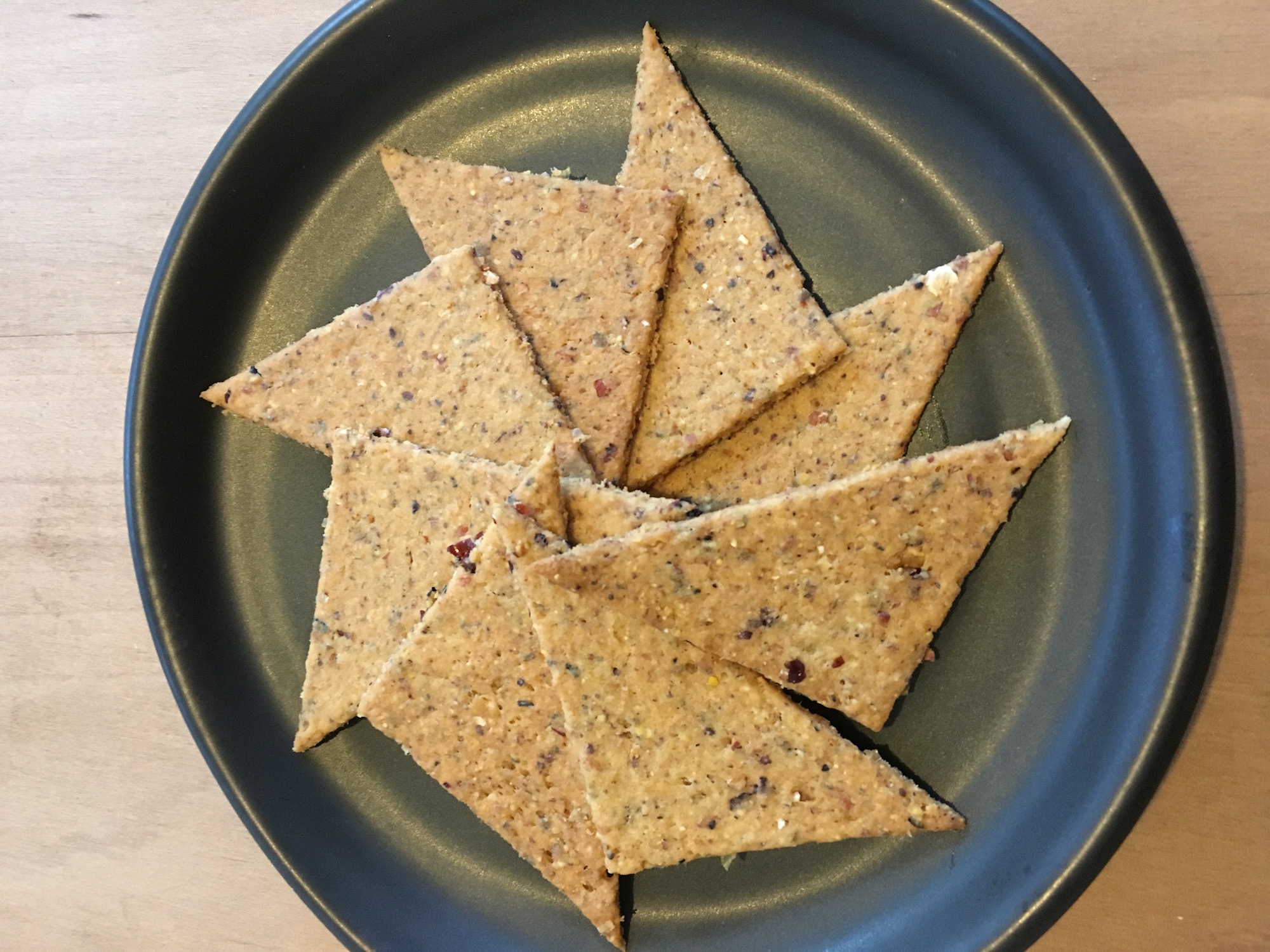
The resulting corn chips were delicious. Right out of the oven, the taste was reminiscent of popcorn, but fully cooled, the popcorn flavour diminished.

Were they better than corn chips made with commercial cornmeal? The jury is out. I think we need to do side-by-side taste testing to determine which is better. I suspect my family will be thrilled to oblige. We might just have to have a chip and dip party (ooh, this gets better and better).

Am I happy I planted Painted Mountain corn? Absolutely! My son is grinding the next batch of meal as I type, and we’re looking forward to trying it in all manner of dishes. Maybe the taste will be no different from commercial cornmeal, but we will know it came from our garden, and that will make it taste twice as good.

To Burn or Not To Burn

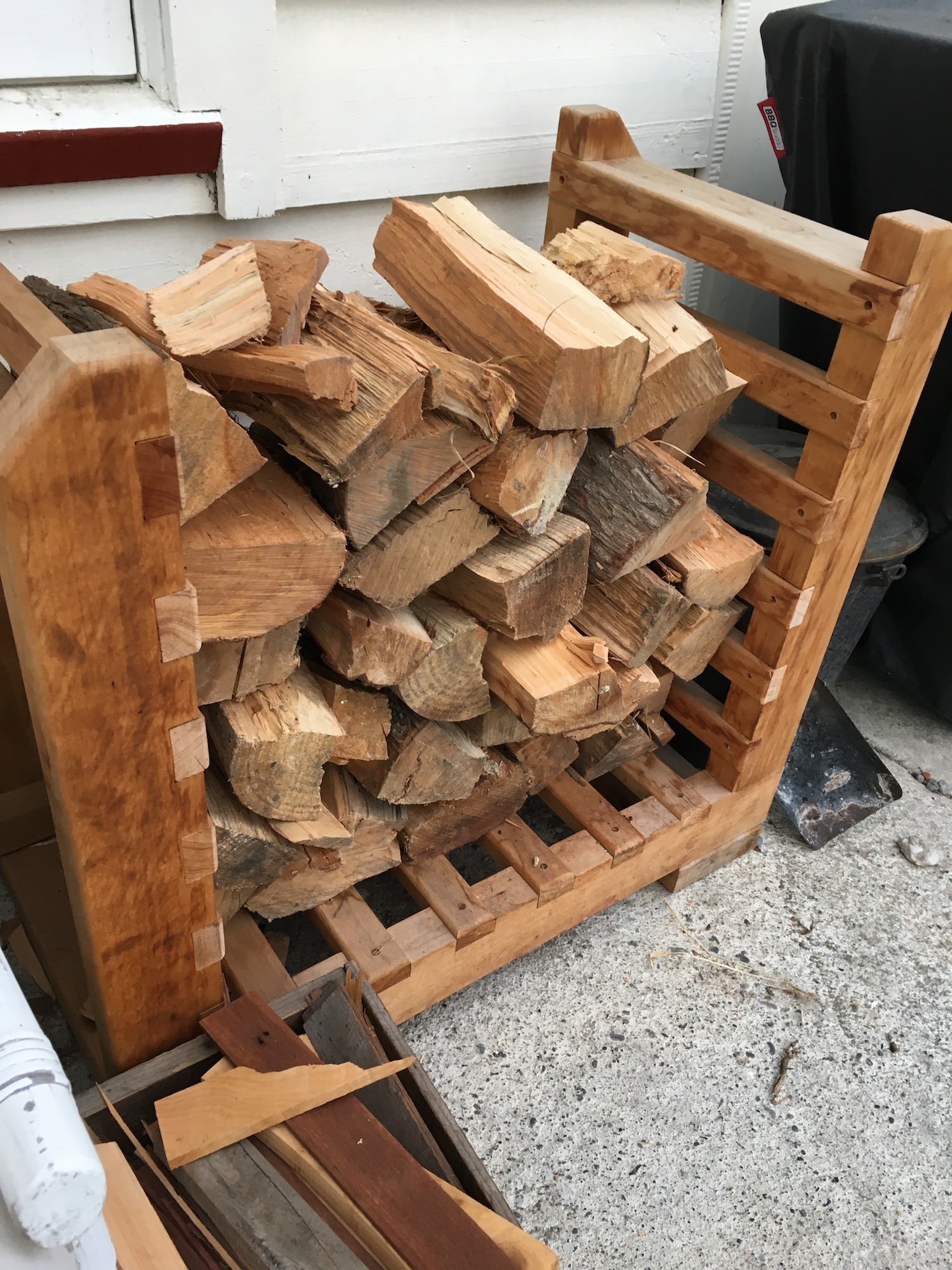
The firewood stands ready to go.

That is the question, on a night like tonight. If we light the fire, it will be the first fire of the season–always a bit momentous, because it’s an admission that summer is over.

Technically, we don’t need a fire tonight. It’s cool, but not terribly cold. We’ve had colder nights already this autumn, and never even considered lighting a fire.

But it’s been raining most of the day. The temperature has been inching downward since morning, and the wind has been picking up. It’s thoroughly unpleasant outdoors this evening.

It’s emotionally cold.

It’s not that I’m not thankful for the rain–we really need it. It’s not that I don’t enjoy hearing it on the roof and against the windows.

But it would sound even better accompanied by the sound of a crackling fire.

It’s not so much a need for warmth, but a need for hygge. A need for comfort.

And so, as a fresh gust of wind rattles the window, I think I’ll close this blog post, put on a pot for tea, and build a fire.

A Messy Life

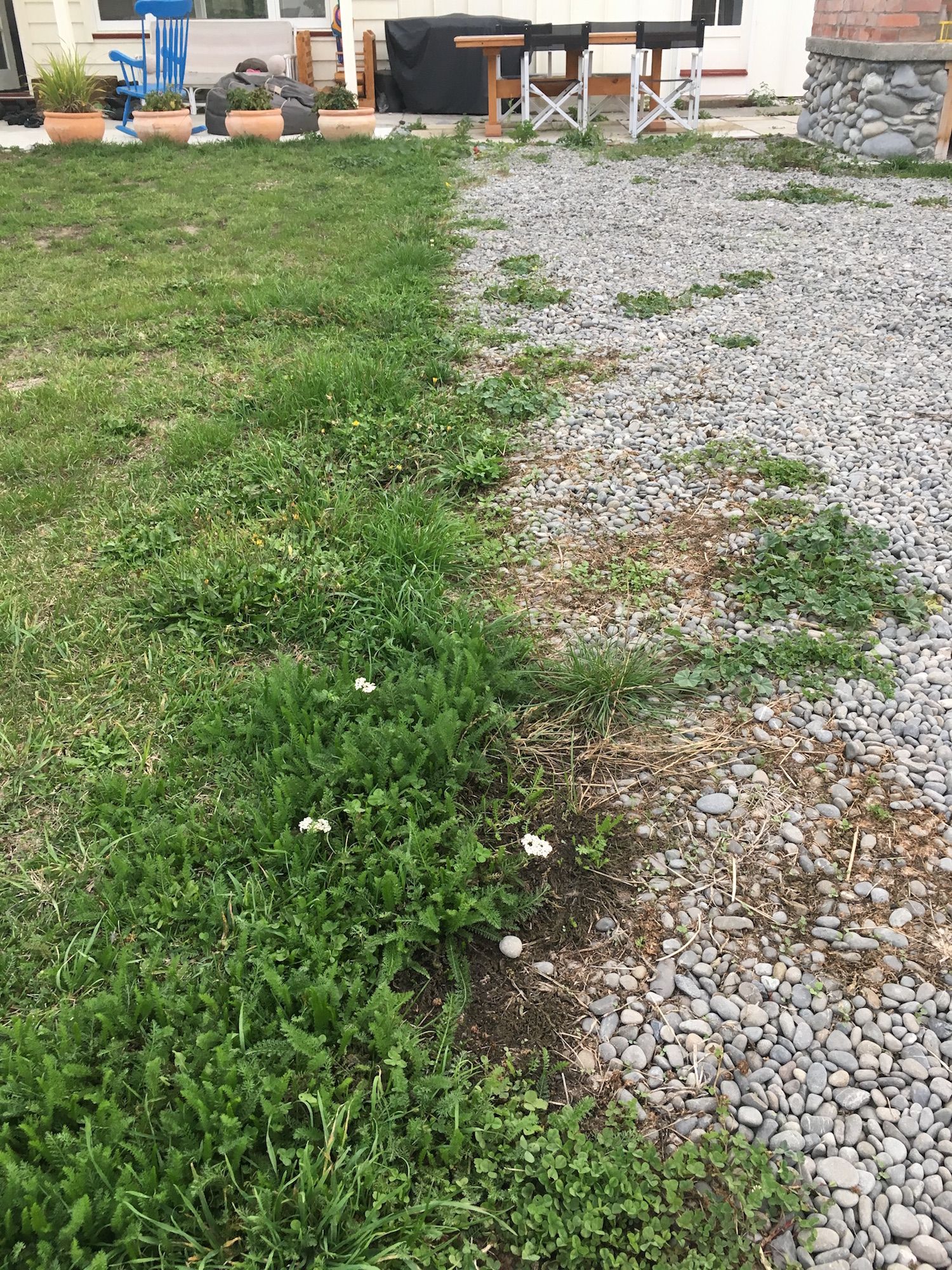
My not-so-straight edges.

I was working in Halswell today, and I went for a walk at lunchtime. I walked through some of the newer subdivisions, and after a time, I realised I had no idea where I was, though I’ve walked those same streets many times. I wasn’t worried. I wasn’t lost, I just couldn’t remember what street I was on.

Walking on, knowing I would find my location at the next street sign, I pondered why I was so lost in a place I knew reasonably well. I looked around me. It wasn’t a cookie-cutter neighbourhood, with row upon row of identical houses, but there was a sameness to every house, every yard. They were all perfect. The lawns were immaculately clipped, with not a single weed in any of them–more carpet than grass. The paths were edged as though with a ruler. The boxwood hedges were precisely cut and perfectly square–they could have been boxes, cleverly painted to look like plants.

Every house had perfect stonework, perfect paint, a smooth driveway leading to a perfectly hung garage door (operated, no doubt, by an electric opener that ran smoothly and quietly).

The houses, the yards, the streets looked like they had dropped straight from an architectural drawing. Devoid of all character, stripped of any indication real people actually lived there. They were sanitary, and soulless.

It’s no wonder I felt lost.

My home is not like that. My home is full of weeds, sprawling hedges in need of trimming, peeling paint and rotting weather boards. It’s full of paths edged by the grass creeping across their surface. Flowers that aren’t deadheaded, trees that need pruning. My home is alive and growing, taking on surprising forms, springing up in unexpected places.

And my life reflects the weedy lawns that make up my world. It is not a neatly clipped hedge, but a wild hedgerow, full of surprises. Sometimes good surprises like ripe blackberries, sometimes bad surprises like thistles. But it’s alive and exciting.

I think about the people who inhabit those sterile houses on sterile streets. Are their lives as neat and tidy as their yards? Are they as forgettable as the houses that all eventually look the same?

The thought makes me shudder. It’s true, my messy yard and my messy life make me work. I don’t often put my feet up. Some days are a struggle, and every day is long and busy. But my messy yard, my messy life is always growing, even in the midst of drought, or in the aftermath of herbicide overspray. There, in the mess are the seeds of something new, something exciting, something tough and resilient.

I did find my way out of the soulless subdivision. It was a relief to leave it behind, and a joy to come home to my rampant weeds, to a messy life in a messy yard, full of surprises, growth and life.

Apple Season

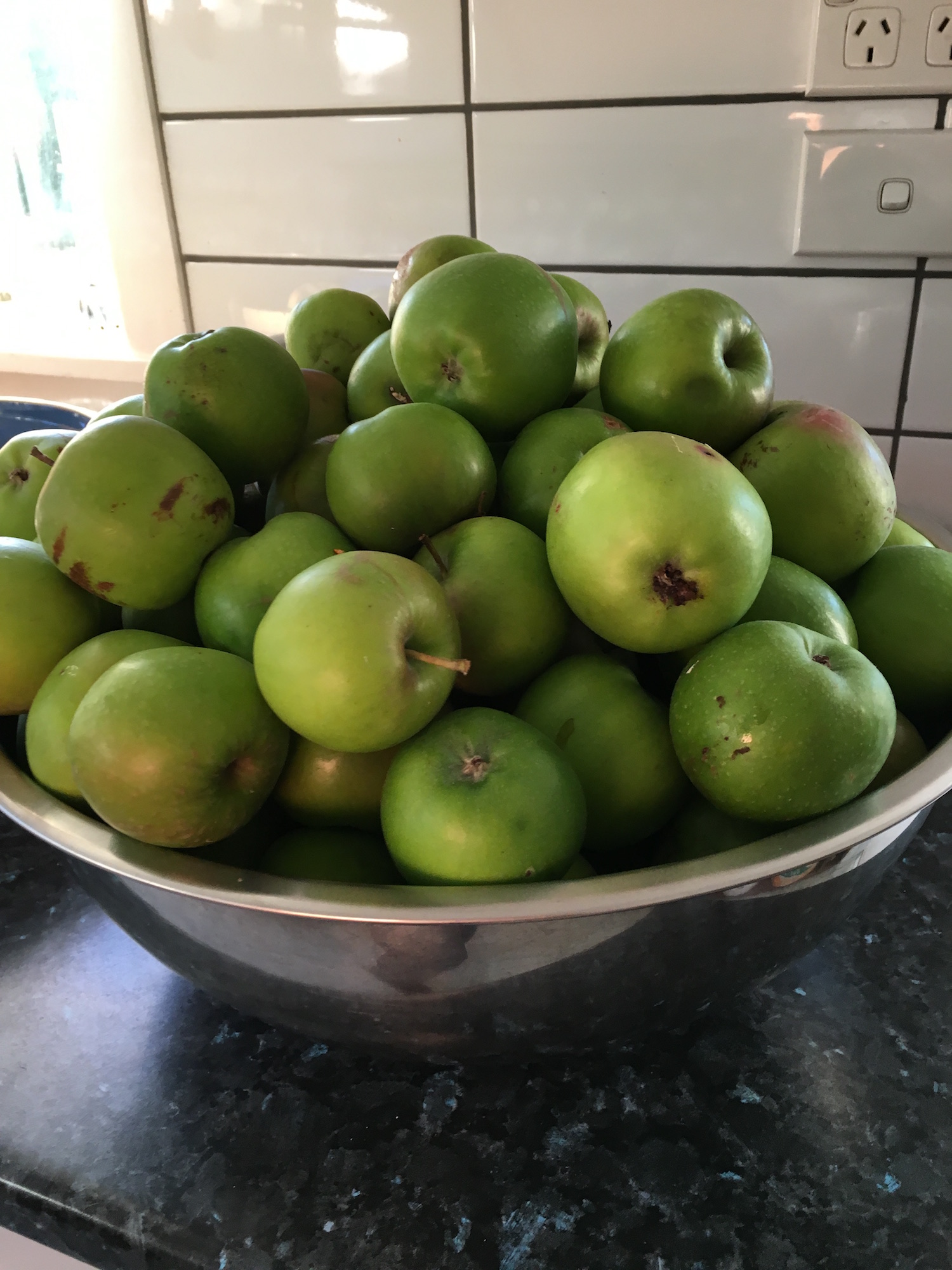
This year’s apple harvest was small, but unlike last year’s, it ripened on the tree instead of being blown off before it was ready, so the quality is good, even if the volume isn’t.

Truthfully, I’m thankful there aren’t too many apples to deal with. We’ve run out of canning jars and freezer space, so I’m not sure what I’d do with them if I had more.

So I’ve been considering how to process the fruits to encourage us to eat a lot of apples.

Naturally, apple pie is near the top of my list. Last year, with vast quantities of apples, I came across a particularly nice apple pie recipe that allows you to pack more fruit into a pie by pre-cooking the apples slightly. The recipe indicated it was a good way to avoid the empty space between fruit and upper crust that’s so common in apple pie, but I took it as an invitation to add more apples. And who could resist a thick, dense apple pie? Maybe with a little whipped cream?

Here’s the recipe, paraphrased from the 1997 edition of Joy of Cooking:

Make your favourite pie crust–enough for a double crust pie.

Roll out half the dough and fit it into a 9-inch (23 cm) pie pan. Roll out the other half of the dough. Refrigerate both until you’re ready to use them.

Peel, core and slice 3 pounds (about 1.5 kg) of apples. The recipe says you want 7 cups of slices–go for 8 cups.

Heat 3 tablespoons (40 g) unsalted butter in a wide skillet until sizzling. Add the apples and toss until glazed with butter. Reduce the heat to medium, cover, and cook, stirring frequently, until the apples are soft on the outside, but still slightly crunchy (5-7 minutes).

Stir in 3/4 cup of sugar, 1/2 tsp ground cinnamon, and 1/8 tsp salt.

Increase the heat to high and cook until the juices become thick and syrupy (about 3 minutes). Spread the apples on a baking sheet to cool to room temperature.

When cool, pour the apples into the bottom crust, add the top crust, cut steam vents, and bake 40-50 minutes at 425°F (220°C). Cool completely before serving.

Water Perspective

“The weather’s been shocking! Where did our sunshine go?”

“I don’t know. All this rain is horrible.”

I listened to this conversation with a mixture of amusement and sadness. Amusement, because, though we’ve had seven days of off-and-on drizzle, it’s not been that bad. It’s not been cold or windy, just overcast with some light rain now and then.

Sadness because the conversation revealed how disconnected the speakers were from the desperate state of Canterbury at the moment. Three years of drought have left our streams dry, our groundwater depleted, and our land tinder-dry. The soil is dry as dust for as far down as you want to dig. This rain hasn’t even begun to bring us back to the soil moisture we should have. It has wet the top few centimetres of soil, no more.

The truth is, we need weeks and weeks of steady rain, just to bring us to where we should be at this time of year, then we need a nice wet winter to top us up.

Beachgoers have been spoiled with three years of clear skies and record high temperatures, but if it continues, there will be dire consequences for the region–a region that depends upon irrigated agriculture to fuel the economy. Not to mention the higher water bills, more frequent wildfires, rising electricity costs (because much of our power comes from hydro lakes), and fewer recreational opportunities.

While those of us involved in growing plants and raising livestock understand this intuitively, the majority of folks, living in town and paying little attention to more than the immediate weather conditions, are completely unaware.

It can’t be good, this lack of awareness. Our planet is facing such catastrophic climate change, that a lack of awareness of larger patterns in weather and climate can only lead to continued lack of action to address the issue, a continued blindness to the changes that to me are so clear and convincing.

Until we all understand that having nothing but beautiful beach days isn’t good, our fight against climate change is going to languish.

Ugniberry

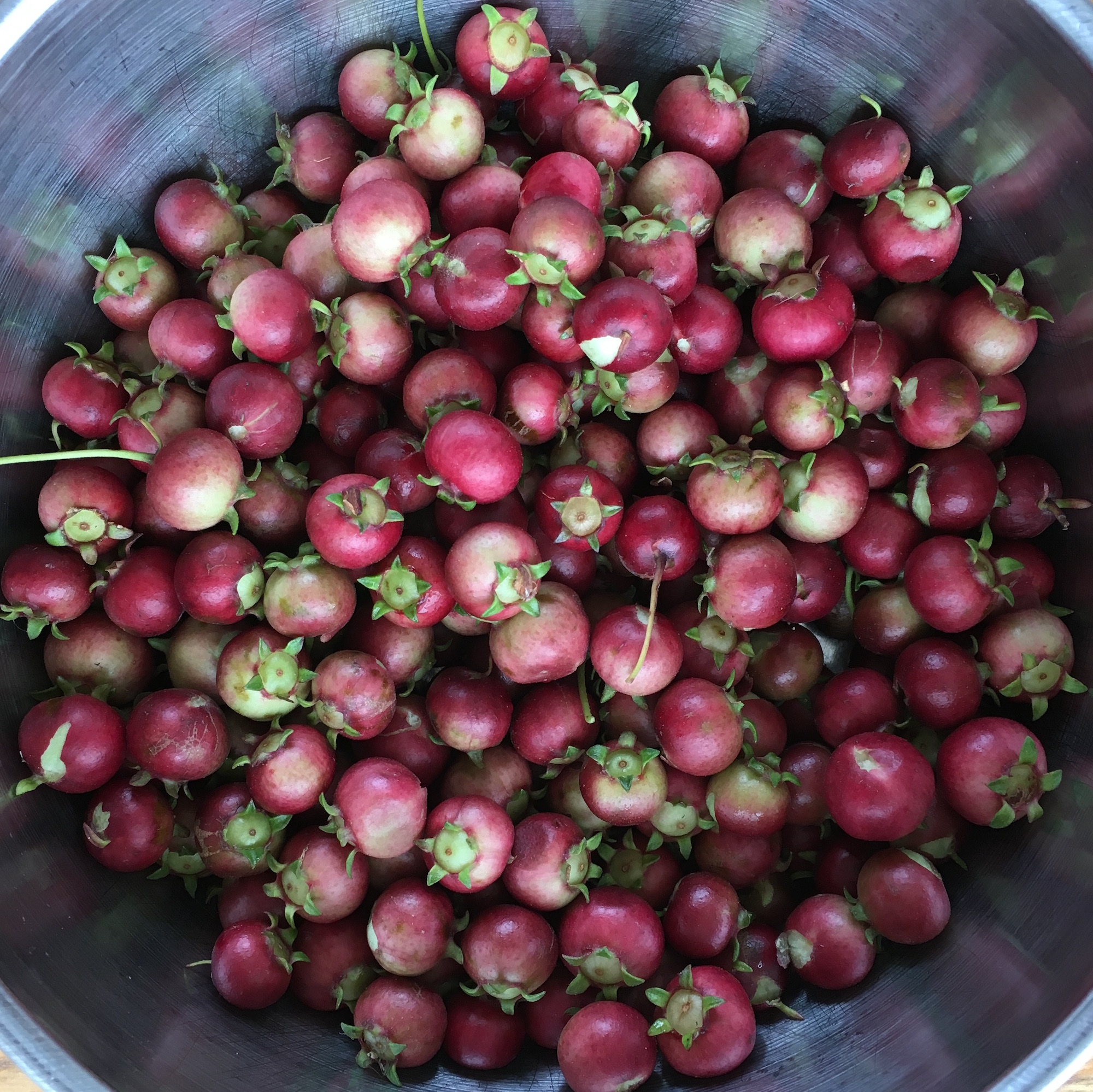
I’ve eaten some strange fruits over the years–sour, gritty nance; agua de manzana that tastes like a rose; the astringent cashew fruit… Few have been so delightful as Ugniberry. Ugni molinae, sometimes called New Zealand cranberry here, is native to South America where it flavours alcohol, is made into jam, and is eaten fresh.

I’ve heard it described as “rapidly addictive”, and I have to agree. Once you’ve eaten one, it’s hard to stop.

The fruit is blueberry-shaped and sized, apple-coloured, and flavoured like fruit salad. The flavour has hints of juniper, raspberry, blueberry, and strawberry. It’s a lingering flavour, changing and maturing, the juniper becoming more pronounced after you’ve swallowed.

The texture takes some getting used to–the skin is tough, with stiff little sepals, and the fruit is seedy. But by the time you’ve eaten three of the things, the odd texture is merely part of the experience.

My husband planted ugniberry a few years ago, and this year we are getting our first sizeable crop. I keep meaning to bake with them, because I think they’d make an incredible muffin, but they never last long enough…