Fungal Wonderland

A family hike on Saturday took us through a fungal wonderland on Mount Oxford. Everywhere we looked, it seemed, fruiting bodies were popping out. White, brown, blue, purple, red, black—fabulous diversity of species, form and colour.

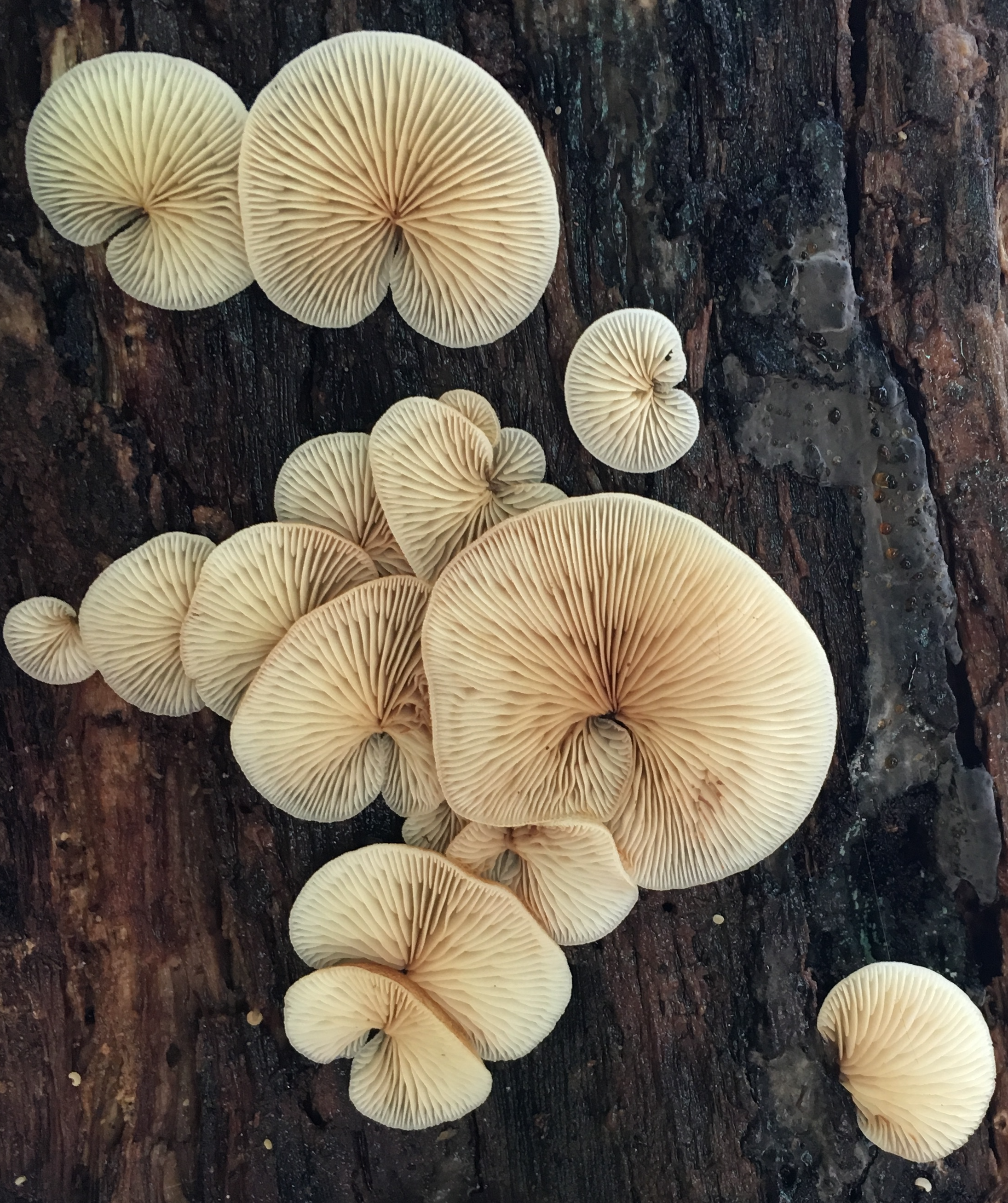
My favourite of the day, however, were not the big, showy Amanita muscaria or the lurid purple Cortinarius porphyroideus, but these unassuming (and unidentifiable by us) little shelf fungi. They were growing out of the underside of a fallen log we had to duck under, and their gills made stunning, artistic patterns. Unremarkable though the mushrooms themselves were, the perspective of seeing them from below turned them into something truly special.

Amazing how a simple shift of perspective can turn the ordinary extraordinary.

Watermelons Rule

Nothing says summer like watermelon—a seasonal fruit that matures during the hottest days of the year, and doesn’t keep.

Watermelon is an unreliable crop here. Twelve years ago, when we first arrived, I was told watermelon doesn’t grow in Canterbury. I’ve planted it every year, regardless, because I can’t imagine a summer without it.

Some years we get nothing. The plants don’t grow at all, or they grow too slowly to produce mature fruit before the first frost, or they’re nailed by herbicide overspray. Some years we get a few smallish fruits that we savour as rare delicacies.

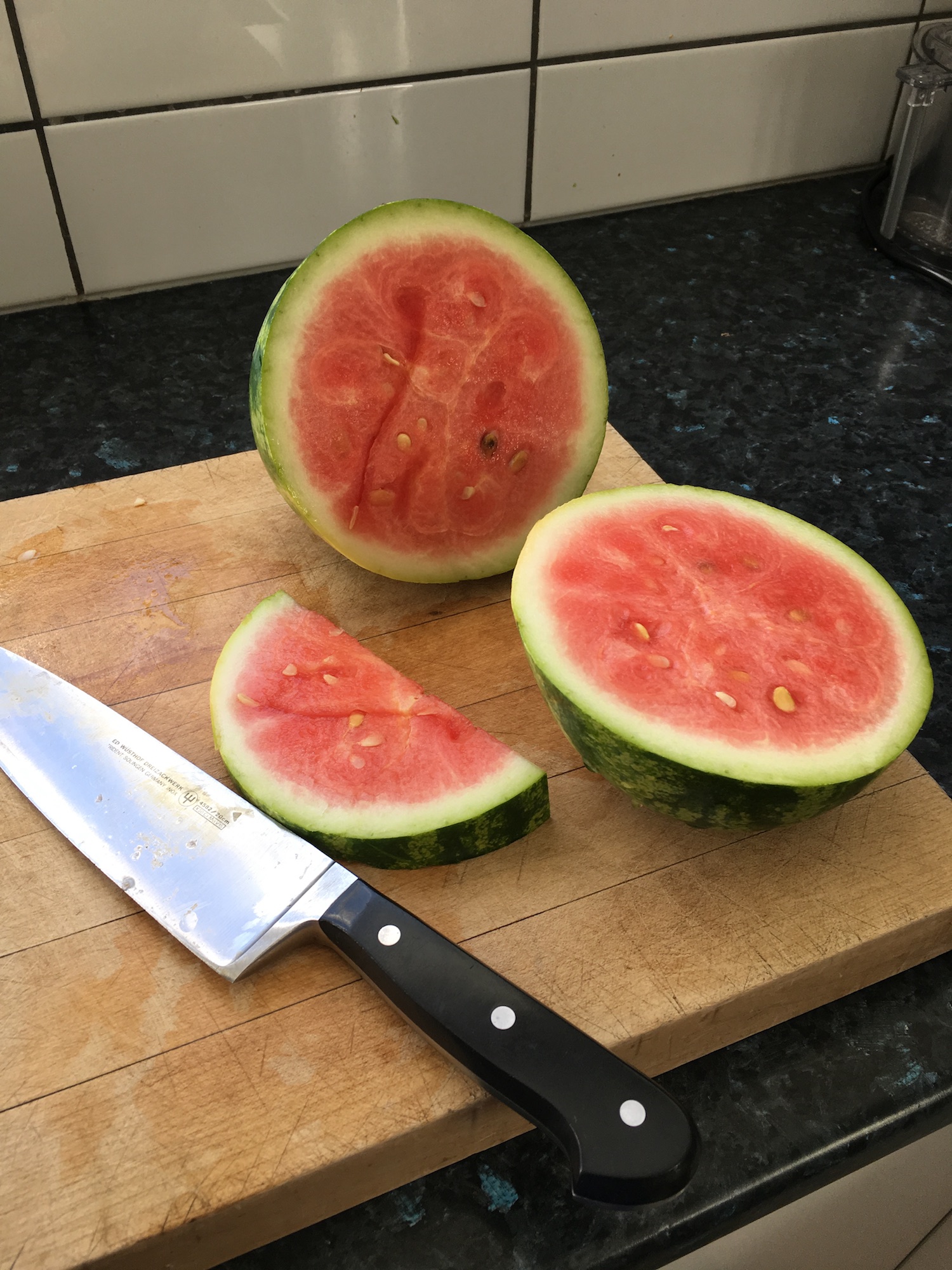
This year we are awash in watermelon. The fruits aren’t big—even the largest hasn’t reached the weight the seed catalogue says this variety should—but they’re the largest watermelons we’ve managed to grow here. And most importantly, they’re sweet, crisp and delicious. And there are lots of them!

As I sit on my office deck spitting seeds, I am reminded of the magical poem by John Tobias—Reflections on a Gift of Watermelon Pickle Received from a Friend Called Felicity.

I wonder if my kids will remember this year of watermelon as Tobias wrote…

“…During that summer—
Which may never have been at all;
But which has become more real
Than the one that was—
Watermelons ruled…”

Beach Walk

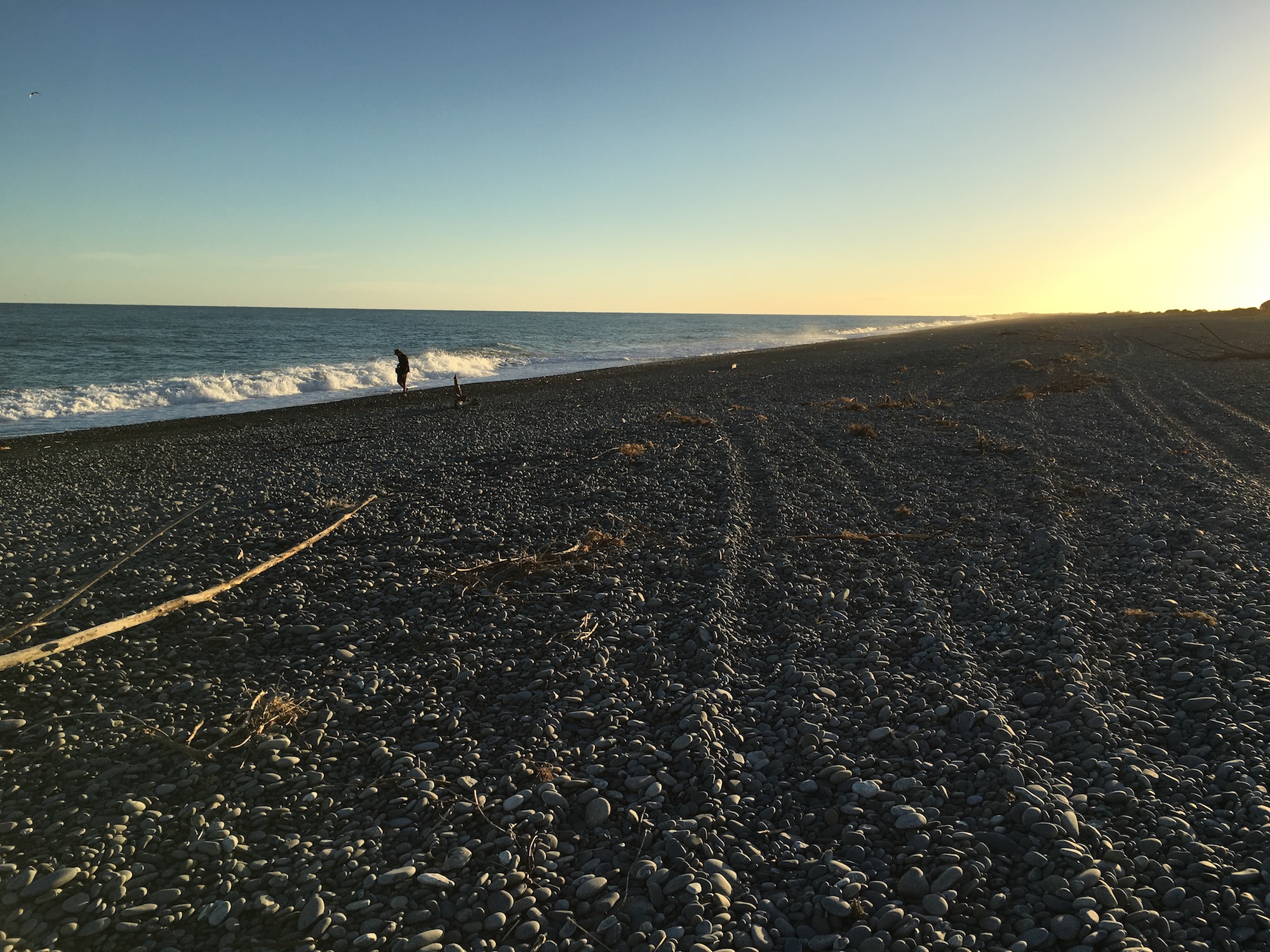
Husband: “How about we go for a walk on the beach after dinner?”

My brain: What? No. I have to write today’s blog, finish the story I was working on, tidy the office, make granola, sweep the floor, fold the laundry, weed the garden, pick tomatoes, sort the recycling…

My brain at the beach: Yeah…Whatever…Did you see this cool pebble?

Green Orb Weaver

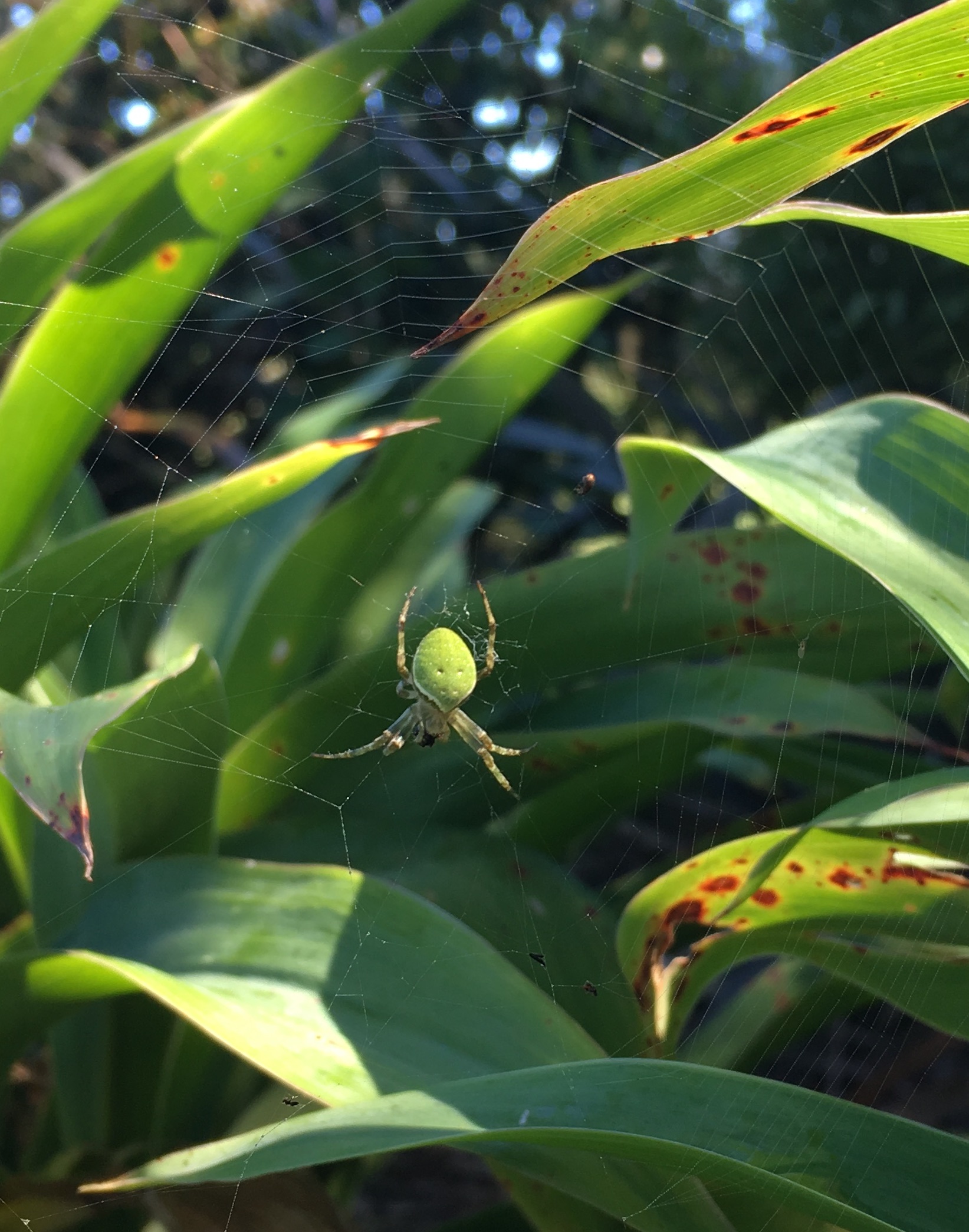
This year has apparently been good for the green orbweb spider (Colaranea viriditas); I usually see them only rarely, but I’ve run across quite a few this summer.

These beauties are pale green with a kelly green leaf-shaped mark covering the abdomen.

As the name implies, these spiders make orb webs—the spiral-shaped webs everyone’s familiar with. Though they’re primarily nocturnal, I’ve regularly seen them hanging out in the middle of their webs during the daytime (often snacking on an insect). These sharp-looking spiders apparently like a tidy web; they rebuild their webs nightly, and the webs are always as attractive as their residents.

The green orb weaver’s main predator is the native potter wasp, which paralyses the spiders with a sting and stuffs them into its nest for its larvae to feed on. However, the green orb weaver appears to be better at hiding from potter wasps than the non-native Australian orb weaver (at least on our property). Earlier this summer, the potter wasps decided that the screw holes in the bottom of the dining room table were perfect nest holes—every one of the dozens of orb weavers they crammed into the table was an Australian orb weaver.

I enjoy finding these little green gems in the garden. They’re as beautiful as they are helpful.

Noddy’s Back!

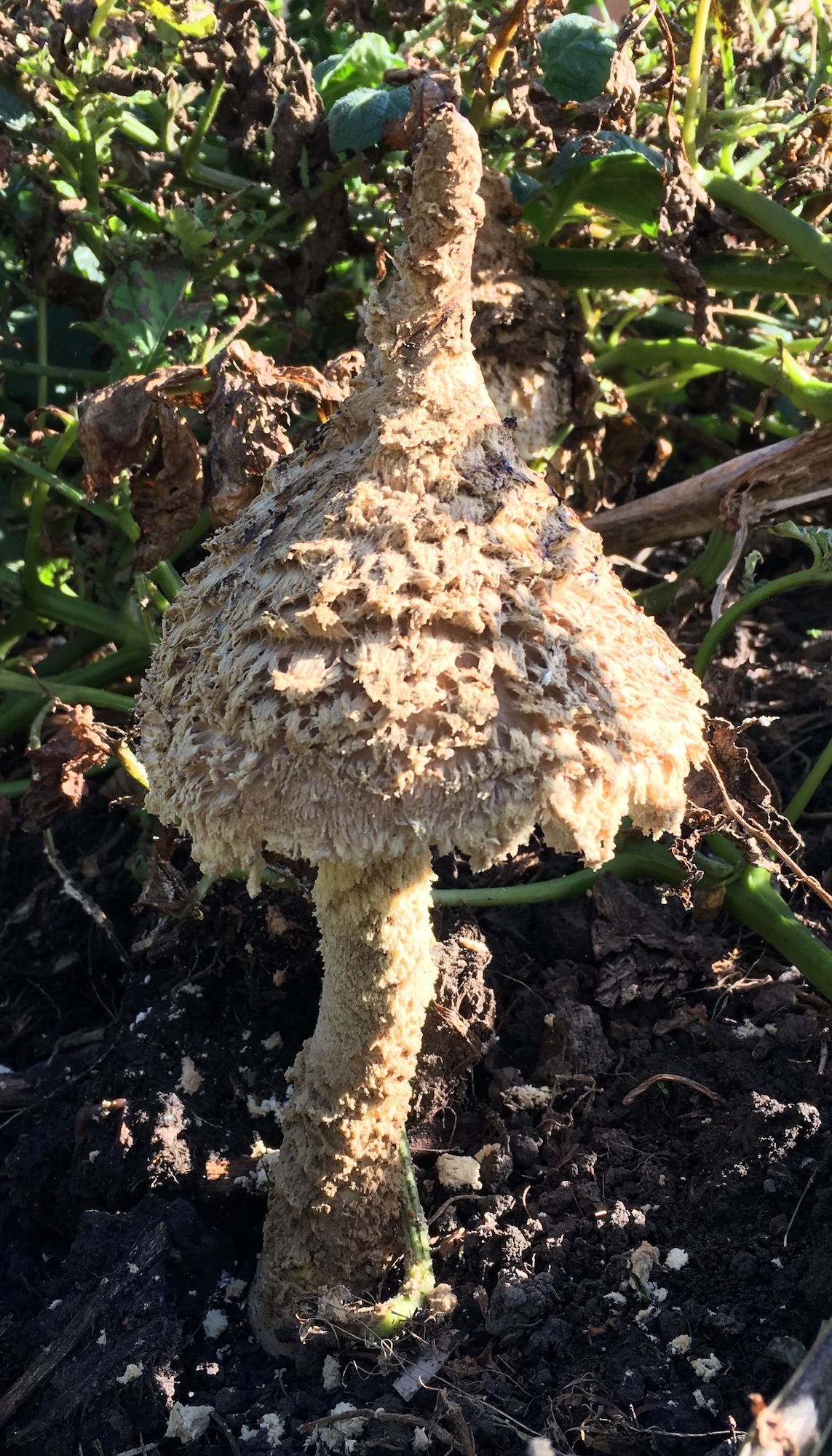
Okay, call me a complete geek, but I’m inordinately pleased about today’s find in the vegetable garden—Noddy’s flycap. This striking and mysterious mushroom showed up last year, causing great excitement and a blog post. The word from the scientific community was we weren’t likely to see it again for a long time, as it doesn’t seem to fruit every year.

Ha! Another thing we can tick off as an unknown for this fungus. Second year in a row Noddy’s has popped up in the garden.

As far as I know, the fungus still has no official scientific name, and its origin remains as mysterious as it was when I wrote about it last year. So for now I’ll simply enjoy the whimsy of this most delightful of fungi.

Magpie Moths

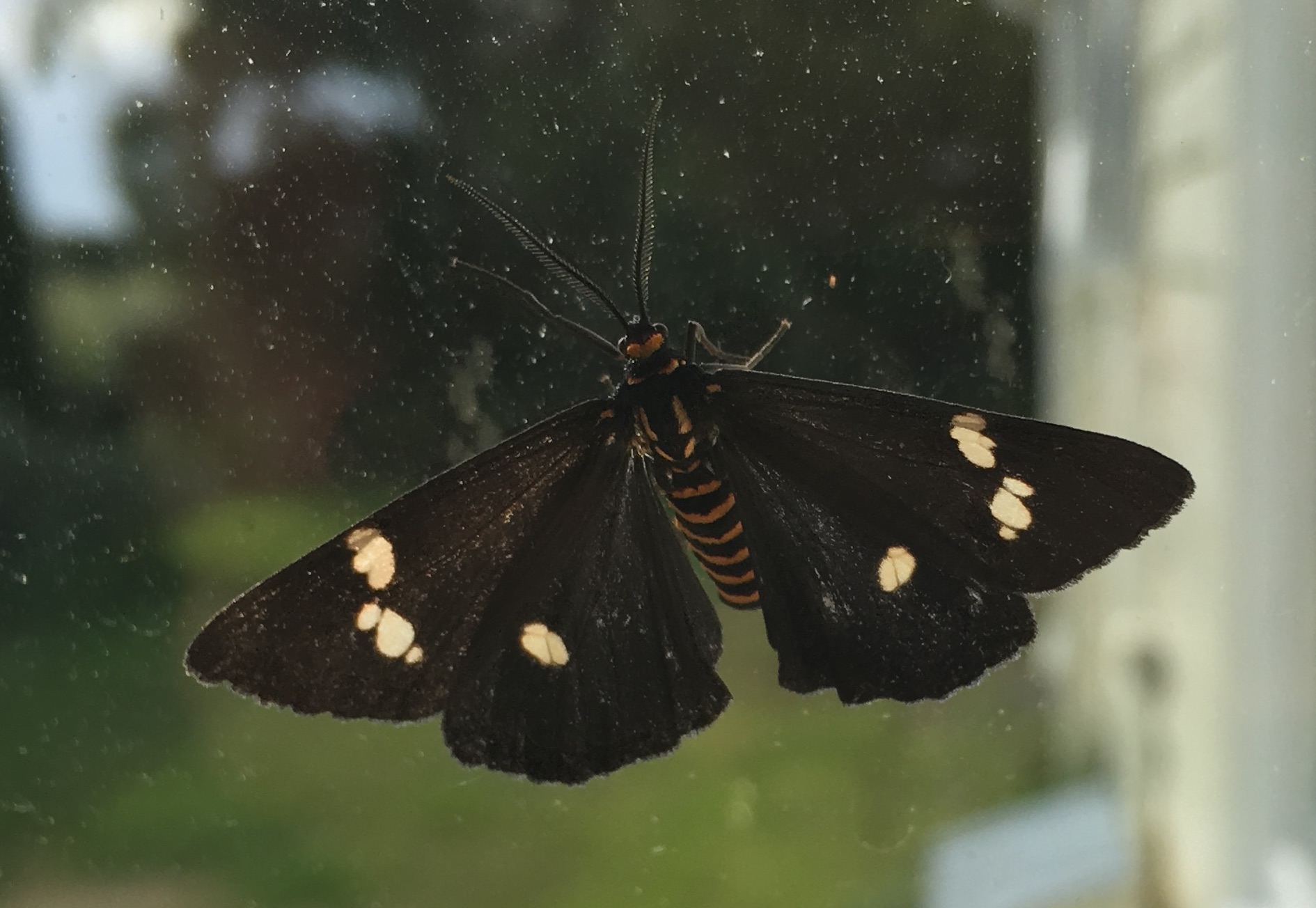
It’s the time of year when one of my favourite moths emerges—the magpie moth (Nyctemera annulata). Magpie moths are in the family Arctiidae—a family including many brightly coloured day-flying moths that threaten to blur the line between moth and butterfly. N. annulata is endemic to New Zealand, though it has a closely related Australian cousin, N. amica, with which it can interbreed.

Magpie moth caterpillars eat plants in the daisy family, especially in the genus Senecio. Common host plants include groundsel (Senecio vulgaris), ragwort (Senecio jacobaea), and cineraria (Jacobaea maritima, formerly Senecio cineraria).

We have large quantities of groundsel, and a few sizeable cineraria on the property, so we always have a healthy population of magpie moths. The caterpillars are black with orange ‘racing’ stripes, and somewhat hairy.

As you can guess from their colouration, magpie moths are poisonous. As caterpillars, they sequester toxins from the plants they eat. These toxins deter most predators. The shining cuckoo, however, is apparently quite fond of magpie moth caterpillars. It avoids the poison by eating only the insides of the caterpillar, leaving the bitter-tasting exoskeleton behind.

In addition to eating weeds like groundsel and ragwort, the magpie moth is a beautiful, colourful addition to the garden. It always makes me smile.

Ushering in Autumn


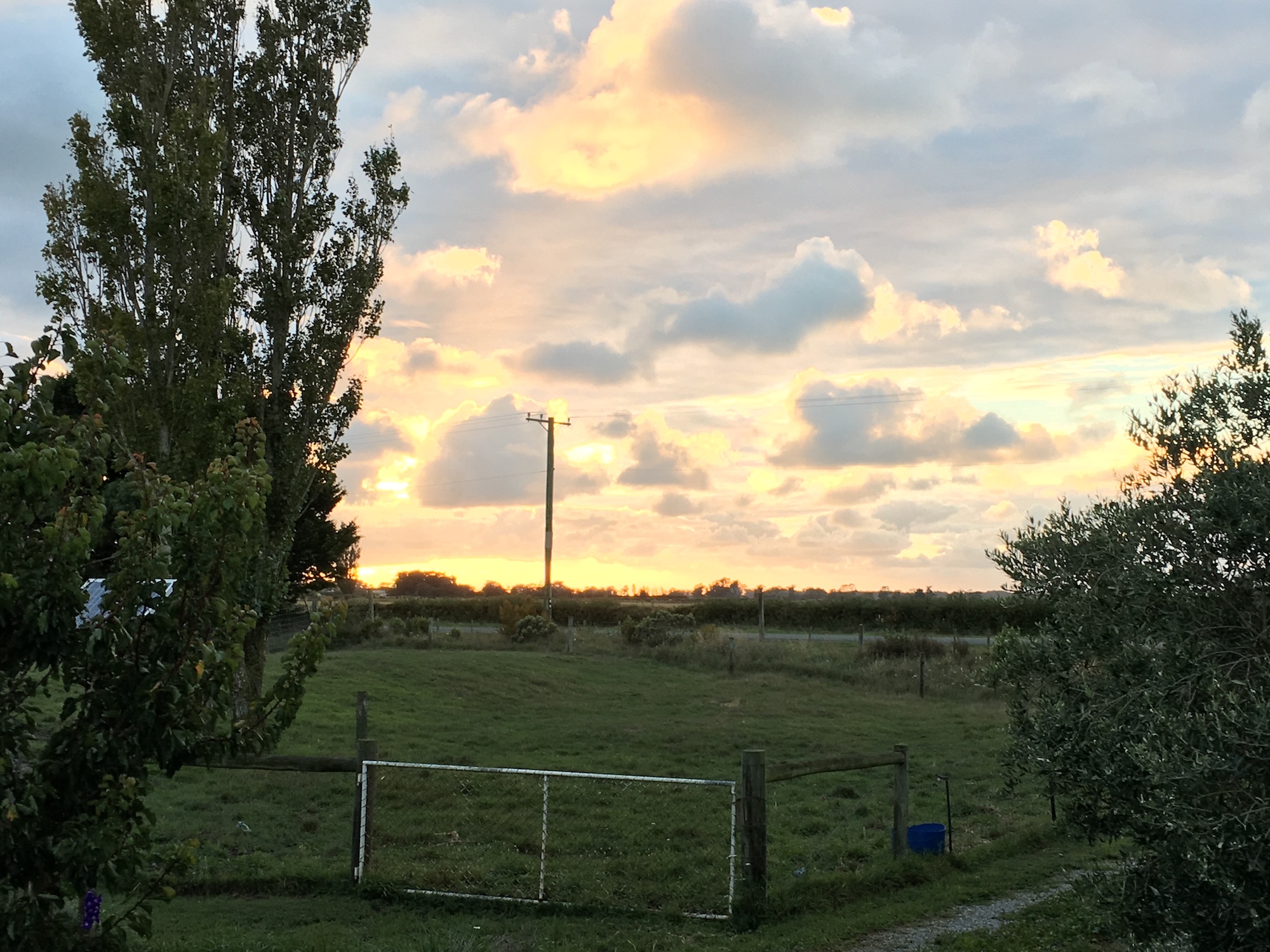
Thursday’s dawn farewell of Gita.

Gita blew through earlier this week, dumping 96 mm (nearly 4 inches) of rain on us. She also seems to have ushered in autumn. Sultry summer heat has given way to crisp air in Gita’s wake. The sun is still hot, but the nights have been chilly. The crickets sing their welcome to a new season. Even the garden has taken on an early autumn look, tired plants beginning to look tattered and yellow. Before Gita, I had ordered my firewood for the winter. It seemed too early at the time, but now, I’ll be happy to see it arrive.

Summer fruits and vegetables should still roll out of the garden for the next six to eight weeks, but the end is in sight. We’ll enjoy it while it lasts.


The Square Trees and other natural wonders…sort of

The rock at Hanging Rock Bridge.

Years ago, when my husband and I were Peace Corps volunteers in the Republic of Panama, we visited the famous Arboles Quadratos (the Square Trees) in El Valle de Anton. The Arboles Quadratos were, according to the guidebooks, amazing freaks of nature—trees with perfectly square trunks. These remarkable plants grew in a special grove in the rainforest behind the hotel in El Valle, and were one of the town’s main tourist attractions.

So we went to see them.

They were buttressed trees, like many rainforest trees are. And the buttresses made them…sort of squarish, if you had a little imagination. I think there were, maybe, four of them in a cluster along the trail. Their beauty was completely overshadowed in my mind by the rest of the forest around them.

My daughter and I recently had a similar experience. On a road trip, we kept passing signs for Hanging Rock Bridge. It seemed all roads led to Hanging Rock Bridge. We figured it must be something pretty spectacular, if so many signs pointed the way to it.

So we went to see it.

And, yeah, there was an overhanging rock near the bridge. It was kind of cool. But the landscape around the bridge, with stunning limestone outcrops in every paddock, was far more spectacular than the bridge’s rock. If you’d gone out of your way to see the rock at Hanging Rock Bridge, you’d be disappointed.

Plenty of other ‘natural wonders’ fall short of the hype surrounding them. Others, unknown by anyone but locals, are truly stunning.

Like the Iglesia de Piedra, the Rock Church, near our village in Panama. This narrow chasm was carved by a small stream, and it’s one of the most incredible places I’ve ever been—maybe 30 metres deep, and so narrow you can touch both walls. Vegetation covers the opening high above, and makes everything look green below. The stream is shallow, and frogs hop away from every step. At the back of the chasm is a waterfall plunging all the way from the surface.

No tourists make pilgrimages to the Iglesia de Piedra. Few outside the surrounding area have ever heard of it. But it knocks the socks off many a popular tourist destination.

The world is full of these hidden gems, and one of the most wonderful things about living in different places is finding the local wonders. The beautiful places tourists never hear about.

I’ll still go to see the Square Trees and the Hanging Rock Bridges of the world, but much of the wonder of the world is reserved for those who live with it every day.

Preparing for Gita

Just some of the weekend’s harvest.

I have been AWOL from the blog for longer than usual. I have good reasons, one of which is whirling toward New Zealand as I type. Cyclone Gita is bearing down on us, and though we aren’t likely to bear the full brunt of her damage at our place, we will get heavy rain and gale-force winds.

So I’ve spent the last two days bringing in the crops that might be damaged by her—wheelbarrow loads of corn, soy, black beans, borlotto beans, tomatoes, and apples. This summer’s intense heat and sufficient rainfall have not only encouraged excess cucurbits, but also increased my bean harvest—picking took far longer than I expected, and I will spend the next week shelling them all.

But when the rain starts later tonight, I’ll be able to relax, knowing I’ve done as much as I can to protect the crops. And the rush to bring them in means the job isn’t still hanging over me, lingering on the to-do list.

So I may not have posted the blogs I’d hoped to, but I’m ready for whatever Gita throws at us.

Little Beach Poems

Spent some time at ‘our’ beach today, watching waves, birds, dolphins. Here are a few little poems I wrote there:

Terns wheel and bob
Above each dolphin
Like balloons on a string.

****

Wave rises, crests
Wind blows foam back

Like errant strands of hair.

****

The hiss-swoosh of wave
And rolling pebbles
Rounds all edges.

****

Shag arcs and dips its head.
The body follows
And is gone.