Downsizing?!

I realised a shocking thing the other day. My son will finish high school in December this year. We all hope he’ll be leaving home for university shortly thereafter.

Next year, my teenage boy won’t be here all summer to eat vegetables.

Next year, I’ll need to plant a smaller garden, or be completely overwhelmed with food we can’t eat.

This is the last summer I will ever have a garden this big.

I’m having a harder time adjusting to that thought than I am the thought one of my kids will leave home in a year. Oh, I always knew that someday I’d scale back the garden, but ‘someday’ in my mind was always when I grew too old to manage so much garden.

But ‘someday’ is next year.

How am I going to cut back? Which varieties will I not plant? How will I curb my zucchini problem? What am I going to do with my time, if I’m not forced to spend every daylight hour in the garden from September to December?

It’s a good thing I have several months to prepare. This is going to take some getting used to.

Aftermath

The courgettes (zucchini) will recover, in spite of all the broken leaves.

The remnants of cyclone Fehi hit New Zealand yesterday. We didn’t receive the brunt of the storm, and I am thankful for that. But we didn’t escape damage.

After Fehi’s wind dumped rain on the West Coast, it swooped over the Southern Alps and raced down the other side, heating up as it went. We were blasted by the hot, dry wind—gusts at least 130 kph (and higher, by the damage inflicted), and a temperature that reached 35ºC by early afternoon.

Parts of the garden will not recover. I’m glad we ate our first sweet corn earlier in the week, because it might be our last—the corn lies flat on the ground today.

The greenhouse plastic was shredded, and the stakes holding the greenhouse in place were pulled from the ground. Only my paranoia about the greenhouse taking flight in the wind saved the structure—years ago, I’d tethered it to y-posts driven deep into the soil. They were the only things left holding the structure in place.

Today is cool and rainy. The change will help the garden recover from yesterday’s thrashing, but it can’t bring back the stripped fruit, broken branches, and fatally flattened vegetables. It won’t fix the greenhouse.

We pick up the mess and get on with it. The damage is discouraging, but I am not discouraged. If gardening (and life in general) were not laced with setbacks and disaster, we could take no pride in our accomplishments. I will be extra-pleased with every tomato and cucumber we eat for the remainder of the summer.

And, by the way, if cyclone Fehi did nothing else, it reminded me where the name Debbie’s chutney came from—cyclone Debbie stripped the apples from the trees before they were ripe. We made chutney from those apples, and named it Debbie’s. Perhaps we will be making Fehi’s chutney this weekend.

Year of the Cucurbit

A portion of one day’s cucurbit harvest…and the melons and pumpkins haven’t even begun.

The Chinese New Year is coming up in less than a month. It will be the year of the dog.

I beg to differ. At least at Crazy Corner Farm, it will be the year of the cucurbit.

Extremely high temperatures combined with an unusual amount of rain seem to have encouraged growth of the pumpkins, zucchinis, melons, and cucumbers this year. I have never, in over 30 years of gardening on three continents, seen cucurbits grow like this.

I accept responsibility for the zucchini. I know I always plant too many. But the others aren’t my fault.

Melons are usually incredibly difficult to grow here. They barely grow, and give very few, tiny fruits. I’ve tried them in the greenhouse, and they seem to do even worse there than in the garden. Too cool and dry, I suspect. Not this year! They have outgrown their bed and are invading the beans on either side of them. There are dozens of fruit set, and those fruits (still quite immature) are already larger than most of the mature fruits I’ve gotten in previous years.

The pumpkins have simply devoured half the garden. They’ve invaded the corn, overtopping it in some places. I’ve had to push them back into the garden when they’ve escaped, growing over five metres from where I planted them. I planted just a few plants each of pickling cucumbers and  table cucumbers, and spaced the two varieties well apart from one another. I am now hacking them back to keep them separate and avoid them spreading over the shade house. My plan with the pickling cucumbers was to have just a handful for making fresh pickles (because I only ‘make pickles’ every two years to avoid becoming the crazy pickle lady), but I’m harvesting as many pickling cucumbers as I do on most pickle years.

I have lost all paths in half the garden to cucurbits, and many of the paths in the more clear half are overgrown, too. It is truly out of control. I have never seen this sort of cucurbit exuberance before.

So, I declare 2018 Year of the Cucurbit. Care for a pickle, anyone?

A new species!

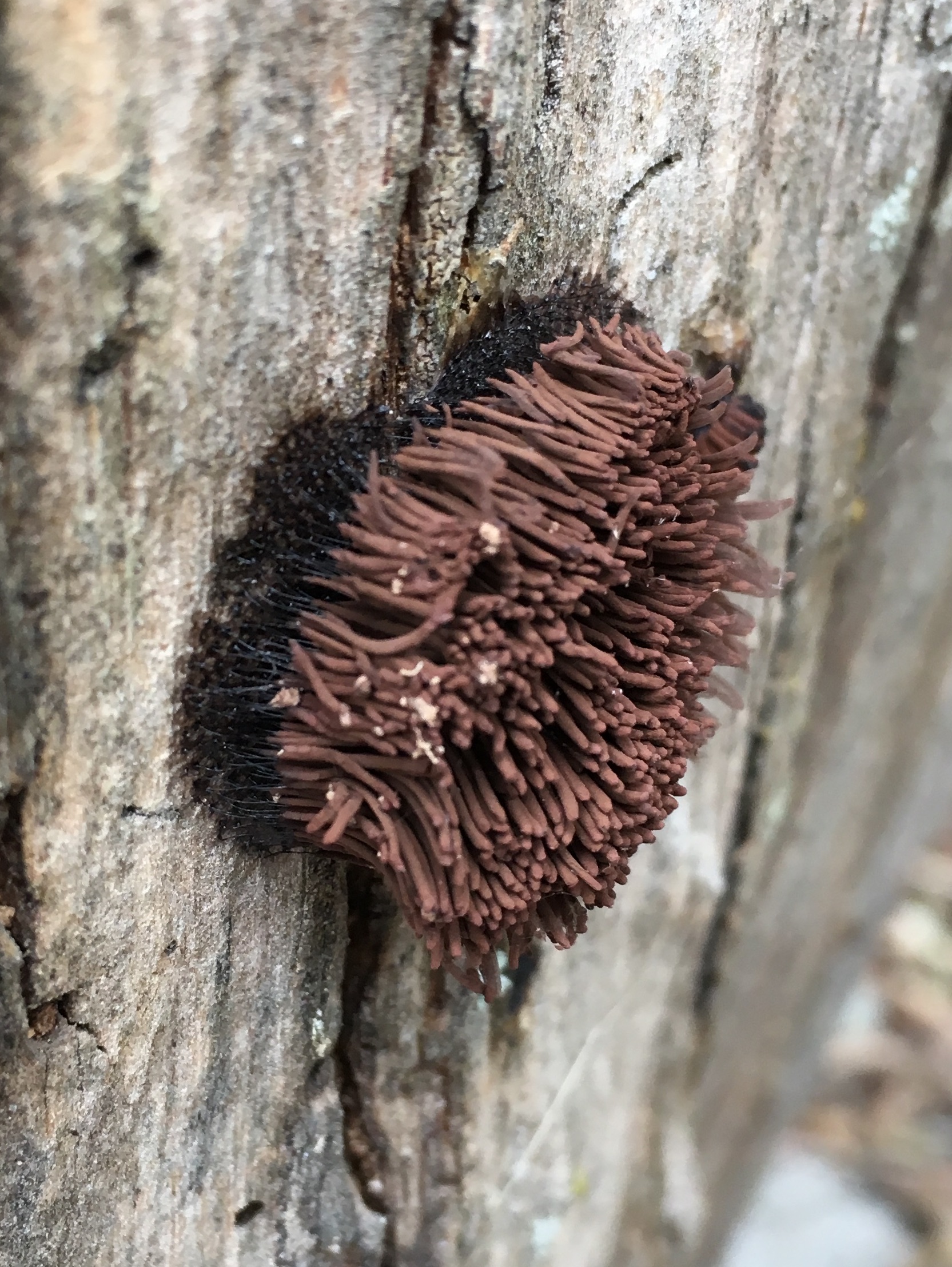
It’s always exciting to discover a new species in the yard. Yesterday we found a chocolate tube slime mould (in the genus Stemonitis). A beautiful creature, and aptly named.

If you Google chocolate tube slime mould, you get lots of websites calling it a fungus. Let’s just get this straight right now. Slime moulds are not fungi. Not even close. They’re not even in the same Kingdom of life. Saying a slime mould is a fungus is about as accurate as saying you are a fungus.

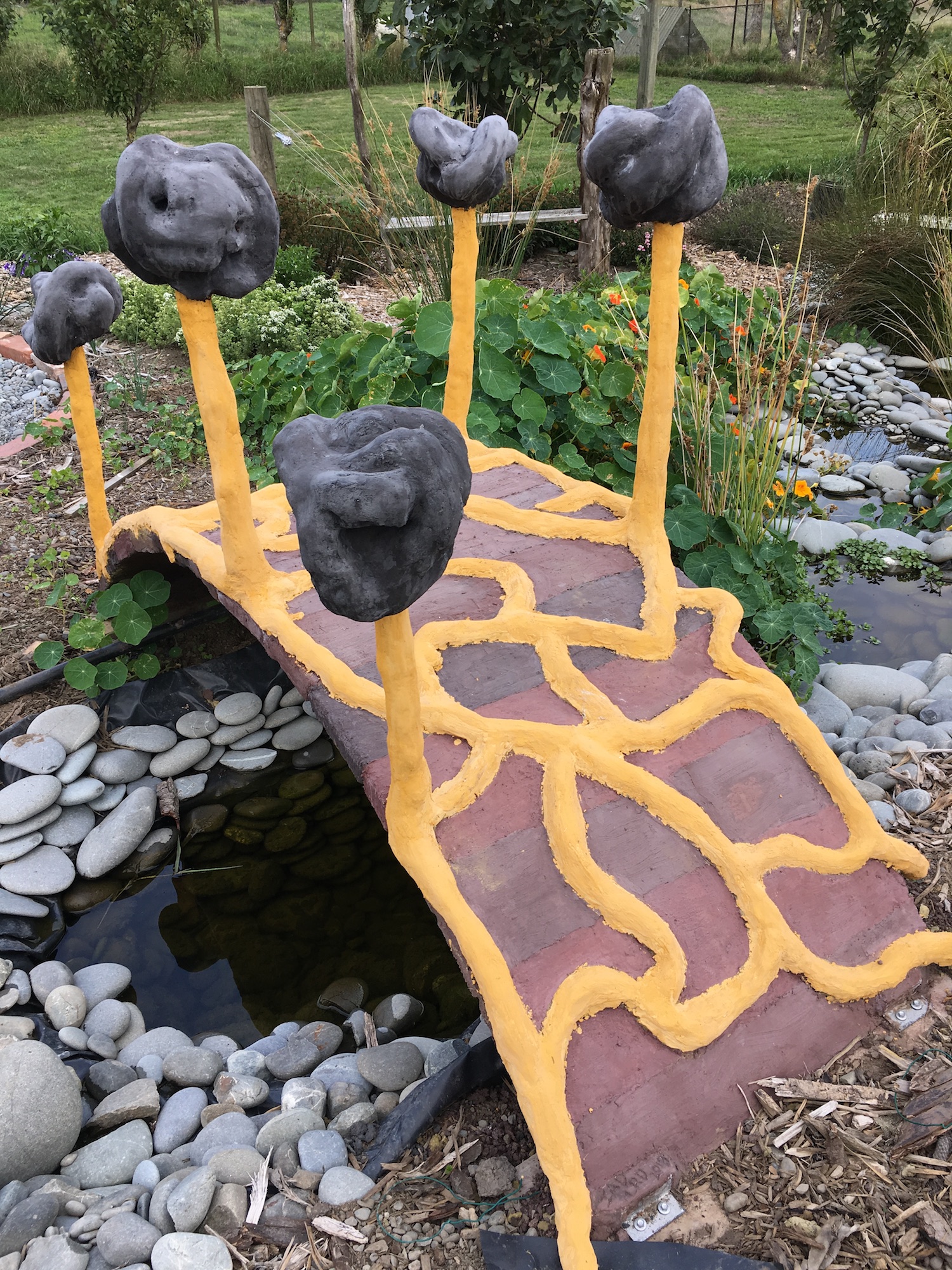
We’re a bit nutty about slime moulds here at Crazy Corner Farm … Okay, we’re a little more than a bit nutty about slime moulds. My daughter and husband have been working for months on a slime mould bridge modelled after Physarum polycephalum.

Slime moulds are some of the strangest organisms you’ll find in your back yard. Many are named for their looks, and one of the most common species goes by the name ‘dog vomit slime mould’.

The two groups of slime moulds, plasmodial and cellular, are quite different from one another, and both types are weird and wonderful creatures. Plasmodial slime moulds can cover several square metres, but are made of just one cell filled with thousands of nuclei. They creep across the ground like a giant amoeba with pulsing waves of cytoplasm, engulfing and eating bacteria.

But they’re more than just quivering bags of goo; they can solve mazes, even choosing the most efficient pathway if there is more than one. Cellular slime moulds (which don’t form enormous multi-nucleus cells) can join together to create a multi-cellular organism when the need arises for a larger, more mobile body.

Slime moulds may even save us from the growing problem of antibiotic-resistant bacteria—researchers are working on ‘training’ cellular slime moulds to sense and destroy resistant bacteria.

So you can see why we were excited to find another species of slime mould living on our property! Who wouldn’t be excited by it?

Hawksbeard: a Cheerful Weed

We’ve had recent, much-appreciated rain, and the grass is unusually green for January. But even with the grass growth, summer is weed season in the lawn.

More specifically, summer is weed flowering season.

Some of the weed flowers are uninspiring, and merely annoying—the dull greenish flowers of plantain, for example.

Others bring a splash of colour to what is normally a bleak time in the lawn.

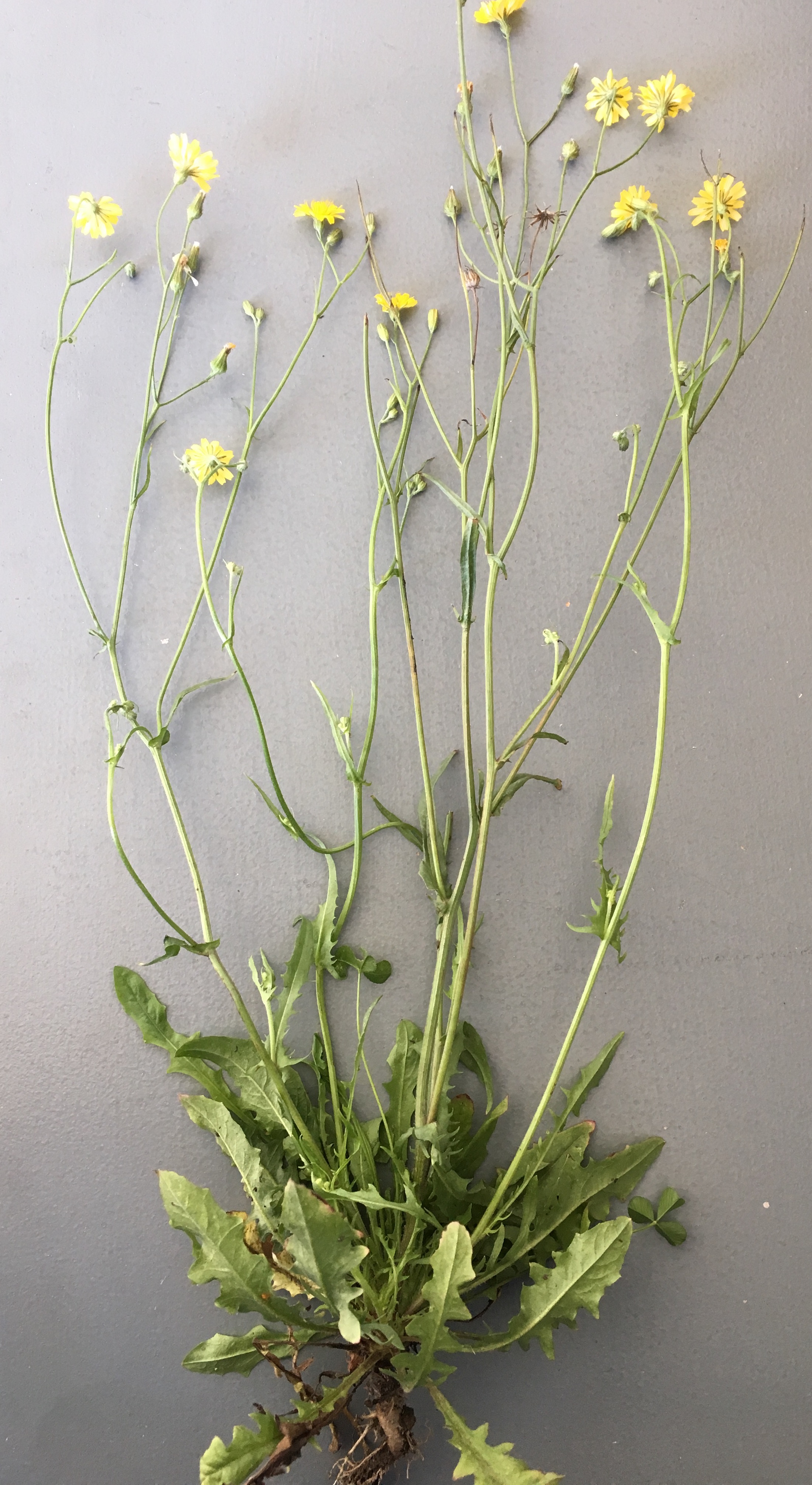
Hawksbeard (Crepis capillaris) is one of the more prolific colourful weeds in the lawn in summer. An annual or biennial member of the dandelion family, this plant bears small, cheery yellow blooms on tall, branched stems.

The NZ Plant Conservation Network shows hawksbeard as being naturalised in 1867 from Europe. Like its cousin dandelion, it was most likely brought to New Zealand on purpose as a food plant—it’s young leaves are edible. Like the dandelion, it is no longer valued as a food, but is considered a weed.

I will admit, the tall flower heads of hawskbeard can be annoying in the lawn. They seem to spring up overnight between mowings, and they slap against your legs as you walk through the yard. But I do appreciate their yellow blooms at a time of year when most other plants give up from the heat and drought. I have been known to use hawksbeard in flower arrangements, and their green rosettes are sometimes the only green to be found around the yard.

Rolling out the Welcome Mat

When we first moved to our house, most of the landscaping, at our place and at the neighbour’s, was non-native. Gorse, photinia, oaks, birch, macrocarpa…plants of little interest to native wildlife. We’ve slowly been replacing much of the non-native vegetation with natives. When the property next door changed hands, the new owner replaced the gorse hedges with natives. Our plantings are all maturing, and I’ve got my fingers crossed we’ll soon attract some native residents.

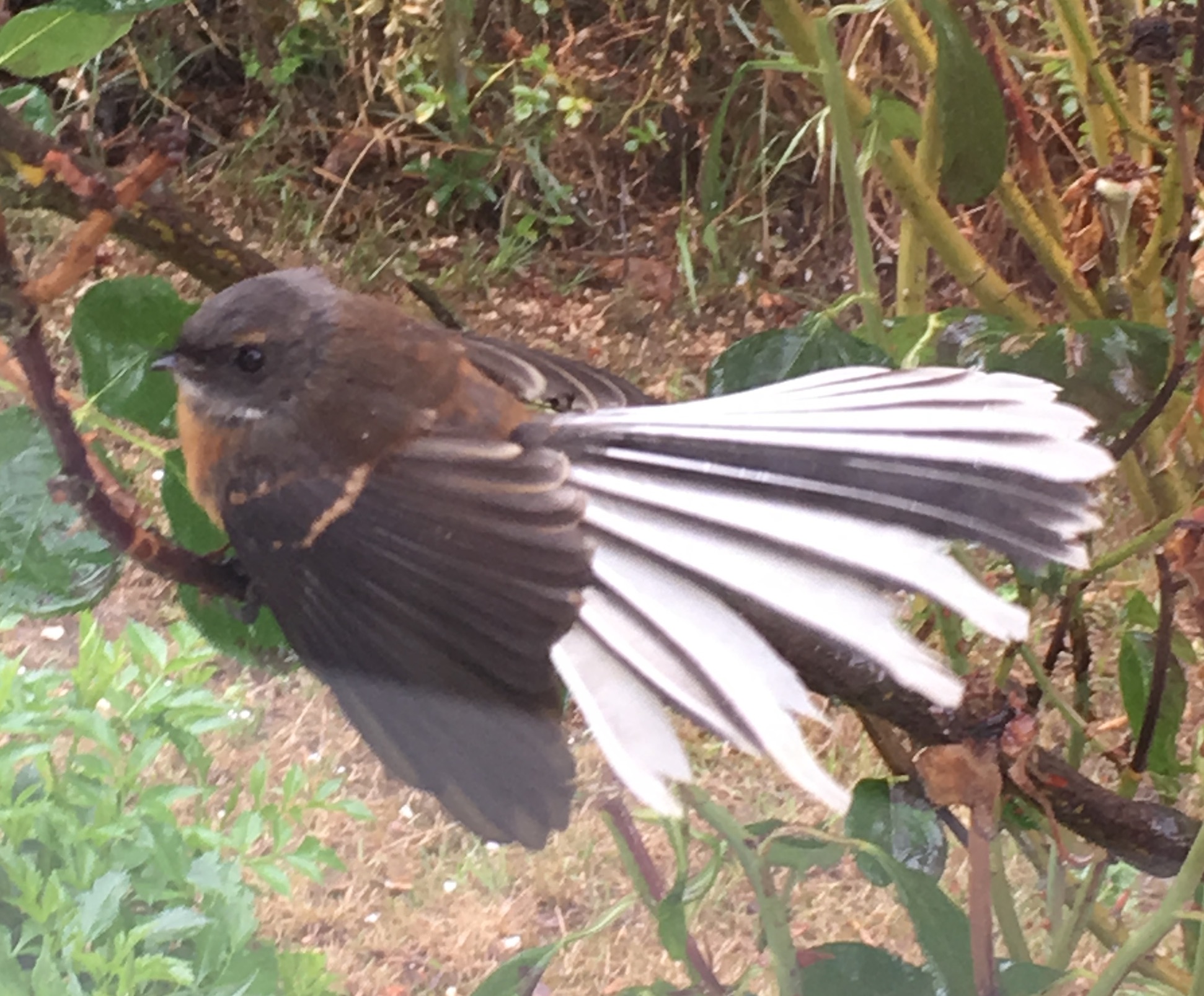
Over the years, piwakawaka (fantails) have shown up occasionally, usually in autumn, and only for a week or so before moving on. But this year, one has arrived in summer. He’s been flitting around for over a week now, chattering and declaring ownership of the place. I’m crossing my fingers, hoping he’ll stay.

Piwakawaka don’t stay still for photos, but he was talking to me through the kitchen window yesterday and, with the window as a bird blind, I was able to snap a couple of photos that weren’t just a blur of feathers. He’s a cute wee guy. I hope our welcome mat is acceptable to him.

Good Mum, Bad Mum

It rained all day today, as it did yesterday, and as it’s supposed to do tomorrow. The weather is fine by me–plenty of water for the garden, and I have lots of writing to do–but for the kids, three days of rain in the middle of the summer is hard to manage.

What can a mum do under these circumstances, but bake, and enlist the kids’ help? So we made soft pretzels and zucchini cupcakes (see previous blog post). It doesn’t take all day, now the kids are teens, but it gave them something to do for a little while, and treats to eat afterwards.

I felt like such a good mum…

Then I thought about the fact I let my kids eat soft pretzels, pickles and brie for lunch, with a big frosted cupcake afterwards (not to mention licking the bowl and beaters).

Such a bad mum!

All those times we’ve fed our children healthy, balanced meals…you know what they’re going to remember? Yep. Pretzels and pickles for lunch.

I know this, because the meals I most vividly remember my mother making when I was a kid were the naughty ones–hot apple pie with milk (for dinner–the whole meal!) and raspberry shortcake (again, the entirety of the meal). Those meals were legendary, precisely because they weren’t healthy and balanced. They were naughty and we knew it.

Such a bad mum!

Such a good mum!

Volcanoes in the Mist

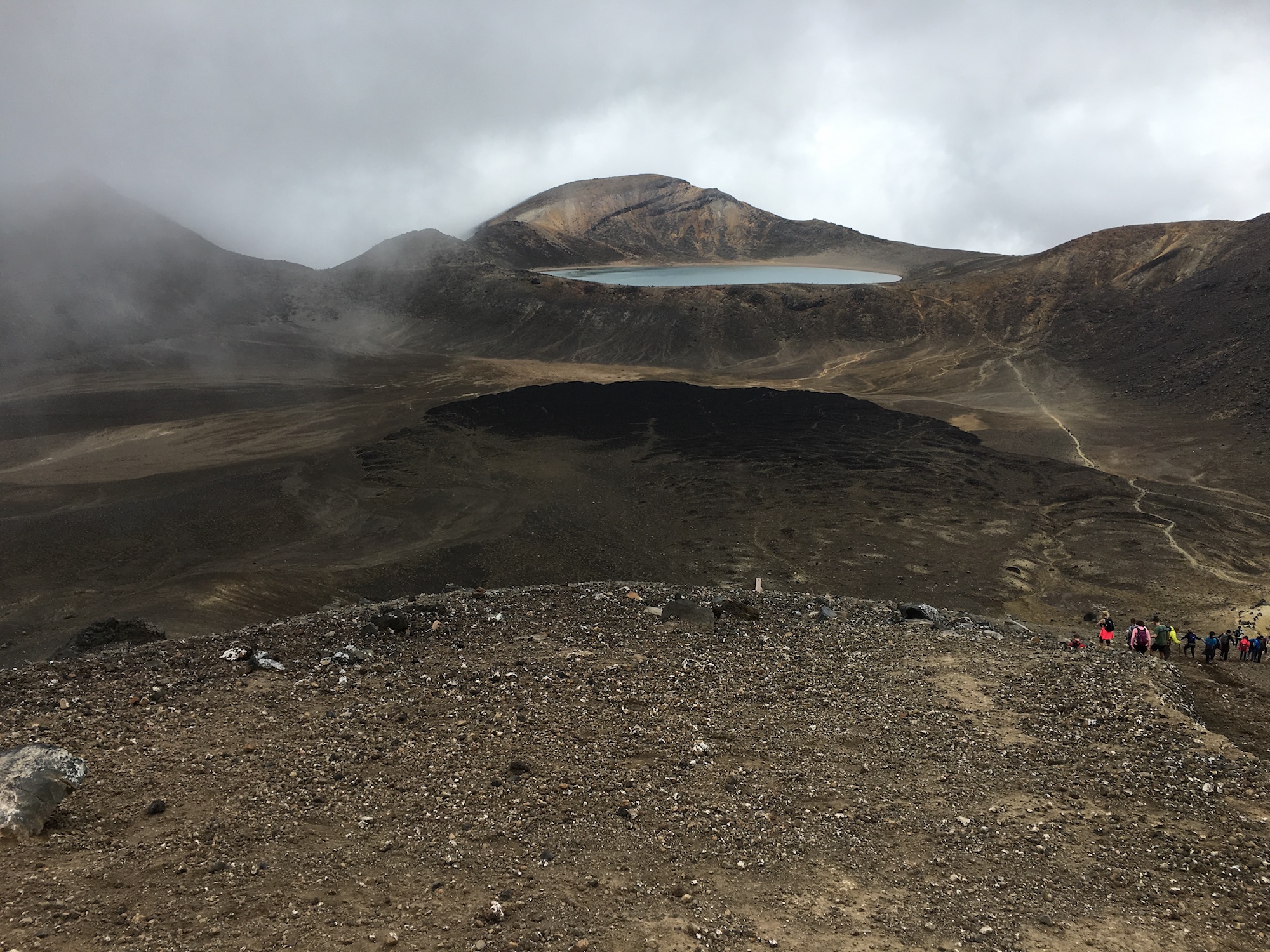
Our pre-Christmas family adventure this year took the form of a week on the North Island. One of the many things we did was to hike the Tongariro Crossing. The track climbs the slopes of Mt. Tongariro passes between Tongariro and Mt. Ngauruhoe. The volcanoes are active–the last eruption was in 1975, and they have a history of erupting about every nine years before that–so the landscape near the top is stark and raw, with sulphurous steam rising from fissures and craters, tumbled rock, and dark lava flows.

The area is tapu, sacred, to the local Māori, and it’s no surprise. Power and violence are written on the landscape, the lush lower slopes of the mountain only accentuating the devastation near the top. The awesome forces that shape the face of the planet are on display there. It is a place for gods to live.

Unfortunately, it has also become an incredibly popular tourist destination. The day we hiked it, there was a constant stream of shuttle buses arriving at the start of the track. We spent the day hiking on others’ heels, with hikers on our own heels. When we stopped for lunch, we counted sixty-eight people pass us in just 15 minutes. A quick back-of-the-envelope calculation, and we estimated that there were 1600 people on the track at the time.

It seemed to me that most of the people were treating the excursion as nothing but a physical challenge–a race to be completed or 19.4 km to tick off their to-do list. A large group of twenty-somethings all but pushed us off the track in their effort to pass us as they chatted loudly to one another, oblivious to the beauty around them. A group of teens playing loud music sauntered past. A man sat beside a crater lake doing a business deal on his cell phone.

I wanted to stop, to soak in the alien landscape, to feel the immense power of lava beneath my feet, to examine the crusted sulphur on the rocks and the tenacious plant life that colonised the harsh landscape. But like sheep being herded onto a truck, we were pushed along the narrow track by the people behind us. Fifteen seconds, thirty seconds was all we could snatch at a time to appreciate the landscape.

Like our favourite beach, the Tongariro Crossing has been diminished by its popularity. The gods are still there, in the steam and the lava, the raw craters blasted in the earth, but no one is paying attention.


Garden Shift

From one day to the next it happened.

The garden went from newly planted to bursting and full.

It will get much more crowded before summer is over—I usually lose most of my paths by mid-February—but it has lost the widely-spaced springtime look.

It is always such a surprise and a pleasure when it takes on the summer look. It’s like the moment when you look at your teenager and you can see the adult s/he is becoming. It’s a phase shift, and though it comes on gradually, there is a magical moment when you suddenly see it.

I walked through the garden today for no reason, just for the pleasure of walking among those wonderful, full rows of plants.

Double Cherry Pie

I picked eight cups of cherries from our tiny sour cherry tree the other day. I was thrilled I’d gotten enough for two pies from a tree not much taller than me! I decided to make them all up into pie filling—I’d make one pie right away, and freeze half for later.

But when it came to filling the pie dough, I poured all eight cups in! Yikes! There was no way to take it back out, and I knew it was going to boil over and be a disaster in the oven.

I shrugged—nothing to do but see what happened—and slipped the pie into the oven (with a tray beneath it to catch drips.

An hour later, I pulled the most glorious pie out of the oven…

It had dripped a little, but no more than every other cherry pie I’d ever made.

And it looked plump and delicious. Each slice was thick and wonderfully overloaded with fruit. Truely decadent!

I’m not sure I’d recommend making a pie with eight cups of cherries—it really could end up a disaster in the oven—but it certainly was a delicious mistake.