The Sound of a Story

I sit down at my desk and breathe a sigh of relief. It’s quiet here, in my office. Not like the noisy library where I worked yesterday.

But, no, that’s not true. I hear the roar of the surf in the distance. The trickle of the artificial stream in the garden overlays the sound of the ocean. When I step to the office door, a goat greets me with a maa. Starlings mutter in the treetops, magpies warble on the fenceposts, and a fantail chitters in the shed. A plover’s percussive call is underlain by the chirping of a thousand crickets.

The neighbour rumbles past in his tractor, carrying a bale of silage. I can hear his son in the paddock shouting and whistling at his five barking sheep dogs.

It is far from quiet.

And yet …

Somehow, the sounds here caress my thoughts, rather than intruding upon them like the horrible Muzak from the library cafe, or the screams of tired children, or the drone of the automatic returns machine—please place the item on the trolly.

The fantail flits in and out of the story I’m writing without knocking over my coffee. The goats and sheep graze beside me without barging across the keyboard. The crickets keep to the grass. The tractor rumbles along without leaving tire tracks on my manuscript. The ocean doesn’t even wet my toes.

But somehow, I’m certain these sounds end up in my stories, caught up in the weave of plot and characters. The fantail is there, in the flick of a character’s fingers. The ocean is the relentless sound of the plot line. The tractor is the rumble of disaster bearing down on my protagonist. The goats’ deep maa is the voice of wisdom, and the crickets’ chirping lightens the mood.

Hiking Under the Influence of Parenthood

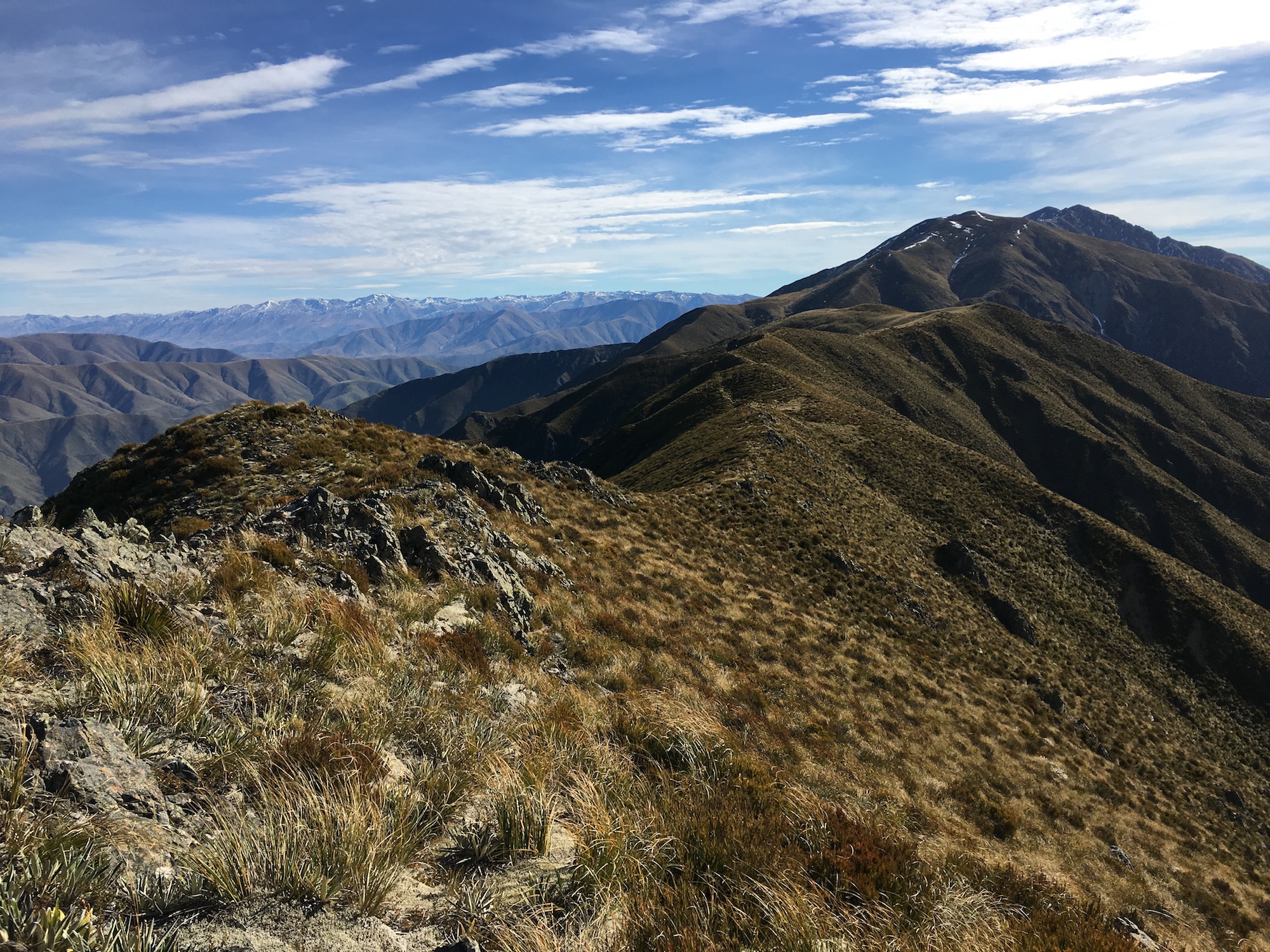
My daughter and I went hiking for two days this week, taking advantage of the school holidays to get out. On our first day, we summited Little Mount Peel. Several years ago the whole family hiked the same track, though not to the top. In those days, my husband and I pulled the kids along behind us. Encouraging them on, waiting for them while they took breaks.

These days, it’s the other way around. I determined we would go at my pace, not the 14 year-old rock climber’s pace. She pulled me up the mountain, stopping occasionally to let me catch up. (Where did she learn that bland, patient smile, calculated to hide her boredom?)

I wish I could be as oblivious as the children I used to pull up the mountain.

Though I hiked behind her, I was still out in front, assessing risk, calculating her need for food and rest, figuring hiking times and return times, keeping an eye on her warmth. I was still the worrier, still the responsible parent.

When the kids were young, I dreamed of the day they could keep up. Now I fear the kids’ ability to get into trouble has outstripped their ability to manage risk. Not surprising. That’s what teens do.

But now I dream of a day when I can simply hike, without worrying about anyone’s safety but my own. I will go at my own pace, stop when I am tired, sit on rocky outcrops for hours contemplating the patterns of ridge lines in the distance. Perhaps once again I will experience a place fully, and not through the fog of parental responsibility.

Ode to a Fern

I could have posted a blog yesterday, but only from here, where there was cellphone reception. You’ll excuse me if I decided to enjoy the view instead of write a blog post.

It’s not that I didn’t write. My daughter and I, out for two days of hiking, stopped a couple of times on our way to sit and write. Sometimes I gave us a challenge, sometimes we just wrote.

I can’t say that anything I penned in the past two days is great literature, but I did smile as I wrote this Ode to a Fern, which was our first challenge. True to our writing styles, my daughter’s poem was deep and insightful, mine silly doggerel. Here it is, to lighten your day …

O filmy fern
All wet with dew
With fronds so thin
They are see-through.

You could adorn
A lady’s hat
A leafy veil
Fine to look at.

Or perhaps a curtain
You could be
Your gauzy fronds
Flapping free.

O filmy fern
These aren’t for you
To your wild self
You must be true.

Inhabit damp footpaths
Dimly lit
The forest floor
Is where you fit.

Pigeon Bay Walkway

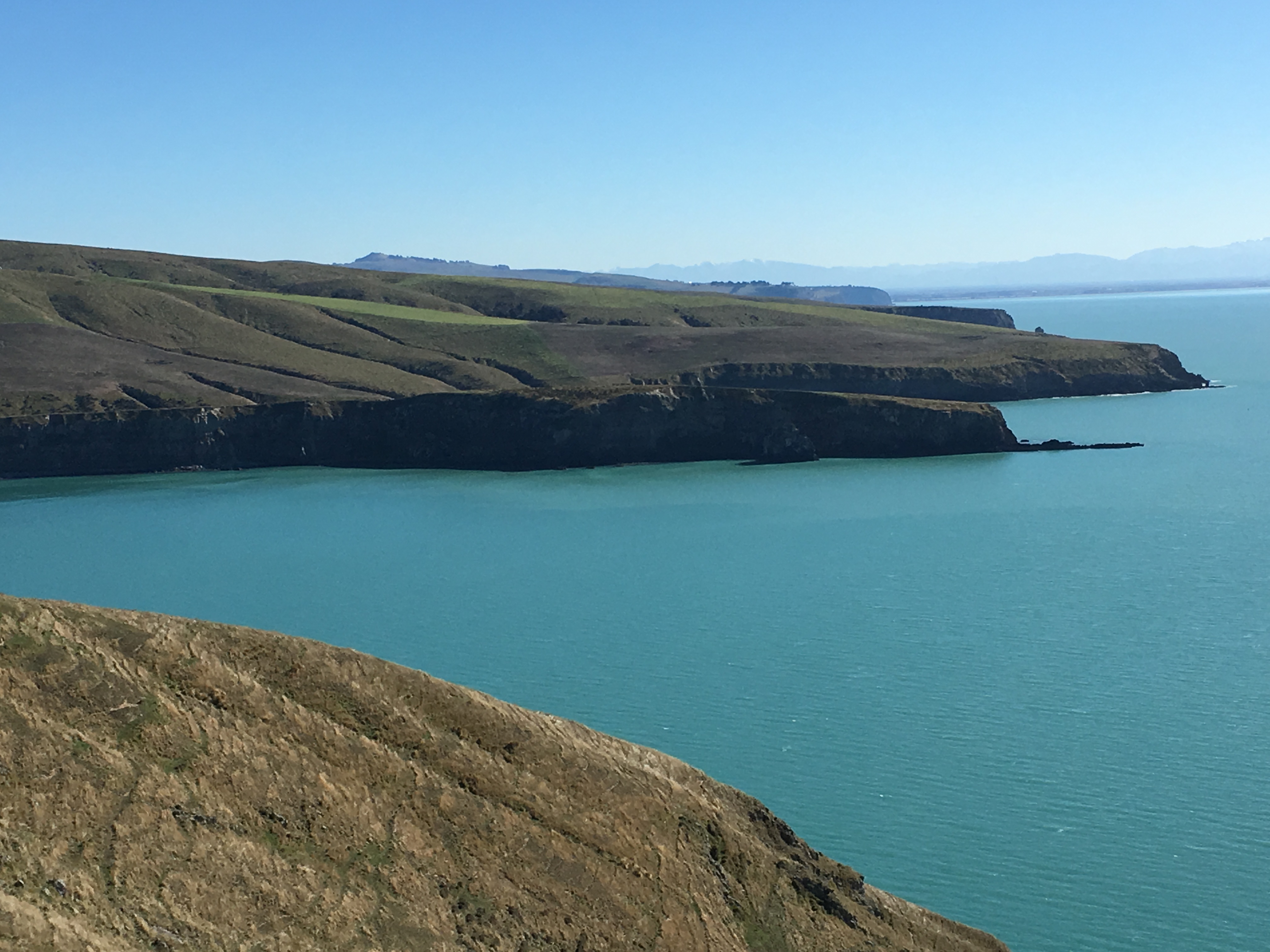
View from the head toward Christchurch.

Yesterday was a beautiful autumnal day. We headed out to the Banks Peninsula and did the Pigeon Bay Walkway.

It has been over a decade since we’ve been to Pigeon Bay. Last time we went, the kids were preschoolers. Then, we’d hoped for some sort of beach where the kids could play in the water, but Pigeon Bay is rocky. The shoreline is covered in cobble-sized rocks teeming with life. Lift any rock and a dozen crabs scuttle away. A decade ago, the pursuit of crabs delighted the kids. Still does. Yesterday, we also noted starfish, chitons, limpets and snails under the rocks.

But the main activity for yesterday was the walkway. It’s rated as a five hour return walk, but is mostly on a well-graded farm track. It’s easy going, and we did it in four hours, including a lunch break.

The track runs all the way to the head of the bay. It’s not exactly a wilderness experience—the land is a beef and sheep farm—but the views are spectacular. It’s one of the few places on the Banks Peninsula where you can get right out to the tip of the headland.

Out on the head, the cliffs are quite spectacular, and you can see the layers of volcanic deposits, well-spattered with poo from the shag colonies there. In the clear air yesterday, we could see all the way to the Kaikoura ranges.

The best part of the walk for me was looking down on a small pod of Hector’s dolphins feeding in the bay below. The dolphins were clearly circling and corralling fish, and there was a trio of gulls shadowing them in the air, picking off the fish the dolphins missed.

A lovely walk. Hard to believe it took us this long to get around to doing it.

Nursery web spiders

The nursery web spider (Dolomedes minor) is one of New Zealand’s larger spiders, in spite of it’s species name. At this time of the year, it’s also one of the more visible spiders, or at least its webs are.

Nursery web spiders don’t use webs to catch food. Instead, they use their silk to create shelters for their eggs and newly-hatched young. These shelters are visible in late summer and autumn on the tips of shrubby plants, especially gorse.

The female spider can sometimes be seen hanging around the web during the day. In fact, if she’s nearby, its hard to miss her, with a body nearly two centimetres long, and a leg span reaching six centimetres.

The nursery web isn’t the only care the nursery web spider gives her young. Until the spiderlings are near to hatching, she carries the egg sac with her to protect it. The young hatch out inside the nursery web, staying within the web’s protection for about a week.

The spiderlings disperse by ballooning—they let out a strand of silk until the force of the wind blowing on it is greater than their own weight, and then they float away on the end of the thread to a new home.

Like other members of the genus Dolomedes, the nursery web spider is an ambush hunter, chasing down its prey on foot. But most other Dolomedes do this exclusively on or in water, whereas the nursery web spider hunts on land as well as water, eating a wide range of invertebrates.

Belated Poetry Day

I missed World Poetry Day last week, so here’s a belated poem in honour of the day, inspired by the little spider who has built its web over the kitchen window.

David and Goliath

Honeybee caught
In a spider web
Buzzes murder to
All eight-leggers,
Stinger stabbing at
Offending silk.

Alerted,
Out rushes
The tiny spider,
Dwarfed
By its angry prey.

Dart in,
Avoid the sting,
Dart out.
Throw silk with
Frantic hind legs.
Tangle wings, tangle legs.
Dart in.
Avoid the sting.
Bite.
Dart out.
More silk.
More silk.

Bee’s wings are stilled
Though she still buzzes
A warning,
As though through
Gritted teeth.

More silk.
More silk.
Dart in.
Bite again.
Dart out.

The bee’s movements slow.
Abdomen goes slack.
Legs twitch once.
Twice.

More silk.
More silk.

David slays Goliath.

Equinox Accounting

Happy Equinox!

It is the autumnal equinox, and fittingly, our weather today has started out pure summer heat, and is predicted to turn to wintery wind and rain later on. I can see the clouds piling up to the south as the front approaches.

There are still plenty of summer crops coming out of the garden, but the equinox is a good time to evaluate what worked and what didn’t this past summer.

It was an extreme summer, so there’s no saying this year’s performance will hold in future years, but new varieties that did well include:

Tomato Indigo Apple—I blogged about this beauty when it first began to ripen. It has proven itself over the season, producing plentiful, delicious and attractive fruits that ripened early and continue to ripen as other varieties are giving up for the year.

Tomato Oxheart—This variety was also new to me this year, and it did well enough to deserve another go. The almost disturbingly heart-shaped (as in ox heart, not love heart) fruits were flavourful and plentiful.

Onion Pearl Drop—Cute and fast-growing. I’ll plant these again.

Watermelon Sweet Red—It might have simply been the weather this summer, but Sweet red matured more quickly and produced more fruit than Rapid Red, which I’ve planted in past years. I’ll be curious to see how it does in a cooler summer.

Varieties that didn’t grow so well:

Eggplant Container Pick—I was excited by this smaller variety of eggplant, as mine always end up pressed against the top of the low tunnel I grow them in, but these seeds didn’t even germinate.

Tomato Russian Red—This isn’t a new variety for me. Usually Russian Red, bred for its ability to withstand and produce well in cool temperatures, is my best producer. This year, the plants spent most of their energy on vegetative production, growing to massive leafy plants without actually producing much fruit. And the fruit they did produce was so hidden in all the greenery that I missed half of it. It won’t stop me from planting Russian Red in the future, but it emphasises to me the need to plant a mix of varieties, as year-to-year differences in weather can make a big difference in production.

Pole Bean Jackson Wonder—The jury is still out on this bean, but poor germination and slow growth mean I still haven’t harvested any of these lima beans. There are plenty of pods on the plants, but whether they will fill out properly before frost kills them is debatable. My guess is that in a normal summer here, they wouldn’t have a chance—they appear to need too long a growing season.

Earthworm!

Most people give little thought to earthworms. Even gardeners, who appreciate their presence, don’t spend much time considering which species of worm are present.

But species matters.

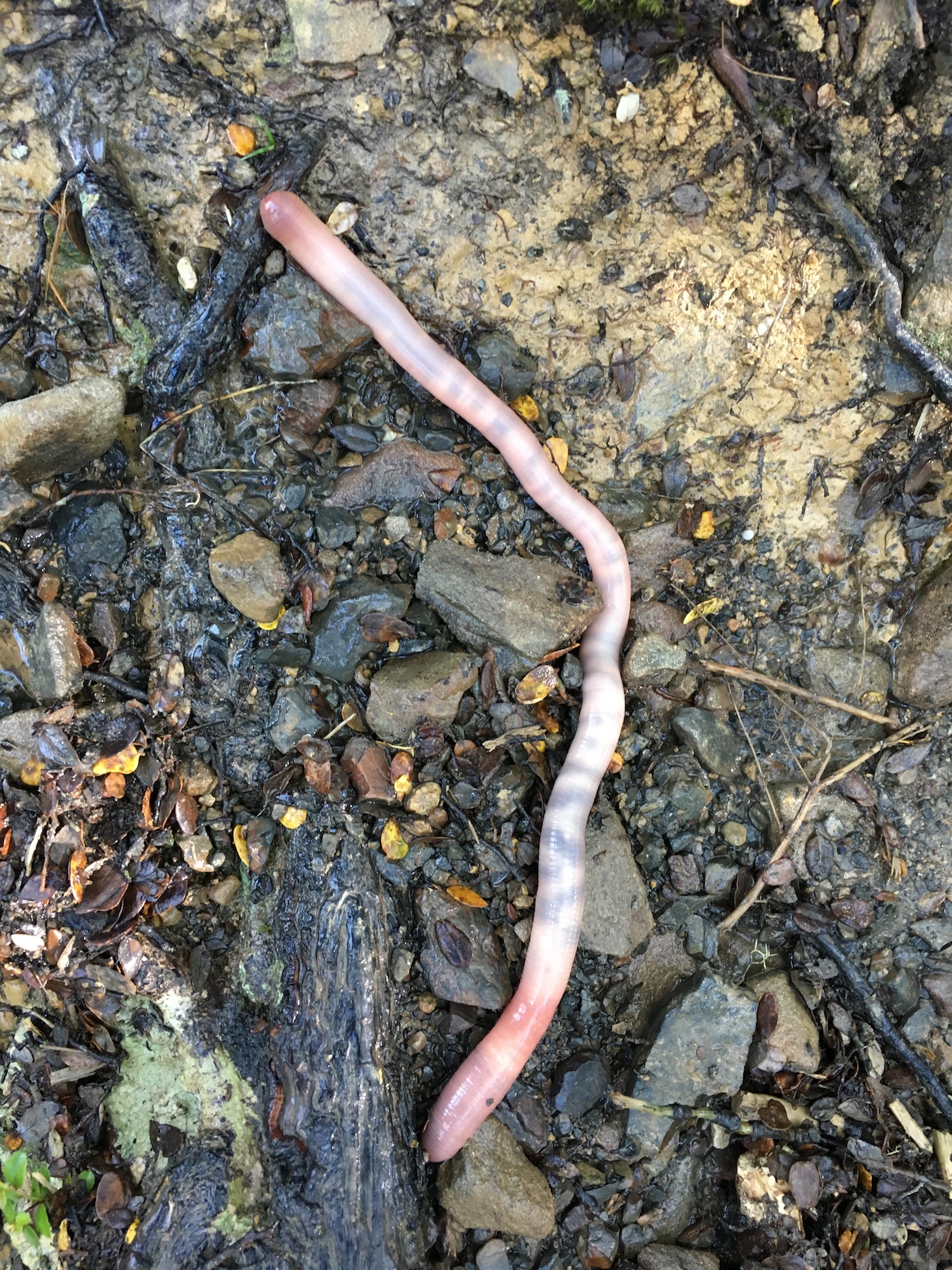
Here in New Zealand, we have about 200 species of earthworms, most of which are native. The native and non-native worms are sharply segregated by habitat—natives in native habitats, non-natives in agricultural and urban habitats. So all the worms we see in our gardens are non-native species.

When you’re used to the small to medium sized non-native worms, finding a native worm is exciting. They’re generally larger than the non-native worms—sometimes much larger. Some can grow to nearly a metre and a half (59 in) in length.

We were lucky enough to find this native worm on Mount Oxford over the weekend. I can’t positively identify the species, but it’s likely to be Octochaetus multiporus. This was a young specimen—not yet reproductive age (as evidenced by its lack of a clitellum)—but already about 20 cm (8 in) long and as thick as my pinky finger. This particular species grows to about 30 cm (12 in) long.

O. multiporus is a particularly interesting worm because it is bioluminescent and spits a bioluminescent defence compound when disturbed. On the bright sunny day we found this one, there was no hope of seeing any bioluminescence. Still, it was a great find on our walk.

Fungal Wonderland

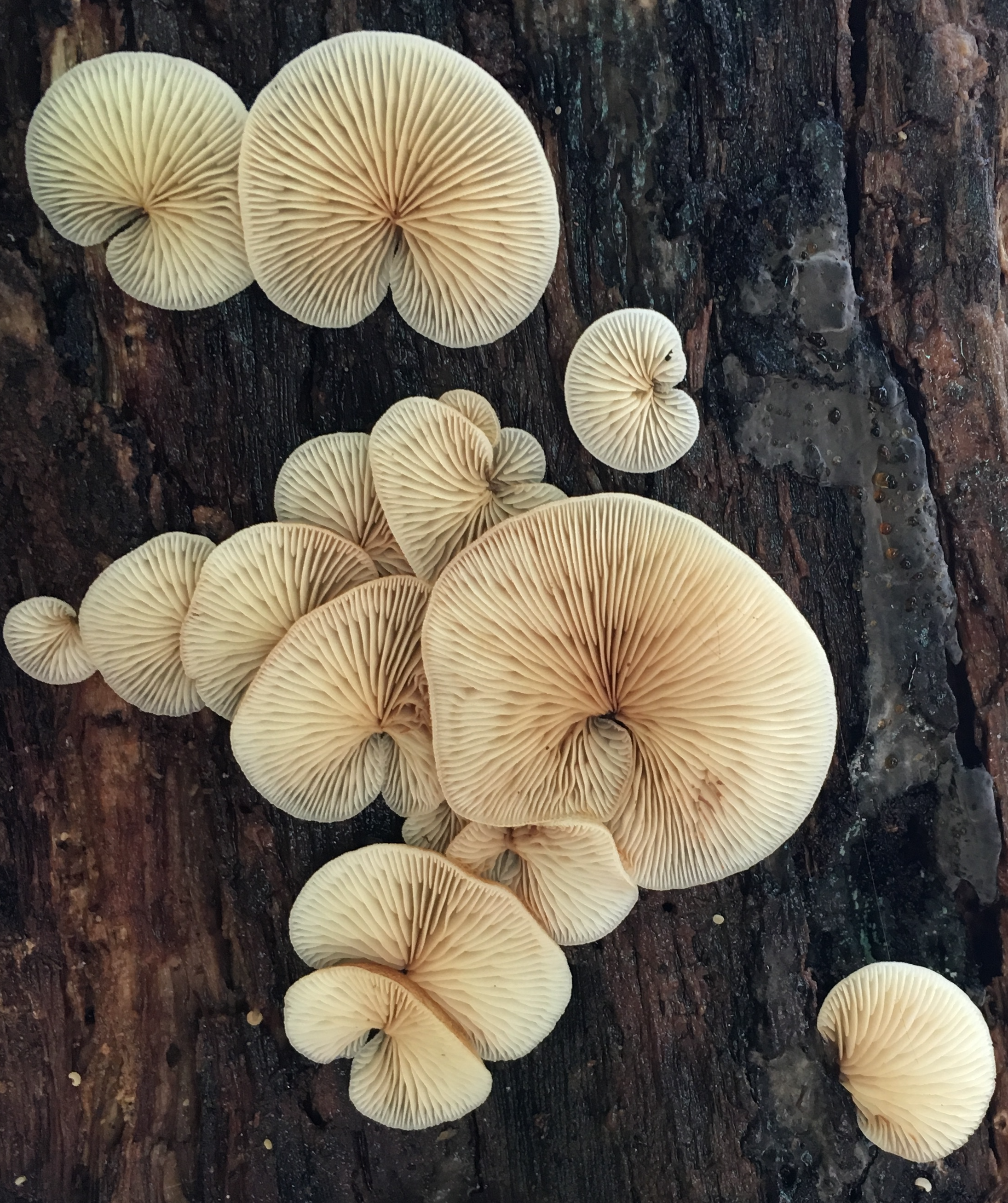
A family hike on Saturday took us through a fungal wonderland on Mount Oxford. Everywhere we looked, it seemed, fruiting bodies were popping out. White, brown, blue, purple, red, black—fabulous diversity of species, form and colour.

My favourite of the day, however, were not the big, showy Amanita muscaria or the lurid purple Cortinarius porphyroideus, but these unassuming (and unidentifiable by us) little shelf fungi. They were growing out of the underside of a fallen log we had to duck under, and their gills made stunning, artistic patterns. Unremarkable though the mushrooms themselves were, the perspective of seeing them from below turned them into something truly special.

Amazing how a simple shift of perspective can turn the ordinary extraordinary.

Watermelons Rule

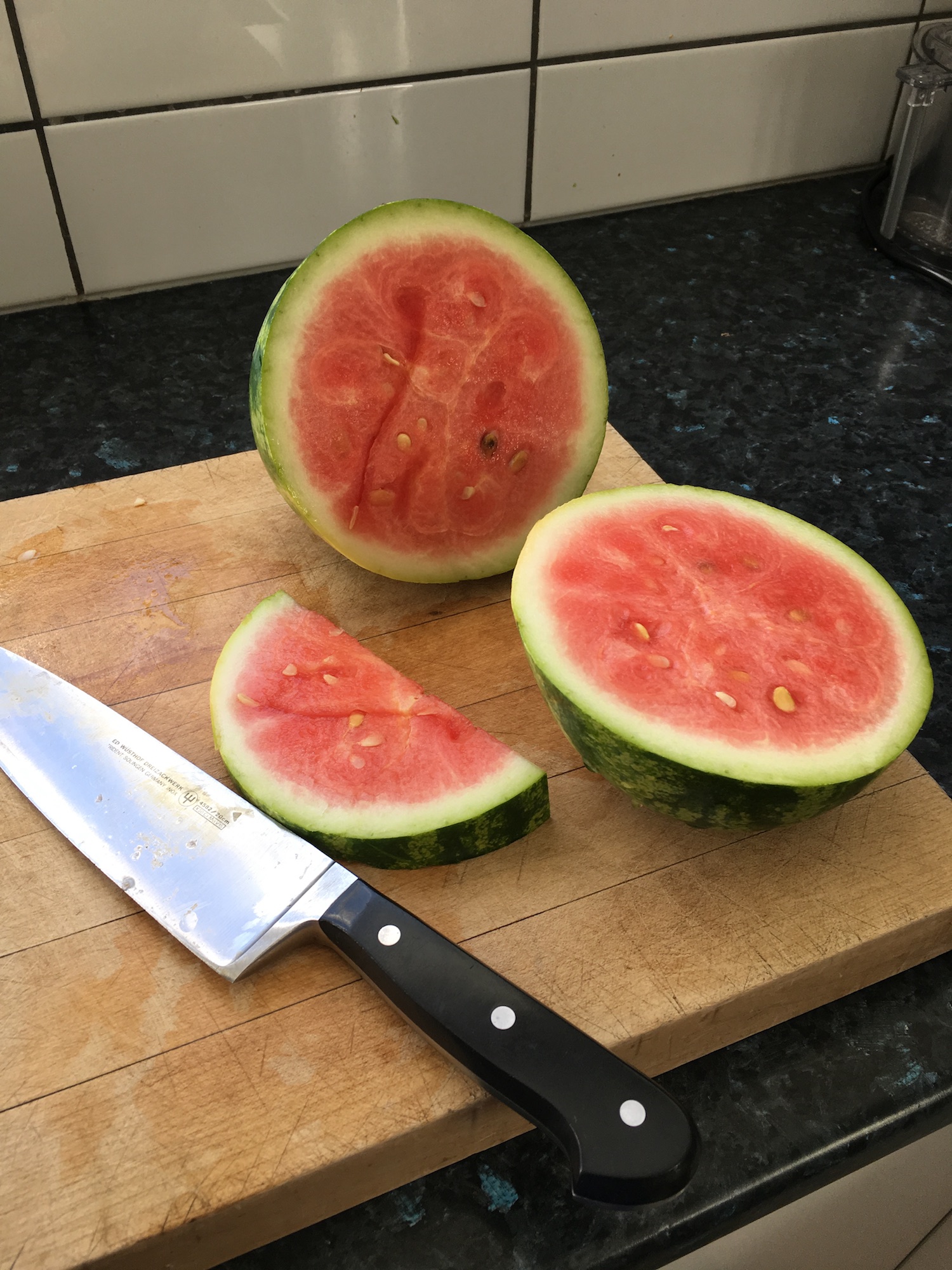
Nothing says summer like watermelon—a seasonal fruit that matures during the hottest days of the year, and doesn’t keep.

Watermelon is an unreliable crop here. Twelve years ago, when we first arrived, I was told watermelon doesn’t grow in Canterbury. I’ve planted it every year, regardless, because I can’t imagine a summer without it.

Some years we get nothing. The plants don’t grow at all, or they grow too slowly to produce mature fruit before the first frost, or they’re nailed by herbicide overspray. Some years we get a few smallish fruits that we savour as rare delicacies.

This year we are awash in watermelon. The fruits aren’t big—even the largest hasn’t reached the weight the seed catalogue says this variety should—but they’re the largest watermelons we’ve managed to grow here. And most importantly, they’re sweet, crisp and delicious. And there are lots of them!

As I sit on my office deck spitting seeds, I am reminded of the magical poem by John Tobias—Reflections on a Gift of Watermelon Pickle Received from a Friend Called Felicity.

I wonder if my kids will remember this year of watermelon as Tobias wrote…

“…During that summer—
Which may never have been at all;
But which has become more real
Than the one that was—
Watermelons ruled…”