The Midges!

A male midge, with feathery antennae.

A male midge, with feathery antennae.

It was like a scene from an Alfred Hitchcock film. The sliding glass doors of my office were swarming with midges, commonly called lakeflies here (because they lay their eggs in nearby Te Waihora/Lake Ellesmere, and rise off the lake in huge swarms in summer). By their density (at least 1 per square centimetre), and the size of the doors, I estimated that there were at least 90,000 on the doors alone, not counting the ones swarming around looking for landing space.

I had been working late in the office, with the lights on, and they were attracted to the light. I turned off the light, took a deep breath (breathing in midges is horrible), and bolted out the door, slamming it closed behind me.

A female midge, with thread-like antennae.

A female midge, with thread-like antennae.

There were about a hundred on my ceiling in the morning. I reckon that was pretty good, given how many were knocking on the door.

I actually don’t mind the midges much. They don’t bite, and their appearances are brief, if dramatic.

But the question is, what are they all doing in those great big swarms? Well, the swarms are great big mating displays called leks. Male midges (they are the ones with feathery antennae), fly around in large swarms trying to attract the eye of a female. The females drop by the lek, pick out their favourite male, and mate with him. The resulting eggs are laid in slow-moving bodies of water (or sometimes on wet car parks, where I imagine they don’t live long).

The larvae of our particular midges are called bloodworms. They are one of the few insects that have haemoglobin in their blood. That’s what gives our blood its red colour, and it does the same to the midge larvae. The haemoglobin allows the midge larvae to live in low-oxygen, stagnant water, because it can capture and store oxygen, just as it does in our blood.

Midge larvae are a critical part of the food chain in many terrestrial aquatic ecosystems, feeding fish and other insects. They also must be important food on land, too. The spiders and songbirds certainly enjoy them when they swarm.

Still, in spite of their harmlessness and their ecological importance, I think Hitchcock could have had made a great movie of them.

Jewels in the Garden

groundbeetlesmDigging potatoes for dinner yesterday, I came across one of my favourite New Zealand insects—the metallic green ground beetle.

When I teach about this insect, I always tell the kids it’s magical because at first glance it appears to be just a large black beetle. A closer look, however, reveals shimmering green around the edges.

Some individuals are more spectacularly green than others, and the one I found yesterday was one of the most vibrant I’ve seen.

Metallic green ground beetles are welcome in the garden. As larvae and as adults they eat slugs, grass grubs, and caterpillars—some of my worst pests.

But I think that what makes metallic green ground beetles most special is that they are endemic, not just to New Zealand, but to the Canterbury region. That means they are found nowhere else on Earth but in this little region of New Zealand.

They aren’t rare or endangered—they thrive in nearly every environment. They have close relatives nearby. But I appreciate the fact they are our own unique jewels.

Soundtrack For the Drive Home on a Summer Evening

(with special thanks to Dave Dobbyn)


2016-02-24 20.57.32Traffic thins, dusk falls

Be mine tonight.

Windows down, breathe cool air

Just add water and dissolve, Baby.

100 kilometres per hour past disinterested sheep

Guilty through neglect.

Moths in the headlights make furry windshield thuds

The outlook for Thursday, your guess is good as mine.

Stray hairs tap tap tap a rhythm on my cheek

It’s magic what she do.

Purple mountains against a bruised apricot sky

Shouldn’t you ought to be in love?

Kids playing frisbee in the dusk

            Call me loyal

Round the bend, the neighbour’s dogs bark

Welcome home.

22 February 2011

100_0076 smToday is the fifth anniversary of the Christchurch earthquake that killed 185 people and brought life as we knew it to a grinding halt.

It was the day my husband insisted we get cell phones.

It was the day I started posting details of my whereabouts on the fridge every morning, just in case I didn’t make it home.

Our house was fine (anything vulnerable to quakes had been destroyed by the September 2010 quake), and we watched in dismay as news of the destruction and death in town trickled out to us. We watched the rescue helicopters fly over, ferrying patients to Dunedin.

When we loaded the car with tools and food and drove to the eastern suburbs two days later to do what we could to help, we were stunned by the destruction.

Five years later, those eastern suburbs are still struggling, and life for all of us is fundamentally changed.

New Zealand sits on the Ring of Fire. It was built by the Ring of Fire. Earthquakes and volcanoes are simply what happens here.

Do earthquakes frighten me? I don’t know if frighten is the right word, but I will admit to a surge of adrenaline with every tremor. I admit that whenever I enter a new room or building now, I immediately assess earthquake hazards, shelter, and exits. I’ve lost my love of cliffs and caves, replaced by wariness and visions of falling rocks. I still pause at the sound of a loud rumble, poised to dive under the table until it resolves into the sound of a truck.

I suppose we could leave New Zealand. We could move back to the U.S., to live on firmer ground.

But, much as I hate to admit it about my homeland, there is an ugly culture of fear in the U.S. When a presidential candidate can preach a doctrine of hatred, misogyny, and racism and gain in the polls, that feels like a betrayal. When schools are patrolled by armed guards, it is an outrage. When violence against each other is considered normal, there has been a failure of humanity and society.

But in an earthquake, there is no malice. Though it may cause great destruction, it is impersonal. It is simply the earth doing what the earth does. An earthquake is not a betrayal. It is not an outrage. It is not a failure of humanity and society.

Not that bad people don’t do bad things in New Zealand—there is racism, sexism, and violence here, too. But here I need not wonder who is packing heat on the street. Children walk to school. Fear of each other does not pervade life.

And so I choose earthquakes. I choose the destruction and stress, the uncertainty, and the inconvenience. And if someday the earth should shrug me off as it shifts to a more comfortable position, I’m okay with that.


Sounds of Summer

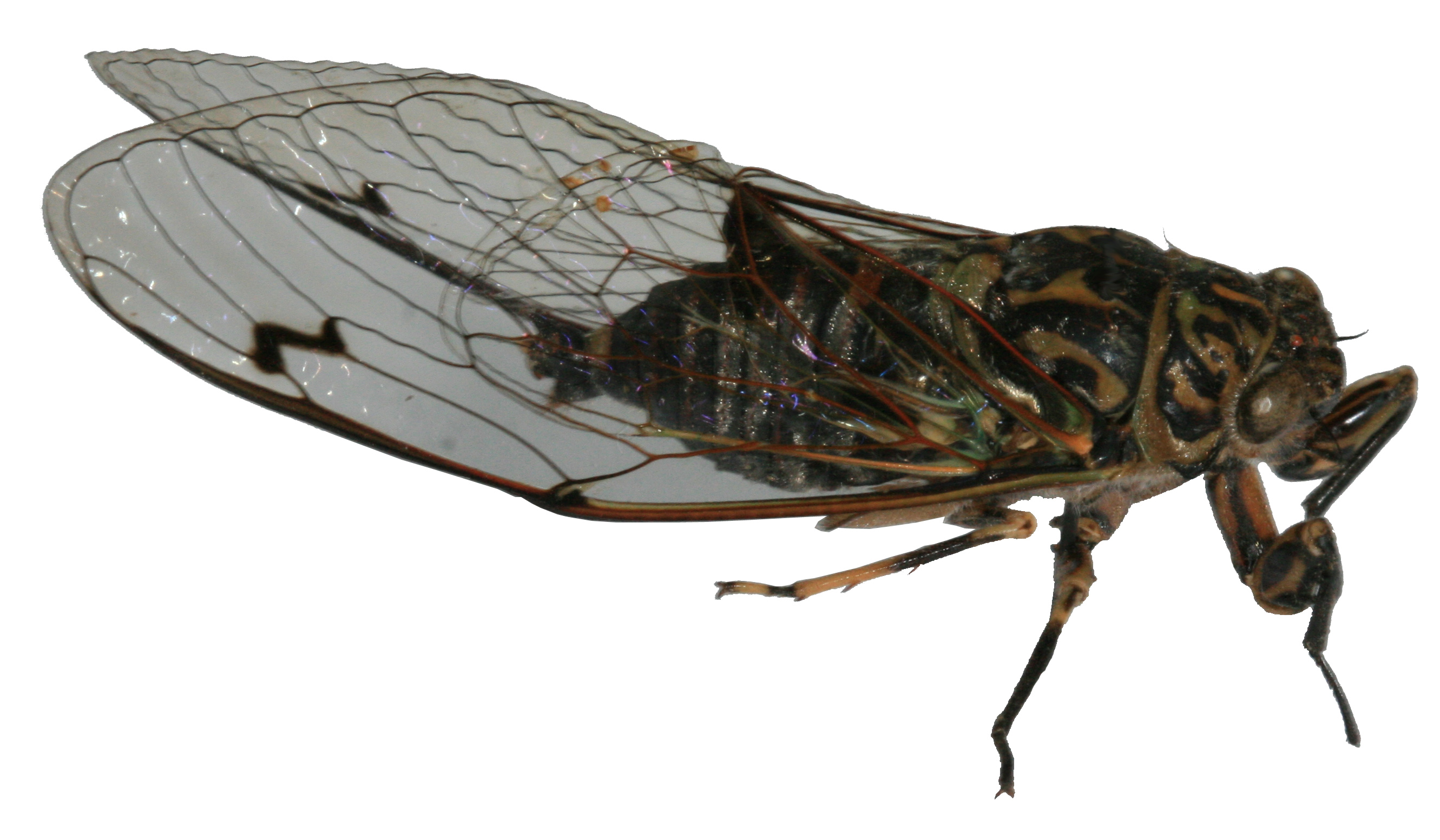
cicada2As we drove to the beach this afternoon, we passed out of the agriculturally blasted plains to the slightly less blasted Banks Peninsula. As we drew closer to the remnants of bush on the Peninsula, the decibel level outside the car rose dramatically. The culprit was the chorus cicada/kihikihi wawā (Amphipsalta zealandica). Wawā means roaring like heavy rain, and it’s an excellent description of the noise the males make en masse from every bush and tree. In some places, they are so loud, that conversation is completely impossible.

But their chorus is summer here. The season hasn’t really arrived until the cicadas start calling in January. As my husband noted today as we drove, “It just feels warmer when the cicadas are calling.”

And for as long as they call, we will believe it is summer. For as long as they call, we will feel we are on vacation, and the work week is simply a temporary interruption between trips to the beach.

Outside In

2016-01-01 16.46.05Window screens are uncommon in New Zealand.

It’s not that there is no need for them. This time of year I struggle to keep the outside out of the house.

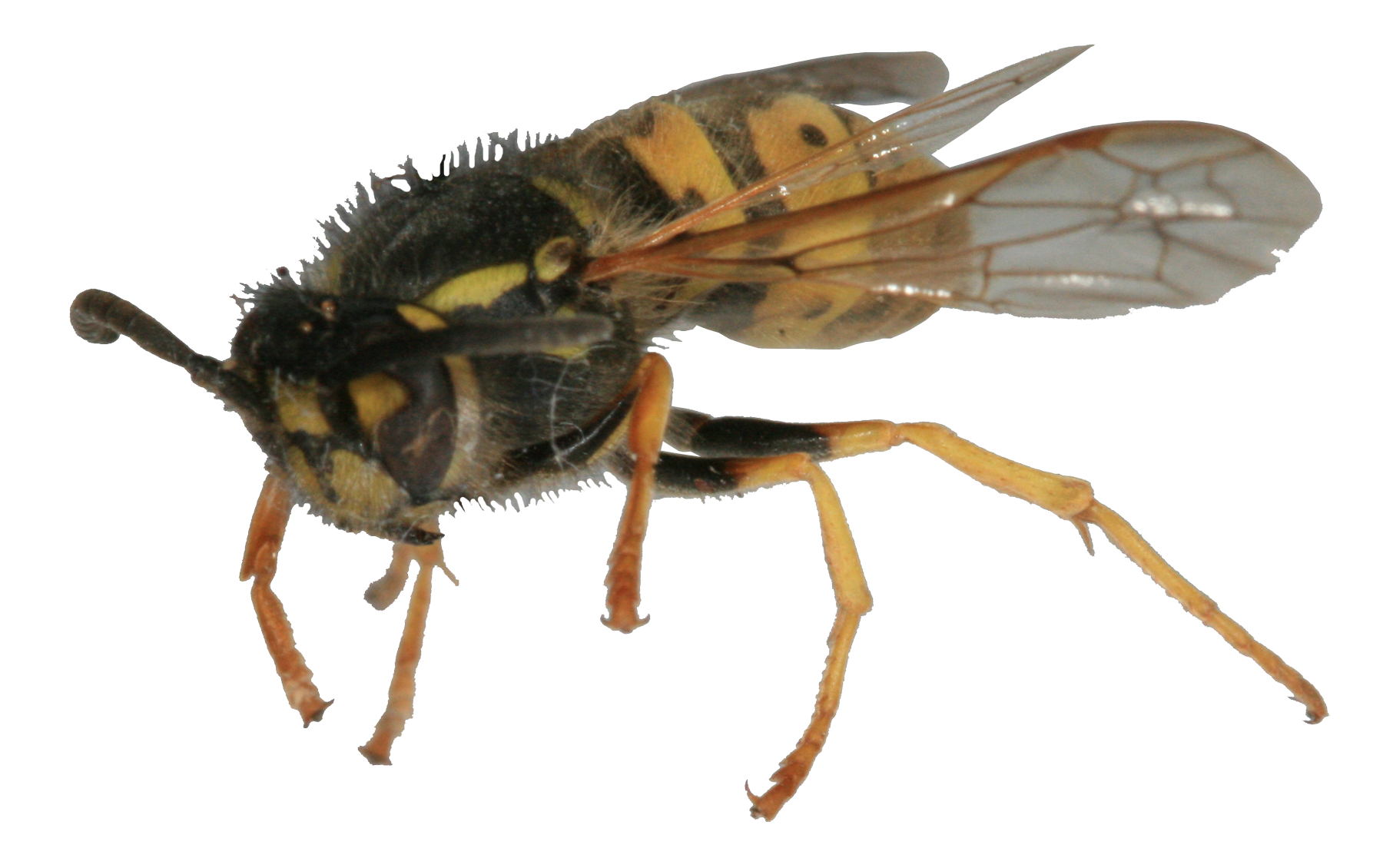
Flies, bees, wasps, mosquitoes, and moths all find their way in, to buzz, bite, and generally be a nuisance. Leaves and seeds blow in on the ever-present wind. And the occasional escaped chicken or feral cat wanders in, too.

So why no screens?

It makes sense if we look at why window screens are found elsewhere in the world.

In the United States, window screens were uncommon until the early 1900s, when they were suddenly mandated by local governments all over the country. An important advance of science was the reason for the new laws.

Today, with think of malaria, yellow fever, dengue, and a host of mosquito-borne diseases as tropical. But these “tropical” diseases, especially malaria, used to range all through Europe and North America. The ancient Romans invading Scotland, lost half their soldiers to Scotland’s local strain of malaria. Yellow fever and malaria were common in Boston and London. Philadelphia was decimated in 1793 by a yellow fever epidemic.

The connection between mosquitoes and malaria was discovered by entomologist Ronald Ross in 1897, and by 1900, mosquito control efforts were underway all over the world. Within a few years, window screens were being mandated by law in disease-hit areas. Most of those laws are still in place, as there is nothing preventing those mosquito-borne diseases from returning.

Here in New Zealand, we are remarkably free of mosquito borne diseases. Malaria, and yellow fever have never gained a foothold, though they almost certainly have shown up now and again in the form of sick travellers.

With no mosquito borne disease, the biters that slip in through my windows every night are just a nuisance, so screens haven’t been written into the building code.

But they would be nice to have…

Damselflies

2016-01-31 13.44.27 cropTwo years ago, my husband did what he’d been threatening to do for years—he dug a pond. At some point, I’ll write a blog post on the pond itself, but today I want to talk about the damselflies that live there.

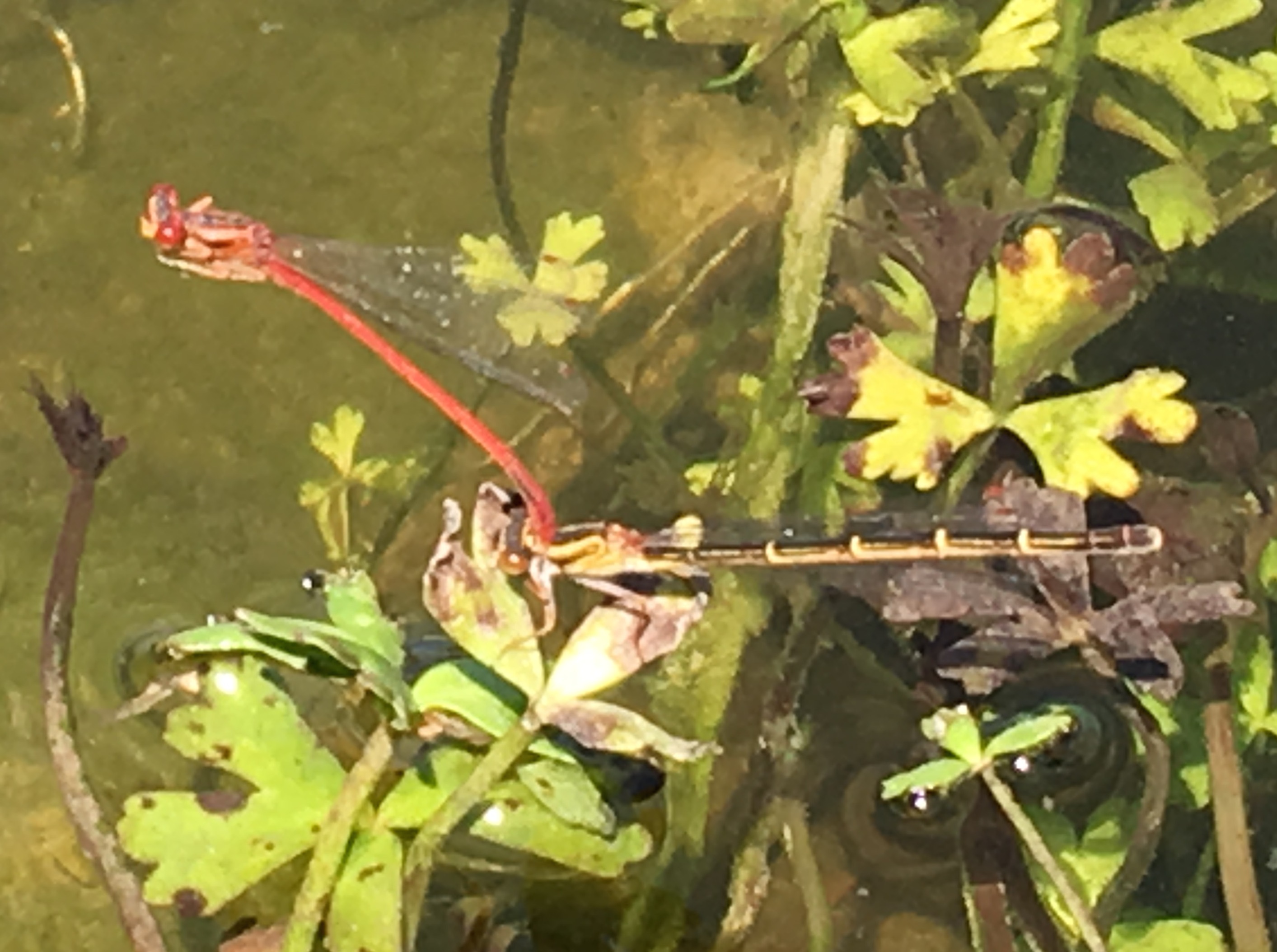
I took a break from my work this morning and spent a few minutes sitting beside the pond. It was swarming with red damselflies (Xanthocnemis zealandica). They were mostly males jockeying for the best territories—chasing and dive bombing each other, all short jabs of snapping wings.

2016-01-31 13.44.40 cropThe females were there, too. Every one I saw was being guarded by a male as she flitted from plant to plant, dipping her abdomen into the water to lay her eggs in the plant’s submerged stem. Damselfly mate guarding is awkward at best—the male grasps the female behind the head with claspers on the end of his abdomen and discourages other males from mating with “his” female. Both insects must beat their wings to keep the pair aloft, and as I watched them, it wasn’t at all clear to me who chooses the spots to stop and lay eggs.

When a pair stops, the male often supports himself entirely with his claspers, tucking in wings and legs and forming a bizarre appendage to the female as she gets down to business. She appears completely oblivious of her escort, resting after laying each egg, as if to say, “If you want to cling there in that ridiculous pose, that’s fine by me, but you’re not going to rush me.”

The eggs these girls lay will hatch in a week or two, and the nymphs will spend nearly a year living in the pond, eating other aquatic invertebrates with a hinged, extrusible mouth that is the stuff of horror movies, before emerging from the water as adults.

I sat and watched the spectacle for a while, and just as I was about to leave, I was treated to the sight of the other damselfly resident in this part of New Zealand—the blue damselfly (Austrolestes colensonis)—a large neon-blue insect that makes the red damselfly look dull.

Unfortunately, he didn’t stick around for a photograph, but I’ll be looking for his nymphs in the water later in the year.

Archaeological Adventures

100_2163 smDigging in our yard is an archaeological adventure. A hundred and thirty years of rubbish deliberately buried or accidentally lost is hidden under the sod.

Our little acre and a half was separated from a large sheep run in the mid-1800s and used as a Council gravel reserve—the braided rivers that crisscrossed this area over the past 20,000 years left a rich lens of rocks here. The pit and hill of the quarry are about the only relief we have on the property.

Then the property was freeholded, and a house was built (which we live in today). There came a succession of mostly poor and often strange owners. There has never been rubbish pick up here (not even today), so much of the trash produced by early owners was buried on site.

There was once a woman who appreciated cosmetics—the little glass pottles that held face cream and powder attest to her taste.

Somebody made a homemade handle for a knife, then dropped it while building the ablutions shed (now our bathroom).

More than one pitchfork was either discarded or lost. The head of one now acts as a convenient set of hooks in my garden shed.

Then there were the brothers who brewed moonshine. According to the more senior neighbours, who were just young’uns at the time, these two each had their own brew, and neither wanted to share with the other. So they hid bottles all around the property. Under the floor of the calf sheds, under the house…the brown bottles were everywhere when we moved in, their lids rusted away, hoarded moonshine long gone.

There are crockery and cutlery, wire and chain, hinges and gate pins, cow bones and tomato sauce bottles…Dig a hole just about anywhere and you’ll find all the debris of a rural property.

Usually we can identify the items we find—our lifestyle isn’t much different from the former inhabitants, and many items are familiar.

Occasionally we come across something we don’t even know how to begin to identify, like this strange metal disk sprouting wires. Our little archaeological mysteries—glimpses into the more obscure aspects of our predecessors’ lives. These items ultimately end up in our local landfill—maybe some archaeologist excavating the landfill in a couple of hundred years will know exactly what those things are.

Hedgehogs

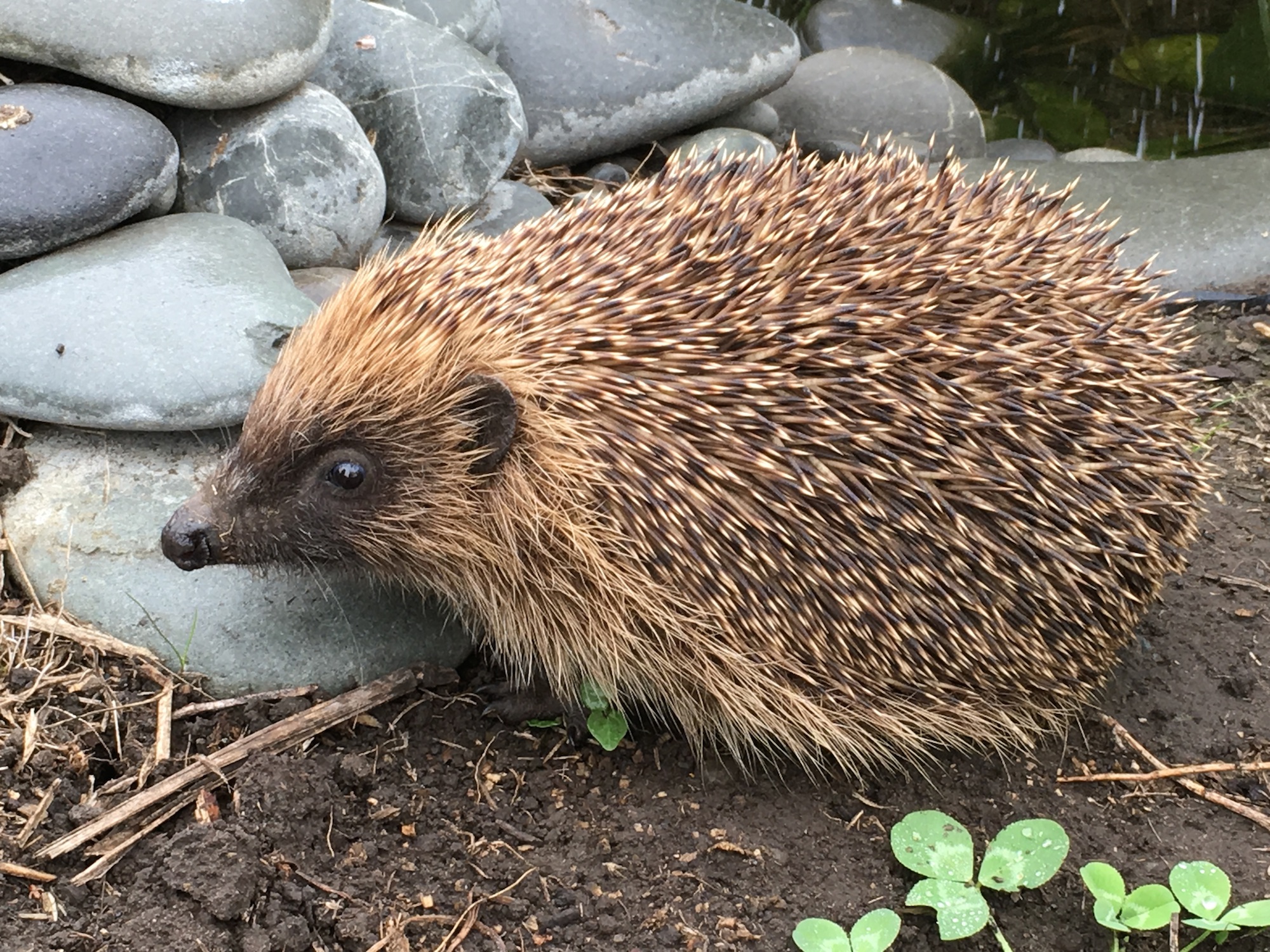
2016-01-26 18.07.41 smThey’re adorable and unafraid of humans. They eat snails, slugs and grass grubs. What’s not to like about hedgehogs?

Unfortunately, a fair bit, here in New Zealand. In addition to eating pests, they also feast on ground nesting bird eggs and chicks, skinks, and many native and endangered invertebrates.

And they’re more common in New Zealand than they are anywhere in their native habitat.

And I think they’re more common in our yard than anywhere else in New Zealand.

Now that the days are getting shorter, I regularly step on them in the dark when I’m out milking and feeding the animals. I certainly wouldn’t walk barefoot through the yard at night here.

They snuffle around the flower beds, snorting and grunting, oblivious to anything non-edible. They spread compost all over the yard.

They also apparently love cucumbers—last year I had to trap one out of the garden after it managed to squeeze in through a hole in the rabbit fencing. It took a bite out of each cucumber—obviously trying to find the perfect one.

They like the apples and peanut butter I bait the possum traps with, and though I don’t aim to kill them, I will admit that I’m not upset when I catch a hedgehog instead of a possum (my trapping seems to have no effect whatsoever on the population of either pest, anyway…). They snatch the eggs of the spur-winged plovers that nest unsuccessfully every year in our paddock, and I’d much prefer plover chicks to hedgehogs in the yard.

It still doesn’t stop me from smiling when I see one trundling along through the grass.

They are adorable after all…

Writing Rocks

2016-01-21 12.46.49 smWe are blessed with a wild, pebbly beach just four kilometres away from home. On that beach is a sampling of the geology of New Zealand, polished and rounded from the sea.

At first glance, the rocks are all nondescript greywacke.

Look more closely, down by the waterline, and you find a veritable rainbow of metamorphic rocks.

Brick red rocks laced with white,

Green serpentine, mottled to look like miniature Earths,

Translucent quartz,

Smooth pebbles black as night,

Chalky white rocks like petrified marshmallows,

Improbably pink rocks flecked with sparkling quartz (said to be the sweat of one of the early Maori chiefs in the area, produced when he challenged the taniwha in the Rakaia River).

When we first moved here, I brought home a pocketful of colourful stones every time we went to the beach.

I quickly realised I couldn’t keep doing that, or I’d end up with hundreds of jars full of rocks.

Now I allow myself one rock each beach visit. One rock that speaks to me. A rock that is more than all the other rocks on the beach.

The rock might bounce around in my pocket for a few weeks after I pick it up. I’ll pull it out and look at it, finger it in the pocket, feeling it’s shape, weight, and imperfections.

Most rocks then find a home in the cobble-lined drainage ditch that carries rainwater away from the house.

The very best rocks—those that whisper stories to me and fit my palm perfectly—become my writing rocks. These pebbles sit on my desk and occupy my hands while I’m contemplating a new plot or considering a character’s strengths and weaknesses. They capture the churning crucible of the earth’s crust, the rush of mountain streams, and the wildness of the sea. They tell me their stories, and I tell them mine.