A Rough Day at Work

We dropped the kids off for a week of YMCA camp this morning.

The best thing about taking the kids to camp is finding ourselves on the Banks Peninsula with no children and the whole day stretching before us.

Today, there was work to do—scoping out a field trip site for a workshop my husband is hosting in Akaroa next month. It was rough work. We were forced to drive out to Hinewai Reserve and hike through regenerating native bush to the beach.

I hate that sort of work.

Hinewai_LongBayIt’s especially bad when you are forced to have lunch on the beach, endure views like this, and see a 100 year-old nīkau palm tree at the limit of its ecological range.
And it’s even worse when after you’re done, you have to stop by Akaroa for a beer and chips outdoors along the waterfront.

NikauTerrible.

Good thing every work day isn’t like that. 😉

The Summer Job–part 1

DSC_0181 smI’ve decided to add a new blog category–Saturday Stories. A break from the daily grind. A little fiction, a little whimsy… 

The rain came down in blinding sheets, driven by a howling southerly wind. Matt scrambled up the rocky slope, his fingers numb with cold, and the rest of his body sweating inside his raincoat and rain pants. It was January, for God’s sake, the height of summer! But that icy, wet wind felt more like July. His foot slipped on a moss-covered rock and Matt slid painfully downhill, wrenching his shoulder as he grabbed for a gnarled shrub to stop his fall.

Once again, he tackled the slope. According to his map, there was a bivvy up here. Matt’s only goals right now involved a dry spot out of the wind and a hot cup of tea.

Foothold by handhold, he made his way upward, cursing the tracks that had led him into this gully hours ago. They had led him to nothing but an old camp, and had prevented him from noticing the storm clouds piling up in the south. He was beginning to wonder if he would spend all summer searching for orcs and never see one.

This had seemed like the perfect summer job for a fit twenty-something guy who didn’t know what he wanted to do when he grew up. The ad described it as including “significant backcountry tramping”, and said it involved “pest eradication”. Matt assumed he’d be trapping possums or stoats. He never dreamed he’d be hunting orcs. Hell, he didn’t even know orcs were real before he got this job. He just assumed they were some creature Tolkien had made up.

Matt was a Lord of the Rings fan—what guy his age wasn’t? He’d read the books and seen the movies, including the three Hobbit films, which he thought were a little stupid, but enjoyed anyway. But they were fantasy, right?

Apparently not. Not according to the Department of Conservation.

#

Finally, Matt made it to the ridgeline. The wind up here was a living, roaring monster, and he didn’t dare stand, for fear of being blown right back into the valley below. On hands and knees he squinted through the rain. Clouds scudded over the ridge, obscuring even nearby objects. Please let the bivvy be nearby, he thought. He could see nothing but rock, lichen and rain. He crawled a few meters further and found the tramping track that ran along the ridge. Left or right? Which direction was the bivvy? He was about to pull out his GPS and then remembered—the batteries were flat. He had spares, but they were on the very bottom of his pack. To get to them would require taking everything out. In this rain. That’s why they told you in training to always replace your batteries as soon as they were low, idiot!

He took a guess and went left, which kept the wind slightly more to his back.

It was painful and slow going on hands and knees. He gripped the rocks with his hands and dug his feet into cracks as the wind threatened to pluck him off the ridge. The wind blew rain up under his raincoat now, and Matt wondered if he would make it to the bivvy before he died of exposure. He decided he would crawl for half an hour in this direction, then turn around if he didn’t find the bivvy and try the other direction. If he still hadn’t found the bivvy…well, he wouldn’t think about that right now.

It was only twenty minutes before he saw it looming out of the clouds. Looming wasn’t really the right word for the low A-frame structure held to the ridge with guy wires, but to Matt on his knees, it towered like a high-rise hotel.

He heaved open the door, pushing hard against the wind to do so, scrambled inside and collapsed on the floor as the wind slammed the door shut behind him.

Rain lashed the tin roof with a deafening roar, but inside was a sea of calm. For a few minutes, Matt didn’t move. He didn’t even take his pack off. He just lay still, savoring the respite.

Half an hour later, revived by a dry pair of thermals and a steaming cup of tea, Matt was almost glad for the storm raging outside. It gave him an excuse to stay put for the rest of the day. It wasn’t even quite noon yet. He could have a nap, drink all the tea he wanted to, and lounge around until bedtime. He had the bivvy to himself, so he could even play music on his cell phone.

Matt managed to while away a few hours, organizing the music and photos on his phone, enjoying a mug of hot soup and a few more cups of tea, and draping all his wet gear around the bivvy to dry. But as the day wore on, he ran out of things to do and found himself thinking ever more about his job.

Before his boss would tell him what the job even entailed, Matt had to sign an agreement to keep the nature of his job secret. He couldn’t tell anyone what he was doing.

It was obvious why the government wanted this kept secret. If the world at large found out that there were orcs running wild in New Zealand, the tourism industry would die overnight. Not to mention it would be a bad look—a massive biosecurity leak that would destroy more than one career at Biosecurity NZ and the Department of Conservation.

The orcs had arrived with the Lord of the Rings cast and crew, of course. Where Peter Jackson got them in the first place was unclear—some said they came from Romania, others said they were actually Oni from Japan—no one really knew, but the fact was he had gotten real live orcs, not actors, for the orc roles in the films. When filming was over, most of the orcs were flown back to…wherever they came from. Some, unfortunately, escaped their handlers and settled in the mountains on the South Island.

At first Matt didn’t believe it, but he had seen his first orcs during training and had had enough encounters with the rubbish they left behind them since then to realize that there were at least a couple hundred of them out here. Filthy, they were. There was no mistaking an orc camp—cigarette butts littered the ground, along with bones of whatever hapless animal they’d recently butchered. Deer, tahr, and rats, mostly (One of the other summer staff had found human bones once—he quit the next day). Piles of undisguised orc shit with toilet paper flags ringed each camp–they were worse than German tourists. And there were Tim-Tam packets, too. Orcs loved Tim-Tams, and every camp was rife with the discarded packets. Matt noted that Caramel seemed to be their favorite variety, followed closely by Original.

It was a package of Original he’d dropped off in the camp he found this morning—Original laced with cyanide. Poison was DOC’s answer to most vertebrate pests, and so they’d sent Matt and a couple dozen other guys out into the bush with packs full of poisoned Tim-Tams.

And swords.

The swords were meant for self-defense. Matt picked up his DOC-issued sword and pulled it out of its scabbard. The edge was still nice and sharp. No rust, though he should oil it after the soaking it got this morning.

He thought his boss was joking when he said he’d carry a sword, just in case.

“Why not a hunting rifle?”

“We’re concerned that if we send a crew into Fiordland with rifles, the orcs could get hold of a rifle and…well…that could be bad. Better to fight them on their own terms.”

So Matt had had a week of tracking and sword training, and then he was dropped off at the edge of Fiordland National Park with his search area marked on a laminated topo map in his pack. He checked in with the Queenstown Office once a week via cell phone and picked up airlifted supplies every fortnight. Between times, his task was to kill as many orcs as possible within his search area.

But Matt had yet to use his sword. He’d seen orcs from a distance and plenty of orc camps and trails, but he hadn’t managed to get close to them. He wasn’t entirely sure he wanted to get close to them, actually. Seeing them on the movie screen was one thing, but being face-to-face with one was another. Besides, they always seemed to come in groups, so he knew that if and when he did catch up with them, he’d be outnumbered.

He really thought they should have given him a gun.

The gale continued through the day and into the evening. Matt made a cup of soup for dinner, eating it with the last of the stale crackers from last week’s supply drop. He checked his drying gear and packed away what he could. He tucked the sword into his pack, just in case someone else was unlucky enough to show up at the bivvy tonight. He spread out his sleeping bag and lay down with a sigh. It was still early, but with the weather and the struggle up to the ridge earlier, Matt was ready to call it a night.

#

He was deeply asleep when the sound of the bivvy door slamming roused him. At first he couldn’t even open his eyes, and when he did, the sight he saw made him shut them again quickly.

I’m asleep and dreaming, asleep and dreaming, asleep and dreaming…

The rain lashing the roof couldn’t mask the sounds, though. Grunts, growls and roars—the unmistakable voices of orcs.

In the bivvy.

With Matt.

He cracked his eyes open just enough to see through his lashes. There were two of them, one tall and broad, and the other shorter and hunched. They both carried torches—not flaming torches like they did in the movies, but battery-operated, LED torches. In true orc fashion, their faces were revolting, but each in a different way. The tall one had a pig-like nose and jagged brown teeth. A thick scar ran from its left eye all the way to its jaw. The shorter one had a fringe of wispy white hair, a face that seemed to slide off its head, and eyes like peeled grapes without irises.

The orcs were clearly having some sort of an argument. From their gestures, he guessed it was something about whether they were going to take shelter here or somewhere else—the shorter one clearly was rooting for the bivvy, the taller one seemed to think the shorter one was a wuss. They didn’t notice Matt for a minute, and he began to hope, as their argument heated up, that they’d just kill each other and have done with it. They had their knives out.

Then the short one gestured at the room, causing the tall one to glance in Matt’s direction. Suddenly, their argument was forgotten. Greedy smiles spread across their faces, and they charged toward Matt.

Matt was caught in his sleeping bag, in his underwear and half asleep, and his sword was buried in his pack. All he could do was thrash and yell as the orcs grabbed him roughly and dragged him to the middle of the room where they could all stand without bumping their heads on the ceiling.

Switching to English, the orcs began to taunt Matt.

“Oh! It’s our lucky day! Dinner, all ready and waiting for us. We don’t even have to chase it down!”

The smaller one sniffed in Matt’s direction.

“Too bad it ain’t fresh!”

The taller one laughed.

“That’s alright. I brought some aioli. Hides the stench of sweaty tramper.”

Matt’s legs were still tangled in his sleeping bag, and the orcs each gripped an arm in vice-like hands. His struggles and yells were accomplishing nothing. He was only vaguely listening to the orcs’ conversation, but when he heard “aioli”, he was so taken aback that he stopped his struggles.

“Orcs eat aioli? You know, that stuff is made with raw eggs—it’ll give you salmonella if you don’t keep it refrigerated.”

The orcs laughed uproariously, sending spit flying at Matt’s face. He shut his eyes with a grimace until they recovered.

“Oh, we got ourselves a smart one, here!” crowed the tall one. “They taste even better than the dumb ones!” He licked his lips and leered at Matt.

Then the orcs both burst out laughing again and released Matt, slapping him on the back like he was an old school chum.

“Ha! Ha! Ha! We got you, didn’t we! You shoulda seen the look on your face when we said we was gonna eat you with aioli!” said the tall one.

Aioli!” screeched the other through his laughter. “That was brilliant!”

“And then, you get all serious-like. You know that stuff is made with raw eggs.” He burst out laughing again. Matt stood bewildered as the orcs wheezed and snorted with laughter. He thought their leering faces were bad, but their mirthful ones were positively gruesome.

When the orcs had calmed down somewhat, Matt ventured a question.

“So…you’re not going to eat me?”

“‘Course not.”

“Yeah, we’re vegetarians.”

“Vege…but you’re orcs! You’re supposed to be bloodthirsty man-eaters! You know MAN FLESH! Like in the movies.”

“Mate, do you believe everything you see in the movies? Honestly, I thought you was smart.”

“Yeah, we’re not all bloodthirsty carnivores. Some of us is very sensitive and kind.”

Both orcs burst out laughing again. Before Matt could work out how to react, the orcs were inviting him to sit down with them.

“C’mon! We brought the chilly bin and a bottle of something…special.”

Bewildered, Matt allowed himself to be tugged toward the pile of gear the orcs had deposited inside the door.

The smaller orc opened a large red chilly bin, and Matt marveled that they’d lugged the thing up here—the movies had clearly not misrepresented orc stamina. The orc pulled out a package of vegetarian sausages and handed them to Matt.

“These are awesome! Just like the real thing! We’ll cook some up.” He looked up at Matt. “Of course, we’ve only got tomato sauce for them, no aioli.” Then he burst out laughing.

“Hey…” said Matt. “I know you! You’re the orc who said What about their legs? They don’t need those!, aren’t you?”

“He recognizes me!” The short orc grinned and turned to his companion. “Grabloc, he recognizes me! I’m famous!” He lurched around the chilly bin toward Matt, who automatically shied away from him.

“C’mere, c’mere! I need a photo of this! Me with my adoring fan!” The orc pulled a cell phone out of his filthy pocket, slung an arm over Matt’s shoulder and leaned toward him, grinning.

“Say cheese!” The flash made Matt blink. Or was that the orc stench burning his eyes?

“Hey, when you’re done with your adoring fan, Thigspit, find the cookstove and get them sausages cooked. I’m starving!”

Thigspit set to work on the sausages while Grabloc pulled out a bottle from his pack. He opened it and took a swig, then sighed with satisfaction and wiped his mouth with his sleeve.

“Go on!” he said handing the bottle to Matt.

Matt took the bottle gingerly and examined it.

“Single malt scotch?”

“Yeah, that’s good stuff, too—Talisker, eighteen years old. Nice an’ peaty-like. Like takin’ a drag on a cigarette. It’ll put hair on your chest, mate! Go on. Take a swig.”

Matt did so. He wasn’t one to turn down an eighteen year-old scotch, and he figured the alcohol would kill whatever germs Grabloc had.

“Yeah, that is nice,” he said, handing the bottle back.

“You got a cup?” asked Grabloc, waving the bottle to indicate he’d pour. Matt rummaged in his pack for his mug. As he did so, he saw his sword. He paused and looked furtively at the orcs. They were both busy over the sausages, testing to see if they were done yet. Matt grabbed his mug and cinched the pack shut tight. Now wasn’t the time for a fight.

…to be continued next Saturday

Impossible Sky

I couldn't capture today's sky, but it was something like this...

I couldn’t capture today’s sky, but it was something like this…

It was another of those drive-off-the-road-gorgeous skies this evening. The kind that is completely impossible to capture in a photograph, and is more likely to be seen in a cheap painting for sale alongside velvet paintings of Elvis.

I can get lost in one of those skies.

Ripples and waves of grey cloud surging across the sky. A break just big enough to illuminate the edges, just big enough for the sea foam-salmon pink-blue of evening to peek through. The ragged shreds of dark cloud caught in shadow. And far out across the plains, a shaft of brilliant sun lighting sheets of mist shrouding the mountains.

These things only happen in bad paintings.

Or so I thought.

But the New Zealand sky is like the Andes Mountains. As a child, I was obsessed with the Andes–so impossible, so improbable in the National Geographic photos, I couldn’t believe they were real. And then I went there and climbed them, and I knew they were not.

It is the same with the New Zealand sky. To see it is to know it cannot possibly be real. It is a storybook caricature of a sky. It is a fantasy sky. It is a sky so dense with colour, you think it must have drained the rest of the world, casting everything else in black and white.

And I am so profoundly humbled and honoured to be able to call it my sky. My home.

Puddles of Crickets

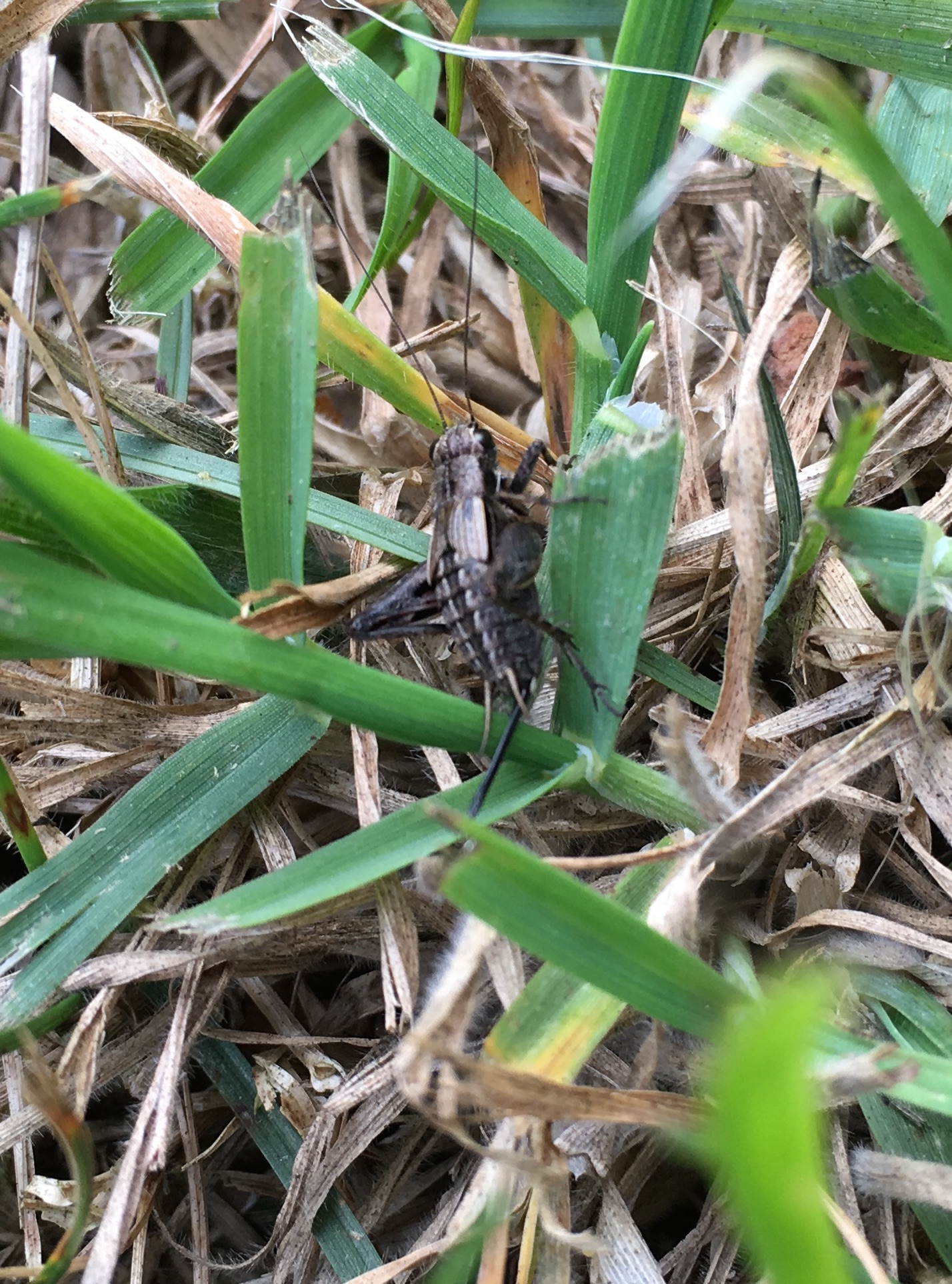
A female small field cricket--the long ovipositor (egg laying tube) at the rear tells you she's a girl.

A female small field cricket–the long ovipositor (egg laying tube) at the rear tells you she’s a girl.

It was like walking through puddles, my daughter said.

There had been no rain.

But the grass was so alive with crickets, they rippled away from every step like splashes of water.

By the time I got there, she had splashed all the crickets away, but I could still hear them. Their little bell-like songs have been a constant background noise all summer, and are particularly loud now, in autumn, when most are adults.

It’s only the males who sing, and they do it by rubbing their short, leathery wings together. The song is fiendishly difficult to locate—it sounds like it’s coming from a dozen places at once, and finding a calling male is all but impossible for a predator. The other crickets are able to do it, though. Males’ calls stake out their territories and attract females.

When I ran the Bugmobile, I used to take crickets to schools, and I always wanted to have a couple of males so the kids could hear them singing. Catching males was a challenge. Not only are they difficult to locate by sound, but if you do stumble across one, it will drop immediately to the ground and scurry underneath the leaf litter like a cockroach. Females, on the other hand, take great bounding leaps to get away, making them easy to catch in a sweep net. I could collect a dozen females in one sweep of the net, but it might take me half an hour to search out as many males.

It was the same story when I went to photograph them for today’s blog post. Males singing all around me, and not one available for the camera. The girls were more obliging. It wasn’t quite like walking in puddles, but there were an awful lot of them hopping around in the grass.

Fungal Forest

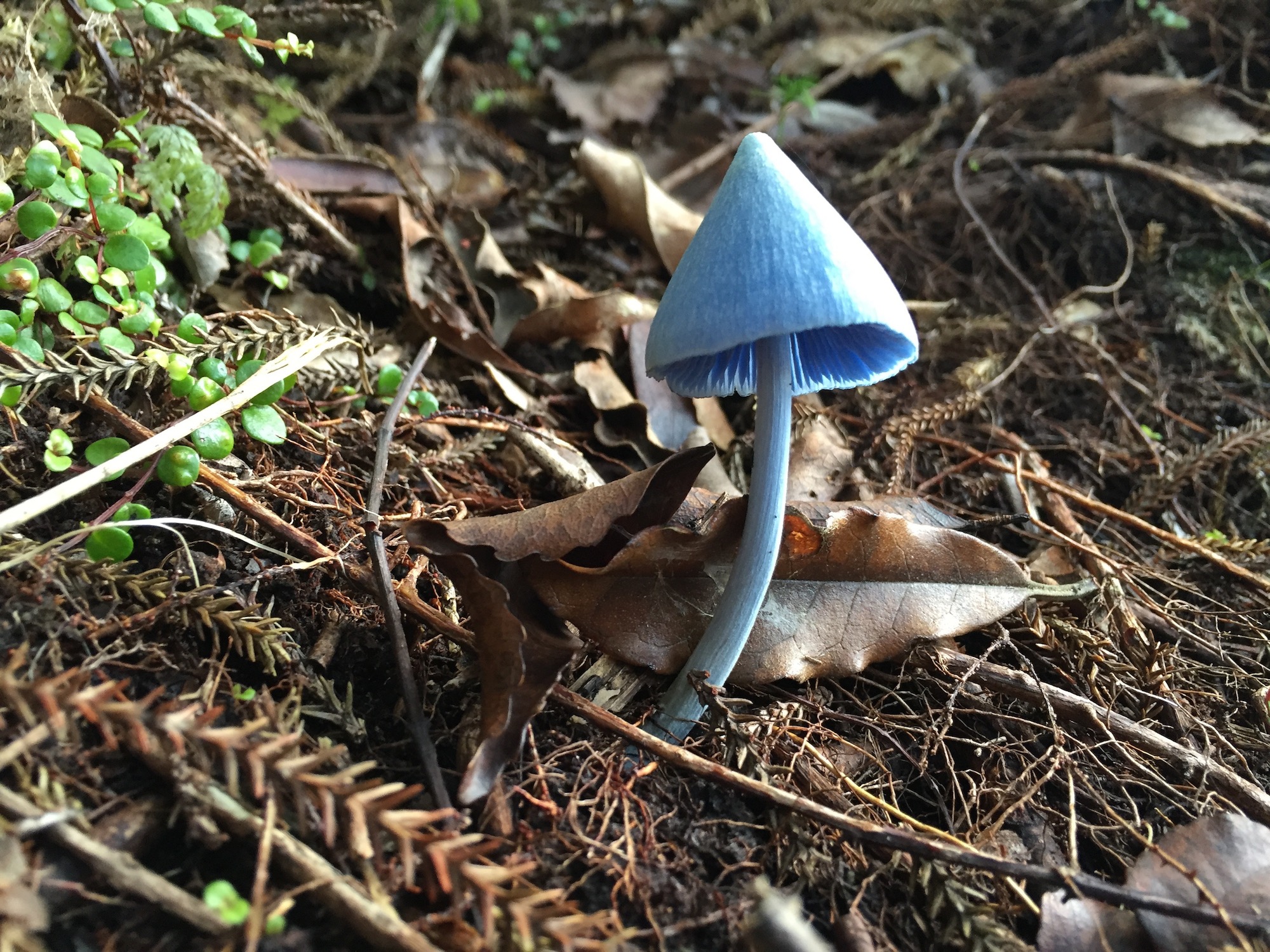
Entoloma hoschstetteri--the only fungus that appears on a nation's currency.

Entoloma hoschstetteri–the only fungus that appears on a nation’s currency.

Over the weekend, we went on a lovely hike from Okarito, through the bush up the hill behind the town, over to the next lagoon, and back via the beach.

The beach part was, naturally, lovely, with huge waves, trickling waterfalls down the cliffs, and a lazy seal who watched us pass.

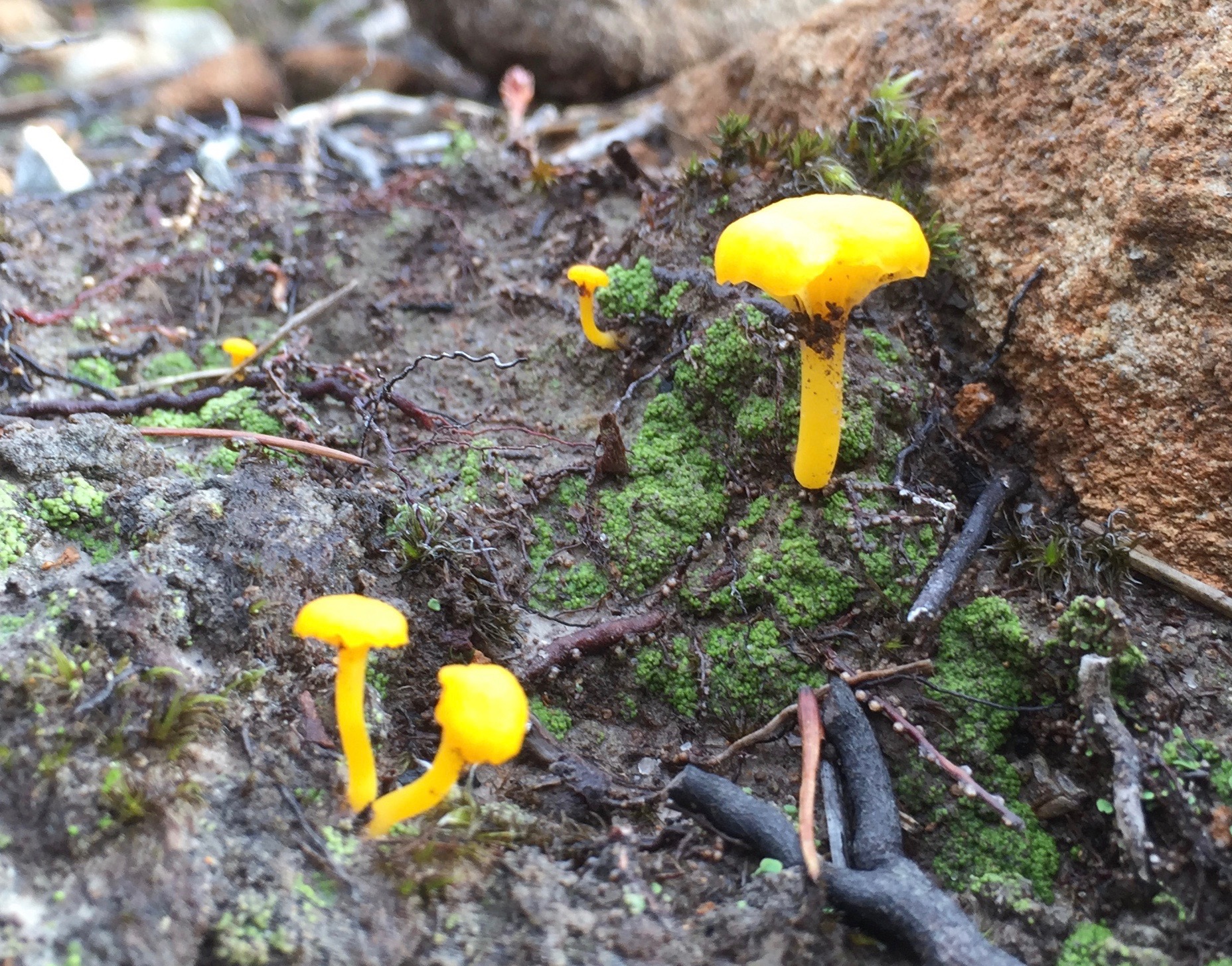
Hygrocybe spp.--known as waxcaps--the Crayola of the fungi

Hygrocybe sp.–known as waxcaps–the Crayola of the fungi

But the real beauty lay on the forest floor. The track was like a Disney storybook forest, with colourful mushrooms everywhere. It just needed a few gnomes or fairies to be complete.

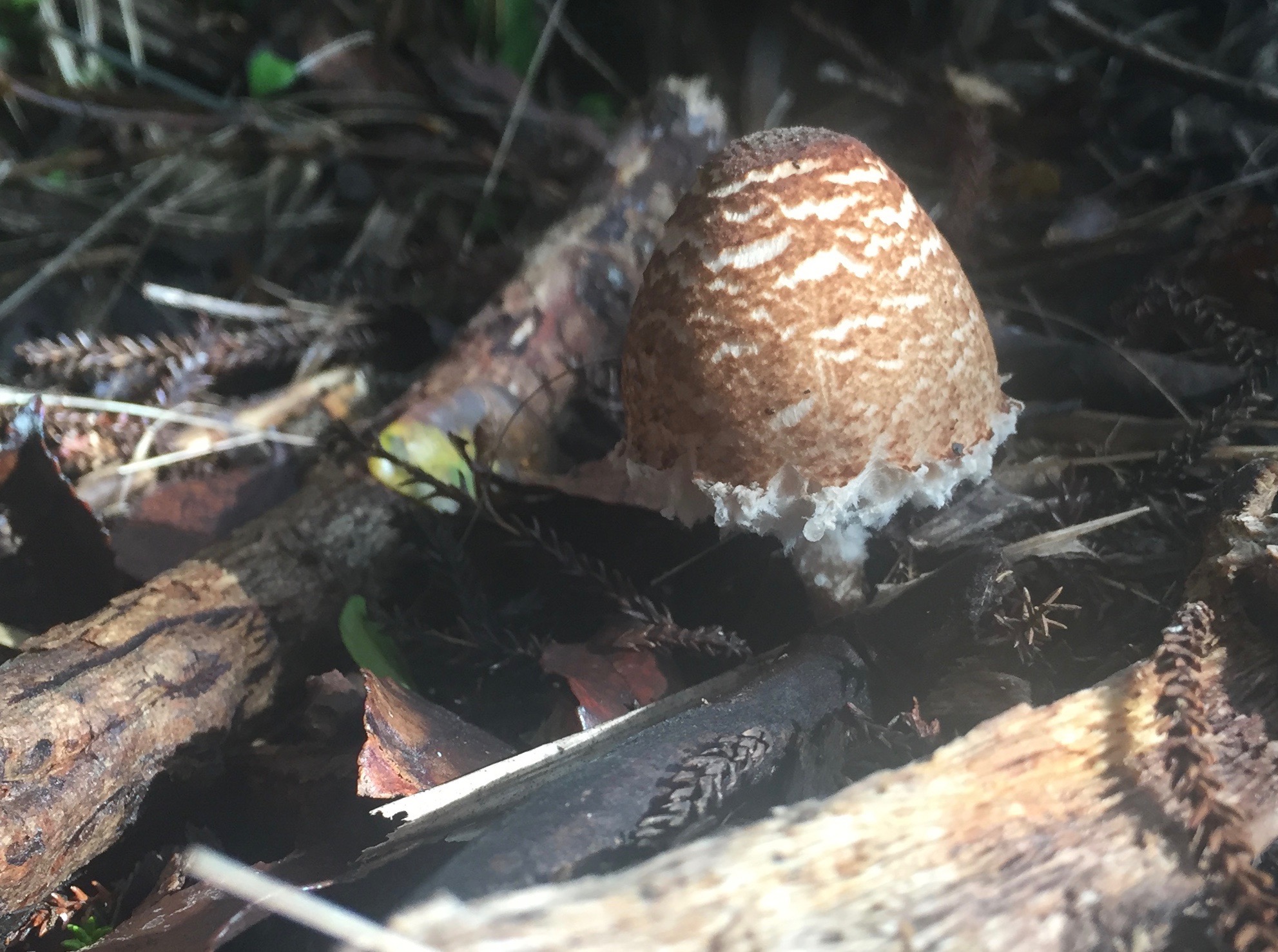
This unknown mushroom had a lovely lace petticoat.

This unknown mushroom had a lovely lace petticoat.

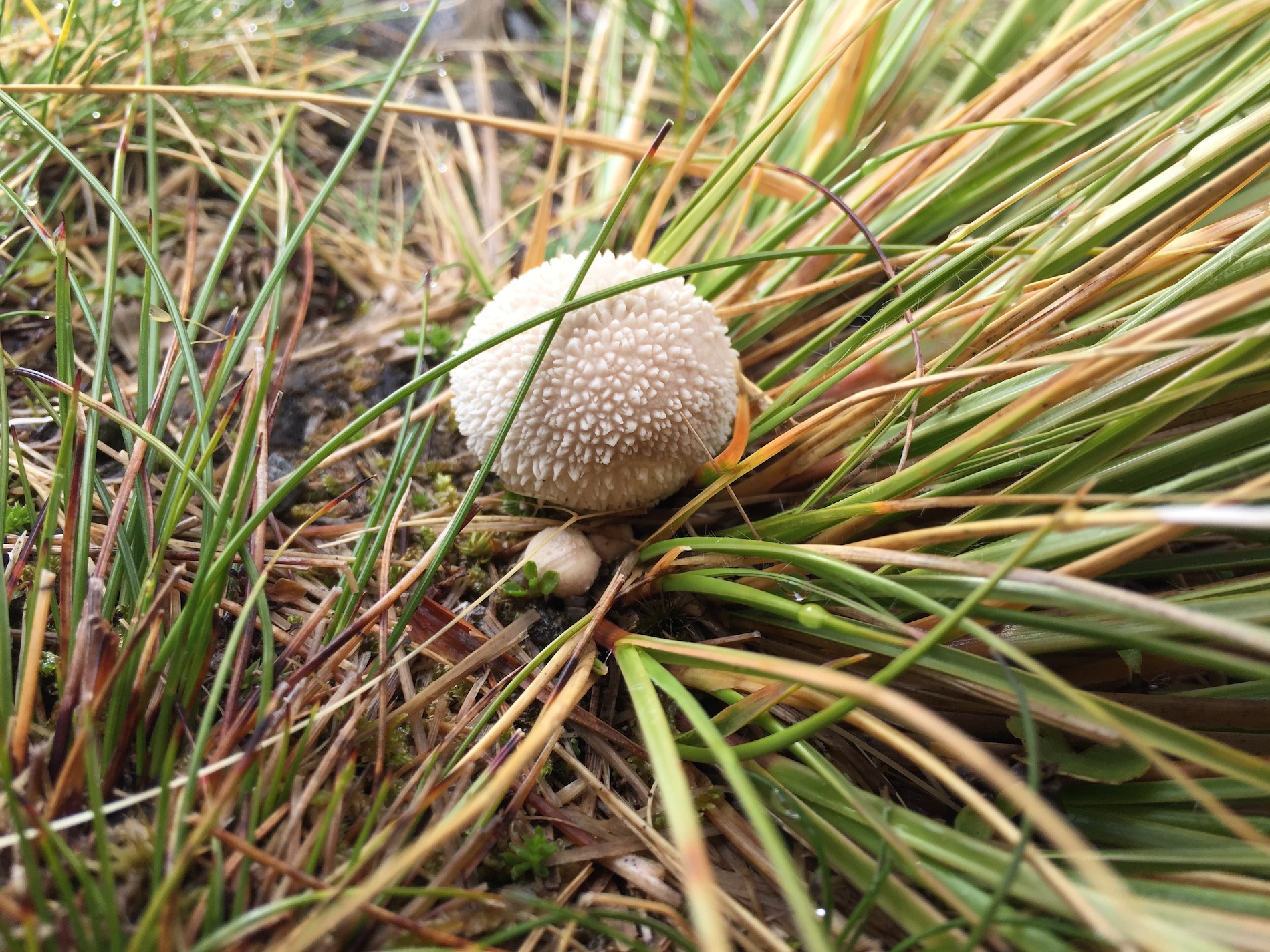
Lycoperdon spp--a puffball. The genus name means "wolf fart"

Lycoperdon sp.–a puffball. The genus name means “wolf fart”

Another member of the genus Hygrocybe

Another member of the genus Hygrocybe

Small Town Celebration

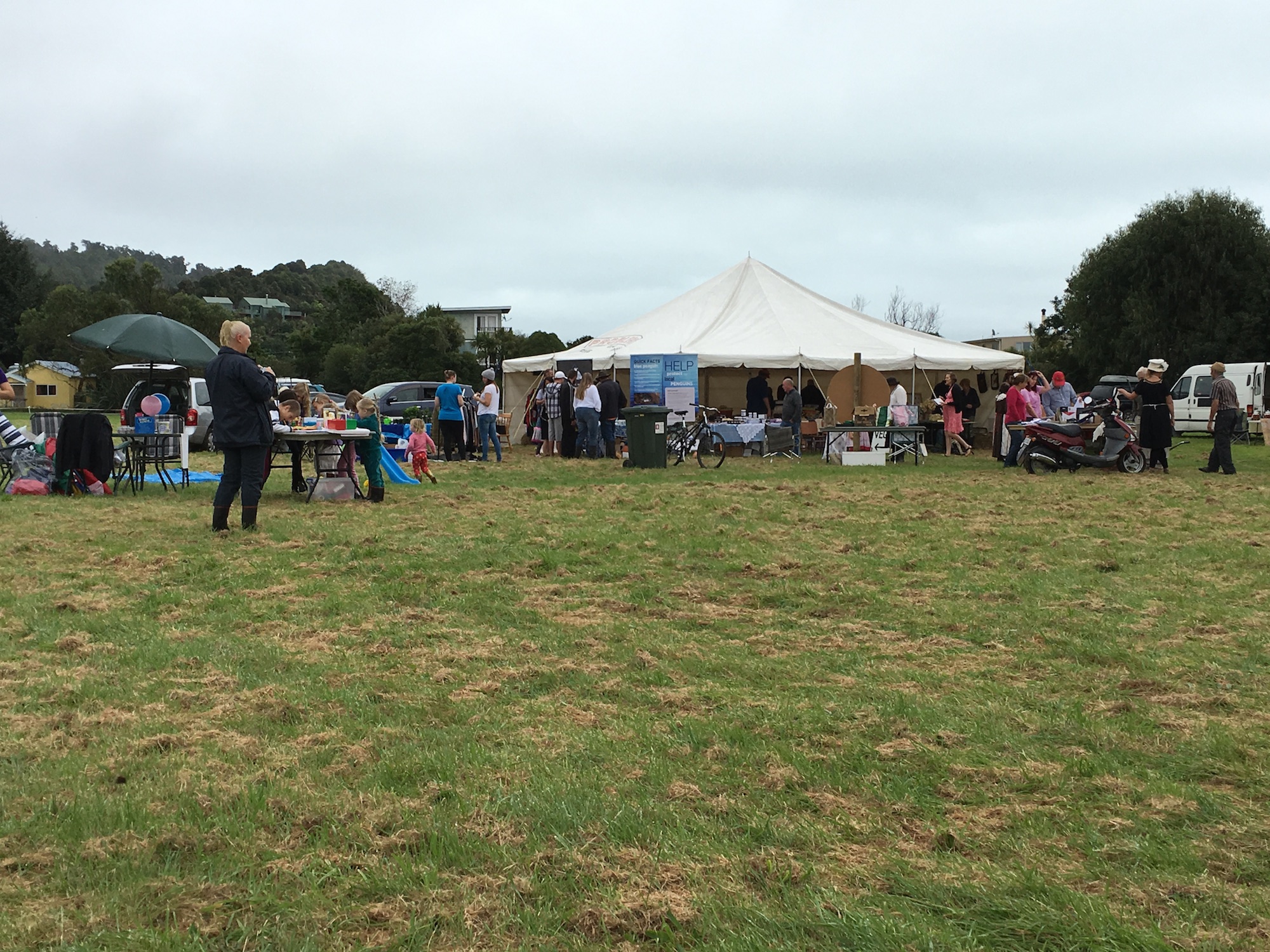
2016-03-26 10.31.51 smWe spent Friday and Saturday nights last week at the Okarito campground. As it happened, Saturday was Okarito’s 150th anniversary celebration. Okarito used to be a town of about 4000 people, back in the late 1800s when the West Coast gold fields were booming. The town sported a 25 hotels, 3 theatres, two banks, several general stores, and a public swimming pool, Today it has a year-round population of about 30. Most of what was once bustling streets has been reclaimed by the rainforest. There are no hotels (though many of the baches are rented as holiday homes), no banks, no pool, and the only remaining general store serves as a tiny museum and event venue seating 40. You can buy a coffee and insect repellent at the local kayak rental company.

Okarito is 30 minutes drive from the township of Franz Josef Glacier, and 3 hours from Hokitika. In the middle of nowhere, I was curious to see how many people would actually show up to the town’s 150th celebration.

It started off slow…

The festivities were scheduled to start at 9 am and run through to 10 pm on Saturday. At 9.00, there were a few people setting up in the marquis…

About 10.30, the bouncy castle was inflated, and half a dozen kids tumbled around on it. We bought a coffee from a food truck that had parked on the edge of the commons and some baked goods from some girls who had set up a table on the lawn. There was a woodworker, the local scout troupe, a few Department of Conservation staff, some locals selling second-hand goods, a knitter selling baby sweaters, a woman selling jam and goat cheese…And very few customers.

By the time the auction started, there might have been 50 visitors, most locals. A good proportion of the items up for auction were purchased by the auctioneer.

A couple of dozen people enjoyed the barbecue dinner.

When the band started playing at 7pm, there were maybe 30 people in attendance. But the music brought out a surprising number, and within half an hour, there was an audience of 125.

Most of that 125 knew one another. They were local farmers, residents, bach owners, regular visitors, and young people working the local tourism industry. Everyone knew each others’ dogs by name, and the dogs chased each other around the crowd like young cousins at the annual Labour Day get-together. It was a lovely atmosphere—more like a family reunion than a public event.

I don’t know whether the Community Association had hoped for a larger crowd, or if it exceeded their expectations. I don’t know if they made back the cost of the marquis rental. But I do know that those who were there smiled, laughed, and enjoyed the day.

Otira Valley

2016-03-25 10.41.03 smWe spent the past three days on the West Coast. On the way over the mountains, we stopped for a hike up the Otira Valley.

The track goes through stunning, diverse alpine vegetation, much of which was in seed at this time of year—lots of weird and wonderful berries to be seen! Though we were lucky to avoid being rained on ourselves, there had been recent rain, so the track was wet, and every little rivulet was running. The Otira River roared below us.

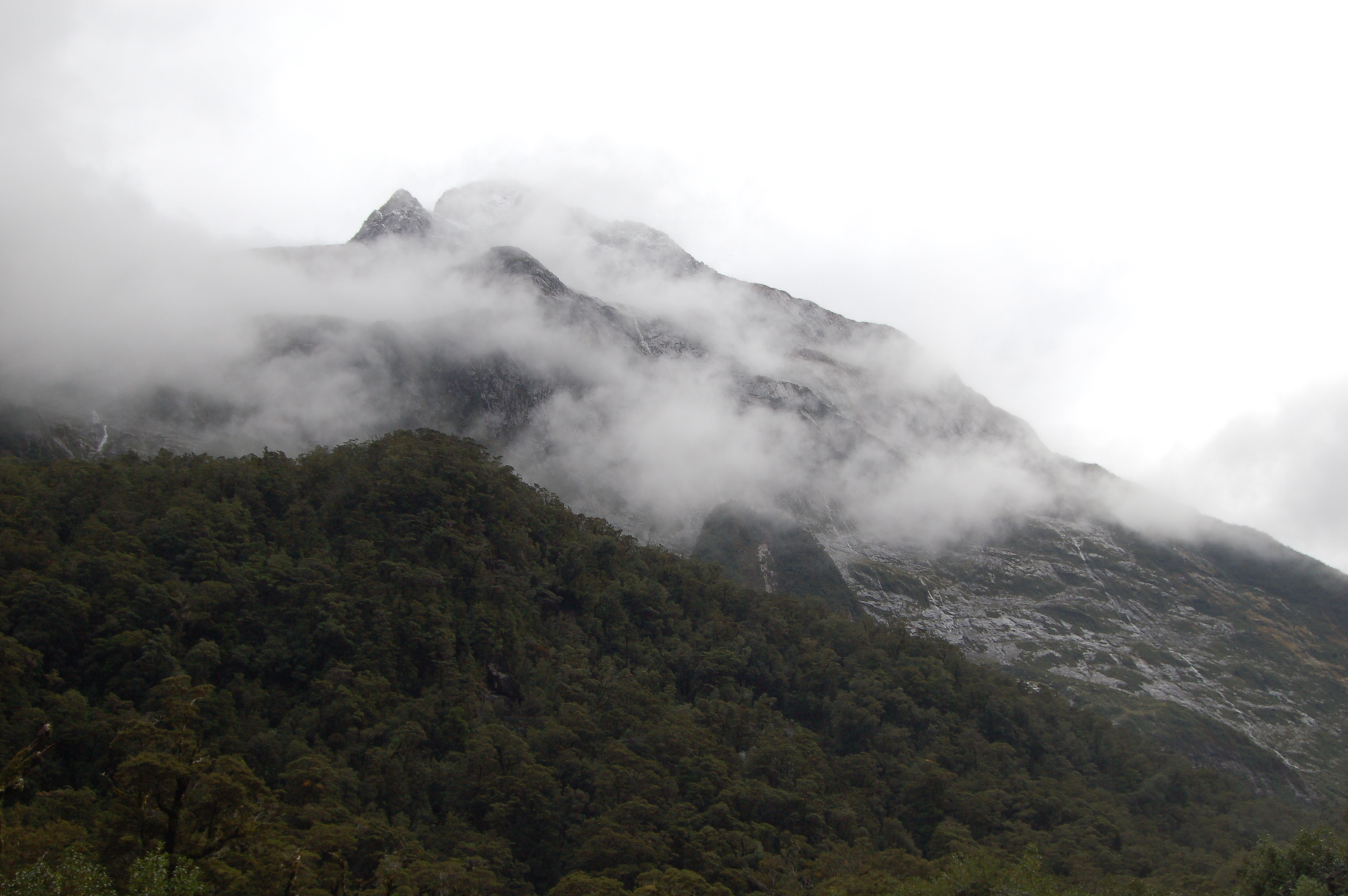
The day was moody, and low clouds shrouded the mountain tops around us.

2016-03-25 11.19.21 HDR smI love the alpine environment. One of the most wonderful things about it is that its beauty lies both in the minute plant life clinging to the rocks, and in the grand vistas—one must view the landscape at both scales to fully appreciate it. We spent our time divided between marvelling over some tiny plant, and admiring the peaks and waterfalls around us.

Hedge trimming

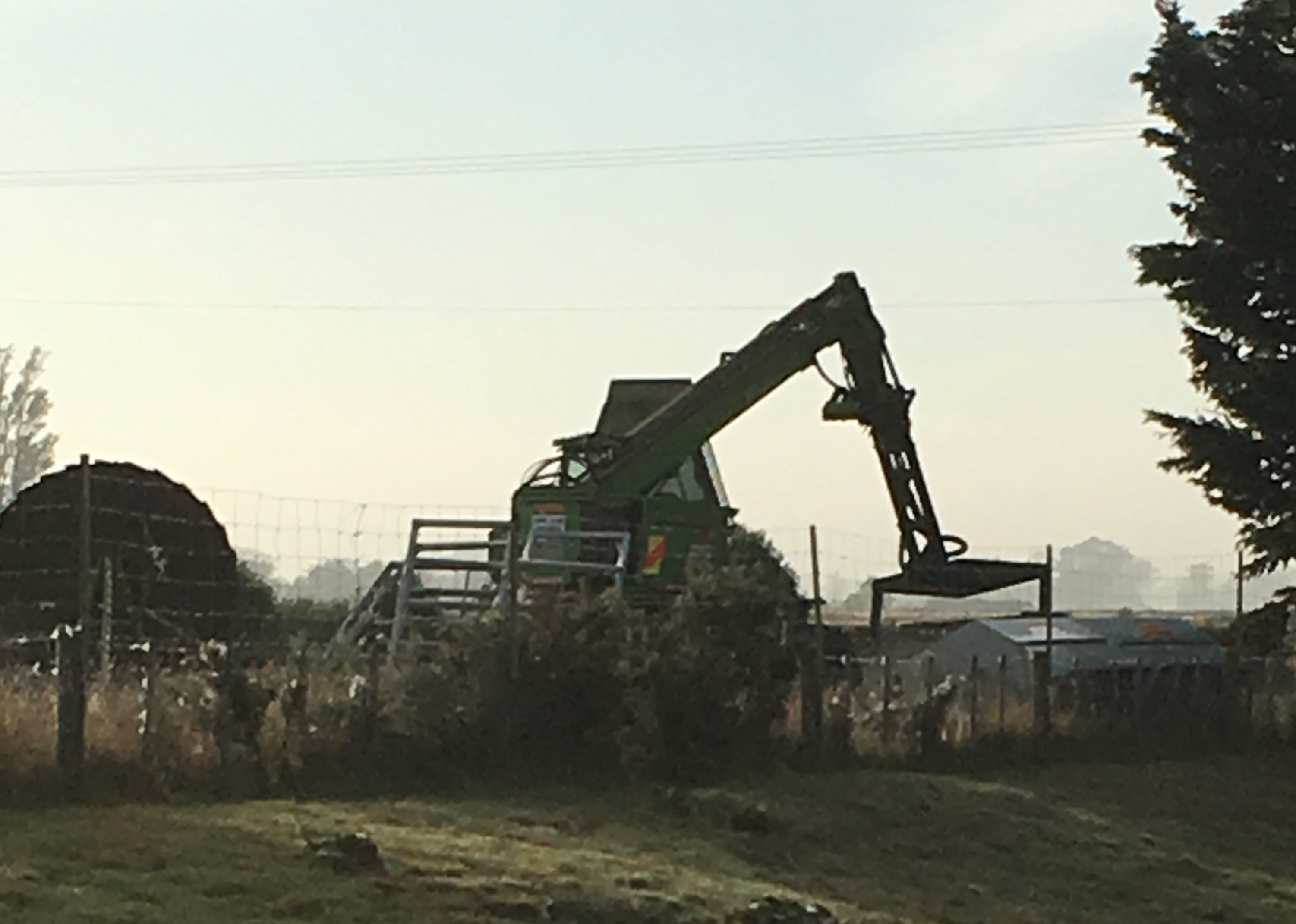
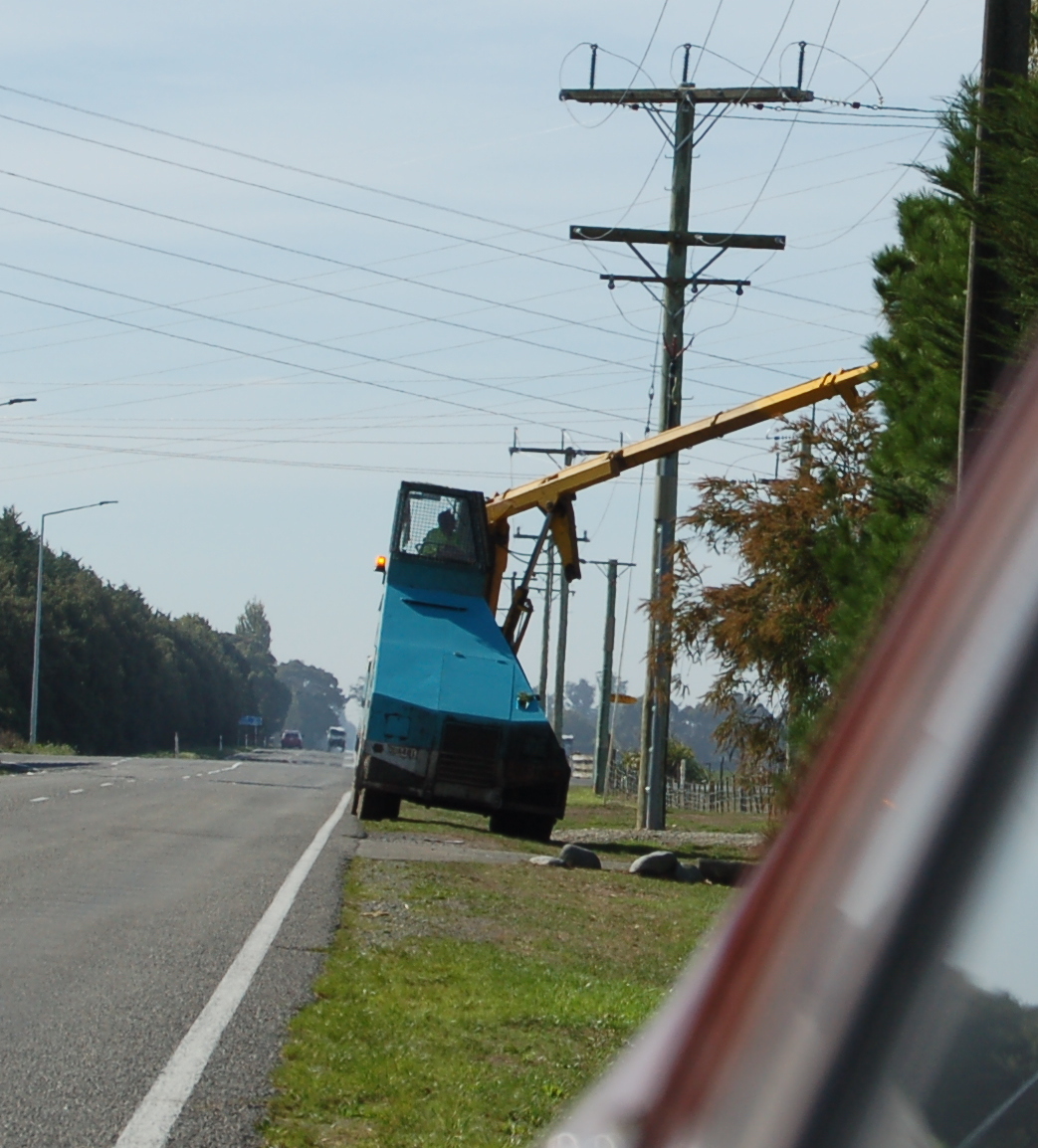
Trimmer looming out of the early morning fog. Note the circular blade to the left--he switched to that later.

Trimmer looming out of the early morning fog next door. Note the circular blade to the left–he switched to that later.

THWACK! THWACK! THWACK! THWACK! THWACK! THWACK!

The sound, like a helicopter crashing into a stand of trees, is unmistakable, though the first time I heard it, I had no idea what it was—a giant hedge trimmer.

Hedges are a necessity here on the windswept Canterbury Plains, and autumn is hedge trimming season.

Our hedge, hemmed in by fruit trees and the septic system, has to be trimmed by hand—a full-day job for my husband and me, and one we put off as long as we can every year.

Here's another, snapped along the roadside on the way to town.

Here’s another, snapped along the roadside on the way to town.

Our neighbours, however, have their hedges trimmed by professional hedging contractors. The hedge trimming machines they use are terrifying—giant, armoured vehicles with a long crane arm bearing any one of a number of wicked-looking cutting devices.

There are circular saw blades the size of a man, two-metre wide lawn mower blades, heavy chains that just beat the branches off the hedge. The machines must be Occupational Safety and Health’s worst nightmare. Some have an 18 metre reach, and the result is perfectly trimmed hedges the size of castle battlements.


Melon time

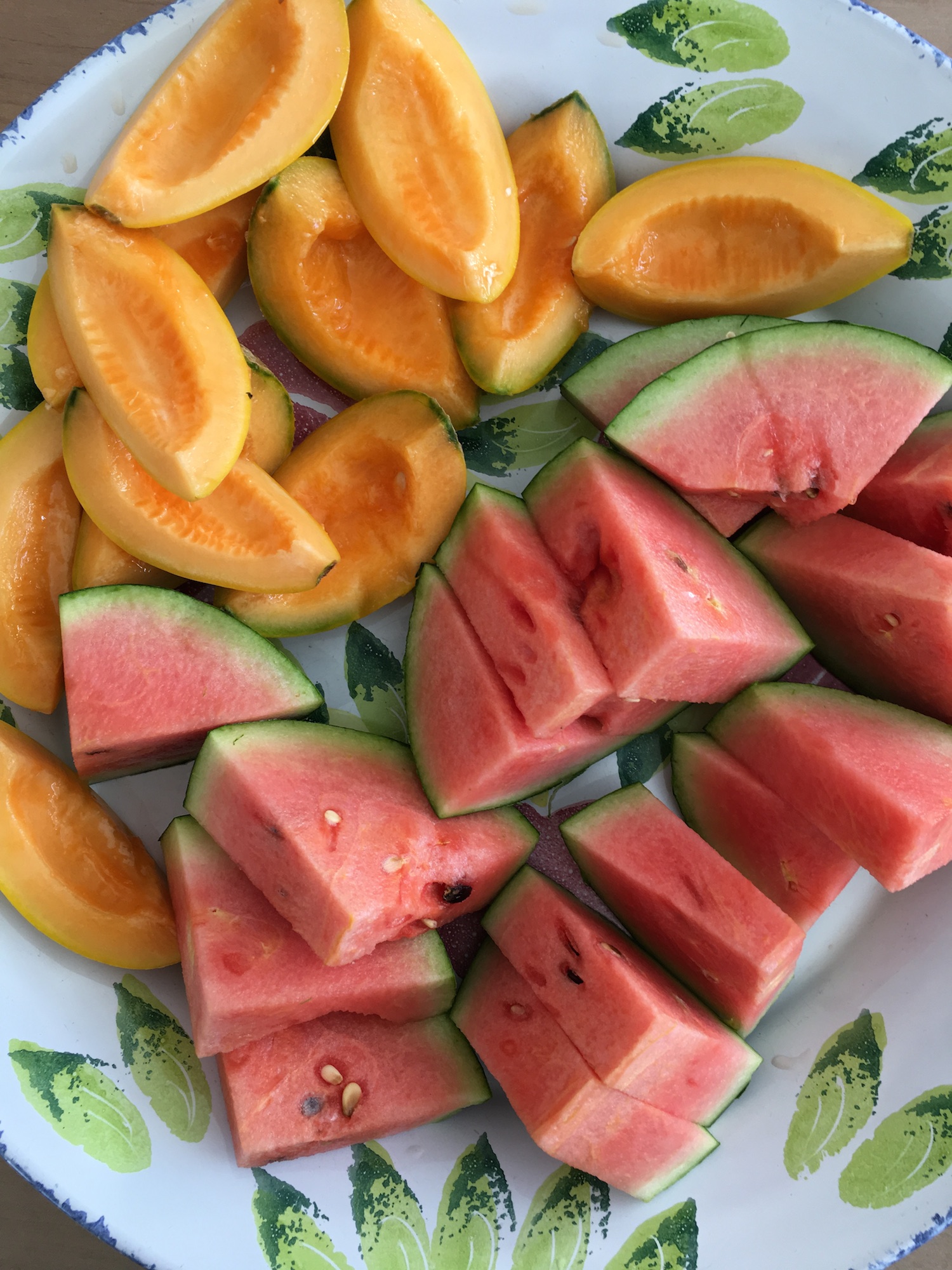
2016-03-14 17.47.43 smThey only just squeak into summer here, screaming in at the last minute, if they come at all.

Melons usually hate Canterbury summers—cool and dry just isn’t melon weather. I plant them every year anyway, because sometimes they manage.

This year has been a good year for melons. They would have liked more water, but they at least had the heat they wanted. Most of the melons are grapefruit-sized, but they’re delicious, and because they’re so small, they make fabulous lunchbox fruits—cut them in half, scoop out the seeds, then put the halves back together with a rubber band, and they travel beautifully.

And though they come in only after summer is officially over, they are still the ultimate flavour of summer.

German Wasps

GermanWaspCanning fruit or tomatoes always brings them around—the German wasps can’t resist the sweet/tart smell of chutney, tomato sauce, or apples. And of course, their numbers are highest in late summer/early autumn when we’re doing lots of canning.

Today, they flitted around the kitchen most of the afternoon, licking up applesauce from the benchtops, and generally being a nuisance.

German wasps are opportunistic feeders—they’ll eat most anything, from fruit, to dead animals, to live insects. In the house, they not only go for whatever’s cooking on the stove, but they catch houseflies in mid-air, chomping them messily on the windowsills and leaving cast off fly legs and wings all over the place.

Though they are a nuisance indoors, and can prove deadly to people like me, with allergies to their stings, they do their worst damage in our native forests where they rampage like a pack of hungry teenage boys.

As flexible scavengers whose numbers can grow to an estimated 10,000 wasps per hectare in beech forest, their impact can be devastating. They compete for food with native birds, lizards, and bats. They also eat native insects and even baby birds.

Almost every year, we have a wasp nest somewhere on the property. I haven’t found this year’s yet, though by the number of wasps enjoying my applesauce today, I know there’s a nest somewhere nearby. When I find it, I’ll destroy it—from an environmental perspective, and from a personal safety perspective it needs to be done.

But I admit I will do so with a twinge of guilt. Troublesome as they are, I have great respect for wasps. These beautiful animals are the ultimate efficient eating machine. They are no-nonsense foragers who go out and get the job done so well that they’ve been able to invade diverse habitats throughout the world. I may not like the consequences of that, but I can admire an animal flexible enough to thrive almost anywhere.