A Delightful Day Hike in Canterbury

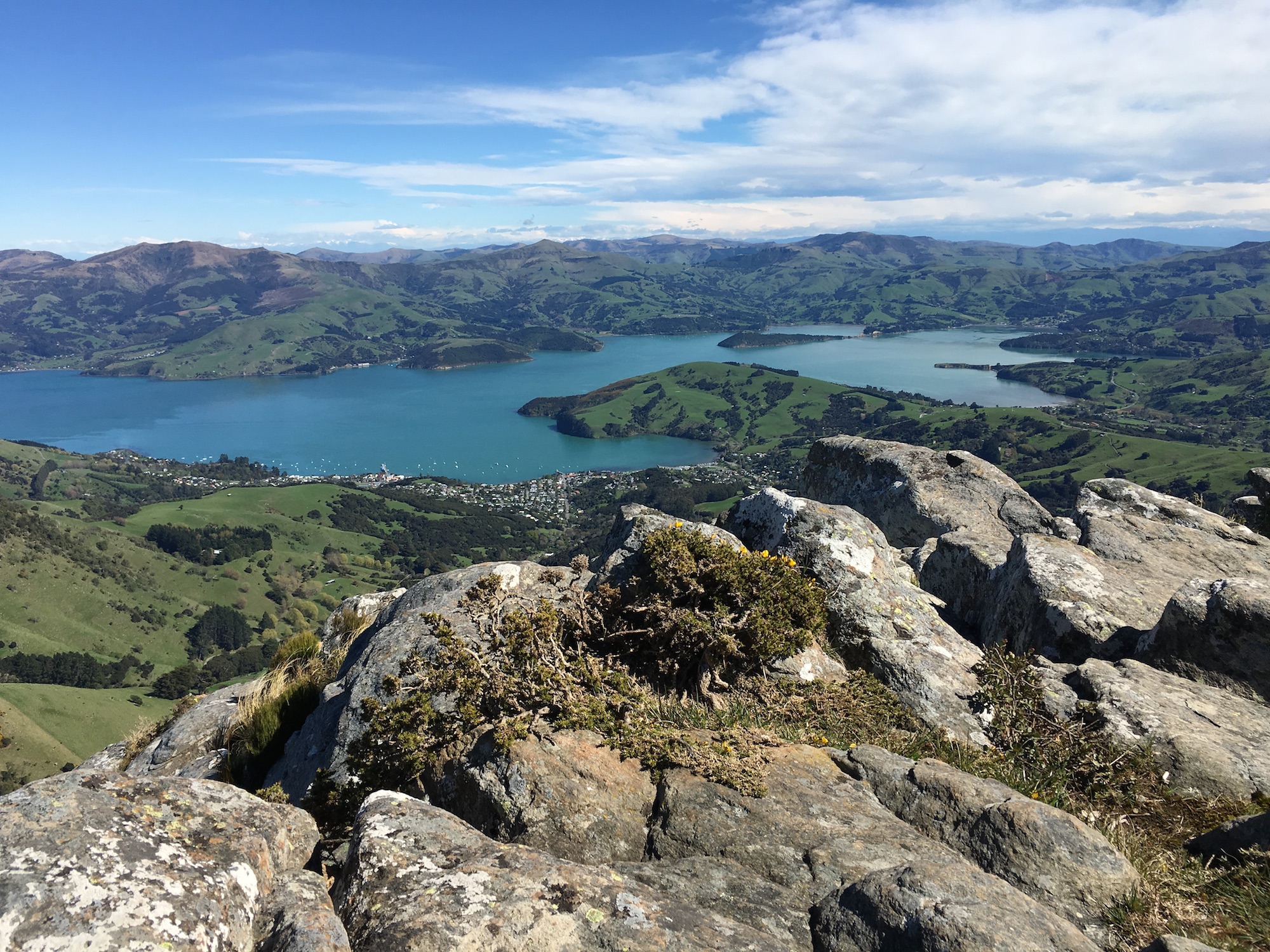
Looking toward Akaroa from Stony Bay Peak.

Looking toward Akaroa from Stony Bay Peak.

With the kids on school holidays, we took the day to go hiking. My daughter chose our destination—the Skyline Circuit, which starts and ends in Akaroa.

It’s an 800m climb to Stony Bay Peak, and down again, and makes a nice day walk.

It’s a typical Banks Peninsula track, climbing mostly through paddocks to a rocky gorse-covered peak. Not exactly a wilderness experience, but varied enough to be interesting, and there are some lovely pockets of native vegetation along the way.

You wouldn’t want to do this walk if the tops were shrouded in cloud—it’s the view from the top that makes the steep climb worthwhile. This morning was clear, and we could see all around the Banks Peninsula and across the plains to the Southern Alps.

Much of the downhill is on Stony Bay Road. I’m not generally fond of hiking roads, but Stony Bay Road isn’t much more than a nice wide gravel path that snakes down through a picturesque patchwork of bush and paddocks.

We ate lunch at the top, and were ready for an afternoon snack by the time we made it back to Akaroa. And, of course, that’s where the beauty of the walk becomes particularly clear—you can end it with a beer and chips at a café in Akaroa (we were even treated to live piano music on the waterfront today).

The clouds rolled in as we left Akaroa, and it was raining by the time we got home, but it was the perfect spring hike.

Still Life with Poems

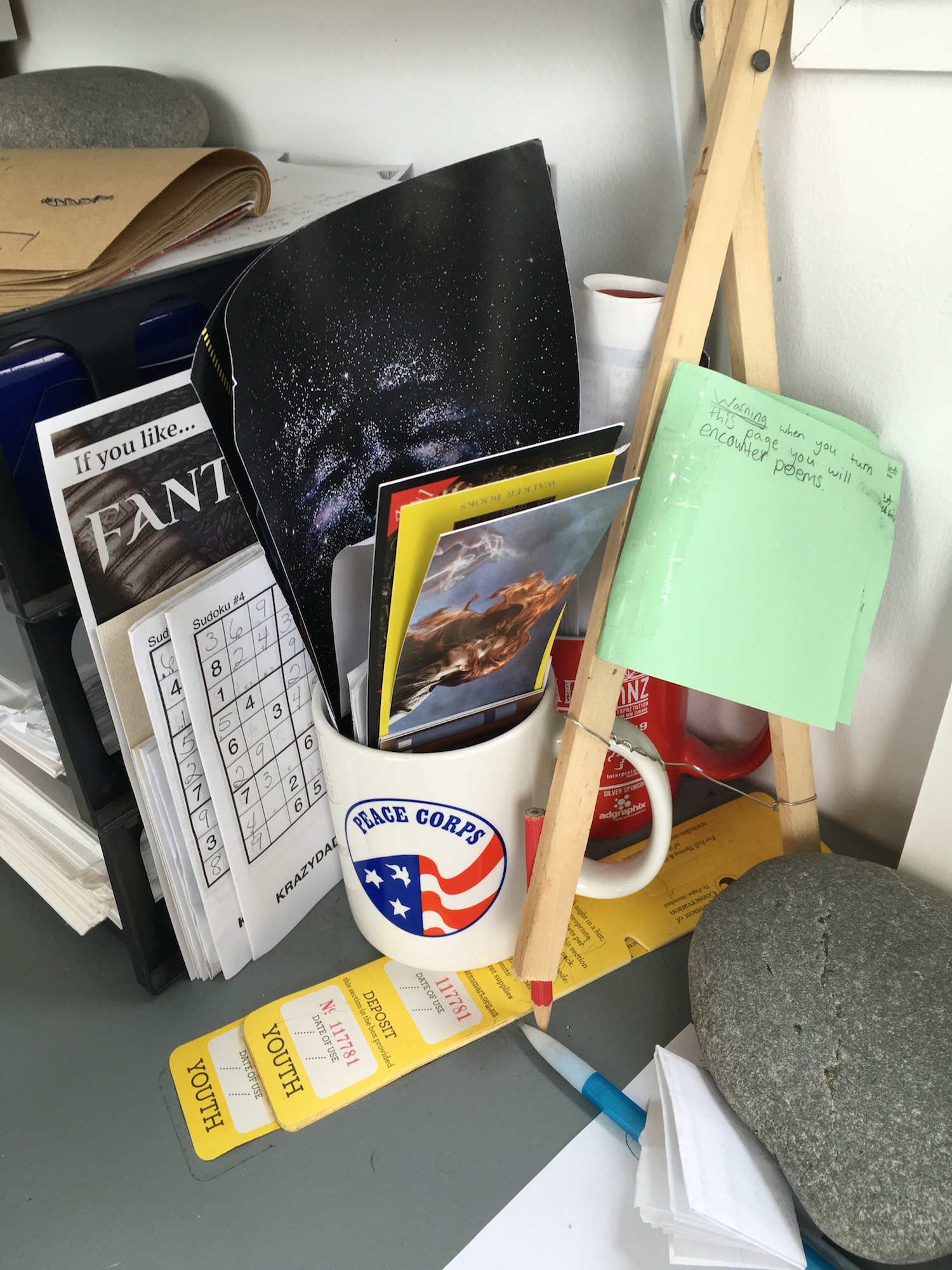
2016-09-19-09-52-35I picked up my phone today, and it automatically opened the camera, which I had used last. This is the picture it framed—a corner of my desk—and it struck me as a curious slice of my life and personality. In the picture are:

  • A flier from the library with a list of fantasy authors they recommend.
  • A couple of half-finished Sudokus—lunchtime brain breaks.
  • A Peace Corps mug—still flying those colours after 21 years. It’s a rare day I don’t think about our time in Panama. That mug is filled with more fliers for books I’d like to read.
  • A mug from the Some Like it Hot Conference—from another past life when I was Secretary of Interpretation Network New Zealand. That mug is stuffed with notes to myself—names and addresses I want to remember, ideas for birthday and Christmas gifts, web sites of interest, the odd poem.
  • A gift from my daughter—a hand-made compass, complete with a book of poetry attached.
  • A rock from our beach—part paper weight, part touchstone, grounding me in this place.
  • A pencil—my favourite writing tool.
  • A folded wad of paper to stabilise my computer stand, which wobbles on uneven legs.
  • A stack of Department of Conservation hut tickets from a trip that I intended to take my ecology students on, but which was cancelled due to weather.
  • A scrap of paper awaiting the day’s to-do list.

There you have it. The messy corner of my brain, where poems vie with the day’s to-do list, and numbers and words mix, and good intentions meet reality, and maybe
today’s to-do list
becomes
tomorrow’s poetry.

There and Back Again

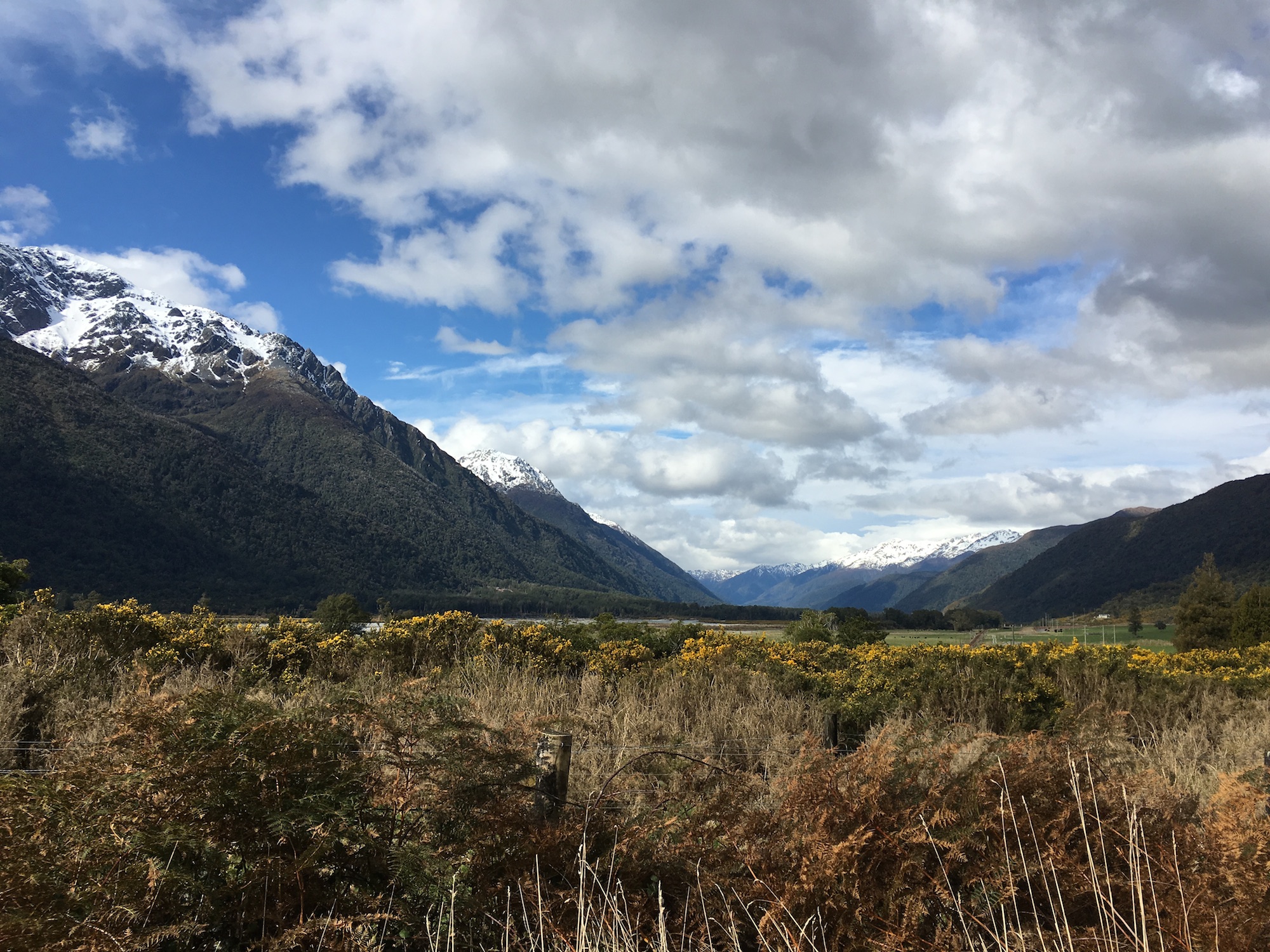
Looking up Otira Valley

Looking up Otira Valley

I slowed into the first curve and began to smile. Within a few short kilometres, the smile had widened to a grin that would remain for nearly two hours.

I will never tire of the drive up and over the Southern Alps. Especially the homeward drive, from Kumara on the West Coast to Springfield on the Canterbury Plains. The first time I made the trip was at night under a full moon that sparkled off the river below and made the snowy peaks shine. How could I not fall in love with it?

I love the first half of the drive, up Otira Valley—the belted galloways grazing in the paddocks on the lower slopes, the rainforest crowding in on the road, the long vistas up-valley to snowy peaks in the distance.

And then, when the road becomes steep and the valley closes in, the craggy peaks loom so close, you have to press your face to the window to see the tops.

And the water! Impossibly long falls coursing down forested slopes, spurting from every little dip and fissure along the roadside, and even soaring out over the road on a concrete sluice.

And then there is the road itself—steep, and as curvy as ribbon candy. There’s the cantilevered half-bridge, and the viaduct that soars out into space over an enormous landslide.

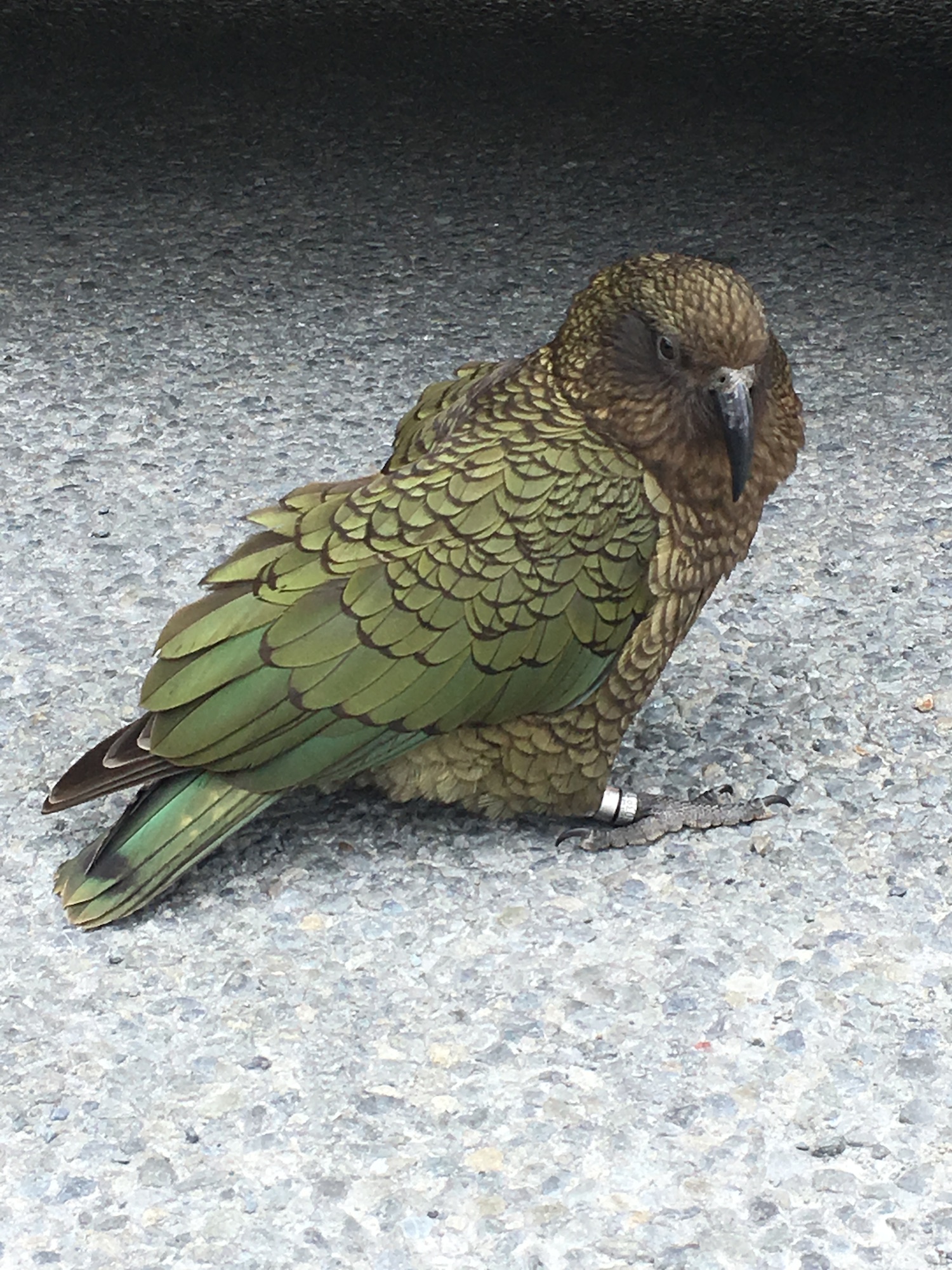
There is the lookout at Death’s Corner, where you can stop and be fleeced by a gang of endangered alpine parrots.

And when you reach the top and plunge down the other side, a whole new set of marvels awaits in the dry, brown, tussock-covered mountains of the eastern ranges.

There are the mountains of scree that look like they’ve been dumped by some enormous gravel truck. There are the limestone outcrops standing like a geologic Stonehenge. There are more snowy peaks, rising out of mounds of alpine tussock. There are lakes hemmed in by massive landslides.

Rear view.

Rear view.

Coming home from the West Coast yesterday afternoon, I was still grinning as I drove through the last of the hills. When I glanced in the rear view mirror, I couldn’t help laughing out loud at the sun glinting off a rank of snow-laden peaks behind me.

Even after nearly twelve years here, I continue to live in wonder at my luck—that I am permitted to call this incredible land home.

Bealey Valley, Arthur’s Pass, New Zealand

2016-09-12-13-06-26-smStop.
Soak up the still silence.

Except that it is neither still
Nor silent.

Wind tumbles
The leaves of the trees.

Overhead in the branches, sounds
The pebble-in-a-still-pool languor
Of the bellbird,
The electric zit-zit
Of the rifleman.

Nearby, a small stream
Hisses over the rocks.
And from farther away
Comes the deep rumble
Of the river
Shaking the stone
As it crashes
Headlong
Down the mountain.


Competition Ploughing

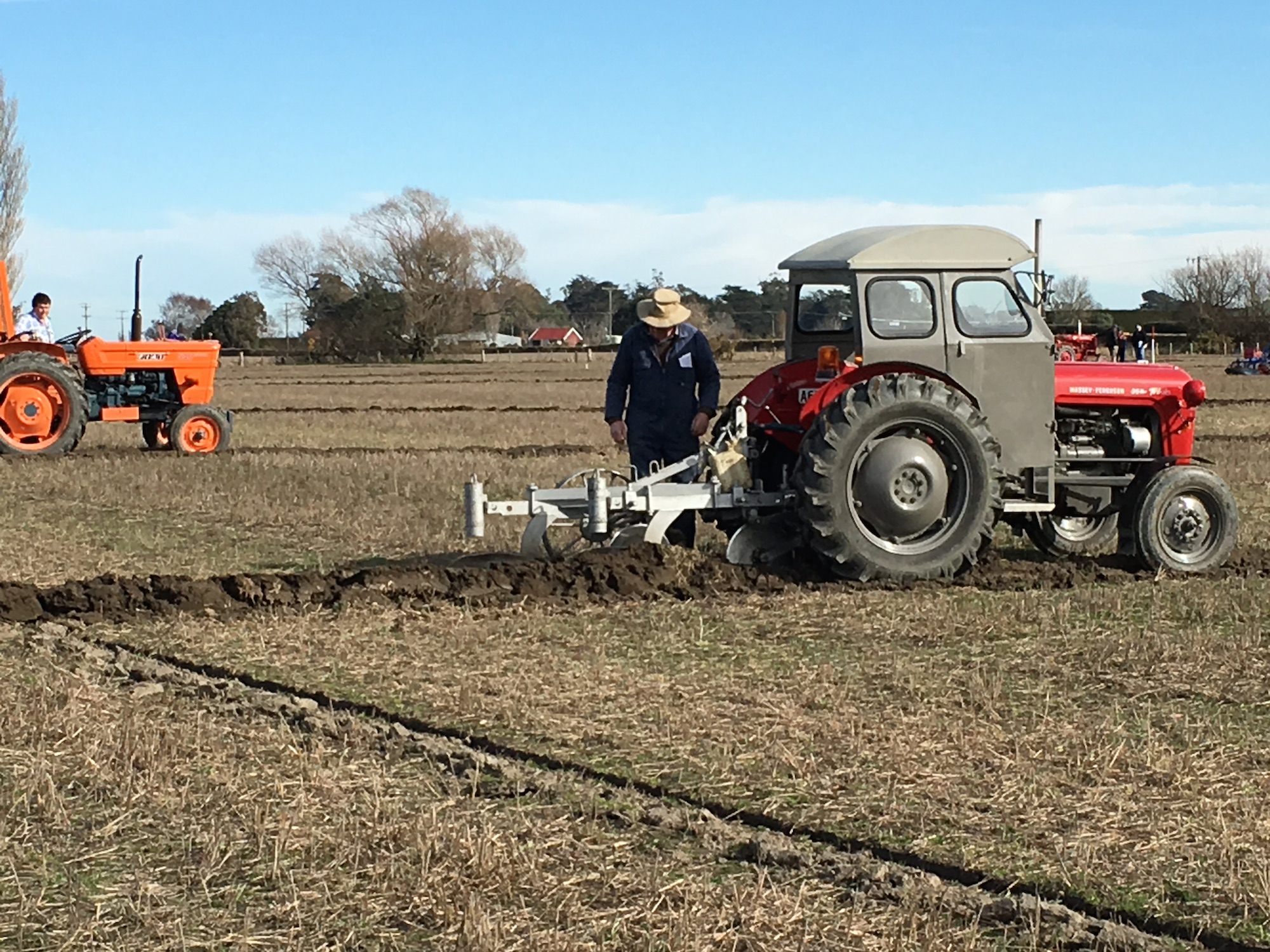
2016-08-20 11.18.35 smThis past weekend was the annual Ellesmere Vintage Club’s Ploughing Match. Our neighbour hosts the event, so we walked down there on Saturday morning to watch the action.

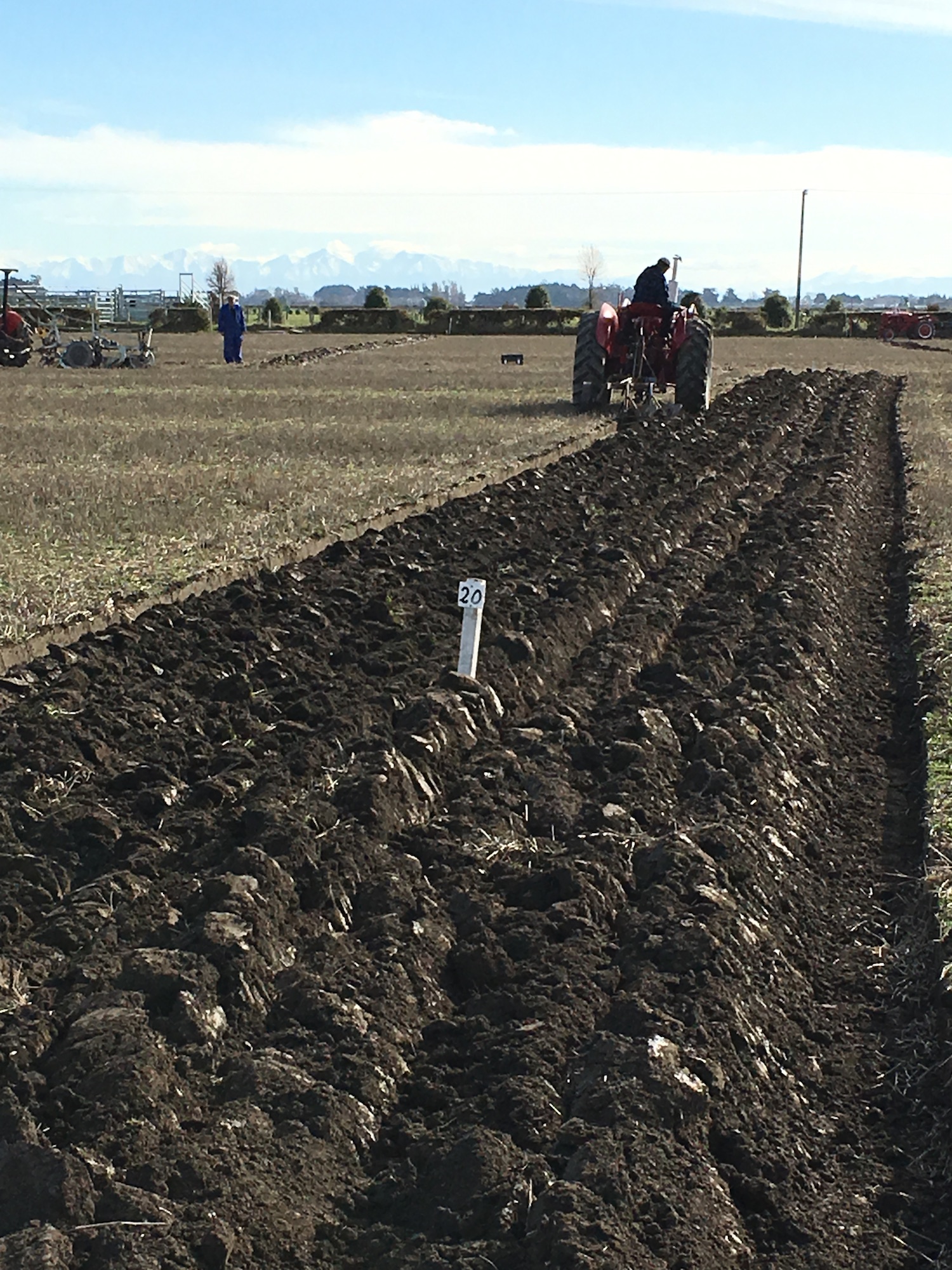
It was slow-motion action. No big thrills or adrenalin. Just the rumble of diesel engines and the smell of freshly turned soil. It was clear the point was a perfectly-turned patch of ground, not speed. There was a lot of starting and stopping, and adjusting of freshly-painted ploughs.

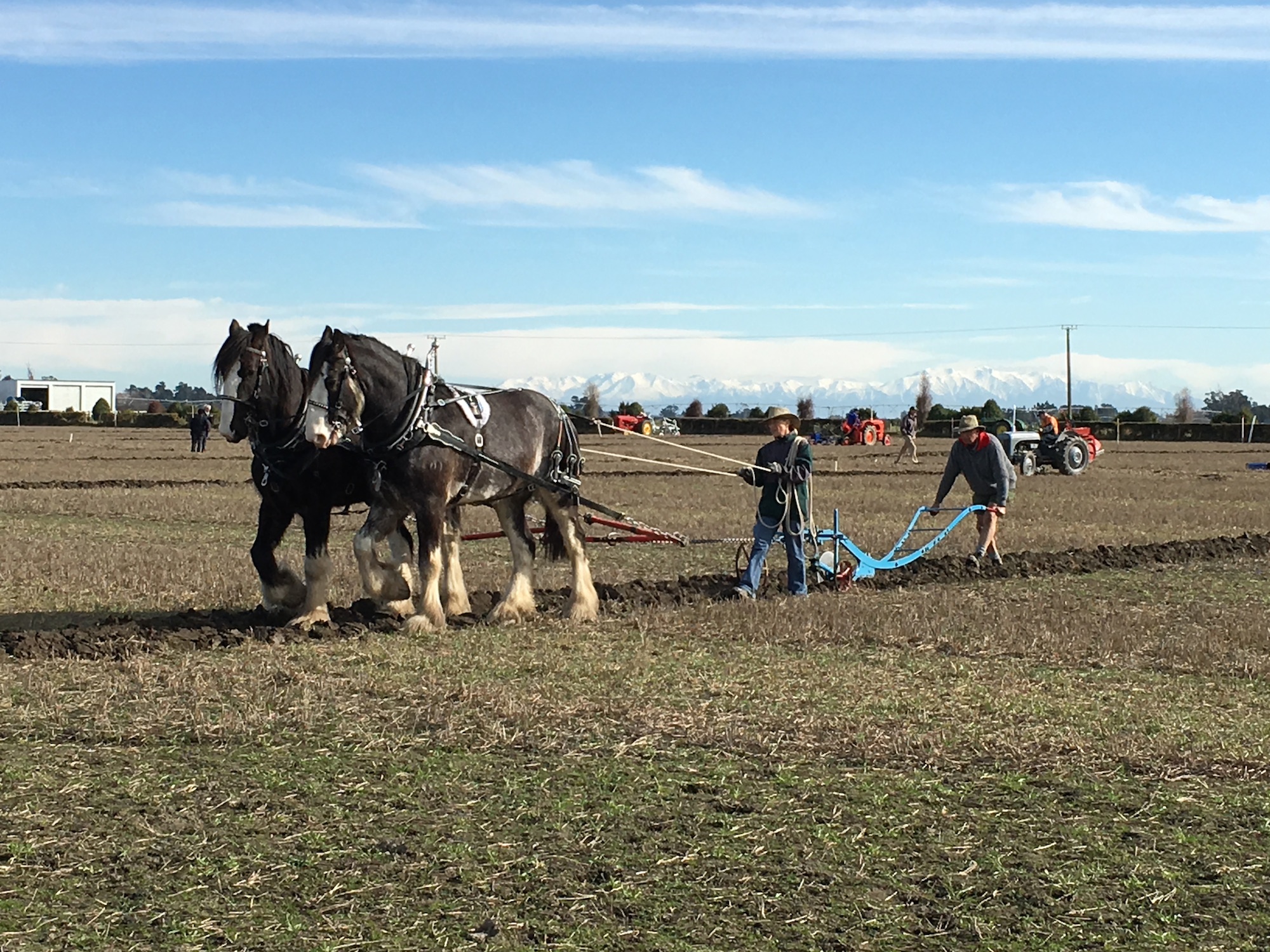
2016-08-20 11.22.21 smA pair of horses joined the 1940s and ’50s era tractors. Watching them work, it’s clear why tractors have taken over on the farm—there was significantly more fiddling to be done by the horse team in order to perfect their rows.

The demographics of the crowd were predictable. Before we arrived, I commented to my daughter that we might be the only women there. Her response was that she would likely be the youngest person there…by about 70 years.

2016-08-20 11.32.18 cropWhile the majority of competitors were as vintage as their tractors, there were a few younger ones. Two or three other children were there, too, though they were sitting in a car playing on an iPad. And there was a small contingent of women. A few wives watched from the sidelines, and a woman drove the horse team.

It was a true small-town event—25 competitors, and perhaps 40 people in total at the event when we were there. Participants were shuttled to the local hall for lunch on two long benches, set back-to-back atop a flatbed trailer.

2016-08-20 11.33.12 smLater, as the event broke up and tractors motored past the house, we laughed—it was hard to tell which vehicles were en route from the competition, and which ones were simply on their way from paddock to paddock. Many of these vintage tractors still get regular use on the farm.

Of course, I have to wonder what will happen as the vintage tractor enthusiasts and their machines age further. Will younger farmers grow nostalgic about tractors from the 60s and 70s as they age? If not, we’ll see a lot fewer than 25 contestants at vintage ploughing matches in future years.

It’s All About Perspective

IMG_5709 sm
We headed to the mountains this morning in the hopes of snow. We were disappointed in that—there was no sledding to be had, but we did have a lovely walk at Kura Tawhiti/Castle Hill instead.

Kura Tawhiti, with its fabulous limestone formations and huge boulders, is one of our favourite quick day trips and a regular stop-off on our way to other places. For all our visits, though, we have never actually gone to the top of Castle Hill. So today, that was our destination (with many boulder-scaling detours along the way, of course).

The best part of the top of Castle Hill was the massive boulder jutting up from near the summit (I really think they should have put the trig marker on top of that rock—it really is the summit, more so than the ground below). Though I didn’t measure it, I’d guess the rock adds a good seven metres to the height of the hill. It dwarfed us all as we stood in its shadow.

It was a lovely walk to the top, though we were disappointed that we couldn’t actually make it to the top of that big rock. After a few minutes on top, we made our way down the other side of the hill.

Later, looking back toward the summit from a neighbouring ridge, that massive boulder looked tiny.

“The lesson,” my husband said, “Is that until you reach them, all your problems will seem insignificant. It’s only when they’re upon you that you’ll realise how utterly insurmountable they are.”

It wasn’t exactly the lesson I took (I was thinking that big problems, safely in the past, look small), but it’s a valid point. Sometimes we take on challenges or make decisions we know will lead to challenges in the future. At the time, those challenges might look manageable, but when we finally face them down, they could be huge.

Thankfully, we rarely have to face life’s problems alone unless we choose to do so. In fact, many of the big challenges that matter a great deal to us—raising kids, dealing with illness, facing loss—are really only manageable when shared. Sometimes, the hardest part is asking for help.

And then, once you’re past, the problems look smaller again. They look more manageable, because you did manage them.

So, don’t be afraid of those big challenges. They may be bigger than you think, but once you’ve made it past them, you’ll be able to look back from a distant ridge and say, “Well, maybe that wasn’t so bad after all.”

Tūrangawaewae

DSC_0095 smIt’s Maori language week, so I thought I’d share one of my favourite Maori words—tūrangawaewae.

Tūrangawaewae is a place to stand, where a person feels strong and at home. It doesn’t really have an English equivalent. Homeland comes sort of close, but one’s homeland is not always one’s tūrangawaewae.

Though I am not a religious person, I am a spiritual one, and the word tūrangawaewae speaks to me in a spiritual way. I know where my tūrangawaewae is. It’s not so much an actual place, but a biome–the forests of the north eastern US. I am an organic part of that biome. It is wired into my nerves and muscles. Every leaf, animal and rock feels familiar.

I have little use for American culture, and no affinity with the cities and interstate highways that encroach upon my tūrangawaewae. I have honestly tried to find a new tūrangawaewae here in my adopted home. There are many places here I love. Many places to which I feel drawn. But none matches my tūrangawaewae for that deep sense of belonging.

Where is your tūrangawaewae?

Throw the Windows Open

2016-06-29 13.02.59Until we moved to New Zealand, I would have laughed at the idea of opening the windows and doors in mid-winter. When it’s well below zero, a fresh breeze through the house isn’t exactly welcome.

Somehow here, the idea of a fresh breeze through the house at any time of year is welcome.

It helps that the climate is warm—there’s never a day that remains below freezing, even in the depths of winter. But even so, I noted after I flung the house open today that the outside temperature is only 11°C (52°F). I’m sure I never opened the windows at that temperature in Minnesota or Pennsylvania.

Of course, in Minnesota and Pennsylvania, the windows never ran with moisture. Puddles didn’t form on the windowsills every morning (in MN, it was ice, but that’s another story). The winter air here is warm enough to hold plenty of moisture, and without central heating to dry out the air, it can get pretty damp indoors. A couple of hours of a brisk breeze on a sunny afternoon can do wonders for the indoor humidity.

Perhaps that’s part of what I like about living here—the opportunity to invite the outdoors in, even during the wintertime.

As Horace Everett wrote (to Aaron Copland’s music): Stomp your foot upon the floor / Throw the windows open / Take a breath of fresh June air and dance around the room.

Throwback Thursday: Tramping the Abel Tasman

100_1198 smThe Abel Tasman was our first Great Walk as a family. It was also our first family tramp longer than two nights—the kids were still at the stage where they sometimes needed a prod to get to the top of a hill (or more accurately, the promise of chocolate at the top).

The Abel Tasman was the perfect trip—long enough to give the kids a ‘real’ adventure, and easy enough that they didn’t struggle with it. The distances between huts were short enough that the kids could spend hours playing on the beaches along the way and still get to the hut by mid-afternoon.

I’ve heard that the track is miserable in bad weather—all those exposed beaches can’t be fun in the wind and rain—but we were blessed with perfect sunny days. Though it was April, the weather was warm enough for lots of swimming along the way, and the whole experience felt more like a frolic than a tramp.

For me, the best part about the trip was gaining a greater appreciation for tides. The surges of water, so different from the normal waves, that fill the estuaries, bringing schools of fish and rays with them. The rippled and exposed mud flats of low tide. The twice-daily rhythm of inundation and exposure of the coast.

It wasn’t a wilderness experience—the huts were filled to capacity, and boats stopped at most of the beaches—but it was a beautiful chance to explore a rich and dynamic coastline.


Adventure on Kaitorete Spit

2016-06-11 11.10.09 smSaturday morning, we took advantage of the lovely weather to take a walk out on ‘our’ beach. Not just any old walk, but one that would take us beyond the lake opening onto Kaitorete Spit.

I can’t believe that in the eleven years we’ve lived here, we’ve never done this before. We’ve walked to the lake opening many times, but always when the lake was open to the sea, to see the dolphins and seabirds that congregate there eating the fish migrating in and out of the lake.

But our goal this time was the wild tip of the spit.

You would think that a mere couple of kilometres would make little difference in the beach, but the change was positively stunning.

On ‘our’ part of the beach, the dunes are covered in non-native shrubs and ice plant. Not a native plant to be found.

An hour’s stroll out onto the spit took us into a different world. Non-native plants all but gone on the dunes, replaced by pingao. Behind the dunes, native broom, Raoulia (vegetable sheep), and Muehlenbeckia.

The shape of the dunes was different. The whole effect less verdant and more windswept.

Naturally, we searched for kātipo spiders among the pingao, as this is one of the few places this endangered spider can be found. We found none, but we did find a number of other spiders, lots of spider egg cases, and a couple of sand scarabs (including an adult, which was a first for me).

We knew all this was out there, but knowing and having experienced it are two different things.

And now that we understand what’s out there, I’m sure we’ll be going back again soon.