Beech Forest Hiking

I’m particularly fond of hiking in early spring. It’s not for the spring weather, which is often raw and windy, or for spring flowers, which aren’t particularly abundant in the bush. No, it’s for the lack of German wasps.

Much of the forest we hike through is dominated by beech (not the northern beech, but several species of Nothofagus). Beech is host to a fascinating ecosystem which has been invaded by non-native wasps.

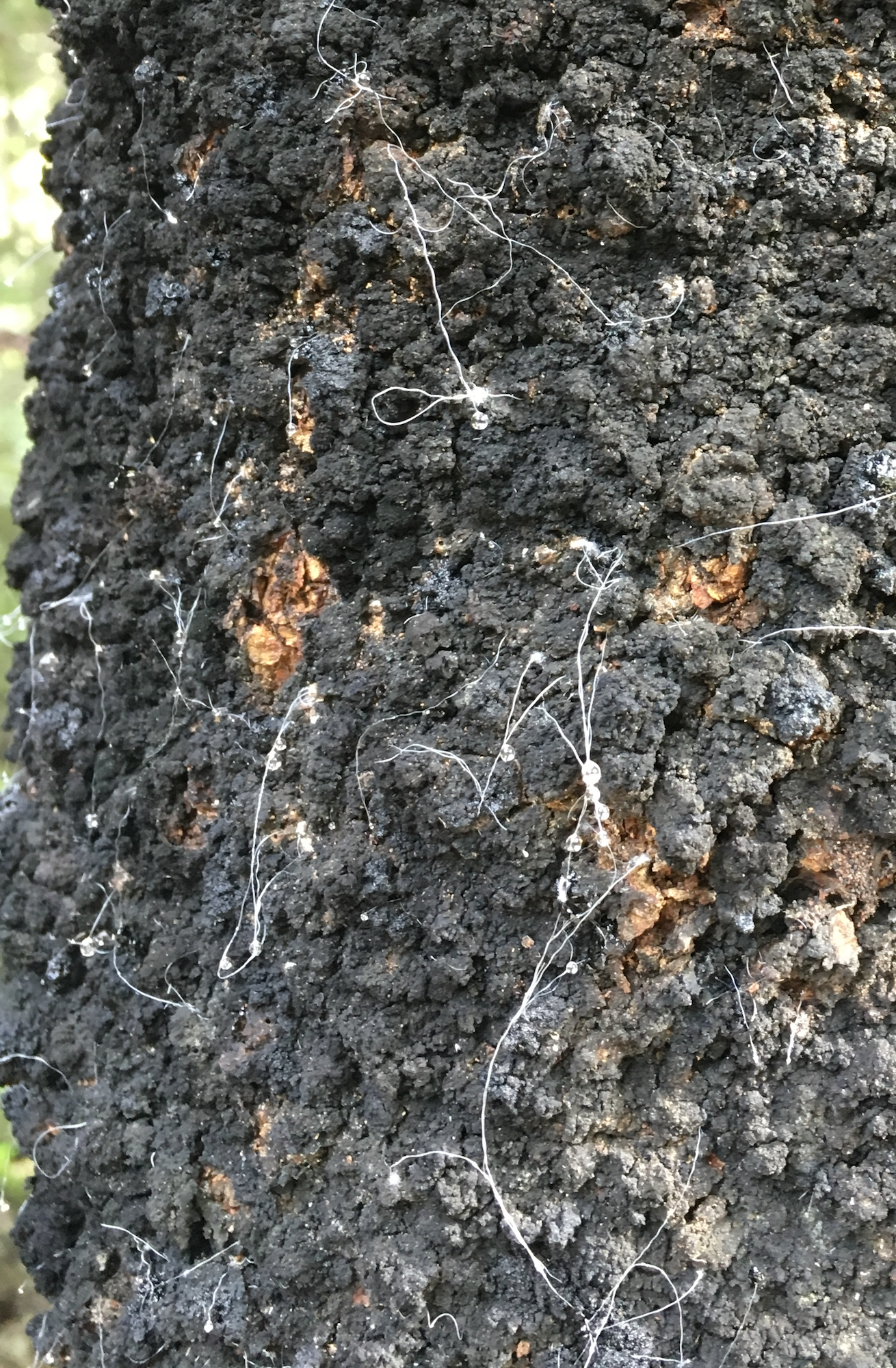
Throughout much of its range, beech is infested by scale insects. The scales live in the bark of the trees, feeding on sap. Because sap is low in nutrients and high in sugar, the insects need to excrete the extra sugar. Each insect has a long anal tube through which it ‘pees’ concentrated sugar water called honeydew.

Drops of honeydew form on the tips of the anal tubes and fall to the ground, tree, trunk, and branches around the insects. The entire area ends up coated in sticky sugar.

Sooty mould grows on the sugar coated surfaces, turning trees and forest floor black, and giving the beech forest a distinctive smell. The sooty mould is eaten by a variety of insects, including moths and beetles.

But not all of the honeydew simply drops to the ground. Native birds and insects (and hikers) drink the drops of water on the tips of the scales’ anal tubes. For wildlife, honeydew is an important winter food, when flower nectar is scarce.

German wasps enjoy honeydew, too, but only in the summer.

By mid-summer, the beech forest hums with the sound of millions of wasps collecting honeydew. For me—allergic to wasp stings—it means a hike requires constant vigilance lest I grab a tree trunk for balance and end up in anaphylactic shock. But in springtime, the wasps aren’t yet out and about, and I can enjoy the sticky smell of the beech ecosystem without worry.

Nettle Season

It’s stinging nettle season and, as I’ve mentioned before, my garden is host to an irritating quantity of nettle—quite literally.

But though it is a stinging weed, I’ll admit to a certain fascination with nettle. Look at the stinging hairs (trichomes) under the microscope, and you’ll find beautifully wicked structures like fine hypodermic needles. Those syringes are full of an irritating mix of acetylcholine, histamine, serotonin, moroidin, leukotrienes, and formic acid to irritate your skin.

But the triggering mechanism for the trichomes depends upon turgor (water pressure), so once a nettle wilts, it can’t sting.

And once it wilts, nettle is an incredibly useful plant. It is edible and quite nutritious for both humans and livestock. The cooked greens are used in traditional dishes throughout the Northern Hemisphere where it is native.

It can be used to make a vegetarian rennet for cheesemaking, and is used to flavour and decorate some cheeses. I’ve made nettle rennet myself as a substitute for commercial rennet when I’ve run out.

Nettles can be used to make tea, cordial and beer.

The fibrous stems can be used to make linen-like textiles. The roots can be used to make a yellow dye.

Fed to chickens, nettle is an effective egg colourant, which may explain the deep orange colour of my chickens’ egg yolks at this time of year.

All in all, stinging nettles don’t deserve their bad reputation. Like many of our weeds, they’re useful plants that we’ve forgotten how to use.

Spur-winged Plovers

Almost every year, a pair of spur-winged plovers (Vanellus miles, known as the masked lapwing in Australia) establishes a territory in the goat paddock. A few days ago, I was taking food to the goats, and noted where the plovers were making a ruckus at the other end of the paddock.

This afternoon, I took a walk out there. The plovers were nowhere to be seen, and I was worried–they’re not always successful nesters here. There are simply too many predators around our property.

I nearly turned around, but I decided to take a look anyway.

I was rewarded with the perfect plover nest. Two eggs, a little dried grass, and some rocks.

The spur-winged plover self-introduced from Australia in 1932. Since then, its population has grown dramatically. No surprise when you consider it likes open habitat, and is quite happy to set up house in paddocks, parks, and road verges (we once had a pair nesting in the middle of an intersection nearby).

It has done so well since it arrived in New Zealand that its protections as a native bird were removed in 2010 due largely to the problems it was causing for aircraft (airports are lovely habitat for it). It is one of only two native birds to not be protected under the Wildlife Act (the other is the black backed gull).

I enjoy the plovers. I love their harsh night-time cry, and their indignant posturing while defending territory and nest. I love the fact they cheekily nest wherever they want and expect everyone else to stay out of their way.

I’ll be watching these eggs closely. Fluffy plover chicks are even more fun to see than plover eggs.

A Look at Larvae

They’re just midges. If anyone pays attention to them at all, it’s to note how irritating they are when they swarm by the millions, here near Te Waihora/Lake Ellesmere. They are annoying at times, swarms so thick you can’t breathe without sucking in a few.

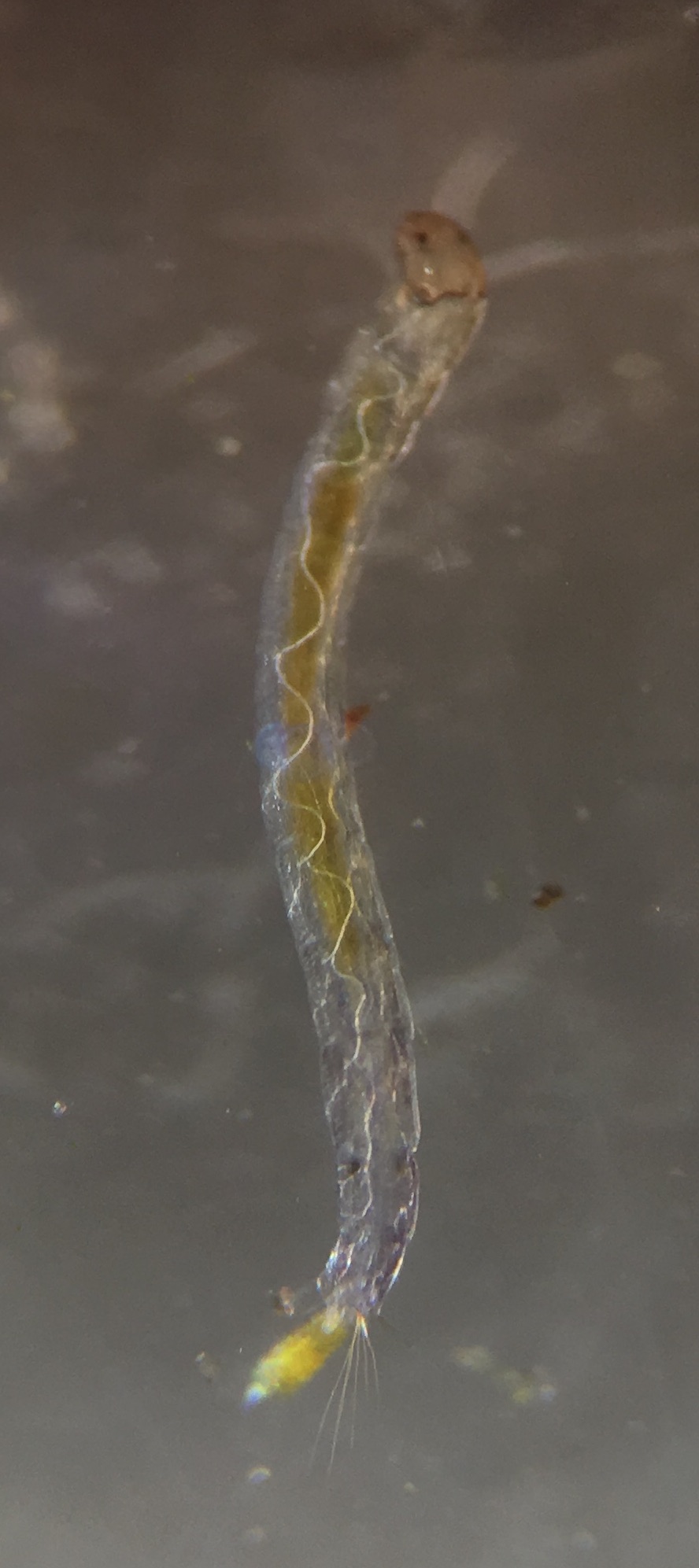
But there are few adults flying at this time of year. Most are still waiting out the winter as larvae underwater. Midge larvae are fun to look at under the microscope, as their exoskeletons are clear, allowing a great view of the inner workings of their bodies.

Seeing the inside of an insect larva helps one appreciate the job a young larva is tasked with—eat. Eat as much as you can and grow as fast as you can. A larva is little more than a mobile digestive system. The brownish streak you can see running the length of this midge larva is the animal’s gut, filled with the algae and other debris it has eaten. At the tail end, you can see, this little larva is having a poo.

Also at the tail end is a wee snorkel of sorts. These midge larvae can survive in low-oxygen water by sucking air from the surface using their snorkel. The silver lines meandering the length of the body are trachea that carry oxygen to all the insect’s cells.

This midge larva was tiny—about two millimetres long—it still has a while to grow before it’s ready to become an adult. But there are lots of other larvae out there getting ready to emerge with the upcoming warm days of spring.

Upcoming release: Backyard Bugwatcher

The final proof…

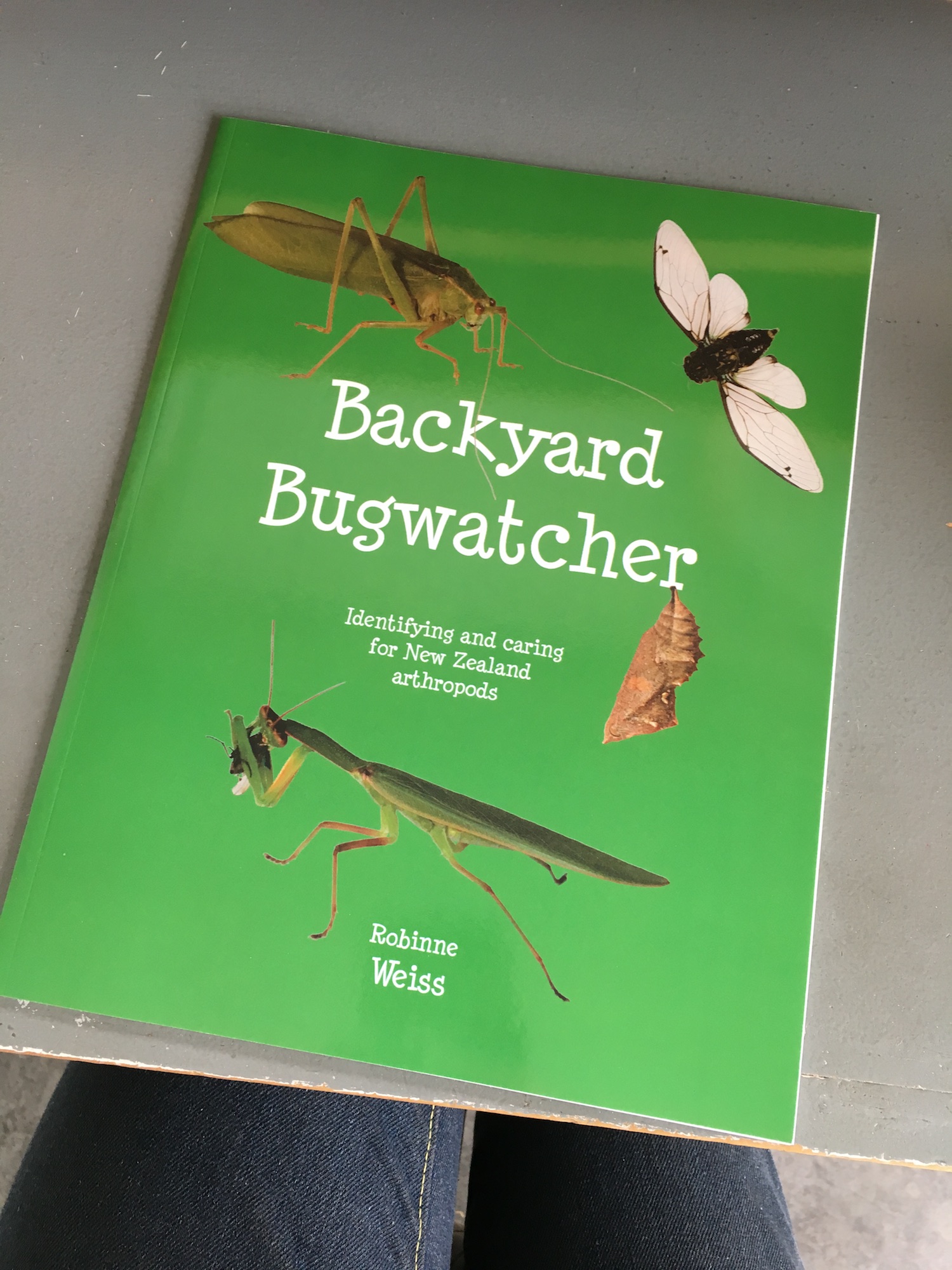
I’m excited to announce the upcoming release of Backyard Bugwatcher. This kid-friendly book includes all the cool information and identification keys from Insects in the Classroom. A great addition to any bug-lover’s library, this guide complements insect guides like Which New Zealand Insect? and Life-Size Guide to New Zealand Insects, giving you additional background information on a broad range of New Zealand arthropods, and providing keys that can help you learn to quickly categorise creepy crawlies for identification.

Contact me to order your copy, or order on Amazon.com 

What are the Odds?

A winter storm dropped nearly an inch of sleet on us overnight. I crunched through the ice in the dark this morning to feed the animals. After emptying sleet out of the chickens’ feed tray and filling it with pellets, I turned and saw, in one of my footprints, a bright green/blue glowing spot.

Bioluminescence. There was no mistaking the colour. I carefully scooped up the bit of glowing sleet and held it in my hand. I could think of no terrestrial source of the glow. There are no glowworms in my vegetable garden, and no bioluminescent fungi. Besides, this was in the ice, not on the ground.

The spot glowed for a moment between my fingers. Then the ice melted, the light went out, and whatever had made the glow dripped to the ground.

I spent an hour online looking for any reference to bioluminescence in snow, and found none. The only explanation I could come up with for my glowing sleet was that a phosphorescent marine creature was picked up in sea spray four kilometres away, frozen, and then deposited in my garden. My stomping foot disturbed it, and it glowed briefly before, most likely, succumbing to a deadly infusion of fresh water.

What are the odds that organism would be picked up from the sea and whisked four kilometres inland? What are the odds it would land in my garden? What are the odds it would have still been alive when I trekked out to feed the animals? What are the odds I would step on that tiny organism and induce it to glow?

Very, very tiny.

I was given a tremendous gift this morning. One of those gifts that reminds me to always keep my eyes open. You really never know what you might see.

Playing with Spiders

If you’ve read my blog for any length of time, you’ll know I love jumping spiders. I’m not alone. In fact, I know people who, in general, can’t stand spiders, but who are nevertheless fond of jumping spiders.

I think part of the reason people like jumping spiders is that they are such visual animals. Like us, they navigate their world using visual cues. They turn to watch something pass by. They walk around objects placed in their path. They react to stimuli in a way we can understand.

The other day, a jumping spider on the computer screen began stalking the cursor as though it were a tasty fly. My husband began to play with the spider in much the same way we dangle a string for the cat. It was terribly cute. I know the cat understands it’s a game, but I doubt the spider did. I’m sure it ended up frustrated it couldn’t catch that little dancing arrow.

Geeky Pruning

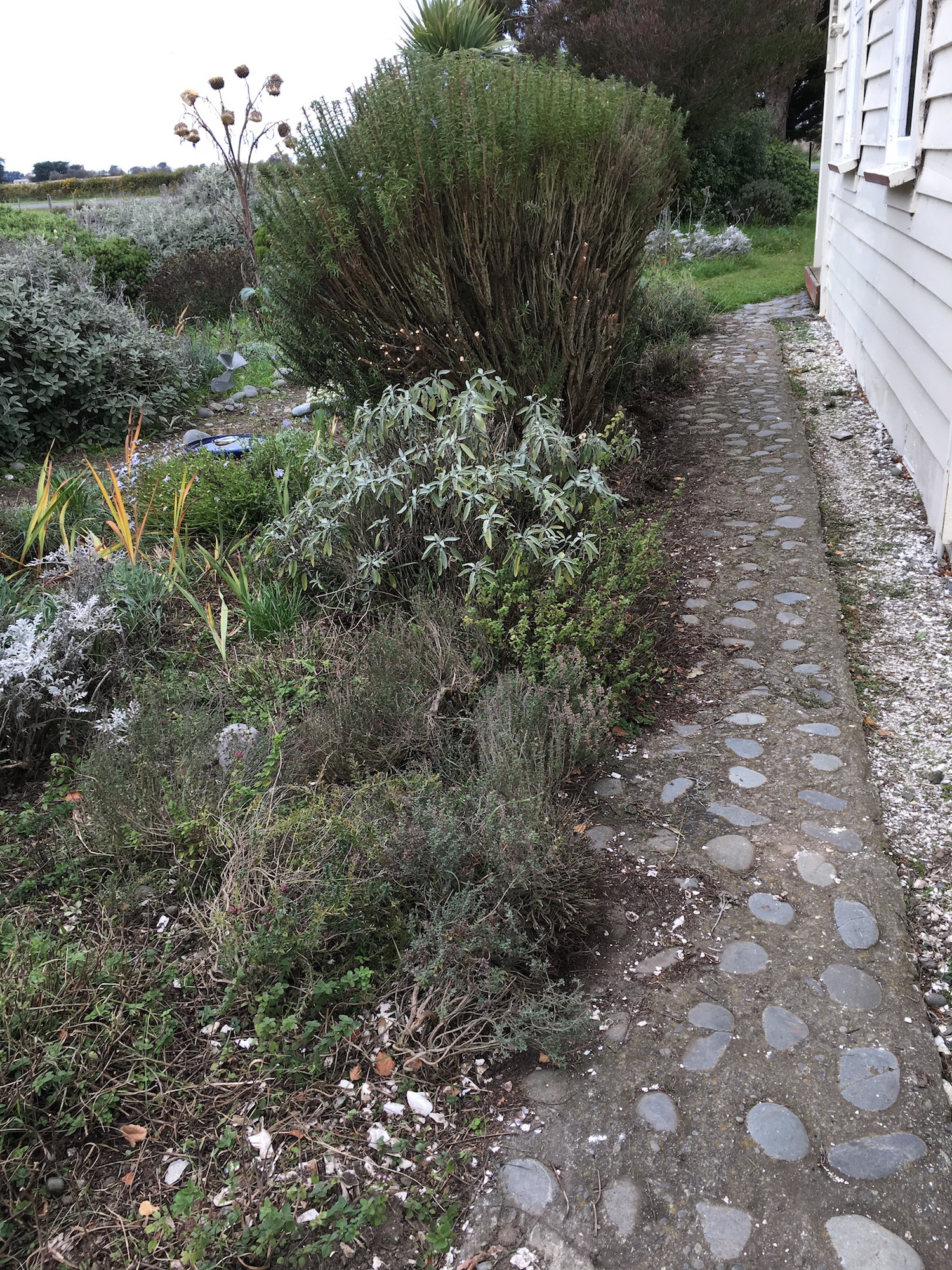
The newly cleared path and scalped rosemary.

The job had been hanging over me for two years. Every time I went to trim the rosemary bushes by the side of the house, I found them being heavily used by insects and couldn’t bring myself to disturb them. I finally had to admit that there was never going to be a good time to prune them.

So this weekend, when I found I could no longer use the path between rosemary bushes and house, and the bushes were nearing two and a half metres tall, I decided it was time to prune.

Pruning the rosemary is never a fun job—the wood is hard as nails, and every branch seems to need a different size pruning tool than the last one. To make it worse, this time the job took twice as long as it might have, because I checked every branch for preying mantids and mantid egg cases.

I shifted six adult mantids to other plants and collected eleven egg cases by the time I was done. I’m sure I missed some, but I’ve tucked the egg cases into a cage to protect them over winter, and when they hatch out in springtime, I’ll release them back to the rosemary.

A bit geeky? Yeah, I suppose it is. But there was never any question about me being an entogeek. This way, I get my path back, and I get to keep my bugs. Everyone’s happy.

A New Jumping Spider

I met a new spider today–Phidippus whitmani. This one appears not to have a common name, though a related species is known as the red velvet jumping spider.

Yesterday, I noted that the red-spotted newt uses warning colouration to tell predators it is toxic. This jumping spider uses the same sort of colouration, but in this case, the warning is a lie.

Like other members of its genus, this spider protects itself by pretending to be a velvet ant with a powerful sting. Unfortunately for this spider, who had to put up with my attentions, I wasn’t fooled, and instead was quite taken by his fuzzy red velvet.

Red-spotted Newt

I was pleased to see today one of my favourite North American animals, the red-spotted newt (Notophthalmus viridescens). These colourful little salamanders have a complex life cycle that includes an aquatic larval stage, a terrestrial juvenile (eft) stage, and an aquatic adult. The terrestrial efts, like this one, are brightly coloured.

Like most bright colours in animals, the red skin and spots of the red-spotted newt are a warning. The red-spotted newt has toxic skin secretions that protect it from predators. This toxic defence gives red-spotted newts the ability to live in permanent bodies of water with fish in them, unlike many other salamanders which fall prey to fish, and rely on temporary pools.