Earthworm!

Most people give little thought to earthworms. Even gardeners, who appreciate their presence, don’t spend much time considering which species of worm are present.

But species matters.

Here in New Zealand, we have about 200 species of earthworms, most of which are native. The native and non-native worms are sharply segregated by habitat—natives in native habitats, non-natives in agricultural and urban habitats. So all the worms we see in our gardens are non-native species.

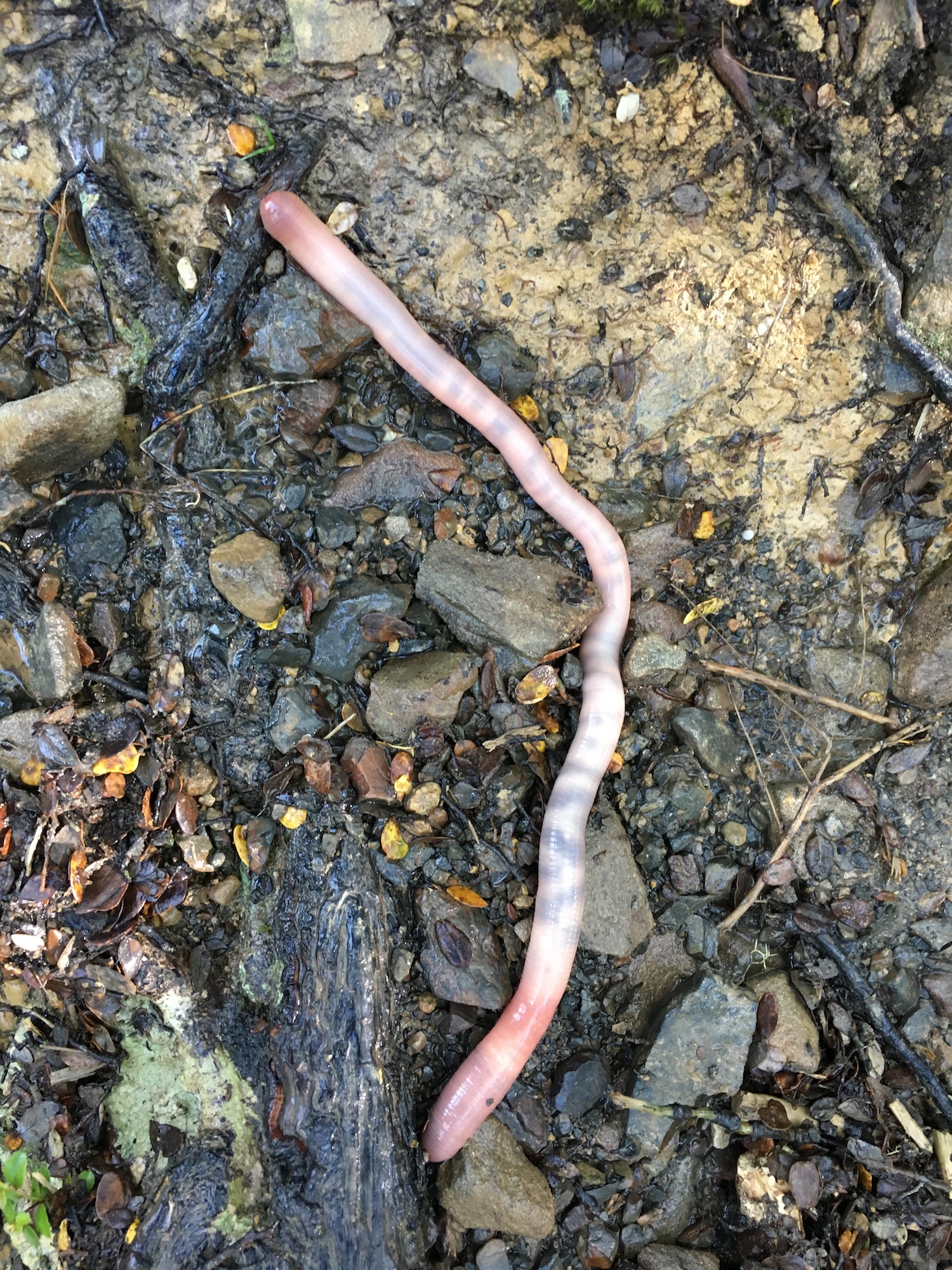
When you’re used to the small to medium sized non-native worms, finding a native worm is exciting. They’re generally larger than the non-native worms—sometimes much larger. Some can grow to nearly a metre and a half (59 in) in length.

We were lucky enough to find this native worm on Mount Oxford over the weekend. I can’t positively identify the species, but it’s likely to be Octochaetus multiporus. This was a young specimen—not yet reproductive age (as evidenced by its lack of a clitellum)—but already about 20 cm (8 in) long and as thick as my pinky finger. This particular species grows to about 30 cm (12 in) long.

O. multiporus is a particularly interesting worm because it is bioluminescent and spits a bioluminescent defence compound when disturbed. On the bright sunny day we found this one, there was no hope of seeing any bioluminescence. Still, it was a great find on our walk.
Fungal Wonderland

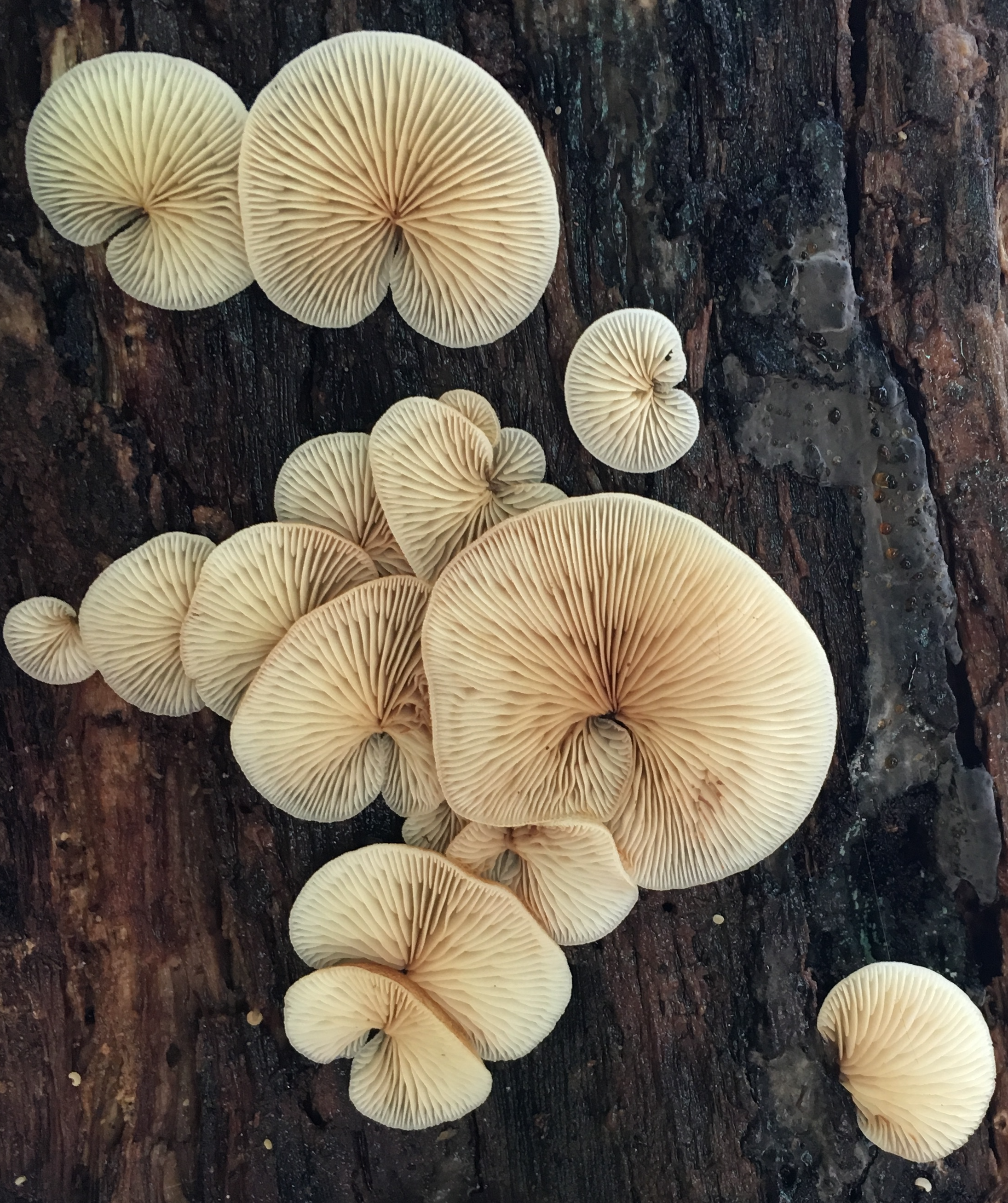
A family hike on Saturday took us through a fungal wonderland on Mount Oxford. Everywhere we looked, it seemed, fruiting bodies were popping out. White, brown, blue, purple, red, black—fabulous diversity of species, form and colour.

My favourite of the day, however, were not the big, showy Amanita muscaria or the lurid purple Cortinarius porphyroideus, but these unassuming (and unidentifiable by us) little shelf fungi. They were growing out of the underside of a fallen log we had to duck under, and their gills made stunning, artistic patterns. Unremarkable though the mushrooms themselves were, the perspective of seeing them from below turned them into something truly special.

Amazing how a simple shift of perspective can turn the ordinary extraordinary.

Green Orb Weaver

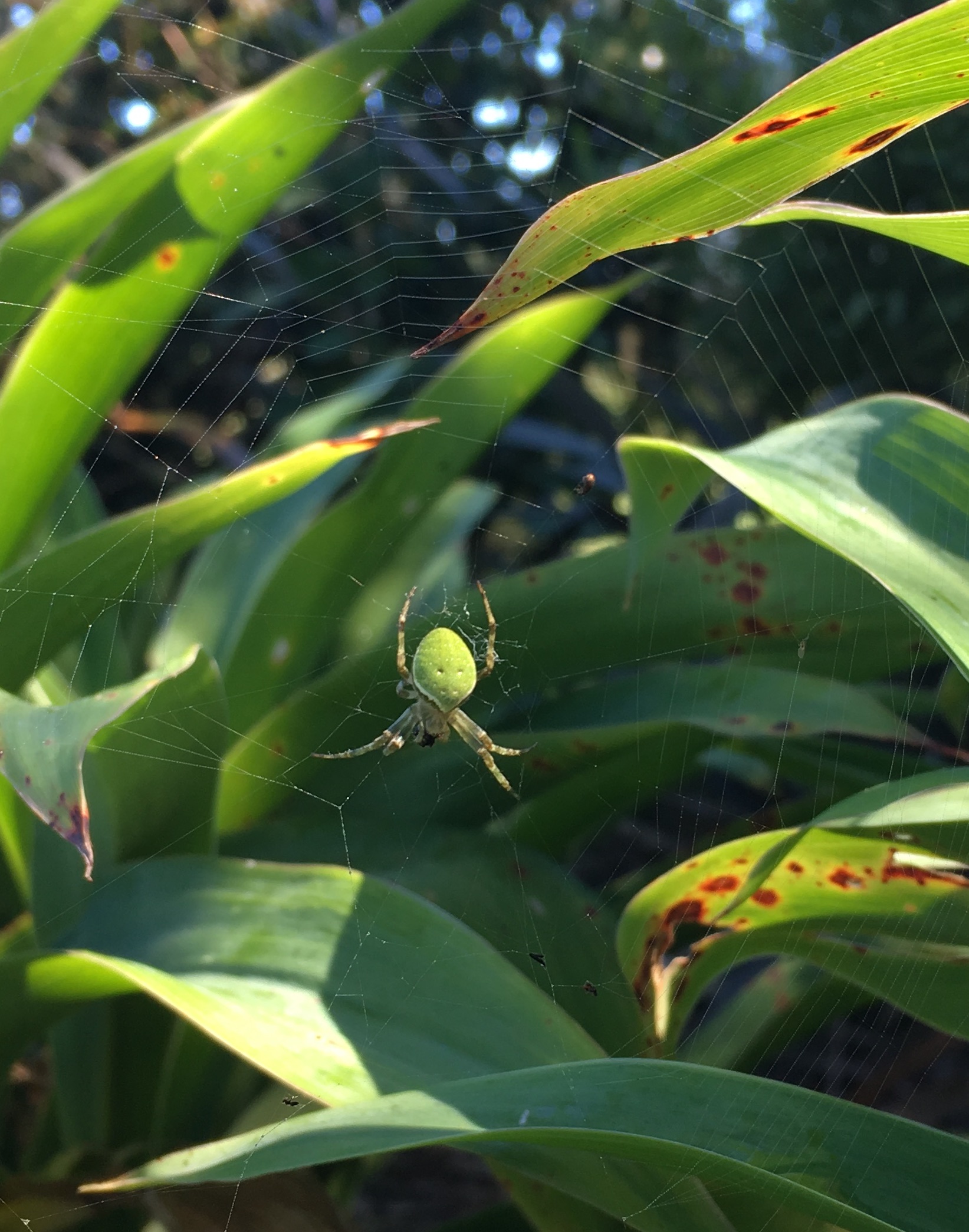
This year has apparently been good for the green orbweb spider (Colaranea viriditas); I usually see them only rarely, but I’ve run across quite a few this summer.

These beauties are pale green with a kelly green leaf-shaped mark covering the abdomen.

As the name implies, these spiders make orb webs—the spiral-shaped webs everyone’s familiar with. Though they’re primarily nocturnal, I’ve regularly seen them hanging out in the middle of their webs during the daytime (often snacking on an insect). These sharp-looking spiders apparently like a tidy web; they rebuild their webs nightly, and the webs are always as attractive as their residents.

The green orb weaver’s main predator is the native potter wasp, which paralyses the spiders with a sting and stuffs them into its nest for its larvae to feed on. However, the green orb weaver appears to be better at hiding from potter wasps than the non-native Australian orb weaver (at least on our property). Earlier this summer, the potter wasps decided that the screw holes in the bottom of the dining room table were perfect nest holes—every one of the dozens of orb weavers they crammed into the table was an Australian orb weaver.

I enjoy finding these little green gems in the garden. They’re as beautiful as they are helpful.

Noddy’s Back!

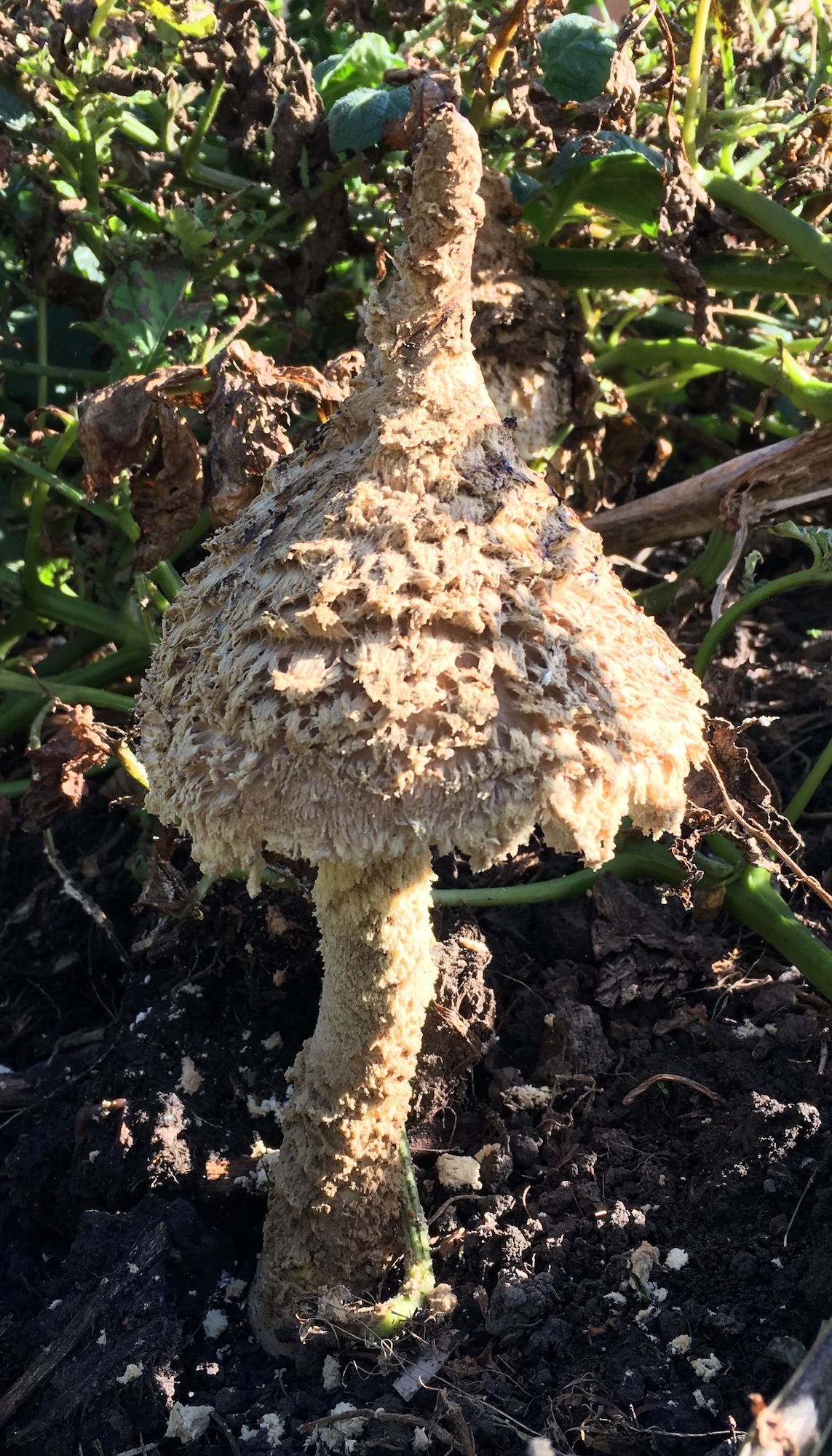
Okay, call me a complete geek, but I’m inordinately pleased about today’s find in the vegetable garden—Noddy’s flycap. This striking and mysterious mushroom showed up last year, causing great excitement and a blog post. The word from the scientific community was we weren’t likely to see it again for a long time, as it doesn’t seem to fruit every year.

Ha! Another thing we can tick off as an unknown for this fungus. Second year in a row Noddy’s has popped up in the garden.

As far as I know, the fungus still has no official scientific name, and its origin remains as mysterious as it was when I wrote about it last year. So for now I’ll simply enjoy the whimsy of this most delightful of fungi.

Magpie Moths

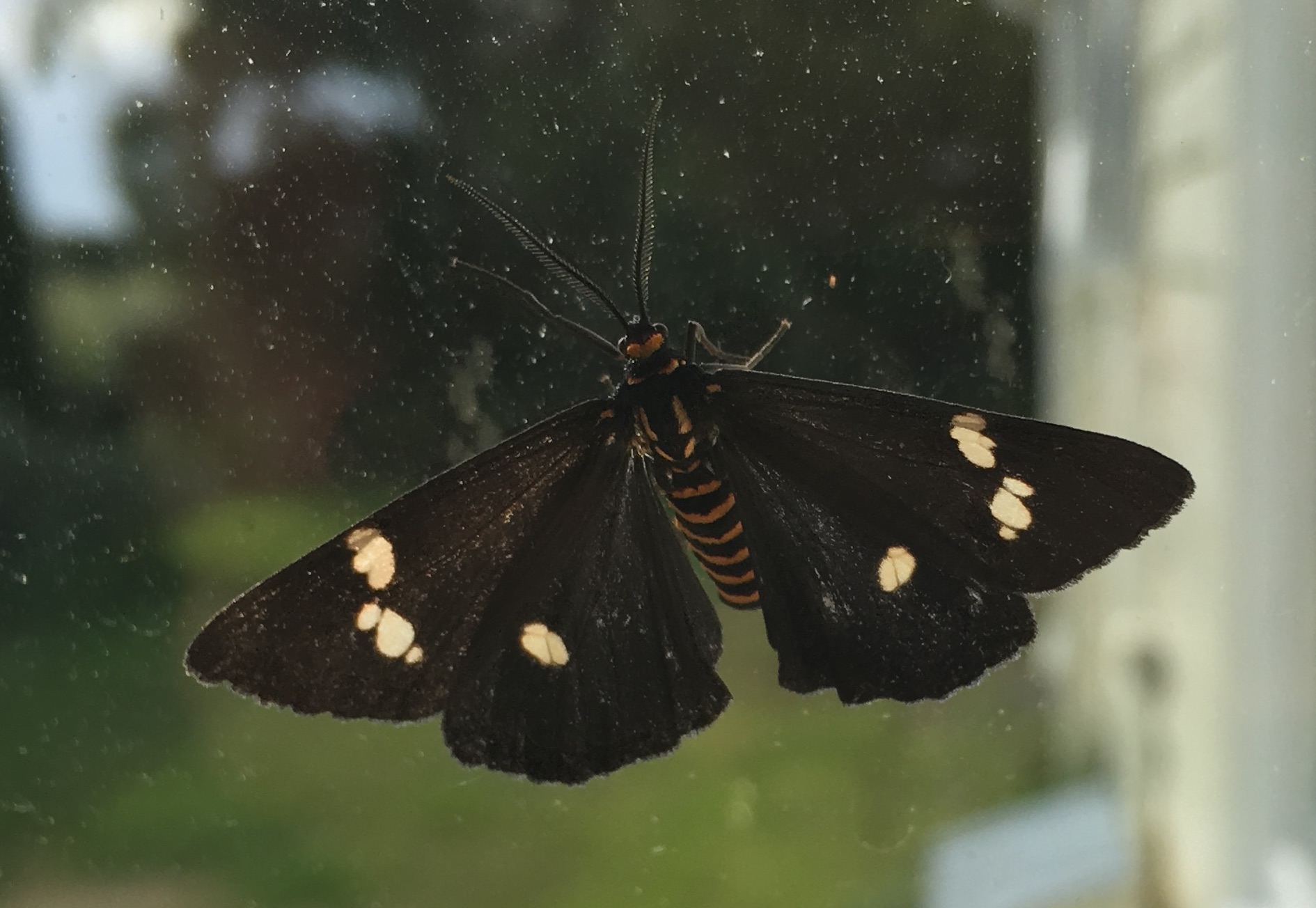
It’s the time of year when one of my favourite moths emerges—the magpie moth (Nyctemera annulata). Magpie moths are in the family Arctiidae—a family including many brightly coloured day-flying moths that threaten to blur the line between moth and butterfly. N. annulata is endemic to New Zealand, though it has a closely related Australian cousin, N. amica, with which it can interbreed.

Magpie moth caterpillars eat plants in the daisy family, especially in the genus Senecio. Common host plants include groundsel (Senecio vulgaris), ragwort (Senecio jacobaea), and cineraria (Jacobaea maritima, formerly Senecio cineraria).

We have large quantities of groundsel, and a few sizeable cineraria on the property, so we always have a healthy population of magpie moths. The caterpillars are black with orange ‘racing’ stripes, and somewhat hairy.

As you can guess from their colouration, magpie moths are poisonous. As caterpillars, they sequester toxins from the plants they eat. These toxins deter most predators. The shining cuckoo, however, is apparently quite fond of magpie moth caterpillars. It avoids the poison by eating only the insides of the caterpillar, leaving the bitter-tasting exoskeleton behind.

In addition to eating weeds like groundsel and ragwort, the magpie moth is a beautiful, colourful addition to the garden. It always makes me smile.

The Square Trees and other natural wonders…sort of

The rock at Hanging Rock Bridge.

Years ago, when my husband and I were Peace Corps volunteers in the Republic of Panama, we visited the famous Arboles Quadratos (the Square Trees) in El Valle de Anton. The Arboles Quadratos were, according to the guidebooks, amazing freaks of nature—trees with perfectly square trunks. These remarkable plants grew in a special grove in the rainforest behind the hotel in El Valle, and were one of the town’s main tourist attractions.

So we went to see them.

They were buttressed trees, like many rainforest trees are. And the buttresses made them…sort of squarish, if you had a little imagination. I think there were, maybe, four of them in a cluster along the trail. Their beauty was completely overshadowed in my mind by the rest of the forest around them.

My daughter and I recently had a similar experience. On a road trip, we kept passing signs for Hanging Rock Bridge. It seemed all roads led to Hanging Rock Bridge. We figured it must be something pretty spectacular, if so many signs pointed the way to it.

So we went to see it.

And, yeah, there was an overhanging rock near the bridge. It was kind of cool. But the landscape around the bridge, with stunning limestone outcrops in every paddock, was far more spectacular than the bridge’s rock. If you’d gone out of your way to see the rock at Hanging Rock Bridge, you’d be disappointed.

Plenty of other ‘natural wonders’ fall short of the hype surrounding them. Others, unknown by anyone but locals, are truly stunning.

Like the Iglesia de Piedra, the Rock Church, near our village in Panama. This narrow chasm was carved by a small stream, and it’s one of the most incredible places I’ve ever been—maybe 30 metres deep, and so narrow you can touch both walls. Vegetation covers the opening high above, and makes everything look green below. The stream is shallow, and frogs hop away from every step. At the back of the chasm is a waterfall plunging all the way from the surface.

No tourists make pilgrimages to the Iglesia de Piedra. Few outside the surrounding area have ever heard of it. But it knocks the socks off many a popular tourist destination.

The world is full of these hidden gems, and one of the most wonderful things about living in different places is finding the local wonders. The beautiful places tourists never hear about.

I’ll still go to see the Square Trees and the Hanging Rock Bridges of the world, but much of the wonder of the world is reserved for those who live with it every day.

A new species!

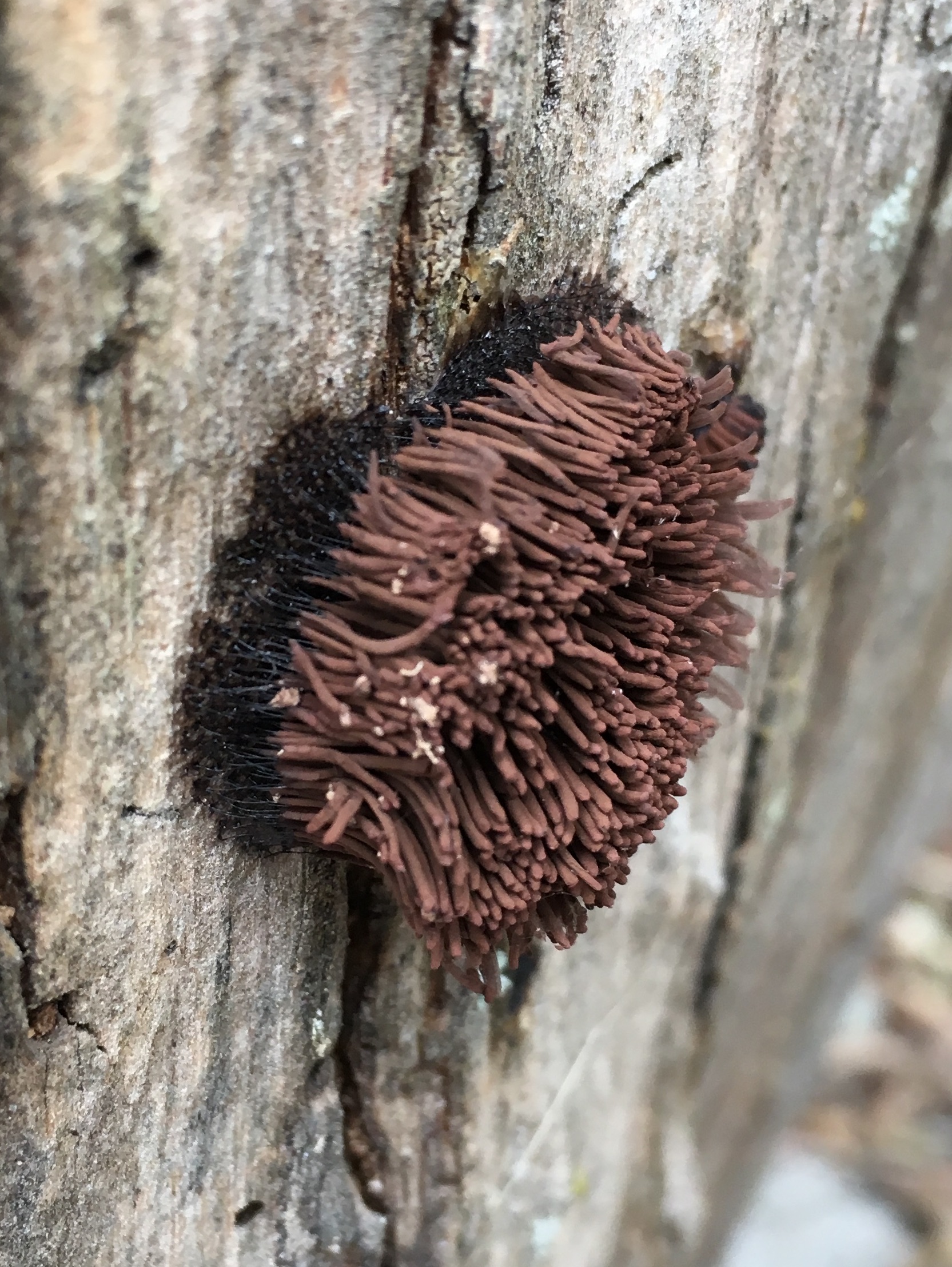
It’s always exciting to discover a new species in the yard. Yesterday we found a chocolate tube slime mould (in the genus Stemonitis). A beautiful creature, and aptly named.

If you Google chocolate tube slime mould, you get lots of websites calling it a fungus. Let’s just get this straight right now. Slime moulds are not fungi. Not even close. They’re not even in the same Kingdom of life. Saying a slime mould is a fungus is about as accurate as saying you are a fungus.

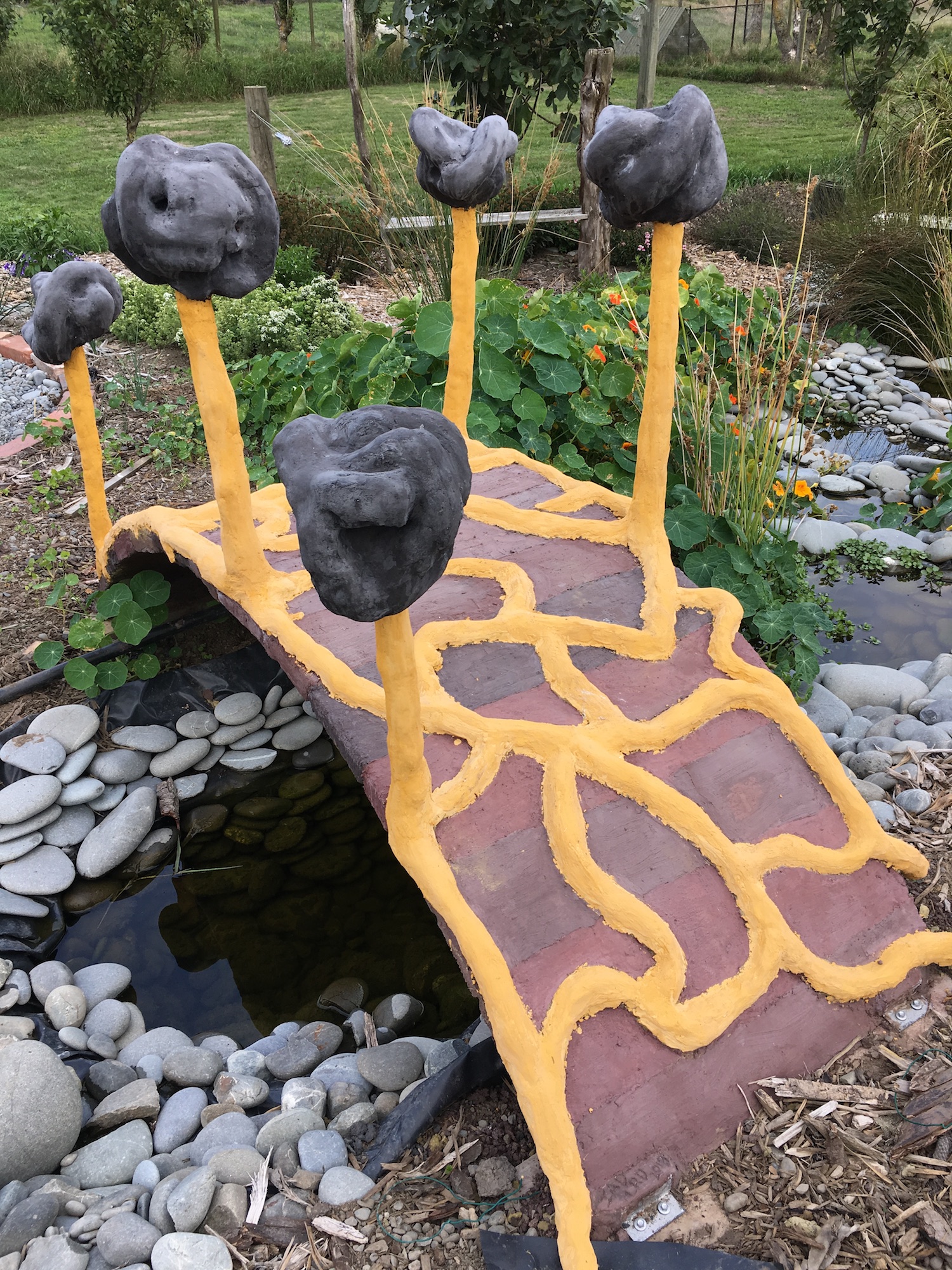
We’re a bit nutty about slime moulds here at Crazy Corner Farm … Okay, we’re a little more than a bit nutty about slime moulds. My daughter and husband have been working for months on a slime mould bridge modelled after Physarum polycephalum.

Slime moulds are some of the strangest organisms you’ll find in your back yard. Many are named for their looks, and one of the most common species goes by the name ‘dog vomit slime mould’.

The two groups of slime moulds, plasmodial and cellular, are quite different from one another, and both types are weird and wonderful creatures. Plasmodial slime moulds can cover several square metres, but are made of just one cell filled with thousands of nuclei. They creep across the ground like a giant amoeba with pulsing waves of cytoplasm, engulfing and eating bacteria.

But they’re more than just quivering bags of goo; they can solve mazes, even choosing the most efficient pathway if there is more than one. Cellular slime moulds (which don’t form enormous multi-nucleus cells) can join together to create a multi-cellular organism when the need arises for a larger, more mobile body.

Slime moulds may even save us from the growing problem of antibiotic-resistant bacteria—researchers are working on ‘training’ cellular slime moulds to sense and destroy resistant bacteria.

So you can see why we were excited to find another species of slime mould living on our property! Who wouldn’t be excited by it?

How To Eat a Whale

Melinda Mae took eighty-nine years to eat a whale, according to Shel Silverstein. How’d she do it? “…she started in right at the tail.” and “She took little bites and she chewed very slow, / Just like a good girl should…”

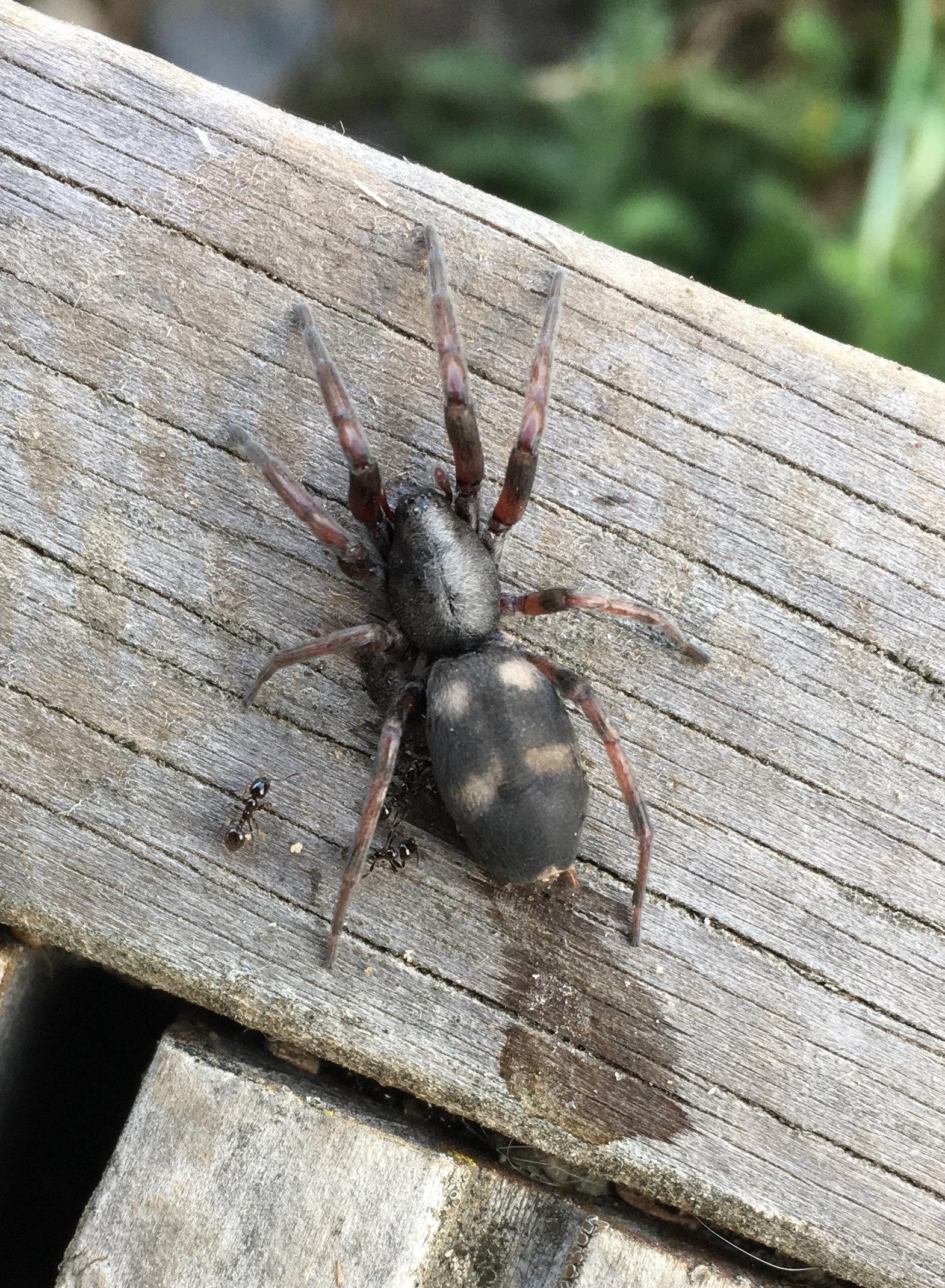
This morning I found this adult female white-tailed spider on my office deck. I don’t know what killed her—she’d dragged herself about 20 cm across the deck oozing hemolymph before succumbing to whatever it was—but by the time I saw her, the ants had found her.

At first, they swarmed over her body, biting at her legs, tugging at hairs. I looked closely with a hand lens—they’d made not a mark on her exoskeleton. Melinda Mae was lucky whales’ skeletons are on the inside.

Eventually, the ants stopped swarming, and I assumed they’d given up eating their ‘whale’.

But a few hours later, I checked again and noticed an ant slip underneath the spider’s body. Another photograph revealed the spider was shrivelling.

Some of the shrivelling would be from dehydration, for sure. But as I watched, I saw a steady stream of ants slipping in under the spider, then slipping out again. Something had punctured her, killing her. The ants had found the hole and were using it to access the soft bits inside.

I expect these ants will accomplish their task much more quickly than Melinda Mae did, but then, they’re working as a team.

So how do you eat a whale?

Well, if it’s got an exoskeleton, the answer is, from the inside out. And if you want to finish before you grow old, get some friends to help.

Hawksbeard: a Cheerful Weed

We’ve had recent, much-appreciated rain, and the grass is unusually green for January. But even with the grass growth, summer is weed season in the lawn.

More specifically, summer is weed flowering season.

Some of the weed flowers are uninspiring, and merely annoying—the dull greenish flowers of plantain, for example.

Others bring a splash of colour to what is normally a bleak time in the lawn.

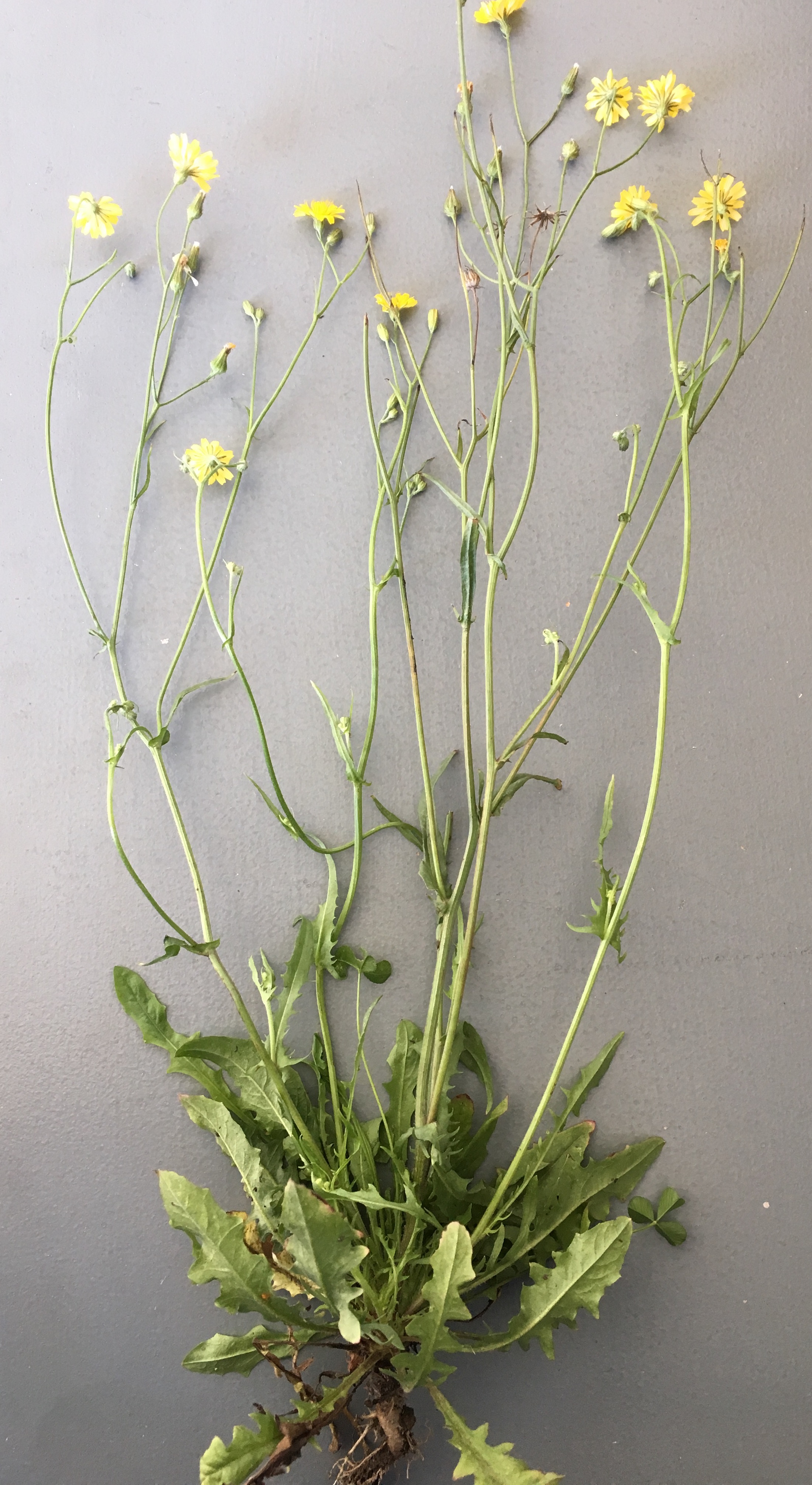
Hawksbeard (Crepis capillaris) is one of the more prolific colourful weeds in the lawn in summer. An annual or biennial member of the dandelion family, this plant bears small, cheery yellow blooms on tall, branched stems.

The NZ Plant Conservation Network shows hawksbeard as being naturalised in 1867 from Europe. Like its cousin dandelion, it was most likely brought to New Zealand on purpose as a food plant—it’s young leaves are edible. Like the dandelion, it is no longer valued as a food, but is considered a weed.

I will admit, the tall flower heads of hawskbeard can be annoying in the lawn. They seem to spring up overnight between mowings, and they slap against your legs as you walk through the yard. But I do appreciate their yellow blooms at a time of year when most other plants give up from the heat and drought. I have been known to use hawksbeard in flower arrangements, and their green rosettes are sometimes the only green to be found around the yard.

Rolling out the Welcome Mat

When we first moved to our house, most of the landscaping, at our place and at the neighbour’s, was non-native. Gorse, photinia, oaks, birch, macrocarpa…plants of little interest to native wildlife. We’ve slowly been replacing much of the non-native vegetation with natives. When the property next door changed hands, the new owner replaced the gorse hedges with natives. Our plantings are all maturing, and I’ve got my fingers crossed we’ll soon attract some native residents.

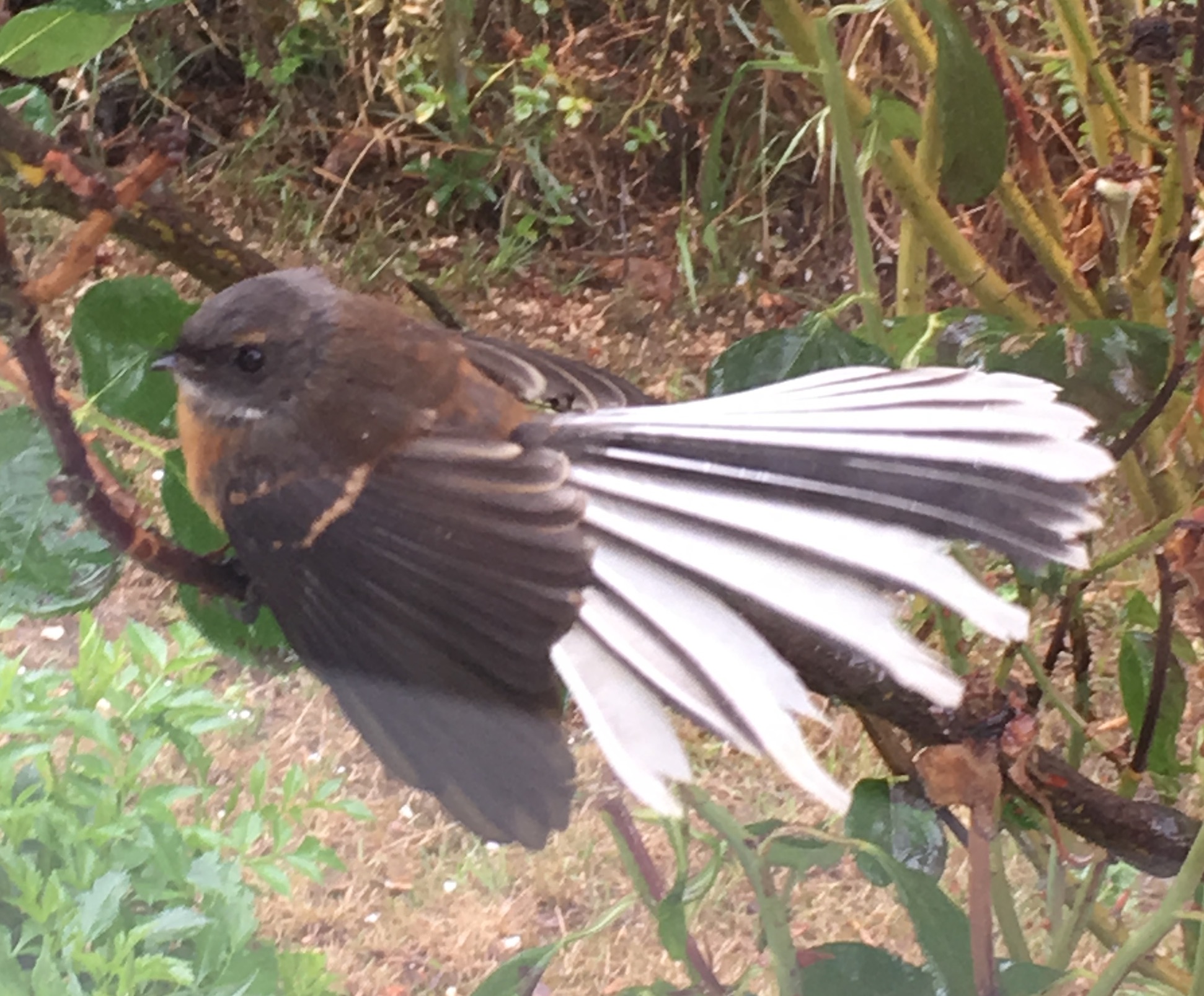
Over the years, piwakawaka (fantails) have shown up occasionally, usually in autumn, and only for a week or so before moving on. But this year, one has arrived in summer. He’s been flitting around for over a week now, chattering and declaring ownership of the place. I’m crossing my fingers, hoping he’ll stay.

Piwakawaka don’t stay still for photos, but he was talking to me through the kitchen window yesterday and, with the window as a bird blind, I was able to snap a couple of photos that weren’t just a blur of feathers. He’s a cute wee guy. I hope our welcome mat is acceptable to him.