Sticky Feet! The Eucalyptus Tortoise Beetle

Hanging up the laundry this morning, I found this lovely beetle making its way along the washing line. It’s a eucalyptus tortoise beetle (Paropsis charybdis). I see them occasionally, but with only one eucalyptus tree in the yard, they’re not common.

I’m quite fond of tortoise beetles. This one isn’t much to look at, but many species are sparkling gold, and my first glimpse of them, as a kid, was a truly magical experience that I’ve never forgotten. What tortoise beetles have in common is their domed tortoise-like shape.

Their shape, combined with some pretty awesome feet is what keeps them safe.

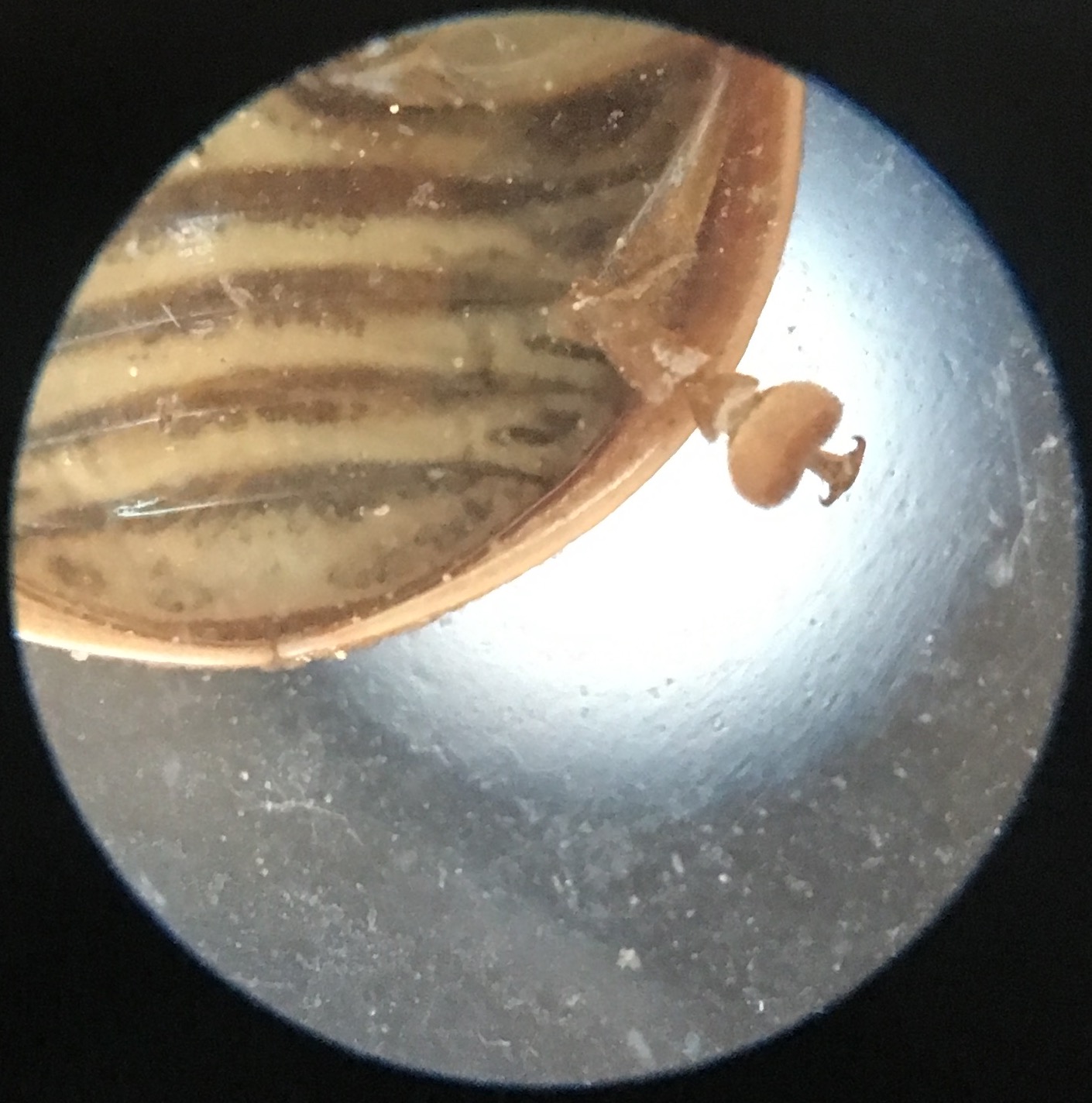
Tortoise beetles have wide pads on their feet (this one obligingly sat on a clear surface and showed its feet under the microscope). The pads are covered densely in short hairs, like the bristles of a toothbrush. Each hair is moistened by oil, which helps it stick to the waxy surfaces of leaves in the same way two wet drinking glasses stick together if they’re nested. The oil bonds to both surfaces and acts as glue. When disturbed, the tortoise beetle presses its feet against the surface, employing as many as 60,000 sticky bristles (about 10 times more than other beetles have) to keep it attached. These sticky feet, combined with the dome-like shape make it difficult for predators to dislodge the beetle.

Entomologist Tom Eisner performed a series of elegant experiments with the palmetto tortoise beetle, attaching weights to the beetles to see how much force they could withstand before being pulled off a leaf. He found they could hold up to 240 times their body mass. Those are some seriously sticky feet!

So if their feet are so sticky, how do they walk? Eisner showed, by looking at palmetto beetle footprints on glass, that when they walk, they don’t let all the bristles on their feet touch the surface. Their full adhesive power is only deployed for defence.

I don’t think anyone has tested eucalyptus tortoise beetle grip strength, but it’s definitely impressive. I popped this one into a narrow jar, and it never hit the bottom—it reached out with one leg, like some movie superhero, and grabbed the smooth wall of the jar, arresting its fall. Then, when I tried to get it out of the jar, it stuck like glue to the side. I had to slide a stiff piece of paper under its feet, prying them up one by one. It was obliging for the photo shoot, but when I tried to let it go, it stuck itself to the paper. It took a few determined nudges, but eventually I got it to the edge of the paper and it dropped off.

The eucalyptus tortoise beetle is not native to New Zealand, and is considered a pest in the forest industry here. Still, I have to admire the beetles’ sheer tenacity, and am willing to share my eucalyptus tree with them for the opportunity to see those sticky feet in action.

Ice and Fire

One of the things I like best about springtime here is the juxtaposition of hot and cold, especially in the high country. The sunshine is warm, but winter lingers in the shade. I’ve gone hiking in shorts and t-shirt through 15 cm of snow in past years.

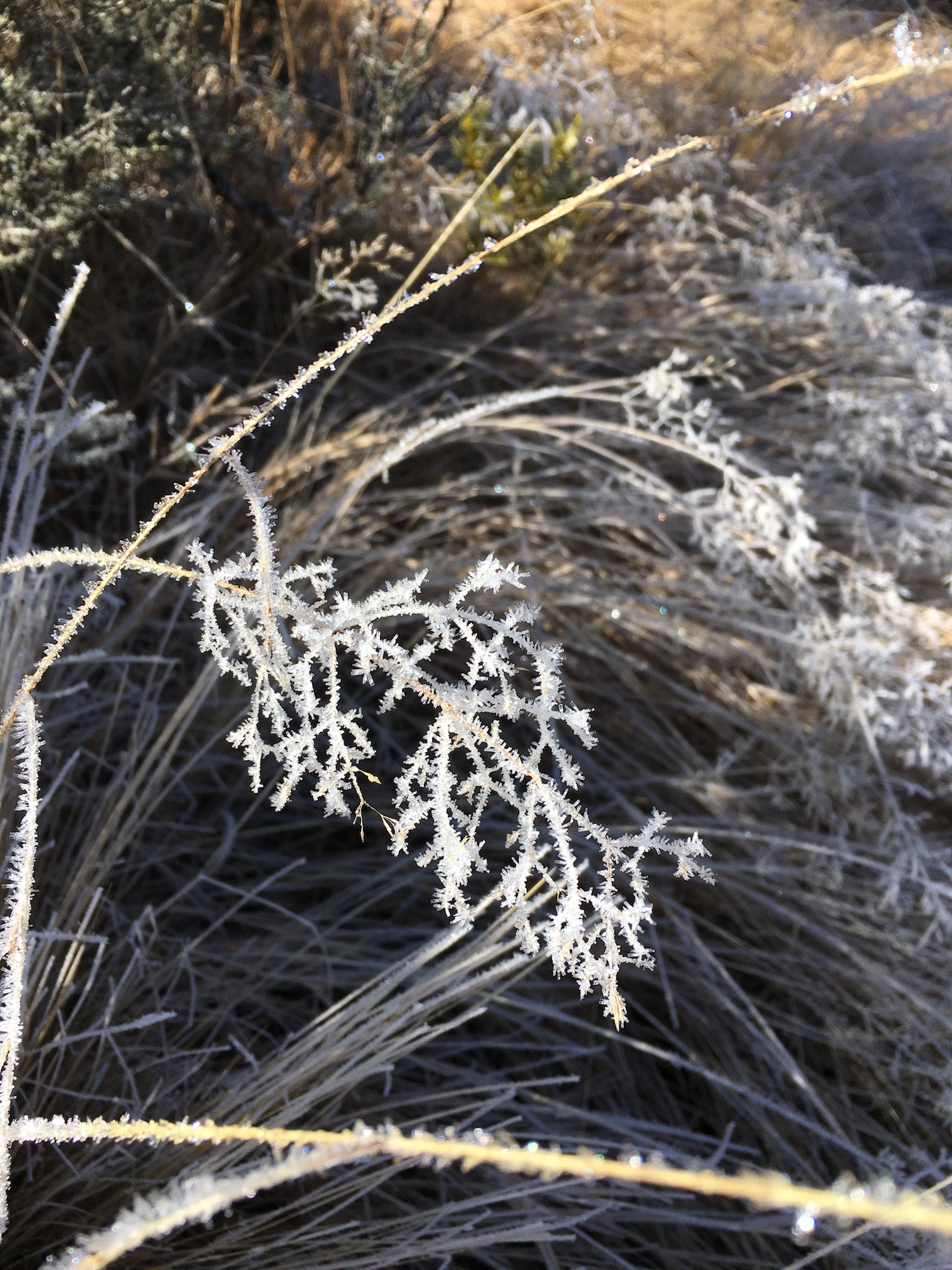
This weekend, we didn’t make it up to snow, but there was spectacular frost on our little Saturday jaunt. Hiking up the shaded side of a hill, we were treated to glistening plants as the first rays of the sun hit thick frost.

In addition to the frost, we crunched over a lot of needle ice. Needle ice can occur when the soil temperature is above freezing, but the air temperature is below freezing. Liquid water rises through the soil via capillary action and freezes on contact with the air. As more water is drawn upward, the ice needles grow in length. They’re common in the high country in springtime, when warm sun heats the ground during the day, but the temperature drops quickly after dark.

Ice needles are more than just a curiosity. They’re a significant factor in soil erosion, because they often push soil upward along with the ice. This loosens the top layer of soil, making it prone to erosion by wind and water.

The air was cold on Saturday morning, and as we started up the hill, we were well-bundled. But like all good tracks in New Zealand, this one started off by going straight up. Between the climb and the sun, we were soon stripped to our t-shirts, enjoying the crunch of ice underfoot and the warmth of the sun overhead.

Shining in the Dark

Not much to look at in the light, but spectacular in the dark.

I’m a morning person. I’m rarely in bed past six o’clock, and am often up long before that. But I will admit that even I get tired of getting up in the cold and dark at this time of year.

Of course, sometimes the most amazing things happen before the sun is up.

Yesterday morning, I stepped into the chicken paddock feed ‘the girls’. It was still dark, with just enough starlight to see my way. I bent to tip a scoop of feed into their dish and froze.

Something glowed on the ground—the eerie glow of bioluminescence.

I’ve seen bioluminescence while feeding the chickens before—a tiny sea creature whipped up and blown in with a violent snowstorm—but this was different.

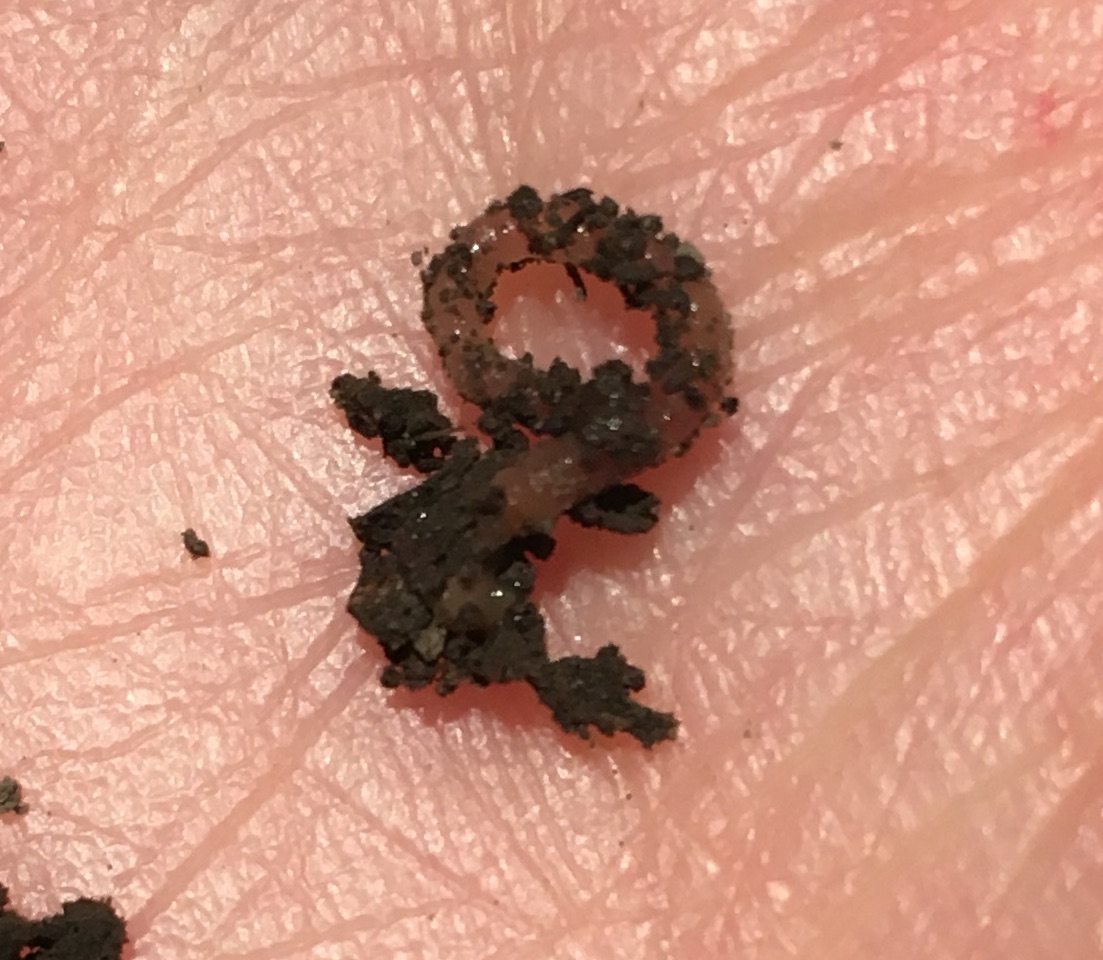
I flicked my light on and saw something pink glistening on the ground. When I tried to pick it up, I discovered it was the head of an earthworm.

A brightly glowing earthworm.

I couldn’t get it out of the ground in order to bring it in and identify it yesterday, but I took the spading fork with me this morning when I went to feed the chickens, and I collected a little glowing earthworm from where I’d seen one yesterday.

I already knew that at least one of our native earthworms is bioluminescent—Octochaetus multiporus, which I’ve blogged about before. But O. multiporus grows to enormous size, and I’ve never found any worms in the garden that match its description. Doing a little research, I found that bioluminescence is quite widely employed by earthworms, presumably as a deterrent to predators.

Most earthworms produce light in much the same way that fireflies do, with a chemical known as luciferin that reacts with oxygen-containing compounds in the presence of luciferase to create light.

So, what species is my little glowing worm? There are about thirty New Zealand species within the genera where bioluminescence has been recorded. I’ve found record of only two of those species being bioluminescent: O. mulitporus and Microscolex phosphoreus, a small worm considered native here, but widely distributed around the globe. My best guess is that it’s M. phosphoreus, but data on that worm’s distribution in New Zealand is almost nonexistent (it’s been recorded from only one location), and data about any earthworm in New Zealand is scanty. Perhaps my worm is M. phosphoreus, but it might also be a worm in which bioluminescence hasn’t been recorded. After all, most people aren’t out in the garden at night to notice glowing worms.

Hopefully, I’ll be able to have the worm identified by an expert. If not, well, I still think it’s the coolest thing I’ve seen in a long while! And I won’t be grumbling about getting up in the dark and cold tomorrow.

Nifty Nematodes

Nematodes under the microscope. Image: CSIRO

A week or so ago, during a writing break, I spent some time peering through the microscope in my ongoing quest to find tardigrades in our yard. I had no luck on the tardigrades, but as usual I came across lots of fabulous little invertebrates.

Perhaps the most common creatures under the microscope were nematodes. No surprise, really. Nematodes are the most common multicellular organisms on earth; there are several million in every square metre of soil here in New Zealand. Most are tiny (less than 3 mm). But not all are so minuscule; the largest, a parasite of sperm whales, can grow to 8 to 9 metres in length.

Nematodes can be free-living or parasitic on animals and plants. In fact, most animals (vertebrate and invertebrate) and plants are host to at least one specialist nematode parasite. Free-living nematodes eat bacteria, fungi, or small invertebrates (including other nematodes).

As you can imagine, nematodes are of huge importance ecologically, economically, and from a human health perspective.

Humans are host to about 60 species of nematode. Diseases caused by nematode parasites in humans include: ascariasis (an intestinal infection that can cause growth retardation and a variety of intestinal and other problems), hookworm (causing anaemia and developmental problems),filariasis (a lymph infection, causing swelling in many body parts, including elephantiasis of the legs), trichinosis (an intestinal infection causing diarrhoea, fever, and other symptoms). Many nematode infections are asymptomatic, and it’s likely most of us play host to nematodes for most of our lives.

The control of nematodes is important in agricultural systems. Worldwide crop loss to nematodes is estimated to be 12.3 percent of production (US$157 billion). Livestock and domestic pets are also susceptible to nematode infection, and millions of dollars annually are spent to control nematode infections including lungworm, hookworm, trichinella, heartworm, and many others.

But nematodes aren’t just doom and gloom. They’re integral parts of natural ecosystems, and critical components in nutrient cycling (especially nitrogen) and food webs. They regulate the bacterial population in the soil, and provide food for many organisms (including some fungi, which catch nematodes with lassos, like tiny cowhands). They can be useful, too. Some insect parasitic species are bred to help control insect pests—a highly species-specific, organic control method.

And like the tardigrade, nematodes are tough. A culture of live nematodes aboard the Space Shuttle Columbia were the only organisms to survive the re-entry breakup of the shuttle, making them the only organism known to survive unprotected atmospheric descent.

Fabulous Flatworms

Australian flatworm

One of the common animals in my yard and garden is the flatworm. Strictly speaking, “the” flatworm here in New Zealand is actually multiple species—possibly up to a hundred—but they have been poorly studied, so it’s unclear just how many species there are.

Flatworms are some of the most impressive predators in the garden, able to consume prey up to 55 times their own size. That’s the equivalent of your house cat taking down a female elk. They eat snails, slugs, and earthworms, digesting them externally before sucking them up with one or more mouths located midway along their bodies.

I love to find flatworms around the yard. They come in striking colours, and some have lovely brown stripes—the orange Australian flatworm (Australoplana sanguinea) is most common in my garden, followed by the relatively nondescript brown New Zealand flatworm (Arthurdendyus triangulatus). Like the slugs they eat, they prefer damp places, and they protect themselves with a layer of mucous. Flatworm mucus is stickier than slug mucous, and they use it to attach themselves to their prey during feeding.

New Zealand is full of non-native invasive organisms, but New Zealand flatworms are one of the few organisms that have turned the tables and become pests overseas. They are easily transported in potted plants, and have successfully invaded Ireland and Scotland. Though there was widespread panic at first about their potential to threaten the local ecology, they appear to have caused little damage to earthworm populations in the UK. Like most cold-blooded animals, their appetites are small. Far from being a devouring hoard, each flatworm can manage, on average, just one earthworm per week. And if they don’t manage to find an earthworm every week, it’s not a problem—they can go a year without eating.

To the Beach

While all you folks in the Northern Hemisphere are flocking to be beach for a swim and some sun and sand, we are shivering down here in the dark days of winter. But that doesn’t mean we don’t go to the beach.

Research from England has found that people living by the coast have better physical and mental health than those living inland. I can certainly understand that.

Growing up three hours’ drive from the beach, I visited the ocean about once a year. My husband, raised in the midwestern US, doesn’t remember seeing the ocean until age twelve or thirteen.

Today, we live a mere four kilometres from the beach. When the wind is calm, we can hear the surf. When the wind is high, we can smell the sea. Even without research to back us up, we’ve learned to head to the beach when we’re stressed.

Our beach isn’t a white-sand swimming beach—it’s made of cobbles, and the waves pound viciously on the shore. It’s not a place to swim, nor really a place to sit for very long (those rocks get uncomfortable fast). It’s a place to walk. A place to search for wave-polished rocks in glittering colours. A place to watch sea birds, dolphins, and the occasional seal. A place to leave all the stress of daily life behind (I challenge anyone to remain stressed while watching dolphins cavorting in the waves).

Researchers point to the calming blue colour, the hypnotic sound of waves, and the cultural context of the beach to explain its calming effect. But for me its influence is more profound. Our beach is usually free of other people—on a busy day you might see four others. From the beach, it is difficult to see any sign of humans at all—the odd bit of flotsam, but not even much of that. On our beach, the world is reduced to sky, water, and rock, shared only with wildlife. It’s easy to imagine the world is in better shape than it is. It’s easy to believe the vast ocean will endure, in spite of human stupidity. It’s easy to think those rare Hector’s dolphins, which we see nearly every time we visit the beach, are actually common. For the space of time we inhabit the beach, all is right in the world.

It doesn’t last, of course, but it’s good to have that escape so close at hand.

Beautiful Brawny Barnacles

My daughter and I went for a walk on the beach after school yesterday. It was chilly, but calm, with a clear mid-winter sky and dolphins in the surf.

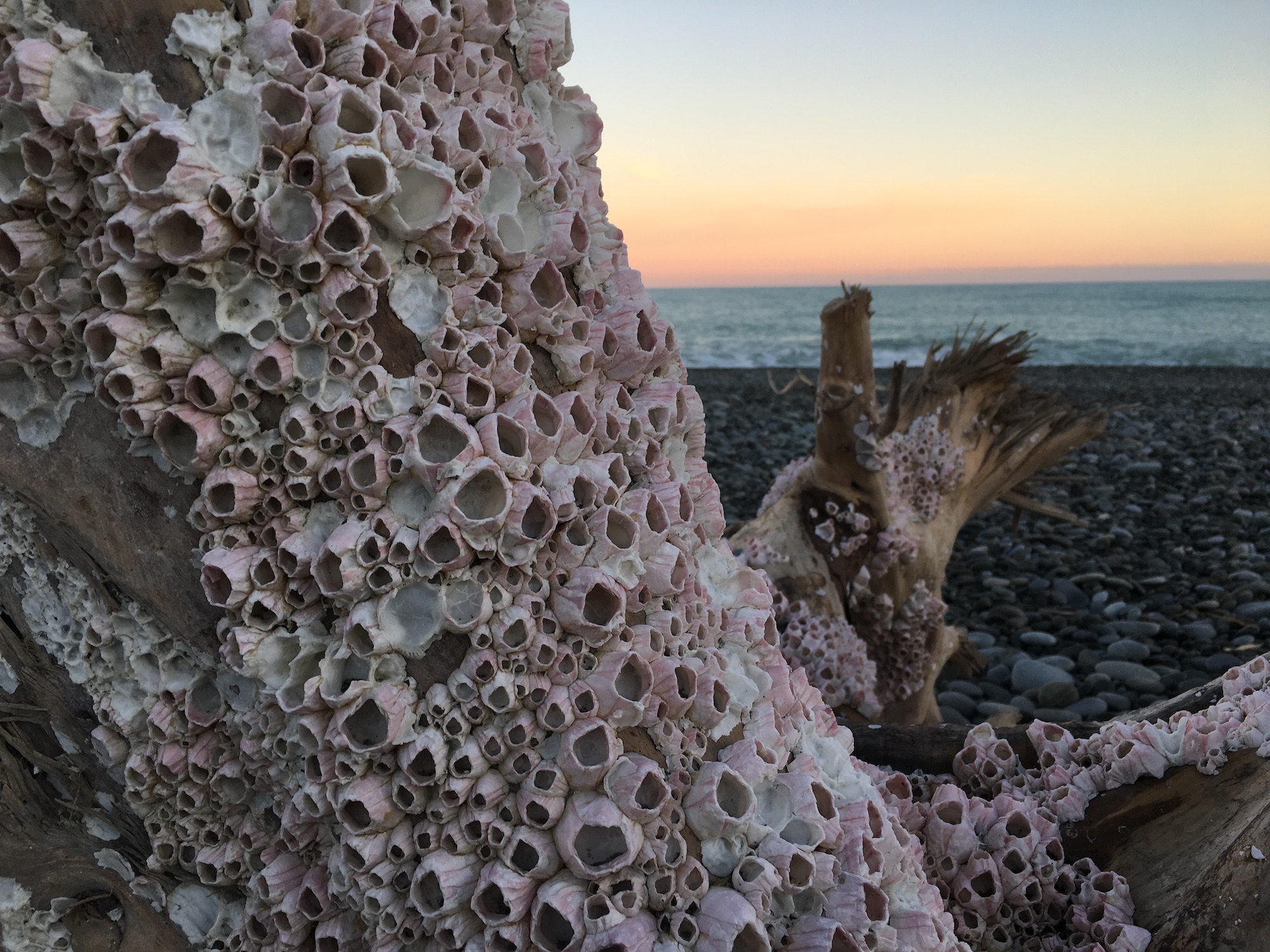
Washed up on the beach was a large tree stump crusted with barnacles whose colours mirrored the evening sky. The size and profusion of barnacles indicate the tree was lodged in the water for a long time before it was hurled onto our beach.

Barnacles are strange creatures. They’re crustaceans—kin to crabs, shrimp, and lobsters—but they don’t look anything like their relatives. Barnacles have given up the ability to move on their own (after a brief mobile larval stage), and instead settle down in places where the water moves around them—intertidal zones, the backs of whales and the bottoms of ships are popular barnacle real estate. Instead of having to wander in search of food, moving water carries lunch to the barnacles, and they filter it out of the water with feathery appendages called cirri.

Staying put in places where waves pound day in and day out isn’t easy. Barnacles produce a ‘glue’ that’s one of the strongest natural adhesives around. With a tensile strength of 35 N/mm2 (5000 psi), it rivals the best commercial epoxies. In a strange quirk of biology, the glue is produced by a gland at the base of the barnacle’s antennae, and so the animal is glued head-first to the substrate. Once glued to its home, the barnacle forms a ring of plates around its body to protect it (this is all that is left of the barnacles pictured here—the animals themselves have died).

There are costs to gluing oneself in place. Unlike other sessile animals like corals who release their eggs and sperm into the water for fertilisation, most barnacles rely on internal fertilisation. To reach their neighbours and manage this feat, the hermaphroditic (both male and female) animals have penises that can be 8 times the length of their bodies. Until recently, researchers thought this was the only way barnacles could reproduce, but in 2013, a study found that at least one species of barnacle (with a particularly short penis) can capture sperm from the water if it’s too far from its neighbours.

Barnacles are of human importance. They encrust ships, leading to increased drag and fuel costs. But their habit of attaching themselves to all sorts of debris can also be used forensically to track marine wildlife like whales and turtles, items from shipwrecks and airplane crashes, and marine debris. Additionally, barnacles are considered culinary delicacies in Spain, Portugal and Chile.

Beautiful and brawny, weird and wonderful, barnacles always make me smile.

Backyard Biodiversity

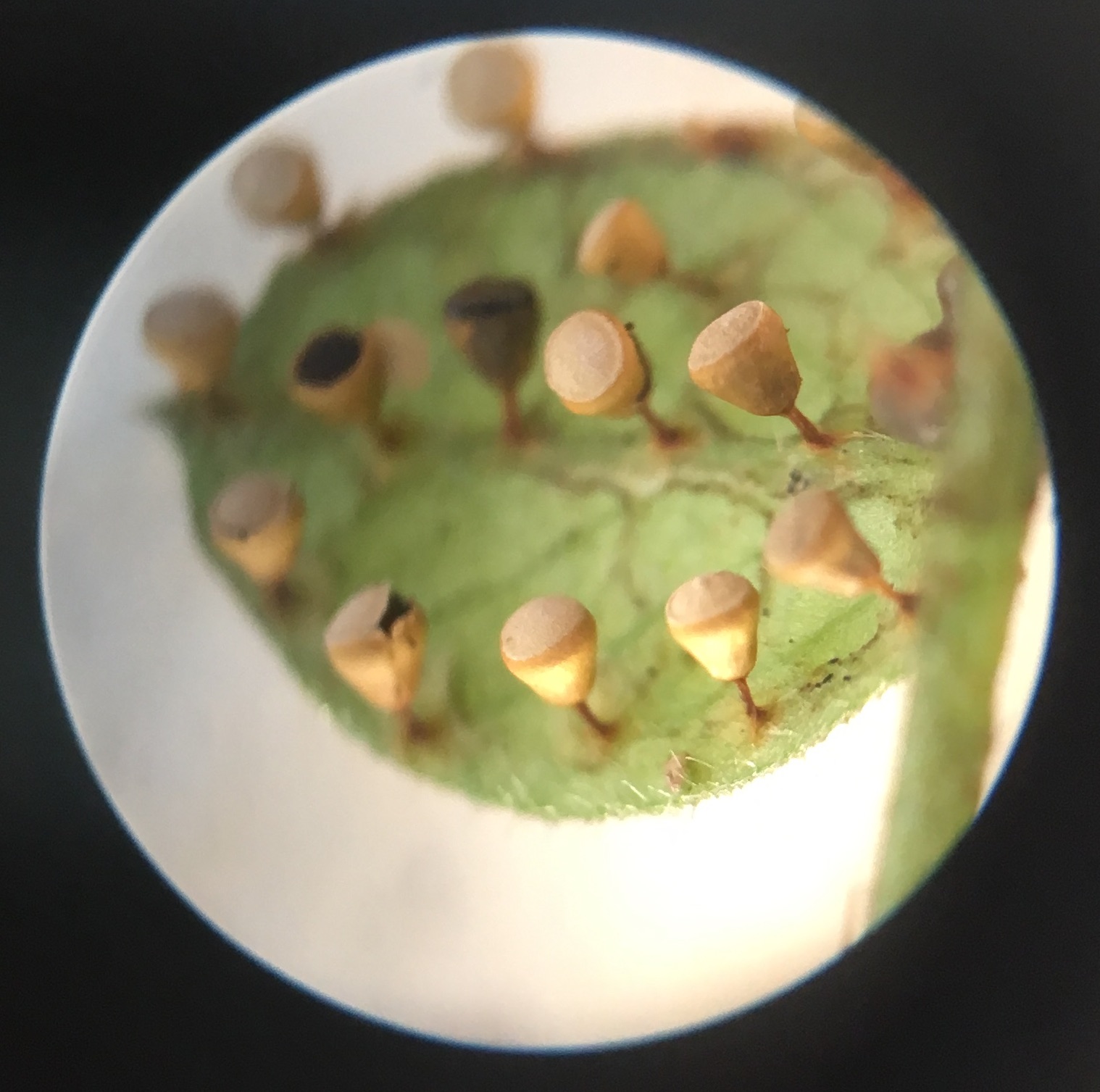
Craterium minutum

I know it’s been a good weekend when I arrive in my office Monday morning to find my microscope in the middle of the desk, and dirt and bits of plant material strewn about.

It means I’ve been outdoors, seeing cool stuff, identifying plants, insects, or other organisms.

Once you start looking at and identifying what lives around you, the variety is astounding. A glance at the citizen science website iNaturalist shows a pile-up of dozens of observations at our address—and those are only the species we’ve bothered to upload.  I’ve identified 58 species of weeds in the vegetable garden alone. We have half a dozen slime moulds, dozens of fungi and lichens, who knows how many insects and other invertebrates. Then, of course, there are the birds, rats, mice, stoats and other vertebrates. I’ve never bothered to make lists of anything beyond the weeds.

So here in the dark depths of winter, I’ve decided to start a comprehensive list of the biodiversity on our little acre and a half. It will take time. It will require my microscope and many Monday mornings brushing dirt off my desk. But wouldn’t it be cool to know exactly how many other species we share this patch with?

And though many of the species I’ll put on my list are ones I’ve noted many times before, I’m sure some will be new and surprising, like the beautiful slime mould, Craterium minutum my daughter found last week.

Because, the truth is, we needn’t travel far to find natural wonders. We merely need to look closely and have a sense of wonder.

Here Comes the Sun

After weeks of grey, unending drizzle, we’re finally seeing a bit of sun. Mushrooms abound in the yard, revelling in the dank mist we’ve been swimming through for a fortnight. We are all eagerly awaiting passing of the solstice and the lengthening of the days.

Though it is still pretty dark and drear, and the days will still be short for some time, there are signs of the spring to come.

Lambing has started. This is the time of year when the neighbours grow noisy, with lambs and ewes calling to one another day and night.

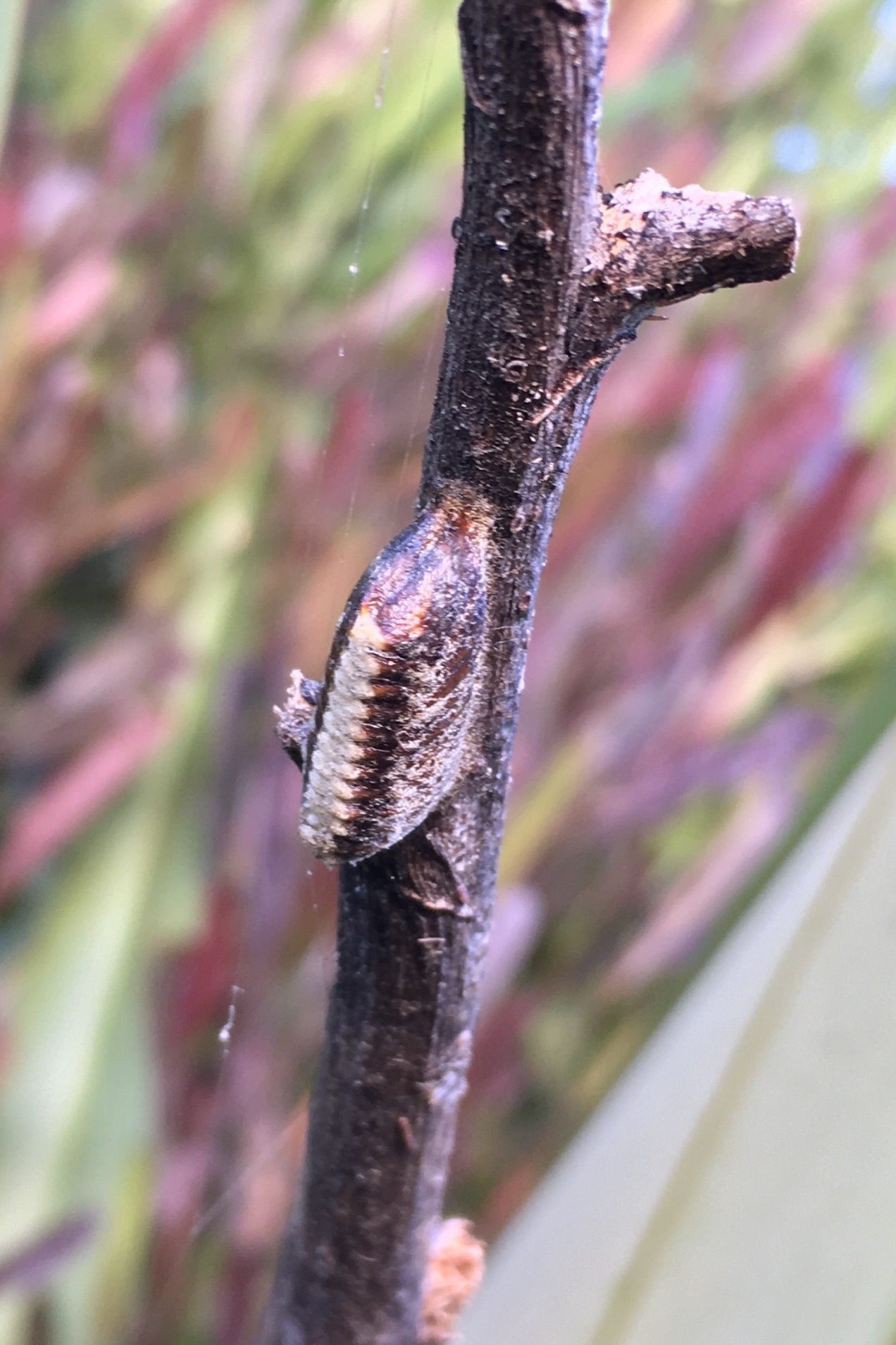
The preying mantids are gone, but their egg cases are dotted around the yard, promising a healthy population of my favourite predators come spring.

The daffodils and snowdrops are coming up, and I’ve even seen them blooming in other people’s yards.

And tomorrow is the solstice. Friday, the sun will remain above the horizon fractionally longer than it did the previous day. We’ll be on the upswing.

Beautiful Basket Fungus

Mature fruiting body

One of my favourite fungi is Ileodictyon cibarium, the basket fungus, native to Australia, New Zealand and Chile. We have been treated this year to an amazing display of these fungi in our recently wood-chipped pond garden. Usually we don’t notice them until the fruiting bodies are fully formed, but because there are so many this year, we’ve been able to watch their whole emergence, from egg-like volva to lacy soccer ball.

Aside from their striking look, there’s nothing particularly lovely about these fungi. The basket fungus is in the family Phallaceae, also known as the stinkhorn fungi. Members of this family—you guessed it—have a foul odour (and many are phallus-shaped). The carrion or dung-smelling fruiting bodies attract flies to disperse the spores. Supposedly, the young fruiting bodies are edible … but not very tasty, as you can imagine.

Immature volvae

In spite of their smell, basket fungi have a certain celebrity status, owing to their remarkable structure. In fact, in Hagley Park in Christchurch there used to be a play structure in the shape of a giant basket fungus. I’m not sure if it’s still there—my kids don’t frequent playgrounds anymore—but it was always a favourite with my kids.