Dobsonflies

Photo: Geoff Gallice

Photo: Geoff Gallice

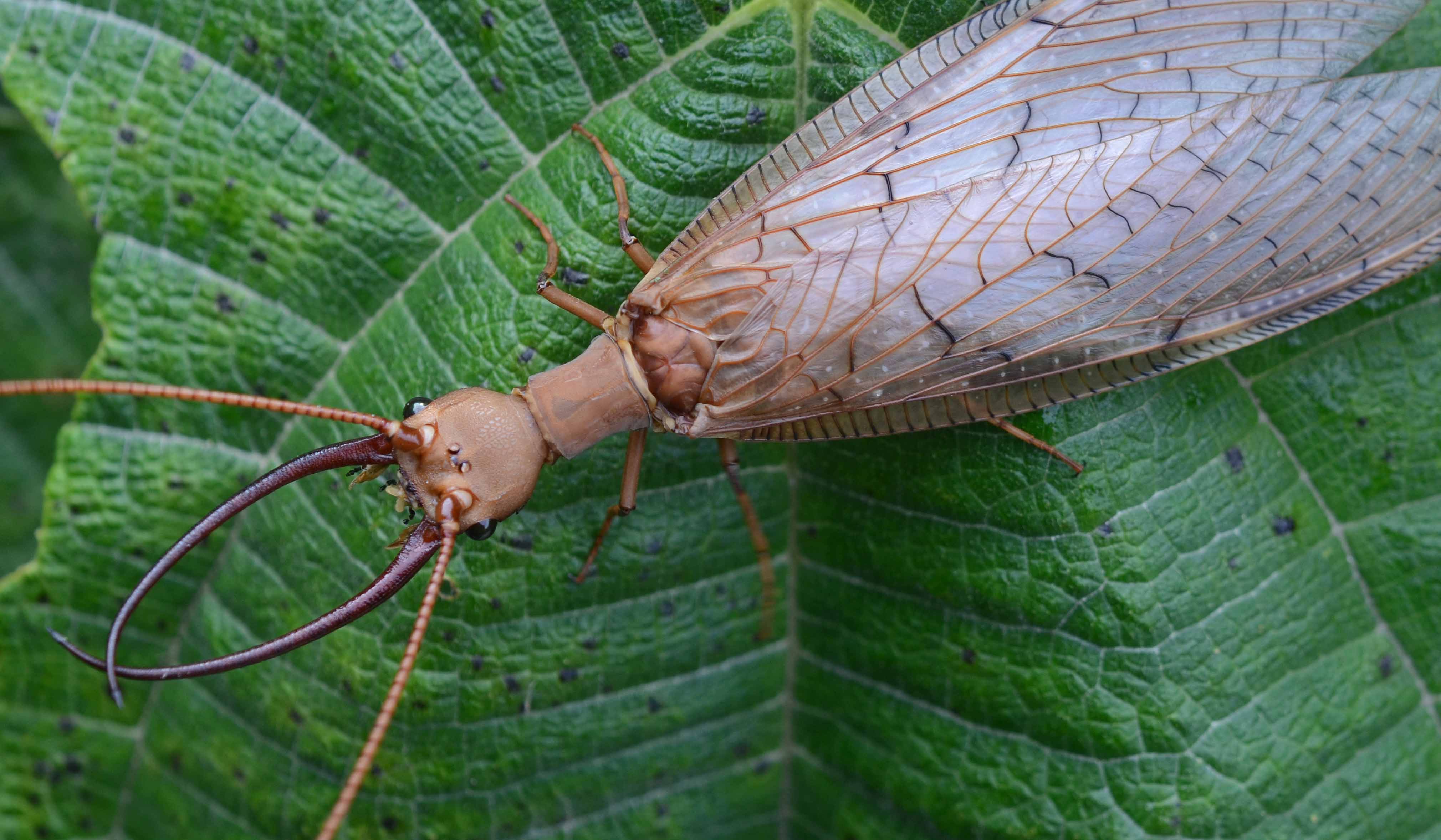
One of the insects I wish we had in our pond is dobsonflies. When I first learned the insect orders, the dobsonflies were lumped with the lacewings. Now they’ve got their very own order–Megaloptera. So, of course, since they have their own order, they need their own poem!

Megaloptera, helgrammite!
Known as toebiters.
When larvae bite

Adults are gentler,
Though they still look fierce
Their scimitar jaws
Are too weak to pierce.

Massive jaws
And flashing wing
Woo the ladies
But don’t catch a thing.


Puddles of Crickets

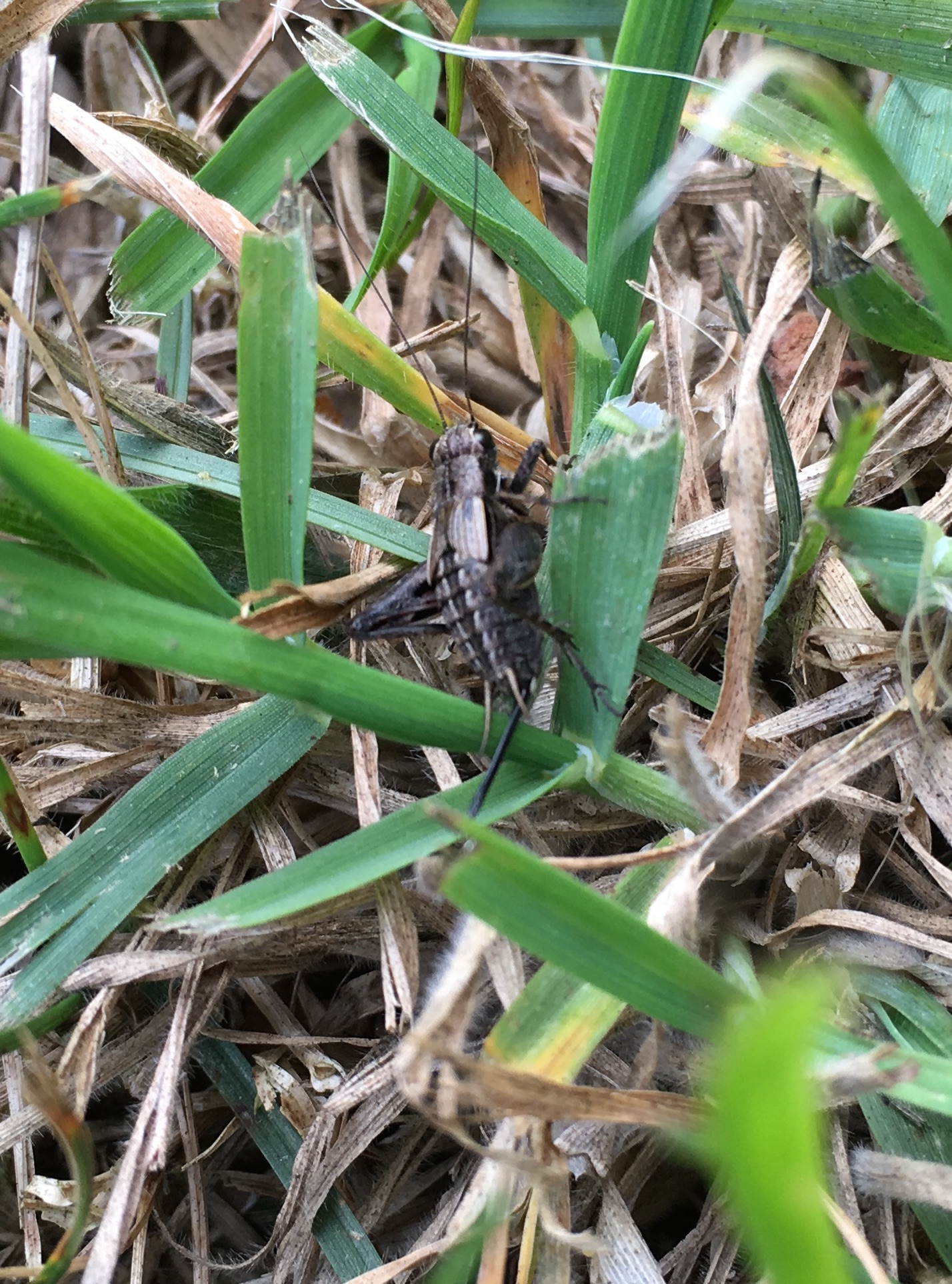
A female small field cricket--the long ovipositor (egg laying tube) at the rear tells you she's a girl.

A female small field cricket–the long ovipositor (egg laying tube) at the rear tells you she’s a girl.

It was like walking through puddles, my daughter said.

There had been no rain.

But the grass was so alive with crickets, they rippled away from every step like splashes of water.

By the time I got there, she had splashed all the crickets away, but I could still hear them. Their little bell-like songs have been a constant background noise all summer, and are particularly loud now, in autumn, when most are adults.

It’s only the males who sing, and they do it by rubbing their short, leathery wings together. The song is fiendishly difficult to locate—it sounds like it’s coming from a dozen places at once, and finding a calling male is all but impossible for a predator. The other crickets are able to do it, though. Males’ calls stake out their territories and attract females.

When I ran the Bugmobile, I used to take crickets to schools, and I always wanted to have a couple of males so the kids could hear them singing. Catching males was a challenge. Not only are they difficult to locate by sound, but if you do stumble across one, it will drop immediately to the ground and scurry underneath the leaf litter like a cockroach. Females, on the other hand, take great bounding leaps to get away, making them easy to catch in a sweep net. I could collect a dozen females in one sweep of the net, but it might take me half an hour to search out as many males.

It was the same story when I went to photograph them for today’s blog post. Males singing all around me, and not one available for the camera. The girls were more obliging. It wasn’t quite like walking in puddles, but there were an awful lot of them hopping around in the grass.

Fungal Forest

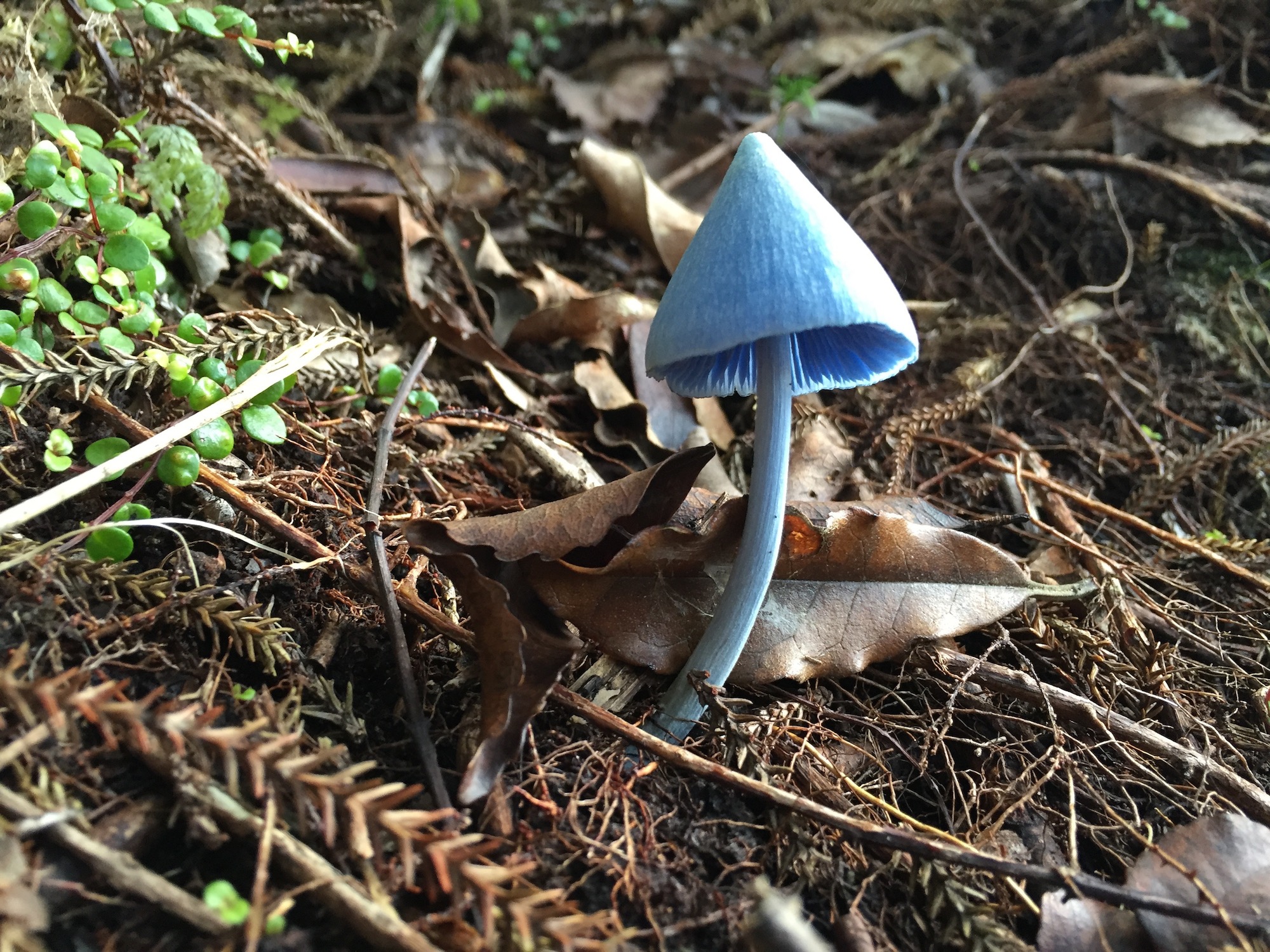
Entoloma hoschstetteri--the only fungus that appears on a nation's currency.

Entoloma hoschstetteri–the only fungus that appears on a nation’s currency.

Over the weekend, we went on a lovely hike from Okarito, through the bush up the hill behind the town, over to the next lagoon, and back via the beach.

The beach part was, naturally, lovely, with huge waves, trickling waterfalls down the cliffs, and a lazy seal who watched us pass.

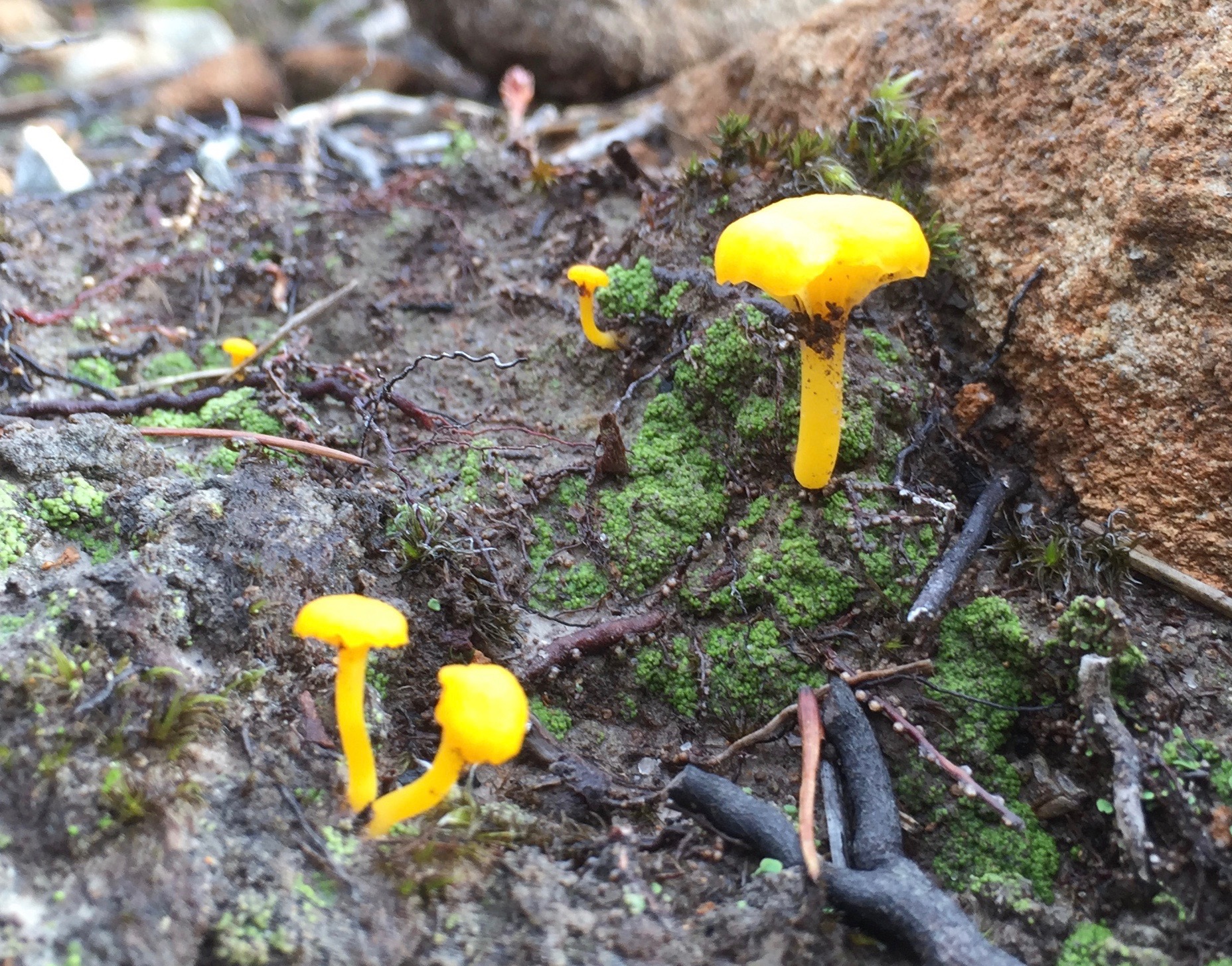
Hygrocybe spp.--known as waxcaps--the Crayola of the fungi

Hygrocybe sp.–known as waxcaps–the Crayola of the fungi

But the real beauty lay on the forest floor. The track was like a Disney storybook forest, with colourful mushrooms everywhere. It just needed a few gnomes or fairies to be complete.

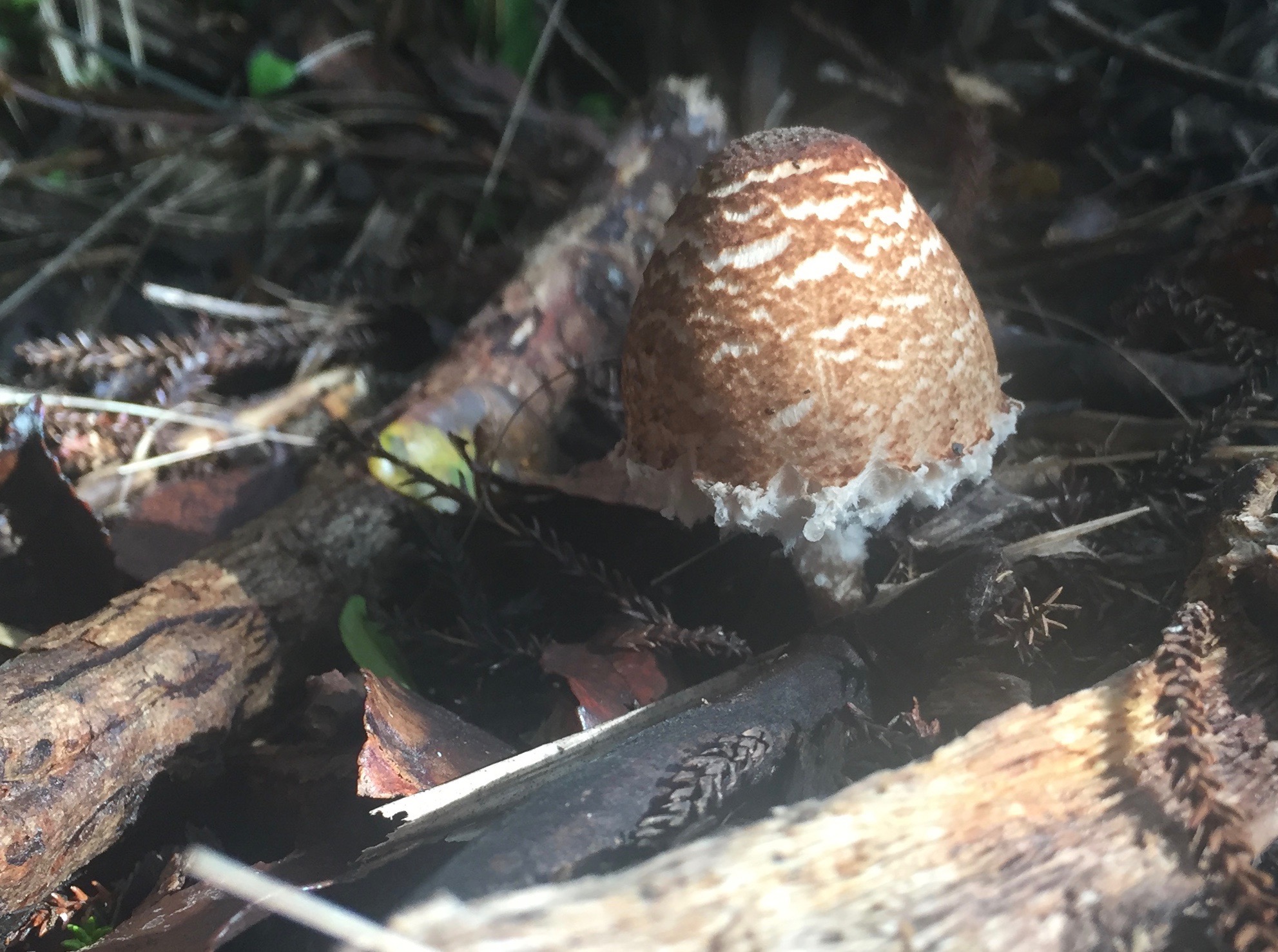
This unknown mushroom had a lovely lace petticoat.

This unknown mushroom had a lovely lace petticoat.

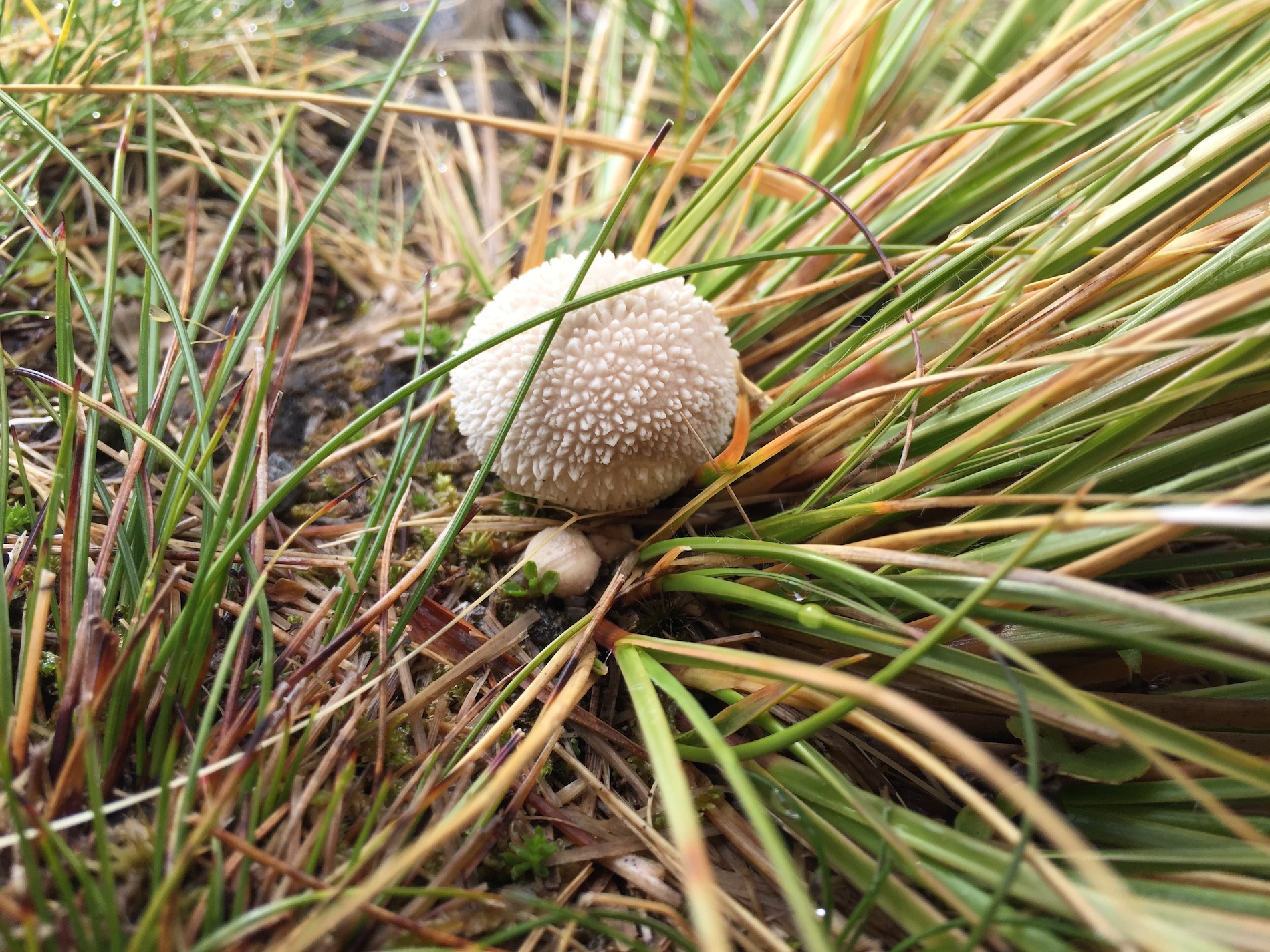
Lycoperdon spp--a puffball. The genus name means "wolf fart"

Lycoperdon sp.–a puffball. The genus name means “wolf fart”

Another member of the genus Hygrocybe

Another member of the genus Hygrocybe

Otira Valley

2016-03-25 10.41.03 smWe spent the past three days on the West Coast. On the way over the mountains, we stopped for a hike up the Otira Valley.

The track goes through stunning, diverse alpine vegetation, much of which was in seed at this time of year—lots of weird and wonderful berries to be seen! Though we were lucky to avoid being rained on ourselves, there had been recent rain, so the track was wet, and every little rivulet was running. The Otira River roared below us.

The day was moody, and low clouds shrouded the mountain tops around us.

2016-03-25 11.19.21 HDR smI love the alpine environment. One of the most wonderful things about it is that its beauty lies both in the minute plant life clinging to the rocks, and in the grand vistas—one must view the landscape at both scales to fully appreciate it. We spent our time divided between marvelling over some tiny plant, and admiring the peaks and waterfalls around us.

Ant Swarm

2016-03-18 12.59.05 smI walked out the brick path to my office after lunch today, my mind focused on how I was going to write my main character out of the mess I’d written her into in the morning.

Then something in my peripheral vision made me leap over a few bricks. I turned to inspect what I’d thought I’d seen.

Sure enough, there were three growing ant swarms on the path. And as I expected, when I looked more closely at them, I found winged ants among them.

Among the eusocial ants, only the reproductive individuals have wings. Throughout most of the year, the colony produces wingless worker ants—females who don’t ever reproduce, but instead care for their younger sisters, and feed and defend the colony. In late summer, in response to some environmental signal (often rain), all the colonies in an area simultaneously produce winged ants—both males and females.

Entomology textbooks dryly say the winged ants fly off in search of mates, but from my perspective, having watched winged ants emerge for over 45 years now, the colony throws a huge party for the winged ants before they go.

On “Emergence Day”, an ant nest swarms with activity—not just inside, where it’s always busy—but also out on the surface. Winged and wingless ants pour out of the nest and mingle in the sunshine, sometimes for hours before the winged ants finally take flight. I like to think they’re having a little bachelor/bachelorette party for the potential brides and grooms.

When the winged ants take off, the wingless ones retreat to the nest. Their brothers and sisters will never return. If they are lucky, they’ll find a mate. The males, once they’ve mated, won’t live long. Their job is done, and they are easy prey for birds, spiders, and other predators.

The mated females, if they escape predators themselves, will fly to a favourable nest spot, break off their own wings (they’re not needed anymore), and begin to dig. The small nest each excavates will be home to her first offspring, who will enlarge the nest and care for the next batch of eggs the new queen lays.

A queen ant will mate only once. From this mating, she will parcel out sperm for her entire life (up to 30 years for some species!) to fertilize the eggs she lays.

So the ant swarms you see on the sidewalk are serious business. Step carefully, please!
 

Psocopterans

I dedicated my book, A Glint of Exoskeleton to the Psocopteransthe booklice. Cute little creatures. They like books–they eat the moulds that grow on them–but they’re not luddites; there’s a whole crew of them that lives in my keyboard. Here is a silly little verse about them.

Psocoptera

Psocopterans are

Great readers of sorts

But don’t enjoy reading

Physics or sports.

They much prefer Hemmingway,

Tolstoy or Shakespeare.

“The classics,” they say,

“Are just so much tastier!”

German Wasps

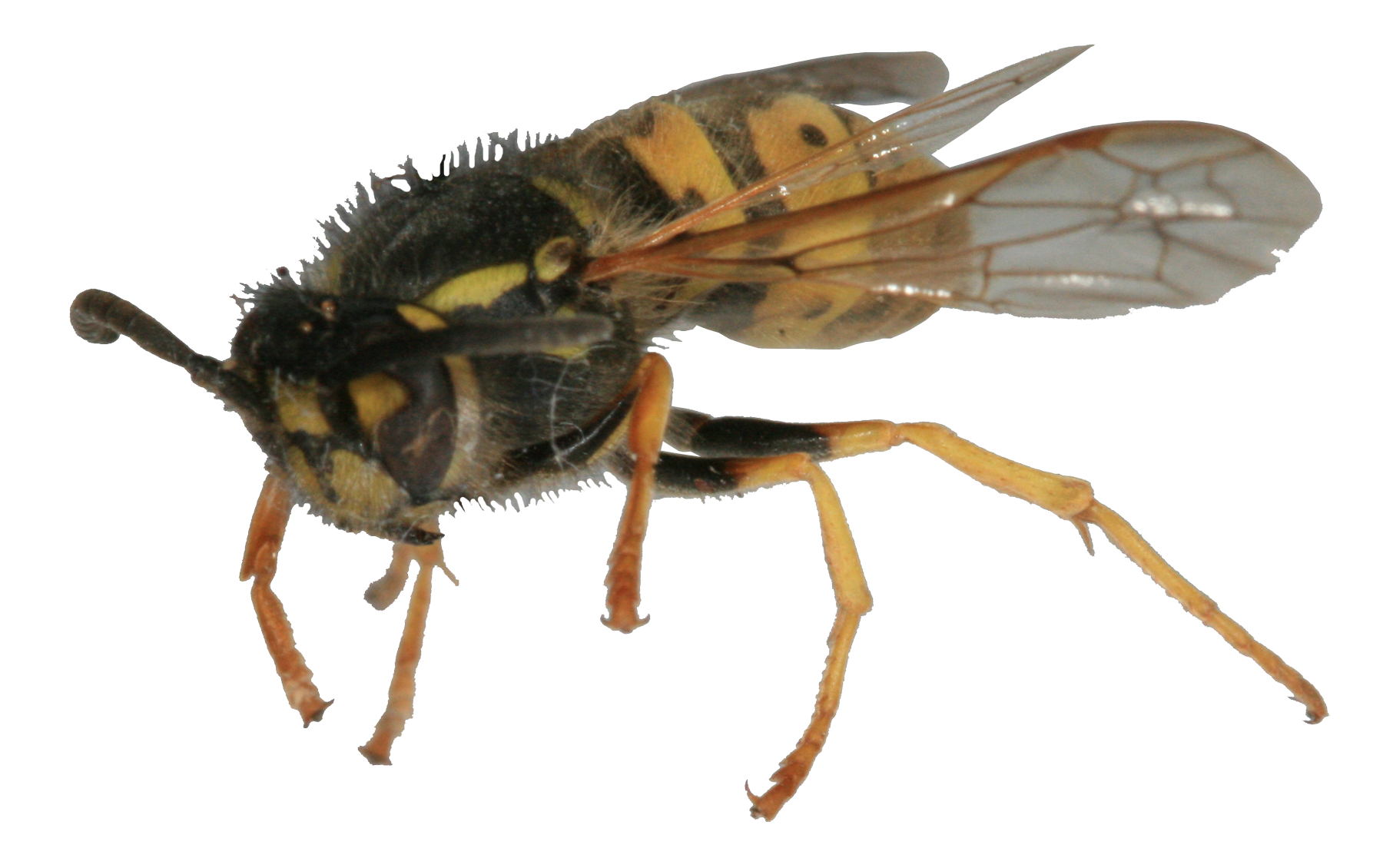
GermanWaspCanning fruit or tomatoes always brings them around—the German wasps can’t resist the sweet/tart smell of chutney, tomato sauce, or apples. And of course, their numbers are highest in late summer/early autumn when we’re doing lots of canning.

Today, they flitted around the kitchen most of the afternoon, licking up applesauce from the benchtops, and generally being a nuisance.

German wasps are opportunistic feeders—they’ll eat most anything, from fruit, to dead animals, to live insects. In the house, they not only go for whatever’s cooking on the stove, but they catch houseflies in mid-air, chomping them messily on the windowsills and leaving cast off fly legs and wings all over the place.

Though they are a nuisance indoors, and can prove deadly to people like me, with allergies to their stings, they do their worst damage in our native forests where they rampage like a pack of hungry teenage boys.

As flexible scavengers whose numbers can grow to an estimated 10,000 wasps per hectare in beech forest, their impact can be devastating. They compete for food with native birds, lizards, and bats. They also eat native insects and even baby birds.

Almost every year, we have a wasp nest somewhere on the property. I haven’t found this year’s yet, though by the number of wasps enjoying my applesauce today, I know there’s a nest somewhere nearby. When I find it, I’ll destroy it—from an environmental perspective, and from a personal safety perspective it needs to be done.

But I admit I will do so with a twinge of guilt. Troublesome as they are, I have great respect for wasps. These beautiful animals are the ultimate efficient eating machine. They are no-nonsense foragers who go out and get the job done so well that they’ve been able to invade diverse habitats throughout the world. I may not like the consequences of that, but I can admire an animal flexible enough to thrive almost anywhere.

The Midges!

A male midge, with feathery antennae.

A male midge, with feathery antennae.

It was like a scene from an Alfred Hitchcock film. The sliding glass doors of my office were swarming with midges, commonly called lakeflies here (because they lay their eggs in nearby Te Waihora/Lake Ellesmere, and rise off the lake in huge swarms in summer). By their density (at least 1 per square centimetre), and the size of the doors, I estimated that there were at least 90,000 on the doors alone, not counting the ones swarming around looking for landing space.

I had been working late in the office, with the lights on, and they were attracted to the light. I turned off the light, took a deep breath (breathing in midges is horrible), and bolted out the door, slamming it closed behind me.

A female midge, with thread-like antennae.

A female midge, with thread-like antennae.

There were about a hundred on my ceiling in the morning. I reckon that was pretty good, given how many were knocking on the door.

I actually don’t mind the midges much. They don’t bite, and their appearances are brief, if dramatic.

But the question is, what are they all doing in those great big swarms? Well, the swarms are great big mating displays called leks. Male midges (they are the ones with feathery antennae), fly around in large swarms trying to attract the eye of a female. The females drop by the lek, pick out their favourite male, and mate with him. The resulting eggs are laid in slow-moving bodies of water (or sometimes on wet car parks, where I imagine they don’t live long).

The larvae of our particular midges are called bloodworms. They are one of the few insects that have haemoglobin in their blood. That’s what gives our blood its red colour, and it does the same to the midge larvae. The haemoglobin allows the midge larvae to live in low-oxygen, stagnant water, because it can capture and store oxygen, just as it does in our blood.

Midge larvae are a critical part of the food chain in many terrestrial aquatic ecosystems, feeding fish and other insects. They also must be important food on land, too. The spiders and songbirds certainly enjoy them when they swarm.

Still, in spite of their harmlessness and their ecological importance, I think Hitchcock could have had made a great movie of them.

Ballistic Plants

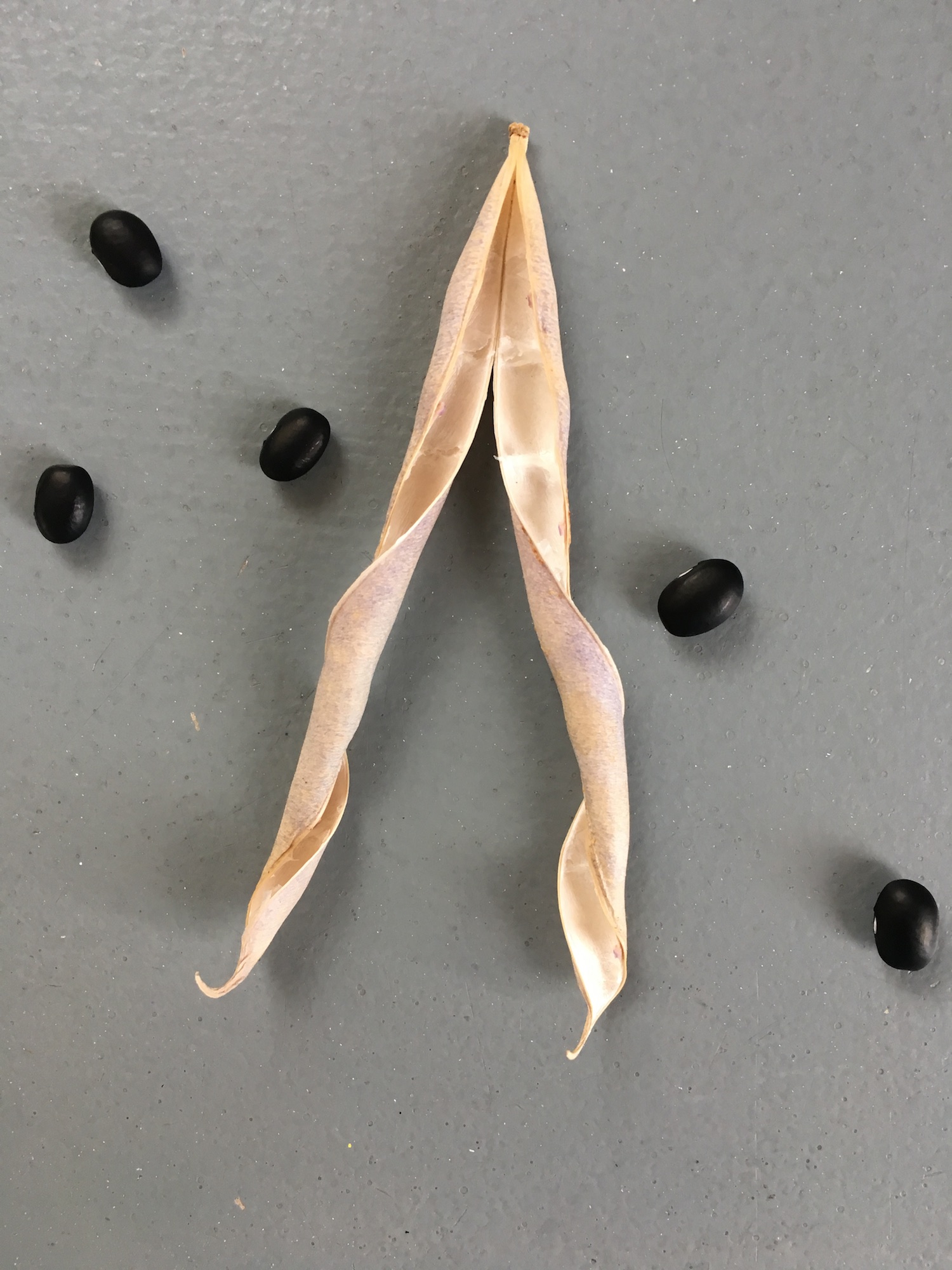
2016-03-05 19.16.53 smI only just harvested the black beans before they all exploded in the garden. It was the hot sun Thursday and Friday that did it. Friday afternoon, when I realised how dry the beans were, I raced to pick as many as I could, and was able to bring in the last of them this morning, with only a few losses.

Though it can be a pain for harvesting, I love plants with explosive seeds. As much as the explosion and shower of seeds, I like the empty pod afterwards. The tension that caused the explosion is gone, and the empty pod twists into attractive little corkscrews.

We have a weed in the yard with seeds so explosive, my daughter and I have dubbed it the seed-in-your-eye plant. It’s real name is bitter cress (Cardamine hirsuta). It’s common in the flower beds around the house, and has a habit of detonating just as a hapless weeder grabs hold of it (hence the seeds in the eye).

My favourite explosive plant is touch-me-not. Where I grew up, touch-me-nots sprang up in any moist hollow. As soon as they started flowering in summer, I’d start searching for ripe seed pods. I’d give each seed pod a gentle squeeze—if the pod was ready, it would burst under my fingers, sending yellow seeds scattering, and turning into a curly work of art. I loved the feel of the deforming fruit.

Sadly, my own children only have beans and bitter cress to detonate here. Now, if I can just convince them that shelling dry beans by detonating them is great fun…


Jewels in the Garden

groundbeetlesmDigging potatoes for dinner yesterday, I came across one of my favourite New Zealand insects—the metallic green ground beetle.

When I teach about this insect, I always tell the kids it’s magical because at first glance it appears to be just a large black beetle. A closer look, however, reveals shimmering green around the edges.

Some individuals are more spectacularly green than others, and the one I found yesterday was one of the most vibrant I’ve seen.

Metallic green ground beetles are welcome in the garden. As larvae and as adults they eat slugs, grass grubs, and caterpillars—some of my worst pests.

But I think that what makes metallic green ground beetles most special is that they are endemic, not just to New Zealand, but to the Canterbury region. That means they are found nowhere else on Earth but in this little region of New Zealand.

They aren’t rare or endangered—they thrive in nearly every environment. They have close relatives nearby. But I appreciate the fact they are our own unique jewels.