Fresh Eyes

Endangered dolphins? Nothing unusual to see...

Endangered dolphins? Nothing unusual to see…

Travelling around this week with friends from the U.S., I am seeing things with fresh eyes. The strange pronunciations, the shockingly changeable weather, the casual acceptance of road closures, spotting endangered species from the roadside…all those things I now just accept as normal. I’m reminded of how foreign they were to me once.

Coming from the land of restaurant chains, they were surprised by the abundance and quality of local cafés. Coming from a place of certainty, they remarked on the number of times I said, “This has changed completely since I was last here.” Coming from a land of freezing winters, they marvelled at fresh vegetables from the garden at the winter solstice.

It has highlighted for me just how much I have ‘gone native’. How much I have accepted, adapted to, and embraced this place. It has become me, and I have become it. There are many times when I still feel foreign, even after ten years here, but having visitors here helps me realise just how much I have come to belong.

Winter Solstice

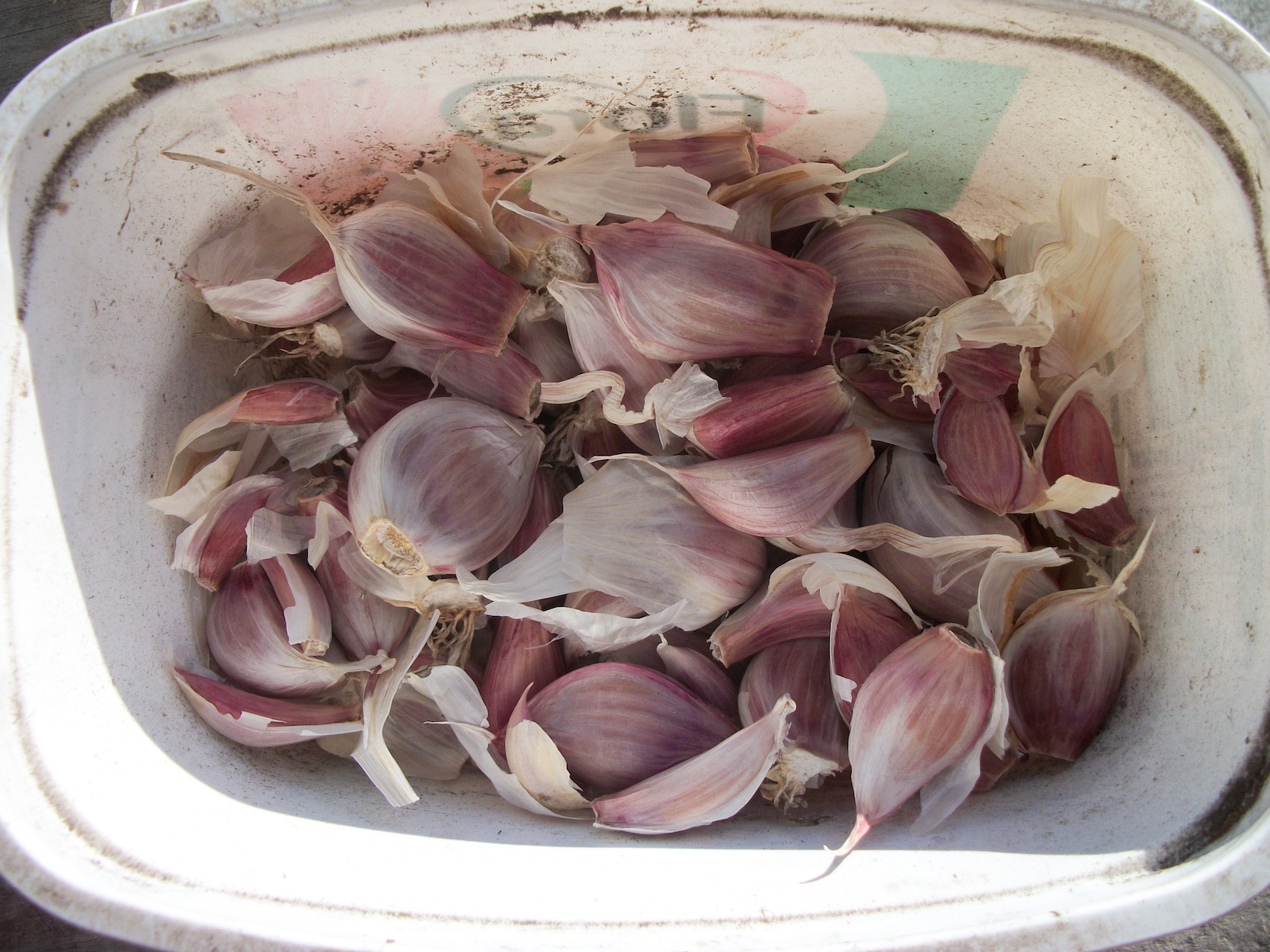
Garlic cloves ready to plant.

Garlic cloves ready to plant.

The forecast for tonight into tomorrow is for cold southerlies and snow lowering to sea level. So what did I do today? Planted garlic, of course!

Plant on the shortest day, harvest on the longest, is what I learned for garlic. Truth is that here, at least, it’s not ready to harvest until mid-January, but I do try to plant on the solstice. Coming from a homeland where the ground was frozen solid at the winter solstice, it feels positively cheeky to plant anything at that time. It’s a bit of defiance—I even planted through snow one year, just because I could.

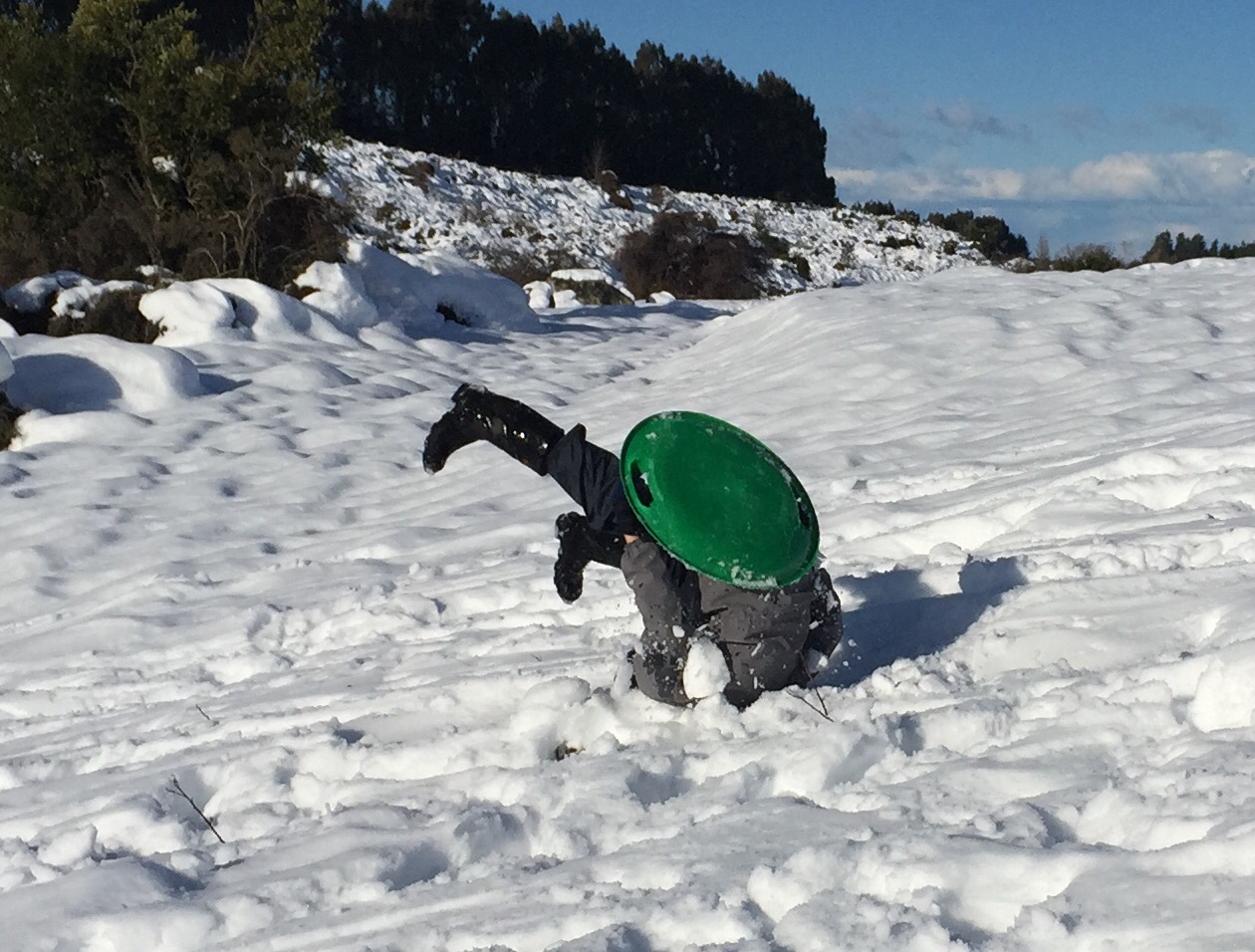
Wipe out!

Wipe out!

Today, I just had to break up mulch stiff with frost before I could plant. It was actually a beautiful (if chilly) day, and after spending the morning in the garden, we rugged up and headed to the hills for a fabulous afternoon of sledding in 30 cm of snow! Winter just doesn’t get much better than that!

Beans, Beans

Beans baked overnight in the bread oven

Beans baked overnight in the bread oven

Beans, Beans

The wonderful fruit.

The more you eat,

The more you toot.

The more you toot,

The better you feel,

So eat your beans

With every meal.


I have no idea where that poem came from or who wrote it. My husband apparently learned it at Scout camp when he was a boy. It makes the 12 year-old in me giggle.

The truth of the matter is that beans don’t make me toot, and they are, indeed, wonderful. We eat beans regularly, in many different forms. Usually I can grow enough beans to get us through the year. I grow black, borlotti, and soy beans. We eat most of the soy green, but I always save some for dry beans. Beans are one of those wonderful, long-storing products from the garden. They’re a low-maintenance, high-yield sort of crop, like potatoes. Best of all, they’re delicious in a wide variety of dishes.

Burritos and burgers are probably my family’s favourite ways to eat beans. They’re time-intensive meals, but well worth the effort. Baked beans, too, are time intensive—mostly oven time, so we usually only make them when we have the bread oven fired up. They bake beautifully in the long tail-end of the oven’s heat.

Simple beans and rice is the most common way we eat beans. If I remember to put the beans to soak in the morning, it becomes an effortless meal, and a perfect winter warmer.

The best flavours to go with beans (no matter how they’re cooked)? Fresh cilantro (added at the very end of cooking), smoked paprika, and cumin. A bit of tomato is lovely, too.

Repurposed tent

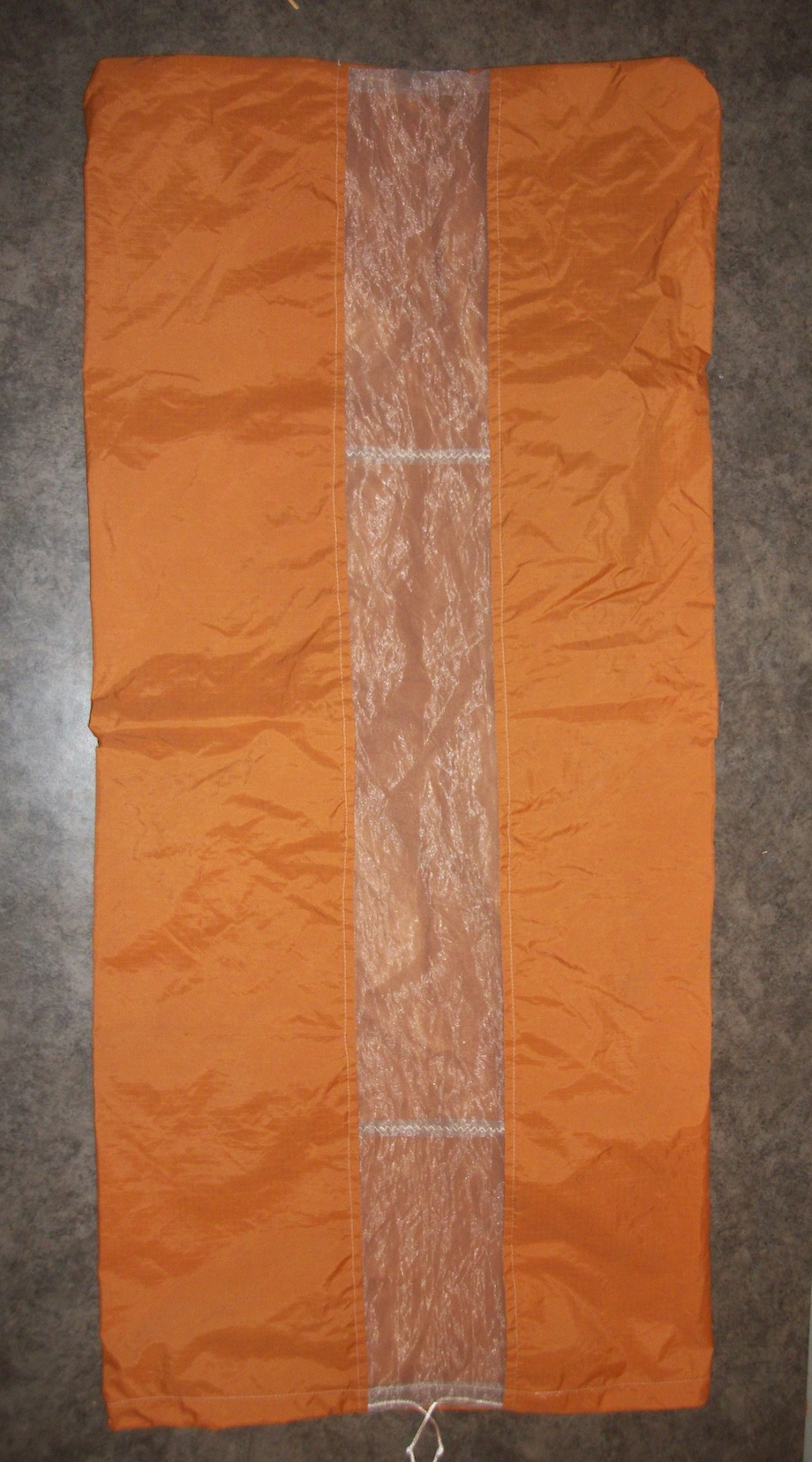
100_3308 copyOur 30 year old Eureka tent finally gave up the ghost this past summer, after many previous repairs and many years of use. I salvaged as much hardware as I could from the tent, and was about to toss the remainder in the rubbish when my hand slid over the silky no-see-um netting of the tent’s windows. That beautiful mesh was still in perfect condition, as was a lot of the rip-stop nylon of the tent itself. I found myself unable to throw it away.

It wasn’t long before I came up with the perfect project for repurposing the tent—mushroom growing bags! Last year, we covered the mushrooms with old pillowcases to keep the fungus gnats from infesting them. The pillowcases were not quite long enough, and did a marginal job. Ian had already asked me to make some custom bags with draw string bottoms to keep the flies out. What could be more perfect than bags made of tough, largely waterproof tent nylon? Add a strip of that no-see-um netting so you can peek in to check on the mushrooms, and the project was perfect.

So yesterday, I whipped out a raft of these slick bags from the old tent fabric. Felt great to repurpose the old tent, and I can’t wait to try them out!

Winter Hope

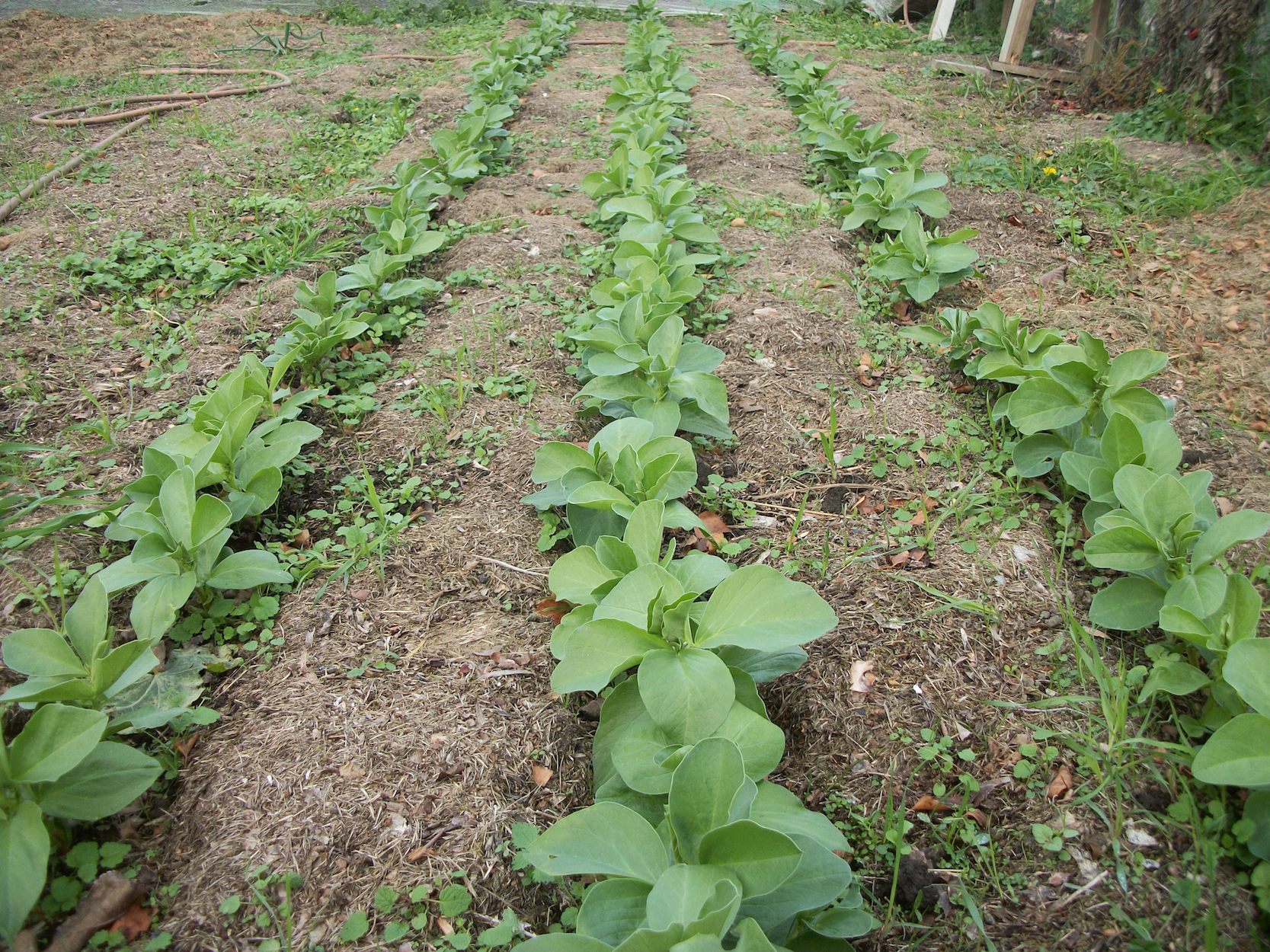
100_3242 copyToday’s wind is bitter, driving icy rain against the windows. Though the heater is on in my office, I’m still shivering—just the sound of the wind and rain makes me cold. It is only the beginning of June. Winter is only just beginning. Three months of dark, cold wet stretch ahead.

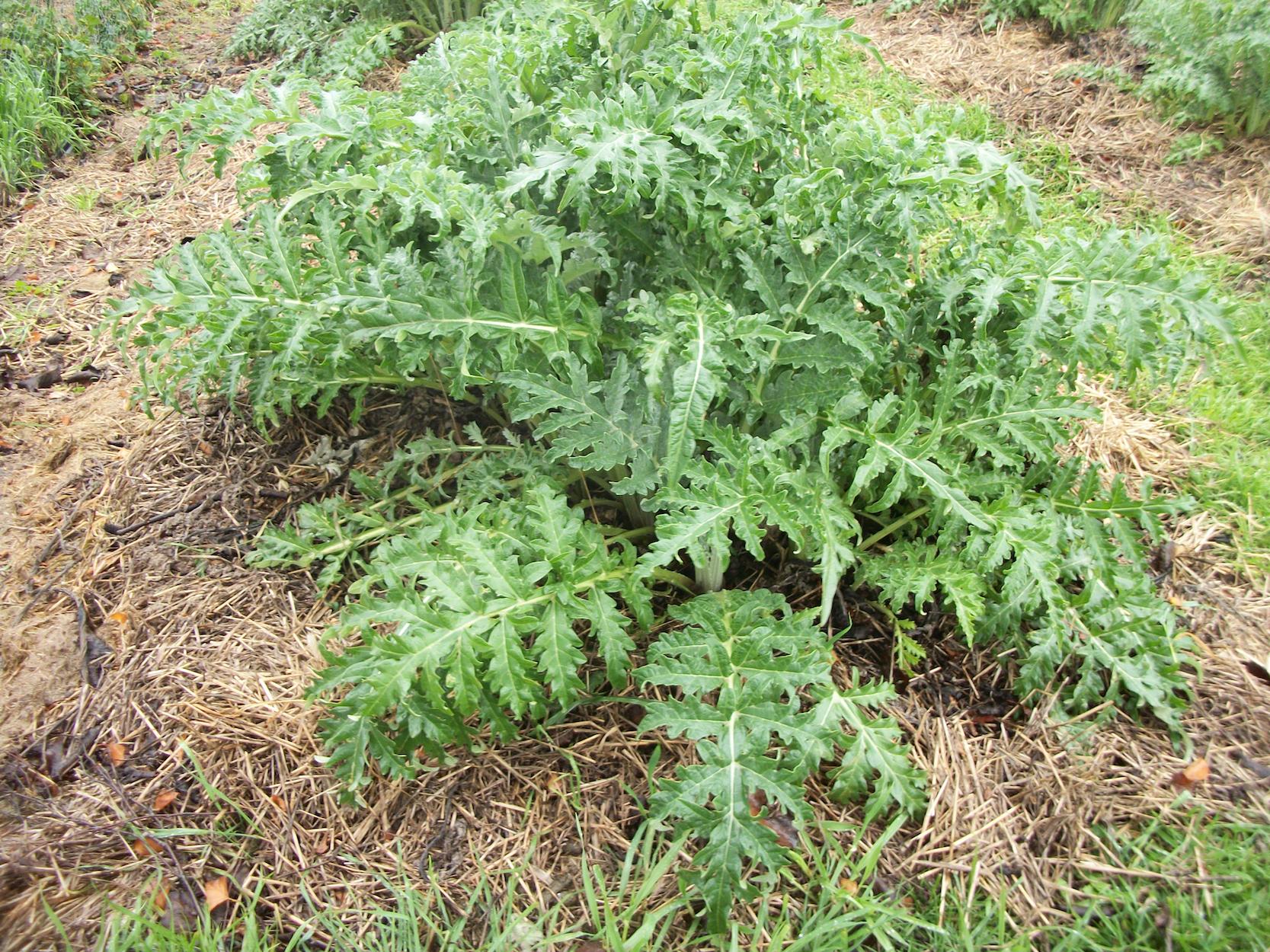
But the garden tells me we’ll see spring before we know it. Though they are bent with frost every morning, the broad beans grow bigger every day. The artichokes are lush, and the broccoli and cabbages flourish with the winter cull of pests. They promise food, light and heat to come.

Satisfying or Sisyphean?

100_3292 copyI have a weed problem. Or maybe I have a weeding problem. I spent the past weekend weeding the artichokes, which are busy putting on their winter growth. I keep them heavily mulched, which prevents most weeds from growing, but twitch (aka couch grass) has no problem coming up through even the deepest mulch.

I would rank twitch as my worst weed. It makes dandelions and thistles seem easy to pull. It grows faster than I can pull it out. It lurks amongst the roots of other plants, ready to spring back the moment I turn my back. It can even drill its way through my potatoes.

My fight against twitch never ends. Twitch grows year round, and if I relax for even a few weeks, it will encroach on the garden. Pockets of it persist, even in areas that are tilled annually and weeded weekly all year. I despair every time I see a blade of twitch poking up from a place I thought twitch-free. Controlling twitch is a never-ending, unrewarding job.

So, why do I sometimes want nothing more than to go out and pull twitch? Sometimes I’ll go out specifically to pull twitch for the sheer satisfaction of it. Especially where it is thick, and the soil is soft, you can pull it up in great branching masses of runners a metre or more long. Every crisp white growing tip I ease from the soil is one less clump of twitch in the garden. There is so much of it out there, that I can’t help but think I’ve gotten it all when I bring up runner after extensive runner.

I know the feeling will not last. In a week, the twitch I missed will be sprouting thick as hair on a dog’s back, and I will wonder if I actually weeded at all.

But for the moment, I have the satisfaction of several wheelbarrow loads of twitch dying on the compost pile, and an artichoke bed that sports more artichokes than weeds.

Eating Native?

veggiesforgrilling2smI’m currently teaching a biodiversity class at my daughter’s school, so I’ve been thinking a lot about biodiversity in New Zealand. Out here on this island in the middle of the Pacific Ocean, living things have had 65 million years to evolve in isolation. Until humans arrived about 700 years ago, most living things here were endemic—found nowhere else on earth. Three and a half metre tall birds and the giant eagles that preyed on them, flightless parrots, frogs that hatch from the egg fully formed, tuatara that died out everywhere else on earth millions of years ago, crickets the size of mice…

Humans changed things dramatically and rapidly. We brought thousands of other organisms with us, some on purpose, many by accident. Many of those organisms flourished here, at the expense of native organisms. Today, there are few New Zealand ecosystems untouched by the invasion of humans and other non-natives. Some of the most successful invaders have been plants—today there are more introduced plants here than there are natives, and more arrive all the time, in spite of efforts to prevent them.

Many of those invading plants were brought to New Zealand on purpose to provide food, shelter, or medicine. In fact, I can’t think of a single native plant currently cultivated for food, except one seaweed. There are certainly a few edible native plants, but they are few, and they are more of a survival food than something you’d want to eat every day.

No surprise. The crops we eat today have been cultivated for thousands of years—selected by countless generations of farmers to be bigger, tastier, and easier to grow. With only 700 years of history in New Zealand, there’s hardly been time to develop native crops.

The human migrants to New Zealand brought their crops with them instead. Familiar corn and carrots, potatoes and peas. But it’s not just in New Zealand that people mostly eat food native to other regions. People have been carrying their food with them for as long as we’ve travelled, until it’s sometimes hard to know where a food originally came from—classic Italian tomato sauce is made from a plant native to the Americas, the American “wheat belt” has its origins thousands of years ago in Turkey, and cassava domesticated in Brazil is now a staple food throughout tropical areas worldwide. Few people anywhere in the world eat native.

While I would love to be able to magically bring back the moa, Haast eagles, huia, and host of other incredible New Zealand endemic organisms that humans have wiped out here, I will admit I’m terribly fond of my non-native tomatoes, cucumbers, potatoes, eggplants, etc. I am thankful those non-natives are here, and I need not subsist on seaweed and ferns. Does it feel somewhat disingenuous to passionately support the conservation of our native biodiversity while I plant my non-native vegetable garden? Yes, but I’m only human, after all, doing what humans have done for 10,000 years.

Guest Post–Figs

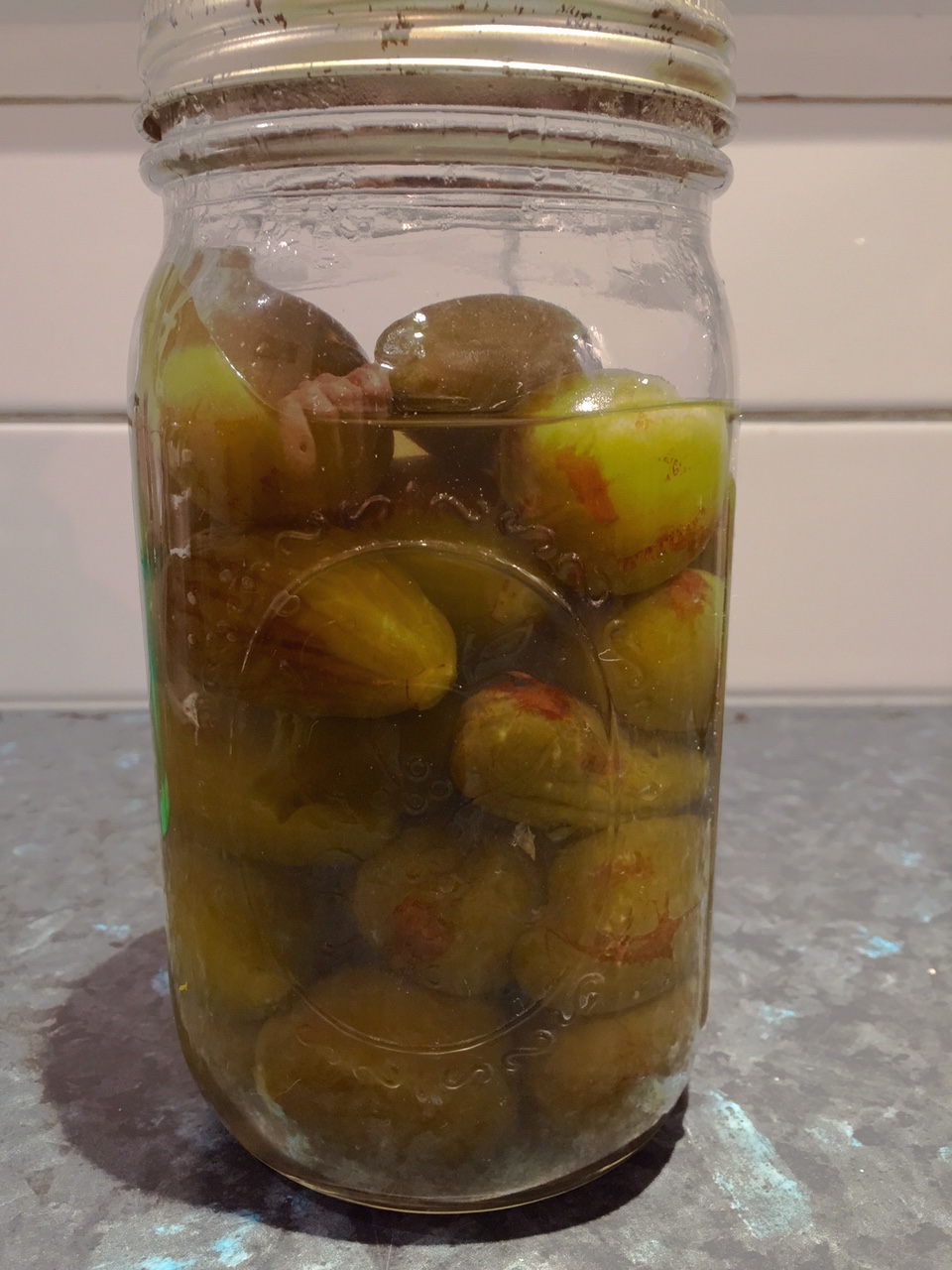
FigsToday’s post is a guest post written by my 11 year-old daughter about the figs she picked and processed today:

Last week I ate a fig for the first time ever. We have one fig tree. It started looking the most decimated of all the small fruit trees, but now it’s the only one that has given us fruit.

I noticed the figs were being eaten by birds so decided to pick one and try it. It tasted sweet and somewhat like Neptune’s necklace (a seaweed), but unlike Neptune’s necklace, it was quite tasty.

Today we picked the rest of the figs because the tree was getting frosted. We then boiled them and put them in a syrup. They are meant to be let sit for three weeks, but now they taste like somewhere between a fig and a sweet gherkin.

Taking Stock

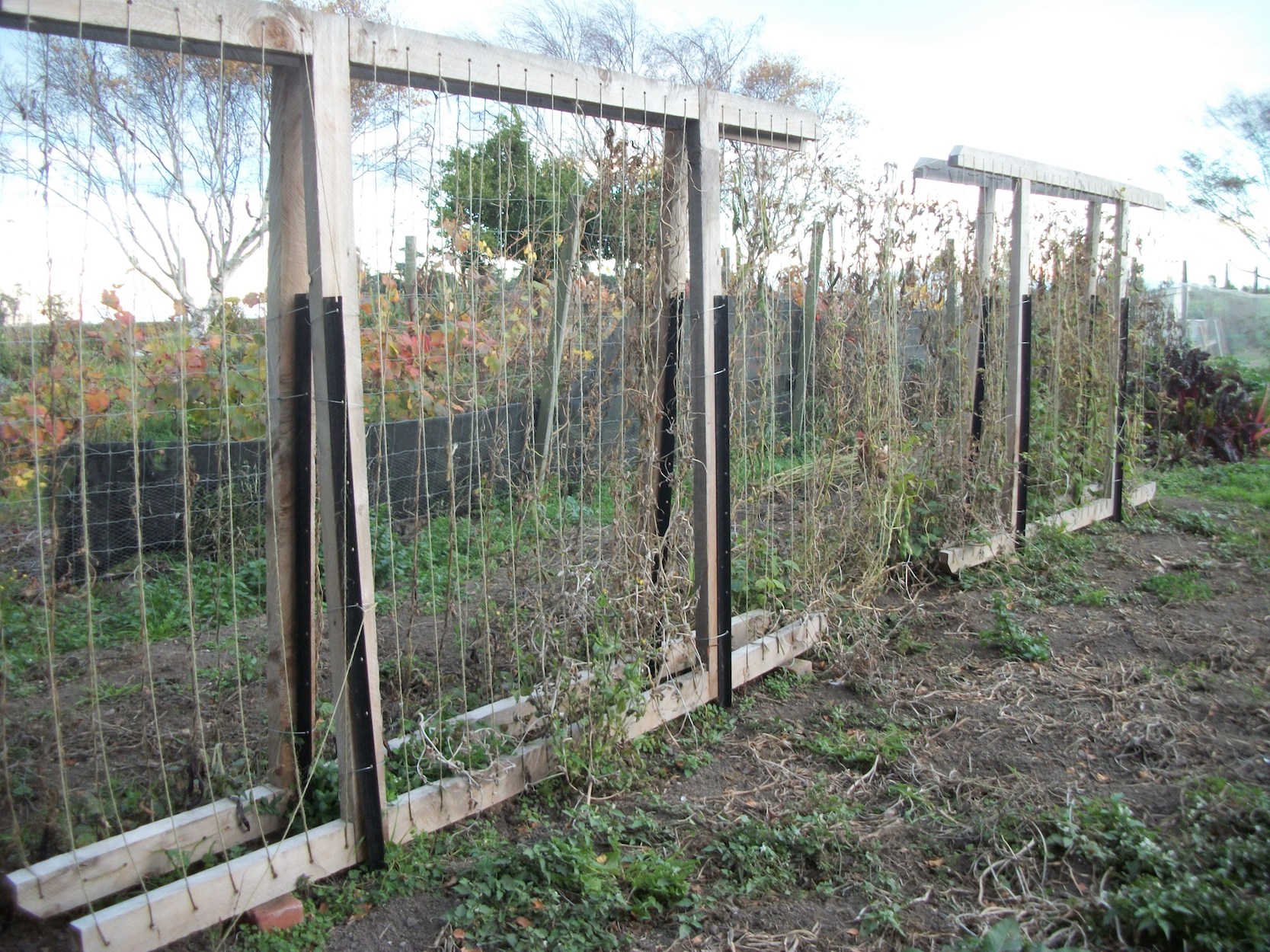
New trellises

New trellises

The new year’s seed catalogue will be out in six weeks, and all the summer crops are in, so it’s time to take stock of how the last year’s garden went.

Water was a constant problem this past summer—lack of it, that is. My irrigation system held up pretty well, though. I added some extra taps along the irrigation line at the edge of the garden, and this reduced the length of hose I had to drag around. The drip irrigation line for my eggplants and peppers is aging, though. I might need to make a new one for next year.

Birds were a terrible problem this past summer, destroying crops they’d never before bothered and never letting up all summer. Usually I only have to protect the peas and lettuce from them, and then only for a few weeks in early spring. This year I fought the birds all summer. It might have been the drought—there certainly wasn’t much food for the birds elsewhere in the yard—or it might be that the birds’ populations are up. Whatever it is, I’m going to have to more aggressively protect the garden next year.

The new trellises Ian made me were perfect for peas and beans, but not so great for tomatoes. The jute I used holds up beautifully for tomatoes in the greenhouse, but in the high wind of the open garden, it broke. I’ll try the new trellises again next year, but strung with high tensile wire instead of jute.

Summer squashes were a bust this year, not through any fault of mine, but because tree roots have again invaded the garden, and they sucked the squash bed dry. The same thing happened to a row of strawberries. We’ll have to get a trencher and cut the roots back before spring.

Peas did beautifully this past year. The heirloom blue peas I planted for the first time were vigorous, stunning to look at, and produced right through summer. Unfortunately, the peas themselves turn an unappealing grey when cooked. I’ll plant them again, for sure, but I’ll have to look for some recipes in which I don’t mind grey peas.

Pumpkins were a bit of a disappointment. Not that we don’t have lots of pumpkins, but we have fewer than I’d hoped. They were in the driest corner of the garden. That corner is always a problem. Perhaps I’ll have to set up some extra irrigation for that spot next year. I planted several new varieties of pumpkin last year, and was very impressed with Baby Bear—as cute and compact as Wee Be Little, which I’ve grown for years, but with better flavour.

The Delicious tomatoes continue to impress me. I think next year I’ll plant more of them than I do Brandywines—they’re almost as tasty, and grow much better here.

These and dozens of other notes are scribbled in my garden journal. I’m sure I’ll make more mistakes next year, but at least I won’t repeat the same ones!