Taking Stock

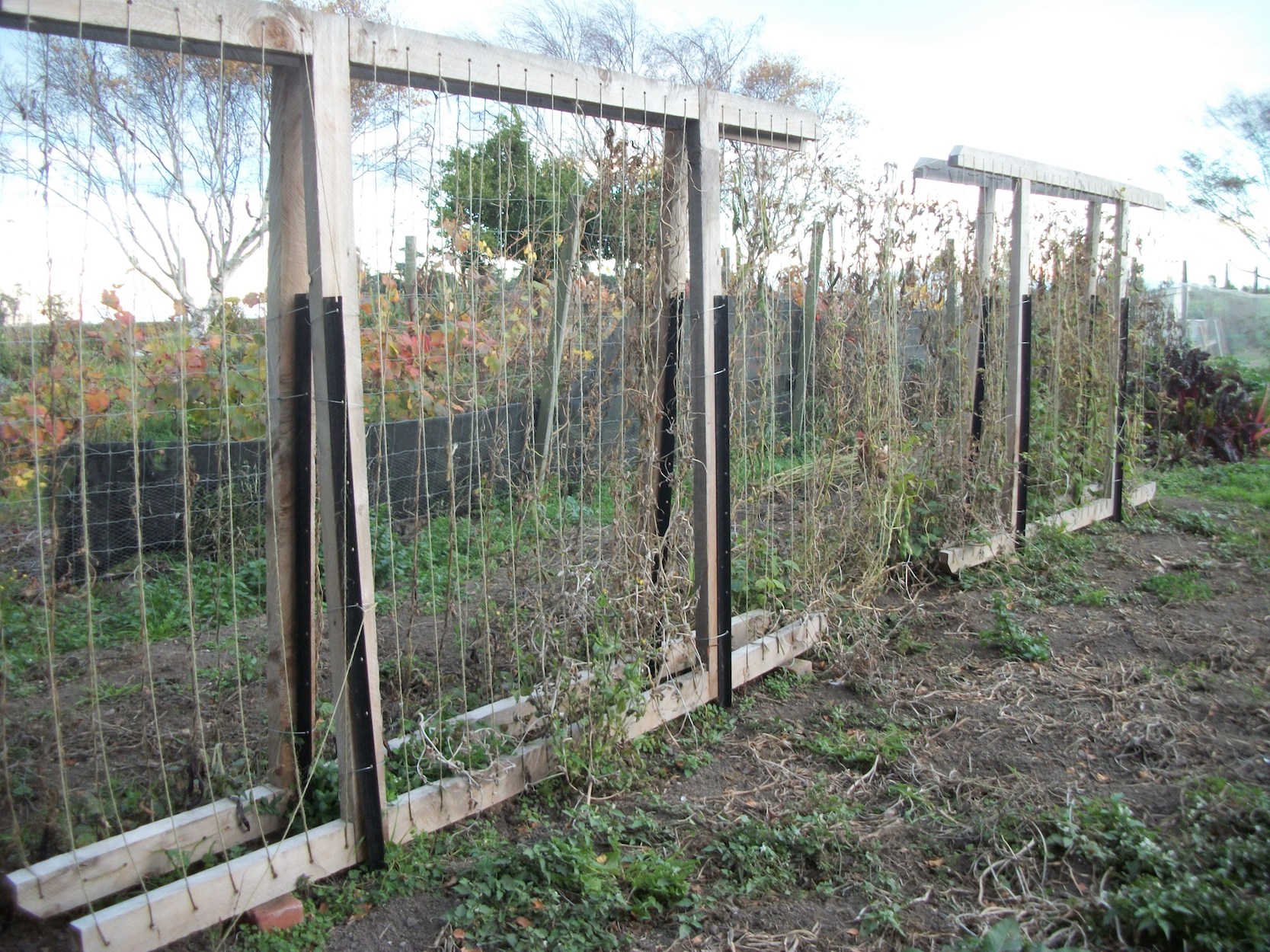
New trellises

New trellises

The new year’s seed catalogue will be out in six weeks, and all the summer crops are in, so it’s time to take stock of how the last year’s garden went.

Water was a constant problem this past summer—lack of it, that is. My irrigation system held up pretty well, though. I added some extra taps along the irrigation line at the edge of the garden, and this reduced the length of hose I had to drag around. The drip irrigation line for my eggplants and peppers is aging, though. I might need to make a new one for next year.

Birds were a terrible problem this past summer, destroying crops they’d never before bothered and never letting up all summer. Usually I only have to protect the peas and lettuce from them, and then only for a few weeks in early spring. This year I fought the birds all summer. It might have been the drought—there certainly wasn’t much food for the birds elsewhere in the yard—or it might be that the birds’ populations are up. Whatever it is, I’m going to have to more aggressively protect the garden next year.

The new trellises Ian made me were perfect for peas and beans, but not so great for tomatoes. The jute I used holds up beautifully for tomatoes in the greenhouse, but in the high wind of the open garden, it broke. I’ll try the new trellises again next year, but strung with high tensile wire instead of jute.

Summer squashes were a bust this year, not through any fault of mine, but because tree roots have again invaded the garden, and they sucked the squash bed dry. The same thing happened to a row of strawberries. We’ll have to get a trencher and cut the roots back before spring.

Peas did beautifully this past year. The heirloom blue peas I planted for the first time were vigorous, stunning to look at, and produced right through summer. Unfortunately, the peas themselves turn an unappealing grey when cooked. I’ll plant them again, for sure, but I’ll have to look for some recipes in which I don’t mind grey peas.

Pumpkins were a bit of a disappointment. Not that we don’t have lots of pumpkins, but we have fewer than I’d hoped. They were in the driest corner of the garden. That corner is always a problem. Perhaps I’ll have to set up some extra irrigation for that spot next year. I planted several new varieties of pumpkin last year, and was very impressed with Baby Bear—as cute and compact as Wee Be Little, which I’ve grown for years, but with better flavour.

The Delicious tomatoes continue to impress me. I think next year I’ll plant more of them than I do Brandywines—they’re almost as tasty, and grow much better here.

These and dozens of other notes are scribbled in my garden journal. I’m sure I’ll make more mistakes next year, but at least I won’t repeat the same ones!
First Frost

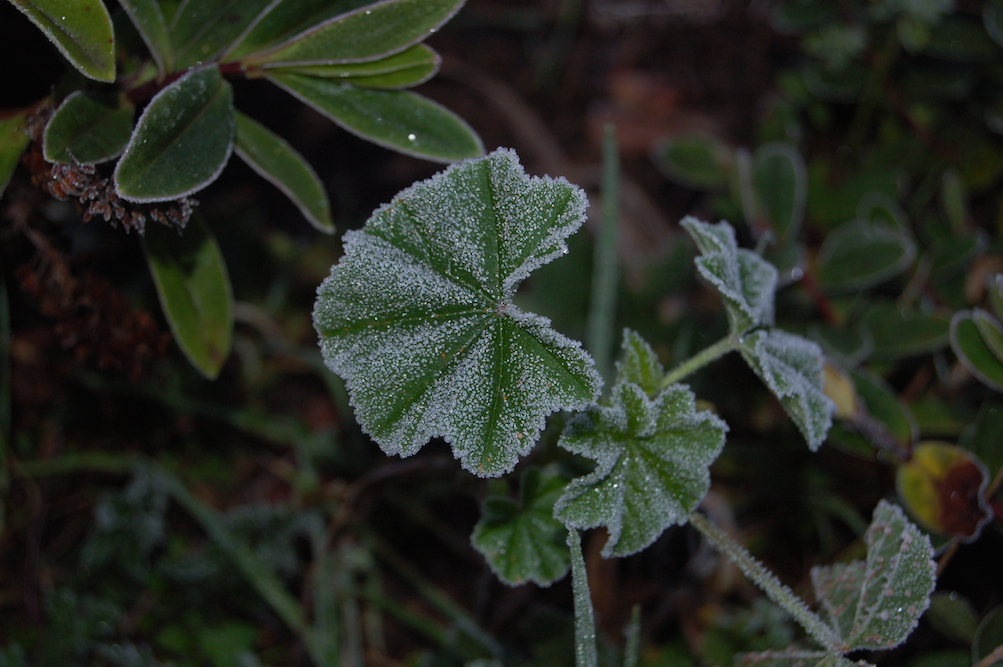
DSC_0006 copyThe grass sparkled in the beam from my headlamp this morning and crunched underfoot—our long-overdue first frost. After such a hot summer, we should have expected a warm autumn, but I was beginning to wonder if it would ever frost; it usually occurs near the end of April.

Of course, even without a frost it’s been too cool for the summer crops outside the greenhouse; they gave up weeks ago. So we’ve been eating as though it has already frosted, but there’s something decisive about the first frost.

First frost gives me permission to haul out the sewing machine after a summer’s interruption to crafts. It encourages me to pull out a good book. It gives me leave to contemplate steaming pots of soup and chunky vegetable stews for dinner. It is a milestone in the year. A time for taking stock, reflecting on the summer’s crops, and enjoying a brief break from most garden chores. Though the garden looks wasted and sad after the first frost, it is a time to savour, like every other event and milestone in the garden year.

Be a Greenhouse Maker

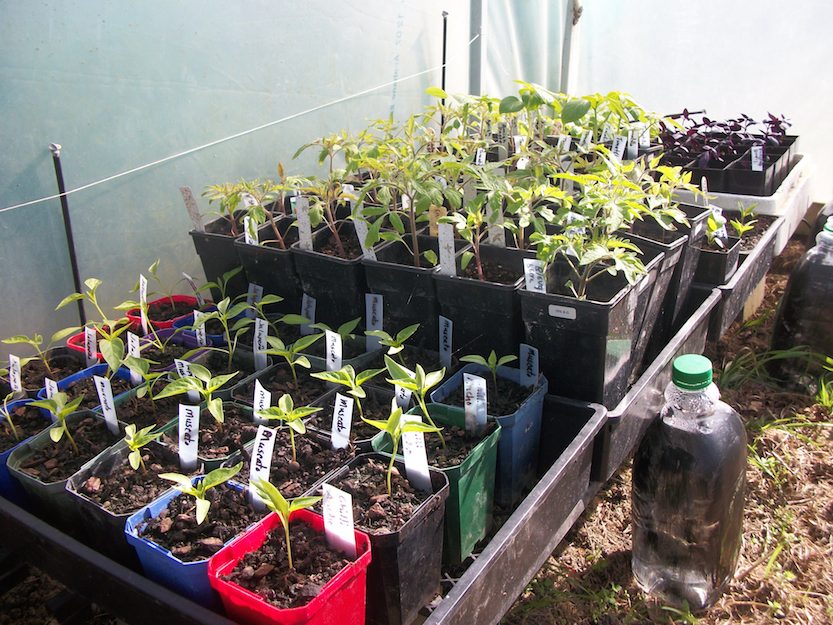
100_2519smThis afternoon when I went out to the greenhouse for tomatoes, I got to thinking about the protection that a greenhouse offers. The more I thought about it, the more I realised that we all use greenhouses, and the best of us create them.

The greenhouse is a refuge for those tropical plants we love so much—tomatoes, peppers, and basil. My unheated tunnel can’t protect the plants from a hard freeze, but it protects them from frost and gives them just enough extra warmth to ripen up those last autumn fruits. It also protects tender seedlings from fickle spring weather.

Not everyone has a greenhouse for vegetables, but we all make use of metaphorical greenhouses.

We provide greenhouses for our kids. We try to protect them just enough to give them extra time to grow and mature until they’re ready to brave the elements alone. We provide them a refuge—a place where they are loved, accepted, and safe from emotional and physical harm.

But it’s not just children who need metaphorical greenhouses. We adults need them, too. Yesterday, my son interviewed me for a school assignment about the factors that help us to be resilient in the face of adversity. It struck me that a large part of being resilient is having a refuge, a “greenhouse” that will take the edge off harsh conditions.

We can make greenhouses for others. When the earthquakes struck in Christchurch, neighbours created greenhouses for one another by pitching in wherever they could—shovelling liquefaction, sharing food, and offering shoulders to cry on. My husband has provided a greenhouse of unwavering support as I muddle through my current emotionally fraught career change.

We can make greenhouses for ourselves, too—places (physical or mental) where we allow ourselves to rest, where we cultivate things that bring us comfort.

When we make greenhouses for our kids, our friends, and ourselves, we all take shelter in them. So go ahead, be a greenhouse maker.


An Orderly Work Space

My "new" 125 year-old garden shed.

My “new” 125 year-old garden shed.

With my husband’s new shop all but finished, he’s been shifting all his tools from the old shop. The shift prompted the shuffling and rearranging of not just his tools, but also my gardening tools and supplies, and my teaching resources and crafts in my office. A shelf unit from my office went to the new shop, and a cupboard went to the “new” garden shed (the old shop). I got new cupboards for the office that are a better fit for the space, and we all spent the entire weekend rearranging and organising stuff in all three work spaces. Cleaned out things we don’t use anymore, discovered things we thought we’d lost, and arranged work spaces so that the tools and materials we need are easy to find and convenient to use.

After nearly ten years saying we were going to do this reorganisation (and being sidetracked by more important issues like leaking roofs, rotted house piles, and disintegrating weatherboards), I’m thrilled to see our work spaces coming together the way we’d like them to. There is still a lot of work to do to finish the job, but I can already see I’m going to appreciate having my seed-starting trays and pots in an enclosed space so they don’t blow off the shelves every time we have a storm. I’m going to enjoy having my garden tools neatly hung on the wall, and my pots and potting mix arranged for efficiency, not just stashed wherever I could make them fit.

Makes me want to go out and plant something, just for the pleasure of using a well ordered shed.

Carrots

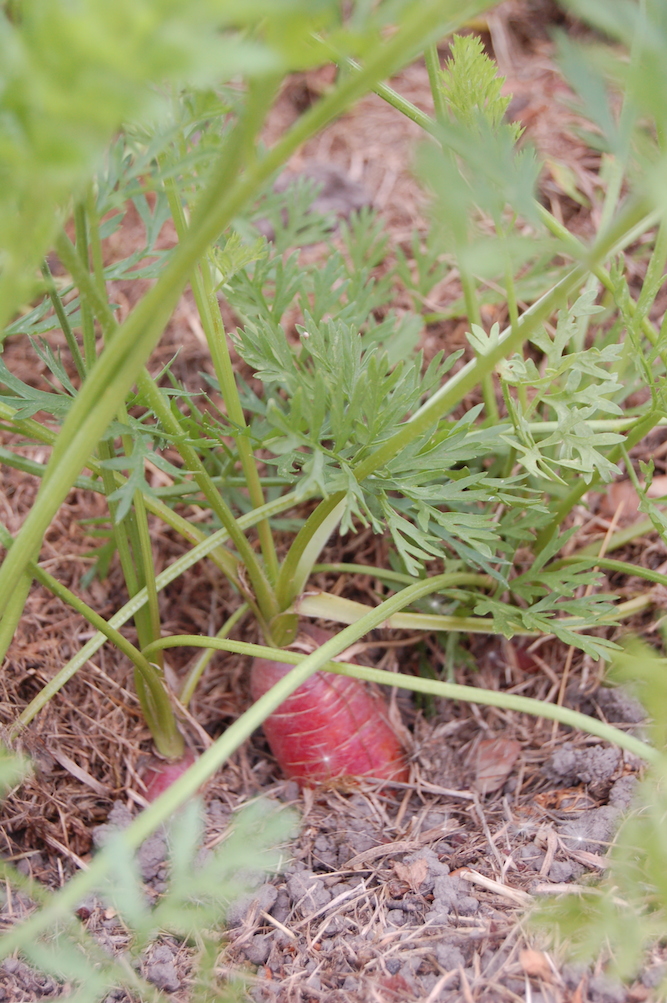
DSC_0037smI eat them almost every night in dinner, and usually with lunch, and often in between meals, too. Nothing satisfies my munchies like the sweet juicy crunch of a carrot. I know I’d automatically reach for cake over carrots, if I could get it, but cake is like riding the crest of a big wave on your boogie board—a thrill while it lasts, but pretty soon you’re going to be washed up on the sand. Cake’s sugar crash can be brutal, but carrots are both satisfying and sustaining.

I could go on about carrots’ nutritional values—how they contain lots of vitamin A, C, and K, how they are low in calories and high in fibre. But frankly, I don’t care. They are delicious and satisfy my snacking cravings; who cares about the rest?

I grow a lot of carrots, but never enough to get us through the year. My favourite variety is Touchon, a sweet orange carrot that grows beautifully in my garden. I also plant Purple Dragon, Solar Yellow, and Nutri-Red, just for fun and variety.

I love braised carrots, roasted carrots, grilled carrots, carrots in soup, carrots in my macaroni and cheese, and carrots in salad. But mostly I love carrot sticks, eaten any time of day or night, whenever I’m feeling a little peckish.


Habitat Gym

hammerarmmodI want to open a gym. I’ll call it the Habitat gym. But instead of rowing machines, treadmills and weights, my gym will have shovels, hammers and hoes. Members will get fit by growing food for the local food bank, or by building low-cost housing or community amenities.

Trainers will match the job to the member—Want to work on your cardiovascular fitness? You’ll fetch tools and materials for the work crews, running back and forth from shed to building site or garden. Keen on weight training? You’ll be mixing cement or turning soil. Just want some gentle stretching and strengthening? You can weed or paint.

Wouldn’t it be great if we could capture all the human energy wasted every year at the gym and funnel it into meaningful projects that help others? Not only would people stay fit, they might be more likely to stick with their exercise regime if they know that what they are doing is meaningful and not just drudgery, if at the end of a year long gym membership, they count their success not just in pounds shed or muscle mass gained, but also in people fed and housed. If all that energy expended at the gym were harnessed for good, think what we could accomplish!

Organising the Tools

DSC_0008 smAs my husband’s new shop takes shape, I am gradually moving my gardening things into their new home in the old shop. Yesterday, my daughter and I arranged the large hand tools, each with its own spot on the wall of the shed. She even drew each tool on the wall in its designated spot, so that they would always be put away in the right places. It is the first time I have ever had my tools neatly arranged, so they aren’t snarled in a hopeless tangle of rake tines whenever I need something. Of course, it only works if the tools are put away. Now, where did that sword go?…

Salad Junkie

salad greens2 smLots of parents fret about their teenagers’ eating habits. Given the freedom and a little pocket money, most teens make bad food choices. I can’t judge—I was one of those teens once, splurging on chocolate and Coca-Cola every chance I got. My son is no different, though his vices tend toward the salty side—chips and cheesy breads.

But I don’t worry. He thinks I’ll reprimand him for the empty chip bag that comes home in his lunchbox (he didn’t get them from home…), but I know that his real weakness is salad.

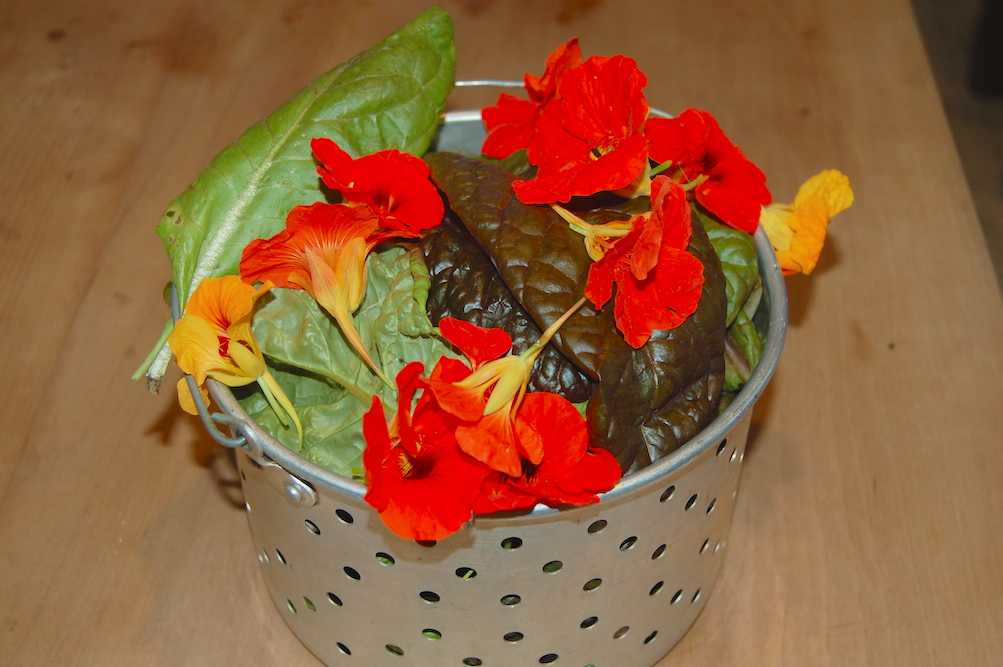
Yep, salad. With a homemade vinaigrette, and plenty of dark, nutty lettuces and spinach. Maybe some nasturtium flowers for colour and a little zing…

He eyes the salad bowl after everyone has had seconds, waiting to see if his sister will fight him for what’s left. She often does, and I would, too, except that my parental instinct is to let them gorge on salad. Rarely is there anything left when the table is cleared.

How did it happen, this salad craving? I have no idea, except that our salads aren’t iceberg lettuce and an anaemic slice of greenhouse tomato. They have flavour and colour. The kids know the names of all the varieties of lettuce I plant, and they enjoy the range of “extras” we add, like nasturtium, salad burnet, and parsley.

“I like that drunk lady,” my son said one day after polishing off the salad greens, “It’s so…succulent.” He was referring to Drunken Woman Fringed Head—one of our reliable year-round lettuces (but that won’t stop me from using the quote as blackmail someday). How can a kid not like lettuce with a name like that?

So, let them have a few chips and some chocolate. I know that they’ll come home and stuff themselves with salad. That’s serious junk food!

Migratory Chickens

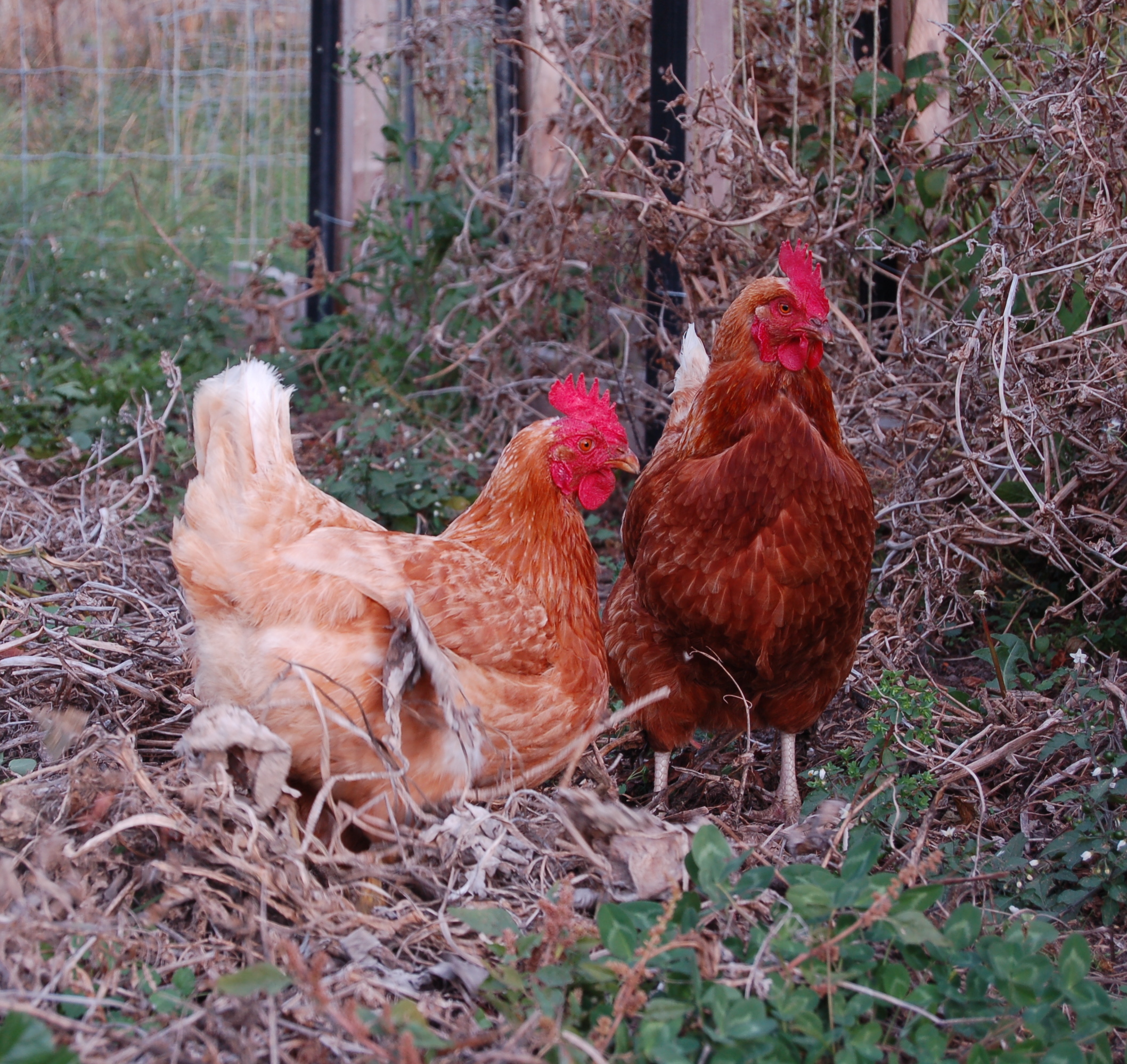
The chickens migrated to the vegetable garden today.

The chickens migrated to the vegetable garden today.

My chickens are migratory; they have a summer home and a winter home. In summer they have a dedicated paddock—an otherwise useless little corner of the yard under some birch trees. Their winter home is the vegetable garden. I fence off a quarter of the space for my winter crops, and let the chooks take care of the rest.

I used to struggle with waist-high weeds in the garden each spring, injuring my back or my arms almost every year just trying to prepare the garden for planting. But since I started employing the chickens in the garden over winter, spring planting has become a breeze.

Well, OK, not a breeze. It’s still a ton of work, but I can do it without injury.

The chickens eat weeds and pests alike, keeping both under control all winter. There are weeds they won’t eat, of course, but as long as I swing through the garden once or twice over the winter to root out the biggest ones, I arrive at spring with minimal weeds or pests to get rid of.

And the icing on the cake is that the chooks love the garden. Egg production often slows down in the autumn, but it shoots right up again when the birds are let loose among the leftover vegetables. Everybody wins!

Autumn

DSC_0009 copyAutumn

Is a yearning

Wreathed in smoke,

Struck through

With the amber rays

Of a westering sun.


Autumn

Is a farewell,

The caress

Of soft wind,

A sigh

Of leaves.


Autumn

Is anticipation:

Wood shed full

Of logs

Awaiting the fire,

Windows

Waiting to be closed,

Tomatoes

Awaiting their first

And final

Trimming of frost.