Garden Update–24 August

100_3612The greenhouse and the first of the garden beds have been cleared of weeds and prepared to receive plants!

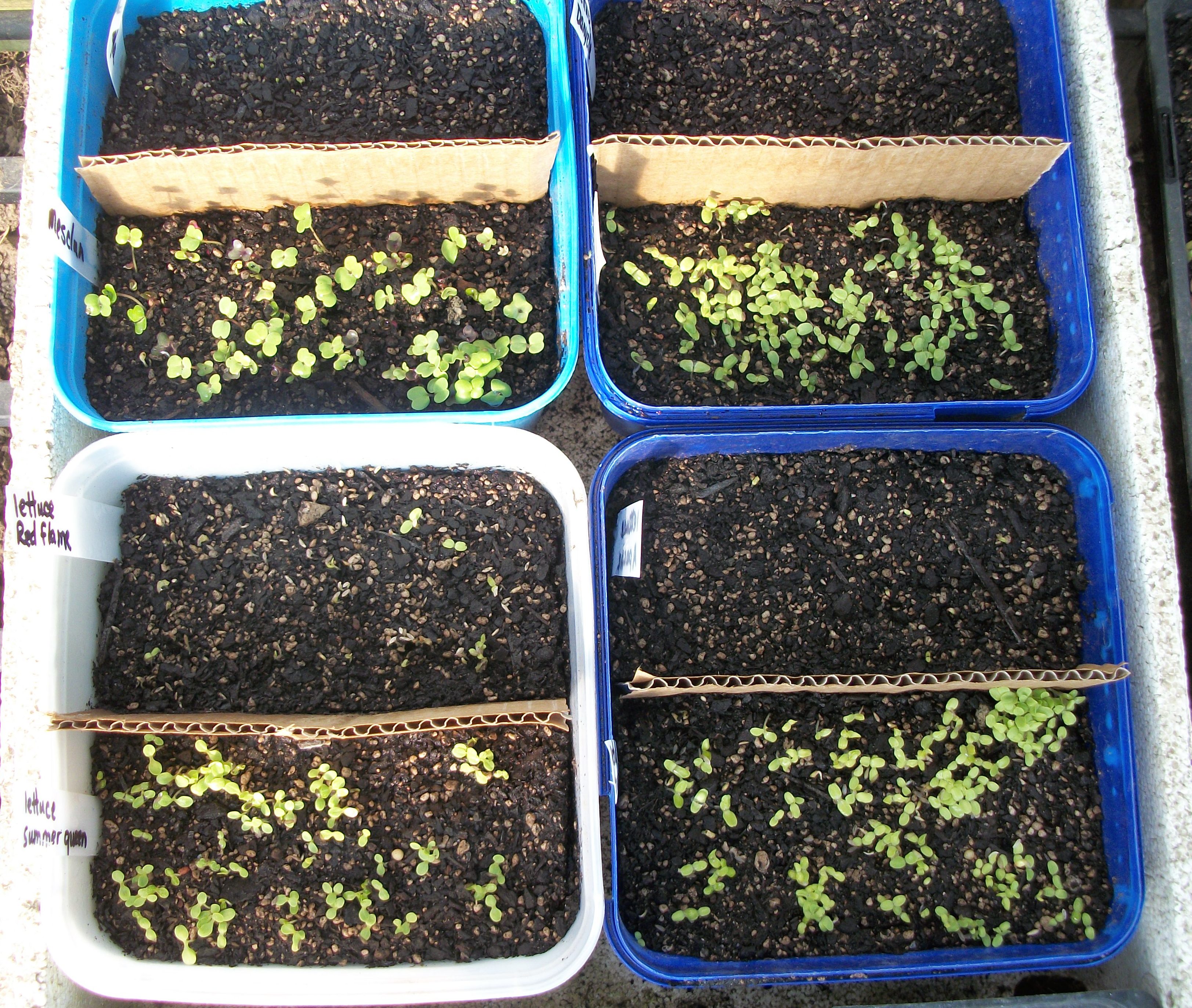
The first plants to go into the greenhouse won’t stay there long. They are the early crops that need just a little extra warmth now, but will be planted out into the garden in just a few weeks. These plants have spent the past week in my office, with a little overnight heat to help the seeds germinate. Now they’ve moved to the greenhouse, making way for the late season crops in the office.

I start the vast majority of my vegetables indoors, because I get much better and more even germination there, and it protects the seeds and very young seedlings from the voracious birds and slugs that prowl the garden.

Over the past two weekends, I’ve planted the following in seed trays:


Broccoli (de Cicco)

Cabbage (Puma)

Pak Choi (Joi Choi)

Broccoli Raab (Spring rapini)

Cauliflower (Snowball)

Pepper (Jalapeño Early)

Pepper (Marconi Red)

Pepper (Thai Super Chilli)

Pepper (Mini-Stuffer)

Pepper (Muscato)

Pepper (Cabernet)

Eggplant (Tsatsoniki)

Eggplant (Tokyo Black)

Eggplant (Eclipse)

Snow Pea (Goliath)

Sugar snap pea tall

Blue Shelling Pea

Lettuce (Danyelle)

Lettuce (Merveille de quatre saisons)

Lettuce (mesclun mix)

Lettuce (Red Flame)

Lettuce (Summer Queen)

Lettuce (Drunken Woman Fringed Head)

Lettuce (Apache)

Arugula

Spinach (Santana)

Spinach (Bloomsdale)

Spinach (Red Stem)

Onion (Stuttgart Long Keeper)

Onion (Red Amposta)

Spring onion (Ishikura)

Shallot

Cilantro (slow bolt)

Celeriac

Gogi berry

Dill (bouquet)

Cape gooseberry

Fennel (Florence)

Fennel (Sweet Leaf)

Celery (Elne)

Celery for cutting

Parsley (Gigante Italiano)

Parsley (Green Pearl)

Tomato (Amish Paste)

Tomato (Indigo Rose)

Tomato (Window box red)

Tomato (Bloody Butcher)

Tomato (Beefsteak)

Tomato (Brandywine pink)

Tomato (Russian Red)

Tomato (Pear Blend)

Tomato (Delicious)

Beet (Detroit Dark Red)

Turnip

Chard (Cardinal)

Basil (Amethyst)

Basil (Sweet Genovese)

Basil (Thai Siam Queen)

Tomatillo

And a bunch of flowers I won’t list…

For a total of about 1300 plants.

Many more to come…
Weeds, weeds, weeds!

DSC_0001 smI was surveying the vegetable garden the other day, contemplating the winter’s crop of weeds. It’s not a pastime calculated to bring out good thoughts.

I have identified 57 weed species in the garden. Most of the weeds are not a big problem. Nettles, while irritating, are easily removed (and they’re food plants for two lovely native butterflies, so that’s okay). Clover, difficult to remove from around vegetables, is easily hoed out of a bare garden. Dock and mallow, even with their long taproots, come up without difficulty in the soft wet soil of spring. California thistles…well, I can at least pretend, at this time of year, that I’m getting them out deep enough that they won’t just resprout.

Then there’s twitch (couch grass). Twitch is the bane of my existence, and gains ground all winter. It creeps in from the edges of the garden and seeds itself into the middle. It is impossible to remove from the packed earth of the paths, and even the smallest piece of a runner left in the ground (or even on the surface) will resprout.

And twitch isn’t something you can just ignore, like shepherd’s purse or henbit. If it goes unchecked, it can wreak havoc in the garden. It sucks moisture, and can sprout thick as the hair on a dog’s back overnight, smothering even good-sized vegetables.

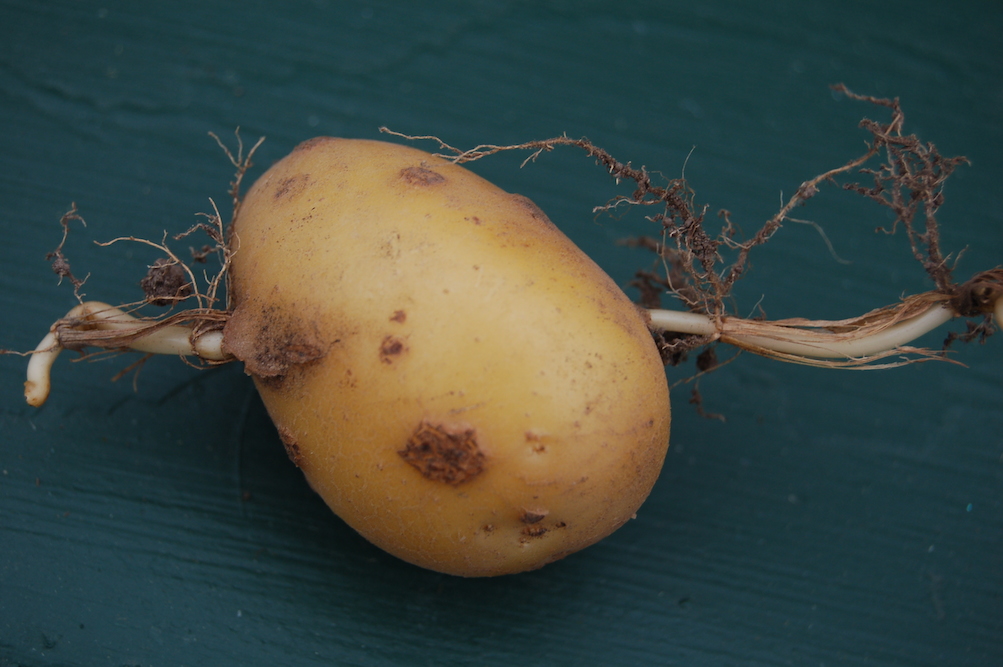
One year, I ignored twitch in the potato bed, thinking that the potatoes would shade it out. I only realised my error when I harvested the potatoes. They were shot through with twitch roots!

My annual struggle with twitch will start soon—probably this coming weekend. I will be sharpening my tools in preparation for the battle.

Garden Planning

gardenplanning1Part of my late-winter garden work is planning the coming summer’s vegetable garden. It’s a job I take seriously, because it affects my work for the entire year.

The vegetable garden (minus the greenhouse) covers about 410 square metres (4400 sq ft). It is divided into 28 beds, separated by narrow paths, with a broad path running up the middle between the gates on either end.

During the winter, the chickens run in about two thirds of the garden, controlling weeds and pests, and the remaining third is devoted to winter crops.

In planning the new crops, I need to take into account when the winter crops will be over, when I’ll have to remove the chickens from the garden for the year, and what was in each bed the year before.

I also need to take into account wind, irrigation patterns, available support structures, and growth patterns. For example, corn always goes near the edges, because the irrigator can’t throw water over the mature stalks—anything on the other side of the corn dries up. Corn is also a great wind block, and I can use it to protect more delicate plants from the vicious nor’west winds. Peas and tomatoes usually go on the edges of the garden, which are bounded by deer fencing they can be tied to for support. Melons like tall plants on their south side to block any cool southerly winds.

My goal is to have every inch of the garden covered with food plants for the entirety of the growing season. For example, the early spinach will be bolting by the time the tomatoes are ready to plant out, so they will share a bed. Chopped spinach stalks will form the mulch for the newly planted tomatoes. The garlic will be harvested before the pumpkins get large, so they can be planted in adjacent beds, and the pumpkins trained into the garlic bed once it is empty. Plants with a single harvest date, like dry beans, are planted in adjacent beds, and packed in so that the plants can spill into the paths, because I won’t need to walk down them frequently for picking.

It takes several hours (and usually a cup of coffee, and a scone if I can get it) to plan the garden to my satisfaction. There are often small changes as I go, but once the plan is in place, it guides my entire spring.

I can’t prepare 410 square metres of garden all at once, but with the plan in hand, I can prepare the beds in the right order so that each one is ready when the crop is ready to go in it. The plan allows me to ignore waist-high weeds in one bed while I focus on another, knowing that all the beds will eventually be prepared and planted. It makes my springtime as stress free as possible, and gives me time to stress about the weather instead!

And They’re Off!

100_3569 smHurrah! The gardening season has begun!

Though it was cold and rainy today, I began planting the early (onions, peas, spinach, lettuce, brassicas) and the slow-growing (peppers and eggplants) crops in trays today.

Now, my office/craft room also becomes a greenhouse. For the next three months it will house a growing array of seedlings that need a little extra warmth overnight.

For several years I started my seeds on top of an old electric blanket in the shed. It worked fine at keeping the seeds warm, but I had difficulty keeping the rats and birds from digging up the seeds and eating them.

Then I discovered that the blanket was getting wet in spite of the plastic I employed to protect it. I decided that, rather than risk burning down the shed or electrocuting myself with a decidedly off-label use of an electric blanket, I should move my plants.

The office has proven a wonderful greenhouse. The seedlings sprout quickly and without fail, and the large sliding glass doors let in plenty of sunlight. And there are no rats or birds to contend with.

The only downside is the humid atmosphere in the office for the spring months. What is good for plants isn’t exactly the best for people or office supplies!

Maybe someday I’ll have a heated greenhouse. Until then, I’ll have to make do with an office full of plants.

Seasons of Garlic

15 heads of garlic, all in one pint jar!

15 heads of garlic, all in one pint jar!

The garlic I planted on the winter solstice has taken advantage of the recent rain. It is now 5cm above ground, and looking great!

Of course, when the garlic in the garden starts sprouting, so does the garlic stored in the shed. And once it starts sprouting, its flavour goes off. The goats will still eat it (they seem to love garlic, and the local breeders feed it to them to help fend off intestinal parasites), but it’s not very tasty to the human palate.

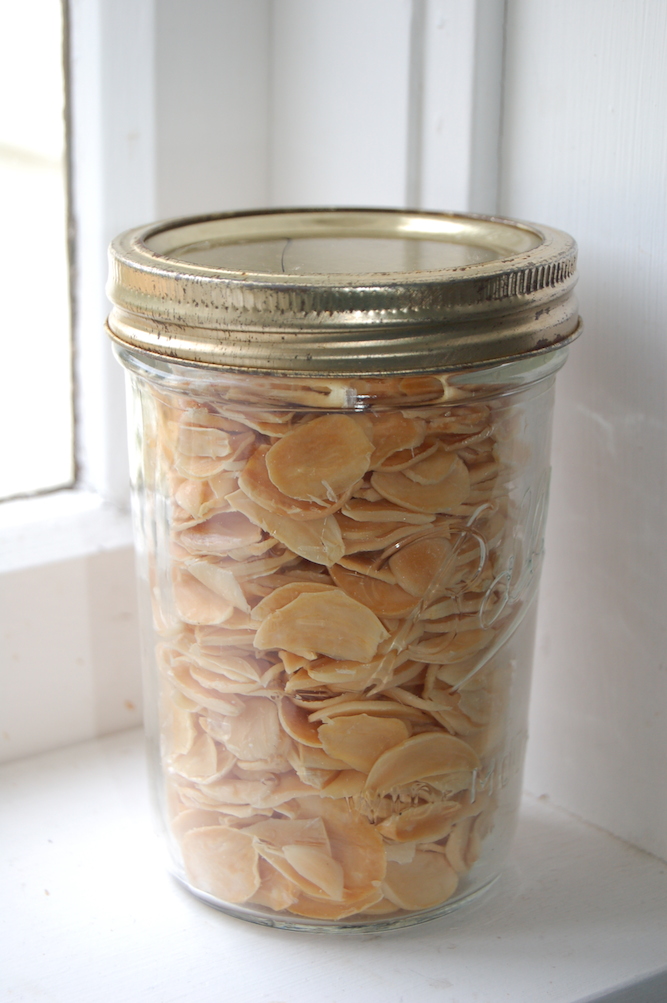
So it’s about this time of year when we switch to using the garlic we dried at harvest time. The thin slices grind well in a mortar and pestle, and are easy to use. Though they aren’t as good as fresh garlic, they’re much better than sprouted garlic, because they were dried at peak freshness.

We’ll use this dry garlic until we can start harvesting the first immature new heads around Christmas. But as spring comes on, and the winter-planted leeks and the spring onions begin to be harvested, we naturally start using more of these fresh members of the onion family and less garlic. There will almost certainly be dry garlic left when the new heads start coming in. But that’s okay—the goats like dry garlic, too!

Space Salad

Simple to grow at home. Not so simple in space.

Simple to grow at home. Not so simple in space.

Astronauts on the International Space Station made history today—they were the first people to eat lettuce grown in space. Red romaine, I understand. With a little balsamic vinegar.

It took years to work out how to do it. Things gardeners take for granted like gravity, 24 hour day cycles, water, and air, are a challenge when growing vegetables in space.

So, why is it important that astronauts can eat fresh lettuce? As of yet, we’ve found nothing edible beyond our own planet. If humans are ever to spend significant time in space, we’ll need to know how to produce food wherever we are, not just for logistical reasons, but who would want to eat those nasty pre-packaged astronaut meals for years on end?

This is another example of people taking their crops with them wherever they go, as I discussed two months ago in Eating Native?

Which, of course, makes me think of how some of the foods introduced to New Zealand have become weeds and pests, damaging the native life forms. Will there someday be weeds in space? Let’s hope we’ve learned a thing or two about avoiding introducing pests before we get to that point.

It Ain’t Over ‘Til the Magpie Sings

Photo: Eric Weiss

Photo: Eric Weiss

We’ve had more than our fair share of beautiful warm winter days this year. Though we’ve had some very cold nights, the days have been sunny, and we’ve gotten only a fraction of the rain we normally do over winter.

So you could have been forgiven for thinking, back in July, that winter was over. In fact, my daughter argued that it was spring a month ago.

I knew better. Winter would assert itself again.

It did so this past weekend, with icy winds bringing sleet, snow and rain. We huddled by the fire, venturing outdoors only to take extra food to the animals and split more firewood.

But in between icy squalls, at 4:00 am two days ago, I heard it—the certain sign that winter is on its way out.

A magpie.

Magpies are noisy all year long, but when spring is almost upon us, their noise changes. They start their wardle-oodle-ardling at four in the morning, and carry on until the sun rises. They feel what we know only because of the calendar—spring is just around the corner.

When the magpies start calling, I get restless. I wake when they do, and their call urges me out of bed.

Wardle-oodle-ardle!

Get up! Get up! Get ready!

            But it’s dark and raining!

Wardle-oodle-ardle!

Get up! Get up! Get ready!

            But it’s cold! Can’t I stay in bed?

Wardle-oodle-ardle!

Get up! Get up! Get ready!

Wardle-oodle-ardle!

Get up! Get up! Get ready!

Spring is coming!

Sunflowers

DSC_0009 smMany vegetable plants are attractive. Many have pretty flowers—okra (a hibiscus), scarlet runners, peas. None is more showy than the sunflower. Indeed, sunflowers are in the ornamentals section of the seed catalogue, not the vegetable section. There are plenty of sunflowers that don’t produce big meaty seeds for eating, but those that do are no less ornamental.

We eat sunflower seeds in a variety of ways. They are delicious sprinkled on top of a casserole or galette. They add nutty flavours to granola and veggie burgers. And they make a great snack!

We don’t grow nearly enough sunflowers to satisfy our appetite for sunflower seeds, but it’s always worth growing them, even if it’s only to enjoy the flowers!

The Gardeners’ Level of Hell

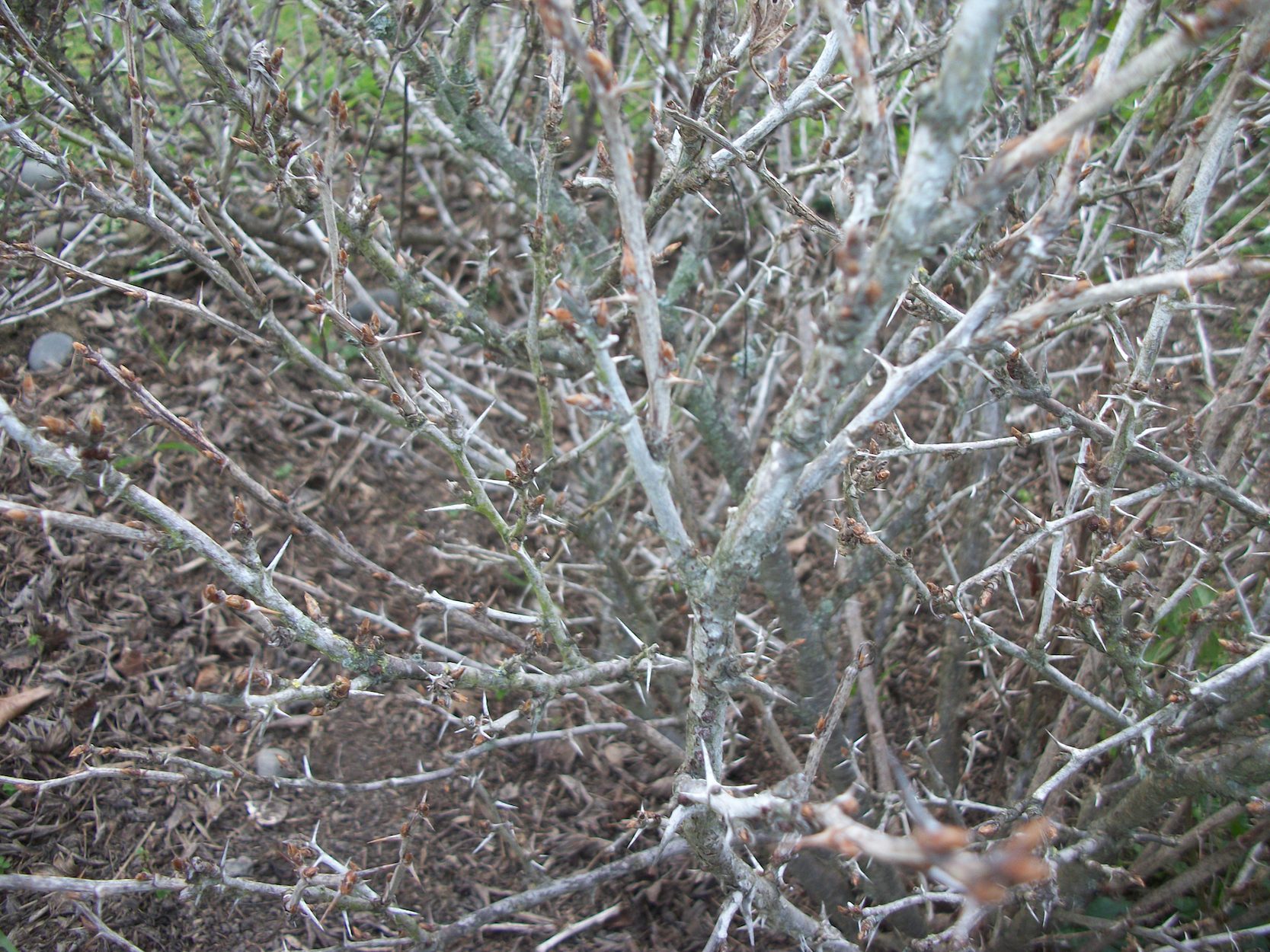
gooseberryplantsmI used to imagine that there was a special level of Hell for bad gardeners in which one was forced to weed thistles out of raspberry bushes for all eternity. I’ve since revised my idea of that level of Hell; I’m now convinced it involves weeding those thistles out from under gooseberry bushes. The combination of prickly plants with tap roots (that will grow back in less than a week) and vicious spines gouging eyes, face, and arms is as good as anything Dante conjured.

I spent an hour of my afternoon in this hell, and have the scars to prove it. But the gooseberry bed looks very nice now—neatly weeded and mulched!

Rosemary

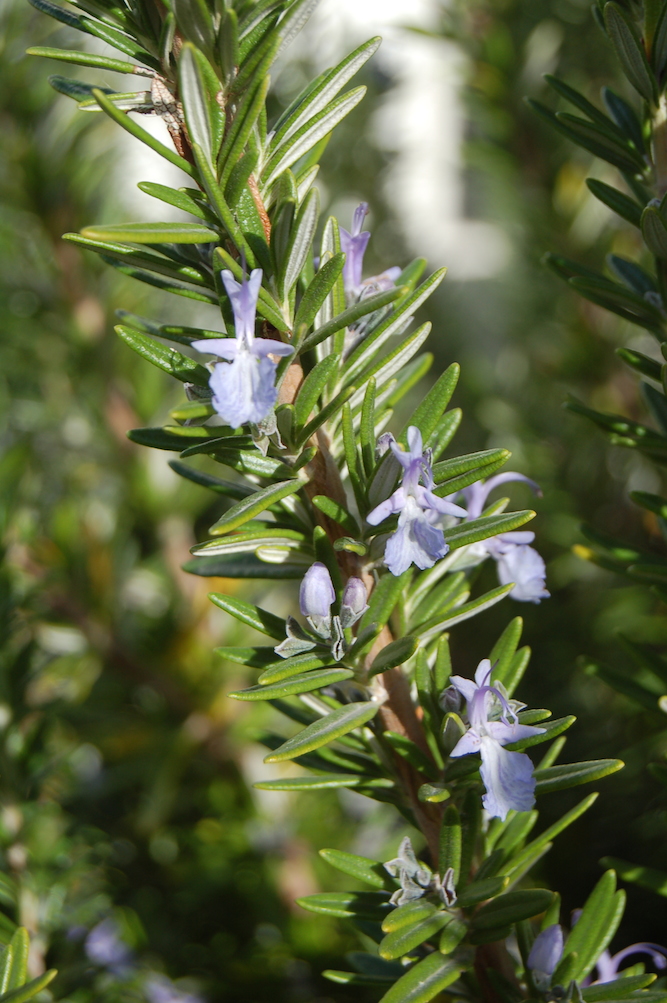
Rosemary1 smIn Minnesota, I grew rosemary in pots and brought it indoors for the winter, lest it be killed by the cold. Here in New Zealand, I grow my rosemary in the garden, and have to hack it back twice a year to keep it from growing taller than I am.

Rosemary is one of my favourite herbs, whether in dinner, in the garden, or in a flower arrangement. It is decorative as well as delicious.

Rosemary was named by Pliny in the first century. Ros (foam) mare (sea)—meaning that it grew so close to the sea that the foam sprayed on it. The Greek gods supposedly valued a rosemary wreath more highly than one made of gold (think how much I could make selling my biennial rosemary trimmings to Zeus!).

Rosemary was first used medicinally and culturally. It entered the kitchen in the Middle ages as a way to disguise the saltiness of salt-preserved meat. I’m told it goes well with lamb, pork, and game. As a vegetarian, I like rosemary with potatoes, pumpkin, and in Italian tomato sauces. And I love to brush the bushes with my hands as I walk past, so I can bring that lovely smell with me wherever I go!