Travelling

100_3358 copyA couple of friends are visiting from the U.S. this week. Poor ladies, coming from summer to record cold weather here!

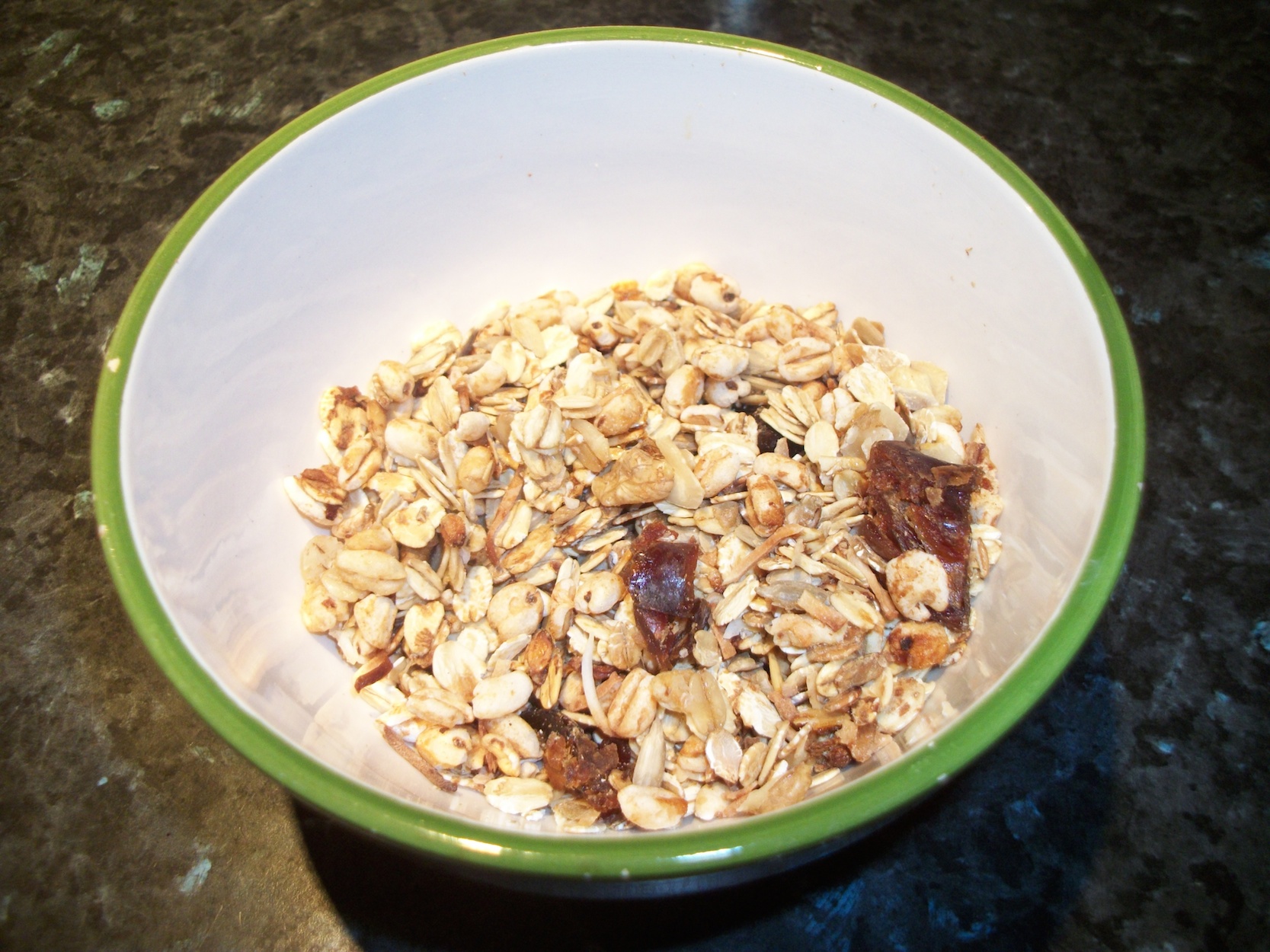
We’ve done our fair share of travelling, so one of the things I asked them was, “What do you normally eat for breakfast?” Breakfast is such a fundamental meal. It sets up your whole day, and when you don’t get the breakfast your body wants, it can throw off everything. When I travel within New Zealand, I always bring my breakfasts with me. If I can have my usual bowl of homemade granola in the morning (and have it at 5.30 am, like I’m used to), I can handle any amount of lousy, erratic meals the rest of the day. When visitors come, I try to provide them a breakfast as close as possible to what they’re used to, so they can enjoy more fully the wonders of New Zealand.

Try it next time you travel. Take breakfast with you and see how the right start perks up your whole vacation!

Truffles!

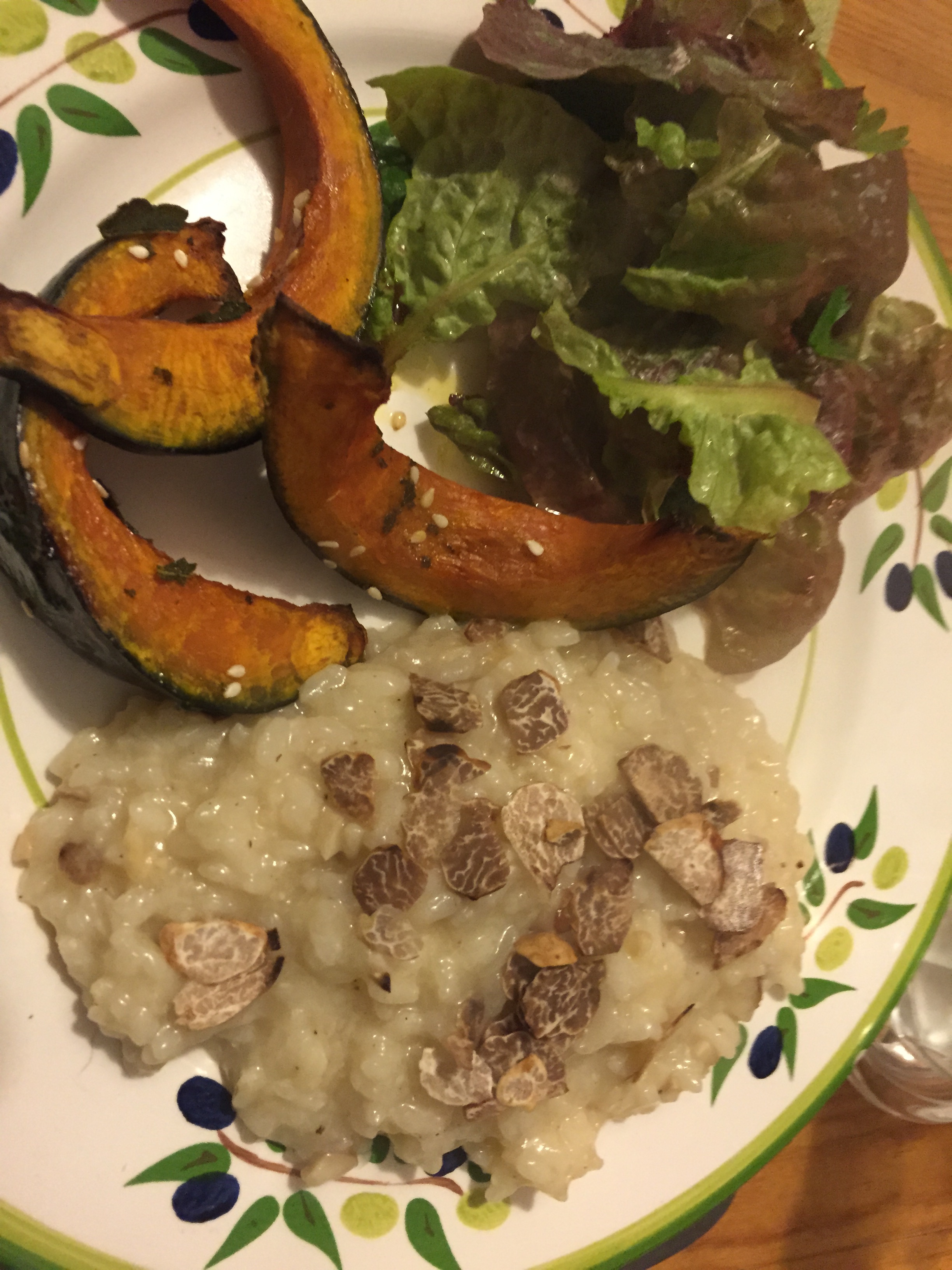
truffles1One of my husband’s colleagues (Alexis Guerin-Laguette at Plant & Food Research) is working on the commercialisation of truffle production in New Zealand. They’ve just harvested this year’s crop, and as an ‘insider’ Ian got early access to the bounty.

“You don’t want to know what I paid for these,” he said of the five tiny mushrooms nestled carefully in a tissue-lined jar.

But, who cares—they were truffles! The real, if-you-have-to-ask-you-can’t-afford-it thing! They weren’t a food item, they were a life experience!

Of course, I will admit that they smelled odd. My son described it as, “sort of like petrol,” and my daughter declared the odour “weird”. I reserved judgement until the fungi were properly prepared and sitting on my tongue.

Ian described the flavour as “Sitting in my grandfather’s green leather chair in front of the fire on a crisp autumn night.” He obviously experienced it much more intensely than I did, because my description didn’t come close. I very much enjoyed the flavour—strong, rich and earthy, and unlike any other mushroom I’ve eaten. I also appreciated the crisp texture of the paper-thin slices on top of creamy risotto. Was it worth it? Yes. Worth every penny (even at $2500/kg)!

For those of you near Christchurch who want to try out some truffles yourself, check out the truffle festival July 11-18!

Vegetarian Meatballs

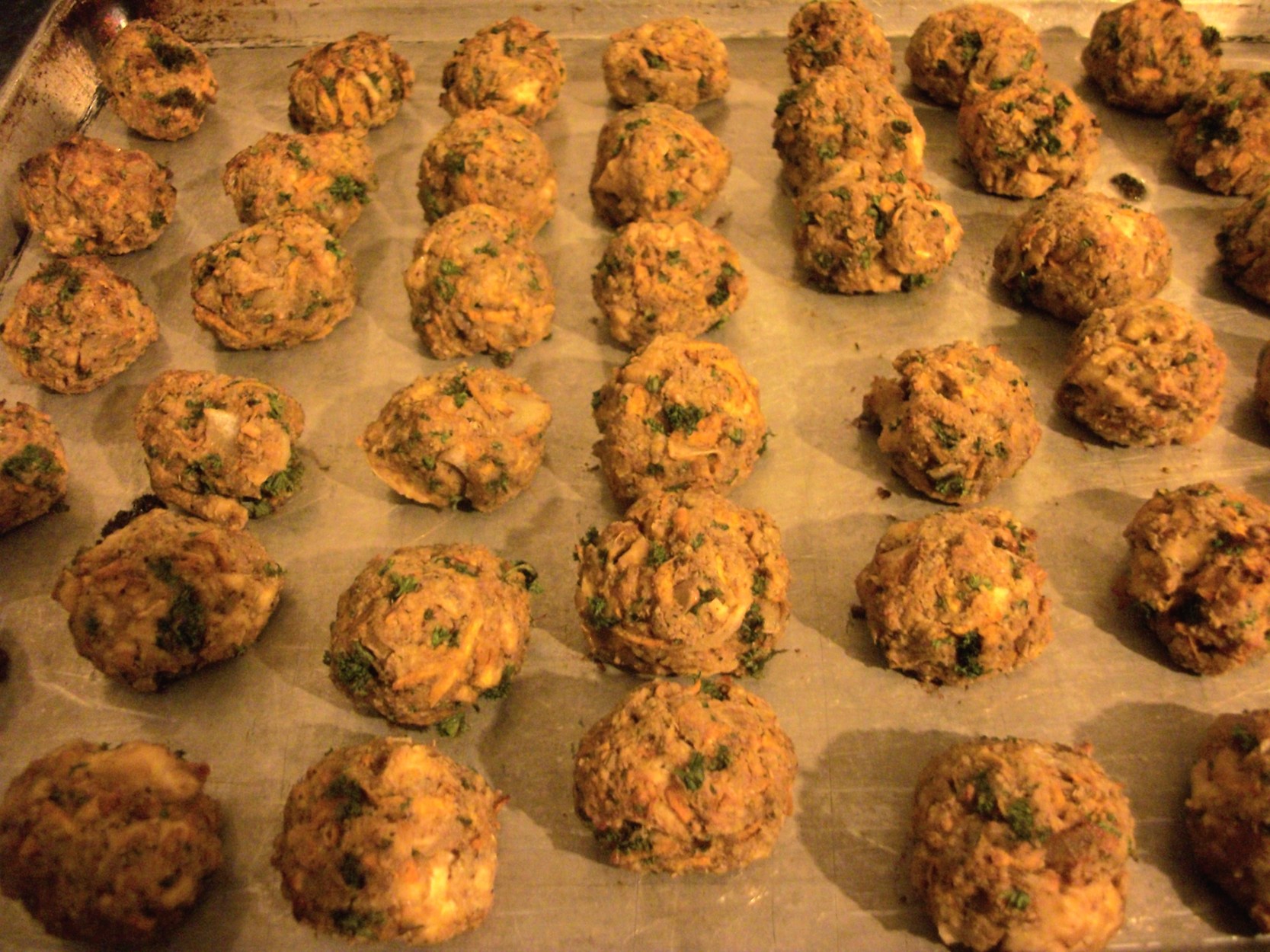
100_3355 copy“Why do we call them meatballs when there’s no meat in them?”

A fair question, from my daughter one day as I stood in the kitchen making one of the family’s favourite meals—spaghetti with meatballs.

Of course, as vegetarians, our meatballs contain no animal muscle tissue whatsoever. Their effect on the gustatory pleasure centres is comparable to a good traditional meatball, though, so the name sticks.

When I was breast feeding my son (13 years ago!), there were very few foods I could eat without causing him colic. It took eight weeks of round-the-clock screaming for me to work this out, and when I finally got him to stop howling by reducing my diet to nothing but carrots, rice and potatoes for a week, I was loath to add anything back in, lest the crying (his and mine) resume. I needed a source of protein, though, and eventually found that tofu was ‘safe’. The problem was that I wasn’t terribly fond of tofu. I knew it could be delicious, because I’d eaten some incredible tofu dishes made by a friend. I rang her up and begged her to send some recipes. One of the recipes she sent was for tofu meatballs.

Those meatballs (minus about half their ingredients) kept me alive for that year of breast feeding. When I was through nursing and was able to add back into the recipe the onions, mustard, and peppers that would have caused my son grief, they stayed on the menu. They are one of those foods that induces overeating. My husband admits that he refrains from using tofu for stir fries or other dishes in the hope that I’ll make meatballs.

I don’t know where this recipe originally came from, and I would love to cite the source. If you recognise it and can enlighten me, please do so!


Mix together in a large bowl:

500g firm tofu, crumbled

1 grated carrot

1 onion, finely chopped (I sauté the onion first—we prefer the flavour that way)

1 green pepper, finely chopped

ÂĽ cup fresh parsley, chopped

Âľ cup finely ground walnuts

1 c bread crumbs

2 eggs

3 Tbsp soy sauce

2 tsp Dijon mustard

1 ½ Tbsp sesame oil

1 tsp ground fennel

1 ½ tsp dried basil

1 tsp dried oregano

ground black pepper to taste

Form into small balls and place on an oiled baking sheet. Bake at 190°C for about 30 minutes, or until beginning to brown. Serve with a simple tomato sauce over pasta.

Another James Herriot Day

100_3318 smIn a James Herriot novel, it would have been funny. The hapless protagonist wakes to a day of routine animal care and vetting. The first call is to a large, languid-looking house cat who needs worming. It’s a simple operation to force open the jaws and slip a pill into the cat’s throat–over before the cat even knows what’s happening. Except that it’s not. The pill slips out of the protagonist’s fingers and lands, in all it’s bitter potency, on the cat’s tongue. His sleepy eyes spring open, pupils dilated. He squirms and gags, tongue lashing to remove the offending pill. The protagonist reaches into the now-menacing mouth and snatches the pill out for another try, but the cat is wise to her tricks, squirming and growling, tail lashing in indignation. Instead of a ten-second procedure, the pill-taking becomes a battle of wills between protagonist and feline. The feline wins, and the protagonist promises to return later to try again to administer the now slimy pill.

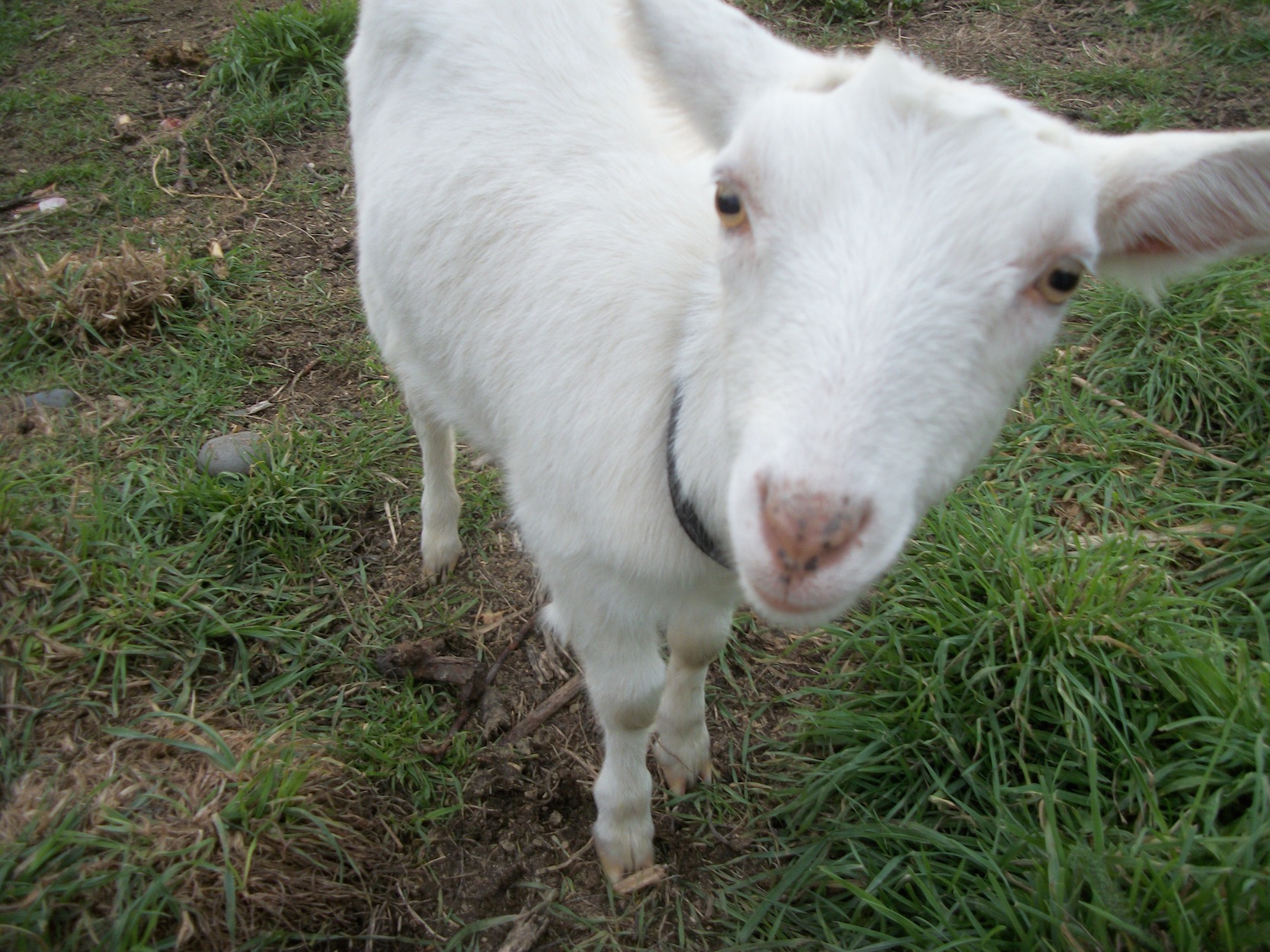
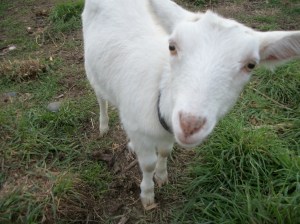
Next stop is a small herd of goats needing injections of worm medicine. Just five goats, three of them kids. Should be a snap. Our protagonist decides that, while she’s got the goats immobilised for the injections, she’ll trim their hooves, too. The first goat walks obediently to the milking stand and eagerly pops her head into the head lock to reach the grain she knows awaits her there. She stands perfectly still for her injection, and only struggles for a moment as her hooves are trimmed. She’s done in a snap, and our protagonist looks forward to the prospect of a quickly-accomplished task. The second goat is the one that has instigated the worm treatment. She’s been scouring recently, and is in poor condition. Unfortunately, this goat, having endured long treatment for a near-deadly illness in the past, is shy of needles. She bucks and jerks as the protagonist gently eases the needle into her skin. The needle pops out. Our protagonist tries again, and manages to inject about half the dose before the goat again dislodges the needle. As soon as the needle is free of the goat’s flesh, the medicine flows so freely, that the protagonist squirts the remainder of the dose into the animal’s fur. So the only animal that desperately needs a full dose gets only half of one. Moving on to the hooves, our protagonist discovers hoof rot. She’s not set up to treat hoof rot today, so she’ll have to get the goat back on the stand another day to do that. The third goat is a young goatling. It is her very first time ‘on leash’ and on the milking stand. She refuses to step out of the paddock, and while our protagonist is trying to haul her out, another goat makes a break for freedom. Our protagonist desperately lunges at the escaping goat, grabbing her collar and almost ending up face down in the mud as the goat lurches out the gate.

Now, the young goatling refuses to be caught. She hides behind her mother, so that the protagonist must lean over the adult to snatch the goatling’s collar. The goatling takes off, knocking the protagonist off her feet and onto the mother. After much cajoling, pushing and pulling, our protagonist finally gets the goatling onto the milking stand. When the goatling finds herself locked in the headlock, she panics, kicking, bucking and shimmying from side to side until she falls of the edge of the stand. The injection and hoof trimming go reasonably well, but only because her small size means the protagonist can hold her still. Again, she discovers hoof rot that will have to be treated another day.

The last two goatlings are too small to fit into the headlock. They will have to be treated in the paddock. But our protagonist is alone, and holding even a small goat still enough with her knees to inject her and trim her hooves (which take both hands) is beyond her skill. She narrowly avoids stabbing herself with a needle, then gives up entirely. As she stands, surveying the unruly herd, she notices that one of the goatlings is limping. There is something distinctly odd about the way the animal steps on her front right foot. The foot almost knuckles under, like newborn kids’ feet do sometimes, before they straighten out and strengthen. The goat will have to be caught and examined, but having been just caught and manhandled, she’s reluctant to submit to it a second time. Our protagonist is flat out in the mud before the little goat is again caught. Our protagonist can find no fault with the leg, foot or hoof. It moves freely and there are no visible injuries. She lets the animal go again, and she limps off. Our protagonist decides to give the leg a few days to see if it comes right before taking her to the vet.

Later in the day, our protagonist steps out of her car, directly into a huge pile of cat poo—the cat has gotten revenge for the morning’s pill.

All the story needs is some local farmer looking over our protagonist’s shoulder saying, “Ach! Tha knows nothin’ ’bout animals!”

As I say, it would have been funny in a James Herriot novel…
Winter Solstice

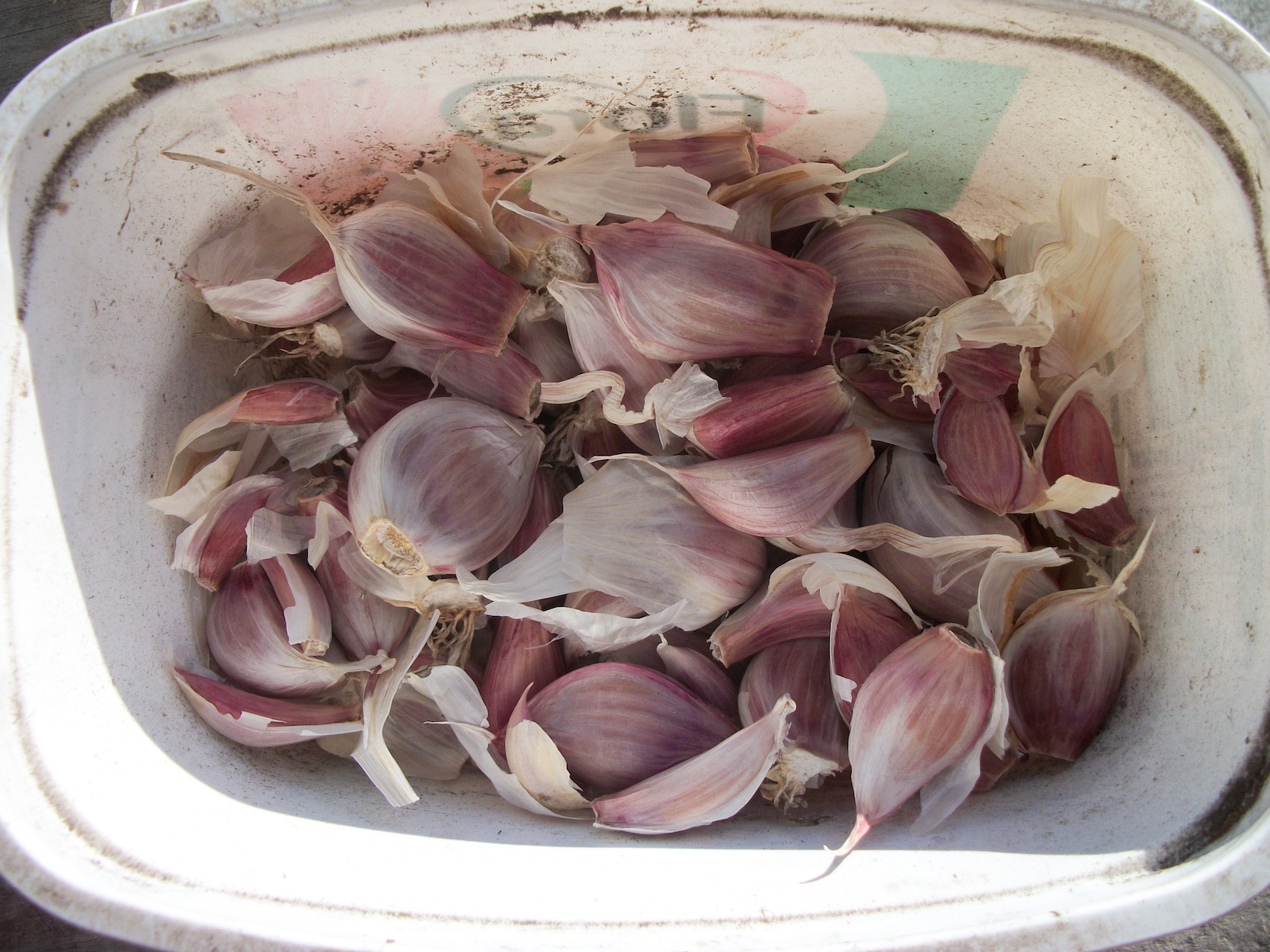
Garlic cloves ready to plant.

Garlic cloves ready to plant.

The forecast for tonight into tomorrow is for cold southerlies and snow lowering to sea level. So what did I do today? Planted garlic, of course!

Plant on the shortest day, harvest on the longest, is what I learned for garlic. Truth is that here, at least, it’s not ready to harvest until mid-January, but I do try to plant on the solstice. Coming from a homeland where the ground was frozen solid at the winter solstice, it feels positively cheeky to plant anything at that time. It’s a bit of defiance—I even planted through snow one year, just because I could.

Wipe out!

Wipe out!

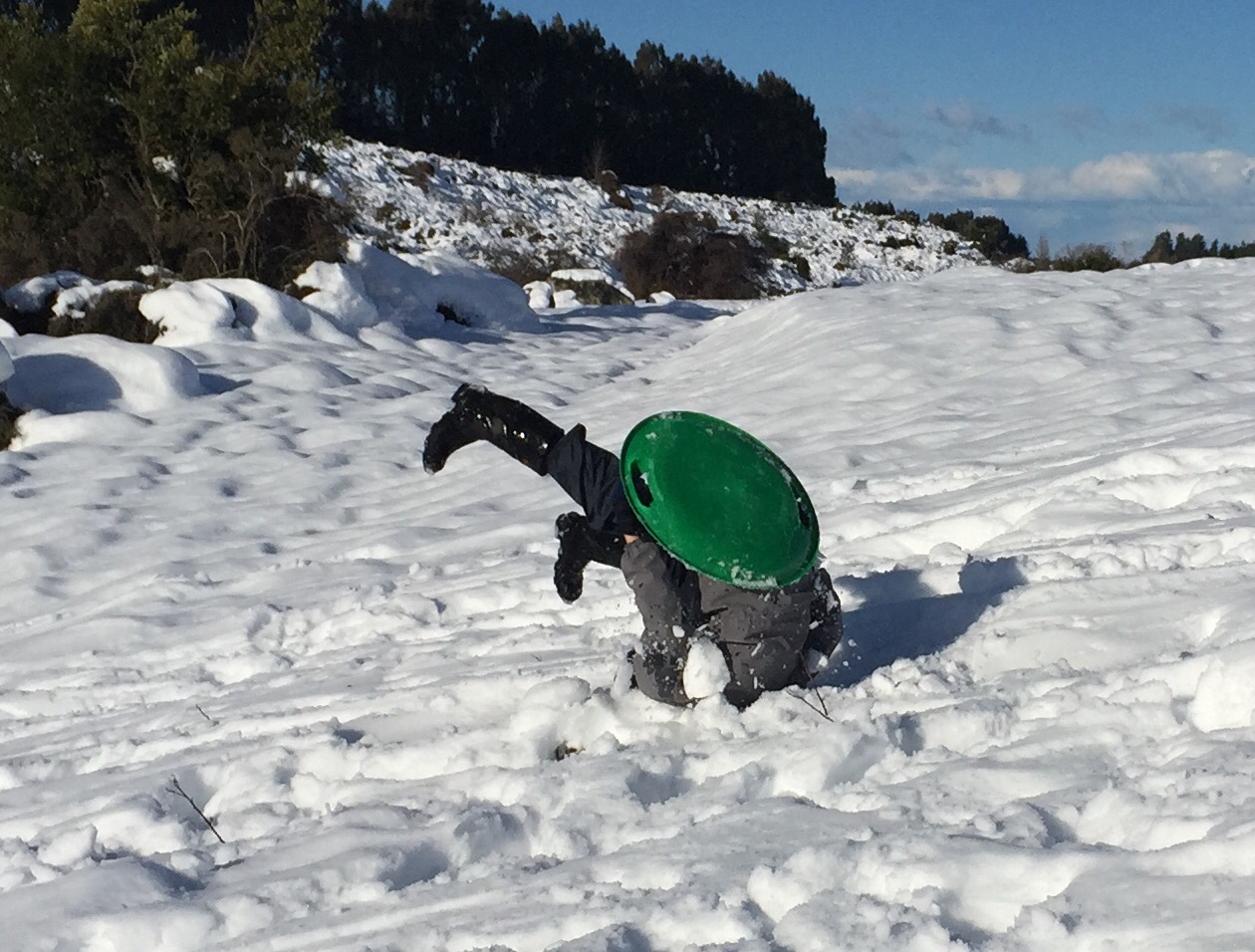
Today, I just had to break up mulch stiff with frost before I could plant. It was actually a beautiful (if chilly) day, and after spending the morning in the garden, we rugged up and headed to the hills for a fabulous afternoon of sledding in 30 cm of snow! Winter just doesn’t get much better than that!

Banish the winter blues!

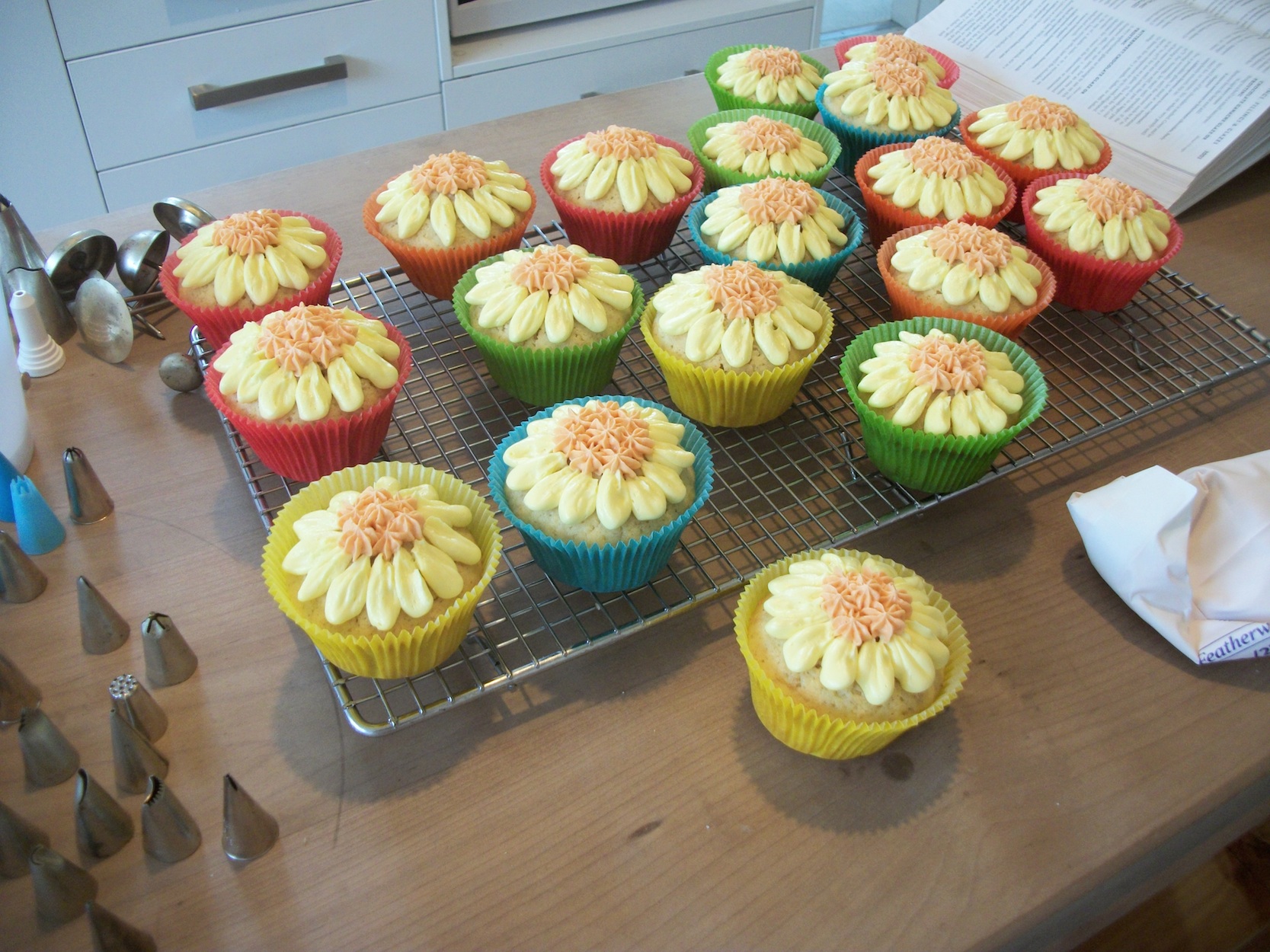
100_3345 copyIt’s a drizzly, dark day. The whole family slept in this morning (well, apart from me), and they still all rose before sunrise. It was a day to either stay in bed or do something to banish the winter blues. So I made lemon cupcakes iced with bright yellow flowers—my kitchen is sunny, even if the sky is grey!

The original plan was to teach my daughter some cake decorating techniques, but we discovered we were out of confectioner’s sugar, so I made a buttercream frosting instead of a quick frosting. That took a lot longer than a quick frosting, and by the time the frosting was ready, a friend had arrived to play. Since all the cake decorating equipment was already out, I figured I’d have some fun, even without my daughter. (She did manage to stop playing long enough to eat a cupcake).

Happy Matariki, (Maori New Year) to you all!

100_3340I love a good New Year celebration, but the January one has less meaning here than Matariki, which is seasonally appropriate, and a much needed celebration in the dark of winter. Matariki is celebrated on the new moon after the constellation Matariki (a.k.a. the Pleiades, Subaru, 7 Sisters) appears in the pre-dawn sky, after being absent from the night sky since April.

The modern celebration of Matariki only dates back to the early 2000s, and is a quirky blend of Maori traditions and European ideas. Kite and lantern making, food, song, and traditional crafts have all become part of the modern celebrations. Matariki is a time for looking back and honouring the past, and for looking forward with hope. It is a time to give thanks for the bounty of the harvest, and to begin to prepare for the coming planting.

So this Matariki, I will honour the spirit of my grandfather, who died late last year and taught me to pursue my dreams, even if it meant striking off the beaten path. I will look forward to the future, striving to make the coming year I find my place in my new career. I will celebrate the bounty of the past summer’s garden, bringing out jars of summer soup, peaches, and pumpkins for a weekend of glorious food. I will begin to prepare for next year’s garden, weeding the strawberries, and planting garlic in the cold, wet soil. I will celebrate light amidst the dark of winter, with candles and toasted marshmallows over a campfire.

May you find wonderful things to celebrate this weekend, too, whether you are celebrating Matariki, Winter Solstice, Summer Solstice, or just another day.

Favourite Kitchen Tools: rotary grater

sunflower seeds grater4 sm

Works great on seeds, too!

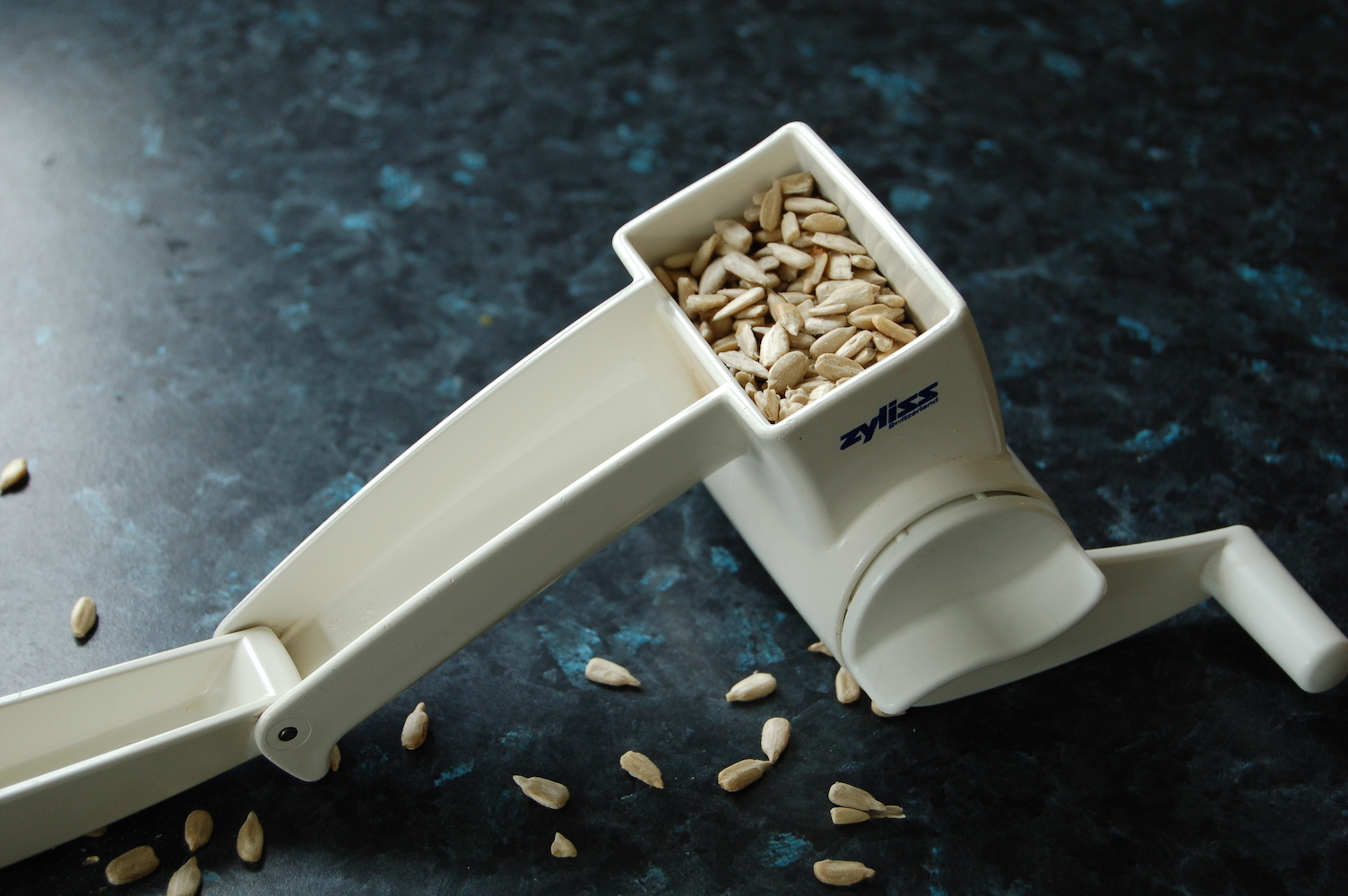
Time for another favourite kitchen tool. This time, the rotary grater. I loved this tool right from the start for grating parmesan cheese and nutmeg without taking off my knuckles, but it really captured my heart when I discovered what it does to nuts.

Grinding nuts with a food processor or coffee grinder works well, but when both coffee grinder and food processor died several years ago, I resorted to doing it by hand with a knife. The process is tedious and yields poor results. Then I tried the rotary grater. It yielded the most beautiful, fluffy nut powder I’d ever seen. In fact, now that I have a food processor again, I still use the grater, because it does a better job.

Beans, Beans

Beans baked overnight in the bread oven

Beans baked overnight in the bread oven

Beans, Beans

The wonderful fruit.

The more you eat,

The more you toot.

The more you toot,

The better you feel,

So eat your beans

With every meal.


I have no idea where that poem came from or who wrote it. My husband apparently learned it at Scout camp when he was a boy. It makes the 12 year-old in me giggle.

The truth of the matter is that beans don’t make me toot, and they are, indeed, wonderful. We eat beans regularly, in many different forms. Usually I can grow enough beans to get us through the year. I grow black, borlotti, and soy beans. We eat most of the soy green, but I always save some for dry beans. Beans are one of those wonderful, long-storing products from the garden. They’re a low-maintenance, high-yield sort of crop, like potatoes. Best of all, they’re delicious in a wide variety of dishes.

Burritos and burgers are probably my family’s favourite ways to eat beans. They’re time-intensive meals, but well worth the effort. Baked beans, too, are time intensive—mostly oven time, so we usually only make them when we have the bread oven fired up. They bake beautifully in the long tail-end of the oven’s heat.

Simple beans and rice is the most common way we eat beans. If I remember to put the beans to soak in the morning, it becomes an effortless meal, and a perfect winter warmer.

The best flavours to go with beans (no matter how they’re cooked)? Fresh cilantro (added at the very end of cooking), smoked paprika, and cumin. A bit of tomato is lovely, too.

The lambs are coming!

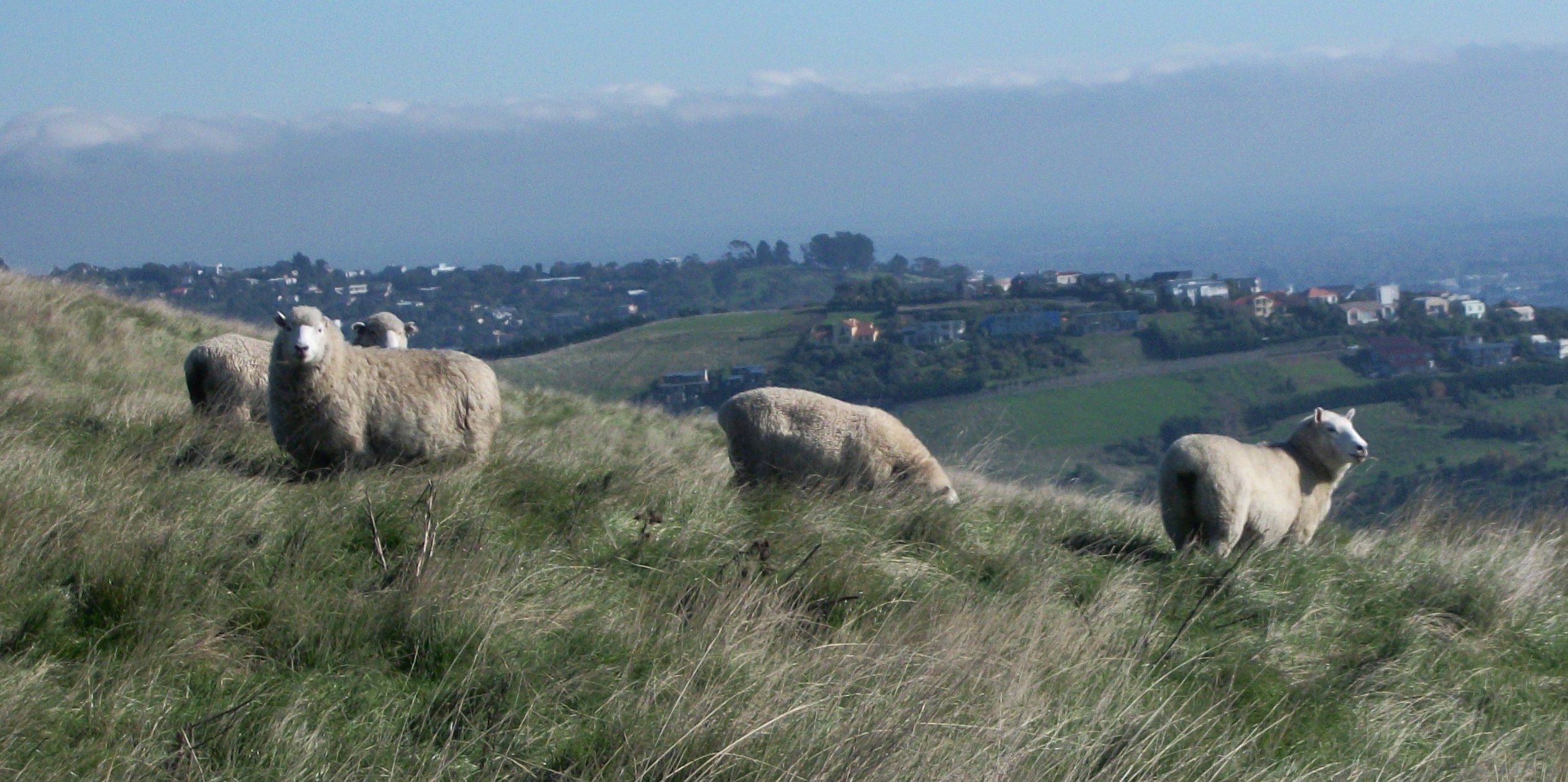
100_2204 cropTwo days ago, I heard the first one—a reedy, high pitched ‘baaa’ from the neighbour’s paddock. Today there are a dozen voices out there, calling to their mothers, whose low rumbles answer patiently.

Lambing comes early in our neighbourhood. These June and July lambs will have to survive the worst of winter, and the farmers know it is a gamble. One ill-timed storm, and a farmer can lose 200 lambs overnight. It is apparently worth the gamble though. Lambs that make it through the winter will have months of growth on the August and September lambs born in the high country, and will be prime for the Christmas lamb market.

Though I feel bad for those little lambs, born in the dead of winter, I do appreciate the promise they bring, frisking in the paddocks on frosty mornings. They promise spring to come. Warmth and light. They bring joy to the bare branches of the winter landscape.